
The fifth edition of Poetics + Politics will be centered around the theme: Poetics in the Politics of Now. The symposium will be held at the University of California at Santa Cruz between May 14-17, 2026.
This intentionally broad theme aims to engender a space of open dialogue about the interplay of aesthetics, politics, and history as they emerge in our various and discrete practices, commitments, regions and contexts. What are ‘poetics’ in the politics of now? Or, what are the ‘politics’ of the poetics of now? What is ‘now’? How are the pervasive topics that tend to cluster around documentary (realism, fidelity, responsibility, ethics, representation) animated or challenged or changed by this contemporary moment? What work does documentary do, and what can it do, in a media space increasingly dominated by altered images and facts? In a world increasingly shaped by the forces of financialization and nationalism? What could investing in form and poetics do in a moment like this?
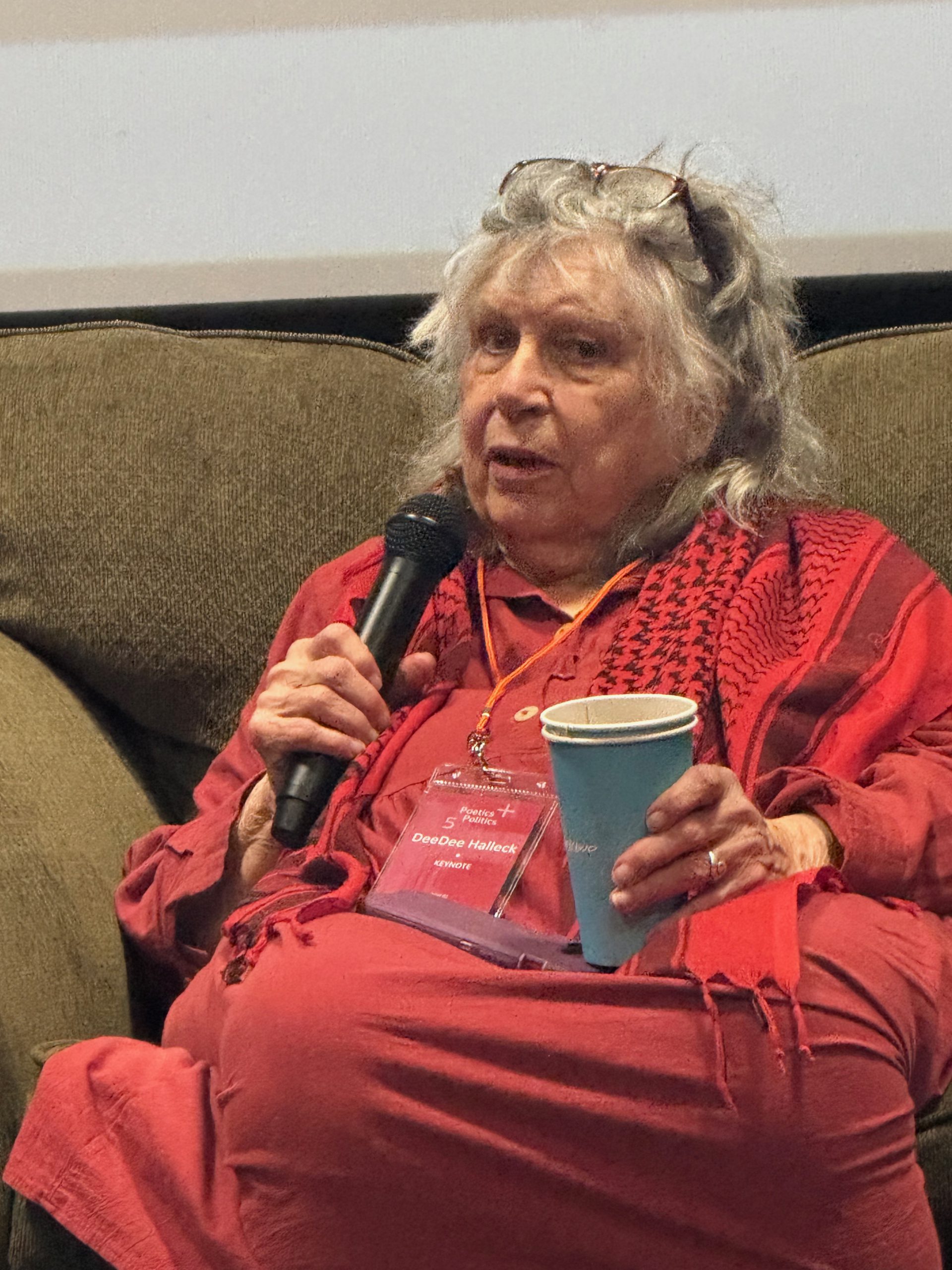
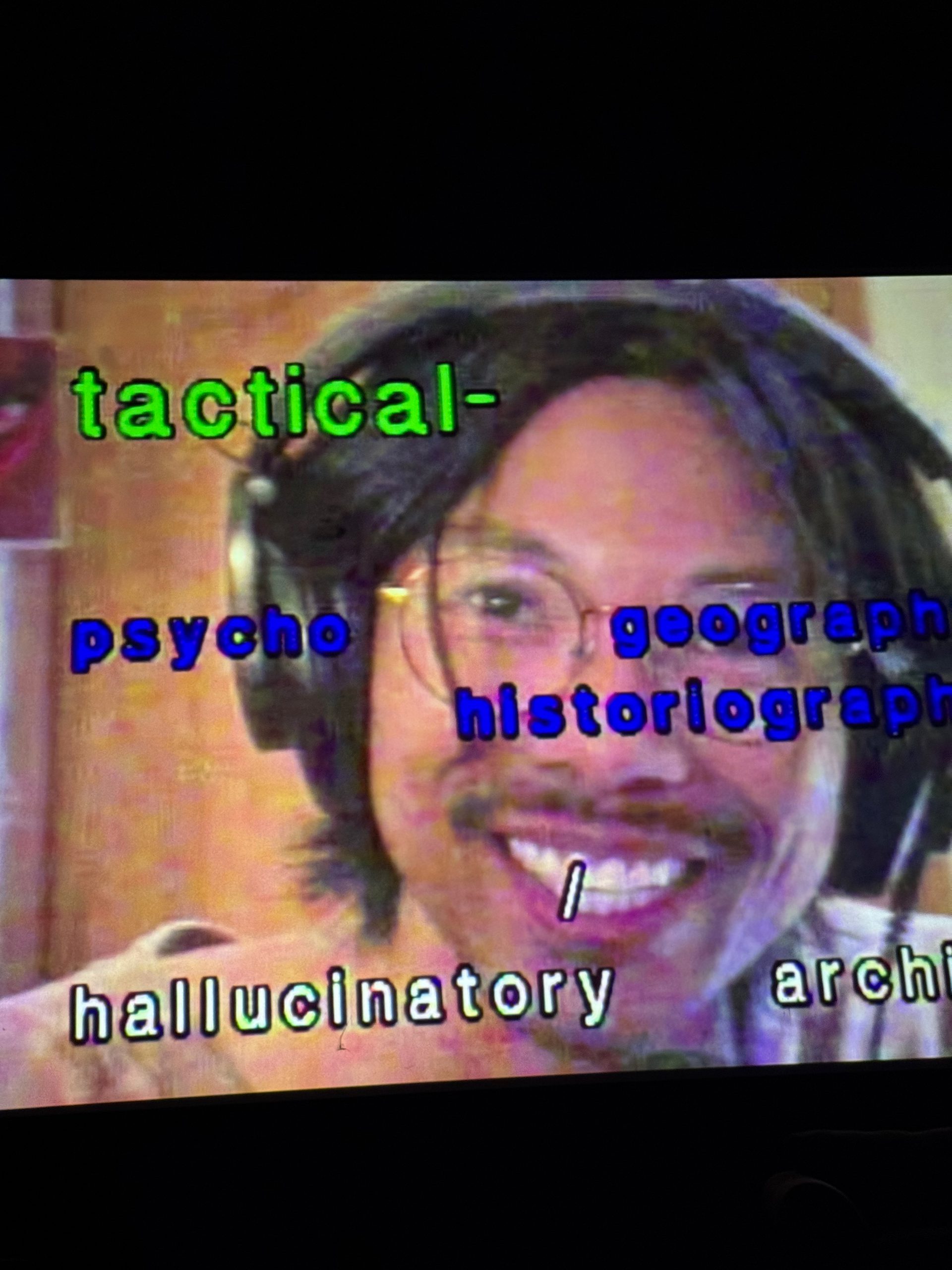
Keynotes for this year’s symposium are DeeDee Halleck and Miko Revereza. DeeDee Halleck is a filmmaker, author, community and media activist, the founder of Paper Tiger Television and co-founder of Deep Dish Television, the first grass roots community television network. Her work to broaden and remake media landscapes has been recognized by major cultural and funding institutions. Miko Revereza is an award winning filmmaker whose body of work experiments with and examines the process of documenting the undocumented, moving through themes of diaspora, colonialism, and Americanization.
The 2026 symposium will be an in-person gathering: we are committed to the community-building work of physical presence and to creating an intentional space for shared and durational conversation across our time together.
Our call for proposals for the 2026 symposium is closed.
Principal Organizers are Irene Gustafson, Irene Lusztig, and Hannah Jayanti. This year’s symposium is made possible by funding from Porter College, the UCSC Arts Research Institute, the UCSC Center for Documentary Arts and Research (CDAR), and the UCSC Arts Division.
Schedule [revised!]
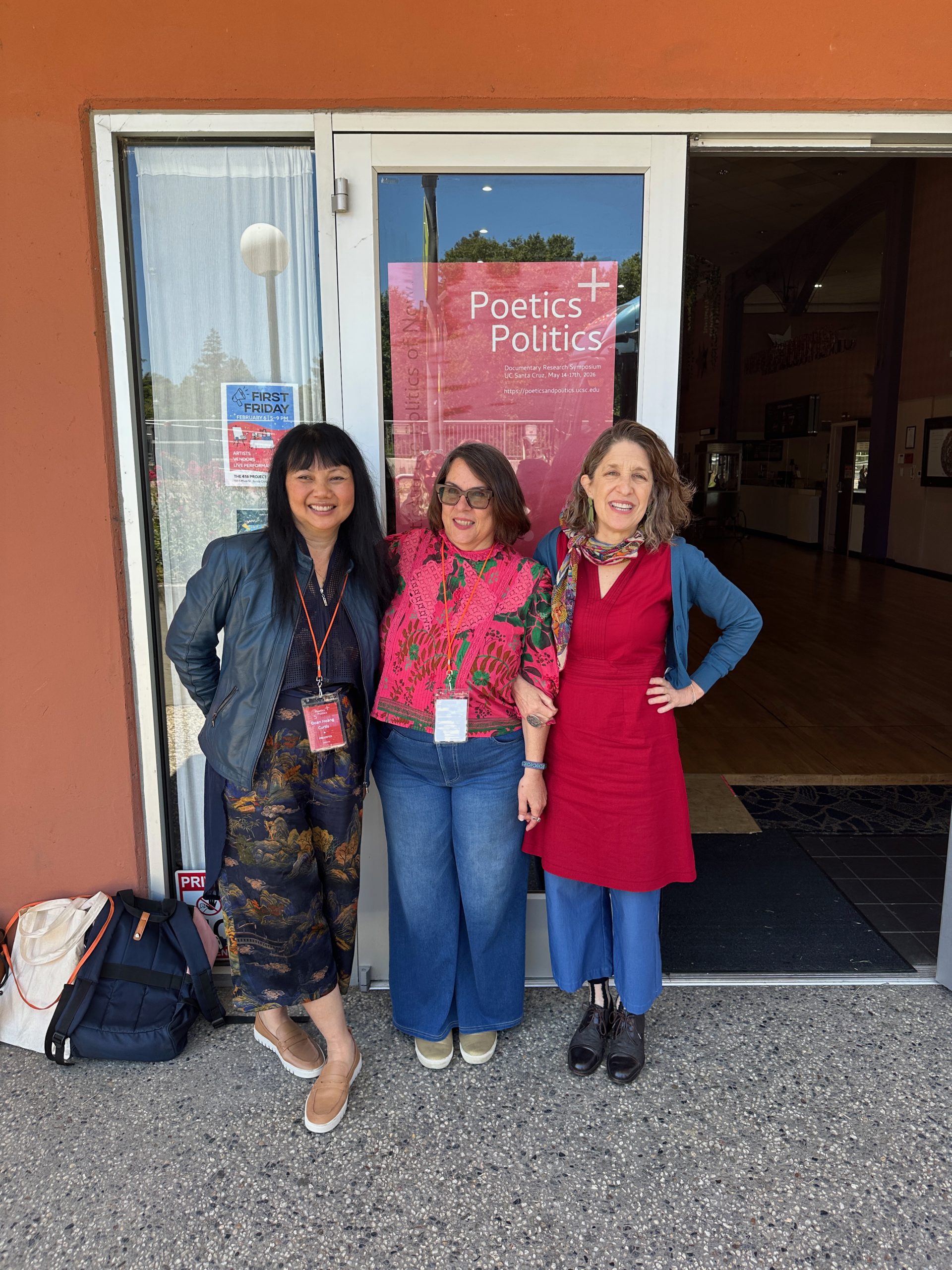
*The symposium has been moved off UCSC campus to honor the AFSCME strike which was called on May 7th, and called off on May 14th. We will gather at two locations: Barrios Unidos (1817 Soquel Ave, Santa Cruz, CA 95062) —please enter Barrios Unidos through cafe door with Poetics and Politics poster on the corner of Soquel ave and Trevethan ave— and 418 Project (155 River St , Santa Cruz, CA 95060)—please enter through the entrance marked Door 3 on River Street .For more information about the venues, parking, etc see Travel and Accommodation. To download a digital version of the old (and logistically defunct albeit very lovely and filled with bios) program—click here.
THURSDAY, MAY 14th
Barrios Unidos 1817 Soquel Ave, Santa Cruz, CA 95062
| Time | Session | VENUE |
|---|---|---|
| 4:00pm -8:00pm | Registration Check in, collect program and name badge | Barrios Unidos |
| 5:00pm -5:30pm | Welcome Honoring Land Relations: Matte Hewitt Opening Remarks: Irene Gustafson, Hannah Jayanti, and Irene Lusztig | Barrios Unidos |
| 5:30pm – 7:30pm | SESSION 1 Poetics of Solidarity John Greyson, Raed El Rafei, Mary Jirmanus Saba [Moderated by Irene Lusztig] In a presentation spanning nude Walt Whitman, a megaphone choir, a boycott duet, and a wartime Gaza hospital diary, John Greyson explores questions of poetics and witness, solidarity and activism, asking: what does it mean to sing queer songs against the tsunami of a genocide? Raed Rafei’s essay film-in-progress, tentatively titled To be in a Time of War, is a reflection on the cognitive dissonance of witnessing the devastating war in Gaza from the safety of San Francisco, a supposed queer utopian haven that both obscures US support and fosters solidarity. Mary Jirmanus Saba will show clips from a collaborative work in progress (with Native Studies Scholar Balraj Gill and Massachusett Sagamore War Chief Faries Gray) offering a framework of spatial sensing as countercartography that asks: what kind of relationships to land and place does embodied sensing foster? What kinds of artistic sensibilities might we as documentarians help to cultivate that could confront the profound challenges of our contemporary moment? This opening session moves expansively from a series of gay marches in San Francisco between the 70s and 90s, to a hospital in Khan Younis, to a protest in a Toronto university lobby, to Indigenous land in Massachusetts, oscillating between there and here, then and now. Collectively, we hope this presentation will offer images and ideas to ground our conversation to come in questions about solidarity across time and space—and how to make art in the most challenging of times. | Barrios Unidos |
| 7:30pm – 9:00pm | Opening Night Reception Outside drinks, light snacks, mingling, processing! | Barrios Unidos |
FRIDAY MAY 15
418 Project 155 River St , Santa Cruz, CA 95060
| Time | SESSION | VENUE |
|---|---|---|
| 10:00am -11:30am | KEYNOTE Martial Arts: Defending Ourselves and Others DeeDee Halleck [In conversation with Marty Lucas] Halleck will look at the history of activism in the arts — from satire, posters and murals to boycotts, whistles, disruption, occupation, and general strike. | 418 Project |
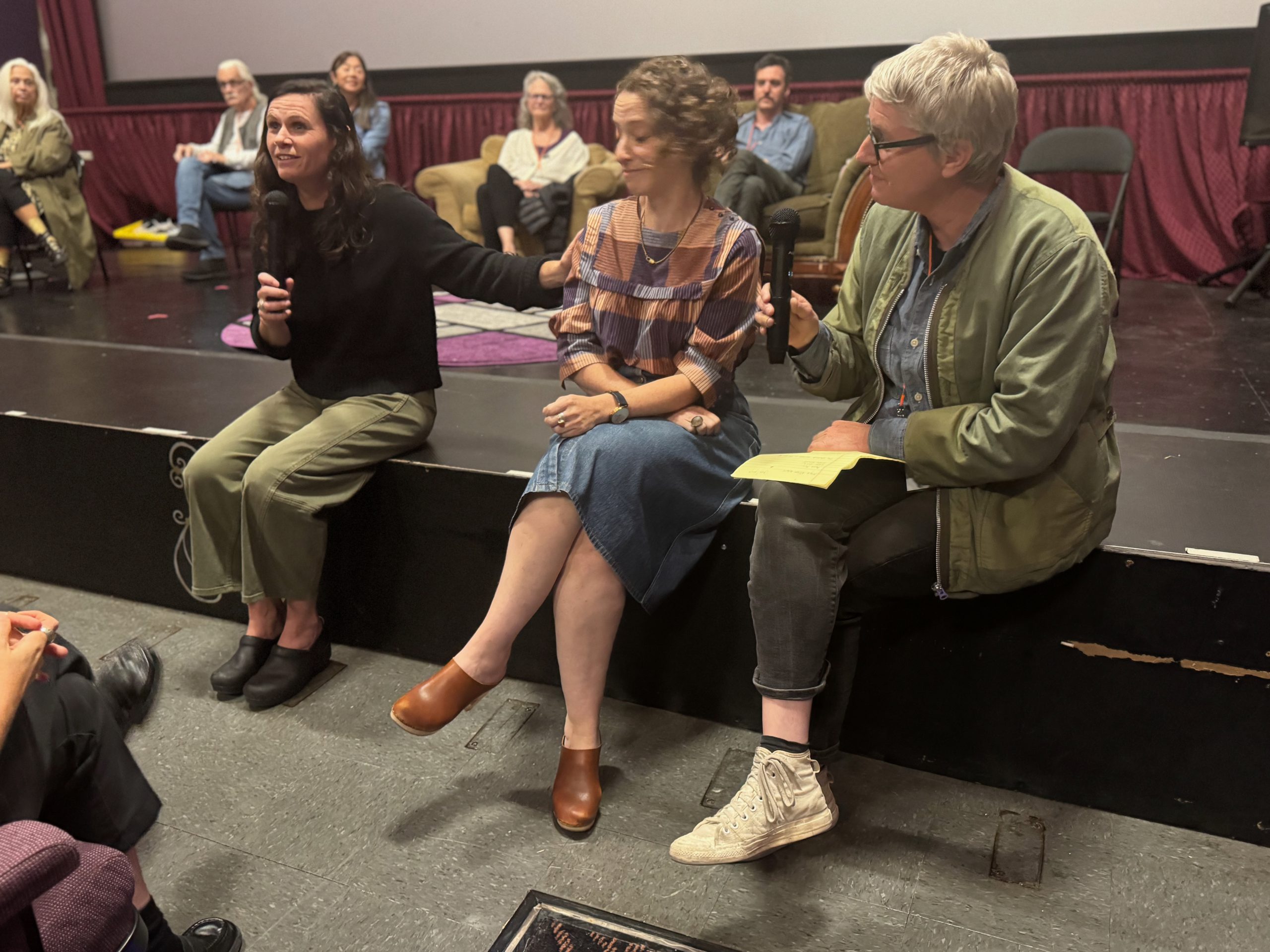
| 11:30am – 1:00pm | SESSION 2 Aftermath Practices Adam Sekuler, The Abortion Clinic Film Collective (Kristy Guevara-Flanagan, Đoan Hoàng Curtis, Lynne Sachs), Helen De Michiel [Moderated by S. Topiary Landberg] “What does it mean to practice documentary when familiar structures no longer hold? This panel is framed by this timely provocation, posed by filmmaker Helen De Michiel, who invites us to think beyond questions of “organizing to restore our legacy institutions,” towards, instead, considering a framework of “aftermath practice — not retreat or defeat, but exploration and discovery.” Filmmaker-members of the Abortion Clinic Film Collective (Đoan Hoàng Curtis, Kristy Guevera Flanagan, Lynne Sachs) share urgent filmmaking and distribution strategies emerging from the frontlines of the post-Roe v. Wade reproductive health crisis. Filmmaker Adam Sekuler invites us to linger in the aftermath of film festival programming, and to attend to the “unseen archive” of what gets left out—silenced forms, counter-temporalities, and other refusals. The presenters in this panel collectively grapple with questions of “aftermath”—how to make work in new ways in spite of—or ignited by—the unraveling of political, public health, and arts institutions at every scale. | 418 Project |
| 1:00pm – 2:00pm | Lunch We will be downtown where there are many places to eat. We can recommend Abbot Square food court for outdoor seating, but also see Travel and Accommodation for suggestions. | |
| 2:00pm – 3:30pm | SESSION 3 Gestures of Repair Rosie Reed Hillman, Eva Knopf, Erin Wilkerson [Moderated by Hope Tucker] How can we explore the “poetics of repair in a seemingly broken world?” We’ve taken this resonant question posed by filmmaker Eva Knopf (who unfortunately could not attend in person) as a frame for this conversation between three filmmakers. Filmmaker Roșie Reed Hillman creates a tender feminist portrait of witches— working-class women in midlife, “using magic to transform and transport.” Filmmaker and media artist Erin Wilkerson calls for “feral” filmmaking and situated knowledge in a live autoethnographic video performance exploring colonial landscapes, early American settlement and expansion, and botanical-based fieldwork. Knopf’s work in progress Movie Kintsugi explores “how we deal with breakages, repairs and the broken pieces of everyday life – in a world of pieces and multiple crises. What do fracture lines tell us that would otherwise remain hidden?” | 418 Project |
| 3:30pm- 4:00pm | Break | |
| 4:00pm-5:30pm | SESSION 4 Reframing Interference Hanna Rose Shell, Anna Friz, Nadia Ahmed [Moderated by Rebecca Ora (rora)] The three presenters in this panel reframe interferences such as sun flare, noise, fuzziness, and ephemerality as productive modes of inquiry rather than obstacles to knowledge. We’ve borrowed the title of this session from Anna Friz’s practice of “detunement” which embraces the uncertainty that research and empirical observation have typically sought to filter out. Through a practice of listening and noticing across radio bands, foggy Icelandic landscapes, and Chile’s industrialized Atacama desert, Friz treats perceptual ambiguity as a methodology for a complex world. Hanna Rose Shell’s work-in-progress, Flare Patrol / Parallax Vision, weaves together 35mm solar-detection films from Cold War-era coronagraphs, and contemporaneous news archives. Placing these in “parallax” across seemingly incommensurable vantage points, Shell explores whether shifting the scale towards the solar can open new ways of thinking about fidelity, frequency, and the politics of “now.” Nadia Ahmed’s Wetlands of Mass Destruction explores how the shifting marshlands of southern Iraq’s Al-Ahwar has long functioned as ecological and political endurance. Reading across myth, indigenous Ahwari poetry, and environmental policy, Nadia argues that foreign restoration efforts fail when they treat the ephemeral nature of these waters as interference to be corrected rather than resilience. | 418 Project |
| 5:30pm – 6:30pm | SESSION 5 | WORKSHOP Documentary as Health Care Liz Roberts, Alex Juhasz Juhasz and Roberts screen clips from two new works, Please Hold and Love is the Drug to engage facilitated conversation with workshop participants about community-situated documentary practice in spaces of health related vulnerability. Both works engage with the durational crisis of HIV/AIDS. Engaging with Juhasz’s definition of queer feminist media praxis, our facilitated experience invites participants to think together in an expansive way through the poetics and practices of activist media. The works are deeply archival, across time and format, but use experimental form to show how all those times can be copresent now, that grief is spatial, and care is always possible. | 418 Project |
SATURDAY, MAY 16th
Held at both Barrios Unidos and 418 Project
| TIME | SESSION | ROOM |
|---|---|---|
| 10:00am-11:30am | KEYNOTE Undocumentability and Smuggling Through Loophole Cinema Miko Revereza [in conversation with Hannah Jayanti] This talk engages Miko Revereza’s practice through notions of undocumentability and smuggling through what Revereza calls loophole cinema. Emerging from his experiences growing up as an undocumented immigrant in the United States, his research begins with the question: how does an undocumented documentary filmmaker document themself? Revereza explores the ontological loopholes between bureaucratic and cinematic documents and how these forms might contaminate each other. His filmmaking practice, operating within registers of visibility and invisibility, becomes entangled with existential decisions such as self-deportation and exile, treating cinema as a stage for refusal and as a tactical method for infiltrating, transmitting, or smuggling himself through borders. In this talk Revereza will explore the evolution of personal filmmaking, departing from his initial question towards a new one: how might an undocumented documentary filmmaker become undocumentable? | 418 Project |
| 11:30am-1pm | SESSION 8 XO & Struggle: A Case Study in Tactical Film Programming & Exhibition Emily Rose Apter and Keisha Knight Featuring work by Saeedah Cook, Kelly Gallagher, Cameron A. Granger, Christopher Harris, Alex Johnston, and Matazi Weathers [Moderated by Abram Stern] Solidarity Media Network presents XO & Struggle, a film screening dedicated to the George Jackson Brigade’s enduring legacy of both love and struggle. Drawing inspiration from Ruth Wilson Gilmore’s notion of abolition as presence, the program explores possibilities of anti-carceral image-making while maintaining that art alone cannot transform the conditions that produce carceral violence. Previous iterations of XO & Struggle appeared in cinema and organizing spaces across NYC, evolving in collaboration with participating artists, organizers, and political educators. This screening will be followed by a facilitated discussion and brainstorm session focused on nourishing an abolitionist imaginary, strengthening inside/outside collaboration, and expanding the use of media in support of global freedom struggles. | 418 Project |
| 1:00pm-2:00pm | Lunch break / part of group moves to Barrios Unidos | |
| 2:00pm – 3:30pm | SESSION 9 (Sessions 9+13 are concurrent presentations at DIFFERENT LOCATIONS) Tracing Terrains Amir Husak, Jenny Lion, Amy Reid [Moderated by Leslie Tai] This session explores filmmaking through what Amir Husak refers to as “a cartographic and poetic act,” where terrains are traced through the histories, politics, and communities that shape them. Husak’s film-in-progress, The Eye of the Mountain, turns an intentionally slow and meditative gaze on Plješevica mountain in Northwest Bosnia-Herzegovina. Investigating how EU border policy is inscribed into the landscape, the project foregrounds stillness, atmosphere, and ecological attention as a form of counter-surveillance. Jenny Lion brings a durational practice to moving-image works set in militarized landscapes of the American West. Lion’s presentation will include excerpts from the work-in progress cinematic essay Dixie Valley which has been shot over twenty years in a remote Nevada valley emptied of its inhabitants by the U.S. Navy and remade as a staging ground for electronic warfare. Amy Reid’s documentary Grandmother’s Garden finds its cartography in the American quilt, tracing histories of enslavement, sharecropping, and women’s labor that are threaded through domestic life. Filmed with quilters across the country over several years, Reid asks what these objects reveal about the economic landscape we have inherited, and what they can teach us about our contemporary moments. | 418 Project |
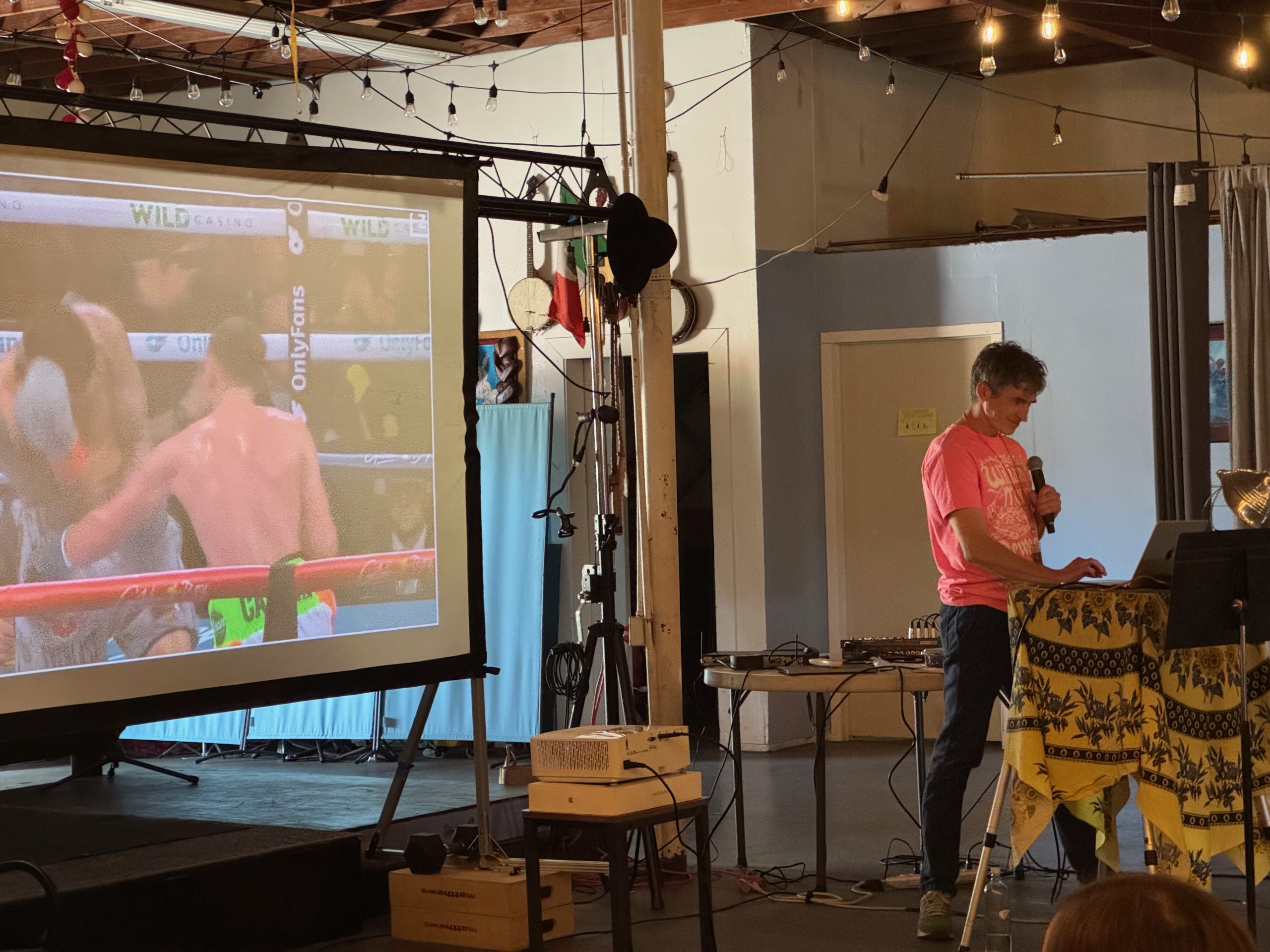
| 2:00pm – 3:30pm | SESSION 13 (Sessions 9+13 are concurrent presentations at DIFFERENT LOCATIONS) Balancing the Scales Jason Fox, Paige Sarlin, Sharon Daniel [Moderated by Pooja Rangan] Positioned at the nexus of journalistic and documentary discourses, this panel engages with national narratives of fairness and justice. Fox’s work-in-progress, a feature-length live cinema project, *A Social History of Fairness*, explores forms and frameworks for judgment animating various scenes of modern athletic spectacle across the 20th and 21st centuries, suggesting that there is much to learn here about our American purposes and desires; the collective satisfactions we think we seek. Sarlin’s presentation considers how ‘interview work’– the production, reproduction, editing, and representation of interviews –has been drawn into the politics of the present. Using the October 2024 ‘60 Minutes’ interview with Kamala Harris as a case study, Sarlin considers the status of editing in recent attempts to establish ethical norms for documentary practice. Daniel’s multi-part, multi-media project, Reasonable Doubt, examines the subjective nature of investigation and the ephemerality, instability and opacity of “evidence” – exploring the failure science and law, ethics and aesthetics, politics and representation, in efforts to resist structural racism, capitalism and corruption. | Barrios Unidos |
| 3:30pm-4:00pm | Break / everyone moves to Barrios Unidos | |
| 4:00pm -5:30pm | SESSION 11 Mediations of Place EB Landesberg, Eli Boonin-Vail, Liz Miller [Moderated by Selmin Kara] Place is a starting point for these presenters to interrogate larger systems. EB Landesberg’s work-in-progress film Con Todo Combina examines Peru’s Inca Kola in order to trace entangled histories and “the legacies of colonialism as they are felt in everyday life.” Through juxtaposing various forms of production—capitalist, cultural, historical—Landesberg asks about the aesthetics of global capitalism and the construction of national imaginaries. Eli Boonin-Vail’s video essay Panorama of Western State Penitentiary considers an abandoned Pittsburgh prison repurposed as a film set in order to explore the relationship between prisons and media. Through presenting excerpts from the film alongside historical contexts, theoretical underpinnings, and an exploration of the artistic process, Boonin-Vail “proposes reflexive methods for researching images under carceral capitalism.” Liz Miller’s collaborative installation In the Wake of the Hochelaga Archipelago follows the water infrastructures shaping Tioh:tiáke/Montréal. Through a practice dedicated to “the poetics and politics of water, waste, consumption, collaboration and place-based documentary methods,” Miller interrogates how technological representations, such as aerial imagery, and documentary methods including non-linear forms, can create alternate imaginaries. | Barrios Unidos |
| 5:30pm- 7:00pm | SESSION 12 Frictional Filmmaking Chico Pereira, Brett Kashmere, Solomon Turner, Jackson Kroopf [Moderated by Maya Scherr-Willson] How does history exert its pressure on the present moment? Pereira’s Fiction Enters Town (working title), emerged from the experience of making his previous film–where a reenactment of a miner’s strike from the 1980s activated collective memory, energized public discourse and inspired political action, all the while being dismissed by local authorities as “only fiction.” The new project probes the distinctions between ‘reality’ and ‘fiction’ even further by testing whether cinema can intervene where reality itself seems to stall. In a presentation on their collaboratively produced film, Hundred Yard Universe, Kashmere and Turner speculate about the historical imaginary of American football: how the ‘now’ is shaped by cultural forces and how the future might emerge through a collective processing of physical, emotional, and political traumas. Kroopf’s hybrid non-fiction film project The Art of Survival (or What in the Son-of-a-Bitchin-Fuck IS That?) features 97 year-old acting teacher, movement artist, and Holocaust survivor Maria Wida. Her simultaneous desire for representation and also her resistance against it, sets the stage for the film’s query of imaginary and historical selves. | Barrios Unidos |
| 7:00pm – 10:00pm | SYMPOSIUM DINNER for symposium presenters and moderators only | Barrios Unidos |
SUNDAY, MAY 17th
418 Project 155 River St , Santa Cruz, CA 95060
| TIME | SESSION | ROOM |
|---|---|---|
| 10:00am -11:30am | SESSION 14 Physical Imprints Sophie Hamacher, Kym McDaniel, Lalu Ozban, Chisato (Chisa) Hughes [Moderated by Inês Pedrosa e Melo] The sensing, feeling, resilient and, also, vulnerable body is both a site of inquiry and the location from which these three presenters stage questions about ethics, care and the medicalized body. Hamacher’s multimedia installation, Piece of My Heart: A Laboratory asks how visual systems—like medical imaging and surveillance—shape our perception of care, vulnerability, and the body. Through an essayistic video address, ceramic speakers, and silkscreen prints, the work explores how political and environmental forces inscribe themselves on the human heart, a simultaneous metaphorical and tangible organ. In her in-progress film, Memory Recall, McDaniel uses animation, montage theory, and text-on-screen to explore trauma narratives.The film is both a method of processing embodied trauma as well as an invitation to question and resist medicalized and depersonalized approaches to the topic and experience of trauma. Lalu Ozban’s work-in-progress documents two collective porn-watching events—one in Istanbul in 2021, another in Santa Cruz in 2026—examining how communal viewing might function as a practice of transfeminist solidarity. Filming the second event with thermal cameras, Ozban prioritizes heat and presence over legible identity, enacting a “poetics of anonymity” and repurposing technologies often used for surveillance. | 418 Project |
| 11:30am – 1:00pm | SESSION 15 Common Threads Ernest Larsen, Sherry Millner, Alex Johnston, Jeanne C. Finley [Moderated by Anita Chang] Through practices of engaged collaboration, this panel imagines how filmmaking can enact care and relationship building processes. In a presentation on their in-progress experimental essay film, Uprooted, Larsen and Millner reflect upon the “complex, anti-authoritarian poetics, rooted in and uprooted from the multiply determining contexts” in which the film and the filmmakers themselves are embedded. Johnston explores the intimate nature of his in progress film, Cozy Cuddly, Armed and Dangerous: A Film with the George Jackson Brigade. His presentation considers the film’s acts of relational and political entanglement and ponders the ways we learn and listen and teach and love one another amidst historical periods of dislocation, isolation, and precarity. An extended meditation on the necessary and complex nature of hope– as an orientation of the heart– Finley will discuss her latest documentary A Radical Thread. | 418 Project |
| 1:00pm -1:30pm | Closing Remarks | 418 Project |