Thank you for all of your hard work on this amazing project!
Here is the corrected information you requested.
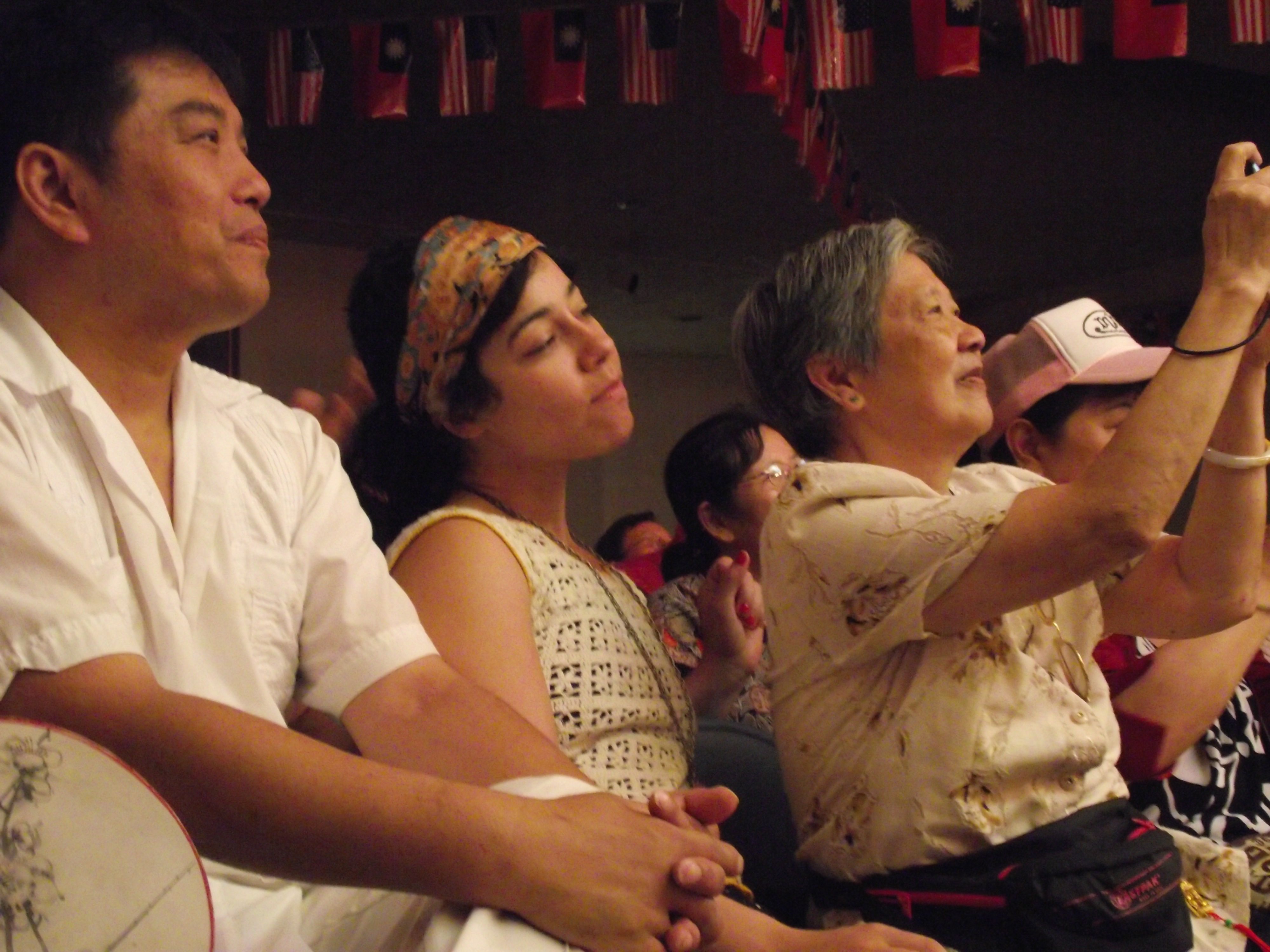
LYNNE SACHS-MARK STREET, At Home in the Darkness / USA / English text and dialogue / Dur: 4.14”
Text and dialogue: 00:00:07 Intertitle: We’ve always encouraged our daughters to walk on well-lit streets for safety. 00:00:14 Intertitle: But we also want them to embrace the dark.
00:00:22 Intertitle: Dad visits his museum of nocturnal artifacts.
00:00:26 Intertitle:The girls have better things to do.
00:00:31 Audio dialogue: All right Mr. Street. Now, I would like to ask you, what do you think you are going to do with this little movie?
00:02:06 Intertitle: Mom wants to go moon watching.
00:02:12 Intertitle: So the girls come along.
00:02:13 Audio dialogue: what´s your idea of darkness or why did you choose this idea of darkness? – Can you tell her how to look too?
– Oh I see it!
– See the sort of cloudy area.
– See it right in the middle, but don’t look right in the middle. Look around.
– Oh yeah.
– They separate from the cloud.
00:02:51 Audio dialogue: Can we look? Girls do you want to see it? Maya! I will pick her up. See two stars? Wait.
00:03:07 Audio dialogue: Where do I look into?
THREE QUESTIONS FOR GENERAL INFORMATION, JUST ANSWER WITH A PAIR OF LINES PLEASE
Where did you film your darkness?
New York City at the Fulton Fish Market; our backyard in Brooklyn; on the Gowanus Canal in Brooklyn; Brooklyn Heights, Brooklyn; Manhattan; and, Freshkills Park in Staten Island
How was the shooting or let me know some details about it?
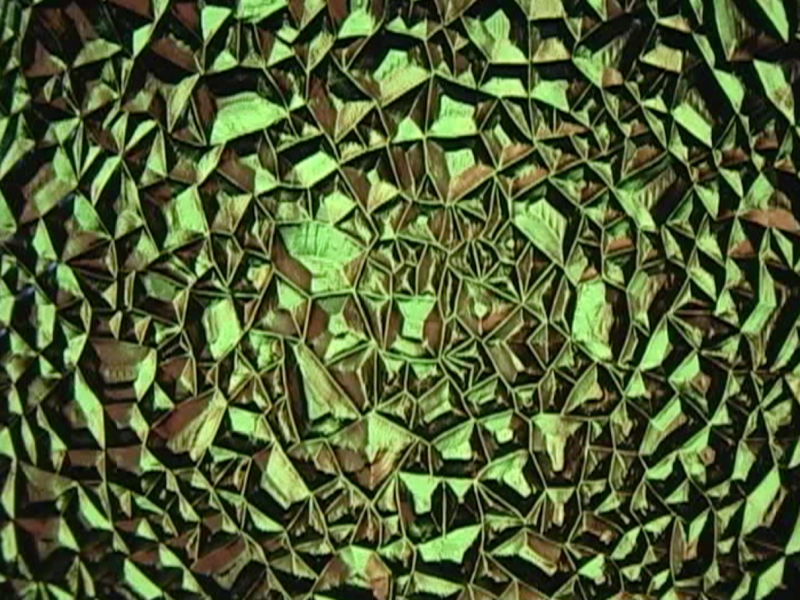
Mark Street carried a camera almost every day for a year, and this footage comes from that period. Part of it is shot through a corrugated filter purchased at an office supply store. Lynne spent a year trying to see and photograph the stars in the heart of New York City.
What´s your idea of darkness or why did you choose this idea of darkness?
Mark: “I worked the night shift in a restaurant 30 years ago and it changed my life. Children are afraid of the dark, famously. Maybe learning to embrace the nightly shroud is all they need to know; to appreciate the mystery and subtlety of the sublime and primal.”
Lynne: “We take our daughters to places in the city that are dark enough to see a planet or a very bright star. We want them to appreciate the other worlds beyond our own. We hope they will always find their way when they feel apprehensive in the dark.”
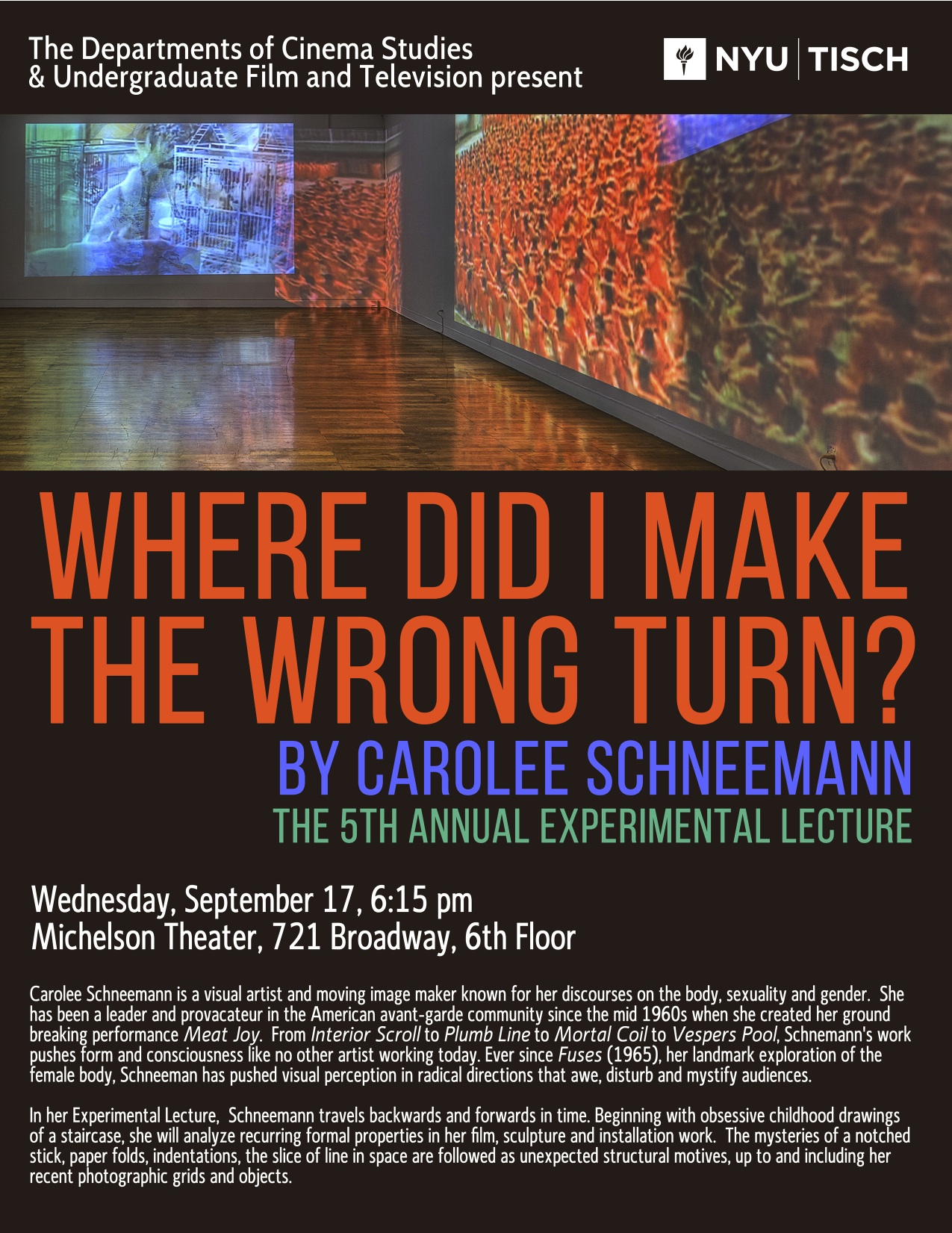
Where Did I Make the Wrong Turn? The 5th Annual Experimental Lecture by Carolee Schneemann
Wednesday, September 17, 2014
Curated by Lynne Sachs
Carolee Schneemann is a visual artist and moving image maker known for her discourses on the body, sexuality and gender. She has been a leader and provocateur in the American avant-garde community since the mid 1960s when she created her ground breaking performance Meat Joy. From Interior Scroll to Plumb Line to Mortal Coil to Vespers Pool, Schneemann’s work pushes form and consciousness like no other artist working today. Ever since Fuses (1965), her landmark exploration of the female body, Schneemann has pushed visual perception in radical directions that awe, disturb and mystify audiences.
In her Experimental Lecture, Schneemann travels backwards and forwards in time. Beginning with obsessive childhood drawings of a staircase, she will analyze recurring formal properties in her film, sculpture and installation work. The mysteries of a notched stick, paper folds, indentations, the slice of line in space are followed as unexpected structural motives, up to and including her recent photographic grids and objects.
Co-sponsored by NYU’s Department of Undergraduate Film and Television and the Department of Cinema Studies.
2014 International Festival of Documentary Cinema: Encounter with Other Cinema, Quito, Ecuador
Scenic Ruptures: Experimental Documentaries from New York City and Los Angeles
Co-curated by Alexandra Cuesta and Lynne Sachs
Synopsis for NYC program by Lynne Sachs
Ten New York City artists ranging in age from 24 to 80 bring their personal impressions of the place they call home to Quito’s EDOCS screen. This program of experimental documentaries transforms a “bigger than life” metropolis into a place full of delicate, sometimes dirty, occasionally shiny images that will certainly complicate the more famous, monolithic images created by the mainstream media. Because these films are shot “from the inside out” by people who know the city well and are sensitive to the weave of the urban fabric, they reveal a fresh, intimate view from the ground up. Where and how do we engage with the city’s flora and fauna in our daily lives? How might the omnipresent trash of the streets reveal something about our quotidian rituals? When does the simple task of walking along a sidewalk become a surprising piece of radical performance art? Where are the silent, hidden workers who make the things we wear everyday? Together we will answer these questions during and after the screening of the NYC section of “Scenic Ruptures”.
Dear Alexandra,
Some people believe that the world looks better through “rose colored glasses.” I am not sure if this expression has any meaning in the Spanish language, but in English the implication is that these glasses are able to trick us into thinking that the bad things in life are not really so bad. It’s a kind of strange, optically generated false optimism. I’ve been living in New York City for eighteen years, and I must admit that ever since I arrived here I refused to put on those proverbial rose-colored glasses. I always wanted to see the dust, grime and shine of this major metropolis for what is was, in the same way that I truly prefer to see people without makeup, finding the lines of aging far more compelling than the smooth surface of cosmetics. I suppose this is the reason I make experimental films. I don’t want to cover up the brilliant, scary, intimidating surprises that the world offers, but instead prefer to look head-on with my eyes open. In this program, I have chosen a suite of short films that I think will show you and the audience at EDOCS a side of New York City that is rarely depicted through those big mainstream Hollywood movies that travel so easily across borders.
We will start the program by diving into the under water world. “Living Fossil” reveals a thriving beach side “community” of sea crabs, lovingly deposited on our local coastline by the Atlantic Ocean. Then in “Fulton Fish Market” you’ll see the nocturnal activities of the workers at the renowned, though now sadly defunct, South Street Seaport market. Next we will visit the cluttered, colorful streets of Manhattan by way of the object animations in “Early 12 New York Song”. Here, we will look at the magnificent detritus of the sidewalks, transforming the trash of our city into an archeologist’s treasure box. After that, we will take a pastoral detour to Central Park where, believe it or not, you will witness the Christmas time ritual of SantaCon. “Extinction Becomes Us”is an exquisite film portrait ofanannual, anarchic event in which thousands of New Yorkers prance around the city dressed like, you guessed it, Santa Claus. Oh, and I better add, they are all drunk! From this nonsensical, apolitical reverie, we will move onto something far more dialectic. “Capitalism: Child Labor” is radical in every sense of the word. The film is an aggressive visual diatribe against all that New York City has come to represent in the world arena. The next two films on our visual journey will take us downtown to Chinatown. Through “Chinaman’s Suitcase”, we’ll experience a riveting, darkly humorous performance piece in which a somber traveler from Chinatown walks all the way to Midtown and then back again. As a finale to his low-key pedestrian adventure, our protagonist delivers one of the most outlandish film finales I have ever seen. “Night Scene New York” then carries us on a breathtaking, yet contemplative magic carpet ride through the same neighborhood. Moving north just a few blocks to the starkly different Lower East Side, “Bitch Beauty” gives us a candid portrait of a downtown woman artist who has lived a life full of heartbreak, disappointment, creativity and revelation. Our last image of New York City is my own “Drift and Bough”. We had an extremely cold and long winter this season, so I thought the only way I could reckon with its challenges was to make a movie.
I hope you will enjoy this cinematic voyage through the place I call home. I certainly had a great time designing your itinerary.
All the best,
Lynne Sachs
Quito, 9 de marzo, 2014
Querida Lynne,
Gracias por tu carta. Tengo mucha curiosidad de ver a Nueva York a través de los filmes que has escogido. Me identifico con tu mirada porque, al igual que tú, pienso que la esencia de un lugar esta detrás de lo que se percibe en el exterior. Como dices, hay infinitas perspectivas desde donde explorar una ciudad, y en mi caso el entendimiento de Los Ángeles está ligado a mi contexto personal. Viví ahí durante siete años, siendo este el tiempo más largo en que he vivido en un solo lugar. Desde temprana edad me he trasladado de ciudad en ciudad, llevando conmigo diversas culturas. Por esto, mi relación con el lugar es una experiencia simultánea entre pertenecer y ver desde afuera, adaptarme y observar, siempre desde algún lugar en la mitad. Es desde ahí desde donde construyo mi descripción de esta gran urbe. Una mirada que se fija en los márgenes, en los intersticios y en lo invisible. Paradójicamente también es la razón por la que mi práctica e interés en el cine están enraizadas en lo experimental, justamente porque este proceso permite construir perspectivas permeables y abrir significados.
Al no disponer de un centro definido en un amplio territorio, una de las características más impactantes del imaginario urbano de Los Ángeles es el urban sprawl, “esparcimiento urbano”. Partiendo de esto, el espacio de la ciudad y de sus habitantes no se puede definir con fronteras trazables. Es así que he creado un programa de obras poéticas y personales que crean una descripción abierta y ambigua, proponiendo una oportunidad para imaginar a la ciudad. Además, esta selección servirá como una introducción a las diversas tradiciones experimentales en el cine.
El primer filme en el programa, My Tears Are Dry, es un homenaje al cineasta experimental Bruce Baillie y también una oda al ideal californiano: palmeras y el cielo azul en una tarde de descanso. Después, observaremos la decadencia suburbana en un paisaje nocturno donde imágenes de películas viejas evocan al pasado en el filme Vineland. Continuando con un paisaje diurno, estaremos visualmente estimulados con la gran cantidad de vallas, sonidos, música y letreros que aparecen en Get Out of the Car, una sinfonía de ciudad del gran cineasta Thom Andersen, quien describe la nostalgia en el presente y visibiliza el maquillaje multicultural de la ciudad. Seguimos con The Electric Embrace, un estudio formal y estético filmado en película blanco y negro de alto contraste, sobre estructuras eléctricas e industriales particulares en las afueras de la ciudad. Continuamos con Everybody’s Nuts, un filme-ensayo sobre la presencia forzada de corporaciones agrícolas en la tierra de un trabajador mexicano, en un filme altamente personal. Regresamos a la urbe con mi película Piensa en mí, que incluí porque visibiliza a la gente que utiliza el transporte público mientras recorre la ciudad de Este a Oeste en una trayectoria visual. Finalmente, salimos a la frontera y nos encontramos en el muro que separa a Estados Unidos con México en Crossings, una obra altamente experimental del cineasta Robert Fenz.
Este es el recorrido. Por supuesto, es una pequeña muestra en un inmenso territorio. Siempre habrá más que mostrar y quedan infinitas miradas por incluir. Sin embargo espero que disfrutes de este fragmento y que te dé una idea de esta gran ciudad.
Con mucho cariño,
Alexandra Cuesta
NYC Program:
Living Fossil
dir. Sean Hanley 16mm, 2 min., 2014
It is springtime along the coast of New York’s Long Island. Thousands of horseshoe crabs spawn on beaches under the glow of the full moon. This film offers a brief glimpse of a 450 million year old ritual. (SH)
Sean is an educator and filmmaker pursing experiments in the documentary genre. His work as a director and/or cinematographer has shown at the Museum of Modern Art, the Ann Arbor Film Festival, the Images Festival, the Pacific Film Archive, the Vancouver International Film Festival, FLEXfest, and the Black Maria Film + Video Festival. He is the Assistant Director of Mono No Aware, an annual exhibition of expanded cinema and film-installation.
Fulton Fish Market
dir. Mark Street
35mm, sound, color, 12 min., 2003
Until 2005, New York City’s Fulton Fish Market exploded with movement, sound and color between the hours of midnight and 7 AM, Monday through Friday in lower Manhattan. Fishhooks flailed, crates were ripped open, and tens of thousands of fish were arrayed in ice as discerning retailers and restaurant owners made the rounds. This lyrical, visually vibrant documentary reveals a profoundly tactile material world tucked away in the shadow of the digital age. (MS)
Mark Street graduated from Bard College (B.A, 1986) and the San Francisco Art Institute (M.F.A., 1992). He has shown work in the New York Museum of Modern Art Cineprobe series (1991, 1994), at Anthology Film Archives (1993, 2006, 2009), Millennium (1990,1996), and the San Francisco Cinematheque (1986, 1992, 2009). His work has appeared at the Tribeca (5 times), Sundance, Rotterdam, New York, London, San Francisco, New York Underground, Sarajevo, Viennale, Ourense (Spain), Mill Valley, South by Southwest, and other film festivals.
Early 12 New York Song
dir. Amanda Katz and Anthony Svatek Video, 3 min. 2012
Objects and sounds collected on an early morning walk through Brooklyn, New York billow against a sun-struck floor. The smallest parts of the city are up for grabs. (AK & AS)
Amanda Katz is a professional film editor who teaches 16mm filmmaking at the Mono No Aware workshops in Brooklyn, NY. She remains endlessly inspired by the urban environment, and this is reflected in her personal work. Georg Anthony Svatek is a documentary cinematographer and producer who seeks to inspire estrangement from the familiar and create a sense of awe within the viewer. Aside from working at BBC World as a shooter and researcher, Anthony is currently co-creating an experimental documentary tentatively titled The BQE Project.
Extinction Becomes Us
dir. Josh Lewis Super-8mm, color, silent, 3 min., 2010
Shot at Christmas time in New York’s Central Park with Lewis’ last roll of Super 8mm Kodachrome, this film was born from a chance encounter with the post-irony holiday bacchanalia known as SantaCon. Sad to say, it is no longer possible to process this exquisite film stock, so the very look of the film is a relic from an age gone by. (LS & JL)
Working freely in abstraction, documentary, performance, and narrative filmmaking, Josh Lewis creates work that engages with the mechanics of human need, guilt, desire and transcendence. His film-based work revolves heavily around chemical experimentation and an unconventional, often derelict approach to darkroom procedures. He is a firm believer in manual knowledge and the transformative potential of an immediate bodily struggle with the elements of the natural world.
Capitalism: Child Labor
dir. Ken Jacobs Video, color, sound, 14 min., 200
“A stereograph celebrating factory production of thread. Many bobbins of thread coil in a great sky-lit factory space, the many machines manned by a handful of people. Manned? Some are children. I activate the double-photograph, composer Rick Reed suggests the machine din. Your heart bleeding for the kids? The children will surely be rescued and by their bosses! ‘Boys,’ they will say, ‘Have we got a war for you.” (KJ)
“For more than fifty years, Ken Jacobs’s work has inspired the sense of awe and mystery that nineteenth-century audiences must have felt when confronting motion pictures for the first time. Jacobs’s lifelong project has been the aesthetic, social, and physical critique of projected images.” (Museum of Modern Art) In 1967, with the involvement of his wife Florence and many others aspiring to a democratic -rather than demagogic- cinema, he created The Millennium Film Workshop in New York City. Honors include the Maya Deren Award of The American Film Institute, the Guggenheim Award and a special Rockefeller Foundation grant.
Chinaman’s Suitcase
Dir. Miao Jiaxin Performance Video, 6 min., 2012
In a performance, the artist Miao Jiaxin brings hanging ducks to Zuccotti Park (famous as the site of Occupy Wall Street) in downtown Manhattan, sprays them with color, hangs them back in Chinatown. (LS)
From his early practice, starting as a street photographer tracking Shanghai prostitutes to the development of a pseudo-transvestite web celebrity, Miao Jiaxin has evolved an edgy and protean practice. Beginning in Shanghai, Miao then immigrated to New York, expanding his view of urban streets towards a more conceptual public stage, where his works travel across different media.
Night Scene New York
dir. Jem Cohen 16mm, 10 min., 2009
A sleepwalker’s circumnavigation becomes a chance observation of New York’s Chinatown. (JC)
Jem Cohen is a filmmaker especially known for his observational portraits of urban landscapes, blending of media formats (16mm, Super 8, video) and collaborations with music artists. Cohen found the mainstream Hollywood film industry incompatible with his sociopolitical and artistic views. By applying the do-it-yourself ethos of Punk Rock to his filmmaking approach, he crafted a distinct style in his films.
Bitch Beauty
dir. M.M. Serra 16mm & Super 8mm, 7 min. 2011
This film is anexperimental documentary profiling the life of Anne Hanavan, who experienced the underground scene in the East Village of the Eighties. It is a time capsule of addiction, the perils of street prostitution, and subsequent renewal through cathartic self-expression. (MS)
Filmmaker, writer, teacher, curator, director of the Film-Makers’ Co-op and all around dynamo, MM Serra has been central to the East Village experimental film scene for two decades. Her raven-black Betty Page hairdo, starlet sunglasses, sexpot leather pants and outrageous laughter make her one of downtown’s most unforgettable personalities.
Drift and Bough
dir. Lynne Sach Super 8mm, 6 min. 2014
“I spent a morning this winter in Central Park shooting film in the snow. The stark black lines of the trees against the whiteness creates the sensation of a painter’s chiaroscuro, or a monochromatic tableau-vivant. When I am holding my Super 8mm camera, I am able to see these graphic explosions of dark and light.” (LS)
Lynne Sachs makes films, videos, installations and web projects that explore the intricate relationship between personal observations and broader historical experiences by weaving together poetry, collage, painting, politics and layered sound design.
Drift and Bough dir. Lynne Sachs Super 8mm, 6 min. 2014
Music by Stephen Vitiello + Molly Berg “Back Again” from the album “Between You and the Shapes you Take” Courtesy 12k
“I spent a morning this winter in Central Park shooting film in the snow. The stark black lines of the trees against the whiteness creates the sensation of a painter’s chiaroscuro, or a monochromatic tableau-vivant. When I am holding my Super 8mm camera, I am able to see these graphic explosions of dark and light.” — Lynne Sachs
“There I was disarmed by the quiet, unassuming succession of art-photo shots of snowy Central Park, which seemed pretty ordinary, but which again drifted little by little into a richer and richer collection of elements, such as the lines that did various things like scale shifting and–with the lines of duck trails through the ice-pack–lines that “drew” a kind of benign insinuation into a cold world…which seemed to help effect an insinuation into my affect in my reception of the film. By the time the film ends I have been drawn, partially consciously, into a meditative state that I wanted to resist at its beginning. The ending–with the people moving about and the bicycle taxi and camera both drifting to the right–was a slight break in that mood, perhaps because of the people moving about and doing things, but it still maintains some of the meditative mood through my realization that a barely perceptible superimposition of nothing very distinguishable has occurred mysteriously for the first and only time in the film.” – Ron Green, in letter to filmmaker Lynne Sachs
Extra Long Twin
an original live film performance
conceived and directed by Lynne Sachs
Written and performed by: Kamau Agyeman, Lorenca Alencar, Diana Li, Hanna Lindeyer, Sofia Monestier, Dan Steven
March 11, 2014
Pratt Institute
Brooklyn, New York
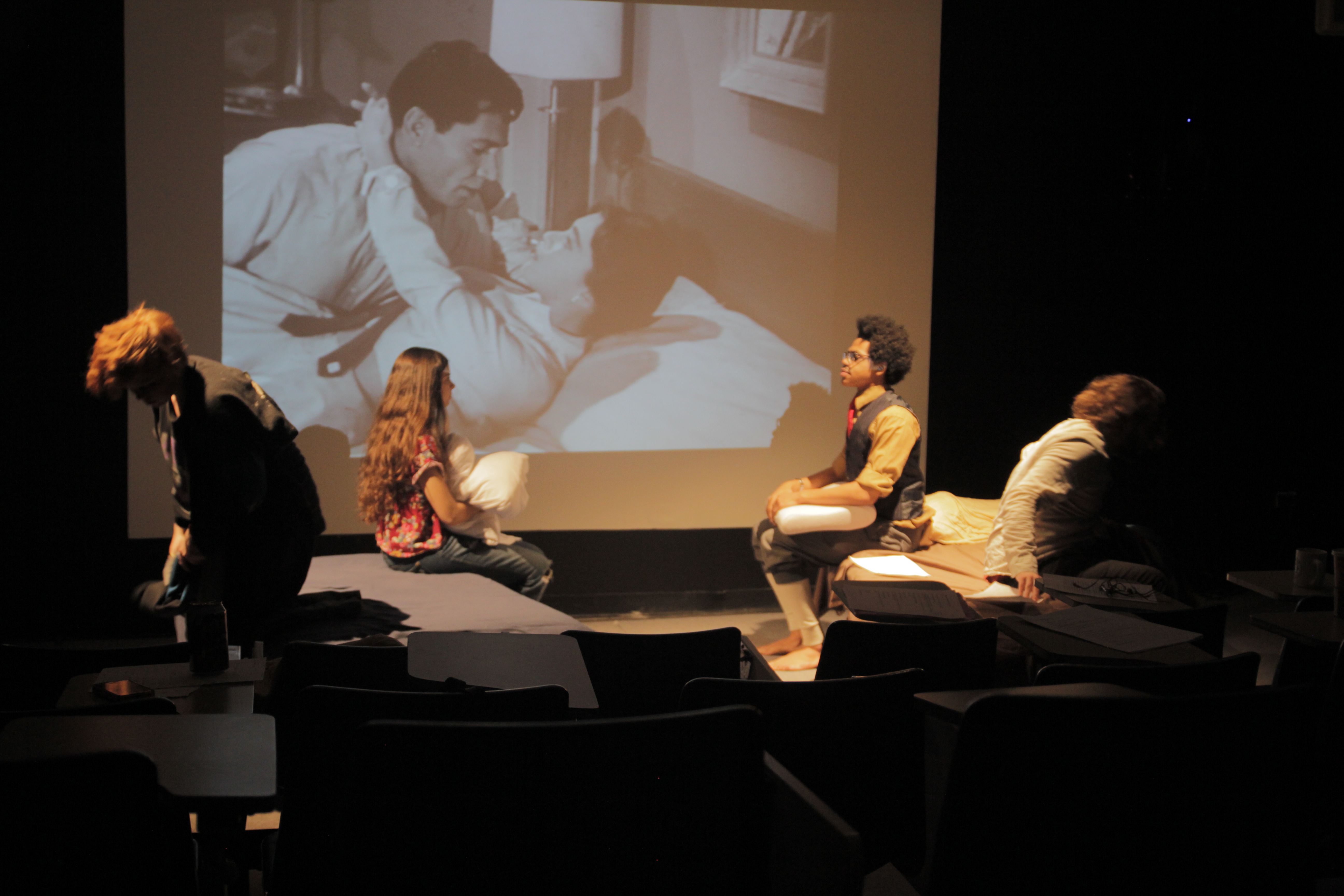
In the spirit of Pratt Institute’s RIDE (Risk/Dare/Experiment) series, filmmaker Lynne Sachs and a group of six Pratt film students present their own short film-performance as a finale to Lynne’s “Taking a Documentary Detour” talk. During a workshop held in the film department at Pratt Institute, each student created a composite character built from both autobiography and fictional discoveries. Expanding upon the theme of the bed in Lynne’s hybrid film Your Day Is My Night, the students utilize the bed as a starting point for inquiry into the personal and collective experience of living in a New York City apartment or dormitory. Archival film footage of people in their beds throughout the history of cinema forms a backdrop to the entire performance.
Co-sponsored by the Pratt School of Art and Design, the Department of Humanities and Media Studies, the student club Film Cult and Bomb Magazine.
Produced by Jacki Ochs and Mary Billyou
Found footage provided Craig Baldwin
Performance Documentation by Donald Daedalus and Brandon Brown
Editing by Sean Hanley
RISK/DARE/EXPERIMENT
Educational Episodes at Pratt Institute
RiDE is a new series of events organized by the Pratt Institute’s School of Art and Design that features invited artists, as well as Pratt faculty, staff, and students across departments and disciplines.
RiDE sessions bring various processes related to artistic and design practices into a visible arena while illustrating the unforeseen outcomes of experimentation—ventures that open up new paths, abandoned projects that lead to new insights, and other types of risks that inspire adventurous ideas and actions.
In Taking a Documentary Detour, Sachs discusses her associative, non-literal approach to images in the context of her new enthusiasm for mixing fiction and non-fiction modes of production. Recently, after 25 years of making experimental documentaries, Sachs noticed something that turned all her ideas about filmmaking upside down. She was working on Your Day is My Night , her film about Chinese immigrants in New York, when she came to see that every time she asked a person to talk in front of her camera, they were performing for her rather than revealing something completely honest about their lives. The very process of recording guaranteed that some aspect of the project would be artificial. “I had to think of a way to subvert the rigidity of both the documentary and the narrative model, so I decided to invite the people in my film to work with me to make the film, to become my collaborators.” In her lecture, Sachs will explore the austere yet playful dramaturgy of French theater director Ariane Mnouchkine (Theatre du Soleil), Augusto Boal’s Theater of the Oppressed, the Wooster Group’s high-tech stage shenanigans, and Chinese director Jia Zhangke’s mixing of artifice and truth. She shows clips from her own films, including The Last Happy Day (2009), Wind in Our Hair (2010) and Your Day is My Night .
Hanna Lindeyer, Sofia Monestier, Kamau Agyeman, Dan Stevens in EXTRA LONG TWIN directed by Lynne Sachs
BOMB Magazine published this interview with Lynne by poet Paolo Javier today. They talk about poetry, documentary, politics and personal histories. BOMB is a sponsor of the RiDE (Risk, Dare, Experiment) lecture.
Transcript from EXTRA LONG TWIN live performance with film:
Extra Long Twin – RiDE (Risk/ Dare/ Experiment)
Conceived and directed by Lynne Sachs
Written and performed by: Kamau Agyeman, Lorenca Alencar, Diana Li, Hanna Lindeyer, Sofia Monestier, Dan Steven
During Lynne Sachs’s RiDE workshop, each student created a composite character that combine autobiography and fictional discoveries. Sachs asked each student performer to imagine a situation from the past that might have occurred in the room where they currently live. Each participant then wrote and performed a monologue that could have been spoken by the fictional person who lived in the room.
Play begins. Performer 1 sits on the left and across from her, Performer 2. Each holding a pillow and blanket.
Performer 1 gently folds out her sheet and starts arranging her bed while Performer 2 flops down.
Performer 1
I’m not going to answer that, they keep insisting. I haven’t even gone to any of them. I hate these High School reunions.
Performer 1 continues to tweak her space making sure her sheets are even
Performer 1 (Cont’d)
I can’t find anything in this place. It would help if someone else was looking here. That they have clothes for both men and women. But it’s okay you know. He pays me and kinda reminds me of my daughter. Haven’t been able to sleep very well. Vera the soul cleanser she says that my mom use to be a slave owner in a past life. And that’s why I can’t sleep cause the spirits are haunting me. She gave me this…
Performer 1 grabs an unmarked spray and starts spraying around her
Performer 1 (Cont’d)
It’s to keep them from bothering me. My daughter thinks it’s all bullshit, at least that’s what she says when we talk over the phone.
Performer 2 lets out an audible groan.
Performer 2
Ahh… Shit… A who the hell wakes up on 3 PM on Saturday. I’m up I’m good alright. Aw shit, fuck, fuck.
Performer 2 stands up from bed
Performer 2 (Cont’d)
Alright, A-Alright buddy you need to go. (Motioning for the person in her bed to leave) Yeah here, here take your shoe. Upstairs. Alright I’ll call I promise… Yeah totally… Aw Fuck. Shit what time is it?… Fuck me… Aw God… Aw fucking shit… Too early for this.
COU—COUGHHH Performer 2 tries to clear their through before dialing a phone.
Performer 2 (On Phone)
Hey Pops what’s up man…Yeah Dad whaddup… Yeah I’m good. Yeah I just got back from the gym… Yeah 17 reps now, Yeah I’m jacked as shit man… Yeah you watch out man I come back and pfffft… Yeah hold on let me put you on speaker for a second.
Places the phone down
Performer 2 (Cont’d)
How ya doing Dad. I’m good. Totally Man. Yeah college is the shit man. Like totally. Oh yeah I’ve made some good guy friends this year. Yeah I was gonna talk to you about sports this year I don’t think… No I’m good I’m good. I don’t think I really wanna play… No this is not like Berkeley again Dad I told you I can’t I can’t talk about this right now. I don’t want to be like you and every other guy in the family, I just want to do some art, what’s so wrong about that? Look dude you gotta’ hear me out…fuck…Look I don’t want to talk about this right now. I’m about to go out with some friends. Aha we are about to go to a club… Yeah condoms pfffft… Of course I have condoms, yeah dude totally, I’ll tell you about all the bitches dad… aha yeah, yeah… look dad I’ll call you later. I really don’t want to talk about this right now… ahah yeah, bye now.
Performer 2 dials a new number
Performer 2 (There is a noticeable change in their voice)
Oh hey girl… I’m excited for tonight. oh yeah okay alright good luck and don’t fuck it up bye.
Performer 2 lays back down on the bed.
Two new performers —who we’ll call 3 and 4— enter stage and sit across from one another, one on each bed.
Performers 1 and 2 exit stage
Performer 3
March 11th 2014. Not a lot of UFO’s today. Lotta’ planes but no UFO’s. Oh my lord it’s beautiful out. All the children on the street are just playing.
Something catches their attention and Performer 3 motions at it
Performer 3
Get down! Get! Get! God damn cat… Hey you see this guy? God damn city worker is back here with the sign. Don’t he know we’re in here. Hey uh are you hungry? I was gonna make some pasta if you want…you’re not hungry… alright I was gonna make some pasta anyway.
Performer 3 moves across stage to a kitchen
Performer 3
Hey uh… Did you remember to take the water down from the roof…that’s alright I guess I won’t make pasta… (Walking back to her bedroom window) I don’t know what that girl does all day she just doesn’t do anything, just stays in her room. There he is again. You see this guy? Every single goddamn week! I been here 40 years ain’t no man from the city gonna take this away from me. This is my home.
Performer 4 sits up in bed
AHHH — Pounds her fists into her bed
Performer 4
You cosmically conceited cunt, I hate you! Just can’t you stop talking. Just talktalktalktalktalktalk all day long… Just SHUT UP. Just quiet that’s all I ask for, for a little bit out of everyday. Just a little bit. Just the fucking worst
Performer 4 paces back and forth
Performer 4 (Cont’d)
It’s so fucking loud in this place all the time. All the time that goddam fucking cat – jesus christ. The cat snores, fuck. No I didn’t get the water off the fucking roof. Why am I supposed to melt snow to get water. This apartment is disgusting. It’s trashed. There’s always some shit around. Cause you never leave, she never cleans up. She watches kids out the window like a fucking pedophile… FUCK… Just want her to leave, think it might kill her though. She steps outside she might trip and fall on her fat ass. So sick of not being able to find anything. It’s not even my shit… Cat poops on my bed one more time I might punt it out the window.
Performer 4 takes a gulp of water to wash down a pill before pulling the covers over.
To new performers— 5 and 6— enter stage while 3 and 4 exit
Performer 5
Ah Juan, you like jazz yeah? Father loves jazz, think I got it from him. My father’s a West African jazz musician and he’s always played African and American jazz. He actually left me a crate full of old records that I haven’t had a chance to look through yet, so that’s what I plan on doing tonight. (Starts to flip though the records) You like Miles Davis yeah? Bitches Brew— That is a nice cover.
Performer 5 pulls out the record… Bwfooof…blows the dust off it. Then takes a very DEEP breath in.
Performer 5 (Cont’d)
Smells like Jazz.
Puts the record on then starts snapping their fingers and bobbing their head to the music
Performer 5 (Cont’d)
That is good music. It’s really good to relax to. My mother’s really into her culture too and I promised her that um, I would wake up before I wake up and before I go to sleep so if you don’t mind
Proceeds to do tai-chi
Performer 5
That’s enough of that.
Picks up the crate of records and puts them away.
Performer 5
You know Juan, I was thinking, if I were to die, hopefully I’d make it to the upper 80’s. If I were to die I would go to heaven, hopefully I’d make it to heaven, if when I get to heaven, if God was a DJ, which I’m sure God would be a DJ, and God were playing music which I’m sure would be jazz and God was playing Miles Davis. If I had to pick one Miles Davis song that God was playing, now I’m not an atheist, but I think if God were to play a Miles Davis song it would be… So What… Good night.
Performer 6
Wait did you know that there’s this rare species of orchids; that their leaves resembles fungus so that flies come to pollenate them. Don’t you think that’s incredible. Like flies. Wouldn’t you think that bees or birds would come to pollenate flowers, you know beautiful creatures, but these orchids actually want flies to pollenate them. Would you take me to China to see them? I think that’d be great. I would love to see those orchids.
Performer 6 rises and begins to adjust the plants in the room
Performer 6
Do you ever think about ants. How they’re so small and they could live inside my plants and climb over all of my leaves. I wish I was as small as an ant so I could live inside my flowers. I’m sorry they’re everywhere, but you don’t mind right. I’ll clean it up.
Getting to know the vibrant film community here in Beijing through the China Women’s Film Festival and the community organizers at the Crossroads Center. The opening ceremony begins this evening.
China Women’s Film Festival opened with stirring images about women’s continued struggles worldwide. I was particularly impressed by the forthright address by the UN representative in China who had an extraordinary grasp of the issues. Saw a great film on the Chinese lesbian film director from the 1940s Esther Eng.
Post #3 from Beijing: I meet an art critic Wang Zhang Wen at the regular weekly NGO meeting at the Crossroads Center in the city’s old hutong neighborhood. In response to my dislike for the famous but rather commercial 798 art district, he offers to take me to the Songzhuang art district on the edge of the city. We go the next day and I discover an incredible live/work area with studios for 5000 artists! If only NYC could offer a community like this that is affordable too! We visit Wang’s cabaret style cafe The Chestnut Tree where he hosts experimental films and readings. He offers coffee from from dainty cups and saucers and tells us that the cafe is named for the Chestnut Tree Cafe in 1984. This was the place, according to the character Winston, where thought criminals spent their time. “Under the spreading Chestnut Tree I sold you and you sold me.”
Post #4 from Beijing: Today I screened Your Day Is My Night to a great, really insightful audience in Bejing as part of the China Women’s Film Festival. later I was on a panel with four brilliant feminist film scholars. What a wonderful, feisty, compassionate group including Yang Hui from Beijing Film Academy, Yushan Huang from Taiwan University of the Arts, Yu Min Mei and Juan Jiang. We all responded to the question “What is a woman’s film?” And on our journey talked about the films of Barbara Hammer, Trinh T Minh-ha, Yvonne Rainer, Susan Sontag, Jane Campion, and many others
China post #6: Shanghai screening tonight of my 1991 film “The House of Science” at a women’s bookstore. All thanks to the nuanced translations of Lesley Yiping Chin who is so capable of articulating the poetry of Gertrude Stein and other mysteries in Chinese.
I saw Liu Chuang “Segmented Landscape” at the Shanghai Art Biennale and was transformed by the way that the work made me think about security, safety, complacency and fear.
Whether you see Chinatown as a place or a state of mind, a purgatory or an oasis, a shrinking immigrant community or an expanding business district, its presence in our cinematic imagination is enormous. Situated north of NYC’s Wall Street, east of the Tombs, west of the old Jewish Ghetto, and mostly south of Canal, the neighborhood that began in the mid-19th century has maintained its distinct character – savory, hardscrabble, succulent, and cacophonous.
WE LANDED/I WAS BORN/PASSING BY explores a provocative array of images of the community from the 1940s to the present day. By embracing the perspectives of grassroots activists, performance artists, conceptual visionaries, home-movie makers, punk horror devotees, and journalists, the series raises questions about how we look at the neighborhood and how its representations have reciprocally shaped our imagination. Who lived in Chinatown at the beginning? Who lives there now? How and why has it changed? What language best describes Chinatown? Whose voices do we hear?
Inspired by the fabulously observant 1960s poetry of Chinatown’s very own Frances Chung, this 5-part film series looks at the streets, desires, shops, and struggles of an iconic community that only begins to reveal its stories when the most obvious outer layers are pulled back. Comprised of documentaries, archival footage, home videos, literary readings, photography, and performance, the series rings in Chinese New Year by opening a window to both early and contemporary conditions. Through it all, geography, memory, and observation compress and expand the imaginary and the real of this beloved section of the Big Apple.
Curated by Lesley Yiping Qin, Lynne Sachs, Bo Wang, and Xin Zhou.
Anthology Film Archives | 32 Second Ave, New York, NY 10003 | (212) 505-5181
Fri, Jan 24 7:30pm | PROGRAM 1: TWO COLD NIGHTS IN NEW YORK CHINATOWN
1月24日(週五)晚7:30 |影片集1:紐約華埠之兩個寒夜
Part of the Chinatown Film Project commissioned by the Museum of Chinese in America, Jem Cohen’s NIGHT SCENE IN NEW YORK is a close nocturnal observation of the people and lights of this urban milieu. In contrast to Cohen’s beautifully shot yet vernacular street scenes, conceptual artist Gordon Matta-Clark’s black-and-white video work expresses a more distant gaze on the Chinatown community, offering an ambivalent and imaginary take on the same cityscape. VOYEUR CHINATOWN (1971) Dir. Gordon Matta-Clark | NIGHT SCENE NEW YORK (2009) Dir. Jem Cohen | A reading Annie Ling from Crazy Melon and Chinese Apple: The Poems of Frances Chung.
Sat, Jan 25 6:00pm | PROGRAM 2: THE TOUCH OF AN EYE 1月25日(週六)晚6:00 |影片集2:視線的觸覺
The view from above – the bird’s eye view – can be omniscient and detached, playful and wicked. Shelly Silver’s TOUCH, a restrained yet endlessly sensual ciné-essay on loss and presence, takes us on a journey that begins with the psyche of an enigmatic son who returns as both insider and outsider to a Chinatown from which he escaped. Celebrated 1960s community activist Tom Tam also shot irrepressibly inventive experimental films of the world he fought so hard to defend. Tam’s pixilated glimpse of a boy on a roof gives voice to a child’s sense of flight and the realization that he will never have wings. BOY ON CHINATOWN ROOF (1970s) Dir. Tom Tam | TOUCH (2013) Dir. Shelly Silver. Followed by a reception.
Sat, Jan 25 8:00pm | PROGRAM 3: CHINATOWN PROBLEMATICS
1月25日(週六)晚8:00 |影片集3:華埠問題考
How can realities be engaged if the idea of a place has already been mediated by a sense of otherness and displacement? It all began with the name “Chinatown”, a specific place that can be found in many cities of the world. THE TROUBLE WITH CHINATOWN, originally aired on WNBC in the 1970s was a survey of social and educational problems. A 2013 CNN “exposé” on the “dirty, dangerous firetrap” at 81 Bowery Street sparked the eviction of the tenants who couldn’t afford another place to live. The reactions today can be linked to Tom Tam’s silent film TOURIST BUSES, GO HOME! that protests against Chinatown tourism. Shelly Silver’s 5 LESSONS AND 9 QUESTIONS ABOUT CHINATOWN interweaves fragments of neighborhood lives with questions of history, change, a sense of belonging and home. Followed by an informal talk by photographer Corky Lee, an activist in the Asian and Pacific American community for the past forty years. WNBC-TV THE TROUBLE WITH CHINATOWN (1970) Dir. Bill Turque | TOURIST BUSES, GO HOME! (1969) Dir. Tom Tam | 5 LESSONS & 9 QUESTIONS ABOUT CHINATOWN (2011) Dir. Shelly Silver | CNN report on 81 Bowery St: “Eviction & Protest” (2013) | Photos and artist talk by Corky Lee.
Sun, Jan 26 5:00pm | PROGRAM 4: BOWERY STREET PLAYBILL
1月26日(週日)晚5:00 | 影片集4:包厘街戲單
Quotidian life is provoked and embodied in this eclectic playbill of Chinatown. We begin with a quietly rueful look at the closing-down of MUSIC PALACE, the last Chinatown movie theater on Bowery Street. In contrast is MAKING CHINATOWN, a reenactment parody of Polanski’s CHINATOWN and its profiling LA Chinatown as a lawless enclave. From the upfront self-mocking of PAPER SON, to two lesbians munching fortune cookie messages in I AM STARVING, to following grocery shoppers home for dinner in THE TRAINED CHINESE TONGUE, everyday experiences constantly negotiate the personal. Interspersed are two historical documentations of Chinese New Years in the 40s and 60s. Chinatown-born photojournalist Alan Chin will provide his vision of the neighborhood through his candid, sharply rendered insider’s eye. MUSIC PALACE (2005) Dir. Eric Lin| MAKING CHINATOWN Pt. 7 (2012) by Ming Wong | I AM STARVING (1998) Dir. Yau Ching | THE TRAINED CHINESE TONGUE (1994) Dir. Laurie Wen | YEAR OF THE RAT (1963) Dir. Jon Wing Lum | Photo slideshow by Alan Chin.
Sun, Jan 26 7:30pm | PROGRAM 5: A TIME OF TWO SQUARE MILES
1月26日(周日)晚7:30 | 影片集5:方圆二英里的時光
Mixing live readings and videos, this program investigates domestic and public spaces in the two square miles of Chinatown. Shanghai-born performance artist Jiaxin Miao carries his suitcase between Chinatown and Zuccotti Park and then boldly sprays colors onto roast ducks. Galvanized by flickering and fast forward motions, revered political activist Tom Tam’s intimate camera work captures the communal life of a health fair in Columbus Park. Lynne Sachs’ hybrid documentary is set in shift-bed rooms in Chinatown where performers transform their everyday movements into dance and are tenderly challenged to leave their shared, self-supporting world. After traveling ten thousand miles to get here, what is it like to go five miles further? Followed by readings of work by novelist Ha Jin and poet Frances Chung, who belong to two different generations of Chinese-American writers. A reading by Herb Tam from a novel Ha Jin | CHINATOWN STREET FESTIVAL (1970s) Dir. Tom Tam | CHINAMAN’S SUITCASE (2011) Featuring Jiaxin Miao | YOUR DAY IS MY NIGHT (2013) Dir. Lynne Sachs | A reading by Paolo Javier of poetry by Frances Chung.
“The impulse in my work is always somewhere between the playground and the academy. I think of myself as an idea person but also someone who loves thinking through materials. I pay serious attention to play – investigating the codes of behavior, body language, power games, gender roles and the codes involved in how we perform who we are and how we operate in society. Female subjectivity, the mundane, the unfinished, the improvised and the discourses of fantasy and desire are subjects of my work. The characters in my films are often stand-ins for myself- outsiders who are on their own path. Lately my work serves as a “memory aid” and a form of (self) preservation, to order the eccentric and diverse materials I have accumulated from travels, pilgrimages, quests, intellectual tours and research trips. Sometimes ordinary, sometimes unusual, collected images and objects offer solace about the past and help predict the future. In BETHLEHEM (2009) I work through my personal archive of accumulated footage, editing together memories like a string of pearls with a bittersweet memory of home. The APE OF NATURE (2010) is about memory and the uncanny. The performers, under hypnosis, communicate with “the other side,” telling the tale of a dystopic future informed by the power of suggestion and the unconscious.”
“Same Stream Twice” by Lynne Sachs with Maya Street-Sachs 4 min. 16mm b & w and color on DVD, 2012
Director’s Choice Award – Black Maria Film Festival 2013
My daughter’s name is Maya. I’ve been told that the word maya means illusion in Hindu philosophy. In 2001, I photographed her at six years old, spinning like a top around me. Even then, I realized that her childhood was not something I could grasp but rather – like the wind – something I could feel tenderly brushing across my cheek. Eleven years later, I pull out my 16mm Bolex camera once again and she allows me to film her – different but somehow the same.
Screenings: Black Maria Film Festival, 2013; Camára Lucída Festival de Ciné 2021; Museum of the Moving Image 2021
This film is currently only available with a password. Please write to info@lynnesachs.com to request access.
Dir. Lynne Sachs 64 min., HD, Color, Stereo & 5.1 Surround, 2013 Chinese, English & Spanish with English Subtitles
This complete film is currently only available with a password. Please write to info@lynnesachs.com to request access. Currently streaming on MUBI at: https://mubi.com/films/your-day-is-my-night
While living in a “shift-bed” apartment in the heart of New York City’s Chinatown, a household of immigrants share their stories of personal and political upheaval.
Synopsis:
Since the early days of New York’s Lower East Side tenement houses, working class people have shared beds, making such spaces a fundamental part of immigrant life. Initially documented in Jacob Riis’ now controversial late 19th Century photography, a “shift-bed” is an actual bed that is shared by people who are neither in the same family nor in a relationship. Simply put, it’s an economic necessity brought on by the challenges of urban existence. Such a bed can become a remarkable catalyst for storytelling as absolute strangers become de facto confidants.
In this provocative, hybrid documentary, the audience joins a present-day household of immigrants living together in a shift-bed apartment in the heart of Chinatown. Seven characters (ages 58-78) play themselves through autobiographical monologues, verité conversations, and theatrical movement pieces. Retired seamstresses Ellen Ho and Sheut Hing Lee recount growing up in China during the turmoil of the 1950s when their families faced violence and separation under Chairman Mao’s revolutionary, yet authoritarian regime. Yun Xiu Huang, a nightclub owner from Fujian Province, reveals his journey to the United States through the complicated economy of the “snakehead” system, facing an uphill battle as he starts over in a new city.
With each “performance” of their present, the characters illuminate both the joys and tragedies of their past. As the bed transforms into a stage, the film reveals the collective history of Chinese immigrants in the United States, a story not often documented. Further, the intimate cinematography and immersive sound design carry us into the dreams and memories of the performers, bringing the audience into a community often considered closed off to non-Chinese speakers. Through it all, “Your Day is My Night” addresses issues of privacy, intimacy, and urban life in relationship to this familiar item of household furniture.
Press:
“Each person’s tale is brief but impactful, intercut with graceful set pieces and grainy footage that allows time to visualize, absorb and contemplate. Your Day is My Night is a cultural window with many dimensions, building empathy with viewers in this politically charged environment.” – Fatima Sheriff, One Room with a View
“A strikingly handsome, meditative work: a mixture of reportage, dreams, memories and playacting, which immerses you in an entire world that you might unknowingly pass on the corner of Hester Street, unable to guess what’s behind the fifth-floor windows.” –The Nation
“Beautifully blending anecdotes, evocative audio textures, and an ensemble of elderly immigrant performers/participants, Your Day is My Night is sumptuous and exploratory, bringing us a Chinatown we have never seen before in film.” – San Diego Asian Film Festival
“Using beds as a metaphor for privacy, intimacy and power, the film explores intercultural and trans-historical dialogue.” – The Washington Post
“Director Lynne Sachs’ Your Day is My Night shines a light on a little documented sub-culture in New York’s Chinatown, chronicling immigrants who live communally in buildings where there’s a shift-bed system. One person returns from a stint of overnight work to sleep in a bed just vacated by another person off to their day job. The form of this documentary is as compelling as its content. It is a beautiful collage of different media and music intricately edited together with the often emotional testimony of the immigrants.” – BBC
“New York’s Chinatown, a place as much spectral as real, flickers and flares into life in this singular hybrid of documentary, performance piece and cine-monologue. Seven working-class, immigrant residents of a shift-bed apartment play versions of themselves, recalling violent upheavals, long journeys and endless yearnings.” – Sight and Sound
“This is no ordinary documentary. This is film, a canvas, a moving poem. It never stands still. It moves and it moves us.” – Kennebec Journal/ Morning Star (centralmaine.com)
Director’s Statement:
“I’ve spent most of my life as an artist thinking about how to convey my observations of the world around me in the visual and aural language of film. I experiment with my perception of reality by embracing an associative, non-literal approach to images, and it is through this artistic exploration that I grapple with the natural, social, cultural and political phenomena that I witness through the lens of my camera. I began the Your Day is My Night project in late 2009 when I was talking with a relative on his 90th birthday. A Brooklyn resident for his entire life, Uncle Bob has haunting memories of December 16, 1960 when a jet crashed near his Brooklyn home. Trying to imagine the devastation in this busy neighborhood, I asked him how many people on the ground had died. ‘It was hard to know because there were so many hot bed houses in that area. They all burned and no one knew precisely who lived there.’ What are hot bed houses? I asked him. ‘Those are homes for poor people who work and can’t afford to rent their own apartments. They share beds in shifts.’ I reconstructed the moment of the crash, creating a mental image of the inhabitants of these apartments as they tried to gather their few personal possessions and escape the fire. Which unlucky person would awake from a deep sleep after a long shift at the port to the sound of the crash and the heat of the fire? After that conversation, I discovered that 19th Century photographer Jacob Riis documented numerous examples of these beds, and it is through his lens that I was able to begin my research. In Riis’ How the Other Half Lives, he exposed to the rest of America the poor, immigrant experience he witnessed in downtown New York City. I later read The Snakehead: An Epic Tale of the Chinatown Underworld and the American Dream by Patrick Radden Keefe to give me a more current sense of the situation in current day Chinatown.
I think of the bed as an extension of the earth. For most of us, we sleep on the same mattress every night; our beds take on the shape of our bodies, like a fossil where we leave our mark for posterity. During the Revolutionary War, George Washington slept in many borrowed beds and now, hundreds of years later, his brief presence is celebrated from one New England town to the next: ‘George Washington Slept Here’ has a kind of strange signification and prestige. But for transients, people who use hotels, and the homeless a bed is no more than a borrowed place to sleep. An animal that borrows its home from another species is called an inquiline, and in Spanish inquilina is the word for a renter. Conceptual artist and sculptor Félix González-Torres photographed a series of empty, unmade beds to commemorate the life and death of his partner, as if the very sheets that remained could remind him and us of the body and the man he had loved.
Since January of 2011, I have been writing, researching, and shooting material for my ‘bed project’ in the Chinatown neighborhood of New York City. I found a group of non-professional Chinese performer/participants (ages 58 – 78) and have worked almost weekly with them ever since. During our workshops, they each exchanged their own stories around domestic life, immigration and personal-political upheaval. None of these people has ever worked in this cross-cultural way, so it is these taped process-oriented conversations that, in the final film, enhance our audience’s sense of the bed – experienced and imagined from profoundly different viewpoints. Next, a written script emerged from our months of shooting documentary images and interviews. Using the interactive model of Augusto Boal’s “Theatre of the Oppressed”, I guided my collective in a “simultaneous dramaturgy”. My performers, crew and, more recently, our live audience, explored the potential for transformation that can come from a dialogue around personal histories and the imagination.
The material I collected during these interviews is the basis for the monologues in Your Day is My Night. In production, I guided my performers through visual scenarios that reveal a bed as a stage on which people manifest who they are at home and who they are in the world. Our shooting took place in two different actual shift-bed apartments located in NYC’s Chinatown. The Chinese participants (several of whom currently live or have actually slept on shift-beds) spoke of family ruptures during the Chinese Cultural Revolution, a mattress excavated from a garbage heap, four men on one bed in Chinatown, amongst a long series of fascinating and haunting bed-related topics.
For inquiries about rentals or purchases please contact the Cinema Guild. For international bookings, please contact Kino Rebelde.
“Your Day is My Night” has been exhibited as a live performance at St. Nicks Alliance in Greenpoint, Brooklyn, New York Public Library in Chinatown, Proteus Gowanus Interdisciplinary Arts Gallery in Brooklyn and University Settlement in Manhattan.” – LS
Cast: Che Chang-Qing, Yi Chun Cao, Yueh Hwa Chan (Linda), Kam Yin Tsui, Yun Xiu Huang, Ellen Ho, Sheut Hing Lee, Veraalba Santa Torres,
Crew: Lynne Sachs (director); Sean Hanley (camera, co-produing and editing); Rojo Robles (co-writer); Catherine Ng and Jenifer Lee (translations); Ethan Mass (camera); Stephen Vitiello (music); Damian Volpe (sound mix) Amanda Katz and Jeff Sisson (sound); Bryan Chang (additional editing and translations); Madeline Youngberg (production assistance)
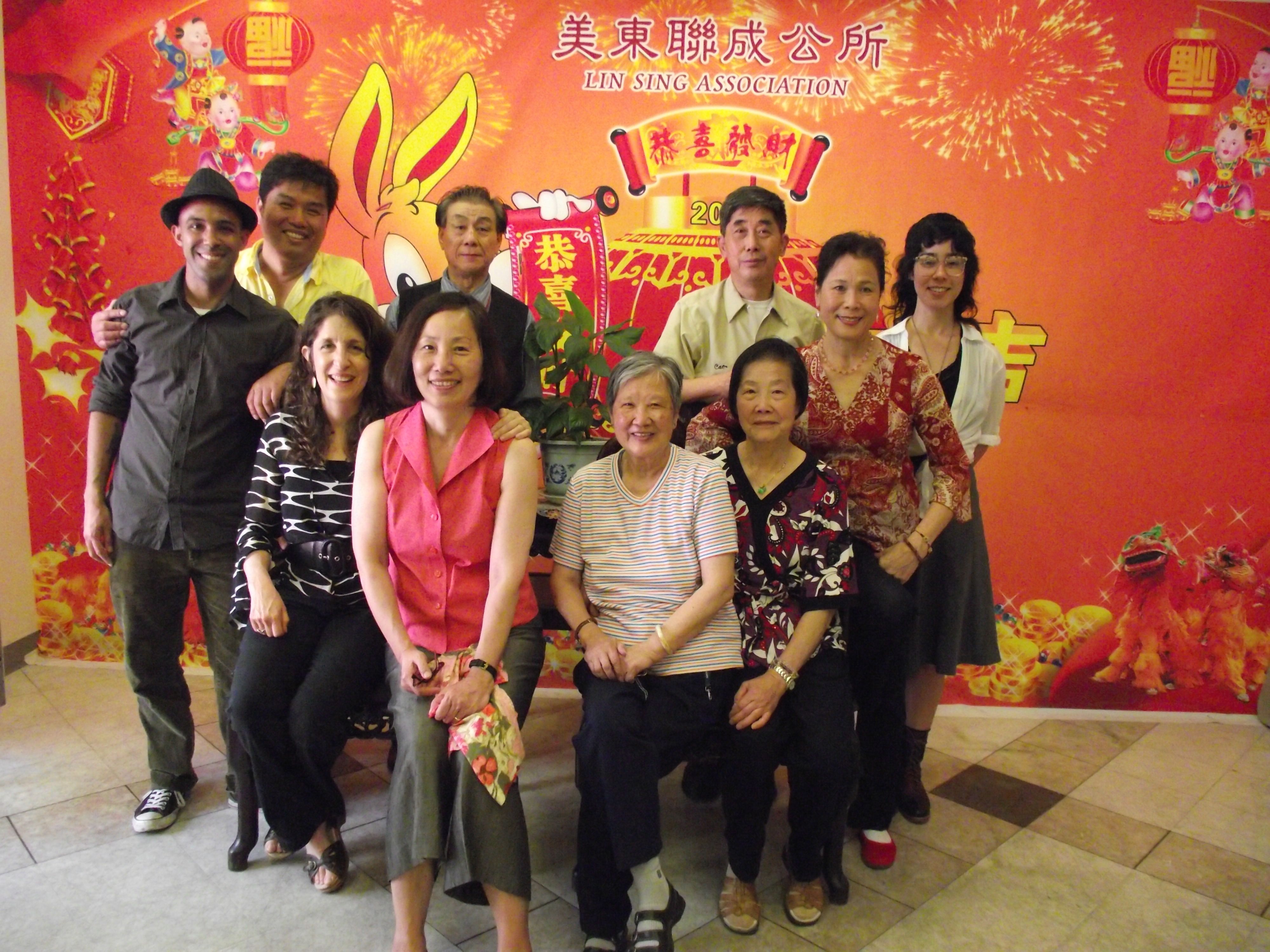
Kam Yin Tsui in Your Day is My NightYour Day is My Night Cast and CrewYun Xiu Huang , Veraalba Santa and Sheut Hing Lee
Kam Yin Tsui and Yun Xiu Huang sing Happy Birthday
“I think of the bed as an extension of the earth,” says experimental documentary filmmaker Lynne Sachs. In YOUR DAY IS MY NIGHT, a moving hybrid documentary/performance piece, the bed becomes stage as immigrant residents of a shift-bed apartment in the heart of Manhattan’s Chinatown are both performers and participants, storytellers and actors. Sharing their experiences as migrants and city dwellers, they reveal the intimacies and complexities of urban living. Filmmaker Lynne Sachs and performers Yi Chun Cao, Linda Y.H. Chan, Chung Qing Che, Ellen Ho, Yun Xiu Huang, and Sheut Hing Lee joined A/P/A Institute at NYU on Thursday, October 2, 2013 for a screening of the film and a conversation moderated by Karen Shimakawa (Chair of Performance Studies at NYU, Tisch School of the Arts). Lesley (Yiping) Qin served as translator.
Selected Screenings:
World Premiere: Museum of Modern Art, Documentary Fortnight 2013 (Feb. 24 & 25, 2013) Senior Planet Exploration Center New York City (April 12, 2013) Ann Arbor Film Festival (March 23, 2013) Athens Film Festival, Athens, Ohio Opening Night April 18, 2013) Workers Unite Film Festival, Cinema Village Theater, New York City (May 10, 2013) Brecht Forum, New York City (May 17, 2013) Union Docs. Brooklyn, New York City (June 8, 2013) Images Film and Video Festival, Toronto (April 19, 2013) Kingsborough College, Brooklyn, New York (May 6, 2013) Maysles Cinema, Fiction-Non Series, NYC, (Sept. 25 & 26, 2013) BorDocs Tijuana Forum Documental, Mexico, Sept., 2013 University of California, Santa Cruz, Nov. 18 and 19, 2013 Pacific Film Archive, Berkeley, California, Nov. 20, 2013. Vancouver Film Festival, 2013 Micheal Moore’s Traverse City Film Festival, Michigan, Best Experimental Film, 2013 New Orleans Film Festival, 2013 San Diego Asian American Film Festival, Best Feature Documentary2013. Center for History, Media & Culture/ Asian Studies, New York University, 2013 Roy & Edna Disney/ CalArtst Theatre (REDCAT), Los Angeles, 2014.