
Interview and edit by Kim Ji-hwan
Kim Ji-hwan (Ji-hwan) :
For readers who may be encountering your work for the first time, could you briefly introduce yourself and your work?
Lynne Sachs (Lynne) :
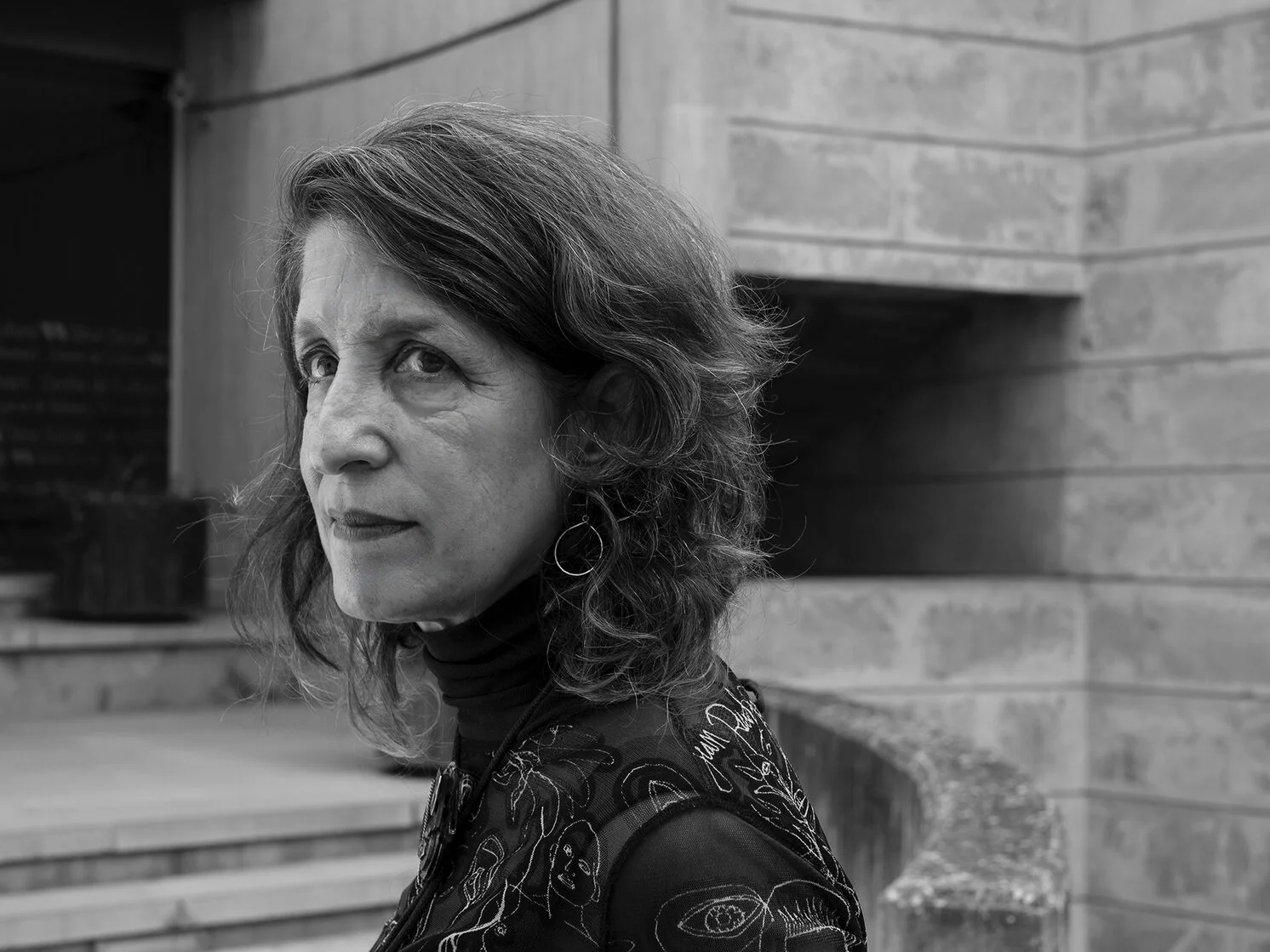
I am a filmmaker and poet living in Brooklyn, New York in the US. Over the last four decades, I have created cinematic works that defy genre through hybrid forms and cross-disciplinary collaboration, incorporating elements of the essay, documentary, performance, and collage. I use letters, archives, diaries, and music to take my audience on a critical journey through reality and memory. Working from a feminist perspective, I investigate connections between the body, the camera, and the materiality of film itself. Retrospectives of my work have been presented at the Museum of the Moving Image, Buenos Aires Festival of Independent Cinema, Cork Film Festival (Ireland), China Women’s Film Festival, Costa Rica IFF, and Ambulante Festival of Documentary (Mexico). My books include Year by Year Poems (Tender Button Press) and Hand Book: A Manual on Performance, Process and the Labor of Laundry (punctum books). Between 2020 and 2022, the Thomas Edison Film Festival, Prismatic Ground Film Festival and Pacific Film Archive recognized my work with lifetime achievement awards in the experimental and documentary fields. In 2026, the San Francisco International Film Festival awarded me with their annual Persistence of Vision Award. I live with my husband Mark Street, also a filmmaker. We have two adult daughters, Maya and Noa Street-Sachs.
Ji-hwan :
– You have been making films for several decades. I believe you still have many works ahead of you. Looking back now, how has your relationship with filmmaking changed over time?
Lynne :
– The longer I have been making films, the more I recognize how vital it is to be part of a community that is supportive and deeply engaged. To my surprise, the internet has allowed all of us to find a global relationship to other artists who are working completely outside the commercial film industry. I’ve worked really closely with people in Mumbai, Montreal, Marseilles and so many other places on the globe. Together, we have created classes, festivals, workshops, and screenings that celebrate both short and long films. Wherever we are, we feel that we are kindred spirits who embrace alternative, underground, experimental and low-budget moving images that originate on celluloid, tape and digital. Thankfully, our commitment to celebrating each other transcends borders – allowing us to work beyond government restrictions and military conflict.
Ji-hwan :
– Experimental cinema takes many forms and often exists outside conventional systems of production and distribution. In this context, how do you see your work situated within the broader landscape of experimental cinema?
Lynne :
– Absolutely everything I do is an experiment. I am closer to a scientist than to a commercial movie director. In the course of my life, I come up with an idea or question or an observation and then I try to answer it by making a film that will become a vessel for my investigation. Let’s consider A Year of Notes and Numbers (2017). That film contains pretty-much everything about me from the year 2017. It’s the mind and the body distilled to a series of animated images of words and numbers. Achingly simple, perhaps, but also precise and comprehensive. It cost me nothing to make. It suggests things about what it is to live in a medicalized society, how it feels to grow old, what are the challenges to being a woman simply living in her own skin. Just as poetry and painting have always spoken to our inner being, people are discovering that the experience of watching a film like this can be a catalyst for a new kind of awareness.
I am grateful to Canyon Cinema, the Film-Makers’ Cooperative, Kino Rebelde, Cinema Guild, Light Cone and Canadian Filmmakers Distribution Center for distributing my films.
Ji-hwan :
– Following that, I’m curious about what you yourself consider to be experimental in your films. How does that experimental quality emerge in your process—through discovery, chance, improvisation, or through the formal language you develop for each work?
Lynne :
– For me, making films is always about taking an aesthetic risk. I push myself to come up with a new vocabulary of images and sounds for each film. There is no template or formula. The materials demand a distinct language that at first may be obscure, but eventually suggest a syntactical series of relationships that work on both intuition and analysis. In my film Swerve (2022), for example, I asked six performers to walk around a market and playground in Queens… speaking in verse written by poet Paolo Javier. The film transforms into an ars poetica/cinematica. My commitment was not to “translating” their words, but rather celebrating their presence as simultaneous insiders and outsiders of mainstream society.
Ji-hwan :
– Your films seem to weave together personal experience, political history, and poetic reflection. How do you think about this relationship in your work?
Lynne :
– This intersection between our internal cosmos and the world beyond has always been a fraught space I wanted to explore through my work. I imagine my domestic universe as a hermetic cosmos that is constantly punctured by uncontrollable events that swirl around it. In Window Work (2000), a woman (who happens to be me) drinks tea, washes a window, and reads the newspaper—simple tasks that somehow suggest a threatening presence within and beyond the image. Sometimes she hears the rhythmic, pulsing symphony of crickets. Other times jangling toys dissolve into the roar of a jet overhead, or children trembling at the sound of thunder. These aural experiences dislocate her space temporally and physically, reminding her that there is a dark world just beyond the one where she lives, the one we, as audience, are seeing. This short film embodies everything you are asking about in a completely non-verbal way, but I have other films that also explore these dynamics, especially Tip of My Tongue (2017), an 80-minute experimental documentary that takes this tension between the personal and the social/political as a starting off point.
Ji-hwan :
– This movement between the intimate and the political seems to open toward others—toward voices, conversations, and shared processes.
At the same time, in films such as The Washing Society, And Then We Marched, A Month of Single Frames, and Carolee, Barbara & Gunvor dialogue, collaboration, and the voices of others seem to play an important role. How did this approach—working through conversation, collaboration, and shared voices—develop in your practice, and what has it opened up in your filmmaking?
Lynne :
– Wow! I have never seen this selection of my films grouped together in this way. You are really making me think about my process from a fresh and exciting perspective.
I began writing poetry in a kind of serious way when I was a teenager. It is still very much at the core of who I am as an artist. But there was a point in my early twenties when I realized that I relished interacting with people, asking questions, knocking on doors of strangers, just generally investigating issues and complex social dynamics with my camera and microphone. I discovered that making films with people gave me an extremely gratifying and collaborative way to be in a range of sustained and revealing dialogues. Just believing in my own endeavor, however small, gave me the “permission” to initiate and record conversations. With And Then We Marched (2017), I talked with my seven-year-old girl neighbor about her experience marching for women’s rights after the election of Donald Trump, a notorious misogynist. With Carolee, Barbara & Gunvor (2017), I simply hung out with my three dear friends and mentors Carolee Schneemann, Barbara Hammer and Gunvor Nelson while carrying my Super 8 camera and an audio recording device. Together we witness the place where each woman finds grounding and spark.
Ji-hwan :
– In your recent film Contractions, the major political shift surrounding abortion rights is revealed not through abstract discourse but through the specific voices of clinic workers, doctors, volunteers, and patients. What led you to foreground personal testimony and everyday language in this film, rather than statistics or commentary?
Lynne :
– In 2023, abortion clinics across the US were closing their doors in the wake of the overturning of Roe v. Wade*. I was feeling a profound sense of shock and disappointment in my country, so I decided to go back to my own home state of Tennessee to make a film. I am neither an academic nor a politician. I made the film Contractions (2024) because I needed to find a way to evoke the anguish I was feeling, not just the disturbing facts and statistics.
In Memphis, Tennessee, I brought together 14 reproductive rights activists—mostly women but also a few male allies—to perform with their backs to the camera in a unified expression of anger and sadness. In tandem with my filming of this collective gesture, I listened to two women… Contractions is our collective witnessing of a troubled time in which women are losing their ability to control what happens to their own bodies.
Ji-hwan :
– While watching your films, I often feel that they explore memory in a broad sense. If this resonates with you, what draws you to cinema as a medium for exploring memory, and how do you understand the nature of memory itself?
Lynne :
– That is a very interesting and insightful question. I think memory is like a primary color for me. It is the pigment that almost always appears in my films, even when I don’t think I need it. I am fascinated by both the precision and the inaccuracy of memory. How we search for material from the past is as important as what we find. Sigmund Freud believed that the impetus for a dream is often to be found in the events of the day preceding the dream, which he called the “day residue.” Ten years ago, I spent a day with my mother shooting Super 8mm film in my childhood home in Memphis. Like a dream, the film Day Residue (2016), which I made with her that day, evokes a simultaneous present and a past.
Ji-hwan :
– If memory is one of the core pigments in your work, then form—how images, text, and voice are arranged—seems to become the structure through which that memory is experienced.
In your films, image, text, and voice are often intricately intertwined. Rather than simply explaining each other, they sometimes create gaps, resonances, or echoes. How do you think about the relationship between image, text, and voice in your work, especially in terms of how they interact, diverge, or create meaning together?
Lynne :
– I appreciate your sensitivity to the formal structure of my films. I think for some viewers my celebration of fissures may seem very disconcerting because the editing patterns are so unfamiliar. For me, a “cut” in a film is very similar to a line break in a poem. I cannot move from one image to the next as a result of a narrative logic like a plot point, or an obvious cause and effect. I need the shift to function like a synapse and for some kind of energy to occur inside the viewer. This is a form of active participation. Thus, the “gaps,” as you call them, become vessels for thought and engagement to bring about an awareness of form and content that is very intertwined.
Ji-hwan :
– Throughout your career, you have worked with a wide range of film materials and formats, from Super 8 and 16mm to digital video and found footage. In your work, the material qualities of images often feel very present. How do you think about the relationship between the material form of cinema and the ideas or emotions you want to express? Has your approach to film material changed over time?
Lynne :
– Yes, each of my films investigates the implicit connection between the body (mine, yours, ours), the camera, and the materiality of film itself. Whether a film is explicitly autobiographical or not, it is an extension of my own life in some way. In E•pis•to•lar•y – Letter to Jean Vigo (2021), I send a letter in the form of a film to French director Jean Vigo. I ponder the delicate resonances of his 1933 classic Zero for Conduct, in which a group of school boys wages an anarchist rebellion against their authoritarian teachers. Thinking about the January 6, 2021 assault on the United States Capitol by thousands of right-wing activists, I use found and archival images to ponder how innocent play or calculated protest can turn so quickly into chaos and violence.
All of the material is in black and white, which makes the differences between historical and fictional time much more ambiguous. As you suggest, I certainly want to evoke emotions. I am fully aware of the affective nature of my practice, but I also want these responses to be empowered by the nature of the materials, not just the subject matter.
Ji-hwan :
– What does the early stage of making a film usually look like for you?
Lynne :
– Honestly, I don’t have a formula or template for starting a film, but I will say that I often begin editing from the middle and then move my way back to the beginning and forward to the end. More often than not, the end of the film is truly the last thing that I figure out, so it is the freshest part of the creation.
This is indicative of the non-narrative structure of my work. I often feel that finding a structure is the hardest aspect of the process, or at least the most rigorously taxing part of the experience. This is what keeps me up at night.
Ji-hwan :
– Do you see this process of searching for structure as a way of thinking, or as something that continues even outside the editing process?
Lynne :
– I find a lot of structural solutions in the shower, or by watching films by other filmmakers I admire greatly.
Lynne Sachs by Oscar Fernandez
Interview and edit by Kim Ji-hwan
Interview with Lynne Sachs
Tip of My Tongue (2017)
Window Work (2000)
Ji-hwan :
Your films seem to weave together personal experience, political history, and poetic reflection. How do you think about this relationship in your work?
Lynne :
This intersection between our internal cosmos and the world beyond has always been a fraught space I wanted to explore through my work. I imagine my domestic universe as a hermetic cosmos that is constantly punctured by uncontrollable events that swirl around it. In Window Work (2000), a woman (who happens to be me) drinks tea, washes a window, and reads the newspaper—simple tasks that somehow suggest a threatening presence within and beyond the image. Sometimes she hears the rhythmic, pulsing symphony of crickets. Other times jangling toys dissolve into the roar of a jet overhead, or children trembling at the sound of thunder. These aural experiences dislocate her space temporally and physically, reminding her that there is a dark world just beyond the one where she lives, the one we, as audience, are seeing. This short film embodies everything you are asking about in a completely non-verbal way, but I have other films that also explore these dynamics, especially Tip of My Tongue (2017), an 80-minute experimental documentary that takes this tension between the personal and the social/political as a starting off point.
Ji-hwan :
Following that, I’m curious about what you yourself consider to be experimental in your films. How does that experimental quality emerge in your process—through discovery, chance, improvisation, or through the formal language you develop for each work?
Lynne :
For me, making films is always about taking an aesthetic risk. I push myself to come up with a new vocabulary of images and sounds for each film. There is no template or formula. The materials demand a distinct language that at first may be obscure, but eventually suggest a syntactical series of relationships that work on both intuition and analysis. In my film Swerve (2022), for example, I asked six performers to walk around a market and playground in Queens… speaking in verse written by poet Paolo Javier. The film transforms into an ars poetica/cinematica. My commitment was not to “translating” their words, but rather celebrating their presence as simultaneous insiders and outsiders of mainstream society.
Ji-hwan :
Experimental cinema takes many forms and often exists outside conventional systems of production and distribution. In this context, how do you see your work situated within the broader landscape of experimental cinema?
Lynne :
Absolutely everything I do is an experiment. I am closer to a scientist than to a commercial movie director. In the course of my life, I come up with an idea or question or an observation and then I try to answer it by making a film that will become a vessel for my investigation. Let’s consider A Year of Notes and Numbers (2017). That film contains pretty-much everything about me from the year 2017. It’s the mind and the body distilled to a series of animated images of words and numbers. Achingly simple, perhaps, but also precise and comprehensive. It cost me nothing to make. It suggests things about what it is to live in a medicalized society, how it feels to grow old, what are the challenges to being a woman simply living in her own skin. Just as poetry and painting have always spoken to our inner being, people are discovering that the experience of watching a film like this can be a catalyst for a new kind of awareness.
I am grateful to Canyon Cinema, the Film-Makers’ Cooperative, Kino Rebelde, Cinema Guild, Light Cone and Canadian Filmmakers Distribution Center for distributing my films.
Ji-hwan :
You have been making films for several decades. I believe you still have many works ahead of you. Looking back now, how has your relationship with filmmaking changed over time?
Lynne :
The longer I have been making films, the more I recognize how vital it is to be part of a community that is supportive and deeply engaged. To my surprise, the internet has allowed all of us to find a global relationship to other artists who are working completely outside the commercial film industry. I’ve worked really closely with people in Mumbai, Montreal, Marseilles and so many other places on the globe. Together, we have created classes, festivals, workshops, and screenings that celebrate both short and long films. Wherever we are, we feel that we are kindred spirits who embrace alternative, underground, experimental and low-budget moving images that originate on celluloid, tape and digital. Thankfully, our commitment to celebrating each other transcends borders – allowing us to work beyond government restrictions and military conflict.
Ji-hwan :
This movement between the intimate and the political seems to open toward others—toward voices, conversations, and shared processes.
At the same time, in films such as The Washing Society, And Then We Marched, A Month of Single Frames, and Carolee, Barbara & Gunvor dialogue, collaboration, and the voices of others seem to play an important role. How did this approach—working through conversation, collaboration, and shared voices—develop in your practice, and what has it opened up in your filmmaking?
Lynne :
Wow! I have never seen this selection of my films grouped together in this way. You are really making me think about my process from a fresh and exciting perspective.
I began writing poetry in a kind of serious way when I was a teenager. It is still very much at the core of who I am as an artist. But there was a point in my early twenties when I realized that I relished interacting with people, asking questions, knocking on doors of strangers, just generally investigating issues and complex social dynamics with my camera and microphone. I discovered that making films with people gave me an extremely gratifying and collaborative way to be in a range of sustained and revealing dialogues. Just believing in my own endeavor, however small, gave me the “permission” to initiate and record conversations.
Kim Ji-hwan (Ji-hwan) :
For readers who may be encountering your work for the first time, could you briefly introduce yourself and your work?
Lynne Sachs (Lynne) :
I am a filmmaker and poet living in Brooklyn, New York in the US. Over the last four decades, I have created cinematic works that defy genre through hybrid forms and cross-disciplinary collaboration, incorporating elements of the essay, documentary, performance, and collage. I use letters, archives, diaries, and music to take my audience on a critical journey through reality and memory. Working from a feminist perspective, I investigate connections between the body, the camera, and the materiality of film itself. Retrospectives of my work have been presented at the Museum of the Moving Image, Buenos Aires Festival of Independent Cinema, Cork Film Festival (Ireland), China Women’s Film Festival, Costa Rica IFF, and Ambulante Festival of Documentary (Mexico). My books include Year by Year Poems (Tender Button Press) and Hand Book: A Manual on Performance, Process and the Labor of Laundry (punctum books). Between 2020 and 2022, the Thomas Edison Film Festival, Prismatic Ground Film Festival and Pacific Film Archive recognized my work with lifetime achievement awards in the experimental and documentary fields. In 2026, the San Francisco International Film Festival awarded me with their annual Persistence of Vision Award. I live with my husband Mark Street, also a filmmaker. We have two adult daughters, Maya and Noa Street-Sachs.
Zero for Conduct , dir.Jean Vigo (1933)
Contractions (2024)
Ji-hwan :
In your recent film Contractions, the major political shift surrounding abortion rights is revealed not through abstract discourse but through the specific voices of clinic workers, doctors, volunteers, and patients. What led you to foreground personal testimony and everyday language in this film, rather than statistics or commentary?
Lynne :
In 2023, abortion clinics across the US were closing their doors in the wake of the overturning of Roe v. Wade*. I was feeling a profound sense of shock and disappointment in my country, so I decided to go back to my own home state of Tennessee to make a film. I am neither an academic nor a politician. I made the film Contractions (2024) because I needed to find a way to evoke the anguish I was feeling, not just the disturbing facts and statistics.
In Memphis, Tennessee, I brought together 14 reproductive rights activists—mostly women but also a few male allies—to perform with their backs to the camera in a unified expression of anger and sadness. In tandem with my filming of this collective gesture, I listened to two women… Contractions is our collective witnessing of a troubled time in which women are losing their ability to control what happens to their own bodies.
Ji-hwan :
Throughout your career, you have worked with a wide range of film materials and formats, from Super 8 and 16mm to digital video and found footage. In your work, the material qualities of images often feel very present. How do you think about the relationship between the material form of cinema and the ideas or emotions you want to express? Has your approach to film material changed over time?
Lynne :
Yes, each of my films investigates the implicit connection between the body (mine, yours, ours), the camera, and the materiality of film itself. Whether a film is explicitly autobiographical or not, it is an extension of my own life in some way. In E•pis•to•lar•y – Letter to Jean Vigo (2021), I send a letter in the form of a film to French director Jean Vigo. I ponder the delicate resonances of his 1933 classic Zero for Conduct, in which a group of school boys wages an anarchist rebellion against their authoritarian teachers. Thinking about the January 6, 2021 assault on the United States Capitol by thousands of right-wing activists, I use found and archival images to ponder how innocent play or calculated protest can turn so quickly into chaos and violence.
All of the material is in black and white, which makes the differences between historical and fictional time much more ambiguous. As you suggest, I certainly want to evoke emotions. I am fully aware of the affective nature of my practice, but I also want these responses to be empowered by the nature of the materials, not just the subject matter.
Ji-hwan :
If memory is one of the core pigments in your work, then form—how images, text, and voice are arranged—seems to become the structure through which that memory is experienced.
In your films, image, text, and voice are often intricately intertwined. Rather than simply explaining each other, they sometimes create gaps, resonances, or echoes. How do you think about the relationship between image, text, and voice in your work, especially in terms of how they interact, diverge, or create meaning together?
Lynne :
I appreciate your sensitivity to the formal structure of my films. I think for some viewers my celebration of fissures may seem very disconcerting because the editing patterns are so unfamiliar. For me, a “cut” in a film is very similar to a line break in a poem. I cannot move from one image to the next as a result of a narrative logic like a plot point, or an obvious cause and effect. I need the shift to function like a synapse and for some kind of energy to occur inside the viewer. This is a form of active participation. Thus, the “gaps,” as you call them, become vessels for thought and engagement to bring about an awareness of form and content that is very intertwined.
Ji-hwan :
While watching your films, I often feel that they explore memory in a broad sense. If this resonates with you, what draws you to cinema as a medium for exploring memory, and how do you understand the nature of memory itself?
Lynne :
That is a very interesting and insightful question. I think memory is like a primary color for me. It is the pigment that almost always appears in my films, even when I don’t think I need it. I am fascinated by both the precision and the inaccuracy of memory. How we search for material from the past is as important as what we find. Sigmund Freud believed that the impetus for a dream is often to be found in the events of the day preceding the dream, which he called the “day residue.” Ten years ago, I spent a day with my mother shooting Super 8mm film in my childhood home in Memphis. Like a dream, the film Day Residue (2016), which I made with her that day, evokes a simultaneous present and a past.
Ji-hwan :
In Your Day Is My Night (2013), you closely observe everyday gestures and rhythms rather than dramatic events. What drew you to this way of looking and filming?
Lynne :
Making Your Day Is My Night allowed me to discover New York City in a way that I needed. Around 2011, I decided that I wanted to make films at home for a while so that I could visit my locations often over a longer period of time.
Ji-hwan :
What draws you to these subtle and often overlooked moments, and how does this attention shape your way of observing and filming people? Do you see this attentive gaze toward everyday gestures as an important element throughout your filmmaking?
Lynne :
In this film, I blend autobiographical monologues, intimate conversations, and staged performances in order to observe the lives of Chinese immigrants sharing a “shift-bed” apartment in the heart of Chinatown. My film was shot over one year, so I got to know the people in the film extremely well, even though I don’t speak Chinese and they don’t speak English. I had marvelous, kind translators who became the dearest of friends. Perhaps because I didn’t speak the language of my film participants, I became very sensitive to their physical gestures. There is also a rather practical side to my use of all the close-ups. We were shooting in extremely small apartments. There was very little room to move, so I would use each finger of someone’s hand to express something that might normally be articulated by a full body moving through space.
Ji-hwan :
You have made a large number of works over the years. To be honest, I have not yet seen all of them, but I have seen around twenty. Among them, several films especially stood out to me, including Girl Is Presence, A Month of Single Frames, Carolee, Barbara & Gunvor, Sound of a Shadow, and The Jitters.
Lynne :
I am fascinated by your choice of films that struck a chord for you. My response at this moment is immediate; I could say something else tomorrow. What all of these films share in some way is a sense of intimacy. This might not be evident to everyone who watches them, but I can certainly say that my relationship to the films is visceral and deeply interpersonal, and yet I want them to transcend my own life and offer something to you, my audience.
Both Girl Is Presence (2020) and A Month of Single Frames (2018) explore solitude. During the global pandemic, I collaborated remotely with a poet on the west coast to create the earlier film. Against the uncertain and anxious pandemic atmosphere, inside our domestic space, my daughter Noa in Girl Is Presence arranges and rearranges a collection of small and mysterious things.
In A Month of Single Frames, I explore friend and filmmaker Barbara Hammer’s experience of being alone, long before the pandemic but now seen through those daunting years. I sought an emotional connection between the two of us and with our viewers. Together, we celebrate quotidian things and nature, embracing small details and growing older. Whether on the screen or heard as voice-over, I use words in both films to expand and shape the cinematic cosmos we are witnessing.
Both Sound of a Shadow (2011) and The Jitters (2023) were made with my husband Mark Street who is also a filmmaker. The earlier film is our shared discovery of Japan. While it may not be evident to a viewer, my images are very wabi sabi, observing that which is imperfect, impermanent and incomplete. His camera, in contrast, is drawn to the glitter and newness of urban life. In the later film, we both shimmy nude across a bed while our three 20-year-old water frogs wiggle in a nearby tank, all celebrating who we are independently and together.
Ji-hwan :
You have also collaborated with many artists, including Barbara Hammer, Gunvor Nelson, Carolee Schneemann, Lizzie Olesker, Anne Lesley Selcer, Mark Street, and Sean Hanley. In particular, it is difficult not to ask about your collaboration with Barbara Hammer.
Lynne :
Oh, you have brought up some of the most critical people in my life as an artist. Gunvor was my teacher; Carolee a mentor and friend; Lizzie a 10-year partner on a live performance, a film and most recently a book; Anne Lesley a poet who contributed her writing to a film; Mark my life partner and fellow filmmaker in our XY Chromosome Project. Since you asked specifically about Barbara, I will say that we met in the late 1980s in San Francisco and were immediately drawn to one another. We shared a passion for making short, experimental films. We both eventually moved to New York City where we hung out quite a bit and always attended each other’s screenings.
In the last few months of Barbara’s life, she asked me to come to her home to discuss something she needed to say in person. I immediately faced a complicated set of emotions. I knew that this tête-à-tête would involve some kind of good-bye, but I had no idea that she had decided to share a part of her personal archive, and thus a part of her being on this earth, with me. As I sat at her side, Barbara vividly described to me her 1998 artist residency in Provincetown, Massachusetts. For one month, she lived and made her art in a Cape Cod shack without running water or electricity. While there, she shot 16mm film, made field recordings, and kept a journal. Barbara’s only instructions to me were very simple: “Do absolutely whatever you want with this material.” While writing the text for my own film, the words I placed on the screen came to me in a dream. I quickly realized that this kind of oneiric encounter could become a posthumous continuation of the dialogue I had started with Barbara. Since I would never again be able to speak to her about her life or the ontological nature of cinema or the textures of a sand dune, I would converse with her in A Month of Single Frames (2020). Through my writing, I tried to address Barbara’s celebration of solitude and cinematic embodiment.
Ji-hwan :
In Carolee, Barbara & Gunvor (2017), Barbara Hammer says that ‘a camera you can hold and move with resembles my identity.’ How do you understand the relationship between the camera and the body in her work? Did your conversations or collaborations with her influence your own approach to filmmaking?
Lynne :
I really appreciate your keen listening. You hear a few words spoken briefly in a short film, and you realize that each word holds a power and is there for a reason. In Carolee, Barbara & Gunvor (2017), I asked each woman to speak about her relationship to the camera. Traditionally, our culture tends to examine this machine based on its ability to see women, to frame them, contain them, and objectify them. But for these women, the camera functions like an arm with an eye, an extension of the body that can play, dance, and rebel.
Ji-hwan :
Beyond Barbara Hammer, I would also love to hear any stories you might share about collaborating with other artists.
Lynne :
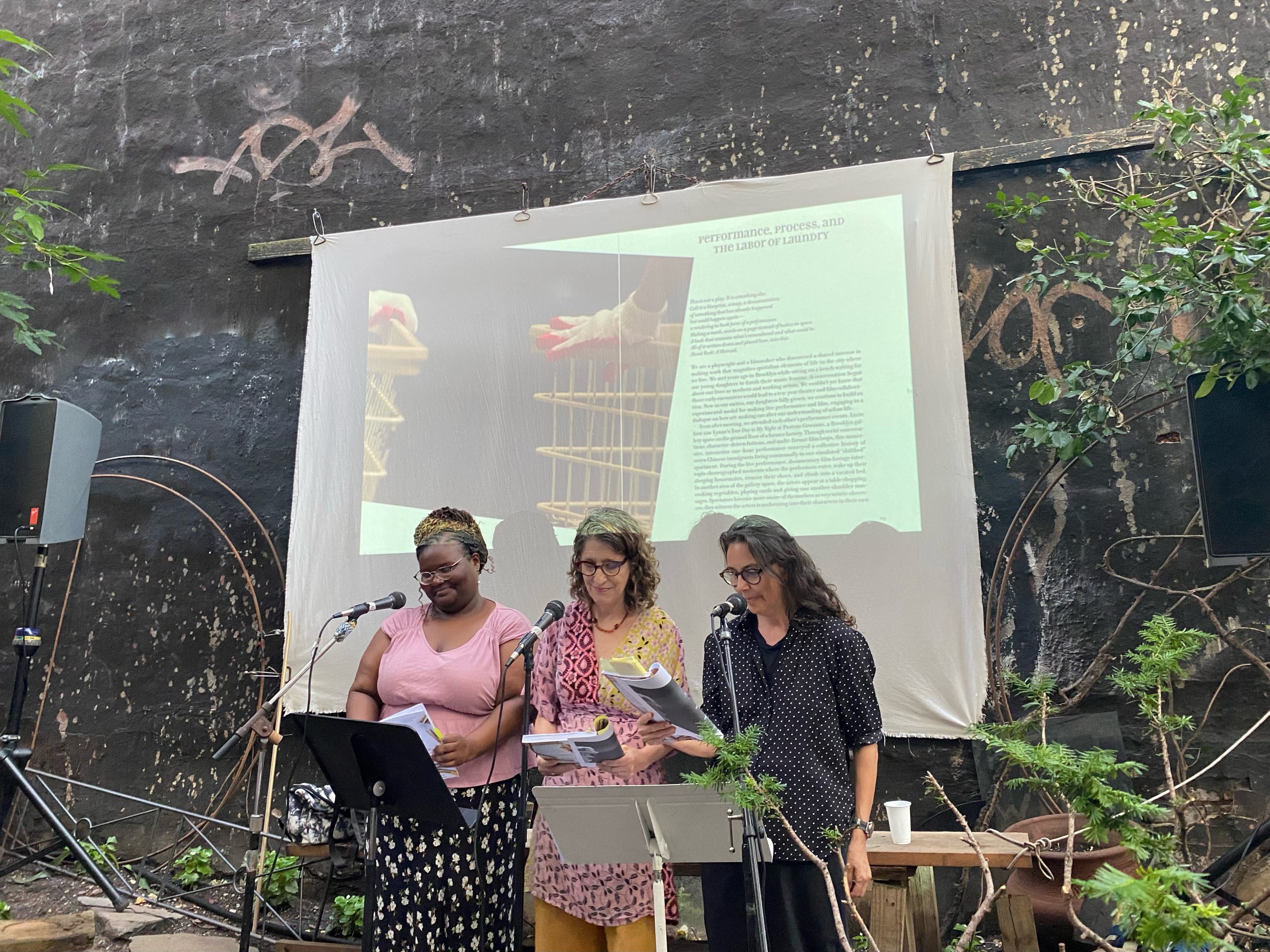
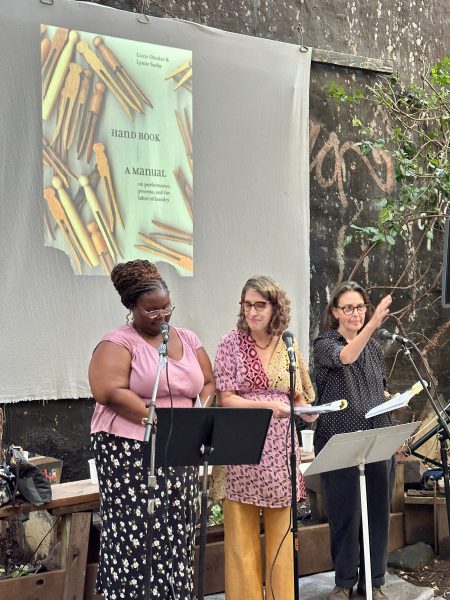
Lizzie Olesker is a playwright. I am a filmmaker and a poet. In 2014, we discovered a shared interest in making work that magnifies quotidian elements of life here in Brooklyn. We first met on a bench waiting for our young daughters to finish their music lessons. A conversation began about our lives as mothers and working artists. We couldn’t yet know that those early encounters would lead to a ten-year theater piece (Every Fold Matters, 2014–17) and film (The Washing Society, 2018) collaboration. Now in our sixties, our daughters fully grown, we continue to build an experimental model for making live performance and film, engaging in a dialogue on how art-making can alter our understanding of urban life.
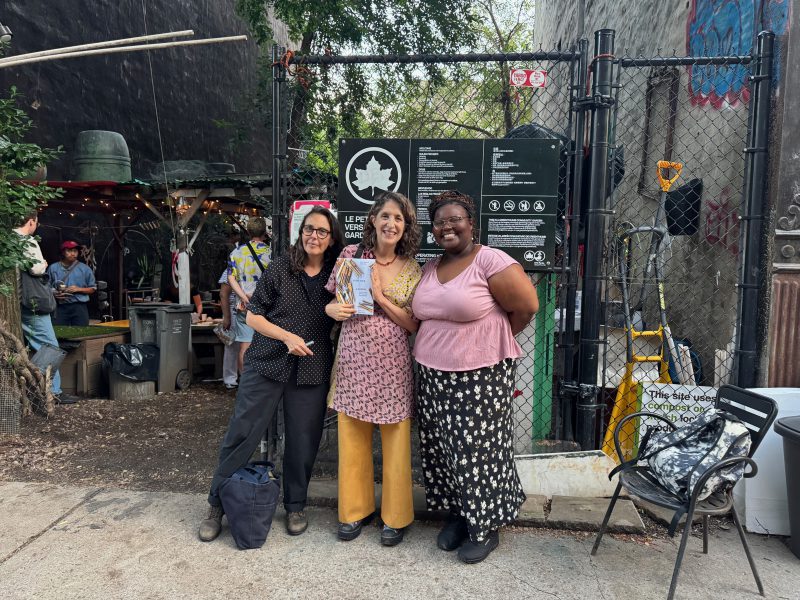
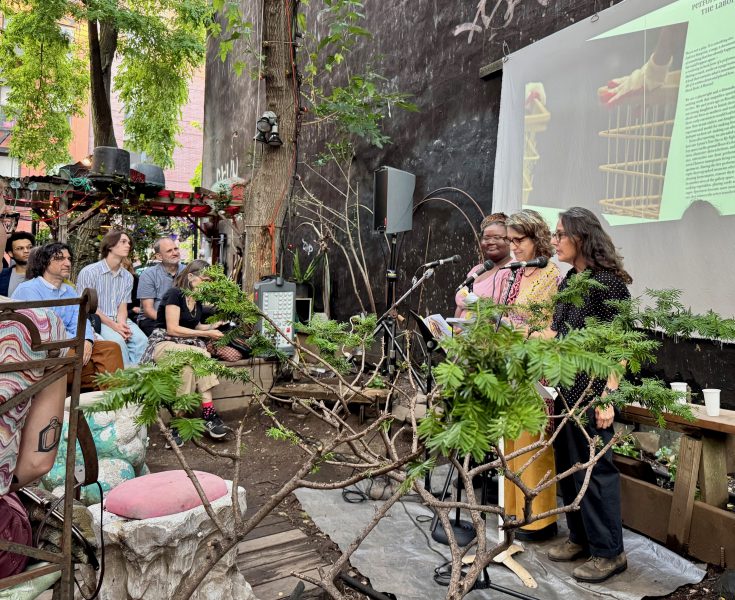
Lizzie first saw my live performance of Your Day Is My Night in a gallery. When I saw Lizzie’s theater work, I was immediately struck by its clarity and inventiveness. Both of us were ready to shake things up, to move in a new direction with our artistic process. We discovered that we each had questions about how to explore unseen, unrecognized, and undervalued work historically done by women. We’ve been making work together ever since. I continue to learn from her each and every day. We know how to support each other, how to disagree and how to listen. In 2025, we co-authored Hand Book: A Manual on Performance, Process and the Labor of Laundry, which was published by punctum books, and which we are taking to bookstores and theaters around the country. Clearly this collaboration is integral to my very existence!
Ji-hwan :
At SPIEXFF, I had the opportunity to curate several of your films, including Photograph of Wind, Same Stream Twice, and Maya at 24. These works seem to observe a body moving through time—almost like a form of long-term cinematic witnessing. How did this ongoing relationship with Maya develop in your filmmaking?
Lynne :
Of course, my daughters Maya and Noa have very much carved out their own lives in this world. Maya is a therapist social worker who works with young people, often in crisis. Noa is an attorney who provides free legal services to low-income individuals who cannot afford private counsel.
I started the cycle of films that includes Photograph of Wind (2006), Same Stream Twice (2016), and Maya at 24 (2021) when Maya was six years old and have filmed with her approximately every six years since that time. Each time she runs in circles around me, our gaze like a tether between our bodies and our eyes.
Of course, she grows older with each iteration, so do I, but she also changes in other ways. Her facial gestures and her body language mature and complicate. Last year, for her 30th birthday, we replayed our game on a mountain top.
I made two films with Noa as well. In Noa, Noa (2006), she grows young, as if time moves backwards. In Girl Is Presence (2020), she plays with and responds to a table full of objects from my past.
Ji-hwan :
These works, shaped over decades, suggest a cinema that returns, again and again—to the body, to time, and to the people closest to you. I am really looking forward to the next film about Maya. I also just came across your film about Noa, and I will definitely watch it.
I understand that you recently received the Maya Deren Award at the Film-Makers’ Cooperative’s 65th anniversary event in New York. Maya Deren is such a significant figure in film history.
Lynne :
Maya Deren—her haunting, exhilarating presence permeates so many things for me. My desire to find my own visual and aural language began when I witnessed her celluloid adventures—always made with absolute candor, from a decidedly female perspective.
Ji-hwan :
What does Maya Deren’s legacy mean to you as a filmmaker? How have her ideas about cinema influenced your own way of working?
Lynne :
My partner Mark Street and I even named our first daughter Maya. In my film Maya at 24, we see her at 24 years old, 24 frames per second, running forward in space, and backwards in time—fully in motion, like her namesake.
The artists who founded the Film-Makers’ Cooperative in 1961 (which happens to be the year of my birth) believed that a radical artmaking practice could speak to the most concerning issues of their day. They had a visceral faith in the medium itself. Through play, experimentation, and the confidence to break every rule in the book—the industry standards—these film artists wanted to spark their audiences to think in new ways about the world as they saw it.
Like Maya Deren herself, they knew they could do it on their own and with very little money. They just needed to support each other. I have tried to follow this ethos in my life as an artist.
Ji-hwan :
Thank you for your time, Lynne, and for this generous conversation.