From our colleagues at Psyche comes a beautiful short film by Lynne Sachs that is a decades-long collaboration with the late pioneering feminist filmmaker Barbara Hammer.
From the Psyche writeup:
In 1998, the pioneering US feminist artist Barbara Hammer (1939-2019) spent a month at an artist residency in Cape Cod, Massachusetts. Feeling “compelled to do absolutely nothing” while living in a dune shack without running water or electricity, Hammer documented her solitude with a journal, a tape recorder and a 16mm film camera. For decades, these materials remained in her personal archive, until, as Hammer was nearing the end of her life in 2018, she entrusted her friend, the celebrated US filmmaker Lynne Sachs, to craft a film with the materials.
For the project, Sachs recorded Hammer reading from her decades-old journals during her final months. Hammer, who is known for her provocative and often controversial artworks, here provides a widely accessible yet distinctive account of solitude, beauty and where these two experiences met during her month on the beach. Her intimate, diaristic account is accompanied by gorgeous nature shots in which she plays with filters and frame rates, seemingly with no other motive than creative exploration. And, connecting past and present through her editing, including the use of words on the screen, Sachs’s treatment provides Hammer’s experience a delicate narrative structure.
In one sense, A Month of Single Frames is a touching coda to Hammer’s life, as the film concludes with the artist revisiting her own poignant meditations on mortality. But, percolating just beneath the surface is a more expansive celebration of artistry, and the artist’s ability to observe, contemplate, refract and give new contours to the world.
In May, 2018, the same year Hammer gave the materials making up this short to Sachs, she attended an event in her honor Temple University, where she spoke to Elisabeth Subrin and Sarah Drury. Read their conversation here, as well as Astra Taylor’s conversation with Hammer from our Winter, 2007 issue. Additionally, Sachs, who was interviewed by Daniel Eagan in 2020, is the subject of a series beginning today at New York’s DCTV.
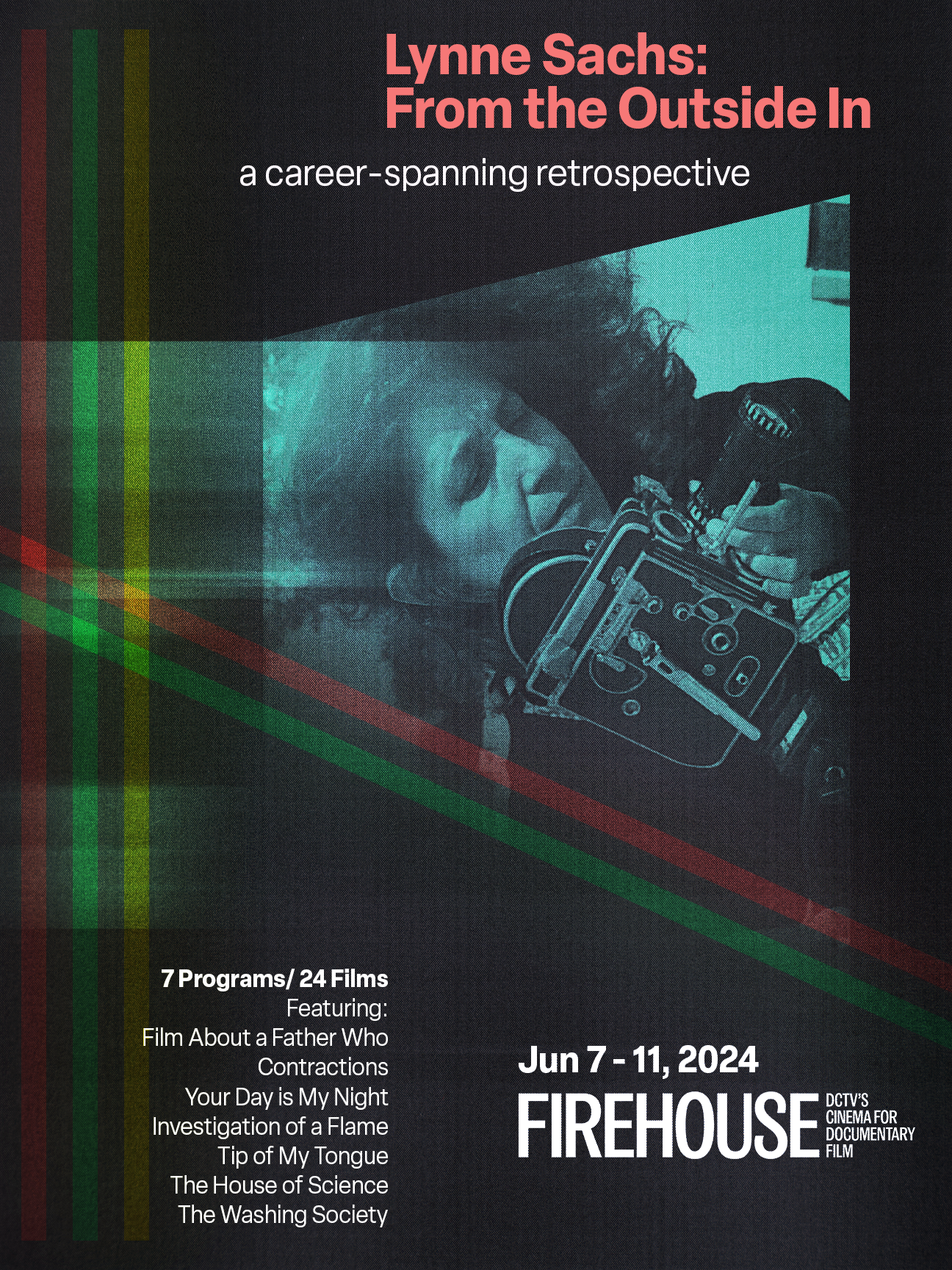
Experimental filmmaker Lynne Sachs took her first video class at DCTV in 1984; she and DCTV Firehouse Cinema are celebrating this fortieth anniversary with “Lynne Sachs: From the Outside In,” a five-day retrospective with seven programs comprising two dozen of her works, from 1983’s Ladies Wear to 2024’s Contractions and the world premiere of We Continue to Speak, from the three-minute The Small Ones (2007) and The Jitters (2024) to the eighty-three-minute Tip of My Tongue (2017). Sachs will be at every program, participating in Q&As and an interactive workshop; among her special guests are Tom Day, Sam Green, Tabitha Jackson, Naeem Mohaiemen, Lizzie Olesker, Accra Shepp, and her brother Ira Sachs.
“I walked into Downtown Community TV (DCTV) in 1984 thinking I needed to take some classes on how to make a documentary film. I was twenty-two years old and open to any possibility, any guidance, and totally impressionable,” Sachs said in a statement. “From that moment on, I learned to challenge every conventional expectation about working with reality. As I continue to explore the connections between the body, the camera, and the materiality of film itself, I reflect on those early experiences that taught me to reflect upon my own relationship to the people, places, and events I continue to witness as a filmmaker.”
The Memphis-born, Brooklyn-based auteur is an open book in her films, melding the personal and the political. In the grainy Ladies Wear, she photographs Ira on the New York City subway as he applies polish to his nails and sneakers. In 2013’s Your Day Is My Night, she documents a group of Chinese immigrants crammed into a closetlike apartment in Chinatown, where they ponder the differences between their lives in America and their native country and wonder if they made the right choice in coming here; there’s a fascinating kind of intervention when a young Puerto Rican woman moves in with them. In The Small Ones, Sachs shares the story of her Hungarian cousin Sandor Lenard, who during WWII in Italy was tasked with “washing, measuring, and cementing the bones of American dead.” His straightforward narration is accompanied by abstract images of war and slow-motion home movies of children at a birthday party. In 2021’s Maya at 24, Sachs depicts her daughter, Maya, at ages six, sixteen, and twenty-four.
Sachs offers a unique perspective of 9/11 in Tornado (2002), her fingers ruffling through ripped paper that floated across to Brooklyn. In the seven-minute Swerve, artist and curator Emmy Catedral, blaqlatinx multidisciplinary artist ray ferreira, director and cinematographer Jeff Preiss, film curator and programmer Inney Prakash, and actor Juliana Sass recite excerpts from Pilipinx poet Paolo Javier’s O.B.B. in a Queens park; words occasionally appear on the screen, including “free emptiness,” “unknown thoroughfare,” and “hum your savage cabbage leaf.” Investigation of a Flame (2001) explores the true story of the Catonsville Nine through archival footage and new interviews, with one member decrying “the obscenity and the insanity” of the US government’s actions, “which are growing more and more obscene and insane.”
“I’ve been in awe of Lynne’s fearlessness and desire to create, make meaning, rip apart, and piece together,” DCTV Firehouse Cinema director of programming Dara Messinger said. “I see her as the epitome of an indelible artist who is driven by curiosity and empathy — not fame, industry demands, or commercial algorithms. And I appreciate her sincere gratitude to her collaborators and to DCTV, honorably looking back but always steps ahead. Good documentary filmmaking cannot happen in a vacuum.”
“I don’t believe that childhood is swathed in innocence,” Sachs writes in e•pis•to•lar•y: Letter to Jean Vigo (2021), which contains footage from January 6 and Peter Brook’s 1963 Lord of the Flies. In The Jitters (2024), she cavorts with her partner, Mark Street, and three pet frogs and a cat. She takes a revealing look at the patriarch of her seemingly ever-expanding family in Film About a Father Who (2020). In And Then We Marched (2017), Sachs speaks with Sophie D., her seven-year-old neighbor, over archival footage of suffragists and shots of the 2017 Women’s March for equality.
Sachs shares her real to-do lists in A Year in Notes and Numbers (2017) while tracking her cholesterol, bone density, weight, glucose level, platelet count, and total protein. In Carolee, Barbara and Gunvor (2018), she visits cutting-edge artists Carolee Schneemann in New Paltz, Barbara Hammer in New York City, and Gunvor Nelson in Sweden. In an essay Sachs wrote about the four-minute 1987 silent short Drawn and Quartered, depicting a naked man and woman divided into four frames, exploring the tacit nature of the human body, Sachs explained how she felt at the film’s San Francisco premiere: “Within those few painful minutes, the crowd went from absolute silence, to raucous laughter, and back to an exquisite quiet. I was shaking.” You can expect all that and more over these five days at DCTV; below is the full schedule.
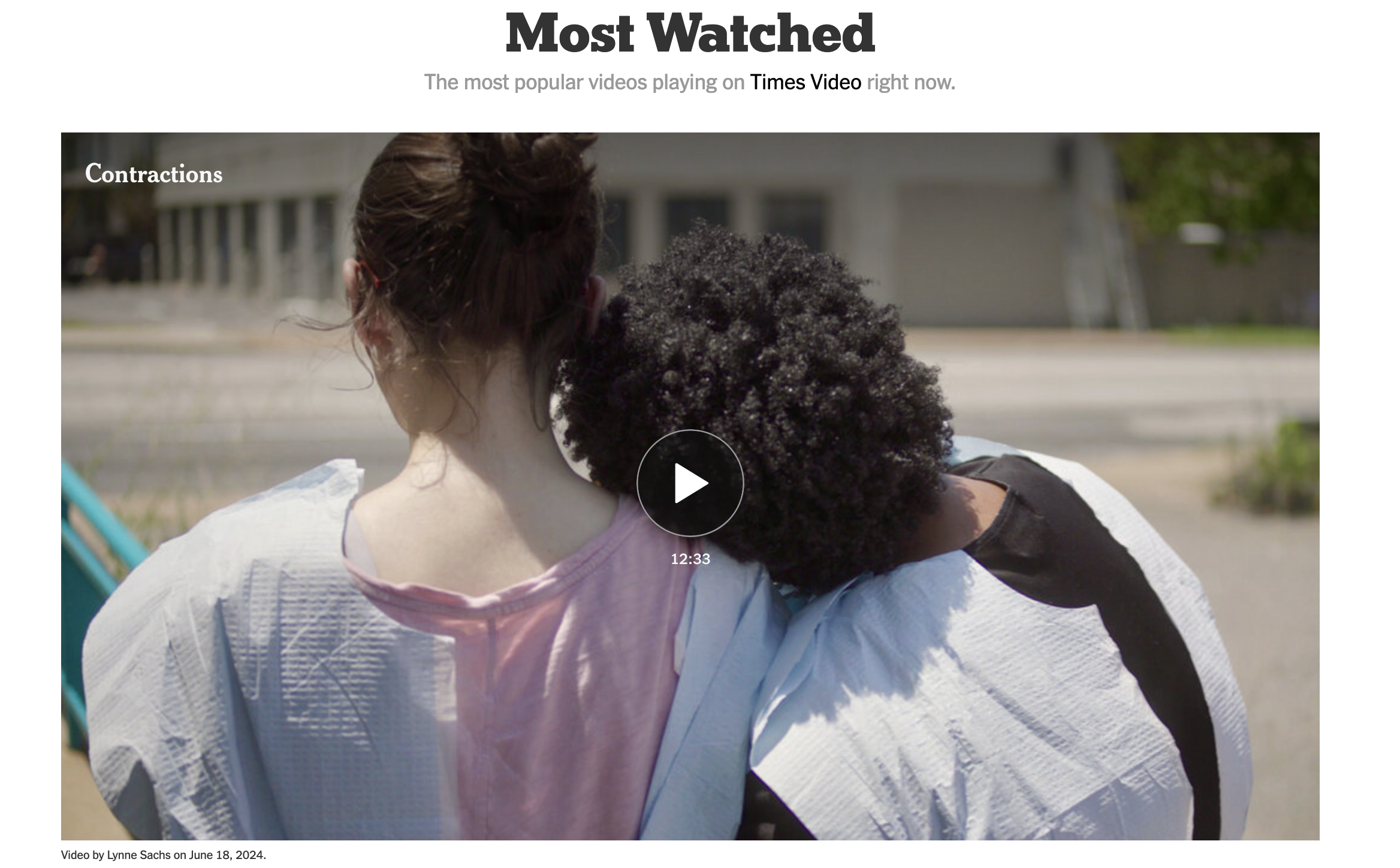
Tennessee Abortion Clinic Workers Speak Out About the State’s Near-Total Ban
In Memphis, a doctor and a volunteer driver contemplate the discontinuation of abortion services at a women’s health clinic two years after the overturning of Roe v. Wade.
I remember the hollowing sensation I felt on June 24, 2022, the day that the Supreme Court deemed that abortion was not a protected right under the U.S. Constitution. Everyone — on both sides of this debate — knew that women’s lives across the country were going to be drastically transformed. Since then, a lot of attention has been paid to the most heart-wrenching cases, but this decision affects all women’s bodily autonomy across the country.
I returned to my hometown, Memphis, to make a short film outside a building that once offered abortion services. In Tennessee abortion is banned, with no exception for rape and very limited medical exceptions that are being debated in state court.
I interviewed Dr. Kimberly Looney, an obstetrician-gynecologist and former medical officer for Planned Parenthood of Tennessee and North Mississippi, and a volunteer driver who had served as a patient escort for decades. The volunteer, whose name has been withheld to protect her privacy, now drives patients nine hours round trip to Carbondale, Ill., where they are able to have legal and safe abortions.
These women offer distinct perspectives on this radical transformation in American society. Together they speak to a time in U.S. history when women are wondering if they have been relegated to the status of second-class citizens. As Dr. Looney puts it in the film, “You basically, as a physician, had to start counseling your patients from a legal perspective and not a medical perspective.”
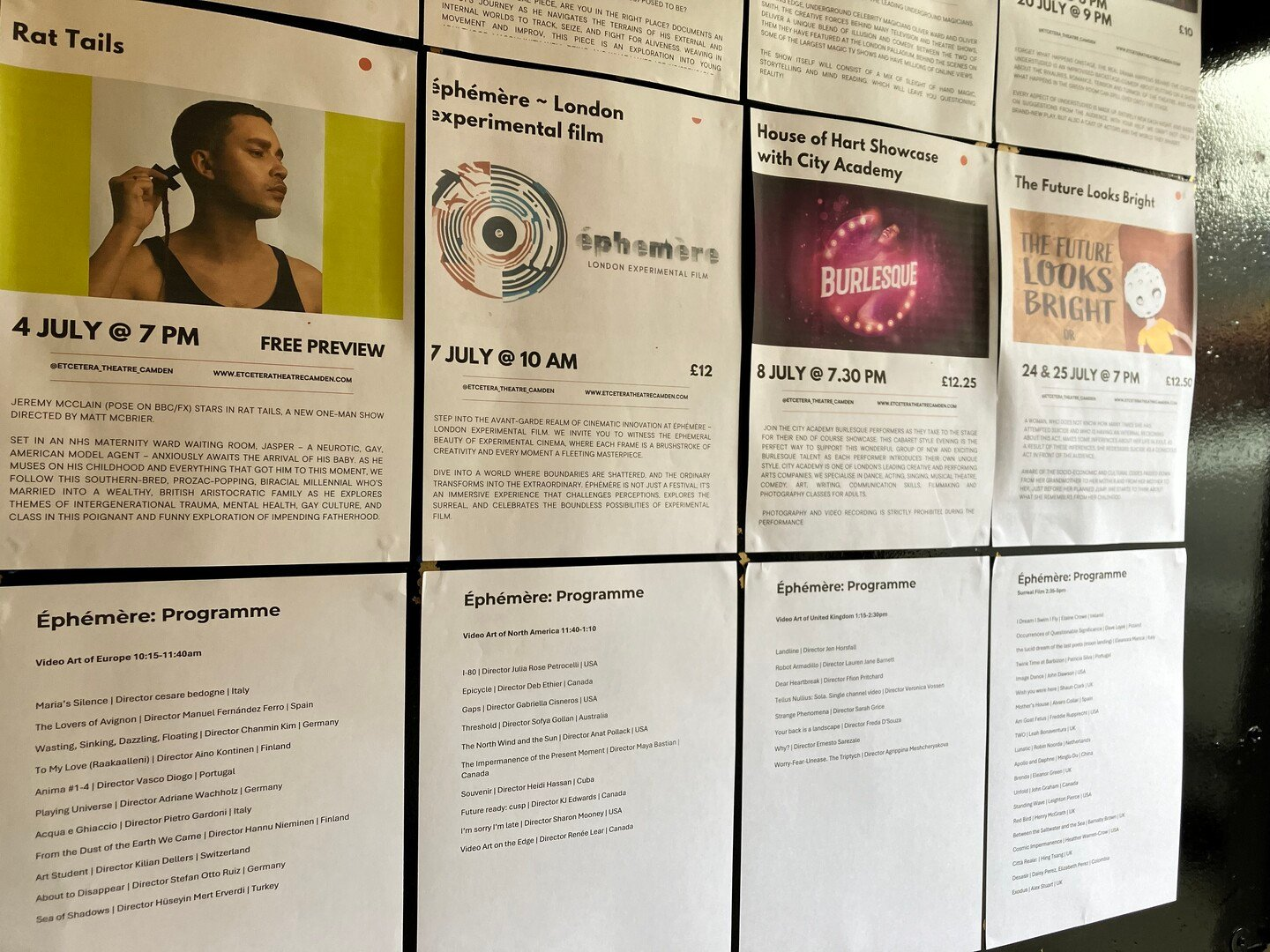
Step into the avant-garde realm of cinematic innovation at éphémère ~ London experimental film. We invite you to witness the ephemeral beauty of experimental cinema, where each frame is a brushstroke of creativity and every moment a fleeting masterpiece.
Lynne Sachs Commendation for Poetic Cinema: Awarded to films that exhibit a poetic and contemplative approach to cinema.
**Stan Brakhage Prize for Innovative Editing:** *Anima 1-4* | Director: Vasco Diogo | Portugal
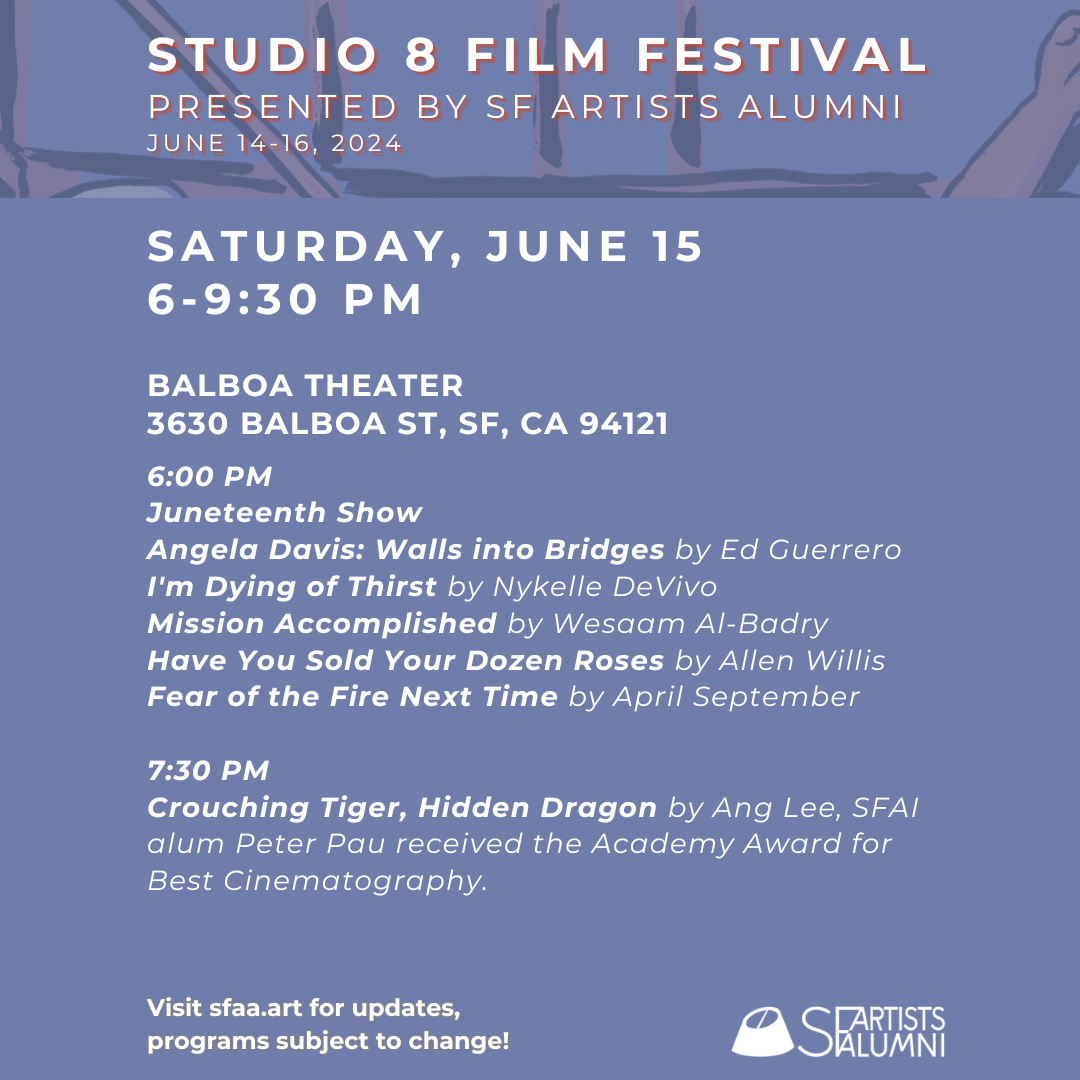
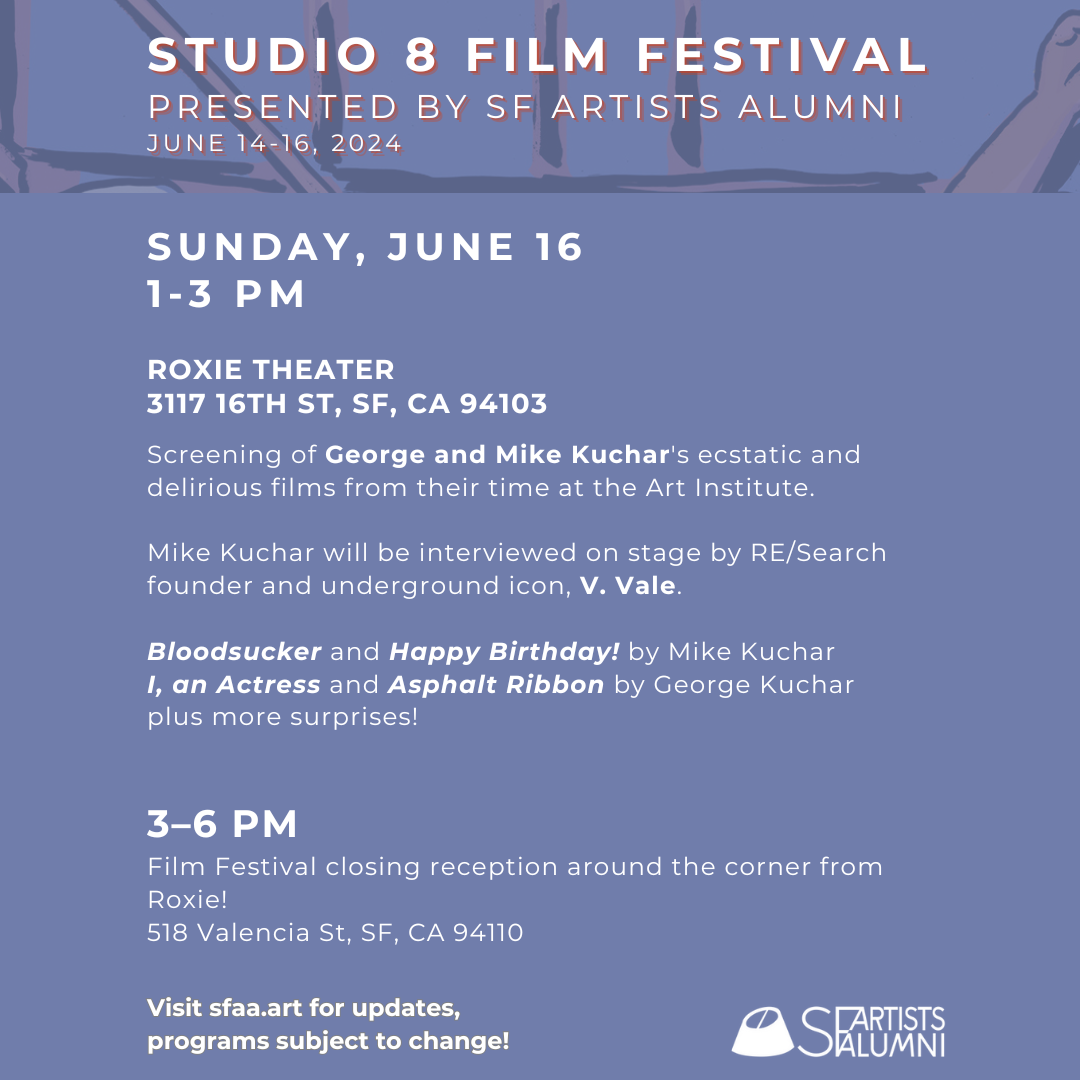
A celebration of filmmaking featuring San Francisco Art Institute STARS past & present including George & Mike Kuchar, Peter Pau, Jibz Cameron aka Dynasty Handbag, Allen Willis plus more!
3 days of films, screened at 3 Bay-Area cinemas, Filmmakers (famous and infamous!) all from SFAI.
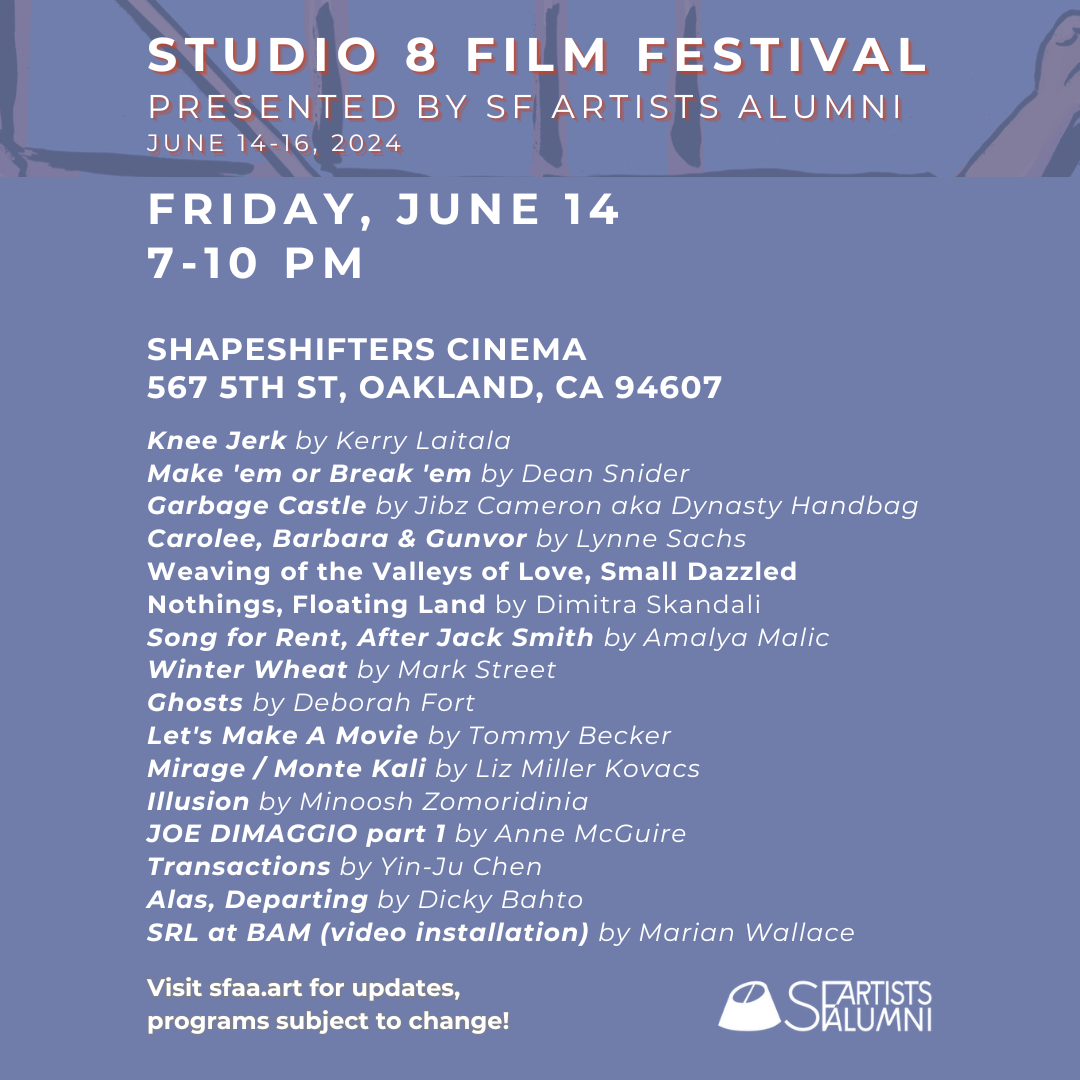
Named after the legendary Studio 8 at SFAI’s 800 Chestnut Campus, this will be the inaugural Studio 8 Film Festival presenting works by SFAI alumni and former faculty!
Opening Night Shorts Program Shapeshifters Cinema June 14th 2024 7:00pm
The STUDIO 8 Film Festival is a 3-day event organized by the SF Artists Alumni Association to showcase the work of filmmakers who honed their craft while students at the legendary (and now-closed) San Francisco Art Institute. The opening night program features short films by Jibz Cameron, Deborah Fort, Dean Snider, Kerry Laitala, Minoosh Zomorodinia, Dimitra Skandali, Liz Miller Kovacs, Lynne Sachs, Mark Street, Yin-Ju Chen, Dicky Bahto, Tommy Becker, Anne McGuire and Malic Amalya.
Juneteenth Show The Balboa Theatre June 15th 2024 6:00pm Angela Davis: Walls into Bridges Ed Guerrero plus shorts by Allen Willis, Nykelle Devivo, April September, Wesaam Al Badry, and others.
Crouching Tiger, Hidden Dragon Ang Lee The Balboa Theatre June 15th 2024 7:30pm
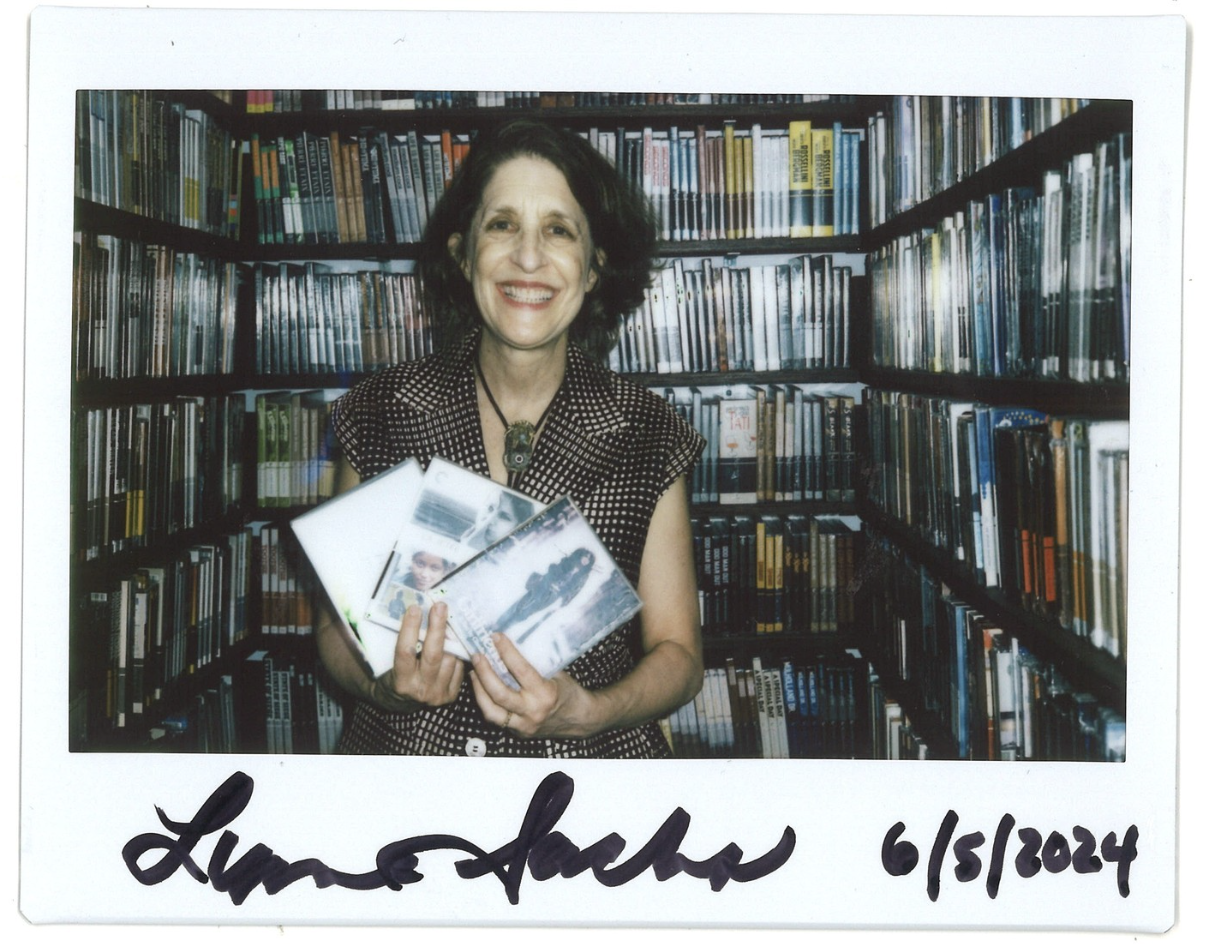
“A delightful visit from Lynne Sachs! This weekend begins a great retrospective of her films—Lynne Sachs: From the Outside In—at DCTV in New York! Sachs will be in attendance for Q&As alongside special guests.
Lynne’s Picks: Wim Wenders’ PARIS, TEXAS Chris Marker’s SANS SOLEIL Claudia Weill’s GIRLFRIENDS”
For forty years, Lynne Sachs has produced adventurous work at the intersection of documentary, essay, and avant garde film. Though they vary greatly in form, all of her films seek novel ways of questioning dominant perceptions of gender, work, and artistic representation. A career-spanning retrospective of her work, From the Outside In, screens this weekend (June 7-11) at DCTV in New York City and includes approximately two dozen films, from the early 80s to brand new films.
The earliest of these films are interested in our gendered perception of the movements of human bodies. The strongest of these, Drawn and Quartered (1986), uses 8mm film stock in a 16mm projector to display a “split” screen of four frames on one reel of celluloid. The top and bottom rows are identical, but the left and right show difference scenes, initially with a man on the left and a woman on the right. The figures, both naked, engage in a series of ordinary activities: squatting and standing, speaking and gesturing. The quadruple frame, along with the film’s silence, create a choice and push the audience into awareness of where we direct our attention, including how we may interpret the man’s and woman’s body language differently despite their essential similarity.
Other early films employ different devices toward comparable ends. Still Life with Woman and Four Objects (1986) films a woman putting on a coat, peeling an avocado, and so on, but adds a soundtrack seemingly unrelated to the images. A voiceover reads what sounds like a screenplay–“Scene 1. Woman steps off curb and crosses street”–but these actions never occur on screen. Similarly, Fossil (1986) cuts back and forth between video of women performing modern dance and women in a Balinese village working along a river. Both films break down barriers between what we perceive to be scripted performances of art and what we perceive to be mundane performances of work.
Over the following decades, Sachs’s work expanded this interest in representation into an examination of scientific and medical literature. One of her most ambitious and complex works, The House of Science: A Museum of False Facts (1991) assembles a whirlwind collage of texts and images dealing with (pseudo)scientific accounts of women’s physiology and and women’s experience in medical contexts. Women’s efforts to speak for themselves–in poetic written memories or seemingly documentary audio records–are interspersed with supposed expertise speaking for and about them, from Renaissance art to images from science books and documentaries. The sheer variety of source material, combined with the fact that images and sound rarely match, means that the materials are never able to settle into a clear narrative, and instead are presented in their character as representations. The overall effect mimics something of the confusion of a lifetime of contradictions taught to women as demeaning frameworks for understanding their own bodies, with the clarity of lived experience struggling to emerge from among this morass. This is sometimes played as comedy, such as when the laughter of children is played over a patently stupid text describing women’s brains and criminal tendencies.
Questions of meaning and textual representation get a much darker and less playful treatment in The Task of the Translator (2010), named for Walter Benjamin’s essay of the same name. Sachs is arguably less concerned with the problems of translation between two written languages and more so with how one appropriately translates the horrors of war into a journalistic text or art work. In the film’s first section, the voice of a doctor describes the work he did during a war to preserve and present human remains while we watch footage of kids at play. In the second section, scholars sit around a table translating a horrifying article about burials in the Iraq War into Latin. In the third and final section, a radio report describes a woman’s effort to recover the remains of her husband who died in the war, while a laundry machine spins on screen. All of these segments pose an unanswerable question about how the meaning of these wartime texts can possibly be grasped by their intended audience living in an utterly different context.
In a very different way, A Month of Single Frames (2019) also deals with the idea of translation, this time between two artists. A posthumous collaboration between Sachs and Barbara Hammer, the film incorporates reels from an uncompleted 90s work by Hammer with new footage and audio recordings by Sachs. Hammer speaks through her own voice and through her work, and Sachs is implicitly in dialogue through her editing and her own footage. It’s partly a documentary, partly a completion of a once abandoned project, but its real magic is in the present tense interaction of these elements.
Sachs seems drawn to these ambiguous and open-ended forms, even in her more apparently conventional documentary work. Your Day Is My Night (2014) portrays residents in a Chinatown apartment who take turns using the same beds according to their different work shifts. The scenes are poignant, so much so that they begin to feel too perfect, raising the question of how scripted some of this might be, particularly when new characters arrive and introduce themselves without ever noticing the camera. Later in the film it becomes clear that the action is partly staged, even explicitly revealing the set as a literal stage. The film was created collaboratively with its actor-participants, who played versions of themselves and other actual interview subjects in both live and filmed performances, blurring the already soft lines between documentary reenactment and scripted fiction. The film itself emerges as only one document of a process which was, arguably, a more expansive art work in its own right. It therefore frames itself as a contingent and partial view, as interested in the political nature of representation and translated meaning as in the specificity of its subject, raising more questions than it attempts to answer.
See also this interview with Sachs published by my friends at Ultra Dogme.
1972 – France – [30′ reduced to ?] 18′ – 35 mm – Color
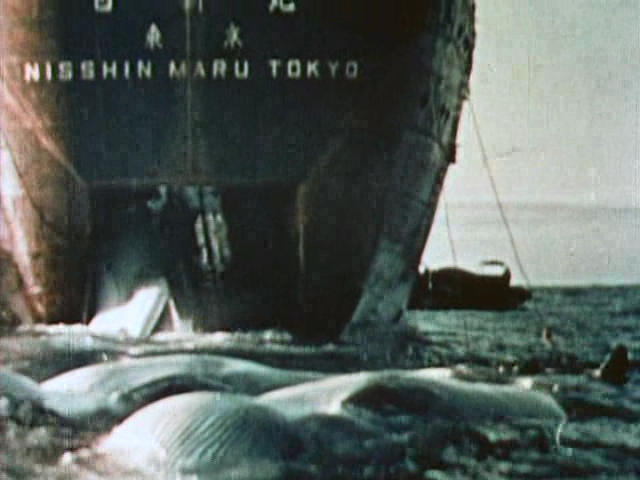
After Mario Ruspoli’s Les hommes de la baleine (1956), with commentary written by Chris Marker, the two men decided to work together on a new film about cetacean fishing: Vive la baleine. This time, however, there was no question of showing traditional sperm whaling. It’s purely and simply about denouncing an unacceptable massacre, that of the blue whales, the largest animal that has ever existed.As the 2004 La Rochelle Film Festival aptly summed it up, “for a part of humanity, the whale initially represented an essential means of survival. Then came industrialization, and with it big business. Whaling became a means of making a profit. The slaughter could begin. That’s the story told in this no-nonsense documentary.” Although today a moratorium prohibits whaling, and despite the fact that Japan, Iceland and Norway continue their exactions under scientific pretexts, the figures are there.
Indeed, the International Whaling Commission (IWC), founded in 1948, had set up a whaling management system that proved to be a total failure. “The conversion system known as the Blue Whale Unit (BWU), which establishes equivalence between the different baleen whale species according to the average quantity of oil that can be extracted from them (1 blue whale = 2 fin whales = 2.5 humpback whales = 6 Rudolph’s whales), as well as the establishment of a global quota for all whaling nations, led to the massacre of the largest whales and brought their populations to the brink of extinction. It wasn’t until the 1960s that country quotas were adopted, and in 1972 the Blue Whale Unit was abolished.“
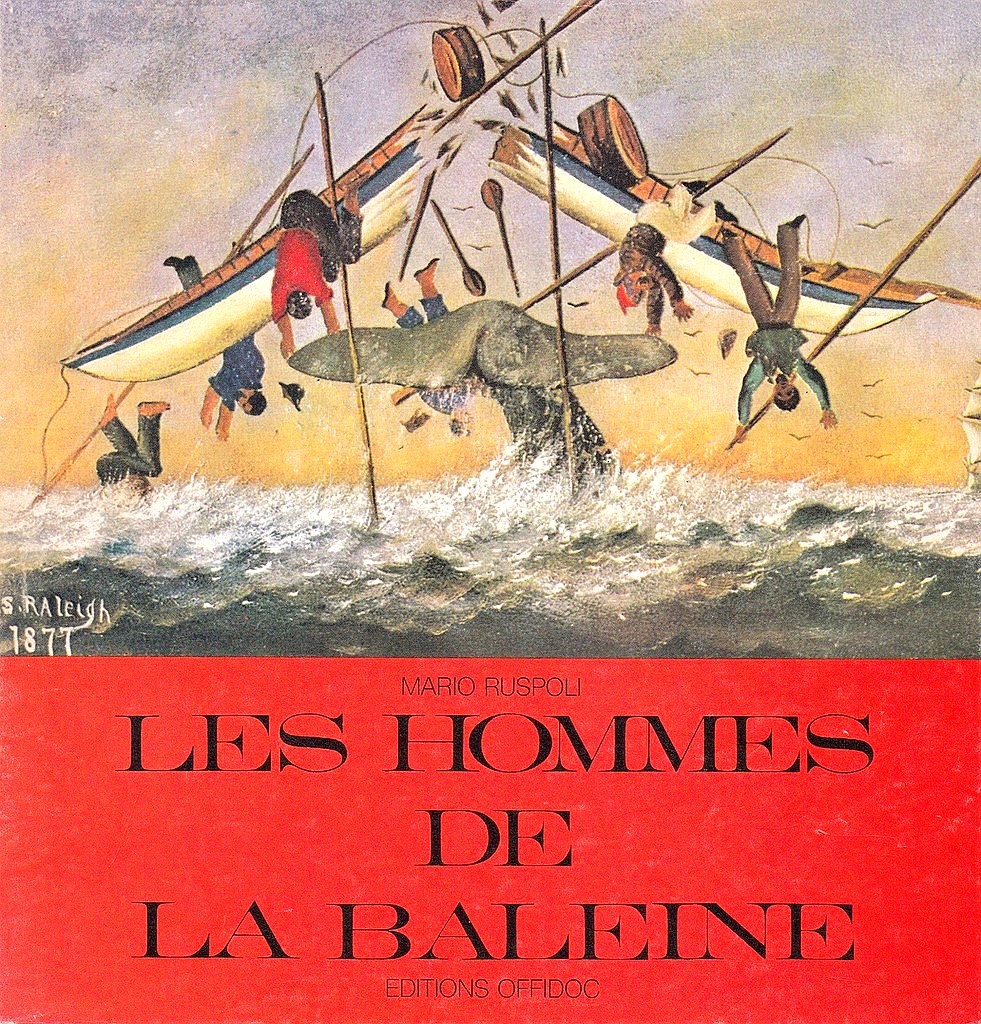
Mario Ruspoli, always passionately involved in his projects, didn’t stop there. In addition to his film, he published a second book on the subject entitled Whale Men (1972), in reference to his first film of the same name (1956), which had been released shortly after his book In Search of the Sperm Whale (1955). In this second opus, Ruspoli takes stock of the hunt, following the Stockholm Conference in June 1972, which called for a ten-year halt to whaling to allow cetaceans to renew themselves. He tells us, among other things, that in 1964, the peak of the massacre, 357 gunboats and 23 floating factories killed 33,001 cetaceans, including 372 blue whales, and that of the 150,000 blue whales alive in 1930, less than 1,000 remained in 1966, a massacre mainly due to the Norwegians.
In 2007, Icarus published a heavily revised English version, as Lynne Sachs, who worked actively on the translation with Chris Marker, tells us.
“Three years ago, Jon Miller, president of our mutual distributor Icarus Films, contacted me to see if I would be willing to assist Chris in the making of a new English version of his 1972 film Vive la Baleine, a passionate, collage-based essay film on the plight of the whales. Of course, I was honored and immediately said yes. For one whole year, Chris and I corresponded weekly as we re-wrote and updated the narration and I searched for a male and a female voice-over actor to read the two parts. He renamed the new 2007 version of his film Three cheers for the whale. It is distributed with other “bestiary” films he has made including The case of the grinning cat.
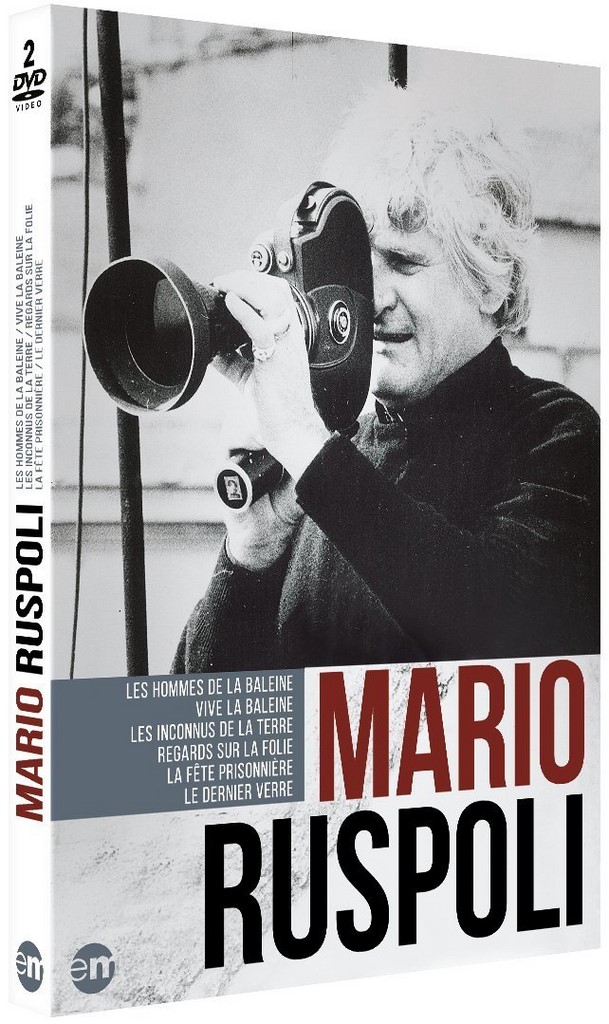
Be that as it may, Three Cheers for the Whale is an exemplary documentary in its didactic approach, as well as being a scathing pamphlet against the mercantilism of the fishing industry. It’s also worth noting the scarcity of documents concerning this film, about which little or nothing is known. In 2016, Argos Films and Éditions Montparnasse released a remarkable boxed set of Mario Ruspoli’s films, including Vive la baleine and Les hommes de la baleine, with an extensive, well-detailed booklet.
Finally, in the “Nota filmografica” inserted at the end of the volume (pp. 193-196) of Scene della terza guerra mondiale 1967-1977, the Italian version of Fonds de l’air est rouge, published in 1980, mention is made of a film entitled Vive la banlieue (Long Live the Suburbs), co-directed by Marker and Mario Maret in 1972. There’s no doubt that it’s actually Mario Ruspoli’s Vive la baleine.
Livre – 1972 – 148 p.
Coffret dvd – 2007
Coffret dvd – 2011
Générique (début, dans l’ordre d’apparition, complété par le site du Festival de La Rochelle) Argos Films – 1972 Vive la baleine baleines: Mario Ruspoli vivats: Chris Marker assistés par: Germaine et Mario Chiaselotti [voix off:] voix magistrale: [Louis] Casamayor voix intérieure: Valérie Mayoux voix musicale: Lalan [van Thienen] générique: Timour Lam [montage, son_et commentaire: Chris Marker] [image: Michel Boschet] [production: Argos Films] Version anglaise (2007): (sous titrage du générique début) Three cheers for the whale whales: Mario Ruspoli cheers: Chris Marker master voice: Leonard Lopate interior voice: Emily Hoffman (ajout générique de fin en anglais) English version supervisor: Lynne Sachs English sound mix: Bill Seery original title drawings: Timour Lam English titles: Kelly Spivey English translation: Liza Oberman A first run Icarus release
Lynne Sachs’ latest film, Contractions, exists, like much of her work, at the intersection of experimental and documentary film practices. In the 12-minute work, superimposition, narration, and choreography are intermingled–all captured using a graceful and haunting camera language that lends what we see the spirit of poetry. The subject of the film is an abortion clinic in Memphis in the wake of the overturning of Roe vs.Wade by the supreme court in 2022. In Sachs’ film, we see sky and then the unglamorous concrete of the clinic’s parking lot, and eventually, people. The figures we see are shot from behind, and appear to be wearing hospital gowns. They stand staring at the single, freestanding building, surrounding it almost like Romero’s living dead. But these aren’t monsters. Sachs explains, “The women in the film were local activists who had agreed to be in the film without really knowing what they would be doing. I had them for one morning only. To give them more anonymity, I shot them from behind, and that released them from being easily recognized, and, honestly, from feeling super self-consciousness.”
The film necessitated a different approach for Sachs for practical reasons. As she explained, “We were all very worried about security issues in Memphis, since standing in front of a women’s health clinic anywhere in Tennessee can become rather contentious. So having a very tight plan was really critical.” In order to make sure things went smoothly and quickly, Sachs used storyboards for the film, “I storyboarded all of the visuals for Contractions in a way that I usually don’t do,” the filmmaker said, “I had never been to the building where we shot, so I had to imagine it as I drew each image.”
The results Sachs achieves are somber and elegant. The entire film evokes modern dance with its pared down language of bodies in space and simple gesture from both performers and the camera. And while the subject of Sachs’ film—the ongoing attack on women’s rights by the U.S. government—is monumentally important, so is its form. Like her film Investigation of a Flame, which chronicles the history of the Catonsville 9 (a group of nine catholic activists who protested the Vietnam War), Sachs’s documentary integrates the poetic and handmade. Through this, she creates an intimacy with her subject that denies traditional documentary objectivity in favor of a more organic, personal and artistic truth.
Contractions and Investigation of a Flame are just two of the films being screened at Manhattan’s DCTV Firehouse in June as part of “Lynne Sachs: From the Outside In.” The retrospective, running from June 7-11, breaks up Sachs’ work thematically into programs. This novel approach is in large part thanks to DCTV’s Dara Messinger, who Sachs says, “brought her exquisite cinematic sensibility to every program, juxtaposing longer and shorter films in ways that bring out our themes in really inventive ways — from “Bodies and Bonds” to “Flightless” to “It’s a Hell of a Place”, it’s proof of her understanding of cinema as a collective art form.”
Sachs, who is celebrating the 40th anniversary of her association with DCTV, has been making films since the early 1980s. Her work spans a variety of subjects and modes, from purely poetic and experimental work, to personal travelogs and emotionally candid documentaries. Throughout all Sachs’ work, however, the artist’s unseen (and sometimes seen) presence endures.
Sachs is a part of the films she makes and because of this, there is a unity of vision and consistent personal themes to her corpus, such as family, activism, travel, women, and others. A Film About A Father Whoand A Year in Notes, while wildly different in scale and form, both stem from the artist’s life. A Film About a Father Who is Sachs feature-length exploration of her charismatic and mysterious father. The film utilizes an array of formats and footage as well as interviews and newly shot vérité to create an ambitious and moving work of personal documentary.
A Year in Notes and Numbers condenses a year in Sachs life to four minutes through a montage of handwritten notes from daily life, many of them detailing family, health, and work. Despite their marked formal differences, both films clearly bear her authorial stamp–a personal candor and a nimble handling of materials and themes. This is often where Sachs’ films evoke the work of other independent film artists of the past. In her words, “All films are documents of people gathering together to make something. I think of film artists like Hollis Frampton or Michael Snow who recognized in a very astute and invigorating way that they weren’t doing anything more than documenting and then subverting the world as they experienced it. They were refracting reality while witnessing it.”
This understanding of the nexus where documentary and experimental film practices meet might seem obvious but these two cinematic modes have not always interacted. As Sachs notes, “The documentary and experimental communities were not mixing at all until about ten years ago. From the experimental world there was snobbery and from the documentary world there was bewilderment. Now there’s a sense of curiosity and sharing between the two.” Sachs’s work, however, offers a great example of the hybrid approach, one that is being more readily recognized by filmmakers and audiences. A leading exponent of this new trend is Prismatic Ground, a film festival that focuses on experimental documentary. In 2021 the festival bestowed their inaugural Ground Glass Award on Sachs for “outstanding contribution in the field of experimental media.”
Sachs’s fluid practice started early. “I have a long relationship with DCTV, beginning in 1984 when I took my first video class there.” Sachs says, “While a student there, I created an expanded cinema piece with video and dance […] I sort of thought it would be my first documentary, but it really became more about the body, work and viewing, feeling of being an outsider in an unfamiliar place. I created it all there at DCTV.” Now, with this exciting new retrospective, Sachs has returned to DCTV, a 50-year-old community initiative in lower Manhattan that uses filmmaking tools to empower communities, to share her career-long dance with experimentation and documentary with New York audiences.
Sachs’ enthusiasm for her world of films and people is infectious. She understands independent and artist made films as a community organism of sorts, one that needs to be nourished and that thrives on interconnectivity. For her, communication is key, even when her work confronts notions of impossibility. Often her work serves as testament to the creativity and frustration of translation (made explicit in her film The Task of the Translator). Despite these ongoing existential and linguistic struggles, there is an ineffable hope that permeates her films. With each new work there is the possibility of communication–the communication of a life lived, of a vision, of a time on earth captured in new and unique ways by a singular artist.
Frequent Filmwax guest filmmaker Lynne Sachs returns to discuss a retrospective of her work to be presented by DCTV. The series, called “From the Outside In“, runs June 7th — 11th at DCTV’s Firehouse Cinema in Lower Manhattan. 2024 marks 40 years since experimental filmmaker Lynne Sachs took her first video class at DCTV. In From the Outside In, we traverse Sachs’ documentary films, defiant of traditional genre or style. From peering out, collecting others’ experiences and world events, to looking inward, reflecting on familial histories and entanglements, Sachs weaves the political with the personal. Through this seven-program series of screenings and discussions, with Sachs and collaborators in front of and behind the camera, this retrospective celebrates Sachs’ distinctive artistry and groundbreaking career.