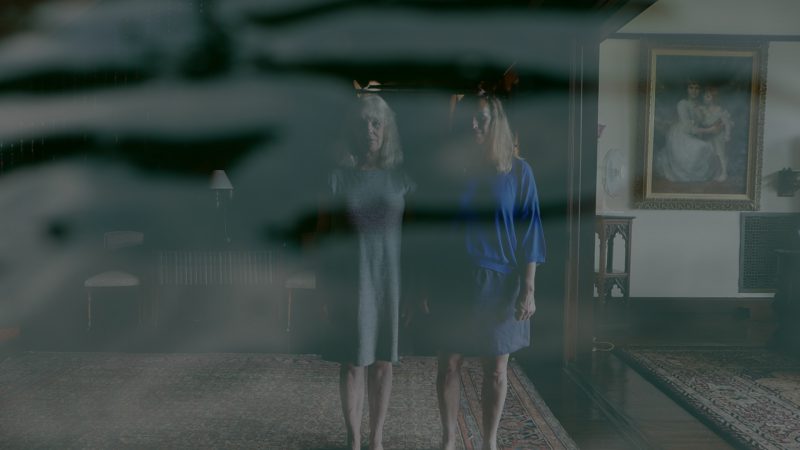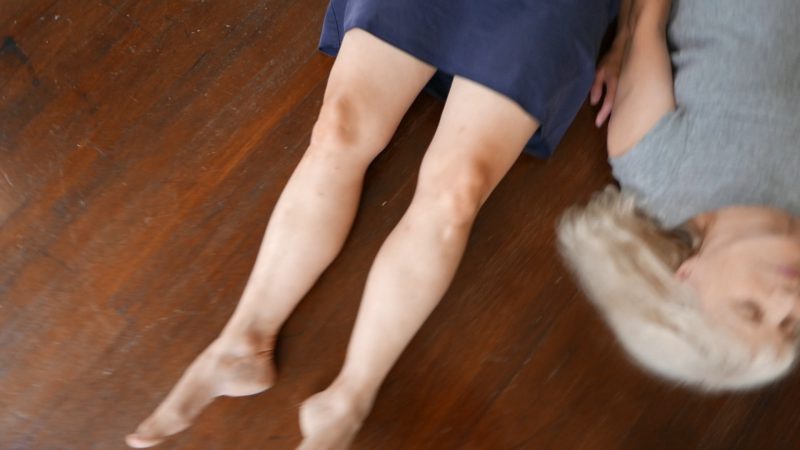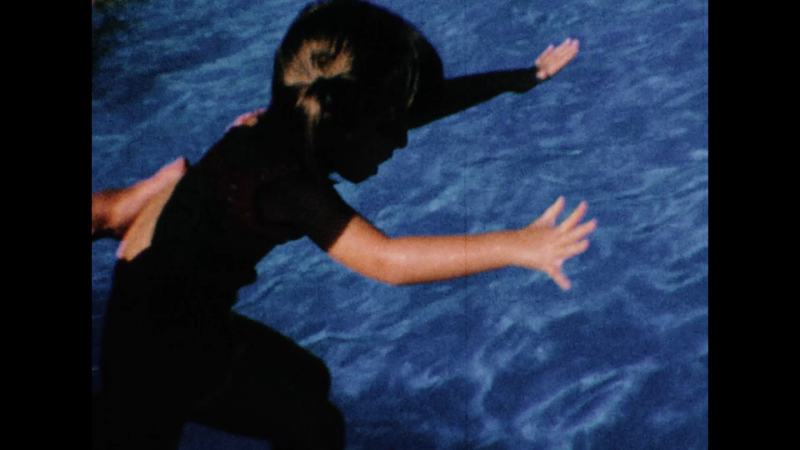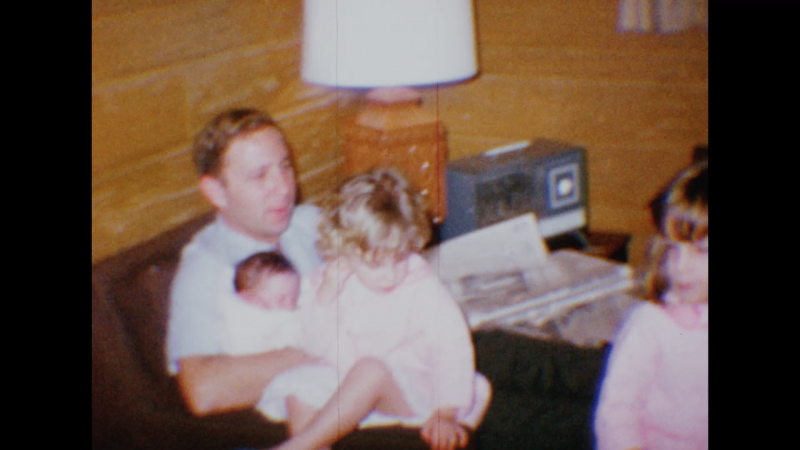
Interview with Lynne Sachs Costa Rica International Film Festival, Lynne Sachs Retrospective Interviewed by Roberto Jaén – Director, Curator of the Preambulo project of the Costa Rican Center for Film Production June 17, 2022 https://www.youtube.com/watch?v=lYv9cFkM4Iw&t=3s
The American filmmaker and poet Lynne Sachs was honored by the tenth edition of the Costa Rica International Film Festival. 10CRFIC paid tribute to Sachs in a retrospective on her work featuring 14 of her films, characterized by Sachs’ poetic, intimate, experimental and reflective tone. In this interview, she tells us how she began her craft and her love for cinema.
Credits Executive Production: Film Center of the Ministry of Culture Production Coordinator: Vania Alvarado Producer: Luis Alonso Alvarez Photography: Jorge Jaramillo Camera assistant: Diego Hidalgo and Gabriel Marín Direct Sound: David Rodríguez Editing: David Rodriguez – Diego Hidalgo Interviewer: Roberto Jaen
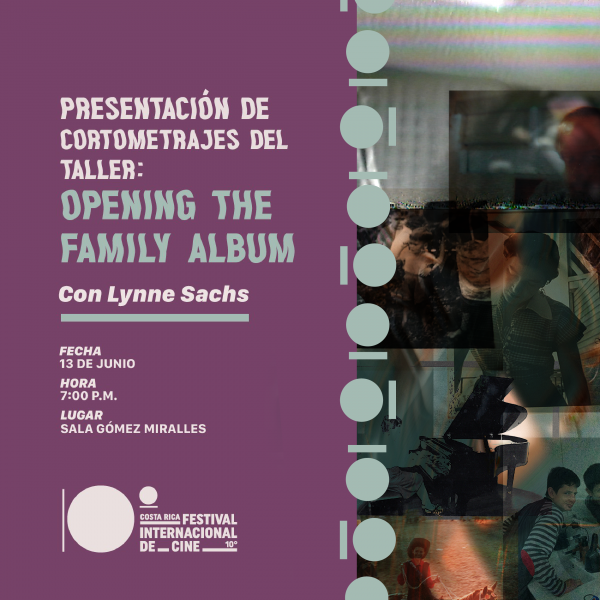
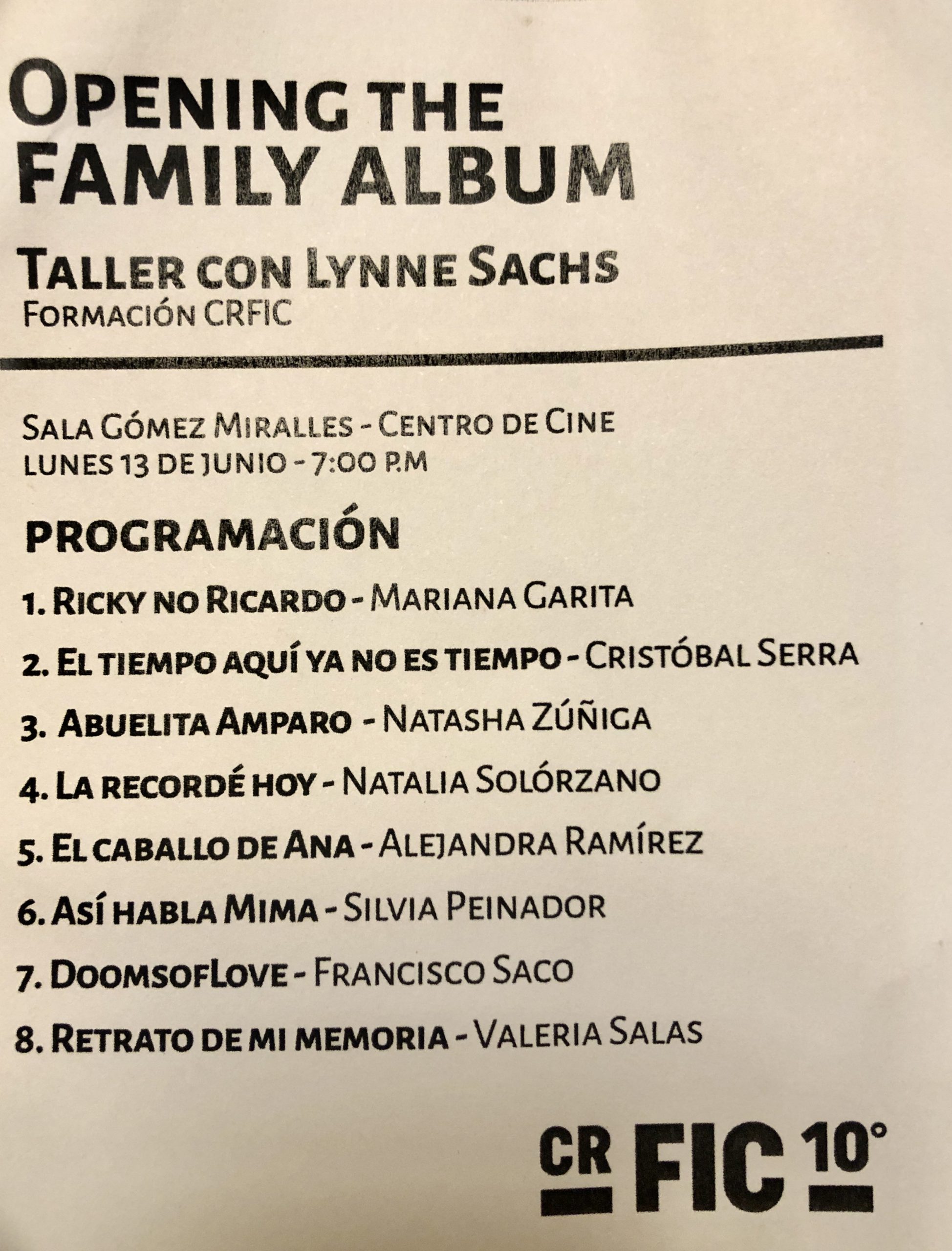
Opening the Family Album Costa Rica International Film Festival San José, Sala Gomez, Costa Rica Film Archive Part of Lynne Sachs Retrospective May and June, 2022 with in-person meetings June 11 and 12 https://www.costaricacinefest.go.cr/categorias/retrospectiva
Opening the Family Album is a three day (two hours each day) workshop in which we will explore the ways in which images of our mother, father, sister, brother, child, cousin, grand-parent, aunt or uncle might become material for the making of a personal film. Each participant will come to the workshop with a single photograph (both in hand and digital) they want to examine. During the workshop, you will write text in response to this image by incorporating storytelling and performance. In the process, we will discuss and challenge notions of truth-telling and language. Your final work will then be a completed film with sound or a film with live narration. Previous filmmaking and editing experience is appreciated but not required. Participants may use their own digital cameras or cell phones to make images and sounds. Please register early so that you can be part of our first meeting which will be virtual.
This workshop is inspired by the work of Italian novelist Natalia Ginzburg, whose writing explores family relationships during the Fascist years and World War II. Ginzburg was a prescient artist who enjoyed mixing up conventional distinctions between fiction and non-fiction: “Every time that I have found myself inventing something in accordance with my old habits as a novelist, I have felt compelled at once to destroy it. The places, events, and people are all real.”
All of the films made in this workshop will be presented publicly on our last day of meeting.
“Thought, Word, Image: Introduction to Lynne Sachs Retrospective” Costa Rica International Festival of Cinema, 2022 Written by Fernando Chaves Espiniche, Artistic Director Translated from Spanish by Maria C. Scharron
There
are films that seem small but on screen they expand until we are overwhelmed.
That is what happens with the images and words that Lynne Sachs pieces
together: her films seem fragile, transparent, but they hit us with the force
bestowed by the mind behind them.
Since
the late 80s, this American artist has been building a group of work that
expands and blurs the limits of fiction, documentary and the experimental
expressions of cinema art. In more than 40 films, between feature films, short
films, performances, web projects and installations, Sachs has demonstrated to
be one of the most authentic voices of American experimental cinema. She
provokes, challenges, and proposes. Her
movies give the impression of simplicity, which the emotional and intellectual
weight betrays. Even when the films are straightforward, they raise deep
questions that make them expand beyond their short duration.
But,
what does someone like Lynne Sachs have to say about the Costa Rican and
Central American context? Although her movies are intimate, Sachs’ films speak
about what we call universal themes: home, memory, time, family, and cinema as
a device to inquire into everything. It is her modest scale, (and we already
mentioned that this should not distract us from her incisive glance), which
lead us to think about other ways to approach cinema as producers, critics and
spectators. Something is burning in these images of Sachs’, something that
motivates us to imagine another way of narrating: the drive to film everything,
transforming it all with voice, editing, thought and rhythm.
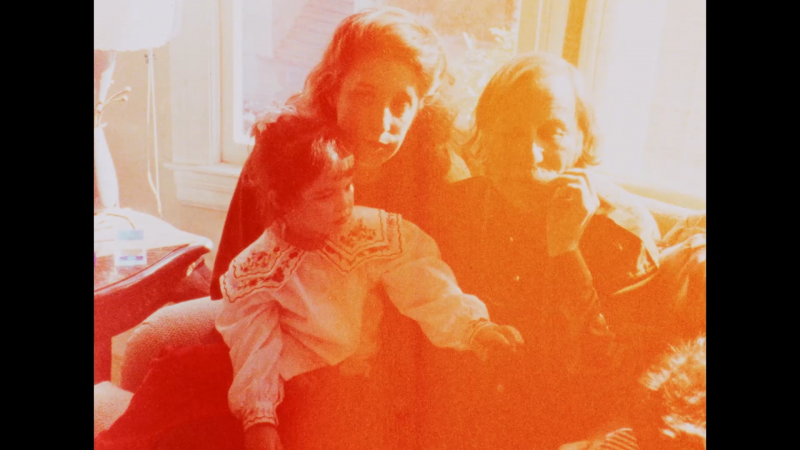
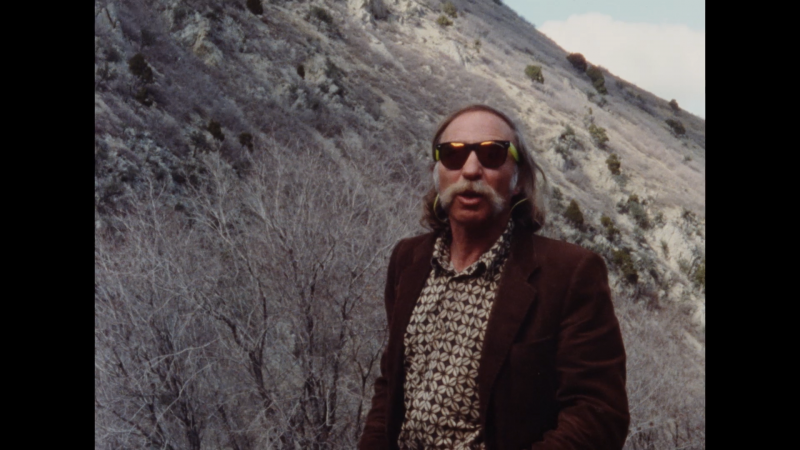
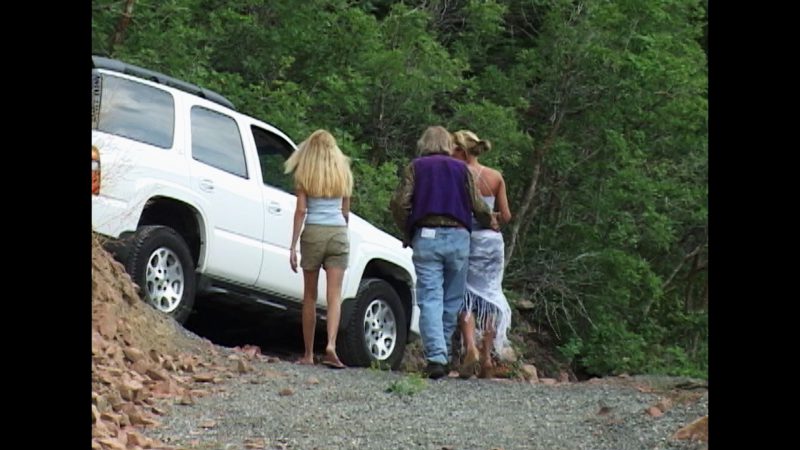
In Films About a Father Who (2020), which
we had the pleasure to show in the 9th Cosa Rica International
Festival de Cine, the director dissects her father’s presence with deep empathy
and an objective eye. The debris of memory accumulates around a very complex
figure. This challenges our understanding of him, but without leaving affection
and tenderness behind. Personal history is made of small fragments recorded and
filmed throughout the years, an accumulation of interactions and moments that
reveal, even through their apparent banality, a compromise with the world and
its inhabitants. By putting them together and letting the editing do its work
and make them speak, these fragments expose other truths, they open fissures to
other intimacies.
Sachs
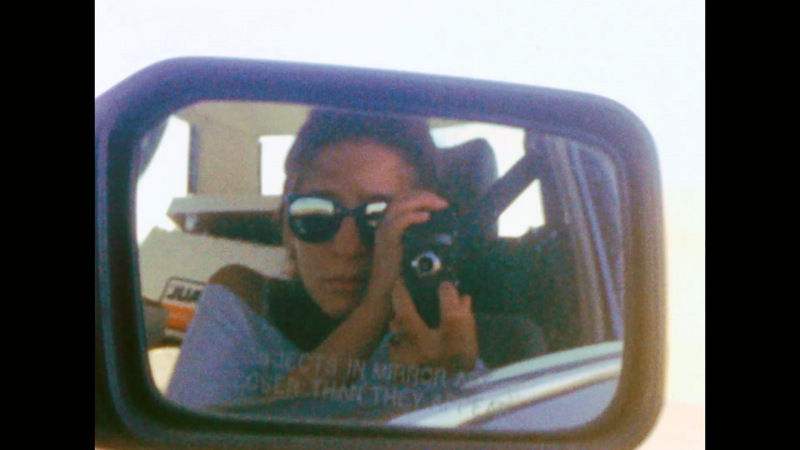
also sketches these family portraits through gestures: in Maya at 24 (2020), her daughter runs around her at ages 6, 16 and
24. Filmed in 16mm, it fuses the emotional landscapes of each age –ages, by the
way, that are crucial in a woman’s life–, letting herself be surrounded by love
and energy. Lynne is at the center of this gesture: this act also touches and
affects her.
We also have to talk about the material nature of film itself, which brings us closer to, we could say, the manual process of transforming those images into a narrative-poem-gesture that summons us and invites us to get involved with these lives. The passage of time is inscribed in these films; the film is affected by light, movement, time and manipulation. Even in digital films we can still feel the presence of the artist’s touch, which is key. Sachs’ works are an invitation to dive deep into the vast archive of images and sounds that we generate, not only to dig into our childhood or hidden stories, but to find ourselves in the process.
It’s weird. With Sachs’ films, we end up feeling like we already know her, that we have talked to her for hours and hours. As in any conversation, one topic leads to another, images repeat, ideas come and go. But as every word turns, another angle reveals itself. In this sense, the power of the minimum inscribes Sachs’ work in a long history of women who have used the moving image as a tool to find themselves, to transform their bodies and their environments and register the beat of a century that learned to see itself through cinema. In Carolee, Barbara and Gunvor (2018), we witness the visits Lynne made to the pioneers of experimental cinema: Carolee Schneeman, Barbara Hammer, and Gunvor Nelson. Visits to the places they called home. They speak about their body and their body of work. They share pieces of their thoughts so we can participate in a different way with their films. Lynne Sachs’ films are an exercise in memory, an expanding memory. From the minimal to the immense, from gesture to revelation. Like glimpses, her movies invite us to be part of a poem: we are just another verse that rhymes with changes of direction, scattered dialogues, the movement of objects and the cuts that link moments that without Lynne’s diligent gaze we would never have found. At CRFIC we are thrilled to present this cinema of what is possible, of what is close. We want to converse with Lynne and her films, and we are fortunate she has opened that door for us.
Translated from the Spanish Original by Maria C. Scharron
“Pensamiento, palabra, imagen” de Fernando Chaves Espinach Director Artístico, Costa Rica Festival International de Cine
Existe cierta clase de cine que parece pequeño pero que, en la pantalla, se
expande hasta abrumarnos.
Así sucede con las imágenes y palabras que hilvana Lynne Sachs: parecen películas frágiles, transparentes, pero nos
golpean con la
contundencia que les confiere el profundo pensamiento que las genera. Desde finales de los años 80, esta cineasta estadounidense ha estado
construyendo una obra que expande y
confunde los límites de la ficción, el documental y las expresiones experimentales del arte cinematográfico. En más de
40 películas, entre
largometrajes y cortometrajes, así como performances, proyectos web e instalaciones, Sachs ha demostrado ser una de
las voces más auténticas del
cine estadounidense experimental. Provoca, desafía y propone. Sus películas aparentan una sencillez que su carga
emocional e intelectual
traiciona; incluso cuando son directas, plantean hondas preguntas que las expanden más allá de su breve duración.
Pero, ¿qué dice alguien como Lynne Sachs a un contexto como el costarricense y
centroamericano? Incluso cuando
son íntimas, las películas de Sachs hablan de lo que llamamos temas “universales”: la casa, la memoria, el tiempo,
la familia y el cine como
dispositivo para indagar en todo aquello. Asimismo, es en su modesta escala, que como ya hemos dicho, no debe
distraer de su incisiva
mirada, que nos mueve a pensar otras formas de acercarnos al cine como realizadores, críticos y espectadores. Algo
arde en estas imágenes de Sachs que
nos impulsa a imaginarnos otra forma de contar: es la voluntad de filmarlo todo y transformarlo con la voz, la
edición, el pensamiento, el ritmo.
En Film About a Father Who (2020), que tuvimosel placer de mostrar en el 9CRFIC, la directoradisecciona la figura de su padre con profundaempatía y una mirada objetiva. Los escombros dela memoria se acumulan en torno a una figuracompleja que nos reta a comprenderlo, sin dejarde lado los momentos de cariño. La historia personalse conforma de pequeños fragmentos grabadosy filmados a lo largo de los años, una acumulaciónde interacciones e instantes que revelan, apesar de su aparente banalidad, un compromisocon el mundo y con sus habitantes. Al unirlos ydejar que la edición les permita hablar en conjunto,los fragmentos emanan otras verdades, abrengrietas a otras intimidades.
Sachs también esboza estos retratos familiarespor medio de los gestos: en Maya at 24 (2020), suhija corre a su alrededor a los 6, 16 y 24 años,filmada en 16mm, fusionando los paisajes emocionalesde cada edad –edades, por otra parte,cruciales en la vida de una mujer–, dejándoserodear por su amor y su energía. Lynne está en elcentro de ese gesto: el acto la trastoca a ellatambién.
Hay que hablar también de la materialidad del filme mismo, que nos aproxima al
proceso manual, diríamos, de
transformar estas imágenes en una narrativa-poema-gesto que nos convoca y nos invita a inmiscuirnos en estas
vidas. En las películas está inscrito
el paso del tiempo; la cinta se deja afectar por la luz, el movimiento, las horas y la manipulación. También en lo
digital se nota esta “mano de la
artista”, que es clave. La obra de Sachs es una invitación a hundir las manos en el vasto archivo de imágenes y
sonidos que generamos, no solo para
excavar momentos de nuestra niñez o historias ocultas, sino para encontrarnos en ellas.
Es raro. Con el cine de Lynne Sachs uno siente quela conoce, que ha conversado con ella por largashoras. Como en cualquier charla así, un tema llevaa otro, se repiten imágenes, ideas van y vienen.Pero en cada giro de la palabra, se devela otroángulo posible. En ese sentido, ese poder de lomínimo inscribe la obra de Sachs en una historiaextensa de mujeres que han tomado la imagen enmovimiento como herramienta para encontrarse,transformar su cuerpo y su entorno, y registrar elpulso de un siglo que aprendió a mirarse en el cine. En Carolee, Barbara and Gunvor (2018), vemoslas visitas que Lynne hizo a Carolee Schneeman,Barbara Hammer y Gunvor Nelson, pioneras delcine experimental, en los lugares que han llamadohogar. Hablan de su cuerpo y de su obra. Noscomparten algunas piezas de su pensamientopara que participemos de otro modo en sus películas.
Así, el cine de Lynne Sachs es un ejercicio dememoria, de una memoria que se expande. De lomínimo a lo inmenso, del gesto a la revelación.Como en destellos, sus películas nos invitan aformar parte de un poema: somos un verso más,que rima con los giros, los diálogos sueltos, elmovimiento de los objetos y los cortes que unenmomentos que, sin la mirada acuciosa de Lynne,jamás se hubieran encontrado. En el CRFIC nosilusiona presentar este cine de lo posible y de locercano. Queremos conversar con Lynne y susfilmes, y para nuestra dicha, nos ha abierto lapuerta.
“Thought, Word, Image” by Fernando Chaves Espinach Artistic Director, Costa Rica International Film Festival
Lynne Sachs will give a workshop on autobiographical family portraits at La Casa Encendida Posted on 04/26/2022 – 12:37:22
The director of “Film About a Father Who” will give this theoretical-practical workshop from May 24 to 26, and will present a monographic session of her work on May 25.
The training program of the cultural center La Casa Encendida (Madrid) will receive the visit of the American filmmaker Lynne Sachs next May, who will give a workshop on the autobiographical family portrait . According to La Casa Encendida, in the workshop “we will explore the ways in which the images of our mother, father, sister, brother, cousin, grandfather, aunt or uncle can become material for the making of a personal film. Each participant will come the first day with a single photograph that she wants to examine. She will then create a cinematic rendering for this image by incorporating narration and acting. In the process, we will discuss and question the notions of expressing the truth and the language necessary for it.”
This workshop is inspired by the work Family Lexicon by the Italian novelist Natalia Ginzburg, whose writing explores family relationships during fascism in Italy, World War II and the postwar period. Ginzburg was a perceptive artist who unified the usual distinctions between fiction and nonfiction: “Whenever I have found myself inventing something according to my old habits as a novelist, I have felt compelled to destroy it immediately. The places, events and people are all real.”
Lynne Sachs is the creator of genre-defying cinematic works through the use of hybrid forms and interdisciplinary collaboration, incorporating elements of essay film, collage, performance, documentary, and poetry. Her highly self-reflective films explore the intricate relationship between personal observations and larger historical experiences. Sachs’s recent work combines fiction, nonfiction, and experimental modes. She has made more than 25 films that have been screened at the New York Film Festival, the Sundance Film Festival, the Toronto Images Festival, among others. They have also been exhibited at the Museum of Modern Art, the Whitney, Walker Art Center, Wexner Center for the Arts, and other national and international institutions. The Buenos Aires International Independent Film Festival (BAFICI), the New Cinema International Festival in Havana, and the China Women’s Film Festival have all presented retrospectives of her films. She currently lives in Brooklyn, New York and is a part-time professor in the Art department at Princeton University.
The workshop will be given in English and Spanish, an adequate level of the language is recommended. Students will have free access to the screening of the Monograph of the filmmaker Lynne Sachs, on Wednesday, May 25 at 7:30 p.m.
SPANISH:
Lynne Sachs impartirá en La Casa Encendida un taller sobre el retrato autobiográfico familiar
Publicado el 26/04/2022 – 12:37:22
La directora de “Film About a Father Who” impartirá este taller teórico-práctico del 24 al 26 de mayo, y presentará una sesión monográfica de sus trabajos el 25 de mayo.
El programa formativo del centro cultural La Casa Encendida (Madrid) recibirá el próximo mes de mayo la visita de la cineasta estadounidense Lynne Sachs, quien impartirá un taller sobre el retrato autobiográfico familiar. Según apuntan desde La Casa Encendida, en el taller “exploraremos las formas en que las imágenes de nuestra madre, padre, hermana, hermano, primo, abuelo, tía o tío pueden convertirse en material para la realización de una película personal. Cada participante acudirá el primer día con una sola fotografía que quiera examinar. A continuación, creará una representación cinematográfica para esta imagen mediante la incorporación de la narración y la interpretación. En el proceso, discutiremos y cuestionaremos las nociones de expresar la verdad y el lenguaje necesario para ello”.
Este taller está inspirado en la obra Léxico familiar de la novelista italiana Natalia Ginzburg, cuya escritura explora las relaciones familiares durante el fascismo en Italia, la Segunda Guerra Mundial y la posguerra. Ginzburg fue un artista perspicaz que unificó las distinciones habituales entre ficción y no ficción: “Cada vez que me he encontrado inventando algo de acuerdo con mis viejos hábitos como novelista, me he sentido obligada a destruirlo de inmediato. Los lugares, eventos y personas son todos reales”.
Lynne Sachs es la creadora de obras cinematográficas que desafían el género mediante el uso de formas híbridas y la colaboración interdisciplinaria, incorporando elementos de la película de ensayo, el collage, la actuación, el documental y la poesía. Sus películas altamente autorreflexivas exploran la intrincada relación entre las observaciones personales y las experiencias históricas más amplias. El trabajo reciente de Sachs combina los modos de ficción, no ficción y experimental. Ha realizado más de 25 películas que se han proyectado en el Festival de Cine de Nueva York, en el Sundance Film Festival, en el Images Festival de Toronto, entre otros. También han sido exhibidas en el Museum of Modern Art, el Whitney, Walker Art Center, Wexner Center for the Arts y en otras instituciones nacionales e internacionales. El Buenos Aires Festival Internacional de Cine Independiente (BAFICI), el Festival Internacional Nuevo Cine en La Habana y el Women’s Film Festival de China han presentado retrospectivas de sus películas. Actualmente vive en Brooklyn, Nueva York y es profesora a tiempo parcial en el departamento de Arte de la Universidad de Princeton.
El taller será impartido en inglés y castellano, se recomienda un nivel adecuado del idioma. Los alumnos tendrán acceso libre y gratuito a la proyección del Monográfico de la cineasta Lynne Sachs, el miércoles 25 de mayo a las 19.30.
Swerve 7 min., 2022 a film by Lynne Sachs with poetry by Paolo Javier
A market and playground in Queen, New York, a borough of New York City, become the site for the shooting of a film inspired by Paolo Javier’s Original Brown Boy poems. Wearing the tell-tale masks of our daunting now, five New York City performers search for a meal while speaking in verse. The film itself transforms into an ars poetica/ cinematica, a meditation on writing and making images in the liminal space between a global pandemic and what might come next.
Paolo Javier is a poet who thinks like a filmmaker. I am a filmmaker who thinks like a poet. In Swerve, we’ve come up with our own kind of movie language, or at least a dialect that articulates how we observe the world together as two artists using images, sounds, and words. The first time I read Paolo’s sonnets in his new book O.B.B. aka The Original Brown Boy, I started to hear them in my head, cinematically. In my imagination, each of his 14 line poems became the vernacular expressions of people walking through a food market full of distinct restaurant stalls. I re-watched Wong Kar-wai’s “Happy Together” – a favorite of both of ours – and immediately thought of the Hong Kong Food Court in Elmhurst, Queens, a gathering spot for immigrant and working-class people from the neighborhood who love good cuisine. As we all know, restaurant owners and workers experienced enormous economic hardship during New York City’s pandemic. Nevertheless, the market and the playground across the street become vital locations for the shooting of my film inspired by Paolo’s exhilarating writing. Together, we invited performers and artists Emmey Catedral, ray ferriera, Jeff Preiss, Inney Prakash, and Juliana Sass to participate in a challenging yet playful endeavor. They all said “Yes!”. On a Sunday this summer, they each devour Paolo’s sonnets along with a meal from one of the market vendors. Wearing the tell-tale masks of our daunting now, they speak his words as both dialogue and monologue. Like Lucretius’s ancient poem De rerum natura/ On the Nature of Things, they move through the market as Epicureans, searching for something to eat and knowing that finding the right morsel might very well deliver a new sensation. The camera records it all. “Swerve” then becomes an ars poetica/ cinematica, a seven-minute meditation on writing and making images in the liminal space between a global pandemic and what might come next.
Made with the support of cinematographer Sean Hanley, sound recordist Mark Maloof, editor Rebecca Shapass, and production assistants Priyanka Das and Conor Williams.
Premiere: BAMCinemafest June, 2022
Screenings: Museum of the Moving Image “Queens on Screen” Chicago Underground Film Festival Camden International Film Festival Woodstock Film Festival
On the set of Swerve
This film is currently only available with a password. Please write to info@lynnesachs.com to request access.
Press:
“’SWERVE is shot in Elmhurst, Queens, a richly diverse immigrant space that saw its residents endure our country’s ground zero phase of Covid-19. SWERVE brings tremendous visibility to an Asian food court and workers otherwise invisible and ignored by the city. Some of the film’s performers have lifelong ties to the nabe. Together we all honor the resiliency of Asian American and Pacific Islanders, underscoring the vitality of poetry and cinema in these fraught times’” – interview with poet Paolo Javier in QNS/ Queens News Service by Tammy Scileppi QNS/ Queens News Service: “‘SWERVE’: NYC performers wax poetic in a new film shot in Elmhurst” byTammy Scileppi , June 23, 2022
“Sachs and Javier make a meal out of zipping around table to table where a pandemic may have kept some customers away, but as people begin feeling their way back into the world, the sensations of reconnecting are conveyed in phrases that may come across as no sequiturs individually but coalesce into something greater as the feeling behind intonations and delivery transcend the statements themselves.” – Stephen Saito, Moveable Fest Moveable Fest: Interview: BAM CinemaFest 2022 on Crafting a Clever Turn of Phrase with “Swerve” by Stephen Saito, June 24, 2-22
Please join us on Sunday, October 17, @ 2pm ET to celebrate the publication of O.B.B. a.k.a. The Original Brown Boy, by Paolo Javier, and the debut of Lynne Sachs’ short video, Swerve, which adapts poems from the book. The reading will take place at the Moore Homestead Playground in Elmhurst, Queens—a neighborhood park and location of Sachs’ video—and Javier will be joined by Stephen Motika, Aldrin Valdez, and the cast and crew members of Swerve—Emmy Catedral, ray ferreira, Inney Prakash, Jeff Preiss, Juliana Sass, and Priyanka Das. Swerve will be playing as a video installation inside of HK Food Court, located across from the park at 8202 45th Avenue, from 12 noon to 6 pm.
This event is generously funded by NYFA’s City Artist Corps Grant and co-sponsored by the Queens Museum. Free and open to the public! The Moore Homestead Playground is located on the corner of Broadway, 45th Ave, & 82nd St, and off the Elmhurst Ave R train and Q60 and Q32 bus stops.
“Thoughts on Making Films with Barbara Hammer” by Lynne Sachs Published in Camera Obscura, Feminism, Culture, and Media Studies Duke University Press Volume 36, Number 3 (108) Dec. 2021
Abstract This personal essay articulates filmmaker Lynne Sachs’s experiences working with experimental filmmaker Barbara Hammer. Sachs conveys the journey of her relationship with Hammer when they were both artists living in San Francisco in the late 1980s and 1990s and then later in New York City. Sachs initially discusses her experiences making Carolee, Barbara and Gunvor (US, 2018), which includes Hammer, the conceptual and performance artist Carolee Schneemann, and the experimental filmmaker Gunvor Nelson. She then discusses her 2019 film, A Month of Single Frames, which uses material from Hammer’s 1998 artist residency in a Cape Cod shack without running water or electricity. While there, she shot film, recorded sounds, and kept a journal. In 2018, Hammer began her process of dying by revisiting her personal archive. She gave all of her images, sounds, and writing from the residency to Sachs and invited her to make a film with the material. Through her own filmmaking, Sachs explores Hammer’s experience of solitude. She places text on the screen as a way to be in dialogue with both Hammer and her audience. This essay provides context for the intentions and challenges that grew out of both of these film collaborations.
Barbara Hammer and I met in 1987 at a time when the Bay Area was affordable enough to become a mecca for alternative, underground, experimental filmmaking. She taught me the fine, solitary craft of optical printing during a weekend workshop, thus beginning a friendship that eventually followed us across the country to New York City. We were able to see each other often during the last few years of her life. Between 2015 to 2017, Barbara agreed to be part of the making of my short experimental documentary Carolee, Barbara and Gunvor (2018) a three-part film that includes Carolee Schneemann and Gunvor Nelson. I met all three women in the late 80s and early 90s in the San Francisco experimental film community and kept in close touch with each of them, both in person and through virtual correspondences, for many years. All three were renowned artists and beloved friends, just a generation older than I, who had embraced the moving image throughout their lives. From Carolee’s 18th Century house in the woods of Upstate New York to Gunvor’s village in Sweden to Barbara’s West Village studio, I shot film with each woman in the place where she found grounding and spark.
Barbara believed that I would see her at her best on a Tuesday, the day of the week in which she would be most energetic after her chemotherapy treatments. That afternoon, I “directed” Barbara to run along a fence as fast as she could toward the camera, without realizing that I had calibrated the f/stops on my camera to reveal the shadow from the fence across her body, creating a fabulous series of stripes in the resulting image. I returned to Barbara’s studio during another chemo period. As we stood together holding our cameras, I thought about her films Sanctus (1990) and Vital Signs (1991), which she was making when we first met in San Francisco. In Barbara’s prescient words, these films “make the invisible, visible, revealing the skeletal structure of the human body as it protects the hidden fragility of interior organ systems.” (Barbara Hammer, Electronic Arts Intermix, description of 16mm film, 1990). That afternoon in her studio, Barbara picked up one heavy 16mm camera after another. She then proceeded to dance with her furniture, embracing that robust physicality so many of us associate with her performative work. In this, my first collaboration with Barbara, I had the chance to photograph her trademark interactions with absolutely any objects she could get her hands on. For both of us, these moments of creative intimacy became the gift we somehow expected from our open, porous artmaking practice. We both wanted more, and by 2018 Barbara had figured out the way to make it happen.
Barbara asked me to come to her home to discuss something she needed to say in person. I immediately faced a complicated set of emotions. This was around the time she gave the talk “The Art of Dying or (Palliative Art Making in the Age of Anxiety)” at the Whitney Museum. Inspired by Rainer Marie Rilke’s book Letters to a Young Poet, she ruminated on the experiences of living with advanced cancer while making art. In her performative lecture, she shared examples from her art-making practice and deeply considered, lucid thoughts on her experience of dying. I knew that this tête-à-tête would involve some kind of good-bye, but I had no idea that she had decided to share a part of her personal archive, and thus a part of her being on this earth, with me. Filmmaking, in the tradition that Barbara and I have espoused for most of our lives as experimental makers, involves a deeply focused solitary period of introspection. A complementary aspect of our practice, however, calls for playful, engaged exchanges with all of the people in the film — both in front and behind the camera. Fundamental to Barbara’s sense of herself as an artist was her commitment to deep and lasting intellectual engagement with her fellow artists in the field, particularly other women who were also trying to find an aesthetic language that could speak about the issues that meant so much to us. By asking me to work with her, alongside her but not “for” her, Barbara, a feminist filmmaker, was actually creating an entirely new vision of the artist’s legacy.
As I sat at her side in the apartment she shared with her life partner Florrie Burke, she explained to me that she had obtained funding from the Wexner Center for the Arts in Columbus, Ohio for this endeavor. There was money and post-production support for her to invite three other filmmakers (Deborah Stratman, Mark Street, and Dan Veltri) to complete films from her archive of unfinished projects. Barbara vividly described to me her 1998 artist residency in Provincetown, Cape Cod, Massachusetts.
For one month, she lived and made her art in a shack without running water or electricity. While in her Dune Shack, as it is still called, she shot 16mm film with her Beaulieu camera, made field recordings, and kept a journal. Barbara’s only instructions to me were very simple: “Do absolutely whatever you want with this material.”
Knowing her work as I did, it was not surprising to me that she was able to face her imminent death in this open, intimate, transparent, and sensual way. From Sanctus and Vital Signs — both of which excavated her own shock and sadness in the face of the AIDS epidemic — to Evidentiary Bodies (2018), which confronted and embraced her own cancer, Barbara developed a precise visual aesthetic that traced her own relationship to her end. Whether she was using her phenomenal optical printing and matting techniques in the studio or performing for the camera, she found an astonishingly inventive cinematic language to explore the resonances of both disease and death. It was with Evidentiary Bodies, her final work that was at the core of her Whitney talk, that she so eloquently witnessed her departure.
About that film, Barbara wrote of herself in the third person:
“The work is experienced and perceived through the performer’s body as we breathe together remembering that cancer is not a ‘battle,’ cancer is a disease. There are aberrant cells not ‘deadly foes.’ She is not ‘combative’ and ‘brave,’ she is living with cancer. She is not going to win or lose her ‘battle.’ She is not a ‘survivor,’ she is living with cancer. There is not a ‘war’ on cancer; there is concentrated research.”
Barbara always had an uncanny ability to understand herself from the inside out and from the outside in. Her films were visceral and personal. They were also exhilaratingly political. As I read through Barbara’s Dune Shack journal, I noticed that she referred to herself in the first and the third person, moving between from the I to the she.
“This morning I began the film. I didn’t shoot it. I saw it. The dark triangular shadow of the shack out the west end window of the upstairs bedroom would shrink and disappear as I sat sweating, single-framing second by second.”
“She had turned 60 today. She was almost the age her mother was when she died, regretful of not living her dreams and desires out into an old age. How resentful she would feel were she to die three years from today. Die without having had her pet dog, her country home, her long lazy days gardening and walking in the yard. Die without knowing the outcome of her partner’s work. The sadness of departure. The inevitable ending of breath and blood coursing. The complete and thorough blankness. “Is this why we make busy,” she wondered, “so that we won’t have time or space to contemplate the heart wrenching end to this expanse called life?”
While writing the text for my own film, the words I placed on the screen came to me in a dream the day I was to begin my final edit at the Wexner Center. By this time Barbara had died. I quickly realized that this kind of oneiric encounter could become a posthumous continuation of the dialogue I had started with Barbara the year before, during the making of Carolee, Barbara, and Gunvor. Since I would never again be able to speak to her about her life or the ontological nature of cinema or the textures of a sand dune, I would converse with her through A Month of Single Frames, the title I chose for my 14-minute film.
Through my writing, I tried to address Barbara’s celebration of solitude and cinematic embodiment. Ultimately, my text on the screen over Barbara’s images functions as a search for a cinematic experience that brings us all together in multiple spaces at once. It is also an embrace of an ambiguous second person you who might be Barbara herself or might be anyone watching the film.
This is how I see you.
This is how you see yourself. You are here.
I am here with you.
This place is still this place.
This place is no longer this place. It must be different.
You are alone.
I am here with you in this film. There are others here with us. We are all together.
Time less yours mine
Barbara’s imprint on my own filmmaking practice is profound. I observed in her work a conscious physical relationship to the camera. For the most part, she shot her own films and in turn found her own distinct visual language for talking about women’s lives, liberation, love, struggle, awareness, and consciousness. Discovering Barbara’s films released something in my own camerawork; my images became more self-aware, and more performative. Thinking about Barbara’s radical, improvisational and totally physical cinematography continues to push me to dive deeply and fully into my body as I am shooting.
In Carolee, Barbara and Gunvor, I brought Barbara together on screen with two other pioneers of the American avant-garde. In an email, she wrote these words to me after seeing the film for the first time: “Hi Lynne, I had a chance to watch your lovely film! I was surprised at how energetically I performed for your camera. I’m honored to be grouped with such strong and remarkable filmmakers. Love, Barbara.” As aware of each other as they were of themselves, the film’s two other subjects also acknowledged her.
Carolee, who sadly died shortly before Barbara, wrote: “I loved seeing Barbara with those old Bolex cameras,” and Gunvor commented on how “Barbara moves so fast and vigorously as she walks toward the camera!”
These two films are my gifts to these women and to our shared audiences. Carolee, Barbara and Gunvor and A Month of Single Frames together attempt to reveal the great mind-body weave of Barbara Hammer’s life: her commitment to cinematic embodiment, her openness about dying, and her deeply held desire to find common space for women of all generations.
Since 2008, the Experimental Lecture Series has presented veteran filmmakers who immerse themselves in the world of alternative, experimental film. Our intention is to lay bare an artist’s challenges rather than their successes, to examine the gnawing, ecstatic reality of the work of making art. Our previous speakers for the Experimental Lecture Series have been Peggy Ahwesh, Craig Baldwin, Bradley Eros, Ernie Gehr, Barbara Hammer, Ken Jacobs, Jonas Mekas, Carolee Schneemann, M.M. Serra, and Nick Dorsky.
– Programmed by Lynne Sachs with Dan Streible.
Abigail Child: “Where is Your Rupture?”
“The title of this lecture takes off from Andy Warhol’s Where Is Your Rupture, an early 60s painting which cuts off both a diagrammatic torso and the text beneath it. The result is at once detached and personal, a fragment with both text and body broken, incomplete.
My own work utilizes fragments and rupture to reconstruct a new and different partiality, often focused on the body and gender. Whether editing found footage or my own filmed images, my principal form has been montage, developing, as Tom Gunning writes, ‘a system founded not on coherence, but on breakdown, not on continuity, but interruption.’ The result has been a complex bringing together of different layers, levels of thought—both fact, and fiction— about the subject at hand. Whether it be the life of Emma Goldman, anarchist and, for a period in American history, billed as ‘the most dangerous woman alive’ (ACTS & INTERMISSIONS -2017) or a re-enactment of still images from ‘strongman’ movies created in the 1930s (PERILS -1984) or a prismatic approach to family drama (THE SUBURBAN TRILOGY -2004-2011), my work attempts to rupture the given narratives across filmic genres.
I will bring to the foreground some examples and also discuss films and collaborations that have yet to come into being, as well as films composed entirely of outtakes, throwaways: the images that are under-valued or not-yet valued. The world increasingly looks to be seamless, ‘lifelike’, realistic, even as our ‘realism’ has evolved into zoom screens and animated caricatures, game-idols of our current myths. Fracturing, recycling, breakdown and sampling are some of the tools contemporary artists use to confront and re-imagine our ‘new’ world.”
Abigail Child has been at the forefront of experimental writing and media since the 1980s, having completed more than fifty film/video works and installations, and written 6 books. An acknowledged pioneer in montage, Child addresses the interplay between sound and image, to create in the words of LA Weekly: “…a political filmmaking that’s attentive to form.” Winner of the Rome Prize, a Radcliffe Institute Fellowship, Guggenheim and Fulbright Fellowships, the Stan Brakhage Award, Child has had numerous retrospectives worldwide. These include Harvard Cinematheque, the Cinoteca in Rome and Image Forum in Tokyo. Her work has been exhibited at the Museum of Modern Art NY, the Whitney Museum, Centre Pompidou, Museo Reina Sofia, and in numerous international film festivals, including New York, Rotterdam, Locarno and London.
Caught in a framework. Inscribed by the parameters of our misgivings. Trapped in the mess that defines us.
You, a masked unarmed responder to other’s calamity, a listener to a tribute from a muted trumpet, relishing stories pulled through one ear out the other.
In spite of everything, nowhere to go, I celebrate your ability to turn routine into ritual, you put on orange pink pastel lipstick, run a comb through your hair, turn on Zoom, catch five o’ clock sun on your cheeks.
Savoring a dinner party that doesn’t happen. The taste for a camp song you once knew and still love. A pile of linen napkins thrown into the machine. Despite. Oh, for the time when a wrinkle mattered.
A chuckle A sigh. Just the same. The house at 3880.
I am there with you. And not. In the beginning, not so far from the end.
The mailbox at the end of the driveway wobbly, yet somehow firm, sole receiver left in a zone of closures.
21 years between your birth in ‘39 and mine in ’61, still thrilled by your attentions, countless appreciations, and your propensity, and willingness to listen to those things that launch my soul each morning. You are so pretty, I tell you.
Outside your window, a green lawn, mowed and below, the remains of a swimming pool, dirt filled, where I spent summers hosting watery tea parties, blowing bubbles, kissing the rim of a shared cup, watching you from below, refracted and wise, wondering how long I could hold breath.
Beside the cracked cement driveway, a fourteen-foot camellia climbing, pink smoke emanating from a chimney of flowers. Not knowing a camellia is conspicuously absent of scent, I draw in air.
Walking alone, one morning, you take note of a a ranch-style house with carport at the end of the block, on a cove, under two large oaks — you somehow sense a neighbor’s anguish, unarticulated, peeling-paint.
For 18 months, we’ve walked, around and around and back again. Phones in pockets. Cables in ears. We talk, wonder, move on together in our way.
In the car, voices of all the people who fill your head, their mysteries and narratives, your music.
I fear for you but not so much, anchored to ground, not underwater.
And there, too the man you love wanting nothing more than to feed you not so much what you need, but what you relish. Not just a meal, but daily dining.
Together, you face the contagion no one sees, like the wind, always present, felt.
A time to spend with things –
Inside a decrepit album you find a photo of Granny smoking a pipe, dressed as a man – you wisely giggle, utter of course.
And an article saved and snipped, concerning your grandmother’s father, my great-great an officer in the provisions wing of the US Confederacy, and a Jew. It couldn’t be, but there it is. Now we know. We know for sure. Heard it before, and didn’t.
A fragment of fact, teased out, discussed, denied — a story with weight sinks and then resurfaces in a telephone conversation from the hollow of quarantine into our fraught and daunting now. It couldn’t be grasped and there it is. So clear.
Despite it all, you – no longer the eternal optimist still drift toward light.
September 18, 2021
Day Residue
Bio
Since the 1980s, Lynne Sachs @LynneSachs1 has created cinematic works that defy genre through the use of hybrid forms and collaboration, incorporating elements of the essay film, collage, performance, documentary and poetry. Her films explore the intricate relationship between personal observations and broader historical experiences. With each project, Lynne investigates the implicit connection between the body, the camera, and the materiality of film itself.
Lynne discovered her love of filmmaking while living in San Francisco. During this time, she produced her early, experimental works on celluloid which took a feminist approach to the creation of images and writing— a commitment which has grounded her work ever since. She is also deeply engaged with poetry. In 2019, Tender Buttons Press published her first book Year by Year Poems. In 2020 and 2021, she taught film and poetry workshops at Beyond Baroque, Flowchart Foundation, San Francisco Public Library, and Hunter.
From essay films to hybrid docs to diaristic shorts, Sachs has produced 40 films as well as numerous projects for web, installation, and performance. She has tackled topics near and far, often addressing the challenge of translation — from one language to another or from spoken work to image. Lynne lives in Brooklyn.
Recently, Lynne’s had the chance to read her poems at these venues:
Maysles Documentary Center – Film Video Poetry Symposium, New York City ; Penn Book Center, Philadelphia; Brooklyn Book Festival; Unnameable Books, Boog Festival, Brooklyn; Topos Books w/ films, Brooklyn; Burke’s Books, Memphis (1/20); Volume Writers’ Series, Hudson, NY Greenlight Books Celebration of Tender Buttons Press: San Francisco Public Library National Poetry Month (2021); McNally Jackson Books, NYC; KGB Bar; Beyond Baroque, Los Angeles; Flowchart Foundation, Hudson, New York.
Banner Art: from Day Residue by Lynne Sachs (c) 2021.
Layout and edits: Robert Frede Kenter. Twitter: @frede_kenter
Singer-songwriter Kristine Leschper wrote to me with a very intriguing proposition: create a short film in response to her song “Figure and I”. I knew that this deeply rhythmic two-minute song called for some kind of somatic imagery. I needed to move with my body and my camera as I was shooting it. A few days later, I went to “The New Woman Behind the Camera” exhibition at the Metropolitan Museum of Art in New York City. In this show, I saw two photos by two women photographers from the 1920s whose work I had never seen before. These images guided me to a way of interpreting the physicality and the intimacy of Kristine’s song. Soon afterward, I invited my friend Kim Wilberforce to be in my film and to interpret the song herself, through her vibrant wardrobe and her precise, ecstatic clapping gestures.
Singer/songwriter Kristine Leschper led Mothers for eight years (their most recent LP was 2018’s Render Another Ugly Method), but she’s now retired the moniker and shared her first single under her own name, “Figure And I,” via ANTI-. “For the first time, I used my hands to clap out a rhythm that spoke to me,” she says. “I don’t have much experience with percussion, so I was thrilled by the ease and accessibility of using hands as an instrument. It’s such a long-standing and fundamental way of making sound in folk traditions around the world, and to use it makes me feel rooted in a deeper sense of time. As a poet, too, I hold an enthusiasm for the symbolism of hands, as a symbol of work, of community or offering, or holding and being held.”
Screenings: National Gallery of Art (Washington, DC), Camera Lucida (Ecuador).
“E•pis•to•lar•y: letter to Jean Vigo” a film by Lynne Sachs 5 min. 2021
In a cinema letter to French director Jean Vigo, Lynne Sachs ponders the delicate resonances of his 1933 classic “Zero for Conduct” in which a group of school boys wages an anarchist rebellion against their authoritarian teachers. Thinking about the Jan. 6, 2021 assault on the United States Capitol by thousands of right-wing activists, Sachs wonders how innocent play or calculated protest can turn so quickly into chaos and violence.
Commissioned by the Punto de Vista International Documentary Film Festival of Navarre program “The letters that weren’t and also are”. Spain, 2021.
Original idea Garbiñe Ortega with the collaboration of Matías Piñeiro
This film is currently only available with a password. Please write to info@lynnesachs.com to request access.
International Premiere: Punto de Vista (Pamplona, Spain)