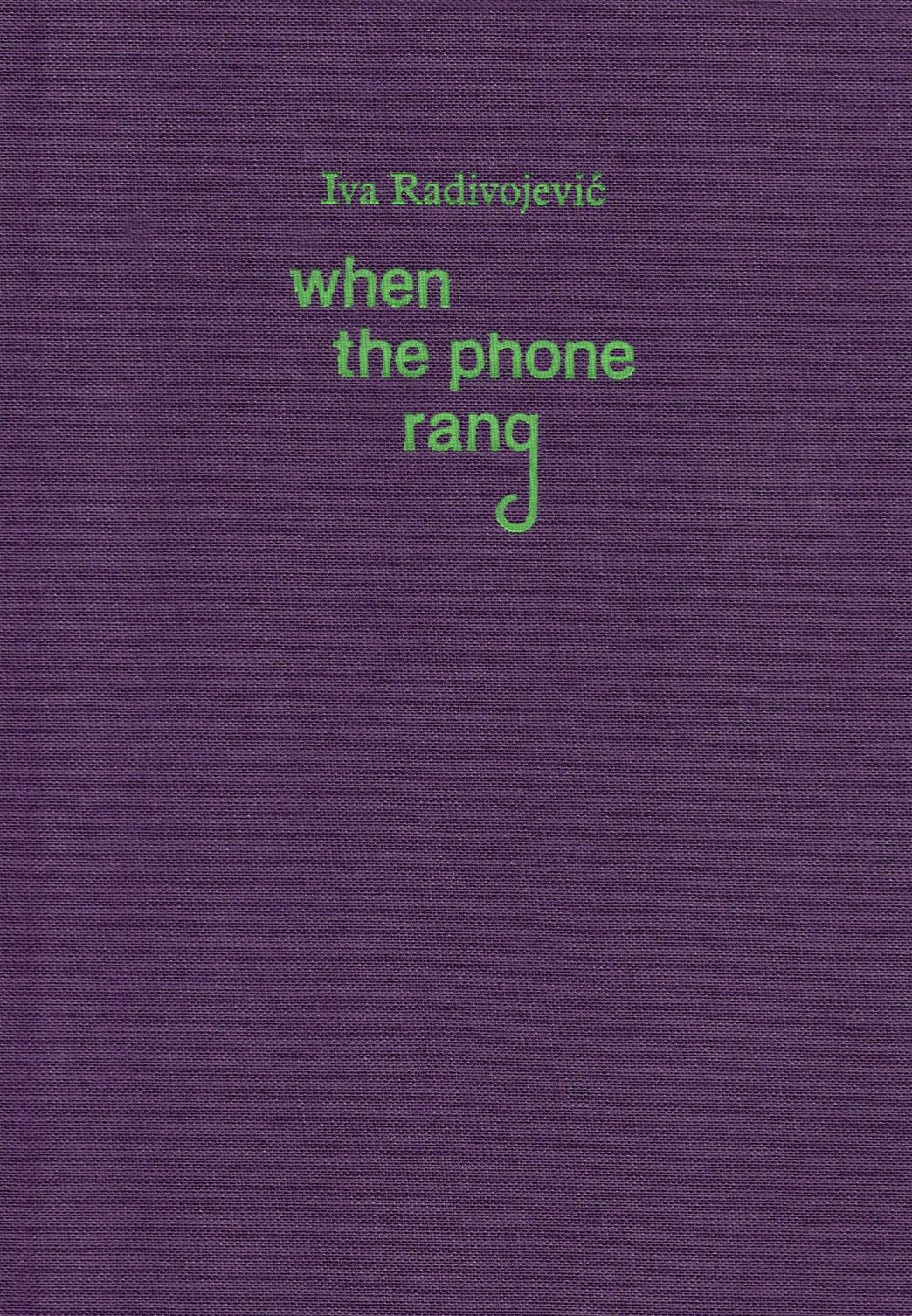
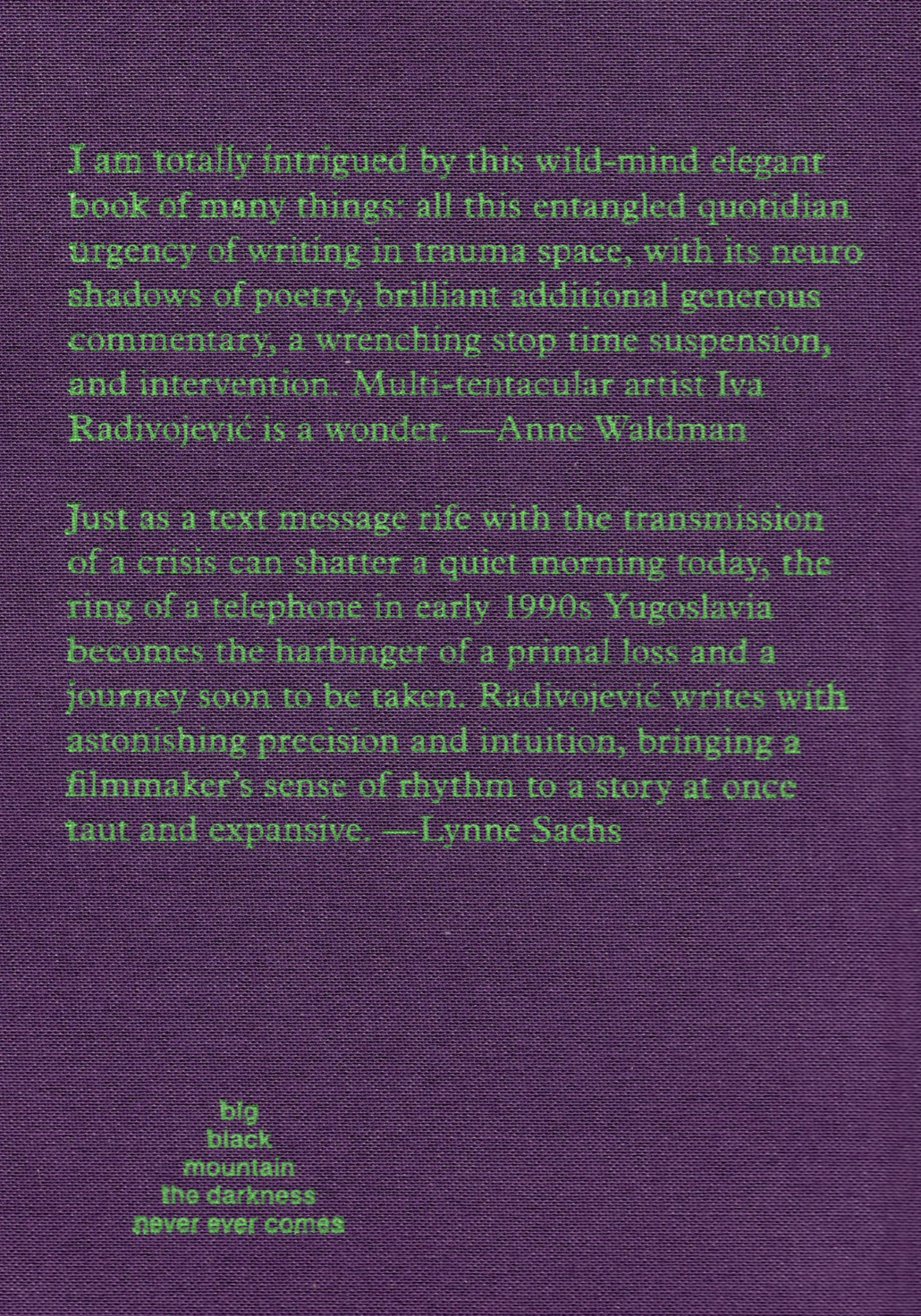
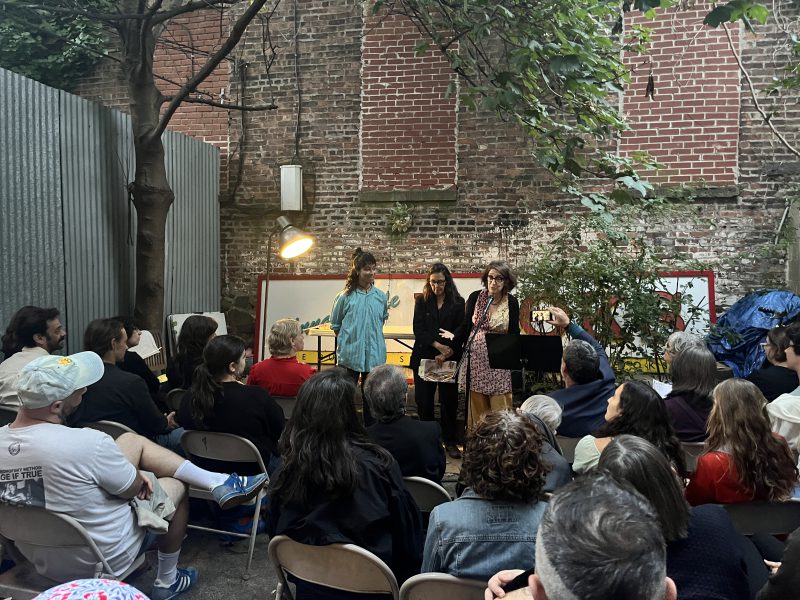
“In author Iva Radivojević’s hands, a mini-novella becomes a distillation for a child’s perception of her domestic universe transformed by the swirling disruptions of a fractured late 20 th Century nation state. Just as a text message rife with the transmission of a crisis can shatter a quiet morning today, the ring of a telephone in early 1990s Yugoslavia becomes the harbinger of a primal loss and a journey soon to be taken. Radivojević writes with astonishing precision and intuition, bringing a filmmaker’s sense of rhythm to a story at once taut and expansive.” – Lynne Sachs
Hardcover reprint by Big Black Mountain The Darkness That Never Ever Comes, in Athens, Greece.
This story was conceived through a constraint. It arose one day suddenly and without warning, in a poetry workshop with the late Lewis Warsh. The book is a meditation on memory – remembering and forgetting. Or, it’s a tribute to those memories that sustain like stubborn specters, haunting the present. It’s looping and recurring opening paragraph reveals a larger story of dislocation: It happened in a place that exists, only in books, films and memories of those born before 1995. When the phone rang it was 1992, 10:36am, a Tuesday,and in this moment the country of Y was still a country.
The story was adapted to a screenplay, and became a film by the same name.
In May of 2020, the Memphis College of Art (MCA) graduated its last class of students, ending an illustrious 84-year history of contributing to the creative, economic, and cultural flourishing of the city of Memphis. In addition to being a touchstone for the regional arts community, MCA graduates ventured across the country and around the world where they nurtured their own careers as well as inspired generations of others through teaching. The college’s history is intimately tied not only to the city but also to the Brooks Memorial Art Gallery, today the Memphis Brooks Museum of Art.
Florence McIntyre played a role in founding both institutions, including in their organization, professionalization, and success. It is therefore fitting that the final exhibition the museum mounts in its original home in Overton Park is a celebration of its sister organization’s august history. Through this exhibition of 90 faculty, administrators, and graduates who represent the diversity associated with the institution, Memphis College of Art, 1936-2020: An Enduring Legacy highlights the school’s success in educating and fostering artists. Featured are ninety works across a range of media spanning the school’s history and is organized into groupings of faculty and their students. The exhibition is an opportunity to reflect on the historical impact of the college as well as celebrate its continued legacy regionally and beyond. The exhibition includes work by Mario Bacchelli, Brin Baucum, Dale Baucum, Kim Beck, Tootsie Bell, Peter Bowman, Cynthia Bringle, Bunny Burson, Fred Burton, Burton Callicott, Karen Carrier, Nancy Cheairs, Martha Christian, Funlola Coker, Michael Coppage, Jay Crum, Beth Dary, Maritza Dávila Irizarry, Alonzo Davis, Patrick DeGuira, Carol DeForest, Don DuMont, Henry Easterwood, Thorne Edwards, Biff Elrod, Ted Faiers, Annette Fournet, Lurlynn Franklin, Moko Fukuyama, Ahmad George, Betty Gilow, Luther Hampton, Rob Hart, Adam Hawk, Michael Hayes, Randy Hayes, Pinkney Herbert, Sharon Havelka, Kyle Holland, Amy Hutcheson, Gere Kavanaugh, J. D. Kelly, Tommy Kha, Tom Lee, Phillip Lewis, James Little, Susan Maakestad, Kate Madison, John McIntire, Emily Miller, Remy Miller, Carl E. Moore, Haley Morris-Cafiero, Joe Morzuch, Floyd Newsum, Michele Noiset, Laurie Nye, George Oberteuffer, Kong Wee Pang, Fidencio Fifield Perez, Ed Perry, Melinda Eckley Posey, Richard Prillaman, Ed Rainey, Veda Reed, Sheri Fleck Rieth, Robert Riseling, Murray Riss, Ebet Roberts, Marc Rouillard, Ted Rust, Jennifer Sargent, Jeanne Seagle, Elizabeth Sheehan, Vitus Shell, Martina Shenal, Allison Read Smith, Dolph Smith, Peter Sohngen, Dorothy Sturm, Cynthia Thompson, Carroll Todd, Martha Turner, Leandra Urrutia, George Wardlaw, D’Angelo Lovell Williams, Sean Winfrey, Jill Wissmiller, Bill Womack, and Tad Lauritzen Wright.
Memphis College of Art, 1936-2020: An Enduring Legacy is guest curated by Marina Pacini, Chief Curator, Memphis Brooks Museum of Art, 2002-2019.
SATURDAYS IN THE PARK Lynne Sachs Memphis Academy of Arts Saturday School, Student, 1970s
Artists are always trying to figure out where they got their start, who were their inspirations, what painting or movie or poem sparked them to follow their creative muse for so many years-well after we put away our box of crayons and start to think of ourselves as adults. I’ve been thinking lately about my own childhood. In my mind’s eye, I revisit the canvases I discovered at age nine with my mother when we entered the Metropolitan Museum of Art during my first trip to New York City. I ponder my third-grade obsession with making needlepoint pillows featuring rainbow-colored mushrooms. I look in a scrapbook for a photo of a lone bicycle leaning against a wall in an alley somewhere in France, my first attempt at creating an image with a “mood.” I contemplate my entire sixth-grade school year in which I was forced to build a single papier-mâché dragon for a school play in which I refused to perform.
Unfortunately, I never had a school art teacher who actually inspired or even truly encouraged me to dive into the haptic, cerebral, even therapeutic, aspects of making art. After far too many disappointments, embarrassments, and frustrations, I abandoned the classes that were offered by my elementary, junior, and high schools and headed to Overton Park where I discovered the wonders of the Memphis Academy of Arts’ Saturday School program for children. There, just a few steps away from our city’s last remaining primordial forest, I embraced a program that supported me and all of the other enthusiastic kids who were looking for something fun, unstructured, and, yes, serious.
In order to understand what it was really like to participate in the weekend classes offered at the academy in the 1970s, you need to think about the building itself, how different it was from any other place where we were expected to learn. Designed by architect Roy Harrover, the academy was a visionary edifice situated in the middle of a metropolitan green space. Rust Hall, its primary building, was named after beloved artist Edwin C. “Ted” Rust, the academy director from 1949 to 1975 and a profound enthusiast for things found in the natural world. No surprise then that the building’s white cement epidermal layer, its skin, was an exquisite latticework that invited nature to enter our consciousnesses. As we stood at our easels with our brushes or our pencils, we gazed wistfully at the old-growth oaks and sycamores just beyond the glass, framed by the distinct graphic configurations of the exterior walls. Even if we were not actually drawing en plein air, the porous sensibility of the building itself invited us to contemplate our place amongst the trees. Whether we recognized it then or not, this was an entirely different sensation from the hermetic experience we found in our more traditional Monday-Friday places of education. Saturday mornings at the academy were different. It’s equally important to know, at least from a child’s perspective, that the Memphis Zoo was only about a five-minute walk from the grand, inviting front stairs of Rust Hall. Animals from every continent were there for us to visit. Of course, with the zoo so close, our teachers would lead us across the park with sketch pads in hand through the entryway, and into the various animal areas. Keep in mind, this was the early to mid-1970s; so, the enlightened late-twentieth- century redesigns of zoos around the country had not yet begun. Most of the creatures were behind bars, shall we say. Nevertheless, we appreciated the sense of adventure that came with being so close. Looking, really looking, at a grand, majestic wildeat for an extended period of time was very different from frolicking from exhibit to exhibit with your family. Now with hindsight, I think about Rainer Maria Rilke’s poem “The Panther” (1902-03) and the way that we as young artists were able to connect with the animals, from their eyes to our paper.
His vision, from the constantly passing bars, has grown so weary that it cannot hold anything else. It seems to him there are a thousand bars; and behind the bars, no world.
As he paces in cramped circles, over and over; the movement of his powerful soft strides is like a ritual dance around a center in which a mighty will stands paralyzed.
Only at times, the curtain of the pupils lifts, quietly—. An image enters in, rushes down through the tensed, arrested muscles, plunges into the heart and is gone.’
Half a century later, my memory insists that the animals were so close to the academy that we could even hear the hoots and screams of the monkeys or the grunts and roars of the elephants from inside the building. Of course, I can’t speak about a school without talking about its teachers. I have been an artist and a college-level professor for more than thirty years, so I think a lot about pedagogy and its impact on students. How we present and talk about art leaves a lasting imprint on the inchoate sensibilities of their evolving, creative minds. I clearly remember two distinct approaches to teaching that were part of my Saturday School and, later, high school night class experiences. There was one painting teacher who insisted that all of his students stand behind him as he rendered a house on a hill with his palette of watercolors. I felt as if I was tied to the ground, being introduced to one methodology that certainly suited him but never resonated for me. I also remember a photography teacher who encouraged us to explore the world we knew and the world we didn’t know, to make the familiar somehow exotic and to make the strange somehow everyday. One day I took a picture of my mother, Diane Sachs, with her hands raised high to the sky, like a tree. She became more than my mom, more than a woman living in Memphis, she became a tree of her own. Both my mother and I still have that black-and-white picture. It will always remind me of that moment in my life when I discovered how art could make me see everything in a new way.
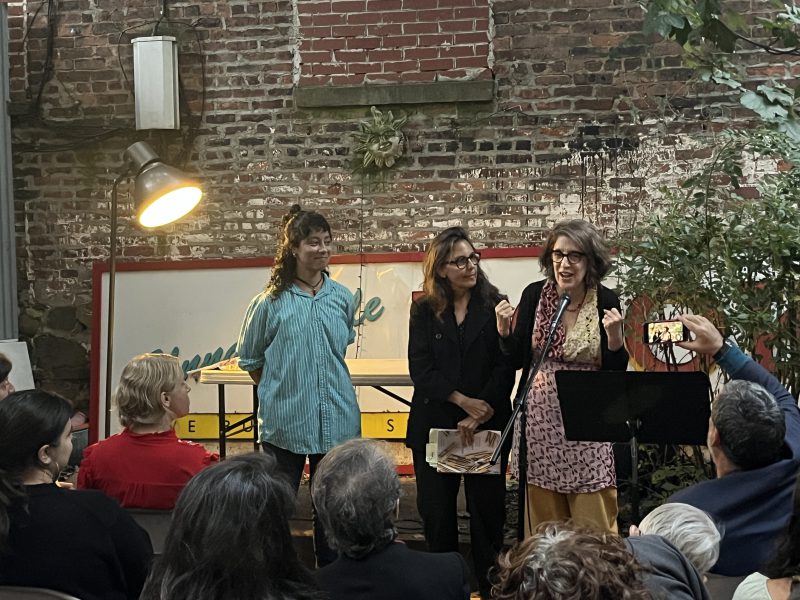
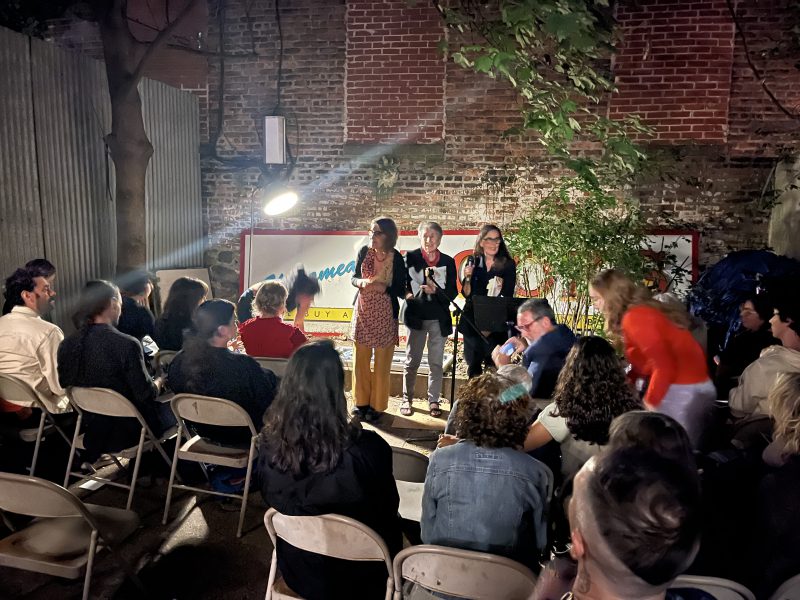
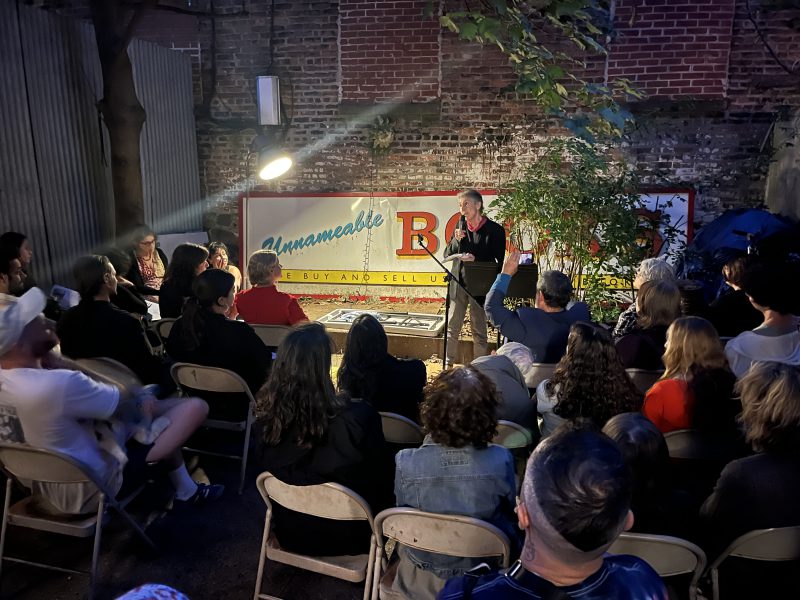
We will be having our first bookstore event for Hand Book: A Manual on Performance, Process, and the Labor of Laundry at the wonderful UNNAMEABLE BOOKS in Prospect Heights, Brooklyn on Monday, September 8 at 7PM.
September 8th, 7 – 8:30 PM
Unnameable Books
Reading and performance with special guests Silvia Federici and Veraalba Santa
615 Vanderbilt Ave. Brooklyn
Please join us in the bookstore’s inimitable outdoor space for our reading. We’ve invited feminist historian Silvia Federici, who wrote our foreword, and dancer Veraalba Santa who collaborated with us on our performance Every Fold Matters and film The Washing Society to join us on this special evening. You may remember Vera dancing on top of the laundromat’s machines!
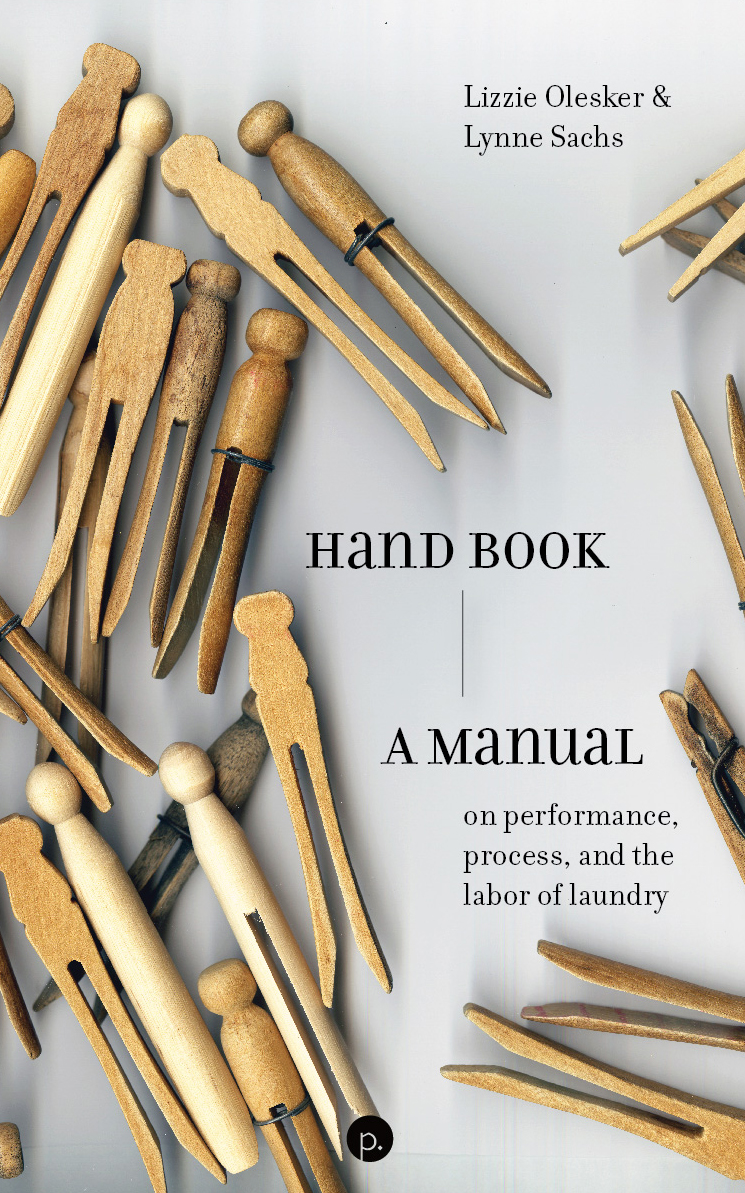
Hand Book: A Manual is a collection of writings and images derived from our film and performance project which looked at the neighborhood laundromat as a microcosm of service work within our city. With a focus on the people who are paid to wash and fold, Hand Book: A Manual explores the convergence of dirt, stains, money, identity, and desire.
Hand Book at Unnameable Books – Run of Show
Monday, Sept. 1, 2025
Notes: Remember adapters Folding table Costumes? Colors Vera’s props, costumes, gloves Lint books Ask Mark to record.
Lizzie and Lynne read from intro. Vera is with us.
P. 29 LS – “Lint” Poem Welcome – LO, LS, Veraalba LO – overall project, each of us intros ourselves LS – Veraalba over 10 years LO – timing, plan, performance, intro Silvia Federici
Vera sits.
P.19 LO “This is not a play….performance.” LS “Making a mark….Manual.” LO “We are a playwright… working artists. LS “We couldn’t know ….urban life.”
P 20 LO “We discovered…..re-enacting.” LS “Our focus …. obvious outsiders.”
P 21 LO “All of the ….Brooklyn.”
Vera starts to transform while Lizzie and Lynne speak. Set up table.
LS “We invited actors…an Imagined laundromat.” LO “Through an open …..textual construction.”
P. 24 LS “Throughout our process…body.”
Vera’s gestures.
LO “You are the audience…another.” LS “Holding….experience.”
P. 25 List of laundromats – Lynne, Lizzie and Veraalba
P. 37 – Veraalba LO “Score for a folding dance.” LS by Veraalba Santa “Stand still … quickly.”
Vera picks up EVERY FOLD MATTERS sign and waves in air. Vera folding dance, starting with less intensity. No music.
Title page of script LO “Every Fold Matters LS a playscript”
P. 1 – 2 (Script) LS “As the audience enters ….overlapping.” LO as Ching: “I don’t want to talk about it.” Vera “Nothing/sorry.” LO “My boss says no.”
P. 3-4 (Script) LO “I think about other things when I’m doing it.” Vera “I meet different people…every customer.”
P. 13 (Script) Vera’s monologue “Sometimes the boss comes… from me.”
P. 12 (Script) LO: I don’t want to talk about it. Vera: Nothing to say (in Spanish)
LO: The boss says no. Return of Vera’s folding dance. With music.
Vera removes layers of clothing that would slowly be peeling away, throughout the reading, as she weaves through with movement. The last layer is removed revealing the worker’s smock. She dances and then removes the smock, revealing one more shirt with writing that’s removed revealing the black actor’s shirt.
P. 38 (Script) Last Paragraph of Score for a Folding Dance: “The body spins… back to folding.”
LO & LS at computer with music, “Watery Variation”.
IMAGE 01 handbook cover IMAGE 02 Introduction page IMAGE 03 Ching in Every Fold Matters performance IMAGE 04 Sky and sign IMAGE 05 In Motion – Two Women Folding in Brooklyn Laundromat IMAGE 06 Ching and Vera transform 1 IMAGE 07 Ching and Vera transform2 IMAGE 08 Ching and Vera transform 3 IMAGE 09a Lulabelle 1 IMAGE 09b Lulabelle 2 IMAGE 09c lint page IMAGE 09d Hand Book pages outdoor performance and list of shows IMAGE 09e Ching in Every Fold Matters performance pp 12 and 13
P. 179 “Epilogue” LO “Things change…launderette..” LS “Now there is an app….it’s guaranteed.” LO “With the sunrise….folded.”
Introduce Silvia Federici and how we met… helping with her archive… George Caffentzis
P. 15 Foreword “The washing of clothes….organization.”
P. 16 “Does Art Embody…..struggle.”
Silvia will talk about: Andrea’s essay “Service not Servitude” p. 136 Here interview – p; 139 and 143
Contributors Andrea Estepa, Silvia Federici, Tera Hunter, Jasmine Holloway, Amanda Katz, Mahoma Lopez, Rosanna Rodriguez, Margarita Lopez, Luo Xiaoyuan, Emily Rubin, Veraalba Santa, Stephen Vitiello
Hand Book: A Manual on Performance, Process, and the Labor of Laundry is a collection of writings and images from a performance and film set within a neighborhood laundromat, a microcosm of service work within our urban reality. With a focus on the people who are paid to wash and fold, Hand Book explores the convergence of dirt, stains, money, identity, and desire. Informed by both theory and history, filmmaker–poet Lynne Sachs and playwright Lizzie Olesker construct a model for making a site-specific work incorporating both live performance and film. From conversations with workers in laundromats around New York City, they develop a play that magnifies forms of manual labor that often go unrecognized. The core of Hand Book is Sachs and Olesker’s hybrid script which grew out of documentary material they collected in New York City over several years. Within this theatrical construct, the actors themselves navigate the dynamic between their laundry worker characters and who they are in their own lives.
In Hand Book, images also engage with text to create an evocative graphic experience. Turning a page becomes an interactive, quasi-cinematic encounter. We think about the intimacy of touching other people’s clothes, almost like a second skin, the textural care for things kept close to the body.
Hand Book includes essays, interviews, memoirs, and poetry that look at the relationship between art and social engagement. Observation, historical research, and fiction intersect, creating a patchwork of what is with a speculative, imagined what was. Historian and author Tera Hunter speaks to the importance of the Washing Society, a group of 3,000 Black women laundry workers who organized in Atlanta in 1881. Feminist historian Silvia Federici engages in a conversation with the authors about the meaning of reproductive labor and its relationship to laundry. Two leaders of a grassroots organization share their experience of immigration and activism. A dancer creates a gestural map of her choreography. An actor deconstructs the charged significance of her Civil War era costume.
Hand Book: A Manual presents an illuminating dialogue between documentary, feminism, film, immigration, labor history, and theater. Throughout, a playwright and filmmaker contemplate how art-making can alter our understanding of the social structure of city life.
The film The Washing Society is available via QR code.
You can order Hand Book: A Manual on Performance, Process and the Labor of Laundry in several ways:
– Asterism, a great supporter of independent presses.
– Directly from Punctum (where you can download the entire e-book for free thanks to their open source policy).
– Support your local bookstore by asking them to order it.
Select Quotes
“This generously kaleidoscopic offering invites readers to think through the labor of laundry via an impressive array of modes in an interactive collage of perspectives, histories, and bodies.” ~ Christopher Harris, filmmaker
“A beautiful example of how art in tandem with other methods of revelation can illuminate the everyday, at once celebrating a particular aspect of how people live, critiquing the power dynamic it contains, and seeking to intervene in bad “business as usual.” ~ Jan Cohen-Cruz, author of Meeting the Moment: Socially Engaged Performance
“The best of art manifests an ordinary devotion to experiences that become extraordinary given enough care and attention, or an extraordinary devotion to conveying the genuine depth of what passes for the ordinary. Here it is both, at once.” ~ Paul Chan, artist and publisher
ABOUT THE AUTHORS
Lizzie Olesker has been making theater and performance in New York City for several decades, reflecting on the politics and poetry of everyday experience. Her plays and solo performances exploring domestic work, personal memory, and quotidian gestures have been developed and presented in NYC at the Public, Cherry Lane Theatre, Clubbed Thumb, Dixon Place, New Georges and the Ohio Theater. As an actor, she’s worked with the Talking Band, appearing at La Mama and on international tour. Published in The Brooklyn Rail and by Ice Floe Press, Olesker received support from New York Foundation for the Arts, the Brooklyn Arts Council and the Dramatists Guild. Olesker teaches at the New School and New York University where she’s active with her adjunct faculty union.
Lynne Sachs is a filmmaker and poet. Her early works on celluloid took a feminist approach to images and writing— a commitment which has grounded her ever since. With each project, Sachs investigates the connection between the body, the camera, and the materiality of film itself. Embracing archives, found images, letters, and journals, her work takes us on a critical journey through reality and memory. In films such as The House of Science, Which Way Is East, Your Day Is My Night, and Film About a Father Who, Sachs uses hybrid form and collaboration, incorporating documentary, performance, and collage. Many of her films explore the relationship between personal observations and collective historical experience. She often addresses the challenge of translation—from one language to another or from spoken work to image. These tensions are investigated in five essay films that took her to sites affected by war, where she looked at the space between a community’s memory and her own perceptions. Retrospectives of Sachs’s films have been presented at festivals in Argentina, China, Costa Rica, Cuba, Germany, Ireland, South Korea, UK, and at NYC’s Museum of the Moving Image. In 2019, Tender Buttons Press published her collection Year by Year Poems. Sachs received a Guggenheim Fellowship in the Arts and lives in Brooklyn.
Andrea Estepa is Research Fellow at Smith College and historian of women and social movements. Silvia Federici is an activist, scholar, and writer of Caliban and the Witch and Revolution at Point Zero: Housework, Reproduction, and Feminist Struggle.Tera Hunter is Professor of African-American Studies at Princeton University and author of To ‘Joy My Freedom: Southern Black Women’s Lives and Labors after the Civil War and Bound in Wedlock: Slave and Free Black Marriage in the Nineteenth Century.Jasmine Holloway is an actor and singer who has performed with Harlem Repertory Theater and Soho Rep. Amanda Katz is a filmmaker and editor. Mahoma Lopez and Rosanna Rodriguez are co-directors of the Laundry Workers Center, advocating for low-wage immigrant workers. Margarita Lopez is a laundry worker and mother living on the Lower East Side. Luo Xiaoyuan is a translator. Emily Rubin is founder of Loads of Prose and author of the novel Stalina. Veraalba Santa is a Puerto Rican actor and dancer with stage and film experience. Stephen Vitiello is a composer and sound artist and Professor of Kinetic Imaging at Virginia Commonwealth.
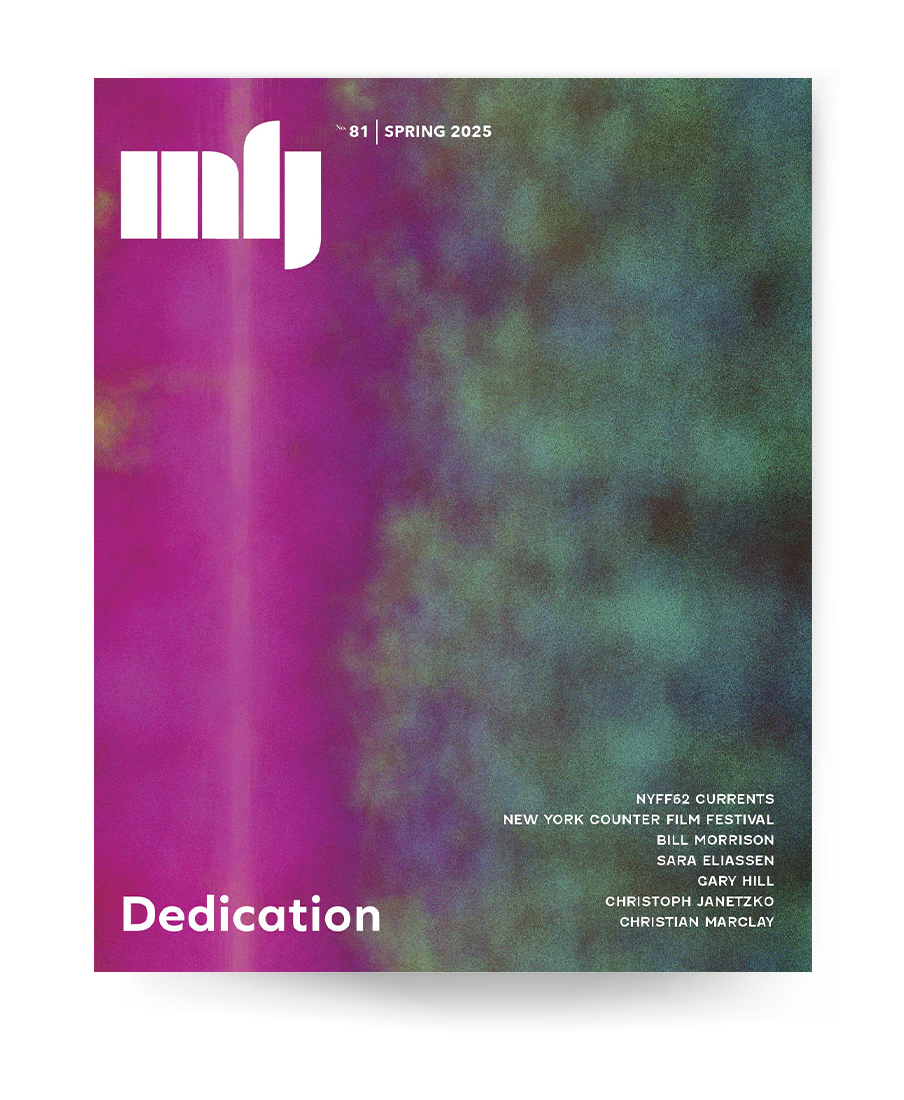
This edition of the Millennium Film Journal is marked, above all, by grief. We felt it painfully during our fall screening at Anthology Film Archives in the immediate aftermath of the 2024 presidential election, and later as wildfires tore through Los Angeles, devastating members of our community directly and irrevocably. Loss is a part of human life, always, everywhere, but today there seems so much to mourn, as wars rage, ecosystems collapse, injustices multiply and worsen, and hopes of humanitarian justice founder.
Excerpted from Nicholas Gamso’s Introduction, MFJ 81 “Dedication” (Spring 2025).
Remembering Gunvor Nelson
Gunvor Nelson was a profound presence in my life – a teacher at the San Francisco Art Institute first and then for decades a dear friend. Her films made you think about everything from the taste of a shiny green apple to the mortal coil. Whether using a light meter or working with the laboratory on the timing lights for a new film, Gunvor relished every aspect of her art, including the technology. I would sit with her for hours in front of a 16mm editing machine, knowing that I was learning from a brilliant, committed artist with the most lucid, precise advice.
“Before you shoot film, it is helpful to think through what style of editing would be most appropriate so that you will not leave out necessary liaisons or steps.”
Transitions were extremely important to Gunvor. She was always thinking about how to enter the front door of an image and how and when to get out. A shot was like an airport and the arrival and departure times of every single plane were critical. Otherwise there might be too much chaos on the tarmac!
“Surprising solutions can be had with the most deficient of material if you let it speak to you, if you learn what really is in the film. Sharp jumps in the editing can be, at the right places, most exhilarating.”
One of the most lasting suggestions Gunvor made to me was that a filmmaker should always return to their outtakes just before the completion of a film. These “mistakes” that were initially disregarded become extremely useful punctuation – like a period or an exclamation mark – that assists the completion of a visual thought.
Gunvor’s movies also made me think about being a woman in the most visceral ways. Here film “Schmeerguntz” (1965) captured the raw, messy ecstasy of being a mother, and her film “My Name is Oona” (1969) celebrated the fierce passion of her daughter Oona Nelson, inspiring me to shoot 16mm footage that spins, dances and, soars with my daughters Maya and Noa.
A few years ago, I traveled to Gunvor’s home in Kristinehamn, Sweden, to spend time with her as I was making my film “Carolee, Barbara and Gunvor” (2018). We often found ourselves in her lush garden just outside the back door. On our last day, we were standing in front of a patch of snapdragons when she decided she couldn’t resist being my teacher again. She noted that everyone shoots colorful, living flowers. It’s more interesting and sculptural, she explained, to film the dead ones.
I am reminded of Gunvor often – in dreams and in my consciousness as an artist. Like Cézanne, she was more intrigued by the shapes that surround an object than the object itself.
“Study negative space.”
Gunvor once explained to me that when you finish editing your film, you will feel ecstatic. Then, there will be a profound sense of loss. To be inside the making of a film is an incredibly consuming fusion of the intellectual and the artistic. No matter what is going on in your home or in the world beyond, you have your film, and that, sometimes, is enough.
Lynne Sachs
Remembering Narcisa Hirsch
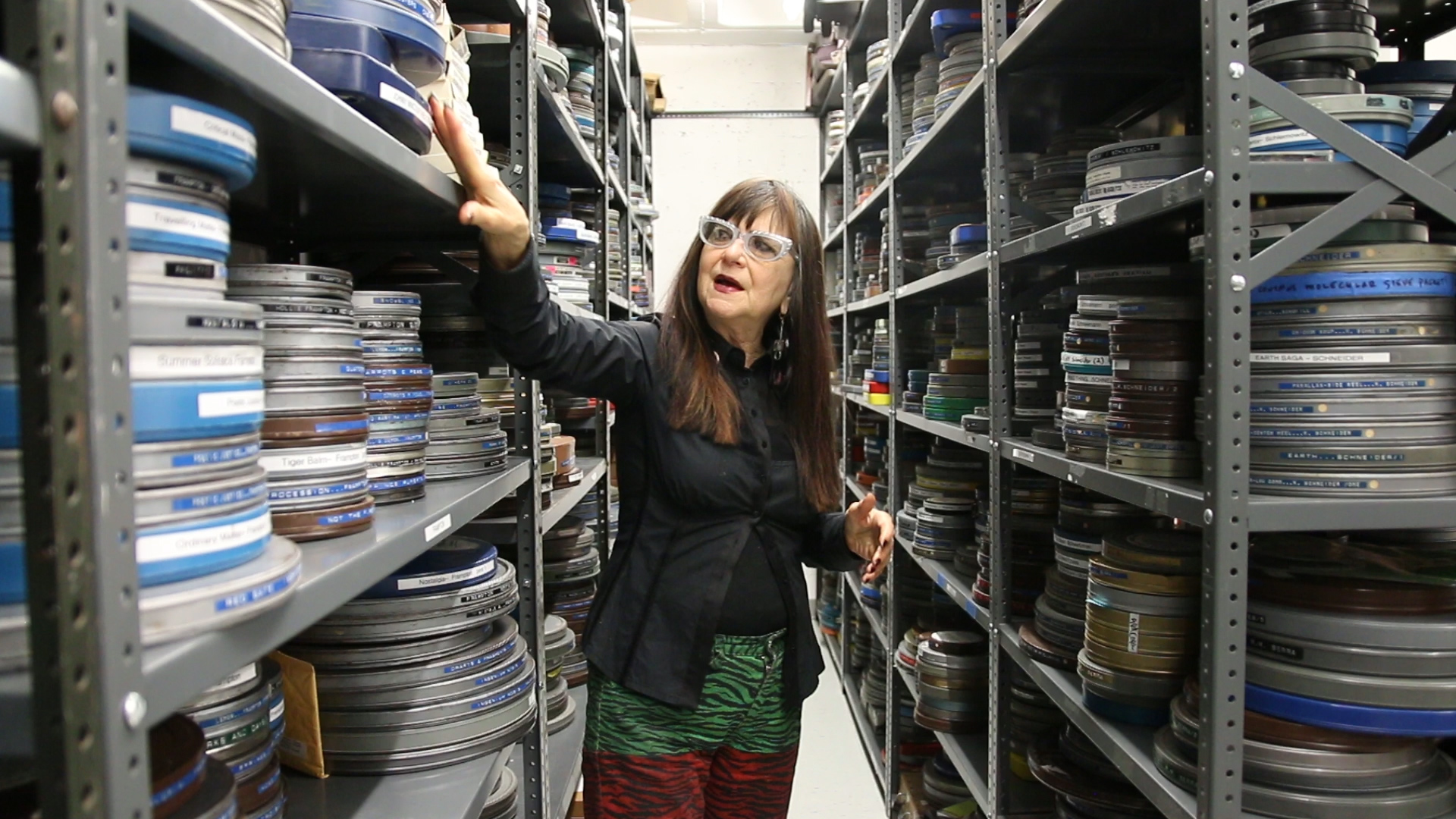
I arrived in Buenos Aires in the summer of 2008, ready to immerse myself in a city with a reputation for celebrating avant-garde films with the same intensity that Hollywood lauds mainstream movies. Within the first few days of landing in Buenos Aires, I started to hear about this extraordinary 80-year-old woman who lived at the vortex of all things experimental. She had not only spent a life-time making her own work, but was also supportive of other film artists whose 16mm prints she collected and exhibited in her home. Her name was Narcisa Hirsch.
From the moment we met, I knew that I wanted to spend as much time as I could with this woman who was so candid about everything surrounding film form and feminism, in equal measure. Clearly, she had a profound interest in unraveling the ontology of cinema and challenging the way that film as an art had been hijacked by the entertainment industry. She was always thinking about the camera’s ability to rearrange reality and the way it allows us to better understand how we think and move. She made it clear that she had her own perspective and it was clearly female.
One morning I went to Narcisa’s home in the neighborhood of San Telmo. Knowing how much she loved children, I brought my camera and my young daughters Maya and Noa. She immediately explained to us that painting on an easel had “died” in the late 1960s. Consequently, she’d made and documented far more radical feminist performances, what people were starting to call “Happenings”. She created Marabunta (“swarm of ants”) collaboratively in the Buenos Aires theater where Antonioni’s Blow Up was premiering. In Munecos she gave away 500 baby dolls on the streets of London and New York City. Narcisa vividly described her first witnessing of Michael Snow’s Wavelength, fully aware of how influential this seminal 16mm film would be to her film Taller, a starkly structuralist, yet personal, survey of her own studio space. She showed us her visualization of Steve Reich’s Come Out which she integrated into a filmed document of the sound piece as it plays on a portable record player. In her mind, purchasing films by artists she respected was the best way to support the work she loved. She proudly swung open a closet which contained the work of Carolee Schneemann, Su Friedrich, Stan Brakhage and so many others.
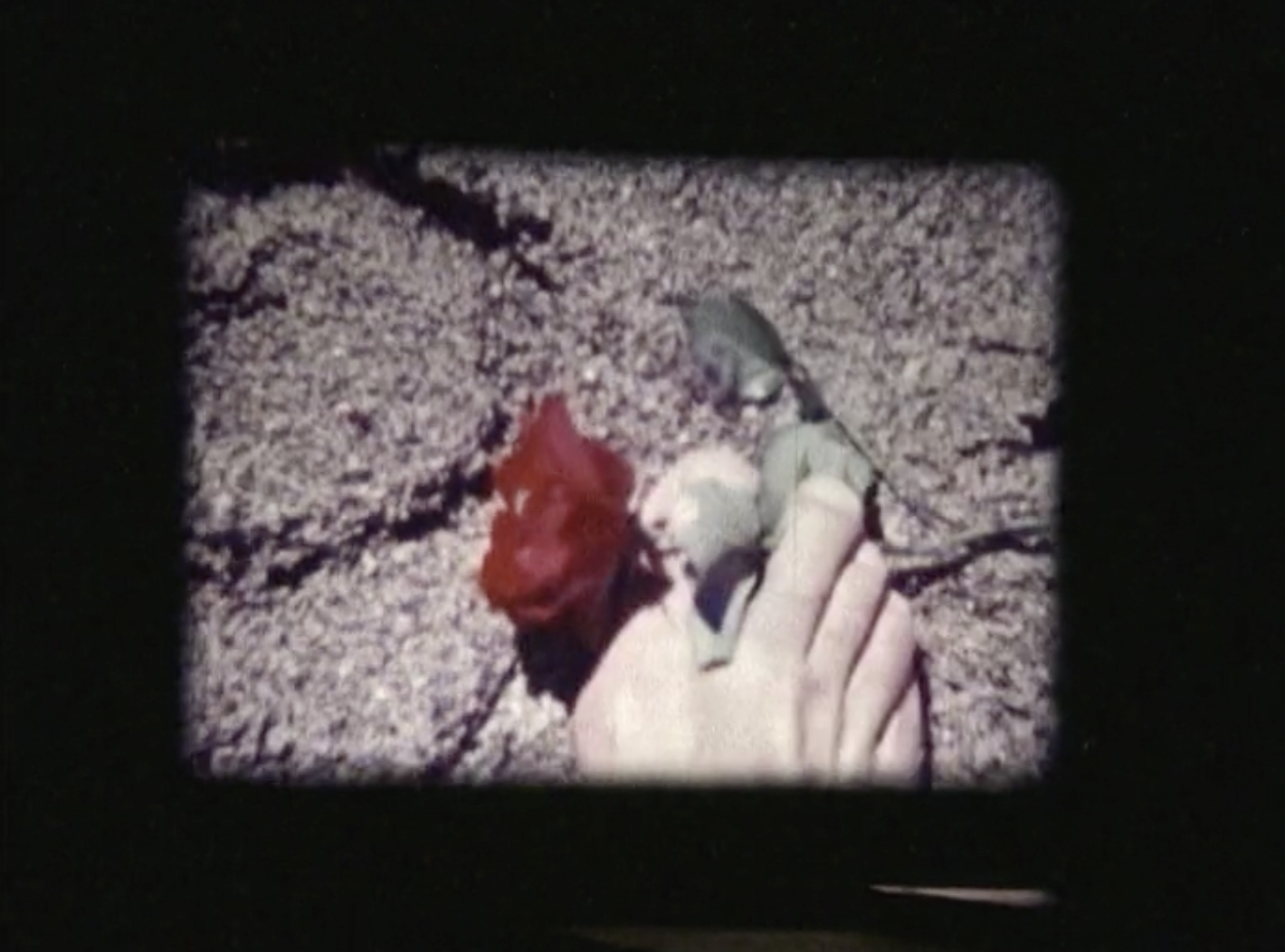
Narcisa was exquisitely aware of what she was doing. She committed herself to filming her daily life both in the city and on her farm in Patagonia — close ups of leaves and water, her feet, a fly, her shadow in the sand as she carries her film camera, cherries on skin, a fly, a mouth luxuriating at the taste of fruit, a baby on the grass, a breast, and a belly in the sunlight. As long as she was world famous for 50 people, she was happy.
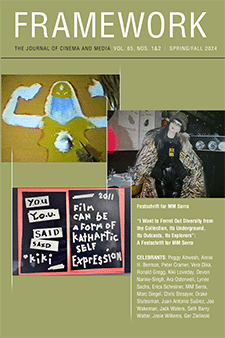
Framework explores a variety of topics in film, media, art, politics, and cultural studies. The journal publishes valuable and innovative work with a wide international range and promotes theoretical and avant-garde approaches from its contributors.
“This is a very special double issue devoted to the work of MM Serra: Film-Makers’ Co-operative Executive Director Emeritus, teacher, mentor, and artist. That list of titles and roles hardly indicates the extraordinary breadth of MM’s work, art and interests, her long friendships, rich artist networks, and commitment to diversity, to outsiders, to the flourishing edges. Framework’s celebratory double issue includes testimonials, art pieces, memoirs, biographies, and conversations from friends and colleagues, stitching together a multi-perspectival, layered collage of MM’s life work.”
—Drake Stutesman and Susan Potter
“From My Mouth to Your Ear”: Recounting a Life in Art and Cinema MM Serra with Lynne Sachs
Introduction
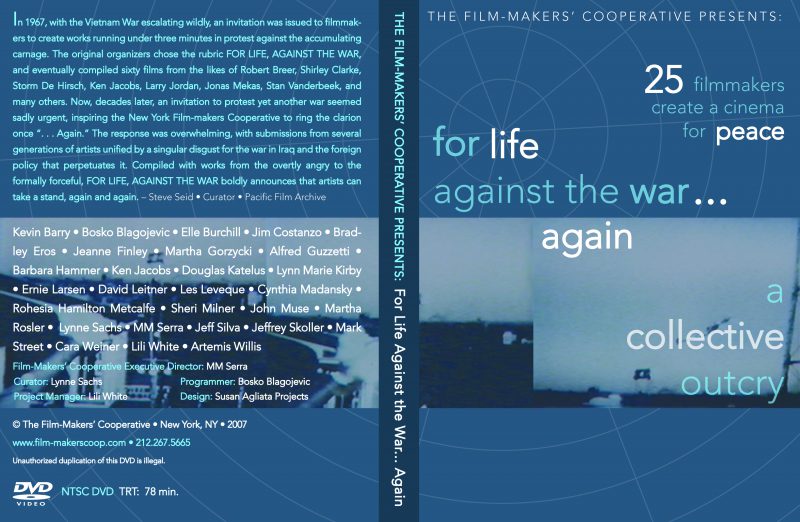
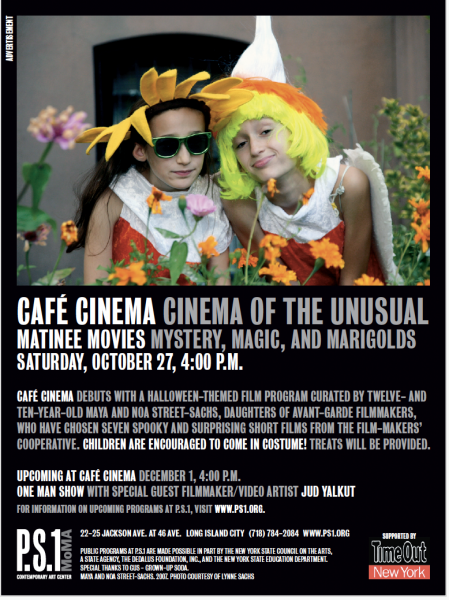
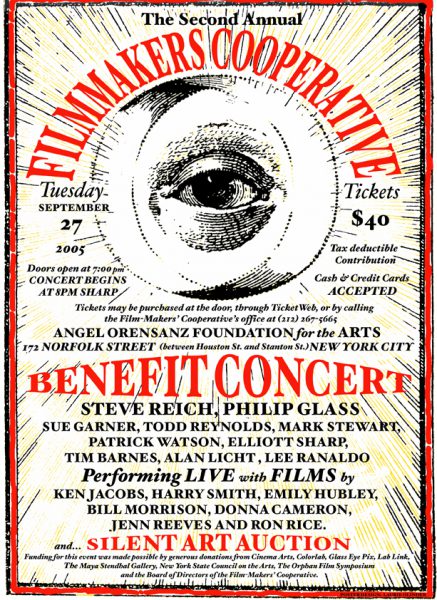
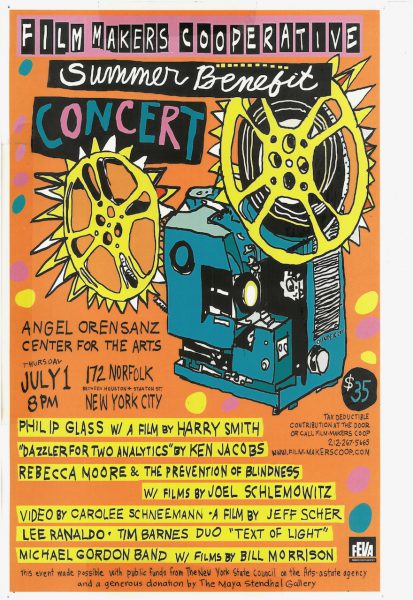
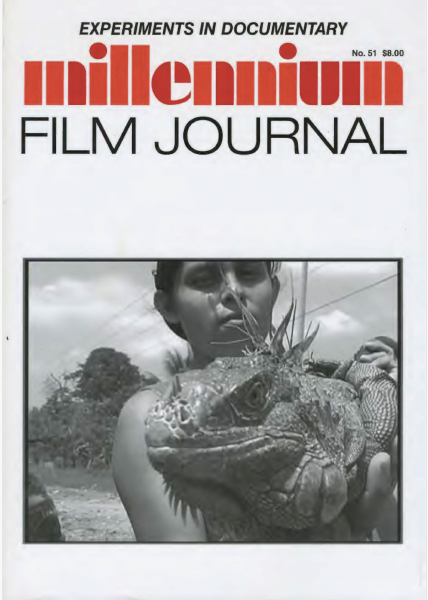
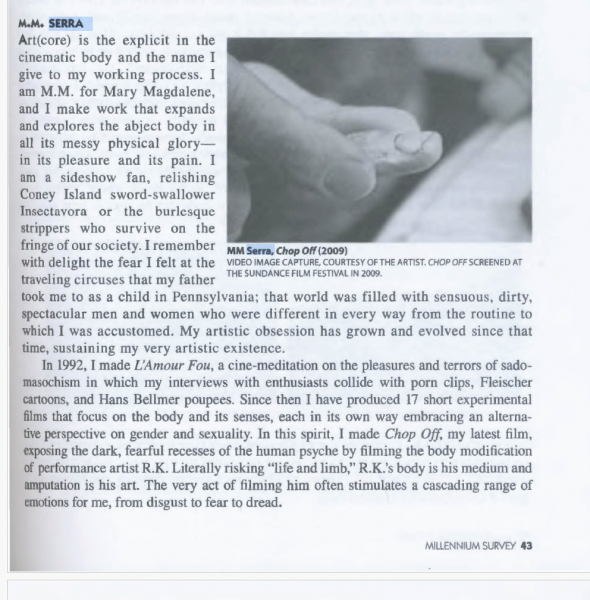
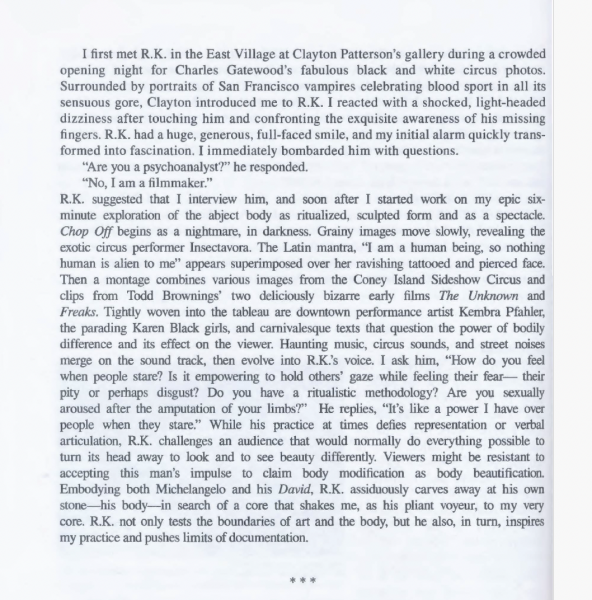
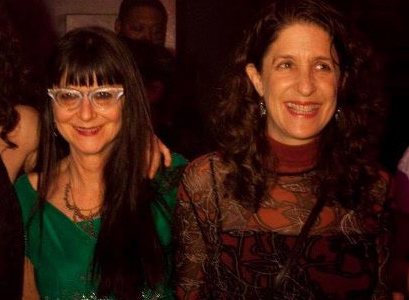
MM Serra is a powerhouse New York City cinema visionary and a beloved friend since the late 1980s. As Executive Director of the Film-Makers’ Coopera- tive, Serra (as I have always called her) asked me to join the Cooperative’s board of directors in 1997, soon after I moved to town with my partner filmmaker, Mark Street, and our daughters, Maya and Noa Street-Sachs. Over the course of the next 17 years, we worked together on innumerable projects including: a 2006 anti-war exhibition (fig. 1) and DVD entitled For Life Against the War . . . Again (US, 2007), currently distributed by the FMC (fig. 2 and 3 For Life Against the War . . . Again photos); a PS1/ MoMA children’s film series entitled “Cinema of the Unusual,” curated by Maya and Noa (fig. 4 and 5 “Cinema of the Unusual” with Maya and Noa Street-Sachs photos) in 2008 and 2009; and many FMC benefits at locations like the then crumbling nineteenth-century synagogue at the Angel Orensanz Foundation in the East Village (fig. 6 and 7 Film-Makers’ Cooperative Benefit photos) and other venues around town. Together in the Coop office on Leonard Street or later on Park Avenue South, we toiled over grant applications, usually meeting their deadlines with only minutes to spare. In 2009, I co-edited the 51st issue of Millennium Film Journal (fig. 8, 9, and 10 Millennium Film Journal photos) which featured writing on the then burgeoning genre of experimental documentary and included Serra’s essay on her film Chop Off (US, 2008).
Time & Place: on the work of Lynn Marie Kirbyexplores the artist’s work through a collection of newly commissioned writing and previously published essays by Etel Adnan, Barbara McBane, Charlie Hewison, Glenn Phillips, Etienne Kallos, Lynne Sachs, Jeffrey Skoller, Jordan Stein, Jalal Toufic, Carolina Magis Weinberg, Tanya Zimbardo, and interviews with Kirby and Lissa Gibbs, Alexandra Grant, Megan Kiskaddon, Rachel Ralph, and Trinh T. Minh-ha. In lieu of standard photo documentation, the book includes Kirby’s black & white scans.
Lynn Marie Kirby is a San Francisco-based artist focused on questions of place, the residue of history, and social choreography. Her conceptual practice engages time as a material, different sensory systems, improvisation and collaboration, accidents that make her jump, and forms of contemplation. She is the co-author of XAB’s previous publication Oracular Transmissions.
Artist: Lynn Marie Kirby Contributors: Etel Adnan, Lissa Gibbs, Alexandra Grant, Charlie Hewison, Etienne Kallos, Megan Kiskaddon, Carolina Magis Weinberg, Barbara McBane, Trinh T. Minh-ha, Glenn Phillips, Rachel Ralph, Lynne Sachs, Michael Sicinski, Jeffrey Skoller, Jordan Stein, Jalal Toufic, Tanya Zimbardo Editors: Addy Rabinovitch, Alexandra Grant, and Lynn Marie Kirby Design: Dana Collins
Published in 2024
9 x 6 x .6 inches (22.9 x 15.4 x 1.6 cm), 312 pages, paperback
Maybe everyone has this feeling in some way. When something terrible happens in the world, we ask ourselves, “What can I do?” Sometimes, I feel hopeless and powerless and go on with my life. Other times, the despair so haunts me that I realize that I must respond in some way. I need my artistic practice to articulate how I am feeling, not so much as an act of persuasion but rather a witnessing.
In spring 2023, filmmaker Kristy Guevara-Flanagan, the head of documentary at UCLA, put out a national call to filmmakers around the country. She was searching for artists who were willing to look at the 2022 Dobbs decision that had overturned Roe v. Wade, the 1973 landmark Supreme Court decision legalizing abortion nationwide. In 21 states, women no longer had the right to end their pregnancies. Guevara-Flanagan hoped to create a collection of films which would reflect the post-Dobbs reality and its ripple effects. Specifically, she wanted to look at the impact of abortion clinic closures across the country. I was already asking myself what the role of my art-making practice might be in this heightened time of fear and chaos. Her summons to action landed in my consciousness at just the right moment.
Now a year later, our Abortion Clinic Film Collective has become a diverse group of six filmmakers. Using our own visual style, we recount the story of various clinics in states where a woman no longer has the right to an abortion. We observe and listen to activists, daughters, parents, teachers and medical providers from Arizona, Kentucky, North Dakota and Tennessee. Each of us investigates the myriad ways that women’s personal and professional lives have been affected by this seismic change in the American legal system. I’ve found a sense of solidarity and hope with these artists.
I traveled back to my hometown of Memphis, Tennessee, to begin the work on Contractions, my contribution to the collective. While I haven’t lived in Memphis for many years, my cousin Laura Goodman, a longtime activist in the local reproductive justice community, was able to help me get started. With her personal contacts and enthusiasm, we gathered a group of 14 Memphis activists – mostly women, but also a few male allies – to perform in front of the camera. From the first moment that we reached out to potential participants in the film, I made it clear that their presence would probably be different from any film they had seen before: there would be no faces on the screen.
If you don’t live in one of the 21 states where antipathy toward abortion rights is at the level of vitriol, it might be difficult for you to imagine what it’s really like to advocate for a woman’s right to choose in the state of Tennessee. Being in this film could pose risks to your reputation – affecting such vital aspects of your life as your job, your place in your religious community, and certainly your political future. If you need an untarnished name in town, you would probably not opt to be in this film. Promising everyone that their face would not appear in the finished film was liberating – for my “cast,” and for me. I am an experimental filmmaker, so beginning a project with these basic constraints actually gave me the artistic freedom to transform what appeared to be a documentary impulse into a choreographed, physically precise performance. I came to our set with drawings for each visual scene and asked all of the women to wear patient gowns. In this way, their presence on screen became stark, uniform, distinct only by the way that they carried their bodies and wore their hair.
I decided to bring New York cinematographer Sean Hanley, a dear friend and collaborator I’ve worked with for over a decade on my films Your Day is My Night (2013), Tip of My Tongue (2017), The Washing Society (2018) and Swerve (2022), with me to Memphis to shoot the film. As part of our preparation for the film, we looked at the work of artist, musician and choreographer Meredith Monk, specifically her astonishingly moving 1981 performance-based experimental documentary Ellis Island. In this film, Monk captures a haunting sense of place and trauma. I wanted to work with Sean in a similar way, using austere, dance-like gestures, a sharp attention to the confinement of the film frame, and a sense of a collective whole in which the singular becomes subsumed by the power of the group. I followed a taut dramaturgical impulse, directing my performers in a way that made them find strength in their shared experience. I was relieved to discover that asking each participant to wear a medical gown as their “costume” and only showing the backs of their heads released them from a self-consciousness that often comes with acting for the camera. Since I had chosen a parking lot outside a very well-known but now shuttered women’s health clinic, our location was simple but highly contested. We needed to work efficiently and very quickly, so I made storyboard drawings I could quickly show to Sean. Through his lens, we tried to evoke a dystopic, yet elegiac, feeling of anguish and collective pain.
On the morning of production, Emily Berisso, a co-producer in our support team, without telling me or anyone else on the crew, summoned 14 volunteer marshals and a paramedic to look out for our well-being during the shoot. These days, gathering together with kindred spirits to make a movie about abortion rights puts everyone involved in a precarious and, dare I say, vulnerable position. In retrospect, I do think it was wise to have an experienced, dedicated security team on call – sitting inside their cars, behind building windows, waiting for something they might deem “threatening” to happen. Luckily, it never did.
For the soundtrack of Contractions, I interviewed two women in my cousin Laura’s home the day after our production. Dr. Kimberly Looney is an obstetrician gynecologist who had years of experience performing abortions prior to the changes in the local laws. Until the fall of 2022, she was the Medical Director for Planned Parenthood of Tennessee and North Mississippi. The other woman, “Jane” – who uses this familiar pseudonym to protect herself and her network of advocates – drives pregnant women who want abortions on a nine-hour round trip, across two states to Carbondale, Illinois, where they are able to obtain the services they feel they need. Together, Dr. Looney and Jane bear witness to a troubled time in which women are losing their ability to control what happens to their own bodies. In addition to the two women’s voices, I recorded with our performers in Easley Studio, one of Memphis’ renowned rock & roll sound studios, which was offered to us free of charge. Standing in front of some of the best microphones the industry has to offer, each participant sang, hummed or simply verbally articulated their anguish over the situation they watch each and every day in the state of Tennessee and elsewhere around the country. Mixed in unison by Kevin T. Allen, their voices form an aural chorus that registers somatically in the soundtrack of the film, and is also available as a separate four-minute audio-only piece titled We Continue to Speak. By working with filmmaker Anthony Svatek on the editing, I tried to construct a rigorous formal engagement between these sounds and the images from the hot summer day in Memphis.
So what is the story of a 12-minute film like Contractions beyond its inception and production? What is the journey for a short art film that speaks to a vital, controversial issue of the day? The film had its U.S. premiere in March 2024 at the True / False Film Festival and is now playing at festivals around the world. Perhaps more significant for its place in the dialogue is the fact that The New York Times’ OpDocs series is streaming the film to a worldwide audience here. Issues around a woman’s constitutional right to control her own body can be reflected upon and maybe even discussed at home, in the office, in a car, on the beach, or wherever people stream content these days.
Making Contractions has already given me the chance to spend time with others in the reproductive justice movement. Through the film, I have engaged with people in the medical field, underground activists with a commitment to acts of nonviolent civil-disobedience film artists, and deeply committed volunteers. The experience of making Contractions has changed me. I am only beginning to discover how the film and our collective efforts will be experienced by audiences. I will smile if these moments of witnessing – whether in the theater or the living room – bring about introspection and recalibration.
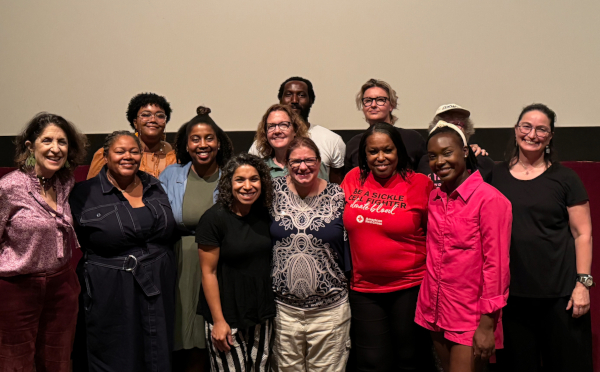
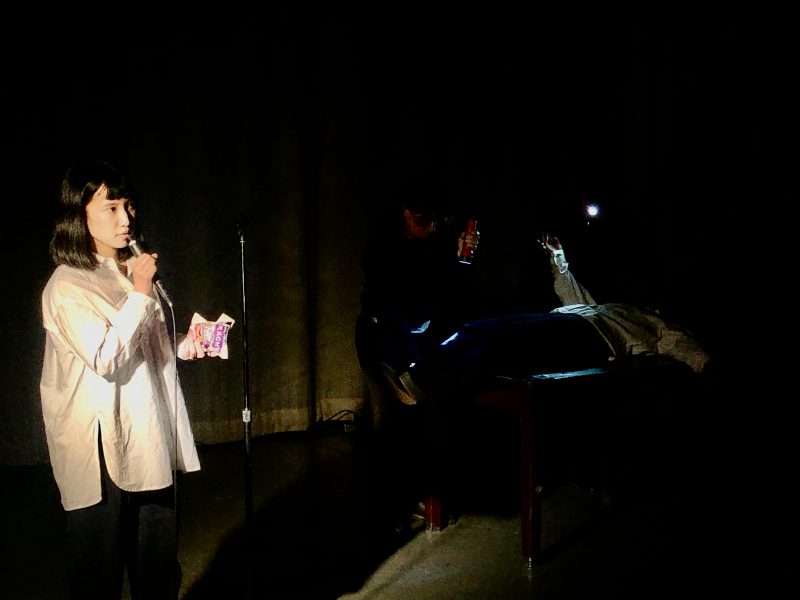
Lynne Sachs (far left)with Dr. Looney, producers Emily Berisso and Laura Goodman and performers in her film Contractions at a screening in Memphis in May 2024.
“Narcisa Hirsch in Berlin in 1928. Argentine by choice, she is a filmmaker, with a long career in experimental cinema. In the 60s and 70s she expanded her activity in the form of installations, objects, performances, graffiti, urban interventions.
In her works she exposes central themes such as love, birth and death, or questions about the feminine condition, recreated through a particularly intimate language of images, with a marked visual and sound poetry. To date she has made more than 30 films in super 8, 16 mm and video.
Since the ’60s, Narcisa Hirsch has given as much importance to experimental cinema as to everything related to it (film archives, sound archives, books, photographs, etc.). Thanks to this visionary spirit, she has gathered, over the years, an impressive archive that includes a collection of national and international films, film material, sound, photographs, among others.” – https://filmotecanarcisahirsch.com.ar/
Interview with Narcisa Hirsch by Lynne Sachs August, 2008, Buenos Aires
In August of 2008, I was living in Buenos Aires with my family. I was able to meet and spend quite a bit of time with artist filmmaker Narcisa Hirsch.
In this conversation, we talk about so many things including: her belief that painting on an easel had died, “Happenings”, her collaborative Marabunta (1967) feminist performance, her discovery of 16mm, watching Michael Snow’s “Wavelength”, creating “Taller” a response to Snow’s ideas, a 16mm visualization of Steve Reich’s “Come Out”, her friend and collaborator Marie Louise Alleman, “Fuses” by Carolee Schneemann which was her first film purchase, making films in the troubled 1970s in Argentina, owning films by Su Friedrich and Stan Brakhage, rejecting making feature films with a script, filming daily life, her being world famous for 50 people, remembering Laura and Albert Honig (Argentine experimental filmmakers), support from the Goethe Institute, making “radical” work that did not threaten the government, “I didn’t go to jail because they didn’t want me,” giving away 500 little dolls on the street and saying “you have a baby” in NYC, London and Buenos Aires. All of these Happenings were filmed and each was very different, she was doing this during the same time that Cesar Chavez was encouraging people to boycott lettuce. She defines what a “happening” is including public participation and very much not a conventional gallery show, art was no longer “re-presentation” but now is a situation, not isolated from the public but including the public. They talk about Ramundo Glazer who was one of the Argentine disappeared.
Then we watch her film response to Steve Reich’s “Come Out”, film diary footage from summer 1973, close ups of leaves and water, her feet, a fly, her shadow in the sand as she carries her film camera, cherries on skin, a fly, a mouth luxuriating at the taste of fruit, a baby on the grass., a breast and a belly in the sunlight, a fly.
with Paula Felix Didier, Ruben Guzman, and Maya and Noa Street-Sachs
The MFA Program in Integrated Media Arts (IMA) offers advanced studies in multimedia documentary arts. The IMA Program educates multi-disciplinary, socially engaged media makers in a diverse range of skills across the media landscape. Working with faculty from film, emerging media, and journalism backgrounds, students learn to conceptualize, create and distribute innovative, politically and socially engaged expression using contemporary media technologies.
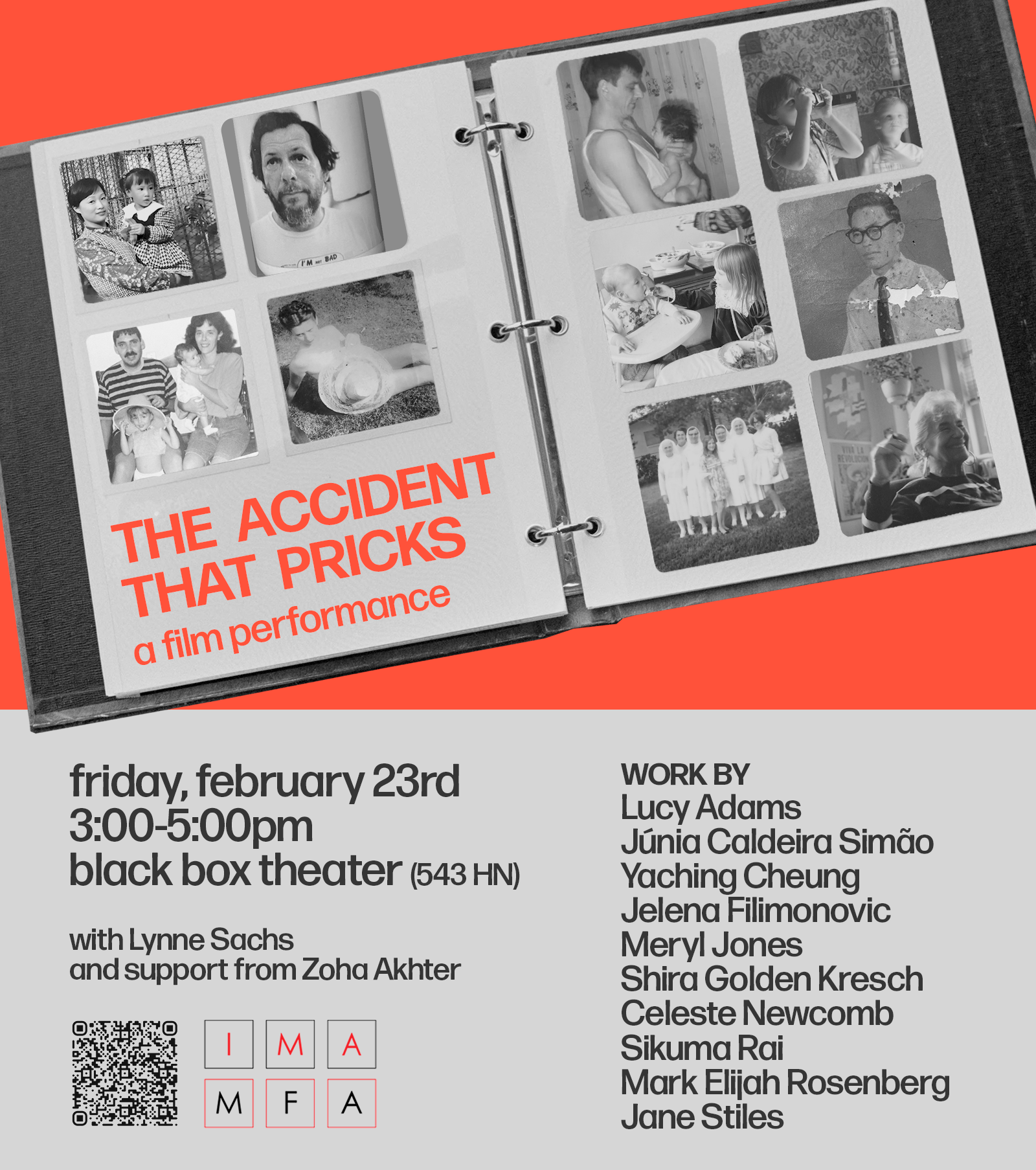
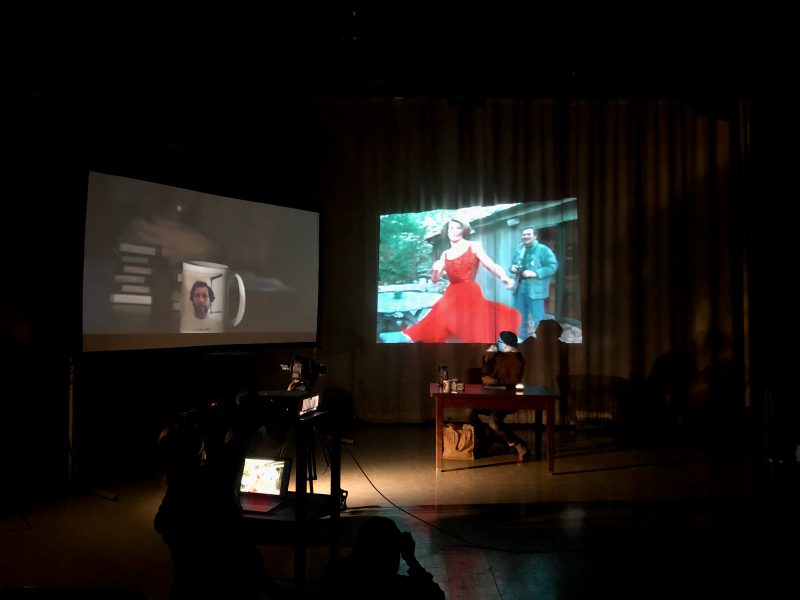
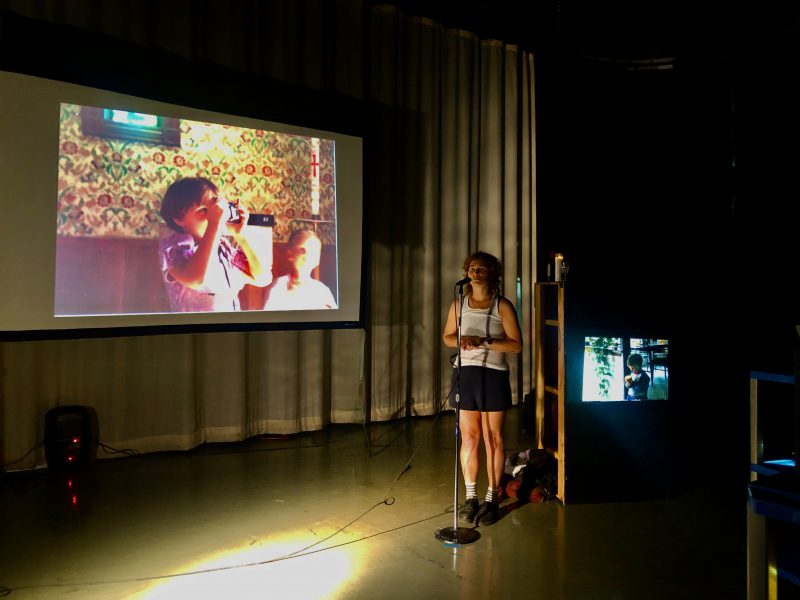
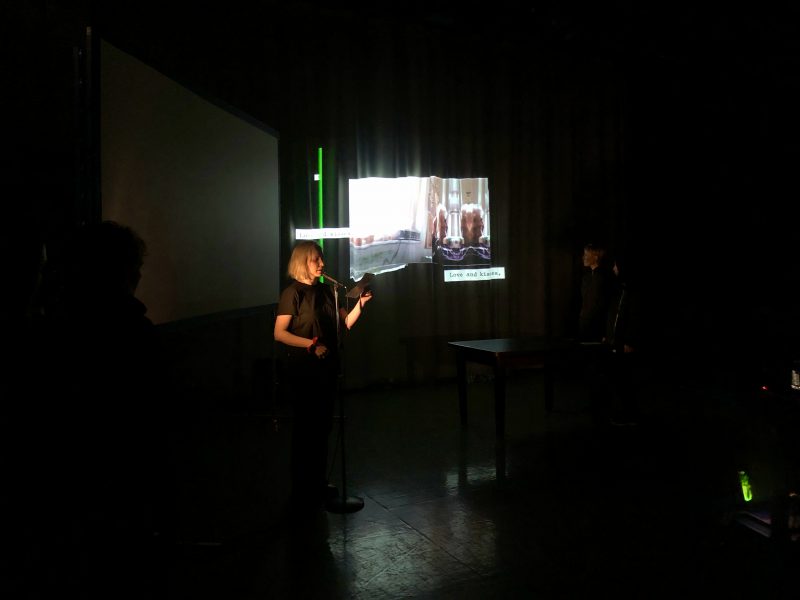
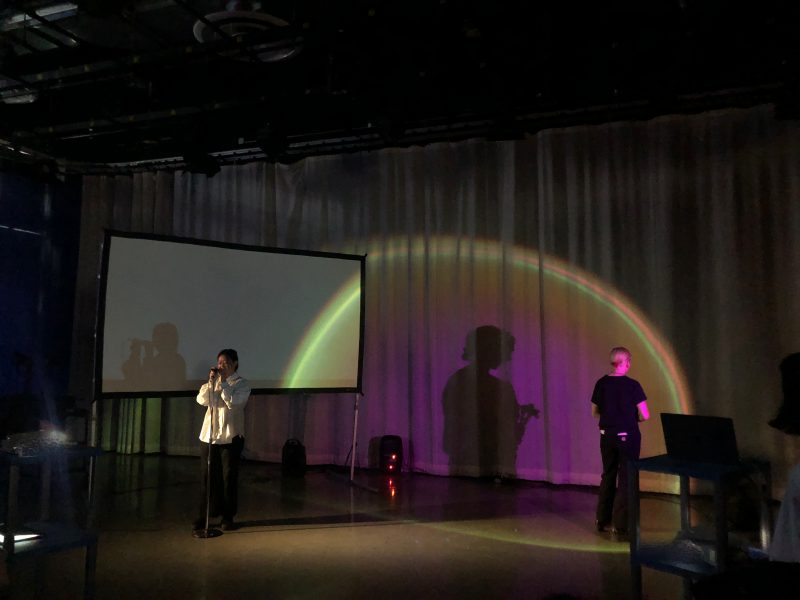
The Accident that Pricks: Family and Photography Lynne Sachs 3 sessions, 1 credit – Fall 2022 and Spring 2024 Final Showcase Friday February 23, 2024
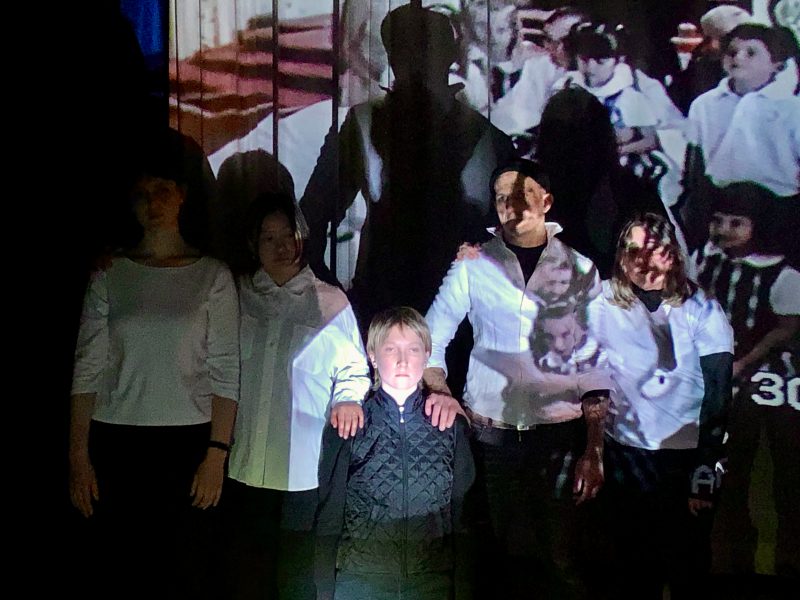
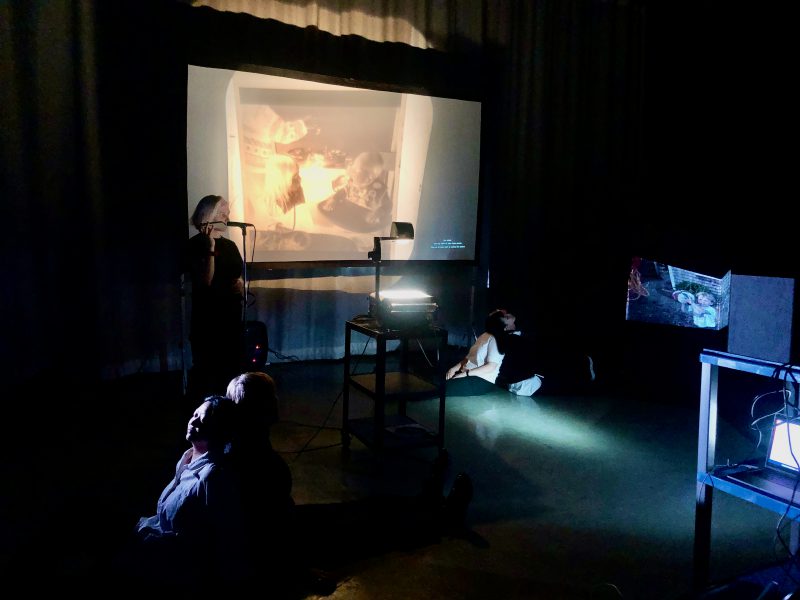
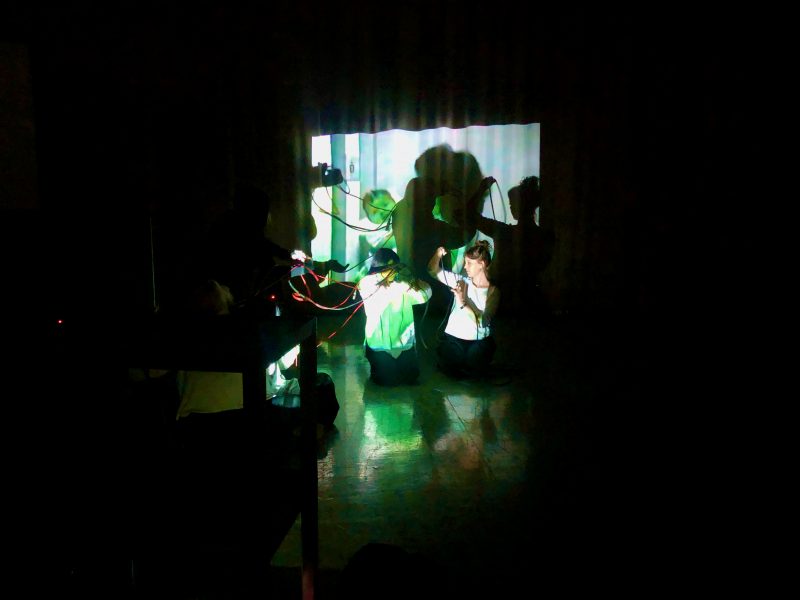
Course Description: The Accident that Pricks: Family and Photography is a course in which we will explore the ways in which images of our mother, father, sister, brother, cousin, grand-parent, aunt or uncle might become material for the making of a personal film. Each participant will come to the first day with a single photograph they want to examine. You will then create a cinematic presence for this image by incorporating storytelling and performance. In the process, we will discuss and challenge notions of truth-telling and language. This course is inspired by French theorist Roland Barthes’ theory of the punctum, the intensely subjective effect of a photograph, and Italian novelist Natalia Ginzburg’s writing on her family living under Fascism during World War II. Ginzburg was a prescient artist who enjoyed mixing up conventional distinctions between fiction and non-fiction: “Every time that I have found myself inventing something in accordance with my old habits as a novelist, I have felt compelled at once to destroy it. The places, events, and people are all real.” Each student participant will produce a live performance with moving image which will be presented at the end of our third class meeting.