Tag Archives: the washing society

Prismatic Ground Hosts Two Programs of Films by Lynne Sachs


Lynne Sachs in Conversation with Brett Kashmere (Canyon Cinema) – Ground Glass Award Presentation

Transcription of Conversation with Brett Kashmere:

Inney Prakash: Welcome, everyone. Just going to give it a few seconds for people to trickle in here.

Hello, my name is Inney Prakash, and I am the founder and director of Prismatic Ground, which in case you haven’t heard, is a new film festival centered around experimental documentary, hosted virtually for the first year, in partnership with Maysles Documentary Center and Screen Slate. We’re here today for a reason that is very special to me, which is to honor Lynne Sachs with the festival’s inaugural Ground Glass Award, which recognizes outstanding contribution to the field of experimental media.

I wanted to include this as part of the festival, because paying homage to people who have sort of led the way is important to me. I think there’s a lot to be learned from those who have done exemplary work, and have a body of work to show for it. Lynn’s body of work is extraordinary. What I really love about it is the way it’s simultaneously very personal and also outward looking, interested in the world.

I think of her Vietnam film and the way it’s both a travelog that is examining a country in the world that’s foreign to her, but also a portrait, a self-portrait of family, and the way in which that’s so extraordinary. You can follow this through line throughout her work to her most recent film as well, Film About a Father Who, which she’s been shooting for a long time, in which in the way it examines, again, it’s a portrait of family, but it’s also a portrait of the effect that her father has had on other people’s lives.

She’s still interested in looking outward while reflecting, and I think that’s really cool. I am really excited to introduce her today. Unfortunately, because this is such a scruffy fest, Lynne, I owe you a physical award. I will eventually come up with that. That will happen. In the meantime, I just want you to know how much your work means to me, and how much it means to me that you’re such a champion for the experimental community, and the importance you place in community, and your willingness to engage with others, to collaborate, to recognize the work of others, to uplift others.

It means a lot to me personally, and I know it means a lot to others as well, so thank you. We also have here, Brett Kashmere, who’s the Executive Director of Canyon Cinema. He’s done a lot of extraordinary things. You can look up his website, one of which he’s working on an epic tome about Craig Baldwin that he’s been editing for some say up to 10 years. He and Lynne are going to talk, and I think they’re going to focus on Lynne’s early years in San Francisco, which, again, there’s another extraordinary example of a way a community came together to build what, in my eyes, is something like a movement dedicated to formally daring work.

With that, I want to step aside and give it away to them, but thank you so much, Lynne. Yeah, that’s it. Nothing but gratitude.

Lynne Sachs: Well, I’ll just say that it’s such a exciting moment for me to be here, and Prismatic Ground represents and celebrates exactly the kind of work that sparked me to want to be a filmmaker. I feel like it kind of comes full circle that you all are, that Inney and the community that you have created is giving me this recognition.

It really does go back to San Francisco, and that was Brett’s idea for us to talk about why that city, that community, has left such an imprint on so many of us. Even if you haven’t ever lived there, you’re feeling it. We can kind of articulate why that is over this conversation.

Brett Kashmere: Okay. I guess maybe I’ll take it from here. First off, it hasn’t been 10 years that I’ve been working on the Craig Baldwin book with Steve Polta. It’s been maybe three years at the most. It only sometimes feels like it’s been 10 years. Second of all, kudos to Inney for the incredible accomplishment that is Prismatic Ground, which is truly astonishing, and inspiring, and so beautifully curated, and expertly organized. I think it’s an ideal in many ways of what’s possible in the digital space.

Then, of course, congrats to Lynne for this very well-deserved honor in recognition of your 35 year contribution to the fields of experimental media and documentary art, and vitally to their cross-pollination and contamination. I mean that in the best possible way. To provide a little bit of background, I’ve known Lynne for about 15 years, I believe, and I’ve always associated you, Lynne, with New York. I’ve always thought of you as a New York filmmaker, kind of quintessentially New York.

Since moving to the Bay Area five years ago, and particularly since joining Canyon Cinema last June, I’ve come to understand that your roots as a filmmaker and your sensibility, your repertoire, are really formed in and by San Francisco. I don’t know, maybe you don’t agree with that assessment. We can get into it, but it’s something that I’ve really sort of picked up on in looking at your films, re-watching them over the past few days and over the past year.

In full disclosure, Lynne is currently a member of Canyon’s Board of Directors, to our great benefit. I thought it would be fun to use this opportunity, perhaps selfishly, to learn more about your relationship with San Francisco, and your time in the Bay Area, the various influences and key figures from that period spanning the mid-eighties to the mid-1990s.

I thought we could start there, or here, depending on where you are, and then eventually move into talking about some of your films, nine of which are currently streaming on the Prismatic Ground site, eight of which are split across two programs curated by San Francisco’s own Craig Baldwin, and then an additional early film, Drawn and Quartered, which is part of the lovely Wave Four program. Lynne, can you explain what drew you to San Francisco initially, and then what kept you planted here for more than a decade?

Lynne Sachs: Actually, I never made a film in college, but I moved to New York in 1983, and I thought, oh, I’ll move. I’m excited about filmmaking. I had just recently discovered Chantal Akerman’s films and Marguerite Duras. I had gone to school in Paris for a year, my junior year. It was there that I began to understand, oh, you could love poetry, you could love image making, and they could come together in this vessel called a film.

When I got to New York, I thought, I’ll just work on other people’s films and I’ll learn how to make movies. It didn’t work that way. That was a way to get into the industry and build skills, but it wasn’t a way necessarily to learn to make your own films. I took a few classes, and they didn’t at first go that well. I took a class at the School of Visual Arts, and I wrote, I made this film called The Tarot that the teacher there said, “You need a punch line at the end.” I didn’t want to make that kind of movie.

Then I started to hang out at Downtown Community Television, and it was there that I started to understand this what we would now call hybrid work. I was doing dance performances with friends, and then shooting documentary footage, and it was all kind of mixing up. Then I thought, well, maybe I’ll go to school. I need to learn how to make movies or film. I always said that when you’re working on them, they’re films, and then when you finish them, you’ve got to say movie.

I moved to San Francisco, and I ended up going to San Francisco State and the San Francisco Art Institute because I didn’t get into the San Francisco Art Institute right off. Both of those sensibilities really left a big imprint on me, San Francisco State mostly for kind of the intellectual rigor there. I was learning film theory, and working with people who were really bringing a conceptual rigor to filmmaking, and then the Art Institute to begin to understand what it meant to be a film artist.

One of the connections to Prismatic Ground that was so much in the air in San Francisco in the eighties, and into the nineties, and to the present, is this idea that experimental and documentary weren’t completely discrete ways of working, because everywhere else, it seemed to me in the country, and particularly in New York, you had to decide, “I’m going to make reality-based work, or I’m going to play with form.”

In San Francisco, the expectation was that you could do both, and that you could make work that asks questions about society, and about politics, and culture, but also in the process, ripped up all the templates that came with that analysis.

Brett Kashmere: You started your MFA at SF State, and then you transferred to SFAI? How did that work?

Lynne Sachs: I actually finished at both, because I started at San Francisco State, and so I got to take film history classes. I had never seen Citizen Kane before I started there, and luckily in that program, they really supported people who were intellectually curious, but didn’t even come with any of the tools, or the baggage, or the knowledge of the practice, but wanted to bring everything. I had been working in art, but I had a degree in European history, and so there was an encouragement for just having that foundation.

Then I applied to the Art Institute, and part of it was that San Francisco State had a MA degree, and San Francisco, at that point, San Francisco Art Institute had an MFA, but there were artists at both schools who were so profoundly influential to me and became dear friends with whom I still share a bond.

Brett Kashmere: Do you have any distinct memories of what the film scene in San Francisco was like during that era? Also, curious about the things that you were reading and responding to, and the films that you were looking at during that period?

Lynne Sachs: Well, I took a semiotics class at San Francisco State, and just the word was so enticing to me. It was the word of the day in the eighties, this notion of studying the signs, and symbols, and what the meanings were of images that were both connotative and denotative, and how that all had sort of started in a dialogue in Europe. I was perhaps more moved by cultural theory, so Roland Barthes in particular, not necessarily Christian Met, not necessarily the film theory, but all of it was new to me.

I knew that I was taking those classes because I would feed into my work. I actually think that the film in the Prismatic Ground, Still Life with Women and Four Objects, really reflects all of those influences, from discovering Jean-Luc Godard, but also thinking he had no sympathy or understanding whatsoever of what women’s lives were like. I actually felt he exploited women in his films, but I still loved his films. There were all these contradictions, and Yvonne Rainer’s films, all of it was just coming into my consciousness.

Also, to be in San Francisco at that time, and to be making your own films was to be circulating and visiting the Film Arts Foundation. Everything that you did was in relationship to that building on Ninth Street. You would go there to edit, you would go there to watch movies, you would go there to hang out. We lived in such a different place now. Our homes are places to make films, but at that time, you had to go out in the world to shoot and to edit.

Brett Kashmere: Do you recall what kind of impact that feminist theory and feminist art making had on the culture and the curriculum of SFAI at that time? The film department specifically, because as I understand it, I think film was a separate department from video and performance.

Lynne Sachs: When I tell you the people who came through for, they always had a visiting artist for the graduate program who would teach classes, the evening class, and I think it was always on Monday night. For example, I met Peggy Ahwesh then, I saw her work. I loved how informal it was, but I also loved how assertive it was about issues related to women and in our culture. That thin line between play and polemic was exciting to me, and not exactly when I was in school there, but later, Carolee Schneemann came, and so I would visit her class.

I actually showed the film that’s in the program, the House of Science, A Museum of False Facts, I was invited to screen by Carolee in her class and we just sat there for hours, talking about it. That was such a gift to me, to be able to talk to someone who’d had such a adventurous and thoughtful impact on women and art, and I mean art in general, but what it was to embrace the body. I had made this film where my body was involved, and I was writing about the body, and she was engaged with that.

Also, I worked really closely with Gunvor Nelson, and that sort of was another side. She’d made a film called Schmeerguntz, which I just loved, because I loved how much it celebrated the sort of dirtiness of the body. I hadn’t had children yet at that point, but it was all about motherhood, and it was raw. She’d also made My Name is Oona, and that film had an impact on me in that it was a celebration of the connection between the person behind the camera who could be a mother, but might not be, and the person in front of the camera who was her child. There’s this intimacy that comes through the arteries of the camera out to the child.

Brett Kashmere: It’s interesting that you mentioned Carolee, because as I was watching Drawn and Quartered the other day, her films really kind of came to mind, especially Plumb Line and Kitch’s Last Meal. Just in terms of the look and feel, and I know that Drawn and Quartered, or I believe Drawn and Quartered is one of your earliest films that was shot on the rooftop of SFAI? I’m curious if that film sort of led you someplace, in terms of thinking about relationship of form, and content, and visual strategy.

Lynne Sachs: You asked me about feminist theory, and I think that Laura Mulvey’s essay on the female gaze, or trying to address and challenge the male gaze, was probably about 10 years old by the time I read it, but it already was, I’m not going to say seminal, but it was already such an important article. When I read that article on Visual Pleasure, I connected to it immediately.

For example, when I was in school, there was a woman who asked me to shoot her film for her, which people do sometimes, they crew for other people. She wanted me to shoot it in a way that I felt was replicating a male gaze. I was in the middle of working for her and I said, “I can’t do this anymore.” I had probably assumed I’m shooting this film for a woman, and we’re going to challenge the ethos of Hollywood or of a conventional formation of the female body.

We weren’t. We were actually trying to just erase her place as a woman. It was horrifying to me. Then when I shot Drawn and Quartered, I believe, I’m trying to remember, but I believe that I had read Laura Mulvey’s article. I had the camera, we never looked through the camera, we would just sort of shoot it in the… I was shooting with my then boyfriend, John Baker, and I would have him shoot my body, and I would shoot his, but it had to be an extension.

There was a man who worked in the cage, the equipment room at San Francisco State, and he always said, “Shoot from the hip.” I liked that. It’s an expression, but I always tried to do it. I want to say something, that Nina Fonaroff just wrote a little note, and I adore her films. We were in graduate school together. I saw that she wrote something in the chat, so I have to respond to that.

She was the most, I got to say it, sophisticated person I had ever met in the realm of theory and practice. She was in school. I remember, this was probably 1987, and she did a presentation in this graduate seminar, and it was like a watershed for me. It was a way of looking at experimental film, because so often in film studies classes, you’re looking at Hollywood films, and you’re breaking them down and analyzing. She was sort of guiding, I won’t say teaching, but guiding the rest of us to understanding experimental film for all its possibility.

It was such a gift to see her work, like Accursed Mazurka, and other films at that point, and to also feel like she was a comrade.

Brett Kashmere: Yeah, besides Nina, are there other classmates or teachers who stand out as important kind of influences or interlocutors for you in the development of your work during that time?

Lynne Sachs: Well…

Brett Kashmere: I can just sort of just say that as I was rewatching your films, I was kind of noticing traces of Trinh Minh-ha’s work in terms of its self-reflexivity, and the poetic narration, and the visual lyricism, and traces of Marlon Riggs, and Lynne Hirschman in terms of their personal introspection, and the collage essay techniques, obviously, of Craig Baldwin in the use of the archive, Barbara Hammer and the focus on the body.

Lynne Sachs: Clearly, I was a sponge, but I will say that Trinh Minh-ha was a teacher of mine in a couple of classes at San Francisco State, and then she asked me to be her assistant. First of all, it was to pick up her mail when she was on sabbatical, and then I became a sound recordist and an assistant on some editing of some of her films. She was also very important to, for example, to the making of Sermons and Sacred Pictures, which is in this program.

That was my graduate thesis at San Francisco State. This is the eighties when identity politics were really so, so vital, and the way that they’ve kind of come back in an extremely important and empowering way. We were thinking, and she had made Reassemblage, and she, as a Vietnamese American woman, had made this film in West Africa, and was aware of her outsider place. I was making a film about a black filmmaker and minister in Memphis, Tennessee, which was a return to my own home.

My home in that city was also very different from his home and his Memphis. She was really so helpful in pushing me to think about being open enough about your own place, but not flaunting it. For example, when I made Sermons and Sacred Pictures, there were some people who thought I needed to show my face. Then there are other people who said, “No, your imprint is in the shaping, and in being on the other side of the camera, and in listening.”

I’ve always wondered about that around documentary, how you learned… I think you learn in that film about Reverend Taylor’s world, because you’re seeing his world through his eyes, but you didn’t need to see me seeing his world. That was a really kind of complicated issue to investigate. She helped me with that step-by-step, because she was actually my advisor.

Brett Kashmere: It reminds me a little bit of her ethic of speaking nearby, rather than speaking about or speaking for.

Lynne Sachs: Yeah, I’ve been kind of, let’s say, preoccupied with prepositions like that ever since. You say the word about, and I Film About a Father Who, like that word about comes up so often not in experimental filmmaking, but in documentary filmmaking. It always has to have a subject. People rarely ask, “What’s the subject of an experimental film?” In documentary, there’s sort of an assumption that it will lead us to an about, and that therefore, we will have a more developed knowledge, and we will leave better, empowered, better.

I think what Minh-ha was saying, you’ll leave in parallel, or you’ll leave with an ability to ask more questions, rather than to confirm a complete kind of knowledge, that you have a fragmented knowledge.

Brett Kashmere: I know that you also worked intensively with Bruce Conner for a year while you were in San Francisco, talking about the other poll from Minha.

Lynne Sachs: Yeah.

Brett Kashmere: Could you say more about your experience working with Bruce? Are there any short stories that you want to share about that?

Lynne Sachs: Yeah. You definitely could say you have the found footage, assemblage approach to commenting on culture, and then you have this other approach, which is more reflective and verbal in Minh-ha’s work, that the notion that you are recounting your position in a more explicit way, and maybe self-conscious way. Both of those things left in imprint, and in certain times, I felt I got lost in that.

Now, I accept that lostness and I’ve felt tension. Am I an experimental filmmaker, or am I a documentary filmmaker? Jonas Mekas hated the word experimental, and lots of people hate the word documentary, and you could say it’s just a creative way of working with reality. Actually, both of those are, in that case. I met Bruce Conner because I had a friend who had done some shooting with him on his film that never got finished, but is now going to get finished, about The Soul Stirrers.

Also, I had gone to the Flaherty in 1984, believe it or not, as a kind of intern fellow. That year, the focus was on Bruce Conner’s work and Maya Deren’s work, none of which, I’d never even heard of either one of them. There I am, at the Flaherty, helping them to give out programs, and doing some things that interns do. Then at the end of the day or throughout the day, I’m seeing work by Maya Deren and work by Conner. They’re completely different. One is looking inward in this very sort of dream-like, and intensely personal way, and the other has a detachment, but an intense engagement with culture.

That started at the Flaherty Film Seminar, and then I ended up moving to San Francisco. I had these little teeny contacts with Bruce Conner, and then he asked me if I wanted to work with him putting together his film negative, I say negative, because that’s how important the work was, for the Museum of Modern Art. They were acquiring all of his work, and they needed the negatives to be organized. I had essentially never spliced a 16 millimeter film in my life. There I would be, every once a week, I would go for the entire day with him, and he would watch me work, and be so frustrated by my inability to do it.

He did all the work. I just sat there, listening to him tell stories. Then we would take a break, and we would have lunch. Then he would take a nap because he was always a little bit compromised physically, or he said he was. Then in the afternoon, we would kind of run errands for him in his, I remember it as a convertible, and one of the funniest, it wasn’t funny at the time, but when I look back, one of the craziest things we did was we would go shopping for Geiger counters, because he was sure there was a lot of radio activity under his house.

We did all these just kooky things. Actually, I’m going to show you this book, which came, this is, have you heard of this book?

Brett Kashmere: Yeah.

Lynne Sachs: Yeah. Bruce, as his health declined, set up brass handles all over his whole house, these brass handles, probably 50 or 60 of them. This is a book of his brass handles, and his house was in Bernal Heights. It had a lot of levels, and he would need to grab things. Anyway, Bruce has been a big part of my life. He gave ink drawings to my daughters when they were born, and he just was super supportive. It actually comes full circle to Sermons and Sacred Pictures.

He always loved that I was making this film about a black minister and filmmaker, and he was curious about it. He would ask me about how it was going, and then he came to the premiere, which was on a church on Fillmore Street, and it was just so scary. It was filled with members of the congregation of that church, the premiere in San Francisco, and then Bruce was there. I was nervous about both.

That’s kind of like the nature of my work, because it was all about that. It wasn’t about the San Francisco black church community, but they were interested. Then it was about playing with form with Bruce.

Brett Kashmere: Another point of connection between you and Bruce is Craig Baldwin, who we’d be remiss not to talk about at some point.

Lynne Sachs: Definitely.

Brett Kashmere: Craig was a student of Bruce’s at SF State in the eighties, early eighties, I think. I know that you and Craig have a very close relationship. I’ve read many of his letters to you, actually, which you provided us for the book that we’re working on. How did you and Craig meet, and what has he meant to you and to your work on video?

Lynne Sachs: Craig is a brother and one of the dearest people in the world to me. I just adore him. I will say that in my file cabinets downstairs, I have two big file cabinets, but about half of one of the whole drawers is filled with things related to Craig, from all of his calendars for other cinema, to letters that we’ve written, to film materials he sent me. Then I’ll go backwards, but lately, he’s been sending me a film either by or about a woman, women’s lives, almost every week since the pandemic started. He somehow thinks that I am going to create a feminist archive.

I kind of am now, because I have so many films and I’ve looked them all up, and found them, and actually know where they were made. If there was a director, I know about it, and I’ve labeled them, so I guess I’m doing my job. Craig and I met around in 1987 when Other Cinema was still around, but it wasn’t at 992 Valencia Street. The first place I went to his series was there. When I saw his film, Rocket Kit Congo Kit at San Francisco State, which was his thesis film there, I was just awed.

It was kind of life transforming. It was life tran… This way of working with images to tell us about ourselves. I never looked back. I would say half the movies I’ve ever made have some piece of film that came from Craig’s basement. I would say that the House of Science, which is in the program at Prismatic Ground, really couldn’t have happened without some of the material that I found in his archive, or that he found and shared with me, or he’d kind of like a frisbee, throw me a reel of film, “You’re going to find something here.”

He knew I was looking for women in science. Then I would just go for it. Lots of my film have material from Craig, so much. He’s just been so supportive. The first one woman show I had, he called The Complete Lynne Sachs, and that was in the late eighties. Luckily, that wasn’t the complete, that was the word he used. I don’t know if my pronunciation is right, but we just believe in each other as makers and people.

Brett Kashmere: By the way, when did you become a member of Canyon Cinema? Do you have any memories or stories about Canyon from that time? Did you ever go to membership meetings?

Lynne Sachs: I felt like I was such an active member of Canyon Cinema. I don’t remember meetings. I actually remember being in the Canyon vibe more from a place called the Know-Nothing Cinema, where lots of Canyon kinds of shows would happen, and I would go there. I was such a part of the years in which Canyon was trying to decide, well, will we bring in video? I don’t remember meetings with the whole body of makers.

I do remember meetings for the Film Arts Foundation, but maybe I just missed those meetings. We definitely didn’t have internet then, but we had these newsletters, and Dominic Angerame would send them out. Is it 626-2255? Is that the phone number for Canyon?

Brett Kashmere: I have not memorized it yet,

Lynne Sachs: Oh, but see, these predate cell phones. I think it’s 415, somebody might verify that.

Brett Kashmere: Yeah, that’s right.

Lynne Sachs: 626-2255. I called it all the time. If that’s a verification of my relationship to Canyon, I think it’s been the same phone number for, it’s moved with Canyon as it’s moved locations. Also, I got to know Bruce Bailey a little bit, and I never really met Chick Strand, but I knew her films so well, so I felt a connection to those early years.

Brett Kashmere: I want to maybe transition into talking more specifically about some of the films that are currently streaming as part of Prismatic Ground, maybe starting with Still Life with Women and Four Objects, which you mentioned earlier. It feels kind of like a classical first film in the way that it was shot and edited, but then it’s also doing some interesting things with narrative and performance.

It has this critique of female representation and the conventions around that. I’m curious where the idea for the film came from. Was it made for a class? If so, was there a particular prompt that you were responding to?

Lynne Sachs: Oh, I have to tell you, there’s one embarrassing prompt, and that I was taking, at San Francisco State, they had a class, which was for those of us who didn’t know how to make movies, which actually, most of us did not. It was like a jump start into 16 millimeter production. We were shooting with Arriflex cameras, and recording sound on Nagras quarter inch tape, but there was one requirement, which was that you had to have at least one shot in sync.

That film has one, it allows me to always know if it’s out of sync. The woman who is the actor in the film, she says, “For women too.” That’s the only sync shot in the whole film. I actually didn’t shoot anything in sync for about 10 years after that. I was kind of resentful of having to shoot something in sync, but I actually liked the burst. It’s like a burst into the moment, a burst into the diegetic space, as they would’ve said back then. That film, I believe, was quite influenced by, let’s say, seeing something like Lives of Performers by Yvonne Rainer, where you could get into a person’s head.

I learned in those early years, or not learned isn’t the right word, but I started to believe that, for the most part, commercial cinema was working with actors as if they were props. I wanted to allow, and I’ve done this ever since that movie, to allow anyone who is in front of my camera to at least collaborate in an intellectual way. The woman who was in the film was a bit older than I was, and I thought quite wise. I said, “Okay, when you come to our set, please bring something that means a great deal to you.”

She brought a picture of Emma Goldman, and I didn’t know who Emma Goldman was at that time. Now I do, and I know what an important figure she is in history for women, and for owning our own bodies, and sort of empowerment, and freedom of sexuality, all of those things. Because she brought the picture, it stirred me, it made things happen. I had to find out who she was. This was before Wikipedia, but it was not that hard to find out who Emma Goldman was.

Then I had to integrate that. I wanted that, there was a kind of register around an important woman in history. Then there was the woman in front of the camera, and then my grandmother died at that time, so I dedicated the film to my grandmother around the time that I made the film. When you saw in the film that she does something three times, she puts on a coat three times, that artificiality of take one, take two, take three, that was part of the structuring and expectation of a search for perfection, which I felt commercial cinema, you would only do take one, take two, take three with the thought that they would get better.

I didn’t care about getting better, but I cared about the recognition that there was a process. That is your typical realization in a film which wanted to lay bare. I guess I was probably reading Brecht at this time, to lay bare the process.

Brett Kashmere: It’s interesting what you’re just saying about collaboration with your on-screen subject or your performer, because I feel like that also, that kind of slipping between narrative and documentary, or real people in real life, also is very much a part of your most recent documentaries, like the Washing Society, where you’re taking documentary tropes but twisting them a little bit.

They have this kind of uncanny effect that feels very fresh, but also is kind of like a throwback to the post-realist kinds of films that Jill Godmilow, and Harun Farocki, and Minh-ha were making, this more synthetic, kind of hybrid style of nonfiction cinema.

Lynne Sachs: I would definitely say that those three people, Jill Godmilow and Farocki, who were working in spaces, let’s say, in that could not be completely controlled. All of us wanted to throw ourselves into environments where things were porous, where the world was going to disrupt or fracture our hermetic space of the set, but we also were drawn to the set. There was this idea that the set was a place to kind of build up ideas, so build up theories and explorations.

That kind of fluidity between the real and the constructed was very exciting. One of the challenges was how do you reveal that through the making of the film? In the Washing Society, I worked with a dear friend, again, who is a playwright, Lizzie Olesker, and we would go into laundromats, and talk to laundry workers, but then we would take what we heard, and create scripts for actors. There were all a bunch of different ways that we could analyze. I’m sorry, there’s a little noise out there, so just one second.

Brett Kashmere: Sure.

Lynne Sachs: Can you all be quiet, please? Hey, you know what? That was a perfect example. We’re on our set, and there’s all this noise going on out there. Anyway, so in the Washing Society, the fact that we moved over to theater came from the obstacle of trying to talk to people who are living in the United States in very compromised situations, where their documentation, as we alluded to in the film, was always in question. We liberated them from being, and they liberated us, by refusing to be on camera most of the time.

Then we would start to work with actors, but then we had other people who felt comfortable enough being on camera, or maybe didn’t have such an awkward or vulnerable position in the United States. Sometimes I think that those kinds of obstacles force you to think about new forms, ways of working.

Brett Kashmere: Speaking of new forms and ways of working, I wanted to ask about House of Science and Which Way is East, which are from the early nineties, are maybe two of your best known films. They feature a lot of what I associate as signature elements of your work, the use of the first person voiceover, but also bringing in multiple voices and multiple narrators, on-screen text, like seeing your handwritten text, optical printing, the mixing of self-shot and archival footage, and just this very layered sort of construction that’s using a lot of different kinds of strategies.

I’m curious how you arrived at this form of personal documentary. Was this a conscious choice that you were working towards, like wanting to make essayistic, first-person films, or was this a more just natural development of where your interests were going and your sensibility as a filmmaker?

Lynne Sachs: I will tell an anecdote that happened in the, let’s say, mid-eighties. I saw Chris Marker’s film, Sans Soleil, which had such an impact on so many filmmakers, still to this day, this freedom of engaging with everything in his life. He wrote about it. He wrote in the first person, but it wasn’t his first person. There was a refraction that happened. You actually have a woman’s voice.

I saw that film, and it just rearranged everything in my head. It allowed for this exploration, it allowed for manipulation, with the hope that some kind of poetry might come out of it, it created a character who wasn’t really a character, but was the self. I loved everything about it. I watched it many times on a VHS tape that had been given to me. Then I wrote a letter to Chris Marker, and I said, “I’m in graduate school, but I’m thinking I need to take a break. Maybe I’ll move to Paris. Do you need an assistant?”

He wrote me back and he said, “Oh, no, no, no, I don’t need an assistant, but let’s get together when I come to San Francisco.” We started a friendship that lasted, I don’t know, till his death, actually. I ended up working on a film with him through Icarus Films here, and helped with the translation from French to English. We made this film together about whales called Three Cheers for the Whales that he had made in the seventies, but wanted to make a new version of it.

There was something about seeing his films that allowed me to better understand the notion of writing, and the doubt that comes, that we associate with the essay film. That film was so important to me. Also, while I was making the House of Science, I was actually keeping a diary that had to do with my physical self, like what I would call a somatic recognition of things I was going through.

I was on an airplane, and I was writing it, and then all of a sudden, it occurred to me that, and I was having a hard time making the House of Science, and I said, “Oh, my goodness, actually, this writing is the skeleton for the whole film,” and it just fit right in. I loved doing it. The way that I tried to do that, and people will see this in the film, was you see the handwriting in the beginning of the film with a voice. It’s very complete. The body is solid.

Then you see the handwriting, and you hear the sound of the pencil on a hard surface or paper, and then you see, you’re reading the writing, which is very much about my body, but it could be any woman’s body. You hear, I’m urinating, actually. I wanted to have that, and I’ve been doing that kind of thing ever since, where you play with what is there and then what is pulled away.

Also, in the text in Which Way is East, which I made a few years later, it plays with the translation. I think all film is translation, but this is translation from Vietnamese to English, and there’s an awkwardness in it, and a sort of fragility. My sister and I made that film together, so Dana, her name is Dana Sachs, and she was living in Vietnam then as one of the first journalists to really set herself up there, and to observe the changes in post-war Vietnam.

I went there, and the writing that we both did had to do with her understanding of the culture and my confusion, or my relationship to, my inability to give up, seeing it as an American, and not being able to listen, really listen. We played also with the idea of a parable from one culture, giving you an insight into that culture, as much as words or interviews would do. Both films kind of explore the possibilities of writing, but also the obstacles of text of any kind.

Also, I think the Washing Society does that too. It continues that conversation around translation, because Lizzie Olesker and I used Spanish and Chinese, both translated and not translated, in the film.

Brett Kashmere: I don’t quite have straight the chronology of your filmography, but…

Lynne Sachs: That’s okay.

Brett Kashmere: I think, correct me if I’m wrong, but sometime closely after the completion of Which Way is East, you made Investigation of a Flame. Maybe there was a film in between?

Lynne Sachs: No, there’s about a six-year difference. I made another film called Biography of Lilith.

Brett Kashmere: Oh, yeah, yeah.

Lynne Sachs: I had two children around that time, so maybe I wasn’t quite as able to finish things, but I tried. Yeah, Investigation of a Flame was made in 2001, and mostly it was made while I was living in Baltimore with my husband, Mark Street, and our daughters. I was very, very, very immersed in the activist, political, progressive, civil disobedience community of Baltimore, but also with people who were there who had done actions like that, as protests and actions against the Vietnam War. That came in 2001.

Brett Kashmere: I wanted to talk about that film, because it feels like there’s a turn, or at least a sort of movement away from the self-reflexive style of House of Science and Which Way is East. It’s a more straightforward documentary.

Lynne Sachs: It’s funny, when I made it, there was actually, I think, a radio station in Berkeley. They did some sort of review of it, and they called it an anti-documentary. It does fit into the documentary practice because I’m listening to people, I’m allowing them to express their opinions, there’s a kind of thesis about breaking the law, and I agree that it is not as introspective in that way the other two were.

Brett Kashmere: I’m curious how you became convinced that that’s a film that you yourself should be making?

Lynne Sachs: I mentioned Biography of Lilith, which I made in 1997. It’s full of poetry about Lilith, and that Lilith, there was a night, I’m just mentioning it was super personal, and I was trying to explore the myth of Lilith who wanted to be on top and sex, and she was thrown out of the garden of Eden, and it’s very raw that way, and it’s also about what you gain and lose in becoming a mother.

It was very personal. I was kind of ready to have a little distance, I guess, now when I look back on that. Also, I had, at one point, thought I wanted to be a lawyer, like a civil rights lawyer or something, or maybe a human rights lawyer or a civil. I know a lot of filmmakers who actually did consider law at one point. Then lastly, you’re kind of thinking, how can I maybe naively think you could change the world, or how could I pursue? We didn’t use the word social justice back then, but now we’d say, “How can we right wrong?”

I thought, well, I’m not an attorney. I’m not really an activist. When I moved to Baltimore and we were there three years, I heard about this group of anti-war activists who broke the law for what they believed in. I was just taken by that, that, notion that you make a certain choice in your life and you can never go back in a bigger way. Not just in that political action, but I don’t think getting married is a decision like that, or moving to a new town.

When you make a choice that puts you right in front of the legal system and then throws you in jail, you give up everything, your freedom, for some belief. I was so drawn to the actions of it, Daniel and Philip Berrigan, and the other members of the Catonsville Nine. I just wanted to understand how it happened, and sort of celebrate that, but also not just to elevate them, but to think about those decisions.

Yeah, it was quite different, and it was very much engaged with another side of me that I had mentioned to you. I’d been a history major in college, so it’s a bit about history, but also about something more wrought, like making a decision of that sort.

Brett Kashmere: It’s such a striking film, and I feel like it’s very much of the moment again. I feel like it’s kind of ripe for re-investigation.

Lynne Sachs: Yeah. I made the film, I started making Investigation of a Flame, and people thought it was quaint that I was looking into this anti-war actions of 1968, like people who were interested in hippies in 1968, or people who were interested in the songs of ’68. That’s what people thought. I found in general, people were rather kind of patronizing about it. Then keep in mind, I finished that film at the same time that September 11th happened.

All of a sudden, the issues around breaking the law, as in the people who enacted, the terrorists who did what they did, they also did it in the name of their God. People started to, even on the left, were super critical of what the Catonsville Nine did, to walk into a selective service office, and take draft files, and burn them with Napalm, was an assault on the structure of government, even though it was done with a kind of spiritual faith.

When that film showed towards the end of 2001, it was very controversial, and actually, ever if you did an action like that now, if you walked into a draft office or some kind of US government office and took files, you’d be called a terrorist. Actually, one of the members of the Catonsville Nine, Philip Berrigan, was put in solitary confinement right after September 11, this gentle priest, because people felt threatened by that.

The film on a personal level threw me into a lot of very, very political situations that were remarkable. I feel lucky, like I got to travel around with Daniel Berrigan, who was an incredible hero of mine, and for political reasons, and he was also a poet. To spend all that time with him was real gift.

Brett Kashmere: I guess maybe to move towards wrapping up, can you maybe speak a little bit about the process of working with Barbara Hammer, who I know was one of your early mentors, and your posthumous collaboration, A Month of Single Frames?

Lynne Sachs: Oh, thank you for asking about that. Yeah. I met Barbara Hammer in San Francisco. Both of us were completely enthralled, I can say, by the experimental, and experimental documentary, and maybe even documentary world that was being supported, I mean supported by the community in San Francisco. Actually, she and I were very similar in that we would make films that were, you could say, about, like she made films about Elizabeth Bishop, or she made a film about Maya Deren, but they were also so much more, more complex and more resonant than just being a straight ahead documentary.

We both had feet in those worlds, and she was teaching a class at the Film Arts Foundation on optical printing, and I took it. She was an extraordinary craftswoman in printing. To optical print is to take a frame from one original piece of film, and then to play with it, and replicate it, and stretch it out, or shorten it, or change its colors. She could do all of that so beautifully. I never was the craftswoman that she was.

Then we both moved to New York and we were friends, and especially when she was diagnosed with cancer about 14 or 15 years ago, my husband Mark and I started to become very involved in supporting her through that. She agreed when she turned 70 to allow me to shoot film, a short film, like a one roll of film of her and her partner, Florrie Burke. She was so busy, it took us at six years to get the appointment for me to shoot it.

When I finally shot it, we became even more bonded. I made a film with her, and Gunvor Nelson, and Carolee Schneemann called Carolee, Barbara & Gunvor. Then when she was about a year away, she knew from the end of her life, she asked four of us to make films with materials she had never completed, including Mark and Deborah Stratman.

I made A Month of Single Frames, and that film is comprised visually of material she had shot at a residency on Cape Cod, but through working with the film, I tried to be in conversation with her, with the audience, with the environment in which she was living in, and wondering in a more, call it epistemological way, wonder how the film could allow us to understand our relationship to time and to space through this unusual and very particular medium of cinema.

Brett Kashmere: Well, I think it’s an extraordinary film. It’s so beautiful. It’s close to a perfect film. I encourage everyone, if you haven’t seen it, please check it out. It’s streaming as part of Prismatic Ground until April 18th. It’s also still streaming on Mubi, I believe. Lynne, it was such a pleasure to spend this time with you. Thank you for your words and your work, and thanks again to Inney and Prismatic Ground for having us.

Lynne Sachs: Yeah, I just want to say, ooh, boy, to have the Ground Glass Award. I know what the Ground Glass is because it’s that little piece inside my Bolex that you have. It’s like if you don’t know what the Ground Glass is, you don’t see the grain. It’s so wonderful that he named this award that. All the words that he uses are part of the, in this festival, it’s like they’re part of the materials that we need to make cinema, but they’re also the things that you might ignore.

I love the subtlety that’s part of his, call it nomenclature, of Prismatic Ground, and it’s such an honor to be part of this whole experience. Thank you very much to you for all your great San Francisco-based questions.

Brett Kashmere: You’re welcome. Okay, I think we’re going to leave it there. Thanks, everyone, for tuning in, and bye. Bye for now.


Hosted April 8-18 , 2021
Here: https://www.prismaticground.com/

Prismatic Ground is a new film festival centered on experimental documentary. The inaugural edition of the festival, founded by Inney Prakash, will be hosted virtually in partnership with Maysles Documentary Center and Screen Slate. Catch the ‘Opening Night,’ ‘Centerpiece,’ and ‘Closing Night’ events live via Screen Slate’s Twitch channel. The rest of the films, split into four loosely themed sections or ‘waves’, will be available for the festival’s duration at prismaticground.com and through maysles.org. On April 10, at 4PM ET, Prismatic Ground will present the inaugural Ground Glass Award for outstanding contribution in the field of experimental media to Lynne Sachs. Other live engagements TBA.


MUBI and Prismatic Ground Film Festival

Questions from Mubi Notebook interview for the article Experimenting and Expanding at Prismatic Ground

1. How did Prismatic Ground get on your radar, and what drew you to the festival?

I met Prismatic Ground Film Festival director Inney Prakash about a year ago when I was teaching my very first virtual film and poetry workshop at the Maysles Documentary Center in Harlem where Inney works as a programmer.  Of course, the workshop was supposed to be a face-to-face experience, but it was May of 2020 and there was no way that was going to happen!  We were living in the beginning of a global pandemic!  Inney was a critical part of our pivot to an online experience that could nourish participants from anywhere in the world.  To our surprise, it worked extraordinarily well and 17 participants from the US, Ireland and Uruguay collaborated on making a series of fantastic video poems.  From that point on, I have a feeling that Inney started to think that anything was possible in terms of making and viewing non-commercial, experimental documentaries. A few months later, he wrote to me to ask me if I would accept the first ever Ground Glass Award from his new founded Prismatic Ground Film Festival. I love the name of the award and thoroughly understand the meaning of the term “ground glass” since I have been making 16mm films since the mid 1980s!  By the way, “ground glass” is the frosted glass surface in a film camera that allows the light projected from the lens to bounce off of a mirror and then be recorded as an image on the film surface.

2. What has your experience been with virtual premieres and screenings? And how has Prismatic Ground been different, if at all?

I had four films circulating in 2020 and 2021, “A Month of Single Frames” (14 min) and “Film About a Father Who” (74 min.), “Girl is Presence” (4 min.), and “Epistolary: Letter to Jean Vigo” (5 min.), plus career retrospectives at the Museum of the Moving Image in New York City and at the Sheffield Doc/ Fest in the UK. I was also on the jury for the Ann Arbor Film Festival and the FestCurtas Belo Horizante Film Festival in Brazil. It’s been a daunting but exciting year. Everything was virtual, but somehow it worked. I loved these experiences and felt that they successfully brought filmmakers from all over the world together. The “in real life” experience can often be quite elitist just because air travel and hotel accommodations are so extraordinarily expensive.

     Prismatic Ground embraced an entirely new, unbelievably adventurous yet compassionate approach to the viewing of experimentally driven cinema, beyond anything I have never seen in my life.  Inney presented such an astonishing array of FREE work, never privileging a feature film over a shorter work, or a more accessible film over a more challenging one.  His Q and A’s were informed, respectful and inviting. 

     I also want to say something about the festival website design and graphics which subtly forced all of us as audience to watch the films with focus and commitment.  You could not scroll through a film or go backward or forward. While you were allowed to pause, you could not be a dilettante and hop around from one film to another without losing your place in a movie.  This created the closest experience to the one we have in a theater that I have ever witnessed online. In addition, the aesthetics of the website allowed Inney to frame each film on a page in relationship to others in the same “wave” which meant that you were always aware of his curating and the intricate relationships and themes he wanted you to recognize between the films.

3. Do you have a dream vision for a post-COVID festival ecosystem? Can be as broad as “more digital screenings,” or as specific as “curated specifically for underseen/experimental artists,” anything at all.

I think that the virtual is here to stay, but I also am praying for a return to being in a space with other people, with all the breaths, whispers, laughs, weeping, and shuffling of our bodies. We must accept that the virtual is vital. It allows homebound, less affluent audiences to access work outside mainstream, commercially driven movie culture. It can also put less emphasis on box office revenue which means experimental, underground, alternative cinema can travel on the magic carpet of the internet.  I have noticed that more and more people throughout the world are becoming interested in the history of avant-garde film.  They are discovering the work of artists like Jonas Mekas, Chick Strand, William Greaves, Carolee Schneemann Fernando Solanas and others, not just in museums or in classrooms, but at home. This is a revolution of the mind, the eye and the ear!

4. How has the last year of relative isolation influenced your work, if at all?

Despite the annus horribilis of 2020 (and beyond), I have actually met really interesting, dynamic, risk-taking people in the filmmaking community, all through the virtual portal of Zoom. For example, I was incredibly sad not to be able to attend the retrospective of my work at the Sheffield Doc/ Fest and at Prismatic Ground, but I was still able to meet Trinidadian essay filmmaker Che Applewhaite through our shared screenings at both festivals. Over the last few months, we have corresponded a great deal and recently even managed to meet in person here in NYC.

      As I mentioned, I was on the jury for the 2020 Ann Arbor Film Festival and the Belo Horizante International Short Film Festival in Brazil. While I was not able to talk, face-to-face, or hang out in local bars with my fellow jury members after the screenings, we did develop quite profound relationships that allowed us to share our aesthetic passions and our personal pandemic struggles.

     As an artist, I was able to make several short films that reflected my thinking during these troubling times. One of my most lasting discoveries has been that you can actually make collaborative work with artists from anywhere on the globe, and that this interactive experience can be revelatory.  Never in my wildest dreams did I think this could be possible. Over the course of the last year, I found creative and intellectual comrades with whom I could work on such a surprising and generative level.  Who knew?

Lynne Sachs
Lynne Sachs Awarded “Ground Glass Award” at Prismatic Ground

Prismatic Ground 
March 2021
Screen Slate 
https://www.screenslate.com/articles/prismatic-ground

Hosted April 8-18 
Here: https://www.prismaticground.com/

Prismatic Ground is a new film festival centered on experimental documentary. The inaugural edition of the festival, founded by Inney Prakash, will be hosted virtually in partnership with Maysles Documentary Center and Screen Slate. Catch the ‘Opening Night,’ ‘Centerpiece,’ and ‘Closing Night’ events live via Screen Slate’s Twitch channel. The rest of the films, split into four loosely themed sections or ‘waves’, will be available for the festival’s duration at prismaticground.com and through maysles.org. On April 10, at 4PM ET, Prismatic Ground will present the inaugural Ground Glass Award for outstanding contribution in the field of experimental media to Lynne Sachs. Other live engagements TBA.

Logo: Kelsey Kaptur


Opening Night: Thursday, April 8th at 8PM ET on twitch.tv/screenslate

The Films of Anita Thacher
Co-presented by Microscope Gallery. Film critic Amy Taubin in conversation.


Centerpiece: Thursday, April 15th at 8PM ET on twitch.tv/screenslate

Newsreels of the Distant Now, a special presentation by Creative Agitation (Erin and Travis Wilkerson)
Filmmakers in conversation.


Closing Night: Sunday, April 18th at 8PM ET on twitch.tv/screenslate

Second Star to the Right and Straight on ‘Til Morning (dir. Bill and Turner Ross) + Dadli (dir. Shabier Kirchner, 2018, 14 min.)
Filmmakers in conversation.

Streaming through the festival’s duration at prismaticground.com and through maysles.org:

Ground Glass Award

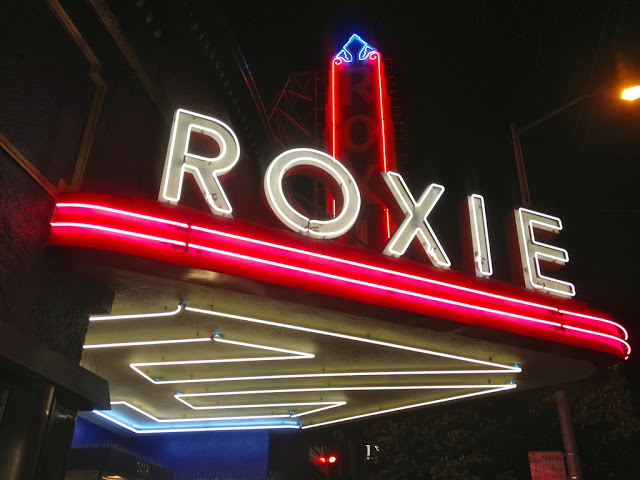
The following programs of Lynne Sachs’s films were originally curated by filmmaker Craig Baldwin as “Sidebars” to accompany a run of Film About a Father Who at The Roxie cinema in San Francisco. They appear here courtesy of Baldwin and Canyon Cinema. Sachs also recently received a career retrospective at the Museum of the Moving Image, curated by Edo Choi.

Prismatic Ground honors filmmaker Lynne Sachs with the inaugural Ground Glass Award for outstanding contribution to the field of experimental media. Two film programs curated by Craig Baldwin available through the fest + a conversation with canyon cinema executive director Brett Kashmere on Saturday, April 10th at 4pm Eastern Daylight Time. [Watch the Recording]

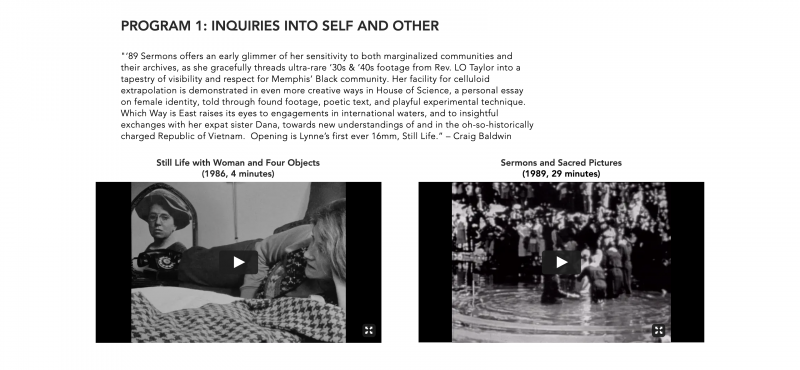
PROGRAM 1

INQUIRIES INTO SELF AND OTHER

“‘89 Sermons offers an early glimmer of her sensitivity to both marginalized communities and their archives, as she gracefully threads ultra-rare ‘30s & ’40s footage from Rev. LO Taylor into a tapestry of visibility and respect for Memphis’ Black community. Her facility for celluloid extrapolation is demonstrated in even more creative ways in House of Science, a personal essay on female identity, told through found footage, poetic text, and playful experimental technique. Which Way is East raises its eyes to engagements in international waters, and to insightful exchanges with her expat sister Dana, towards new understandings of and in the oh-so-historically charged Republic of Vietnam.  Opening is Lynne’s first ever 16mm, Still Life.” – Craig Baldwin

Still Life with Woman and Four Objects (4 min., 1986)
Sermons and Sacred Pictures (29 min., 1989)
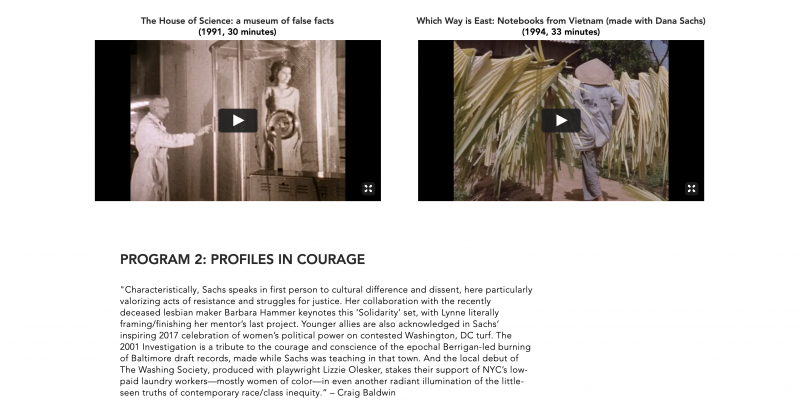
The House of Science: a museum of false facts (30 min., 1991)
Which Way Is East: Notebooks from Vietnam (made with Dana Sachs) (33 min., 1994)

PROGRAM 2

PROFILES IN COURAGE

“Characteristically, Sachs speaks in first person to cultural difference and dissent, here particularly valorizing acts of resistance and struggles for justice. Her collaboration with the recently deceased lesbian maker Barbara Hammer keynotes this ‘Solidarity’ set, with Lynne literally framing/finishing her mentor’s last project. Younger allies are also acknowledged in Sachs’ inspiring 2017 celebration of women’s political power on contested Washington, DC turf. The 2001 Investigation is a tribute to the courage and conscience of the epochal Berrigan-led burning of Baltimore draft records, made while Sachs was teaching in that town. And the local debut of The Washing Society, produced with playwright Lizzie Olesker, stakes their support of NYC’s low-paid laundry workers—mostly women of color—in even another radiant illumination of the little-seen truths of contemporary race/class inequity.” – Craig Baldwin

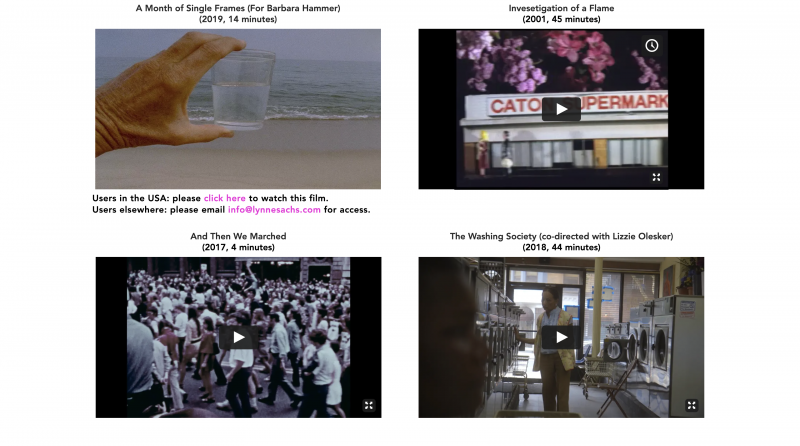
A Month of Single Frames (for Barbara Hammer) (14 min., 2019)
Investigation of a Flame (45 min., 2001)
And Then We Marched (4 min., 2017)
The Washing Society (co-directed with Lizzie Olesker) (44 min., 2018)


Drawn & Quartered will also be streaming in the program- wave 4: through the flowering fields of the sea

Home in the Woods (dir. Brandon Wilson, 2020, 96 min.)
Bodes In Dissent (dir. Ufuoma Essi, 2021, 6 min.)
Make Sure the Sea Is Still There (dir. Gloria Chung, 2021, 8 min.)
The Aquarium (dir. Paweł Wojtasik, 2006, 22 min.)
hold — fuel — when — burning (dir. dd. chu, 2020, 11 min.)
Depths (dir. Ryan Marino, 2020, 5 min.)
Look Then Below (dir. Ben Rivers, 2019, 22 min.)
Drawn & Quartered (dir. Lynne Sachs, 1986, 4 min.)
End of the Season (dir. Jason Evans, 2020, 13 min.)
Learning About Flowers and Their Seeds (dir. Emily Apter and Annie Horner, 2021, 4 min.)
A Slight Wrinkle in the Strata (dir. Ryan Clancy, 2021, 30 min.)
Back Yard (dir. Arlin Golden, 2020, 7 min.)
In Our Nature (dir. Sara Leavitt, 2019, 3 min.)
By Way of Canarsie (dir. Lesley Steele and Emily Packer, 2019, 14 min.)


About Prismatic Ground
Prismatic Ground is a New York festival centered on experimental documentary. Hosted by Maysles Documentary Center and online NYC film resource Screen Slate, the festival will be primarily virtual for its first year barring a timely end to the ongoing COVID-19 pandemic.

We seek work that pushes the formal boundaries of non-fiction in the spirit and tradition of experimental filmmaking. This “spirit” is somewhat amorphous, undefinable, and open to interpretation, but refers to work that engages with its own materiality, and that privileges a heightened artistic experience over clear meaning.

For a better sense of what we’re looking for, here are some filmmakers that inspire us: Chris Marker, Lynne Sachs, Kevin Jerome Everson, The Otolith Group, Black Audio Film Collective, Pat O’Neill, Cecilia Condit, Edward Owens, Chick Strand, Barbara Hammer, Khalik Allah, Michael Snow, Janie Geiser, Isaac Julien, Trinh T. Minh-ha, Sky Hopinka, Fern Silva, Akosua Adoma Owusu…

STEPHEN VITIELLO: SOUNDTRACKS FOR LYNNE SACHS (VOLUME 2)

STREAM OR PURCHASE THE ALBUM HERE:
https://stephenvitiello.bandcamp.com/album/soundtracks-for-lynne-sachs-volume-2-your-day-is-my-night-the-washing-society-tip-of-my-tongue

EXCERPT- Stephen Vitiello – Soundtracks for Lynne Sachs (Volume 2, Your Day Is My Night, The Washing Society, Tip of My Tongue) – 01 opening (YDMN)
EXCERPT- Stephen Vitiello – Soundtracks for Lynne Sachs (Volume 2, Your Day Is My Night, The Washing Society, Tip of My Tongue) – 19 Last Minute (TOMT)
EXCERPT- Stephen Vitiello – Soundtracks for Lynne Sachs (Volume 2, Your Day Is My Night, The Washing Society, Tip of My Tongue) – 09 Every Fold (TWS)

Lynne Sachs first reached out to me in 2012, asking if I could recommend someone to work on the soundtrack for an upcoming film. I probably paused for a polite moment and then offered my own services. Since that time, I’ve created music for several projects by Lynne, including 4 feature-length films, a performance work (created in collaboration with playwright Lizzie Olesker) and a short film that uses a track I did with Molly Berg for a 12k CD. Over the years, I’ve amassed an archive of pieces made for these projects, some used in the films, some excerpted, some proposed. In some cases, Lynne would be looking for a 30-second clip for a transition and I’d use that as an excuse to record a 10-minute piece, figuring we’d find the 30-seconds somewhere in there.

This second volume of soundtracks works are from three films ….
Your Day is My Night, is set in NY’s Chinatown and follows the lives of Chinese-Americans living in shifted apartments. The Washing Society, is a collaboration between Lynne Sachs and Lizzie Olesker, it “brings us into New York City laundromats and the experiences of the people who work there.” Tip Of My Tongue, a piece on events of the last 55 years as remembered by a collection of friends and colleagues. As much as these musical tracks were created for the films, I don’t believe one has to have seen the films to enjoy them. That said, running out, or jumping on your computer, to watch and listen to the films would be a very good thing to consider.


credits

releases March 5, 2021

Stephen Vitiello – guitar, piano, modular synthesizer, field recordings
Molly Berg – clarinet and a bit of voice (YDMN)
Michael Raphael – washing machine recordings (TWS)
Amanda Katz and Jeff Sisson – Sound recordings (YDMN)

Cover art – Lynne Sachs
Mastering – Lawrence English at Negative Space

Your Day is My Night, directed by Lynne Sachs, 2013
Camera, co-producing and editing: Sean Hanley

The Washing Society, a film by Lizzie Olesker and Lynne Sachs, 2018
Editor – Amanda Katz

Tip Of My Tongue, directed by Lynne Sachs, 2017
Editor – Amanda Katz

Kino Rebelde to Represent Lynne Sachs’ Catalogue Internationally

http://www.kinorebelde.com/lynne-sachs-complete-filmography/

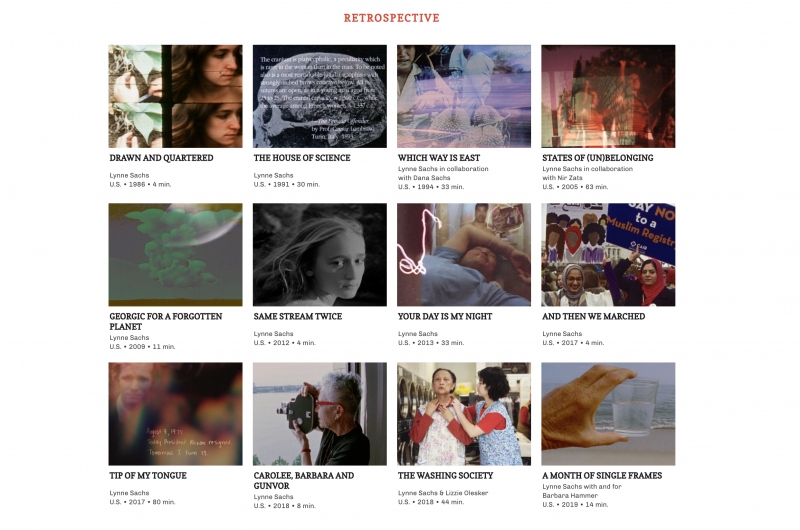
Kino Rebelde has created a retrospective that traces a delicate line connecting intimacy, power relations, violence, memory, migration, desire, love, and war in Lynne’s films. By looking at each of these works, we can see a director facing her own fears and contradictions, as well as her sense of friendship and motherhood.  Moving from idea to emotion and back again, our retrospective takes us on a journey through Sachs’ life as a filmmaker, beginning in 1986 and moving all the way to the present.

With the intention of allowing her work to cross boundaries, to interpret and to inquire into her distinctive mode of engaging with the camera as an apparatus for expression, we are delighted to present 37 films that comprise the complete filmmography, so far, of Lynne Sachs as visual artist and filmmaker. Regardless of the passage of time, these works continue to be extremely contemporary, coherent and radical in their artistic conception.


About Kino Rebelde

Kino Rebelde is a Sales and Festival Distribution Agency created by María Vera in early 2017. Its exclusively dedicated to promotion of non-fiction cinema, hybrid narratives and experimental.

Based on the creative distribution of few titles by year, Kino Rebelde established itself as a “boutique agency”, working on a specialized strategy for each film, within its own characteristics, market potential, niches and formal and alternative windows.

This company supports short, medium and long feature films, from any country, with linear or non-linear narratives. They can be in development or WIP, preferably in the editing stage.

The focus: author point of view, pulse of stories, chaos, risk, more questions, less answers, aesthetic and politic transgression, empathy, identities, desires and memory.

Kino Rebelde was born in Madrid, but as its films, this is a nomadic project. In the last years María has been living in Lisbon, Belgrade and Hanoi and she’ll keep moving around.

About María Vera

Festival Distributor and Sales Agent born in Argentina. Founder of Kino Rebelde, a company focused on creative distribution of non-fiction, experimental and hybrid narratives.

Her films have been selected and awarded in festivals as Berlinale, IFFR Rotterdam, IDFA, Visions Du Réel, New York FF, Hot Docs, Jeonju IFF, Sheffield Doc/Fest, Sarajevo FF, Doclisboa and Viennale, among others.

María has a background as producer of socio-political and human rights contents as well as a film curator.Envelope

vera@kinorebelde.com


Lynne Sachs (1961) is an American filmmaker and poet living in Brooklyn, New York. Her moving image work ranges from documentaries, to essay films, to experimental shorts, to hybrid live performances.

Working from a feminist perspective, Lynne weaves together social criticism with personal subjectivity. Her films embrace a radical use of archives, performance and intricate sound work. Between 2013 and 2020, she collaborated with renowned musician and sound artist Stephen Vitiello on five films.

Strongly committed to a dialogue between cinematic theory and practice, she searches for a rigorous play between image and sound, pushing the visual and aural textures in each new project.

Between 1994 and 2009, Lynne directed five essay films that took her to Vietnam, Bosnia, Israel, Italy and Germany – sites affected by international war – where she looked at the space between a community’s collective memory and her own perception. 

Over the course of her career, she has worked closely with film artists Craig Baldwin, Bruce Conner, Ernie Gehr, Barbara Hammer, Chris Marker, Gunvor Nelson, and Trinh T. Min-ha.

Lynne Sachs and Stephen Vitiello Program at the LA Film Forum

Lynne Sachs & Stephen Vitiello: Sound Engagements – Program 1: Four Films

https://www.lafilmforum.org/schedule/winter-2021/lynne-sachs-four-films-with-stephen-vitiello/

Los Angeles Filmforum presents

Lynne Sachs & Stephen Vitiello: Sound Engagements

Part 1: Four Films

Films Screening February 12-22, 2021


Live Q&A with Lynne Sachs on Friday, February 19, 7:00 pm PST (10:00 pm EST) by Zoom

Conversation with Lynne Sachs and Stephen Vitiello moderated by musician and music critic Sasha Frere-Jones on Sunday February 21, 5:00 pm PST (8:00 pm EST) by Zoom

Online via Los Angeles Filmforum

Filmforum is delighted to kick off 2021 by welcoming back our friend Lynne Sachs with her new film and several past works, all of which include original music by sound artist Stephen Vitiello.

“In collaborating on the soundtracks for my films, Stephen Vitiello somehow recognizes the interior sounds of objects and releases them for us to hear. Together his music and his sound designs push audiences toward a new way of experiencing cinema.” – Lynne Sachs

In these two programs, Los Angeles Filmforum explores the seven-year collaborative relationship between filmmaker Lynne Sachs and sound artist Stephen Vitiello.

Admission will include receiving links to both Zoom conversations!

Four films are covered by this admission, which is on a sliding scale, and which takes you to a screening room set up by Canyon Cinema. You also get a free link to the live Q&A with Lynne on Friday February 19 and the tripartite conversation on Sunday Feb 21.!

Ticketing for Four Films: Sliding Scale, $0 for members, $5 for students, $8, $12, $20

at https://lynnesachs4films.bpt.me

We hope that, if your means allow, you might go for $20, as you will be getting to see 4 wonderful films and attend two discussions!

Film About a Father Who is distributed by Cinema Guild, and has its own virtual cinema admission charge, listed on its own Filmforum webpage at https://www.lafilmforum.org/schedule/winter-2021/film-about-a-father-who/

Special Thanks to Brett Kashmere, Canyon Cinema, Tom Sveen, Cinema Guild.

Films by Lynne Sachs with music and sound design by Stephen Vitiello

2013 – 2020

Biographies:

Lynne Sachs is a filmmaker and a poet born in Memphis, Tennessee but living in Brooklyn, New York. Her work explores the intricate relationship between personal observations and broader historical experiences by weaving together text, collage, painting, politics and layered sound design. Strongly committed to a dialogue between cinematic theory and practice, she searches for a rigorous play between image and sound, pushing the visual and aural textures in her work with every new project. Her work ranges from the very personal, as in her early experiments that are reminiscent of Bruce Connor’s found footage films and Chris Marker’s essay films, to documentary, as in her film on the Catonsville Nine’s antiwar-activism in Investigation of a Flame. Lynne discovered her love of filmmaking while living in San Francisco where she worked closely with film artists Craig Baldwin, Bruce Conner, Barbara Hammer, George Kuchar, and Trinh T. Min-ha. Between 1994 and 2006, she produced five essay films that took her to Vietnam, Bosnia, Israel, Italy and Germany — sites affected by international war — where she looked at the space between a community’s collective memory and her own subjective perceptions.

Sachs has made 37 films, which have screened at the New York Film Festival, Sundance, Oberhausen, Viennale, BAMCinemaFest, Vancouver Film Festival, DocLisboa and many others nationally and internationally. They have also been exhibited at the Museum of Modern Art, the Whitney Museum of American Art, Walker Art Center, Wexner Center for the Arts and other venues. The Buenos Aires International Festival of Independent Cinema, Festival International Nuevo Cine in Havana, China Women’s Film Festival and Sheffield Documentary Festival have all presented retrospectives of Lynne’s films. She received a 2014 Guggenheim Fellowship in the Arts. In 2019, Tender Buttons Press published Lynne’s first collection of poetry, Year by Year Poems. Lynne lives in Brooklyn with filmmaker Mark Street. Together, they have two daughters, Maya and Noa Street-Sachs. www.lynnesachs.com


Stephen Vitiello is an electronic musician and sound artist who transforms incidental atmospheric noises into mesmerizing soundscapes that alter our perception of the surrounding environment. He has composed music for independent films, experimental video projects and art installations, collaborating with such artists as Nam June Paik, Tony Oursler and Dara Birnbaum. Solo and group exhibitions include MASS MoCA, The High Line, NYC, and the Museum of Modern Art.  https://www.stephenvitiello.com/
Solo exhibitions include All Those Vanished Engines, MASS MoCA, North Adams, MA (2011-(ongoing)); A Bell For Every Minute, The High Line, NYC (2010-2011); More Songs About Buildings and Bells, Museum 52, New York (2011); and Stephen Vitiello, The Project, New York (2006). He has participated in such group exhibitions as Soundings: A Contemporary Score, Museum of Modern Art, NY (2013); Sound Objects: Leah Beeferman and Stephen Vitiello, Fridman Gallery, New York (2014); September 11, PS 1/MoMA, LIC, NY (2011-2012); the 15th Biennale of Sydney, Australia (2006); Yanomami: Spirit of the Forest at the Cartier Foundation, Paris; and the 2002 Biennial Exhibition, Whitney Museum of American Art, New York (2002). Vitiello has performed nationally and internationally, at locations such as the Tate Modern, London; the San Francisco Electronic Music Festival; The Kitchen, New York; and the Cartier Foundation, Paris. In 2011, ABC-TV, Australia produced the documentary Stephen Vitiello: Listening With Intent. Awards include Creative Capital (2006) and a Guggenheim Fellowship (2011-2012). Vitiello is a professor of Kinetic Imaging at Virginia Commonwealth University. He lives and works in Richmond, Virginia.  


Sasha Frere-Jones is a writer and musician from New York.

Los Angeles Filmforum screenings are supported by the Los Angeles County Board of Supervisors through the Los Angeles County Department of Arts & Culture, the Department of Cultural Affairs, City of Los Angeles, the National Endowment for the Arts, the Mike Kelley Foundation for the Arts, the Wilhelm Family Foundation, and the Academy of Motion Picture Arts & Sciences. We also depend on our members, ticket buyers, and individual donors.


The Washing Society
Directed by Lynne Sachs and Lizzie Olesker
2018, color, sound, 44 min.
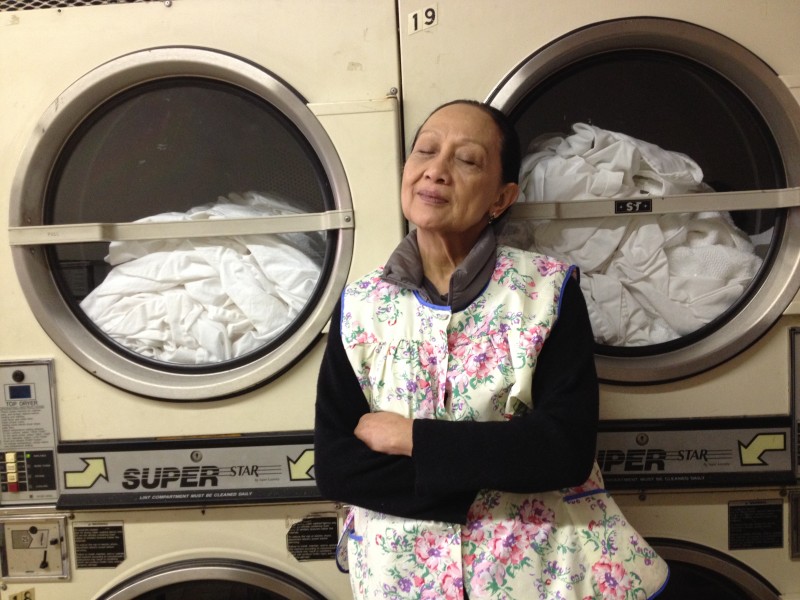
When you drop off a bag of dirty laundry, who’s doing the washing and folding?  The Washing Society brings us into New York City laundromats and the experiences of the people who work there by observing these disappearing neighborhood spaces and the continual, intimate labor that happens there. The juxtaposition of narrative and documentary elements in THE WASHING SOCIETY creates a dream-like, yet hyper-real portrayal of a day in the life of a laundry worker, both past and present.

“The legacy of domestic work, the issues surrounding power, and the exchange of money for services are all potent themes which rise to the surface and bubble over in dramatic, thrilling escalations of the everyday.” – Brooklyn Rail

“Spotlights the often-invisible workers who fold the clothes, maintain the machines and know your secrets.” – In These Times

Featuring: Jasmine Holloway, Veraalba Santa, and Ching Valdes-Aran
Cinematography: Sean Hanley, Editiing: Amanda Katz

Trailer:  http://www.lynnesachs.com/2017/08/23/the-washing-society/

Drift and Bough”
2014, Super 8mm on Digital, B&W, sound, 6 min.
Sachs spends a winter morning in Central Park shooting film in the snow. Holding her Super 8mm camera, she takes note of graphic explosions of dark and light and an occasional skyscraper. The stark black lines of the trees against the whiteness create the sensation of a painterʼs chiaroscuro. Woven into this cinematic landscape, we hear sound artist Stephen Vitielloʼs delicate yet soaring musical track which seems to wind its way across the frozen ground, up the tree trunks to the sky.

Tip of My Tongue
2017, color, sound, 80 min.
“To mark her 50th birthday, filmmaker Lynne Sachs gathers a group of her contemporaries—all New Yorkers but originally hailing from all corners of the globe—for a weekend of recollection and reflection on the most life-altering personal, local, and international events of the past half-century, creating what Sachs calls ‘a collective distillation of our times.’ Interspersed with poetry and flashes of archival footage, this poignant reverie reveals how far beyond our control life is, and how far we can go despite this.” — Kathy Brew, Museum of Modern Art

“A mesmerizing ride through time, a dreamscape full of reflection, filled with inspired use of archival footage, poetry, beautiful cinematography and music. Raises the question of how deeply events affect us, while granting us enough room to crash into our own thoughts, or float on by, rejoicing in the company of our newfound friends.”  — Screen Slate, Sonya Redi

“A beautiful, poetic collage of memory, history, poetry, and lived experience, in all its joys, sorrows, fears, hopes, triumphs, and tragedies … rendered in exquisite visual terms, creating an artful collective chronicle of history.” Christopher Bourne, Screen Anarchy

Trailer:   http://www.lynnesachs.com/2017/04/25/tip-of-my-tongue/

Featuring: Dominga Alvarado, Mark Cohen, Sholeh Dalai, Andrea Kannapell, Sarah Markgraf, Shira Nayman, George Sanchez, Adam Schartoff, Erik Schurink, Accra Shepp, Sue Simon, Jim Supanick

Cinematography: Sean Hanley

Editing: Amanda Katz

Your Day is My Night
2013, HD video and live performance, color, sound, 64 min.
Immigrant residents of a “shift-bed” apartment in the heart of New York City’s Chinatown share their stories of personal and political upheaval. As the bed transforms into a stage, the film reveals the collective history of the Chinese in the United States through conversations, autobiographical monologues, and theatrical movement pieces. Shot in the kitchens, bedrooms, wedding halls, cafés, and mahjong parlors of Chinatown, this provocative hybrid documentary addresses issues of privacy, intimacy, and urban life.

“A strikingly handsome, meditative work: a mixture of reportage, dreams, memories and playacting, which immerses you in an entire world that you might unknowingly pass on the corner of Hester Street, unable to guess what’s behind the fifth-floor windows.” -The Nation

In Chinese, English & Spanish with English Subtitles.

Trailer: https://www.youtube.com/watch?v=0Pks0_IRHek

Featuring: Yi Chun Cao, Linda Y.H. Chan, Chung Qing Che, Ellen Ho, Yun Xiu Huang, Sheut Hing Lee, Kam Yin Tsui, & Veraalba Santa.

Camera by Sean Hanley and Ethan Mass

Winner, Best Feature Documentary, San Diego Asian Film Festival, 2013 * Winner, Best Feature Film, Workers Unite! Film Festival, 2013 * Winner, Best Experimental Film, Traverse City Film Festival, 2013

THE FILMS OF LYNNE SACHS Curated by Craig Baldwin at the Roxie (San Francisco)

THE FILMS OF LYNNE SACHS 
Curated by Craig Baldwin 

https://www.roxie.com/the-films-of-lynne-sachs/

Film About a Father Who +

Two Sidebar Programs

Starts February 12

Fresh from her early 2021 retrospective at New York City’s Museum of the Moving Image, filmmaker Lynne Sachs returns to San Francisco where she lived and went to school (SFSU & SFAI) between 1985 and ‘95. It was here that Lynne really immersed herself in our city’s experimental and documentary community, working closely with local artists Craig Baldwin, Bruce Conner, Barbara Hammer, Gunvor Nelson and Trinh T. Minh-ha and spending time at the Film Arts Foundation (RIP), Canyon Cinema, SF Cinematheque, and Other Cinema.

“For more than thirty years, artist Lynne Sachs has constructed short, bold mid-length, and feature films incorporating elements of the essay film, collage, performance, and observational documentary. Her highly self-reflexive films have variously explored the relations between the body, camera, and the materiality of film itself; histories of personal, social, and political conflict; marginalized communities and their labor; and her own family life, slipping seamlessly between modes, from documentary essays to diaristic shorts.” – Edo Choi, Assistant Curator of Film, Museum of the Moving Image.

Accompanying our Bay Area premiere of Sachs’s Film About a Father Who, the Roxie offers two accompanying shorts sidebars programmed by filmmaker and Other Cinema curator Craig Baldwin.

Special thanks to Other CinemaCanyon Cinema, and Cinema Guild for their support in organizing this program.

FILM ABOUT A FATHER WHO 

Over a period of 35 years between 1984 and 2019, filmmaker Lynne Sachs shot 8 and 16mm film, videotape and digital images of her father, Ira Sachs Sr., a bon vivant and pioneering businessman from Park City, Utah. Film About a Father Who is her attempt to understand the web that connects a child to her parent and a sister to her siblings. With a nod to the Cubist renderings of a face, Sachs’ cinematic exploration of her father offers simultaneous, sometimes contradictory, views of one seemingly unknowable man who is publicly the uninhibited center of the frame yet privately ensconced in secrets. In the process, Sachs allows herself and her audience inside to see beyond the surface of the skin, the projected reality. As the startling facts mount, Sachs as a daughter discovers more about her father than she had ever hoped to reveal. (74 min., 2020, A Cinema Guild Release)

Critic’s Pick! “[A] brisk, prismatic and richly psychodramatic family portrait.” – Ben Kenigsberg, The New York Times

“Sachs achieves a poetic resignation about unknowability inside families, and the hidden roots never explained from looking at a family tree.” – Robert Abele, Los Angeles Times

“Formidable in its candor and ambition.” – Jonathan Romney, Screen International

Tickets for FILM ABOUT A FATHER WHO will be available on February 12

SACHS SHORTS SIDEBARS

Sidebar 1: INQUIRIES INTO SELF AND OTHER

Still from “The House of Science: a museum of false facts”

Still Life with Woman and Four Objects (4 min., 1986)
Sermons and Sacred Pictures (29 min., 1989)
The House of Science: a museum of false facts (30 min., 1991)
Which Way Is East: Notebooks from Vietnam (made with Dana Sachs) (33 min., 1994)

“As sidebar to her fresh Father feature, here is the first of two shorts programs, showcasing the astonishing cinematic artistry of Lynne Sachs…all made during her san fran years and recently digitally restored. Her ‘89 Sermons offers an early glimmer of her sensitivity to both marginalized communities and their archives, as she gracefully threads ultra-rare ‘30s & ’40s footage from Rev. LO Taylor into a tapestry of visibility and respect for Memphis’ Black community. Her facility for celluloid extrapolation is demonstrated in even more creative ways in House of Science, a personal essay on female identity, told through found footage, poetic text, and playful experimental technique. Which Way is East raises its eyes to engagements in international waters, and to insightful exchanges with her expat sister Dana, towards new understandings of and in the oh-so-historically charged Republic of Vietnam.  Opening is Lynne’s first ever 16mm, Still Life.” – CB

TRT: 96 min.

Tickets for Sidebar 1: INQUIRIES INTO SELF AND OTHER will be available on February 12

Sidebar 2: PROFILES IN COURAGE

A Month of Single Frames (for Barbara Hammer) (14 min., 2019)
Investigation of a Flame (45 min., 2001)
And Then We Marched (4 min., 2017)
The Washing Society (co-directed with Lizzie Olesker) (44 min., 2018)

“Characteristically, Sachs speaks in first person to cultural difference and dissent, here particularly valorizing acts of resistance and struggles for justice. Her collaboration with the recently deceased lesbian maker Barbara Hammer keynotes this ‘Solidarity’ set, with Lynne literally framing/finishing her mentor’s last project. Younger allies are also acknowledged in Sachs’ inspiring 2017 celebration of women’s political power on contested Washington, DC turf. The 2001 Investigation is a tribute to the courage and conscience of the epochal Berrigan-led burning of Baltimore draft records, made while Sachs was teaching in that town. And the local debut of The Washing Society, produced with playwright Lizzie Olesker, stakes their support of NYC’s low-paid laundry workers—mostly women of color—in even another radiant illumination of the little-seen truths of contemporary race/class inequity.” – CB

TRT: 107 min.

Tickets for Sidebar 2: PROFILES IN COURAGE will be available on February 12

German Art Magazine – Texte Zur Kunst on the Work of Lynne Sachs

TEXTS ON ART
Oct. 16, 2020
By Esther Buss
TACTILE TRANSLATIONS Esther Buss on Lynne Sachs’ retrospective at the Sheffield Doc / Fest
https://www.textezurkunst.de/articles/esther-buss-taktile-ubersetzungen/

ENGLISH TRANSLATION:
Try about the encounter. This year’s Sheffield Doc / Fest, which took place exclusively online due to the pandemic, dedicated a carefully curated retrospective to the filmmaker Lynne Sachs. This shows the community-creating moment of Sachs’ films, which are often the result of close collaborations – whether with family members, migrant communities or artistic companions like Barbara Hammer or Carolee Schneemann – especially under the restrictions of the pandemic: like the film critic Esther Buss argues, these films are always evidence of the ambivalence between ‘lonely’ art production on the one hand and shared experience on the other.

Lynne Sachs’ films usually begin with a tactile approach: touches with surfaces and textures of bodies, landscapes and fabrics – touches that always include or even affect the materiality of the image. Her most recent work, Film About A Father Who (2020) – the title refers to Yvonne Rainer’s 1974 film About a Woman Who… – begins with a close-up of two hands untangling the tangled white hair in a head of hair . Lynne Sachs cuts the hair of Ira Sachs, her father, who is over 80, the main character in the film and the center of gravity in a complex network of family relationships. From this concrete and symbolically legible entrance image, a fragmentary narrative unfolds that spans 35 years.

Between 1984 and 2019, Sachs repeatedly filmed his own father: a man who is still difficult to decipher for his family members to this day. A promiscuous hippie businessman who had the reputation of being “Hugh Hefner of Park City”, Ira Sachs, father of nine children from different women, is entirely a product of the 1960s. Sachs is only marginally concerned with the finding of a patriarchal order that was carried forward in a break with existing moral and sexual norms. The film About A Father Who is rather an attempt to decenter the enigmatic figure of the father in the form of a polyphonic, sometimes contradicting essay and to let it merge into a horizontal narrative of family connections. With every new memory, every new face, another mesh is woven in the fabric of the Sachs family, which has grown steadily over the course of the film. The result is a collage of different perspectives and voices, which also remains fragile on the level of the material. Grainy 8 and 16 mm images and muddy VHS line up with high-definition digital material, old and new recordings for interviews and home movies – a significant part of which was shot by Ira Sachs and Ira Sachs Jr., Lynne Sachs’ younger brother and filmmaker too. [1]

As part of Sheffield Doc / Fest, the film About A Father Who was shown to an international audience for the first time in early October. The documentary film festival, which took place exclusively online this year, also dedicated a carefully curated program of five films from 1994 to 2018 to Sachs. The selection focused on the term “translation”, with which Sachs is sometimes more, sometimes less explicit in her work (the first in The Task of the Translator, 2010, a film that answers Walter Benjamin’s essay of the same name with three body studies). What was meant was not just translating from spoken to visual language or transferring from a source to a target language. [2] The thematic bracket here was, in general, translation as a practice of encounter and communication and, connected to it, as an awareness of difference. There is a vivid picture of this in the film About A Father Who: The mother had mastered grammar, Sachs said in an interview with her siblings Dana and Ira. Everything was transparent, linear and in the right place, there were commas and points. The punctuation marks with the father, on the other hand, are exclamation marks and question marks.

The work of Lynne Sachs, born in Memphis, Tennessee, in 1961 and trained at the San Francisco Art Institute, where she a. a. collaborated with artists such as Bruce Conner and Trinh T. Minh-Ha are hybrid structures. Since her first films, Drawn and Quartered and Still Life with Woman and Four Objects (both from 1987), which are strongly determined by Laura Mulvey’s feminist essay Visual Pleasure and Narrative Cinema (1975), she has made more than 30 mostly short and medium-length films. The aforementioned “encounter” is essential for Sachs’ artistic practice. Her films are often the result of close collaborations: for example with close or distant family members, migrant communities or artistic companions such as Barbara Hammer, Carolee Schneemann or Gunvor Nelson – she dedicated the film Carolee, Barbara and Gunvor to them in 2018.

As an experimental documentary filmmaker, Sachs always seeks the permeability of authorial authority and filmic subject. In relation to the concept of “fly on the wall” – the most invisible observer – that is decisive for US American direct cinema, she programmatically distanced itself: “As a documentary filmmaker, I am always reckoning with what it means to shoot ‘from the outside in ‘, using my camera to peer into the lives of people from other places, cultures, or communities. Honestly, it’s the foundation of the documentary paradigm that most disturbs me, “said the artist in an interview with the documentary film magazine Modern Times Review. [3] Sachs is always present in her films: as a body, as an off-voice, as a text. There are also fictional and performative elements.

Your Day is My Night (2013) and the film The Washing Society (2018), made in collaboration with playwright and director Lizzie Olesker, both provide insights into the undocumented cultural microcosms of New York, which has been Sachs ’hometown for many years. The subject of Your Day is My Night is a so-called shift-bed apartment in Chinatown – an apartment in which Chinese immigrants from the working class share a bed in layers (i.e. in coordination with their respective day and night jobs), sometimes over many years. With a precise and poetic eye for the economy of the rooms, Sachs portrays a household with seven residents, or rather ‘characters’, on the corner of Hester Street. In the form of autobiographical monologues and re-enacted conversations, these provide information about political upheavals and family separations, talk about exhausting journeys, fears and longings. In an abstract setting that looks like a theater room, the beds become a stage for a stylized body game. The camera touches lying, sleeping and stretching bodies in haptic movements.

The Washing Society is a document of the invisible work that has increasingly come into the public eye with the outbreak of Covid-19 ‘. The setting is in the laundromats that are increasingly being displaced by large laundries in urban areas. With a mixed cast of actresses and real laundresses, Sachs observes the repetitive gestures of reproductive work and gives a voice to the experiences of the predominantly African-American and Hispanic workers. The laundromat is increasingly contouring itself as a space in which underpaid work, racism and classicism become just as evident as solidarity and community. The historical anchor of the film is the eponymous “Washing Society”, an organization founded in 1881 by 20 African-American laundresses that fought for better working conditions. Looking at the remains of the washing process – the camera keeps pointing at an abject mixture of dust and hair – and the omnipresence of touch, Sachs also defines a moment of physical intimacy – “… there are still two hands … washing your skirt, your shirt, your socks, almost touching you, almost connecting with your skin. Another layer ”, it says from the off at the end.

A completely different touch takes place in A Month of Single Frames (2019), a 14-minute short film “made with and for Barbara Hammer”. Sachs processed the 8 and 16 mm film material that the pioneer of lesbian avant-garde cinema, who died in 2019, shot in the late 1990s during a month-long residency in a lonely hut with no electricity or running water on Cape Cod, Massachusetts. When Hammer began to organize her estate because of her progressive cancer, she handed the recordings over to her younger colleague with the invitation to make a film out of them. Sachs assembles tape recordings that she made in her studio shortly before the death of her mentor and on which she had them read from her Duneshack journal with Hammer’s pictures: recordings of insects, the barren vegetation in the dunes, of light reflections, shadow play and weather changes as well of banal everyday things that transform into lyrical objects when the camera looks at them. “I am overwhelmed by simplicity”, one hears Hammer say to the image of a shred of plastic film blowing in the wind. Another time she looks fascinated at a fly, in which she recognizes a miniature of the army helicopters patrolling the coast. Despite all the amazement, A Month of Single Frames is far from an essentialist view of nature. “Why is it I can’t see nature whole and pure without artifice?” Hammer wonders once. She experimented extensively with the possibilities of camera technology: for example, by slowing down the flow of film material to the point of taking individual images and playing with colored foils that throw colored lights in the sand or immerse the landscape in shimmering magenta. The most striking sign of the posthumous treatment by Sachs are the inserted text panels in which she addresses her girlfriend, who is both present and absent.

The ambivalence of isolation and, lonely ‘art production on the one hand, and shared experience on the other, could seldom be experienced as physically as in this film. A Month of Single Frames is a contemplation of nature, an homage to analog cinema and a testimony to a friendship between women without any claim to exclusivity, quite the opposite. The you in the film is always directed towards a counterpart who is invited to join together to form a community across social and geographical distances. [4] “You are alone” – “I am here with you in this film” – “There are others here with us” – “We are all together”.

Some of Lynne Sachs ‘films can be seen on her website: https://www.lynnesachs.com. A Film About A Father Who will soon be showing at various festivals, including Indie Memphis. The restrictions caused by the pandemic make online viewing possible.

Esther Buss works as a freelance film critic in Berlin. She writes u. a. for kolik.film, Jungle World, Der Tagesspiegel and Cargo. Last publication in: A story of its own: Women Film Austria since 1999, ed. by Isabella Reicher, Vienna 2020.

[1] With films like Keep the Lights On , Ira Sachs Jr. Early 2010s among the protagonists of the New Wave of Queer Cinema.
[2] The seemingly seamless transition from the ‘other’ to one’s own language is repeatedly questioned by Sachs. In her Travelogue Which Way is East: Notebooks from Vietnam (1994) there are decidedly untranslated passages that make one aware of the linguistic difference. In this film, Sachs also works with Vietnamese parables, the translations of which remain puzzling.
[3] https://www.moderntimes.review/lynne-sachs-on-sheffield-doc-fest-retrospective/?fbclid=IwAR3OR4Y1Fo13SLsvoRJG39EE3EuFgl7jRmbHqRJW9K3Tpf5mV2z_UCVPsVY .
[4] When A Month of Single Frames was presented as part of the digital edition of the 66th Oberhausen Short Film Festival during the lockdown, its community-promoting message took on a larger dimension. The jury awarded the film the main prize.

Filmcentric Reviews Two Short Documentaries by Lynne Sachs

Two Short Documentaries by Lynne Sachs: The Last Happy Day (2009) and The Washing Society (2018)
23 July 2020
By Filmcentric (Ewan the Cinema) 
https://filmcentric.wordpress.com/2020/07/23/two-short-documentaries-by-lynne-sachs/

One of the special focus strands of the Sheffield Doc/Fest online programme in 2020 was the experimental documentary filmmaker Lynne Sachs, who has an extensive body of work across a number of different documentary interests. I watched two of her films out of the handful made available (some of the rest are still online for festival attendees, so I am determined to catch up with them), and present reviews below — or, maybe I should say, more impressionistic observances as I cannot claim they are as deeply considered as I would like.

The Washing Society (2018)
This isn’t a long film, clocking in at about 45 minutes, but it’s a curious blend of documentary and staged fiction. It films a number of New York laundromats, showing their working environments and including some comments by a number of the workers. However, it starts with a Black woman speaking an historical text and then places her in the space of a laundromat opening for the day, and throughout the film her presence functions as a sort of historical commentary making clear the racialised nature of this work, which is somehow so intangible and invisible to so many people. As the film progresses, the testimonies start to become more like monologues, rather more clearly delivered by actors, itself eventually seguing into a musical performance piece on the machines themselves.

CREDITS
Directors/Writers Lynne Sachs and Lizzie Olesker; Cinematographer Sean Hanley; Length 44 minutes.

Seen at home (Sheffield Doc/Fest Selects streaming), London, Saturday 4 July 2020.

The Last Happy Day (2009)
I find it sometimes very easy to criticize documentaries for following a standard talking heads format, but of course Lynne Sachs doesn’t even approach anything resembling the clichés of the form. This medium-length piece does, however, use occasional on-screen captions to contextualize her story of a distant relative, the Hungarian Jew Sandor Lenard (aka Alexander Lenard), who fled shortly before the outbreak of World War II and eventually found himself in Brazil, where he undertook Latin translations, including of Winnie the Pooh (sorry, Winnie Ille Pu). That said, her experimental practice means that it’s difficult to pick out everything that’s going on here, and I imagine wider viewing of her oeuvre would help more in that respect, but there seems to be an idea of the painful ruptures of war and exile being healed at least somewhat by language, or perhaps the idea of translation (given that the language in question is hardly a widely shared one). It’s a family story, too, so children in Sachs’ own family appear on screen to read Lenard’s letters or comment on them (very eloquently, given their age). These are ideas that come out, not inaccessibly, but in a dense mixture of text and image and voice.

CREDITS
Director Lynne Sachs; Cinematographers Sachs and Ethan Mass; Length 38 minutes.

Seen at home (Sheffield Doc/Fest Selects streaming), London, Tuesday 21 July 2020.

In Their Own League – Exclusive Interview with Filmmaker Lynne Sachs

Exclusive Interview with Filmmaker Lynne Sachs
In Their Own League 
By Bianca ‘Bee’ Garner 
July 17, 2020
https://intheirownleague.com/2020/07/17/exclusive-interview-with-filmmaker-lynne-sachs/

Lynne Sachs is an extraordinary filmmaker with a distinct and unique approach to documentary filmmaking. Each one of her films is an exploration into a secret hidden world as well as an experiment with the medium of visual storytelling. Currently, the Sheffield Documentary Film Festival is running a ‘Directors in Focus’ showcase of Sachs’ work where you can catch pieces like “Your Day is My Night”, “The Washing Society” and her latest film “Film About a Father Who”.

It’s been a real delight to explore Sachs’ work as part of the festival and when the opportunity arose to speak to Lynne personally, I jumped at the chance. Here’s our interview where we discuss how she approaches documentary filmmaking, her friendship with Barbara Hammer and the art of editing. 

Bianca: Hello Lynne, lovely to chat to talk. I just want to say how much I’ve enjoyed exploring your work as part of the Sheffield Doc Fest “Directors in Focus”, you have such an unique approach to filmmaking. I find it to be this unusual blend of traditional documentary style filmmaking meets the avant-garde artistic style of filmmaking of allowing imagery and sound to tell the stories. How did you develop this approach and style of filmmaking, and what was it about documentary filmmaking that appealed to you as a filmmaker?

Lynne: I’ll guess I’ll start by admitting that I don’t even know if I would be able to make a traditional documentary, that might be because of when I invest myself into an investigation or a story I take such a deep dive and I am always looking for a visual or an oral method by which I can comment on that particular theme in a way that hasn’t been done before. Sometimes it’s the topic that guides me. 

The more conventional approach would be to have a template or a formula or maybe even a time-limit like 58 minutes so you would have time for the commercial breaks, then you would take your subject and frame it by those expectations. However, that approach never really interested me and I wonder whether I have the skill or the commitment to do that style of filmmaking. 

My desire to work in the documentary realm came from a convergence of the love of art and the love of politics. My background was as an undergraduate in history, I never expected to be an academic historian but it feeds my way of thinking. I wanted my creative juices to fly but the limitations of being a historian weren’t appealing to me.

Lynne Sachs, dir. of Film About a Father Who

Bianca: Did you always strive to have a personal connection with the people and the subjects you film?

Lynne: It’s very important to me to have a complex relationship with the people in my film, just like the one I would have normally with a friend. It takes work, and often in the field of filmmaking there’s the sense of jumping in as quickly as possible then leaving. You actually leave with this gift: the interaction you had with the people you filmed. You then own that gift, but those people don’t have that anymore. I think the whole process has to take a whole circle where you work to find the right participants for your film, you work on that film and then you come back to them after completion and during distribution. 

With “Your Day is my Night” we worked on that film for a couple of years and it became a live performance and I was bringing the people from Chinatown, to places in New York City where they hadn’t been before. I was organising cars for them as they were older people and we couldn’t expect them to travel via Subway. I wanted them to experience that pleasure, and two years after we had finished shooting we took the film and the live performance to a public library in Chinatown where we had an afternoon matinee where all of their friends came.

It was actually quite a sad moment because one of the participants in the film had died since we made the film, so when his face came up in the film everyone in the audience started crying. So, it was a memorial for him in a way. There are ways films can function outside the function of building your career or taking you to film festivals. I really feel committed about the idea of having movies been shown on all different kinds of screens.

Bianca: People often overlook the importance of sound and audio in filmmaking because film is a visual medium. What I find fascinating about your films is that often the audio doesn’t always match up to what’s being depicted on-screen. I think this is brilliantly showcased in your latest film “Film About a Father Who” where we see one version of your father being shown but the narration is discussing a different aspect of his character.

Lynne: I just want to touch on something I hadn’t thought about, the formal connection between the way you understand a human being and the way that film works, and how you process what you see and what you later discover. I think that’s very particular to this medium. We have this notion that the visual and the sound should be married but we all know that marriage is just an agreement that can fall apart. It’s through that use of ‘falling apart’ where we begin to see that what something appears like isn’t actually what it is in reality, and we build in doubt. 

I think doubt should be a part of any filmmaking experience, whether you’re talking about fiction or non-fiction, do we believe the ideology that is intact. If you’re a doubtful viewer in any way then you start to engage with it in a deeper way, you start to question everything and as a result you become more intellectually engaged. What I wanted to say about “Film About a Father Who” that there were times where maybe I was uncomfortable in a situation where I did have doubts, but I wanted to believe that things were more acceptable than they actually were and worked with how I thought a father should be. 

If you think about the foundations of who we think we are as children and the notions of how we fit into that micro community it’s usually pretty transparent. However, maybe that’s no longer the case today. I used to think my family was very atypical, but now that I’ve screened the film quite a lot of people have either come up to me or written to me to share their own experiences. I think our notions of family are now more evolved than how it was when I was a kid.

Ira Sachs Sr. w Painting in Film About a Father Who

Since making the film I’ve been able to have some really profound conversations with those who have watched it. Whether or not it’s your mother or father who have secrets it’s their way of protecting themselves, but it also leaves an imprint on us and we’re left with a sense of confusion about how we’re supposed to process this new information and emotions. 

Bianca: The impression I got from your film was that this was not only a self-discovery for you but also a self-discovery of who your father is. It was a self discovery of a family too.

Lynne: It took me a year of going through all the videos and super-8 films and I realise I had a lot of content about my father. The traditional approach to documentary filmmaking is that you take all the footage and make a character so people leave the movie thinking they really know that person. I thought about whether that was what I really wanted to do, as what I was really interested in was the interrelationships between people and the way we yearn for a part of our parents in ourselves and how we are always looking for stability. I know I have very distinct relationships with my parents and I value that in its own way. 

Bianca: What’s something you want the viewer to take away from “Film About a Father Who”?

Lynne: I’m very interested portraying the layers of expression especially in terms of being a woman, that include your anger and your rage as well as your ability to integrate forgiveness because I think it’s very hard to go on living your life if you hold onto the pain of your own rage. Forgiveness isn’t about saying that something didn’t happen, there are parts in my film where I realise that I’ve become very good at training myself to have forced amnesia. If you can find forgiveness and realize that the person who hurt you or made mistakes, made those mistakes because of the things they went through themselves that can help you move forward.

Photo collage from Film About A Father Who

I am also interested in showing my family’s story so others can investigate their own stories. I showed the film to a group of fifteen men in their 80s who were in a fraternity with my father and all idolised him. After the film, they said to me that they wished their daughters had made a film about them which surprised me. I think it was because the film elevated my dad to a full person and his entire life was told. He came to the premiere in New York and he was happy with the film. And he’s told me that he wants to do better in the future. 

Bianca: Another recent film of yours is “A Month of Single Frames”, a beautiful collaboration with the late filmmaker Barbara Hammer. How did that film come around?

Lynne: I met Barbara in the late ‘80s as we were both in San Francisco during that time. At that time and well into the 1990s, San Francisco was a mecca for experimental filmmakers. I think that’s the place where my style really evolved as it’s not a commercial film centre like New York or Los Angeles. There was a place called the Film Arts Foundation where you could go and learn different skills or edit your films on a 16mm flatbed and Barbara was there teaching a class. I took a weekend class with her and we hit it off! We became friends and both ended up moving to New York City. 

Twelve years ago, Barbara found out she had ovarian cancer. She was going through chemotherapy and we would take meals to her and talk to her. She actually lived a lot longer than she thought she would. During that time we became deep friends, and I think she appreciated that me and my husband (Mark Street) were not intimidated by the word ‘cancer’. She asked Mark and me to make a film with the material she gave us when she saw her life coming to an end. 

When she gave me the footage she hadn’t told me she’d also kept a journal. Her health was declining but she was quite active in terms of filmmaking in her last year, so I had to squeeze in my visits with her between chemotherapy and her trips to the Berlin Film Festival for a premiere of a film she made. And, when she went to Berlin in 2018 she lost one of her vocal chords so when we were recording her narration for the film we had to use an amplifier. What’s amazing about making a film is that it’s a sustained experience and a gift with that person you’re collaborating with. It was also a gift in the sense that we could share all that time together. 

Barbara passed away in March 2019, and I’d hadn’t yet written the text you see in the film. I really wanted a way so you could dive into the film on a personal level, and on a level where I could be talking to her, the audience, the Earth, to the future and to anyone who could be watching the movie. What’s so specific about film, that it can transport you back in history but can also propel you forward in time too. I wanted there to be an active presence which is why I talk to the audience. 

Bianca: That’s what is so special about “A Month of Single Frames” is that feeling of conversation between you, the audience and Barbara. In the way it felt like therapy and a precious way of capturing someone’s memory.

Lynne: We think of film as a closed system where you enter it but you don’t affect it although it may affect you in a psychological way. I wanted that system to be more open, the screen is no longer a closed system. 

Bianca: Do you think we’ve lost something special about the art of shooting on film compared to how we now seem to shoot everything on digital, especially in terms of the craft of editing?

Lynne: It’s funny that you mention editing because it made me recall Dziga Vertov’s “The Man With a Movie Camera” because many people believe that the director’s wife (Yelizaveta Ignatevna Svilova) really made the film, I believe her work helped give the film it’s rhythm. There’s an image of her in the film where she’s sat at the editing table and she looks like she’s sewing. This image reminds us that analogue film was constructed in a method that was very identified with women. There has been a revived interest in the materialistic qualities of the medium and the fact you can go from something three-dimensional to something two-dimensional.

In terms of my own filmmaking, “Which Way is East” was shot all on film and so was “A Month of Single Frames” and “The Last Happy Day” was digital and film. It’s a real mix. In terms of the images I shoot on Super-8 and 16mm, well I just like them better. Digital can be so pristine. There’s a sense of physicality to analogue film. Sometimes you see a strand of hair or dust, and that’s part of the real world that we’ve left behind like a fossil. 

“Film About a Father Who” is to be screened in Sheffield in Autumn, and online on Sheffield Doc/Fest Selects in parallel. The Filmmaker Focus- retrospective films are streaming now in the UK and their accessibility has been extended through August 31st.

Please see: https://selects.sheffdocfest.com/bundle/lynne-sachs-focus/

Watch Sheffield Doc/Fest : Lynne Sachs Live Q&A with Festival Director Cíntia Gil

DATE: Thursday, 2 July
TIME: 7pm (BST)

Sheffield Doc/Fest Director, Cíntia Gil is joined by director, Lynne Sachs to discuss her films and to take questions from the audience for a live Q&A.

Filmmaker Lynne Sachs, in conversation with Festival Director Cíntia Gil, discuss 5 films that form her Director’s Focus within the Ghosts & Apparitions strand and her upcoming international premiere of Film About A Father Who which screens as part of Doc/Fest in October. Lynne Sachs’ films explore the notion of translation as a poetic and political tool for widening the world. Together with the focus, Doc/Fest presents Sachs’ video lecture My Body, Your Body, Our Bodies: Somatic Cinema at Home and in the World, a fascinating journey through her themes and work.

Her films are currently available to watch on Sheffield Doc/Fest Selects and Doc/Player through August 31, 2020:

The Last Happy Day, 2009, 37’
Which Way Is East: Notebooks from Vietnam in collaboration with Dana Sachs, 1994, 33’
Your Day Is My Night, 2013, 64’
The Washing Society, co-directed by Lizzie Olesker, 2018, 44’
A Month of Single Frames, made with and for Barbara Hammer, 2019, 14’