by Lynne Sachs/Lizzie Olesker, 65:00, 2018, US. When you drop off a bag of dirty laundry, who’s doing the washing and folding? The Washing Society brings us into New York City laundromats and the experiences of the people who work there by observing these disappearing neighborhood spaces and the continual, intimate labor that happens there. The juxtaposition of narrative and documentary elements in The Washing Society creates a dream-like, yet hyper-real portrayal of a day in the life of a laundry worker, both past and present.
Lynne Sachs’s new film Every Contact Leaves a Trace (2025) begins from a pun on Locard’s Exchange Principle: the forensic axiom that each encounter between people or objects deposits a material residue. Sachs turns the principle inward, toward the sedimented matter of a life lived among others: some 600 business cards accumulated over four decades, a paper archive indexing the chance encounters and professional exchanges of an illustrious career. The film appropriately screens on the occasion of Sachs’s Persistence of Vision Award from SFFILM, which recognizes her career in experimental documentary filmmaking.
As Sachs sifts through the stacks, narrating associations or confronting blank spots in her recollection, the cards’ standardized form gives way to the unruliness of relation. Sachs layers a restless flow of images, animations, and superimpositions over a diaristic voiceover, while frequent collaborator Stephen Vitiello’s omnipresent score hums beneath. She stages new encounters with select figures represented in her collection: a textile artist, a therapist, a refugee and mother who once cooked for her. Conversations always seem to turn toward days gone by, though the governing insight is less about recovering evidence of what “really” happened than observing how the past is continually remediated through its recounting and the subtle gravity people exert upon one another’s lives across space and time. At intervals, Sachs extends the interpersonal scale of her inquiry into a more expansive awareness.
While speaking to the woman who cuts her hair or searching for someone to make her maqluba, she holds Ukraine and Gaza on her mind. As she thinks of previous mistakes, of her ambivalent German-Jewish heritage, or her complicity in historical and current violence while living within the imperial core, her on-screen interlocutors serve as mirrors into her own wandering mind, a gesture toward entanglement reminiscent of Chris Marker’s reflexive Sans Soleil (1983). The “trace,” the film suggests, marks both the fact of contact and the asymmetries that shape it. At the same time, these traces may falter in their own ways, as they fail to hold the fullness of what passes between people. What constitutes intimacy? What does it mean to know someone? Closeness doesn’t necessarily produce understanding or solidarity. It can generate hostility or leave damage. With Sachs, we learn that to be in relation is to come to terms with one’s capacity to do harm and to accept that we might leave imprints that elude our awareness entirely. If Sachs begins from the business cards as her archive of traces, then, by the end she relinquishes the thinness of their description to the irreducible complexity of the people and relationships they represent.
Every Contact Leaves a Tracescreens Saturday, May 9, presented by Other Cinema at Artists’s Television Access, with Lynne Sachs in person.
Previously:
Every Contact Leaves a Trace screens Wednesday, April 29, at BAMPFA, with Lynne Sachs in person to receive SFFILM’s Persistence of Vision award.
City Shorts is an annual festival presented by the CCSF Cinema Department. Each year, the festival highlights the best narrative, documentary, and experimental student films produced in the Cinema Department at CCSF. City Shorts stands out as one of the most unique film festivals in the Bay Area due to its being entirely produced and curated by students in the Cinema Department.
“Big thanks to Cinema Department faculty and staff for supporting our students and to all student filmmakers who submitted work this year, the festival had over 70 entries. A huge thank you to Student Festival Producer Laura Cohen who organized and managed this year’s Student Jury that spent Friday March 27th prescreening all festival submissions.”
Congratulations to this year’s programmed filmmakers!
1408by Derek Magsany
Early Autumn by Siyang Chen
artist’s proof (A/P) by Becky Cornwell
PRELINGER LIBRARY by Melis Gullu
In & Out of the Wigby Uel RENTERIA
“moves” by Efrain Gutierrez, James Seo, Shirin, Adi Rao
Invisible Jet Comicsby Rowel Factor
Autumn by Brynn Casto
SASHAY BLACK by Isela Abarca
Boxed In byMonte Mishkin
BACKSTAGE by Allen White
Leaf Lessons by Bryan Gordon, Ayani Hayashi, Jodie Tarpo, June Yee
Crossing Grantby Luciana Terrazas
Wooden Film by Jan de Groot
Addie by Antonina Soloveva
City Shorts XXV Industry Jury
Films advanced by the Student Jury were reviewed and discussed by a stellar cast of industry professionals:
Gina Basso (programmer, formerly of SFMOMA’s film program)
EVERY CONTACT LEAVES A TRACE is a thought provoking overview of our digital era. We mostly live in a time and place where real life connections become rarer, yet any personal encounter can leave a lingering trace. Over a lifetime, filmmaker Lynne Sachs has collected business cards, mementos of these initial meetings with strangers. Sachs selects seven cards from hundreds and throws herself into finding out how and why these brief yet vivid moments left an imprint on her consciousness. When she is able, she embraces clues and seeks out reunions. But when there is no trace, she gambles with imaginary histories and futures. A lifetime of tactile, face-to-face encounters reminds her of identities passed from hand to hand. Director Lynne Sachs joins us to talk about her imaginative hybrid film, that draws inspiration from a basic principle of forensic science, coined by Edmond Locard, a pioneer in the field that any trace can link a person to a place, another person or an object.
Lightbox Film Center is Philadelphia’s premier exhibitor of film and moving image art. Beyond the traditional movie theater experience, Lightbox presents an unparalleled slate of repertory, nonfiction, experimental and international cinema that would otherwise not be screened theatrically in Philadelphia. We are dedicated to preserving and exhibiting films that are historically relevant along with contemporary films that have yet to become widely available. Building a community around a shared reverence for cinema, Lightbox celebrates the projected image as a framework for diverse ideas and perspectives. Our programs inspire discourse, invite exploration and challenge the status quo.
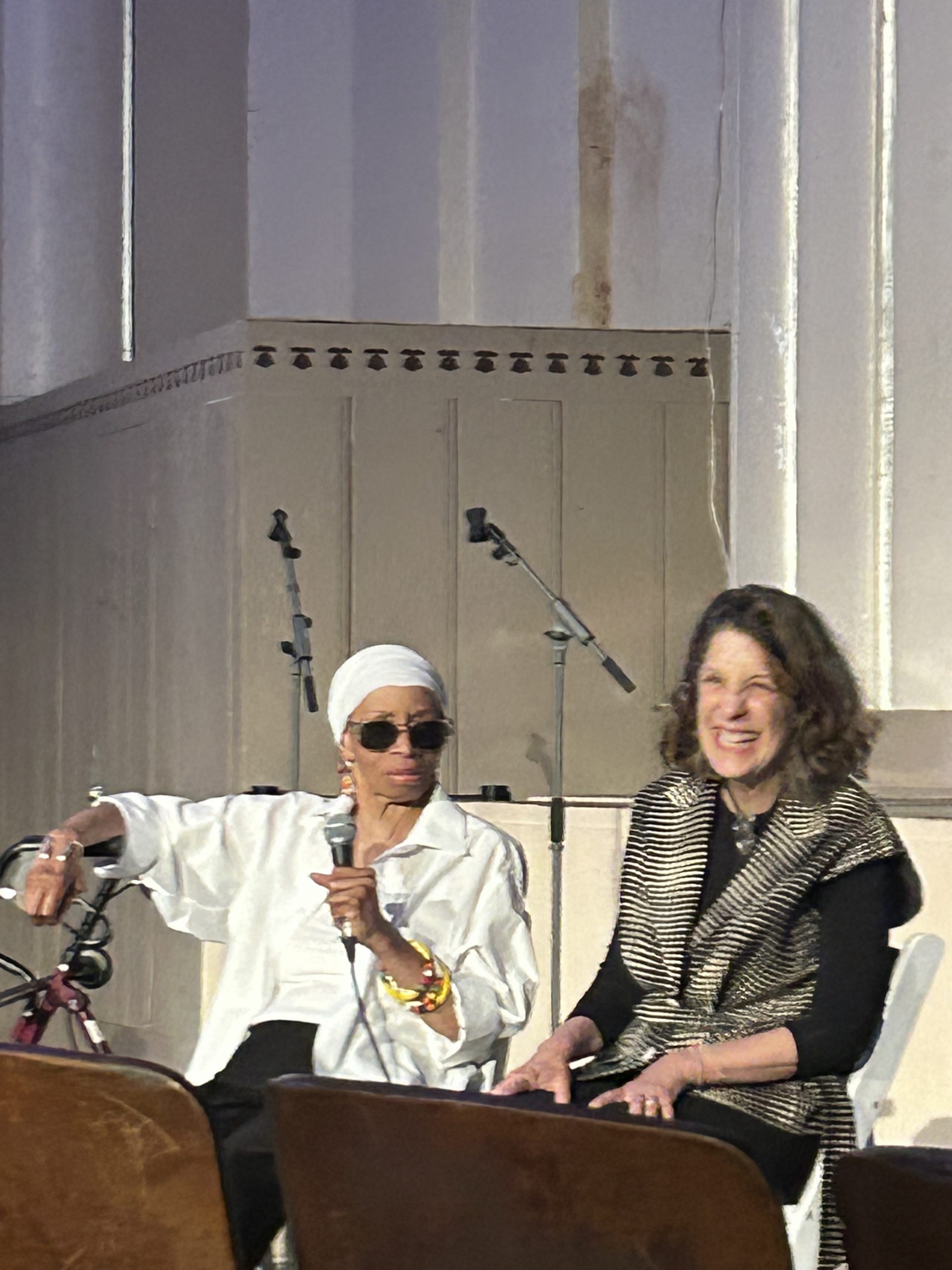
Followed by a conversation with director Lynne Sachs and Philadelphia artist Betty Leacraft
The latest project by filmmaker Lynne Sachs (Drift and Bough,The Washing Society,Film About a Father Who) opens with a quote from the French-born father of 20th-century forensic science, Dr. Edmond Locard: “Every contact leaves a trace.”
The basis for “Locard’s Exchange Principle,” it also doubles as the title of Sachs’ documentary, a deeply personal cine-essay.
With more time behind her than in front of her, a meditative Sachs uncovered a box of 600 business cards dating back to 1990 and the fall of the Berlin Wall. As a young woman and burgeoning filmmaker, Sachs met Angela Haardt, a Berlin resident, a founding member of the International Forum of the Film Avant-Garde, and the director of a shorts festival (1990-1997) where Sachs placed an early short film of hers. Her new film combines archival footage, reminiscences about post-war Germany, and its place in the Jewish-American imagination (more positive than negative for Sachs, the opposite understandably so for her mother)
Decades later, Haardt welcomes Sachs both as an equal and a long-lost friend. Looking back at their initial meeting, the intervening time, and the present, Haardt grapples with German history, identity, and culture, specifically how, when, and where Germans commemorate the Holocaust or deliberately forget it. It’s a tragedy that Sachs connects to her own conflicted, contradictory feelings about Israel, Gaza, and Israel’s initially defensive response to the October 7, 2023, Hamas attack on Israel, including the reoccupation of Gaza and the disproportionate effect on the Palestinian population.
Before Every Contact Leaves a Trace ventures too far into Israel, Gaza, or the commingled future of its peoples and the region itself, however, Sachs deliberately pulls back, returning to the original focus of her project, tracking down a select handful from the business cards she acquired over the years. Few are as compelling as Haardt, but they’re still fascinating on their own, sometimes less because of who they are or what they’ve contributed to film and the film community than their relationship to Sachs and the latter’s attempts, sometimes successful, sometimes not, to reignite long-dormant friendships or relationships.
Among Every Contact Leaves a Trace’s subjects, Sachs’ most intriguing interviewees include the late Lawrence Brose (DeProfundis), a pioneering queer filmmaker who found himself hounded by Homeland Security and ICE for the alleged possession of child pornography. Out of a combination of fear and prudence, Brose pled guilty to a lesser offense (obscenity), in exchange for two years of probation. During that period, Brose couldn’t own or access anything related to the LGBTQ community or risk his probation turning into imprisonment.
Brose’s persecution and subsequent plea deal could — and probably should — have been a documentary in its own right, but in Sachs’ cine-essay, it offers her another opportunity for self-examination, both as an individual and as a filmmaker bound by ethics. Given the seriousness of the accusations against Brose, she considered excising his segment altogether. It’s to her credit that she didn’t.
Even in a truncated form, Brose and his story needed to be heard and seen. Sachs’ ethical conundrum also serves as an opening for much-needed discussion and rumination on the other side of the screen.
Sachs’ other subjects include Juan Jiang, the director of the now-defunct Chinese Women’s Festival; textile artist Betty Leacraft, Sachs’ one-time student turned teacher; Felix and Viva Torres, Sachs’ nephew and niece, respectively (the children of Sachs’ filmmaker brother, Ira); and, in a meta-fictional twist, Rae C. Wright, a performer who serves as a stand-in for Sachs’ therapist. While Leacraft proves slightly prickly under Sachs’ performance-driven direction, Felix and Viva emerge as a charming duo, offering the occasional insight along with warmth of spirit and generosity toward their idiosyncratic aunt.
For some, Every Contact Leaves a Trace will seem overly personal and thus, too slight or of marginal interest. For those willing to look — and just as importantly, listen — Every Contact Leaves a Trace will, like the title of Sachs’ documentary, leave an indelible mark, asking important, open-ended questions about life, art, and mortality. Few have answers, but as Sachs suggests more than once, they’re all the more worth asking.
Every Contact Leaves a Trace premiered at the 2025 IDFA (International Documentary Film Festival) in Amsterdam. It played most recently at the 2026 San Francisco International Film Festival.
The fifth edition of Poetics + Politics will be centered around the theme: Poetics in the Politics of Now. The symposium will be held at the University of California at Santa Cruz between May 14-17, 2026.
This intentionally broad theme aims to engender a space of open dialogue about the interplay of aesthetics, politics, and history as they emerge in our various and discrete practices, commitments, regions and contexts. What are ‘poetics’ in the politics of now? Or, what are the ‘politics’ of the poetics of now? What is ‘now’? How are the pervasive topics that tend to cluster around documentary (realism, fidelity, responsibility, ethics, representation) animated or challenged or changed by this contemporary moment? What work does documentary do, and what can it do, in a media space increasingly dominated by altered images and facts? In a world increasingly shaped by the forces of financialization and nationalism? What could investing in form and poetics do in a moment like this?
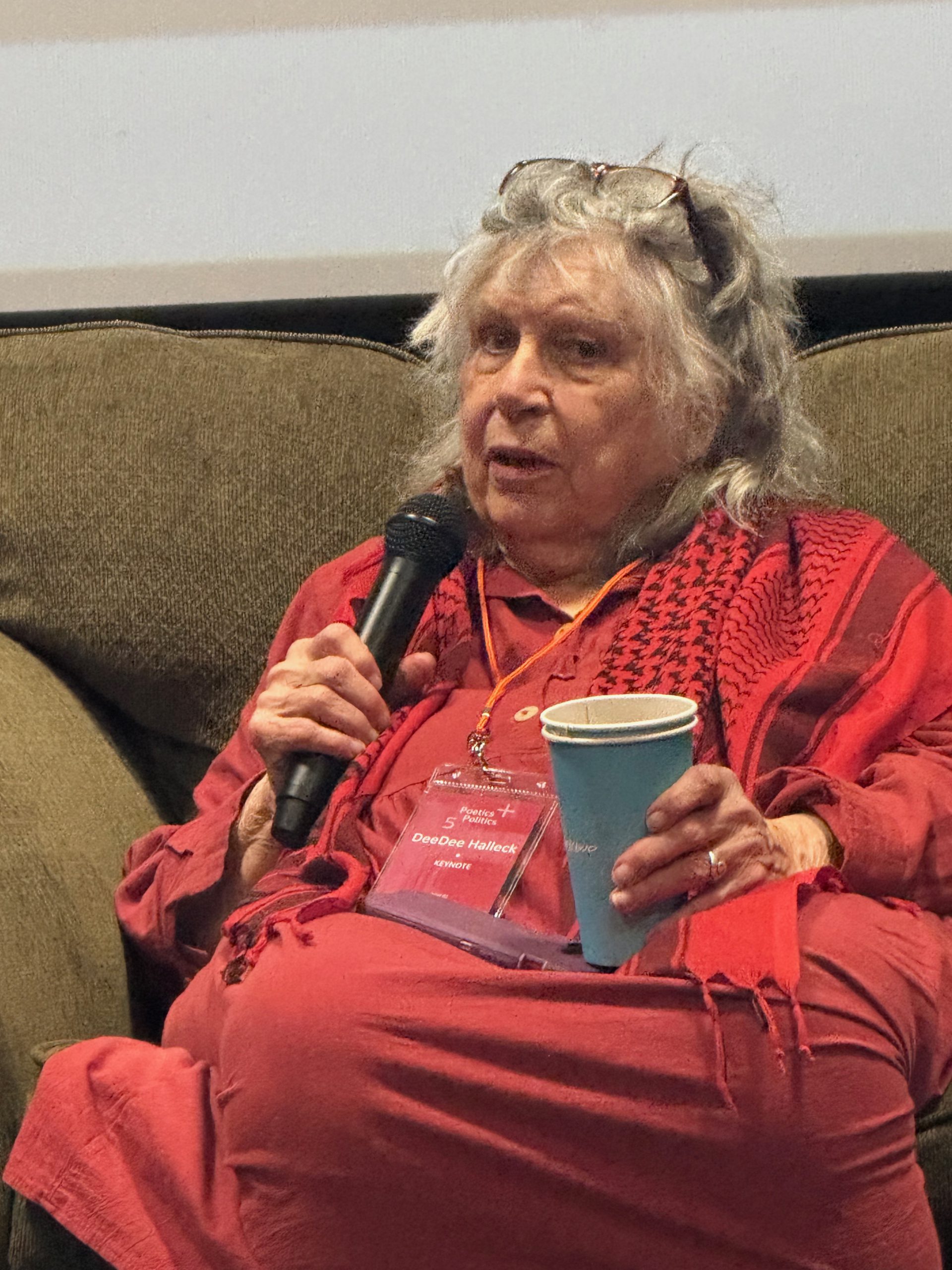
Keynotes for this year’s symposium are DeeDee Halleck and Miko Revereza. DeeDee Halleck is a filmmaker, author, community and media activist, the founder of Paper Tiger Television and co-founder of Deep Dish Television, the first grass roots community television network. Her work to broaden and remake media landscapes has been recognized by major cultural and funding institutions. Miko Revereza is an award winning filmmaker whose body of work experiments with and examines the process of documenting the undocumented, moving through themes of diaspora, colonialism, and Americanization.
The 2026 symposium will be an in-person gathering: we are committed to the community-building work of physical presence and to creating an intentional space for shared and durational conversation across our time together.
Our call for proposals for the 2026 symposium is closed.
*The symposium has been moved off UCSC campus to honor the AFSCME strike which was called on May 7th, and called off on May 14th. We will gather at two locations: Barrios Unidos (1817 Soquel Ave, Santa Cruz, CA 95062) —please enter Barrios Unidos through cafe door with Poetics and Politics poster on the corner of Soquel ave and Trevethan ave— and 418 Project (155 River St , Santa Cruz, CA 95060)—please enter through the entrance marked Door 3 on River Street .For more information about the venues, parking, etc see Travel and Accommodation. To download a digital version of the old (and logistically defunct albeit very lovely and filled with bios) program—click here.
Registration Check in, collect program and name badge
Barrios Unidos
5:00pm -5:30pm
Welcome Honoring Land Relations: Matte Hewitt Opening Remarks: Irene Gustafson, Hannah Jayanti, and Irene Lusztig
Barrios Unidos
5:30pm – 7:30pm
SESSION 1 Poetics of Solidarity John Greyson, Raed El Rafei, Mary Jirmanus Saba [Moderated by Irene Lusztig] In a presentation spanning nude Walt Whitman, a megaphone choir, a boycott duet, and a wartime Gaza hospital diary, John Greyson explores questions of poetics and witness, solidarity and activism, asking: what does it mean to sing queer songs against the tsunami of a genocide? Raed Rafei’s essay film-in-progress, tentatively titled To be in a Time of War, is a reflection on the cognitive dissonance of witnessing the devastating war in Gaza from the safety of San Francisco, a supposed queer utopian haven that both obscures US support and fosters solidarity. Mary Jirmanus Saba will show clips from a collaborative work in progress (with Native Studies Scholar Balraj Gill and Massachusett Sagamore War Chief Faries Gray) offering a framework of spatial sensing as countercartography that asks: what kind of relationships to land and place does embodied sensing foster? What kinds of artistic sensibilities might we as documentarians help to cultivate that could confront the profound challenges of our contemporary moment? This opening session moves expansively from a series of gay marches in San Francisco between the 70s and 90s, to a hospital in Khan Younis, to a protest in a Toronto university lobby, to Indigenous land in Massachusetts, oscillating between there and here, then and now. Collectively, we hope this presentation will offer images and ideas to ground our conversation to come in questions about solidarity across time and space—and how to make art in the most challenging of times.
Barrios Unidos
7:30pm – 9:00pm
Opening Night Reception Outside drinks, light snacks, mingling, processing!
KEYNOTE Martial Arts: Defending Ourselves and Others DeeDee Halleck [In conversation with Marty Lucas] Halleck will look at the history of activism in the arts — from satire, posters and murals to boycotts, whistles, disruption, occupation, and general strike.
418 Project
11:30am – 1:00pm
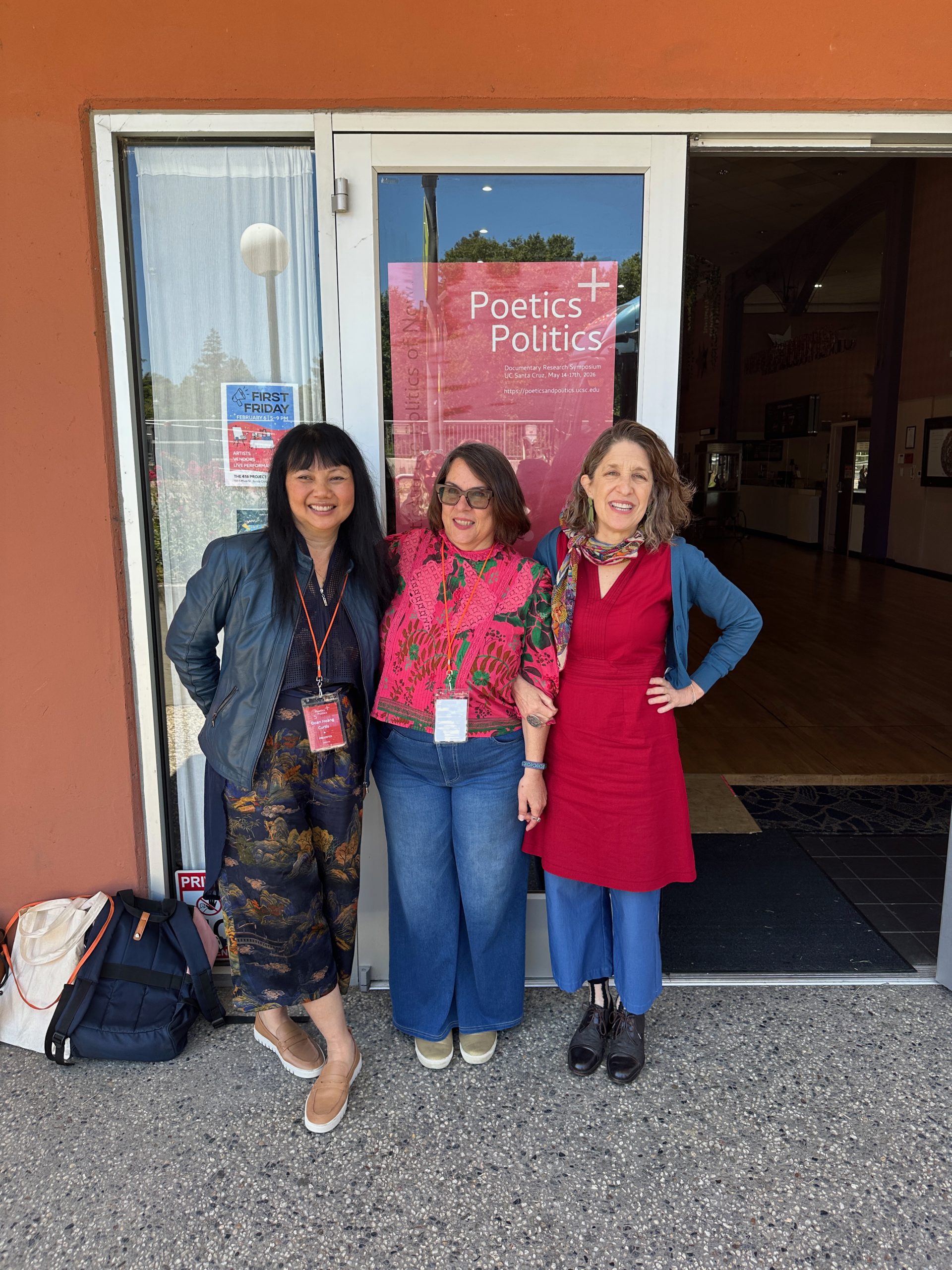
SESSION 2 Aftermath Practices Adam Sekuler, The Abortion Clinic Film Collective (Kristy Guevara-Flanagan, Đoan Hoàng Curtis, Lynne Sachs), Helen De Michiel [Moderated by S. Topiary Landberg] “What does it mean to practice documentary when familiar structures no longer hold? This panel is framed by this timely provocation, posed by filmmaker Helen De Michiel, who invites us to think beyond questions of “organizing to restore our legacy institutions,” towards, instead, considering a framework of “aftermath practice — not retreat or defeat, but exploration and discovery.” Filmmaker-members of the Abortion Clinic Film Collective (Đoan Hoàng Curtis, Kristy Guevera Flanagan, Lynne Sachs) share urgent filmmaking and distribution strategies emerging from the frontlines of the post-Roe v. Wade reproductive health crisis. Filmmaker Adam Sekuler invites us to linger in the aftermath of film festival programming, and to attend to the “unseen archive” of what gets left out—silenced forms, counter-temporalities, and other refusals. The presenters in this panel collectively grapple with questions of “aftermath”—how to make work in new ways in spite of—or ignited by—the unraveling of political, public health, and arts institutions at every scale.
418 Project
1:00pm – 2:00pm
Lunch We will be downtown where there are many places to eat. We can recommend Abbot Square food court for outdoor seating, but also see Travel and Accommodation for suggestions.
2:00pm – 3:30pm
SESSION 3 Gestures of Repair Rosie Reed Hillman, Eva Knopf, Erin Wilkerson [Moderated by Hope Tucker] How can we explore the “poetics of repair in a seemingly broken world?” We’ve taken this resonant question posed by filmmaker Eva Knopf (who unfortunately could not attend in person) as a frame for this conversation between three filmmakers. Filmmaker Roșie Reed Hillman creates a tender feminist portrait of witches— working-class women in midlife, “using magic to transform and transport.” Filmmaker and media artist Erin Wilkerson calls for “feral” filmmaking and situated knowledge in a live autoethnographic video performance exploring colonial landscapes, early American settlement and expansion, and botanical-based fieldwork. Knopf’s work in progress Movie Kintsugi explores “how we deal with breakages, repairs and the broken pieces of everyday life – in a world of pieces and multiple crises. What do fracture lines tell us that would otherwise remain hidden?”
418 Project
3:30pm- 4:00pm
Break
4:00pm-5:30pm
SESSION 4 Reframing Interference Hanna Rose Shell, Anna Friz, Nadia Ahmed [Moderated by Rebecca Ora (rora)] The three presenters in this panel reframe interferences such as sun flare, noise, fuzziness, and ephemerality as productive modes of inquiry rather than obstacles to knowledge. We’ve borrowed the title of this session from Anna Friz’s practice of “detunement” which embraces the uncertainty that research and empirical observation have typically sought to filter out. Through a practice of listening and noticing across radio bands, foggy Icelandic landscapes, and Chile’s industrialized Atacama desert, Friz treats perceptual ambiguity as a methodology for a complex world. Hanna Rose Shell’s work-in-progress, Flare Patrol / Parallax Vision, weaves together 35mm solar-detection films from Cold War-era coronagraphs, and contemporaneous news archives. Placing these in “parallax” across seemingly incommensurable vantage points, Shell explores whether shifting the scale towards the solar can open new ways of thinking about fidelity, frequency, and the politics of “now.” Nadia Ahmed’s Wetlands of Mass Destruction explores how the shifting marshlands of southern Iraq’s Al-Ahwar has long functioned as ecological and political endurance. Reading across myth, indigenous Ahwari poetry, and environmental policy, Nadia argues that foreign restoration efforts fail when they treat the ephemeral nature of these waters as interference to be corrected rather than resilience.
418 Project
5:30pm – 6:30pm
SESSION 5 | WORKSHOP Documentary as Health Care Liz Roberts, Alex Juhasz Juhasz and Roberts screen clips from two new works, Please Hold and Love is the Drug to engage facilitated conversation with workshop participants about community-situated documentary practice in spaces of health related vulnerability. Both works engage with the durational crisis of HIV/AIDS. Engaging with Juhasz’s definition of queer feminist media praxis, our facilitated experience invites participants to think together in an expansive way through the poetics and practices of activist media. The works are deeply archival, across time and format, but use experimental form to show how all those times can be copresent now, that grief is spatial, and care is always possible.
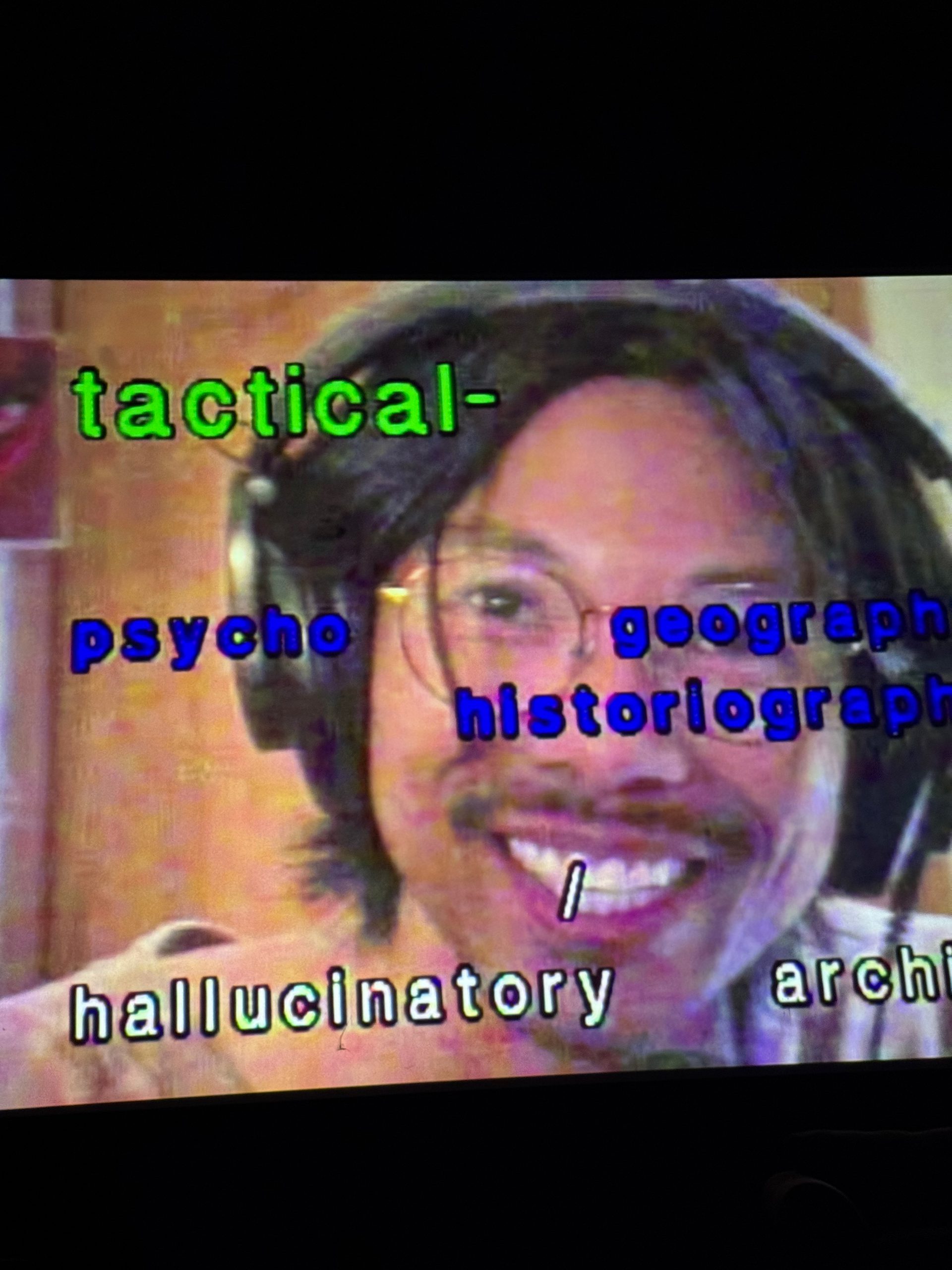
KEYNOTE Undocumentability and Smuggling Through Loophole Cinema Miko Revereza [in conversation with Hannah Jayanti] This talk engages Miko Revereza’s practice through notions of undocumentability and smuggling through what Revereza calls loophole cinema. Emerging from his experiences growing up as an undocumented immigrant in the United States, his research begins with the question: how does an undocumented documentary filmmaker document themself? Revereza explores the ontological loopholes between bureaucratic and cinematic documents and how these forms might contaminate each other. His filmmaking practice, operating within registers of visibility and invisibility, becomes entangled with existential decisions such as self-deportation and exile, treating cinema as a stage for refusal and as a tactical method for infiltrating, transmitting, or smuggling himself through borders. In this talk Revereza will explore the evolution of personal filmmaking, departing from his initial question towards a new one: how might an undocumented documentary filmmaker become undocumentable?
418 Project
11:30am-1pm
SESSION 8 XO & Struggle: A Case Study in Tactical Film Programming & Exhibition Emily Rose Apter and Keisha Knight Featuring work by Saeedah Cook, Kelly Gallagher, Cameron A. Granger, Christopher Harris, Alex Johnston, and Matazi Weathers [Moderated by Abram Stern] Solidarity Media Network presents XO & Struggle, a film screening dedicated to the George Jackson Brigade’s enduring legacy of both love and struggle. Drawing inspiration from Ruth Wilson Gilmore’s notion of abolition as presence, the program explores possibilities of anti-carceral image-making while maintaining that art alone cannot transform the conditions that produce carceral violence. Previous iterations of XO & Struggle appeared in cinema and organizing spaces across NYC, evolving in collaboration with participating artists, organizers, and political educators. This screening will be followed by a facilitated discussion and brainstorm session focused on nourishing an abolitionist imaginary, strengthening inside/outside collaboration, and expanding the use of media in support of global freedom struggles.
418 Project
1:00pm-2:00pm
Lunchbreak / part of group moves to Barrios Unidos
2:00pm – 3:30pm
SESSION 9 (Sessions 9+13 are concurrent presentations at DIFFERENT LOCATIONS) Tracing Terrains Amir Husak, Jenny Lion, Amy Reid [Moderated by Leslie Tai] This session explores filmmaking through what Amir Husak refers to as “a cartographic and poetic act,” where terrains are traced through the histories, politics, and communities that shape them. Husak’s film-in-progress, The Eye of the Mountain, turns an intentionally slow and meditative gaze on Plješevica mountain in Northwest Bosnia-Herzegovina. Investigating how EU border policy is inscribed into the landscape, the project foregrounds stillness, atmosphere, and ecological attention as a form of counter-surveillance. Jenny Lion brings a durational practice to moving-image works set in militarized landscapes of the American West. Lion’s presentation will include excerpts from the work-in progress cinematic essay Dixie Valley which has been shot over twenty years in a remote Nevada valley emptied of its inhabitants by the U.S. Navy and remade as a staging ground for electronic warfare. Amy Reid’s documentary Grandmother’s Garden finds its cartography in the American quilt, tracing histories of enslavement, sharecropping, and women’s labor that are threaded through domestic life. Filmed with quilters across the country over several years, Reid asks what these objects reveal about the economic landscape we have inherited, and what they can teach us about our contemporary moments.
418 Project
2:00pm – 3:30pm
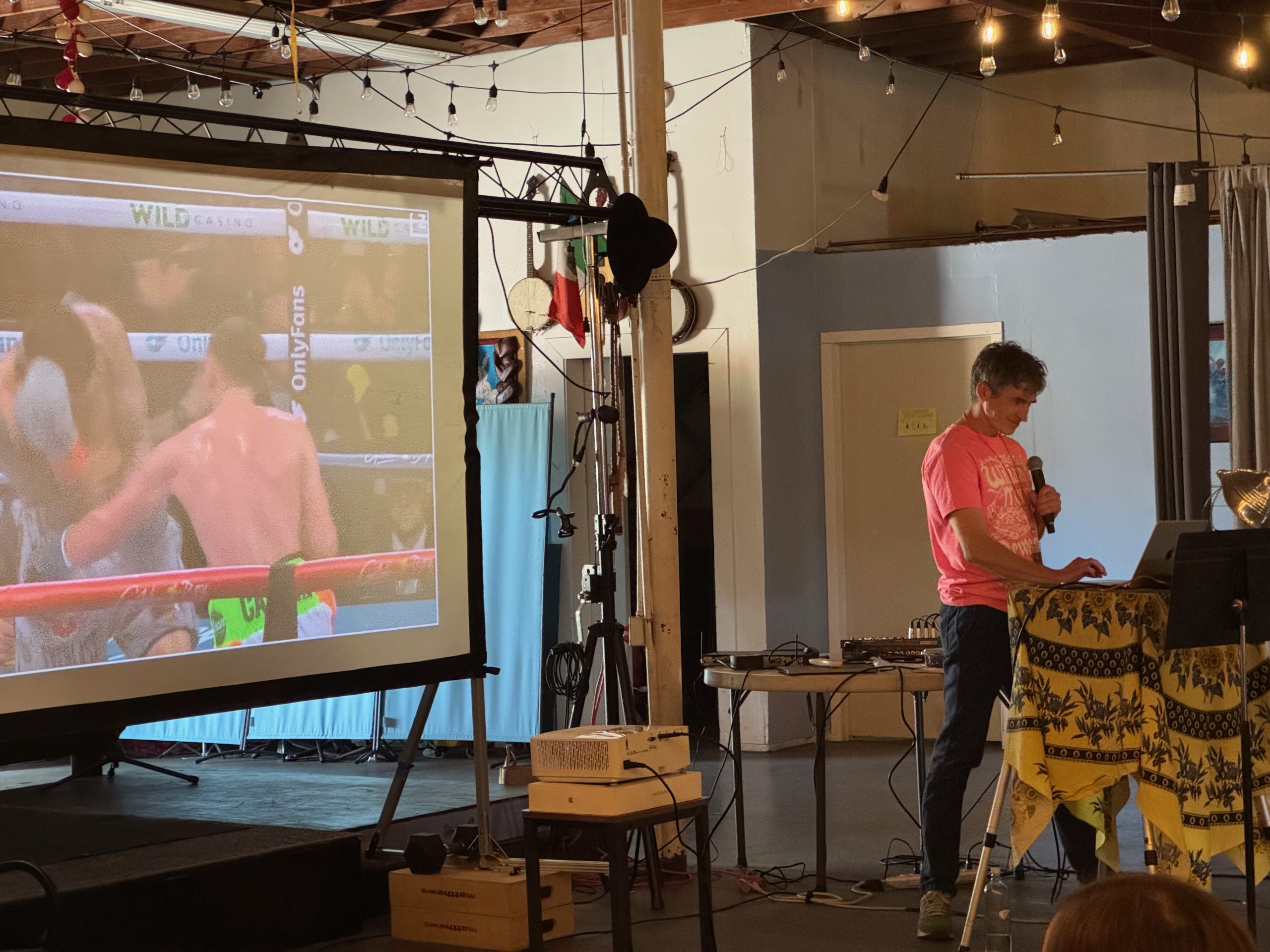
SESSION 13 (Sessions 9+13are concurrent presentations at DIFFERENT LOCATIONS) Balancing the Scales Jason Fox, Paige Sarlin, Sharon Daniel [Moderated by Pooja Rangan] Positioned at the nexus of journalistic and documentary discourses, this panel engages with national narratives of fairness and justice. Fox’s work-in-progress, a feature-length live cinema project, *A Social History of Fairness*, explores forms and frameworks for judgment animating various scenes of modern athletic spectacle across the 20th and 21st centuries, suggesting that there is much to learn here about our American purposes and desires; the collective satisfactions we think we seek. Sarlin’s presentation considers how ‘interview work’– the production, reproduction, editing, and representation of interviews –has been drawn into the politics of the present. Using the October 2024 ‘60 Minutes’ interview with Kamala Harris as a case study, Sarlin considers the status of editing in recent attempts to establish ethical norms for documentary practice. Daniel’s multi-part, multi-media project, Reasonable Doubt, examines the subjective nature of investigation and the ephemerality, instability and opacity of “evidence” – exploring the failure science and law, ethics and aesthetics, politics and representation, in efforts to resist structural racism, capitalism and corruption.
Barrios Unidos
3:30pm-4:00pm
Break / everyone moves to Barrios Unidos
4:00pm -5:30pm
SESSION 11 Mediations of Place EB Landesberg, Eli Boonin-Vail, Liz Miller [Moderated by Selmin Kara] Place is a starting point for these presenters to interrogate larger systems. EB Landesberg’s work-in-progress film Con Todo Combina examines Peru’s Inca Kola in order to trace entangled histories and “the legacies of colonialism as they are felt in everyday life.” Through juxtaposing various forms of production—capitalist, cultural, historical—Landesberg asks about the aesthetics of global capitalism and the construction of national imaginaries. Eli Boonin-Vail’s video essay Panorama of Western State Penitentiary considers an abandoned Pittsburgh prison repurposed as a film set in order to explore the relationship between prisons and media. Through presenting excerpts from the film alongside historical contexts, theoretical underpinnings, and an exploration of the artistic process, Boonin-Vail “proposes reflexive methods for researching images under carceral capitalism.” Liz Miller’s collaborative installation In the Wake of the Hochelaga Archipelago follows the water infrastructures shaping Tioh:tiáke/Montréal. Through a practice dedicated to “the poetics and politics of water, waste, consumption, collaboration and place-based documentary methods,” Miller interrogates how technological representations, such as aerial imagery, and documentary methods including non-linear forms, can create alternate imaginaries.
Barrios Unidos
5:30pm- 7:00pm
SESSION 12 Frictional Filmmaking Chico Pereira, Brett Kashmere, Solomon Turner, Jackson Kroopf [Moderated by Maya Scherr-Willson] How does history exert its pressure on the present moment? Pereira’s Fiction Enters Town (working title), emerged from the experience of making his previous film–where a reenactment of a miner’s strike from the 1980s activated collective memory, energized public discourse and inspired political action, all the while being dismissed by local authorities as “only fiction.” The new project probes the distinctions between ‘reality’ and ‘fiction’ even further by testing whether cinema can intervene where reality itself seems to stall. In a presentation on their collaboratively produced film, Hundred Yard Universe, Kashmere and Turner speculate about the historical imaginary of American football: how the ‘now’ is shaped by cultural forces and how the future might emerge through a collective processing of physical, emotional, and political traumas. Kroopf’s hybrid non-fiction film project The Art of Survival (or What in the Son-of-a-Bitchin-Fuck IS That?) features 97 year-old acting teacher, movement artist, and Holocaust survivor Maria Wida. Her simultaneous desire for representation and also her resistance against it, sets the stage for the film’s query of imaginary and historical selves.
Barrios Unidos
7:00pm – 10:00pm
SYMPOSIUM DINNER for symposium presenters and moderators only
SESSION 14 Physical Imprints Sophie Hamacher, Kym McDaniel, Lalu Ozban, Chisato (Chisa) Hughes [Moderated by Inês Pedrosa e Melo] The sensing, feeling, resilient and, also, vulnerable body is both a site of inquiry and the location from which these three presenters stage questions about ethics, care and the medicalized body. Hamacher’s multimedia installation, Piece of My Heart: A Laboratory asks how visual systems—like medical imaging and surveillance—shape our perception of care, vulnerability, and the body. Through an essayistic video address, ceramic speakers, and silkscreen prints, the work explores how political and environmental forces inscribe themselves on the human heart, a simultaneous metaphorical and tangible organ. In her in-progress film, Memory Recall, McDaniel uses animation, montage theory, and text-on-screen to explore trauma narratives.The film is both a method of processing embodied trauma as well as an invitation to question and resist medicalized and depersonalized approaches to the topic and experience of trauma. Lalu Ozban’s work-in-progress documents two collective porn-watching events—one in Istanbul in 2021, another in Santa Cruz in 2026—examining how communal viewing might function as a practice of transfeminist solidarity. Filming the second event with thermal cameras, Ozban prioritizes heat and presence over legible identity, enacting a “poetics of anonymity” and repurposing technologies often used for surveillance.
418 Project
11:30am – 1:00pm
SESSION 15 Common Threads Ernest Larsen, Sherry Millner, Alex Johnston, Jeanne C. Finley [Moderated by Anita Chang] Through practices of engaged collaboration, this panel imagines how filmmaking can enact care and relationship building processes. In a presentation on their in-progress experimental essay film, Uprooted, Larsen and Millner reflect upon the “complex, anti-authoritarian poetics, rooted in and uprooted from the multiply determining contexts” in which the film and the filmmakers themselves are embedded. Johnston explores the intimate nature of his in progress film, Cozy Cuddly, Armed and Dangerous: A Film with the George Jackson Brigade. His presentation considers the film’s acts of relational and political entanglement and ponders the ways we learn and listen and teach and love one another amidst historical periods of dislocation, isolation, and precarity. An extended meditation on the necessary and complex nature of hope– as an orientation of the heart– Finley will discuss her latest documentary A Radical Thread.
418 Project
1:00pm -1:30pm
Closing Remarks
418 Project
Ernie Larson and Gene FinleyDeeDee Halleck, Keynote #1Revereza, Keynote #2Hannah Jayanti, Irene Lusztig, and Irene GustafsonĐoan Hoàng Curtis, Kristy Guevara-Flanagan, and Lynne SachsJason Fox
Presented in association with the Roxie Theater Admission: $15 General / $12 Cinematheque Members Event tickets here* SOLD OUT *
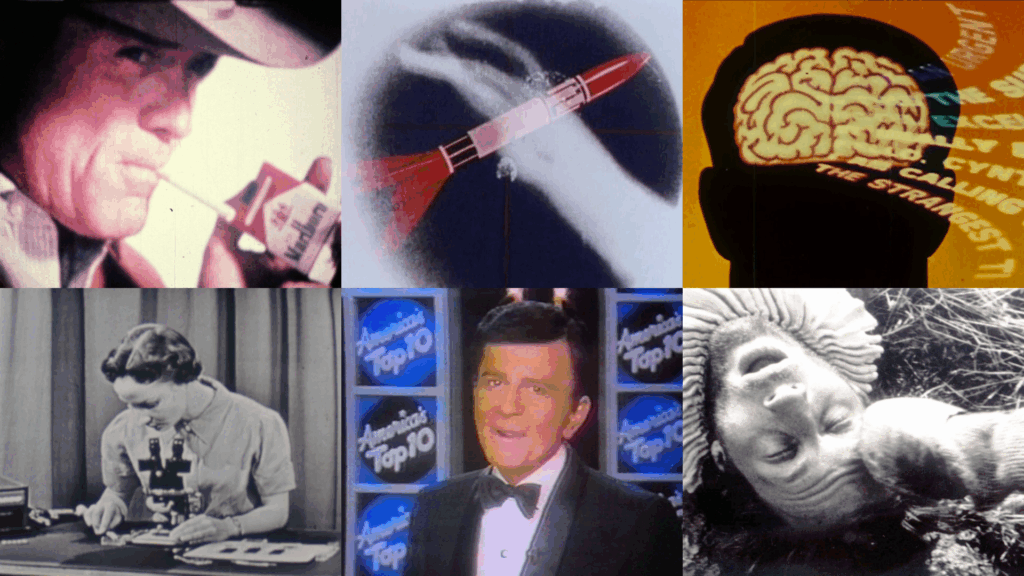
For nearly 50 years, the Bay Area filmmaker and curator Craig Baldwin has been an inspiring figure in contemporary media arts. His acerbic, densely-packed found footage films have traveled the globe, encouraging scores of nascent collage-essayists, culture jammers, and mockumentarians to action. […] Ever seeking to revise and hybridize existing modes and genres, and invent and name new ones, Baldwin’s filmmaking amalgamates cinephilic literacy and voraciousness, a sharp understanding of political and cultural history, and a sly critical polemics. His films are further energized by an encyclopedic knowledge of his own sprawling collection of cast-off educational films and B-grade features and a perverse proclivity for sourcing surreally sublime moments from industrial film effluvia. Informed by left politics, cult cinemas, agit-prop activism, structural film, the Situationists, the Yippies, Arte Povera, media archeology, compilation documentary, and other found footage forms, Baldwin’s praxis is bound by a dual commitment to materiality and aesthetics on the one hand, and disruptive action and fervent, antagonal rhetoric on the other; all the while articulating a contrarian (and at times utopian) sense of apocalyptic historiography. (Craig Baldwin: Avant Savant by Brett Kashmere and Steve Polta, published 2023 in Craig Baldwin: Avant to Live!)
Resonating with Craig Baldwin: Ephemera Unearthed!—on view at the SFAI Legacy Foundation + Archive through May 29—Cinematheque, the Roxie and the SFAI Legacy Foundation welcome King of Found Footage Craig Baldwin to present a personal guided tour through fifty years of radical filmmaking, from the mid-70s/mid-Market San Francisco cinema-scape Stolen Movie (1976) to the recent 3-D short Communique for the Cube (2023) and points in between. More than just a movie show, this evening’s overview will present highlights of the maestro’s oeuvre replete with personal reminisces and war stories with Baldwin in conversation with filmmaker Lynne Sachs and Cinematheque’s Steve Polta.
SCREENING: Stolen Movie (1976, excerpt); Wild Gunman (1978) RocketKitKongoKit (1986, excerpt); Tribulation 99: Alien Anomalies Under America (1991, excerpt); ¡O No Coronado! (1992) Sonic Outlaws (1995, excerpt); Spectres of the Spectrum (1999, excerpt); Mock Up On Mu (2008, excerpt); Bulletin (2015); Communique for the Cube (2023)
Baldwin’s radical fusion of form and content is on display throughout his body of work, and is unified by an unabashed embrace of marginality and cultural abjection, and by his faithful adherence to the twin tenets of “availablism” and “artifactuality.” Availablism, simply put, is the edict that the artist make do with what is at hand and not let the lack of resources—lack of “perfect” footage, lack of filmmaking equipment, or lack of funding— stand in the way of completing a project. Artifactuality, a related idea, rests in the belief that archival source materials are permeated with industrial and cultural histories which invariably contribute meaning. Part of Baldwinian filmmaking is to allow these meanings to resonate as part of the completed work. This latter concept also applies to Baldwin’s use, in his “collage-narrative” films, of underground and B-movie filmmaking methods which, in the spirit of Jack Smith, George and Mike Kuchar, Doris Wishman, and Ed Wood, revel in their poverty, placing their bargain basement budgets proudly on display, and thereby allow their “amateurish” appearances to manifest as inspirational art. (Craig Baldwin: Avant Savant by Brett Kashmere and Steve Polta, published 2023 in Craig Baldwin: Avant to Live!)
Body Atlas maps the shifting relation between bodies and the worlds they move through.
Surfaces become passages. Boundaries soften. Organs echo territories, tissues suggest terrain, and gestures trace invisible routes through lived space. Across these works, scales collapse and expand—what is held within begins to mirror what surrounds. This is not a fixed map, but an unfolding cartography—where bodies and environments continuously inscribe one another.
The body as map. Organs become territories, tissues become terrain, cells become constellations. We are looking for films, images, sounds, texts, and fragments that chart the body as landscape, ecosystem, border, memory, architecture, or unknown geography.
Prismatic Ground is a film festival I have been attending in-person for nearly three years, and while my streak of such attendance unfortunately ended this year, I have continued to watch and cover since its inaugural edition in 2021. Prismatic Ground remains so special because it maintains the tenets of its conception, which founder and director Inney Prakash explained as an attempt to fill the void of festivals dedicated to experimental cinema and a festival that doesn’t treat the COVID pandemic’s shift to online-accessible film-viewing as merely a “stopgap,” but an actual “effort to rethink the experience” of a festival.
The radical shift and change to the festival circuit for both cinema viewers and filmmakers—which includes actually paying the filmmakers for their work to be presented and removing geo-blocking so as many people as possible who can’t attend in-person screenings can still see some films online from anywhere—ties nicely to this year’s closing film, Isiah Medina’s Gangsterism. Always a self-assured and divisive artist, especially post-Inventing the Future, Medina, in his latest, is both his most combative and self-reflexive. Gangsterism is combative for how it seems to deconstruct the criticisms leveled at Medina’s previous films, such as their supposed obtuseness or the heavily academic framework for theorizing things like theft of art and liberation of technology that seems removed from material reality. Its self-reflection emerges from a major topic of discussion: that the central character, Clem, considers it insulting that potential financiers find his movies difficult to understand. Medina’s style is as distinct as ever. The patterns of repetition, sound, and image interrupting each other are contrasted through drawn-out sequences of characters forming arguments on the current economy of cinema, the financing of being a filmmaker, the social responsibilities and roles of academia, and, central to its plot, the proliferation of film via digital piracy.
The festival gives out only one prize per year: the Ground Glass prize, a career-achievement award. In its inaugural year, it went to Brooklyn-based artist Lynne Sachs, and this year it went to Japanese experimental artist Kohei Ando. Sachs also has a film this year, Every Contact Leaves a Trace, which pairs well with Ando’s work. Sachs’ film is a self-insert documentary where the filmmaker looks back to remember and re-encounter people with whom she shared and kept business cards. These encounters vary from friendly to awkward to uncomfortable, both in the memories they bring back and the inherent ideas that shoving a camera into someone’s face might elicit. Considerations of “performance,” “simulation,” and “vulnerability” seep into the forefront through the lens. Sachs considers aloud, while shuffling through the business cards, which of these people would be welcoming to meeting her again. A German festival director named Angela, whom Sachs met 30 years ago, recounts post-war Germany and the history of the Holocaust in people’s collective memory as another genocide in Gaza is unfolding today. Experimental filmmaker Lawrence Brose speaks about the persecution he faced as a gay artist while scenes from his film play in montage over conversation.
Like Sachs’ film, Kohei Ando’s cinema is very much tussling with ideas of time, memory, and connection to people. The most direct work that mirrors Sachs is the fun short My Friends in My Address Book, which goes through a montage of Ando’s friends smiling for the camera and holding up pieces of paper with their names. Other shorts, like his Passing Train series, exhibit time as something continuous and through multiple angles—intimate and unrelenting rather than something that creates distance. There is a sense of sentimentality that warmly lingers throughout these movies—especially On the Far Side of Twilight, which uses a saccharine piano score and cute narration that highlights his memories from childhood to old age. The image composition is immaculate, distinct in its bright coloration, and imaginative for how it breaks the fourth wall of the film plane, burning it, cutting it out, and transforming it into various shapes while moving it at different speeds.
It’s worth highlighting a number of shorts that bring forth examination and consideration for where experimental cinema is today. Rajee Samarasinghe’s A Flower Falling Back Into the Earth comprises excerpts and outtakes from the filmmaker’s remarkable feature documentary Your Touch Makes Others Invisible on missing children in Sri Lanka. The recontextualization of these outtakes from interviews—many of which feature the imperfections of sound, framing, and focus—confront us with how the difficult and traumatic experiences of real people cannot be decontextualized from the filmmaking process. Eislow Johnson’s Injured? is the most “action-packed” and funny of the shorts—a rapid-fire montage of a drive on a highway focusing on the litany of billboards for law firms for car accidents. It is ironic in its clear connection between America’s obsession with cars and suing people, but also fashioned as a sort of intense action film, mimicking the volume and ferocity of one of cinema’s great entertainments: the high-speed chase.
Yusuf Demiror’s Archura Leaves the City Forever is a beautiful, hypnotic fable. Its warm lighting and cold urban exteriors, mixed with fantastical costumes and lush natural highlights, make for a transportive work reminiscent of a mix between Jim Jarmusch’s Permanent Vacation and Nobuhiko Obayashi’s Emotion. Michael Barwise’s That Sanity Be Kept is a melancholy and nostalgic film, but also terrifyingly contemporary in its depiction of surveillance and the destruction of privacy as government agencies track the movements, faces, and clothing of various young people during a ceasefire amidst The Troubles.
Finally, three phenomenal and rare treasures by Iraqi filmmaker Parine Jaddo––Atash, Aisha, and Teyh––all highlight the artist’s conflicts (or false conflicts) of sexuality with religion, and modern discourses of fiction and the roles of men and women in Iraqi society in a rapidly westernizing world. All this occurs amid constant reminders of bombs and how post-war existence for the Middle East is always a pre-war state.