Category Archives: SECTIONS

Interview with Kim Ji-hwan of Saint Petersburg International Experimental Film Festival

Interview and edit by Kim Ji-hwan

Kim Ji-hwan (Ji-hwan) :

For readers who may be encountering your work for the first time, could you briefly introduce yourself and your work?

Lynne Sachs (Lynne) :
I am a filmmaker and poet living in Brooklyn, New York in the US. Over the last four decades, I have created cinematic works that defy genre through hybrid forms and cross-disciplinary collaboration, incorporating elements of the essay, documentary, performance, and collage. I use letters, archives, diaries, and music to take my audience on a critical journey through reality and memory. Working from a feminist perspective, I investigate connections between the body, the camera, and the materiality of film itself. Retrospectives of my work have been presented at the Museum of the Moving Image, Buenos Aires Festival of Independent Cinema, Cork Film Festival (Ireland), China Women’s Film Festival, Costa Rica IFF, and Ambulante Festival of Documentary (Mexico). My books include Year by Year Poems (Tender Button Press) and Hand Book: A Manual on Performance, Process and the Labor of Laundry (punctum books). Between 2020 and 2022, the Thomas Edison Film Festival, Prismatic Ground Film Festival and Pacific Film Archive recognized my work with lifetime achievement awards in the experimental and documentary fields. In 2026, the San Francisco International Film Festival awarded me with their annual Persistence of Vision Award. I live with my husband Mark Street, also a filmmaker. We have two adult daughters, Maya and Noa Street-Sachs.

Ji-hwan :

– You have been making films for several decades. I believe you still have many works ahead of you. Looking back now, how has your relationship with filmmaking changed over time?

Lynne :
– The longer I have been making films, the more I recognize how vital it is to be part of a community that is supportive and deeply engaged. To my surprise, the internet has allowed all of us to find a global relationship to other artists who are working completely outside the commercial film industry. I’ve worked really closely with people in Mumbai, Montreal, Marseilles and so many other places on the globe. Together, we have created classes, festivals, workshops, and screenings that celebrate both short and long films. Wherever we are, we feel that we are kindred spirits who embrace alternative, underground, experimental and low-budget moving images that originate on celluloid, tape and digital. Thankfully, our commitment to celebrating each other transcends borders – allowing us to work beyond government restrictions and military conflict.

Ji-hwan :

– Experimental cinema takes many forms and often exists outside conventional systems of production and distribution. In this context, how do you see your work situated within the broader landscape of experimental cinema?

Lynne :
– Absolutely everything I do is an experiment. I am closer to a scientist than to a commercial movie director. In the course of my life, I come up with an idea or question or an observation and then I try to answer it by making a film that will become a vessel for my investigation. Let’s consider A Year of Notes and Numbers (2017). That film contains pretty-much everything about me from the year 2017. It’s the mind and the body distilled to a series of animated images of words and numbers. Achingly simple, perhaps, but also precise and comprehensive. It cost me nothing to make. It suggests things about what it is to live in a medicalized society, how it feels to grow old, what are the challenges to being a woman simply living in her own skin. Just as poetry and painting have always spoken to our inner being, people are discovering that the experience of watching a film like this can be a catalyst for a new kind of awareness.

I am grateful to Canyon Cinema, the Film-Makers’ Cooperative, Kino Rebelde, Cinema Guild, Light Cone and Canadian Filmmakers Distribution Center for distributing my films.

Ji-hwan :

– Following that, I’m curious about what you yourself consider to be experimental in your films. How does that experimental quality emerge in your process—through discovery, chance, improvisation, or through the formal language you develop for each work?

Lynne :
– For me, making films is always about taking an aesthetic risk. I push myself to come up with a new vocabulary of images and sounds for each film. There is no template or formula. The materials demand a distinct language that at first may be obscure, but eventually suggest a syntactical series of relationships that work on both intuition and analysis. In my film Swerve (2022), for example, I asked six performers to walk around a market and playground in Queens… speaking in verse written by poet Paolo Javier. The film transforms into an ars poetica/cinematica. My commitment was not to “translating” their words, but rather celebrating their presence as simultaneous insiders and outsiders of mainstream society.

Ji-hwan :

– Your films seem to weave together personal experience, political history, and poetic reflection. How do you think about this relationship in your work?

Lynne :
– This intersection between our internal cosmos and the world beyond has always been a fraught space I wanted to explore through my work. I imagine my domestic universe as a hermetic cosmos that is constantly punctured by uncontrollable events that swirl around it. In Window Work (2000), a woman (who happens to be me) drinks tea, washes a window, and reads the newspaper—simple tasks that somehow suggest a threatening presence within and beyond the image. Sometimes she hears the rhythmic, pulsing symphony of crickets. Other times jangling toys dissolve into the roar of a jet overhead, or children trembling at the sound of thunder. These aural experiences dislocate her space temporally and physically, reminding her that there is a dark world just beyond the one where she lives, the one we, as audience, are seeing. This short film embodies everything you are asking about in a completely non-verbal way, but I have other films that also explore these dynamics, especially Tip of My Tongue (2017), an 80-minute experimental documentary that takes this tension between the personal and the social/political as a starting off point.

Ji-hwan :

– This movement between the intimate and the political seems to open toward others—toward voices, conversations, and shared processes.

At the same time, in films such as The Washing SocietyAnd Then We MarchedA Month of Single Frames, and Carolee, Barbara & Gunvor dialogue, collaboration, and the voices of others seem to play an important role. How did this approach—working through conversation, collaboration, and shared voices—develop in your practice, and what has it opened up in your filmmaking?

Lynne :
– Wow! I have never seen this selection of my films grouped together in this way. You are really making me think about my process from a fresh and exciting perspective.

I began writing poetry in a kind of serious way when I was a teenager. It is still very much at the core of who I am as an artist. But there was a point in my early twenties when I realized that I relished interacting with people, asking questions, knocking on doors of strangers, just generally investigating issues and complex social dynamics with my camera and microphone. I discovered that making films with people gave me an extremely gratifying and collaborative way to be in a range of sustained and revealing dialogues. Just believing in my own endeavor, however small, gave me the “permission” to initiate and record conversations. With And Then We Marched (2017), I talked with my seven-year-old girl neighbor about her experience marching for women’s rights after the election of Donald Trump, a notorious misogynist. With Carolee, Barbara & Gunvor (2017), I simply hung out with my three dear friends and mentors Carolee Schneemann, Barbara Hammer and Gunvor Nelson while carrying my Super 8 camera and an audio recording device. Together we witness the place where each woman finds grounding and spark.

Ji-hwan :

– In your recent film Contractions, the major political shift surrounding abortion rights is revealed not through abstract discourse but through the specific voices of clinic workers, doctors, volunteers, and patients. What led you to foreground personal testimony and everyday language in this film, rather than statistics or commentary?

Lynne :
– In 2023, abortion clinics across the US were closing their doors in the wake of the overturning of Roe v. Wade*. I was feeling a profound sense of shock and disappointment in my country, so I decided to go back to my own home state of Tennessee to make a film. I am neither an academic nor a politician. I made the film Contractions (2024) because I needed to find a way to evoke the anguish I was feeling, not just the disturbing facts and statistics.

In Memphis, Tennessee, I brought together 14 reproductive rights activists—mostly women but also a few male allies—to perform with their backs to the camera in a unified expression of anger and sadness. In tandem with my filming of this collective gesture, I listened to two women… Contractions is our collective witnessing of a troubled time in which women are losing their ability to control what happens to their own bodies.

Ji-hwan :

– While watching your films, I often feel that they explore memory in a broad sense. If this resonates with you, what draws you to cinema as a medium for exploring memory, and how do you understand the nature of memory itself?

Lynne :
– That is a very interesting and insightful question. I think memory is like a primary color for me. It is the pigment that almost always appears in my films, even when I don’t think I need it. I am fascinated by both the precision and the inaccuracy of memory. How we search for material from the past is as important as what we find. Sigmund Freud believed that the impetus for a dream is often to be found in the events of the day preceding the dream, which he called the “day residue.” Ten years ago, I spent a day with my mother shooting Super 8mm film in my childhood home in Memphis. Like a dream, the film Day Residue (2016), which I made with her that day, evokes a simultaneous present and a past.

Ji-hwan :

– If memory is one of the core pigments in your work, then form—how images, text, and voice are arranged—seems to become the structure through which that memory is experienced.

In your films, image, text, and voice are often intricately intertwined. Rather than simply explaining each other, they sometimes create gaps, resonances, or echoes. How do you think about the relationship between image, text, and voice in your work, especially in terms of how they interact, diverge, or create meaning together?

Lynne :
– I appreciate your sensitivity to the formal structure of my films. I think for some viewers my celebration of fissures may seem very disconcerting because the editing patterns are so unfamiliar. For me, a “cut” in a film is very similar to a line break in a poem. I cannot move from one image to the next as a result of a narrative logic like a plot point, or an obvious cause and effect. I need the shift to function like a synapse and for some kind of energy to occur inside the viewer. This is a form of active participation. Thus, the “gaps,” as you call them, become vessels for thought and engagement to bring about an awareness of form and content that is very intertwined.

Ji-hwan :

– Throughout your career, you have worked with a wide range of film materials and formats, from Super 8 and 16mm to digital video and found footage. In your work, the material qualities of images often feel very present. How do you think about the relationship between the material form of cinema and the ideas or emotions you want to express? Has your approach to film material changed over time?

Lynne :
– Yes, each of my films investigates the implicit connection between the body (mine, yours, ours), the camera, and the materiality of film itself. Whether a film is explicitly autobiographical or not, it is an extension of my own life in some way. In E•pis•to•lar•y – Letter to Jean Vigo (2021), I send a letter in the form of a film to French director Jean Vigo. I ponder the delicate resonances of his 1933 classic Zero for Conduct, in which a group of school boys wages an anarchist rebellion against their authoritarian teachers. Thinking about the January 6, 2021 assault on the United States Capitol by thousands of right-wing activists, I use found and archival images to ponder how innocent play or calculated protest can turn so quickly into chaos and violence.

All of the material is in black and white, which makes the differences between historical and fictional time much more ambiguous. As you suggest, I certainly want to evoke emotions. I am fully aware of the affective nature of my practice, but I also want these responses to be empowered by the nature of the materials, not just the subject matter.

Ji-hwan :

– What does the early stage of making a film usually look like for you?

Lynne :
– Honestly, I don’t have a formula or template for starting a film, but I will say that I often begin editing from the middle and then move my way back to the beginning and forward to the end. More often than not, the end of the film is truly the last thing that I figure out, so it is the freshest part of the creation.

This is indicative of the non-narrative structure of my work. I often feel that finding a structure is the hardest aspect of the process, or at least the most rigorously taxing part of the experience. This is what keeps me up at night.

Ji-hwan :

– Do you see this process of searching for structure as a way of thinking, or as something that continues even outside the editing process?

Lynne :
– I find a lot of structural solutions in the shower, or by watching films by other filmmakers I admire greatly.

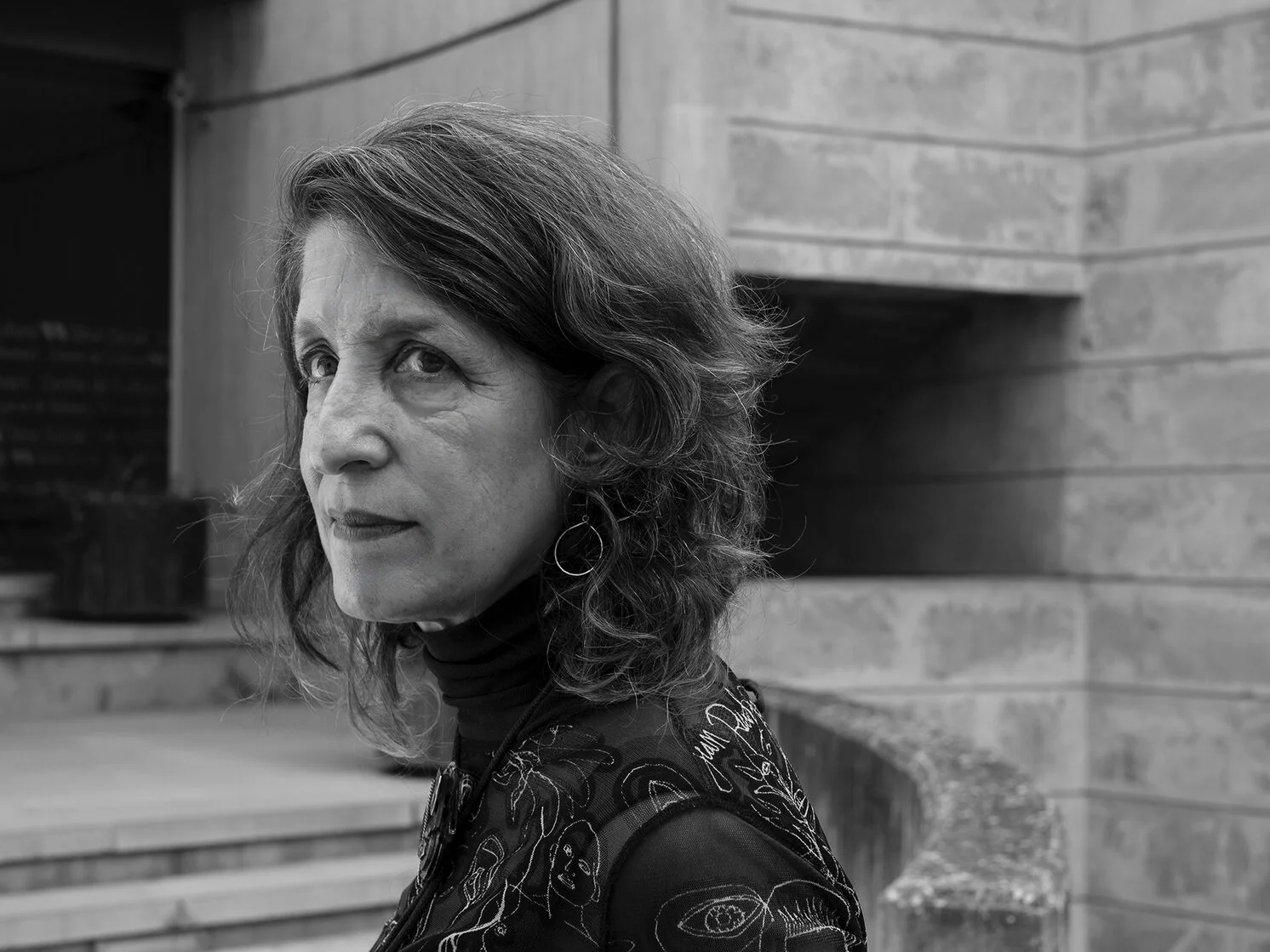
Lynne Sachs by Oscar Fernandez

Interview and edit by Kim Ji-hwan

Interview with Lynne Sachs
Tip of My Tongue (2017)

Window Work (2000)

Ji-hwan :

Your films seem to weave together personal experience, political history, and poetic reflection. How do you think about this relationship in your work?

Lynne :
This intersection between our internal cosmos and the world beyond has always been a fraught space I wanted to explore through my work. I imagine my domestic universe as a hermetic cosmos that is constantly punctured by uncontrollable events that swirl around it. In Window Work (2000), a woman (who happens to be me) drinks tea, washes a window, and reads the newspaper—simple tasks that somehow suggest a threatening presence within and beyond the image. Sometimes she hears the rhythmic, pulsing symphony of crickets. Other times jangling toys dissolve into the roar of a jet overhead, or children trembling at the sound of thunder. These aural experiences dislocate her space temporally and physically, reminding her that there is a dark world just beyond the one where she lives, the one we, as audience, are seeing. This short film embodies everything you are asking about in a completely non-verbal way, but I have other films that also explore these dynamics, especially Tip of My Tongue (2017), an 80-minute experimental documentary that takes this tension between the personal and the social/political as a starting off point.

Ji-hwan :

Following that, I’m curious about what you yourself consider to be experimental in your films. How does that experimental quality emerge in your process—through discovery, chance, improvisation, or through the formal language you develop for each work?

Lynne :
For me, making films is always about taking an aesthetic risk. I push myself to come up with a new vocabulary of images and sounds for each film. There is no template or formula. The materials demand a distinct language that at first may be obscure, but eventually suggest a syntactical series of relationships that work on both intuition and analysis. In my film Swerve (2022), for example, I asked six performers to walk around a market and playground in Queens… speaking in verse written by poet Paolo Javier. The film transforms into an ars poetica/cinematica. My commitment was not to “translating” their words, but rather celebrating their presence as simultaneous insiders and outsiders of mainstream society.

Ji-hwan :

Experimental cinema takes many forms and often exists outside conventional systems of production and distribution. In this context, how do you see your work situated within the broader landscape of experimental cinema?

Lynne :
Absolutely everything I do is an experiment. I am closer to a scientist than to a commercial movie director. In the course of my life, I come up with an idea or question or an observation and then I try to answer it by making a film that will become a vessel for my investigation. Let’s consider A Year of Notes and Numbers (2017). That film contains pretty-much everything about me from the year 2017. It’s the mind and the body distilled to a series of animated images of words and numbers. Achingly simple, perhaps, but also precise and comprehensive. It cost me nothing to make. It suggests things about what it is to live in a medicalized society, how it feels to grow old, what are the challenges to being a woman simply living in her own skin. Just as poetry and painting have always spoken to our inner being, people are discovering that the experience of watching a film like this can be a catalyst for a new kind of awareness.

I am grateful to Canyon Cinema, the Film-Makers’ Cooperative, Kino Rebelde, Cinema Guild, Light Cone and Canadian Filmmakers Distribution Center for distributing my films.

Ji-hwan :

You have been making films for several decades. I believe you still have many works ahead of you. Looking back now, how has your relationship with filmmaking changed over time?

Lynne :
The longer I have been making films, the more I recognize how vital it is to be part of a community that is supportive and deeply engaged. To my surprise, the internet has allowed all of us to find a global relationship to other artists who are working completely outside the commercial film industry. I’ve worked really closely with people in Mumbai, Montreal, Marseilles and so many other places on the globe. Together, we have created classes, festivals, workshops, and screenings that celebrate both short and long films. Wherever we are, we feel that we are kindred spirits who embrace alternative, underground, experimental and low-budget moving images that originate on celluloid, tape and digital. Thankfully, our commitment to celebrating each other transcends borders – allowing us to work beyond government restrictions and military conflict.

Ji-hwan :

This movement between the intimate and the political seems to open toward others—toward voices, conversations, and shared processes.

At the same time, in films such as The Washing SocietyAnd Then We MarchedA Month of Single Frames, and Carolee, Barbara & Gunvor dialogue, collaboration, and the voices of others seem to play an important role. How did this approach—working through conversation, collaboration, and shared voices—develop in your practice, and what has it opened up in your filmmaking?

Lynne :
Wow! I have never seen this selection of my films grouped together in this way. You are really making me think about my process from a fresh and exciting perspective.

I began writing poetry in a kind of serious way when I was a teenager. It is still very much at the core of who I am as an artist. But there was a point in my early twenties when I realized that I relished interacting with people, asking questions, knocking on doors of strangers, just generally investigating issues and complex social dynamics with my camera and microphone. I discovered that making films with people gave me an extremely gratifying and collaborative way to be in a range of sustained and revealing dialogues. Just believing in my own endeavor, however small, gave me the “permission” to initiate and record conversations.

Kim Ji-hwan (Ji-hwan) :

For readers who may be encountering your work for the first time, could you briefly introduce yourself and your work?

Lynne Sachs (Lynne) :
I am a filmmaker and poet living in Brooklyn, New York in the US. Over the last four decades, I have created cinematic works that defy genre through hybrid forms and cross-disciplinary collaboration, incorporating elements of the essay, documentary, performance, and collage. I use letters, archives, diaries, and music to take my audience on a critical journey through reality and memory. Working from a feminist perspective, I investigate connections between the body, the camera, and the materiality of film itself. Retrospectives of my work have been presented at the Museum of the Moving Image, Buenos Aires Festival of Independent Cinema, Cork Film Festival (Ireland), China Women’s Film Festival, Costa Rica IFF, and Ambulante Festival of Documentary (Mexico). My books include Year by Year Poems (Tender Button Press) and Hand Book: A Manual on Performance, Process and the Labor of Laundry (punctum books). Between 2020 and 2022, the Thomas Edison Film Festival, Prismatic Ground Film Festival and Pacific Film Archive recognized my work with lifetime achievement awards in the experimental and documentary fields. In 2026, the San Francisco International Film Festival awarded me with their annual Persistence of Vision Award. I live with my husband Mark Street, also a filmmaker. We have two adult daughters, Maya and Noa Street-Sachs.

Zero for Conduct , dir.Jean Vigo (1933)

Contractions (2024)

Ji-hwan :

In your recent film Contractions, the major political shift surrounding abortion rights is revealed not through abstract discourse but through the specific voices of clinic workers, doctors, volunteers, and patients. What led you to foreground personal testimony and everyday language in this film, rather than statistics or commentary?

Lynne :
In 2023, abortion clinics across the US were closing their doors in the wake of the overturning of Roe v. Wade*. I was feeling a profound sense of shock and disappointment in my country, so I decided to go back to my own home state of Tennessee to make a film. I am neither an academic nor a politician. I made the film Contractions (2024) because I needed to find a way to evoke the anguish I was feeling, not just the disturbing facts and statistics.

In Memphis, Tennessee, I brought together 14 reproductive rights activists—mostly women but also a few male allies—to perform with their backs to the camera in a unified expression of anger and sadness. In tandem with my filming of this collective gesture, I listened to two women… Contractions is our collective witnessing of a troubled time in which women are losing their ability to control what happens to their own bodies.

Ji-hwan :

Throughout your career, you have worked with a wide range of film materials and formats, from Super 8 and 16mm to digital video and found footage. In your work, the material qualities of images often feel very present. How do you think about the relationship between the material form of cinema and the ideas or emotions you want to express? Has your approach to film material changed over time?

Lynne :
Yes, each of my films investigates the implicit connection between the body (mine, yours, ours), the camera, and the materiality of film itself. Whether a film is explicitly autobiographical or not, it is an extension of my own life in some way. In E•pis•to•lar•y – Letter to Jean Vigo (2021), I send a letter in the form of a film to French director Jean Vigo. I ponder the delicate resonances of his 1933 classic Zero for Conduct, in which a group of school boys wages an anarchist rebellion against their authoritarian teachers. Thinking about the January 6, 2021 assault on the United States Capitol by thousands of right-wing activists, I use found and archival images to ponder how innocent play or calculated protest can turn so quickly into chaos and violence.

All of the material is in black and white, which makes the differences between historical and fictional time much more ambiguous. As you suggest, I certainly want to evoke emotions. I am fully aware of the affective nature of my practice, but I also want these responses to be empowered by the nature of the materials, not just the subject matter.

Ji-hwan :

If memory is one of the core pigments in your work, then form—how images, text, and voice are arranged—seems to become the structure through which that memory is experienced.

In your films, image, text, and voice are often intricately intertwined. Rather than simply explaining each other, they sometimes create gaps, resonances, or echoes. How do you think about the relationship between image, text, and voice in your work, especially in terms of how they interact, diverge, or create meaning together?

Lynne :
I appreciate your sensitivity to the formal structure of my films. I think for some viewers my celebration of fissures may seem very disconcerting because the editing patterns are so unfamiliar. For me, a “cut” in a film is very similar to a line break in a poem. I cannot move from one image to the next as a result of a narrative logic like a plot point, or an obvious cause and effect. I need the shift to function like a synapse and for some kind of energy to occur inside the viewer. This is a form of active participation. Thus, the “gaps,” as you call them, become vessels for thought and engagement to bring about an awareness of form and content that is very intertwined.

Ji-hwan :

While watching your films, I often feel that they explore memory in a broad sense. If this resonates with you, what draws you to cinema as a medium for exploring memory, and how do you understand the nature of memory itself?

Lynne :
That is a very interesting and insightful question. I think memory is like a primary color for me. It is the pigment that almost always appears in my films, even when I don’t think I need it. I am fascinated by both the precision and the inaccuracy of memory. How we search for material from the past is as important as what we find. Sigmund Freud believed that the impetus for a dream is often to be found in the events of the day preceding the dream, which he called the “day residue.” Ten years ago, I spent a day with my mother shooting Super 8mm film in my childhood home in Memphis. Like a dream, the film Day Residue (2016), which I made with her that day, evokes a simultaneous present and a past.

Ji-hwan :

In Your Day Is My Night (2013), you closely observe everyday gestures and rhythms rather than dramatic events. What drew you to this way of looking and filming?

Lynne :
Making Your Day Is My Night allowed me to discover New York City in a way that I needed. Around 2011, I decided that I wanted to make films at home for a while so that I could visit my locations often over a longer period of time.

Ji-hwan :

What draws you to these subtle and often overlooked moments, and how does this attention shape your way of observing and filming people? Do you see this attentive gaze toward everyday gestures as an important element throughout your filmmaking?

Lynne :
In this film, I blend autobiographical monologues, intimate conversations, and staged performances in order to observe the lives of Chinese immigrants sharing a “shift-bed” apartment in the heart of Chinatown. My film was shot over one year, so I got to know the people in the film extremely well, even though I don’t speak Chinese and they don’t speak English. I had marvelous, kind translators who became the dearest of friends. Perhaps because I didn’t speak the language of my film participants, I became very sensitive to their physical gestures. There is also a rather practical side to my use of all the close-ups. We were shooting in extremely small apartments. There was very little room to move, so I would use each finger of someone’s hand to express something that might normally be articulated by a full body moving through space.

Ji-hwan :

You have made a large number of works over the years. To be honest, I have not yet seen all of them, but I have seen around twenty. Among them, several films especially stood out to me, including Girl Is PresenceA Month of Single FramesCarolee, Barbara & GunvorSound of a Shadow, and The Jitters.

Lynne :
I am fascinated by your choice of films that struck a chord for you. My response at this moment is immediate; I could say something else tomorrow. What all of these films share in some way is a sense of intimacy. This might not be evident to everyone who watches them, but I can certainly say that my relationship to the films is visceral and deeply interpersonal, and yet I want them to transcend my own life and offer something to you, my audience.

Both Girl Is Presence (2020) and A Month of Single Frames (2018) explore solitude. During the global pandemic, I collaborated remotely with a poet on the west coast to create the earlier film. Against the uncertain and anxious pandemic atmosphere, inside our domestic space, my daughter Noa in Girl Is Presence arranges and rearranges a collection of small and mysterious things.

In A Month of Single Frames, I explore friend and filmmaker Barbara Hammer’s experience of being alone, long before the pandemic but now seen through those daunting years. I sought an emotional connection between the two of us and with our viewers. Together, we celebrate quotidian things and nature, embracing small details and growing older. Whether on the screen or heard as voice-over, I use words in both films to expand and shape the cinematic cosmos we are witnessing.

Both Sound of a Shadow (2011) and The Jitters (2023) were made with my husband Mark Street who is also a filmmaker. The earlier film is our shared discovery of Japan. While it may not be evident to a viewer, my images are very wabi sabi, observing that which is imperfect, impermanent and incomplete. His camera, in contrast, is drawn to the glitter and newness of urban life. In the later film, we both shimmy nude across a bed while our three 20-year-old water frogs wiggle in a nearby tank, all celebrating who we are independently and together.

Ji-hwan :

You have also collaborated with many artists, including Barbara Hammer, Gunvor Nelson, Carolee Schneemann, Lizzie Olesker, Anne Lesley Selcer, Mark Street, and Sean Hanley. In particular, it is difficult not to ask about your collaboration with Barbara Hammer.

Lynne :
Oh, you have brought up some of the most critical people in my life as an artist. Gunvor was my teacher; Carolee a mentor and friend; Lizzie a 10-year partner on a live performance, a film and most recently a book; Anne Lesley a poet who contributed her writing to a film; Mark my life partner and fellow filmmaker in our XY Chromosome Project. Since you asked specifically about Barbara, I will say that we met in the late 1980s in San Francisco and were immediately drawn to one another. We shared a passion for making short, experimental films. We both eventually moved to New York City where we hung out quite a bit and always attended each other’s screenings.

In the last few months of Barbara’s life, she asked me to come to her home to discuss something she needed to say in person. I immediately faced a complicated set of emotions. I knew that this tête-à-tête would involve some kind of good-bye, but I had no idea that she had decided to share a part of her personal archive, and thus a part of her being on this earth, with me. As I sat at her side, Barbara vividly described to me her 1998 artist residency in Provincetown, Massachusetts. For one month, she lived and made her art in a Cape Cod shack without running water or electricity. While there, she shot 16mm film, made field recordings, and kept a journal. Barbara’s only instructions to me were very simple: “Do absolutely whatever you want with this material.” While writing the text for my own film, the words I placed on the screen came to me in a dream. I quickly realized that this kind of oneiric encounter could become a posthumous continuation of the dialogue I had started with Barbara. Since I would never again be able to speak to her about her life or the ontological nature of cinema or the textures of a sand dune, I would converse with her in A Month of Single Frames (2020). Through my writing, I tried to address Barbara’s celebration of solitude and cinematic embodiment.

Ji-hwan :

In Carolee, Barbara & Gunvor (2017), Barbara Hammer says that ‘a camera you can hold and move with resembles my identity.’ How do you understand the relationship between the camera and the body in her work? Did your conversations or collaborations with her influence your own approach to filmmaking?

Lynne :
I really appreciate your keen listening. You hear a few words spoken briefly in a short film, and you realize that each word holds a power and is there for a reason. In Carolee, Barbara & Gunvor (2017), I asked each woman to speak about her relationship to the camera. Traditionally, our culture tends to examine this machine based on its ability to see women, to frame them, contain them, and objectify them. But for these women, the camera functions like an arm with an eye, an extension of the body that can play, dance, and rebel.

Ji-hwan :

Beyond Barbara Hammer, I would also love to hear any stories you might share about collaborating with other artists.

Lynne :
Lizzie Olesker is a playwright. I am a filmmaker and a poet. In 2014, we discovered a shared interest in making work that magnifies quotidian elements of life here in Brooklyn. We first met on a bench waiting for our young daughters to finish their music lessons. A conversation began about our lives as mothers and working artists. We couldn’t yet know that those early encounters would lead to a ten-year theater piece (Every Fold Matters, 2014–17) and film (The Washing Society, 2018) collaboration. Now in our sixties, our daughters fully grown, we continue to build an experimental model for making live performance and film, engaging in a dialogue on how art-making can alter our understanding of urban life.

Lizzie first saw my live performance of Your Day Is My Night in a gallery. When I saw Lizzie’s theater work, I was immediately struck by its clarity and inventiveness. Both of us were ready to shake things up, to move in a new direction with our artistic process. We discovered that we each had questions about how to explore unseen, unrecognized, and undervalued work historically done by women. We’ve been making work together ever since. I continue to learn from her each and every day. We know how to support each other, how to disagree and how to listen. In 2025, we co-authored Hand Book: A Manual on Performance, Process and the Labor of Laundry, which was published by punctum books, and which we are taking to bookstores and theaters around the country. Clearly this collaboration is integral to my very existence!

Ji-hwan :

At SPIEXFF, I had the opportunity to curate several of your films, including Photograph of WindSame Stream Twice, and Maya at 24. These works seem to observe a body moving through time—almost like a form of long-term cinematic witnessing. How did this ongoing relationship with Maya develop in your filmmaking?

Lynne :
Of course, my daughters Maya and Noa have very much carved out their own lives in this world. Maya is a therapist social worker who works with young people, often in crisis. Noa is an attorney who provides free legal services to low-income individuals who cannot afford private counsel.

I started the cycle of films that includes Photograph of Wind (2006), Same Stream Twice (2016), and Maya at 24 (2021) when Maya was six years old and have filmed with her approximately every six years since that time. Each time she runs in circles around me, our gaze like a tether between our bodies and our eyes.

Of course, she grows older with each iteration, so do I, but she also changes in other ways. Her facial gestures and her body language mature and complicate. Last year, for her 30th birthday, we replayed our game on a mountain top.

I made two films with Noa as well. In Noa, Noa (2006), she grows young, as if time moves backwards. In Girl Is Presence (2020), she plays with and responds to a table full of objects from my past.

Ji-hwan :

These works, shaped over decades, suggest a cinema that returns, again and again—to the body, to time, and to the people closest to you. I am really looking forward to the next film about Maya. I also just came across your film about Noa, and I will definitely watch it.

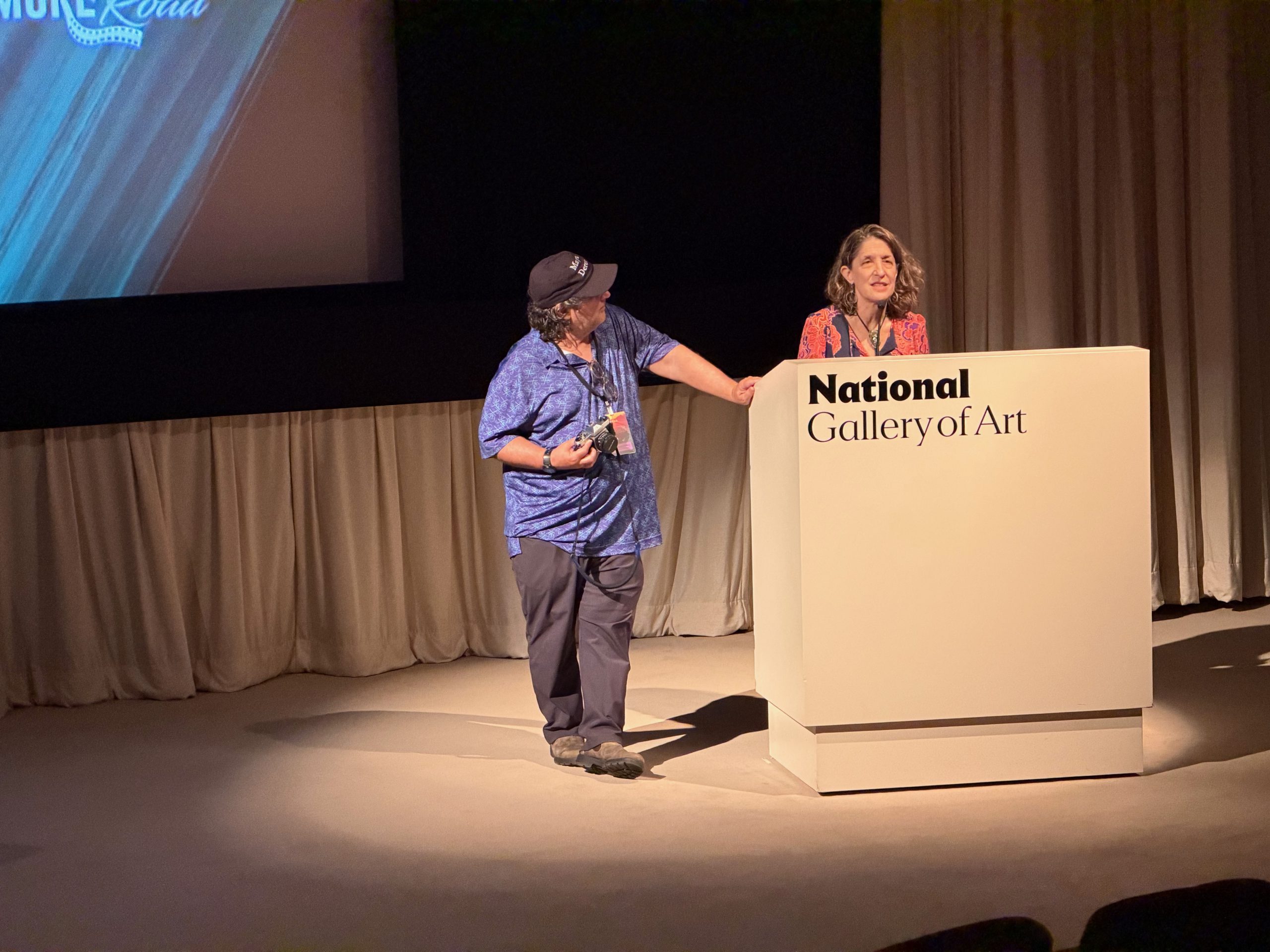
I understand that you recently received the Maya Deren Award at the Film-Makers’ Cooperative’s 65th anniversary event in New York. Maya Deren is such a significant figure in film history.

Lynne :
Maya Deren—her haunting, exhilarating presence permeates so many things for me. My desire to find my own visual and aural language began when I witnessed her celluloid adventures—always made with absolute candor, from a decidedly female perspective.

Ji-hwan :

What does Maya Deren’s legacy mean to you as a filmmaker? How have her ideas about cinema influenced your own way of working?

Lynne :
My partner Mark Street and I even named our first daughter Maya. In my film Maya at 24, we see her at 24 years old, 24 frames per second, running forward in space, and backwards in time—fully in motion, like her namesake.

The artists who founded the Film-Makers’ Cooperative in 1961 (which happens to be the year of my birth) believed that a radical artmaking practice could speak to the most concerning issues of their day. They had a visceral faith in the medium itself. Through play, experimentation, and the confidence to break every rule in the book—the industry standards—these film artists wanted to spark their audiences to think in new ways about the world as they saw it.

Like Maya Deren herself, they knew they could do it on their own and with very little money. They just needed to support each other. I have tried to follow this ethos in my life as an artist.

Ji-hwan :

Thank you for your time, Lynne, and for this generous conversation.
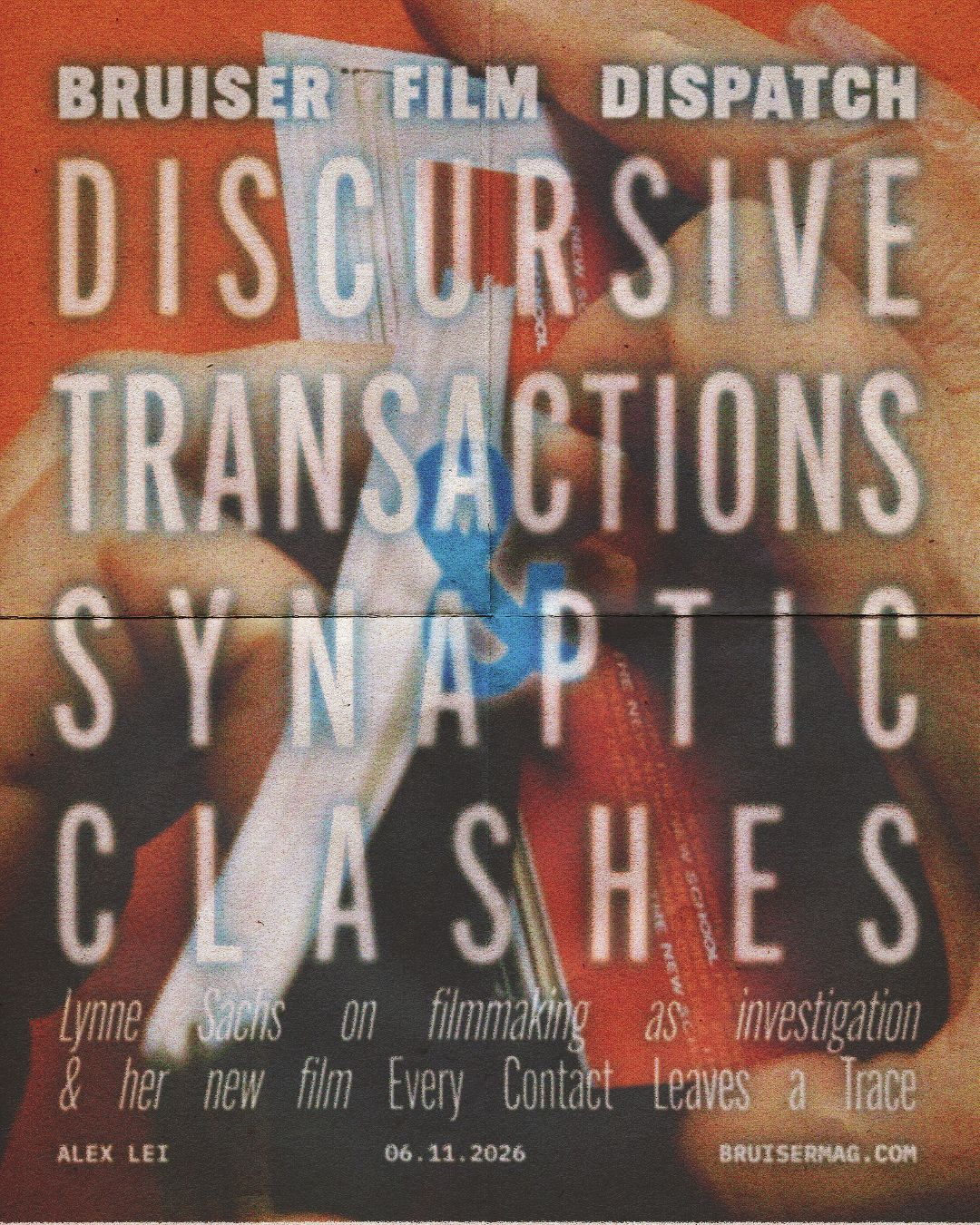
Every Contact Leaves a Trace / BRUISER FILM DISPATCH

DISCURSIVE TRANSACTIONS AND SYNAPTIC CLASHES

Alex Lei talks filmmaking as investigation with Lynne Sachs in her new film Every Contact Leaves a Trace

https://www.bruisermag.com/lei_sachs?brid=YWdncwENegXDz7mo5My_xIJaENr9

Lynne Sachs has been accumulating business cards for decades, little pieces of paper ephemera that not only serve as a functional piece of data, but evidence of an interaction. In Every Contact Leaves a Trace, Sachs seeks to reexamine her past and understand her present by exhuming these cards, creating an essay film following her investigation as she tries to reconnect with people who have both majorly and minorly touched her life, embarking on a Sophie Calle-esque quest with a starting point of brief physical contact.

I got together with Sachs, the former Catonsvillian, after her films both new and old played at the 27th Maryland Film Festival, having a long discussion about her prolific career as an experimental and essay filmmaker, her friendships with legendary and recently deceased queer filmmakers Barbara Hammer and Lawrence Brose, the process of constructing art multifaceted art through piecemeal interrogations, Deleuze & Guattari, and, of course, business cards.

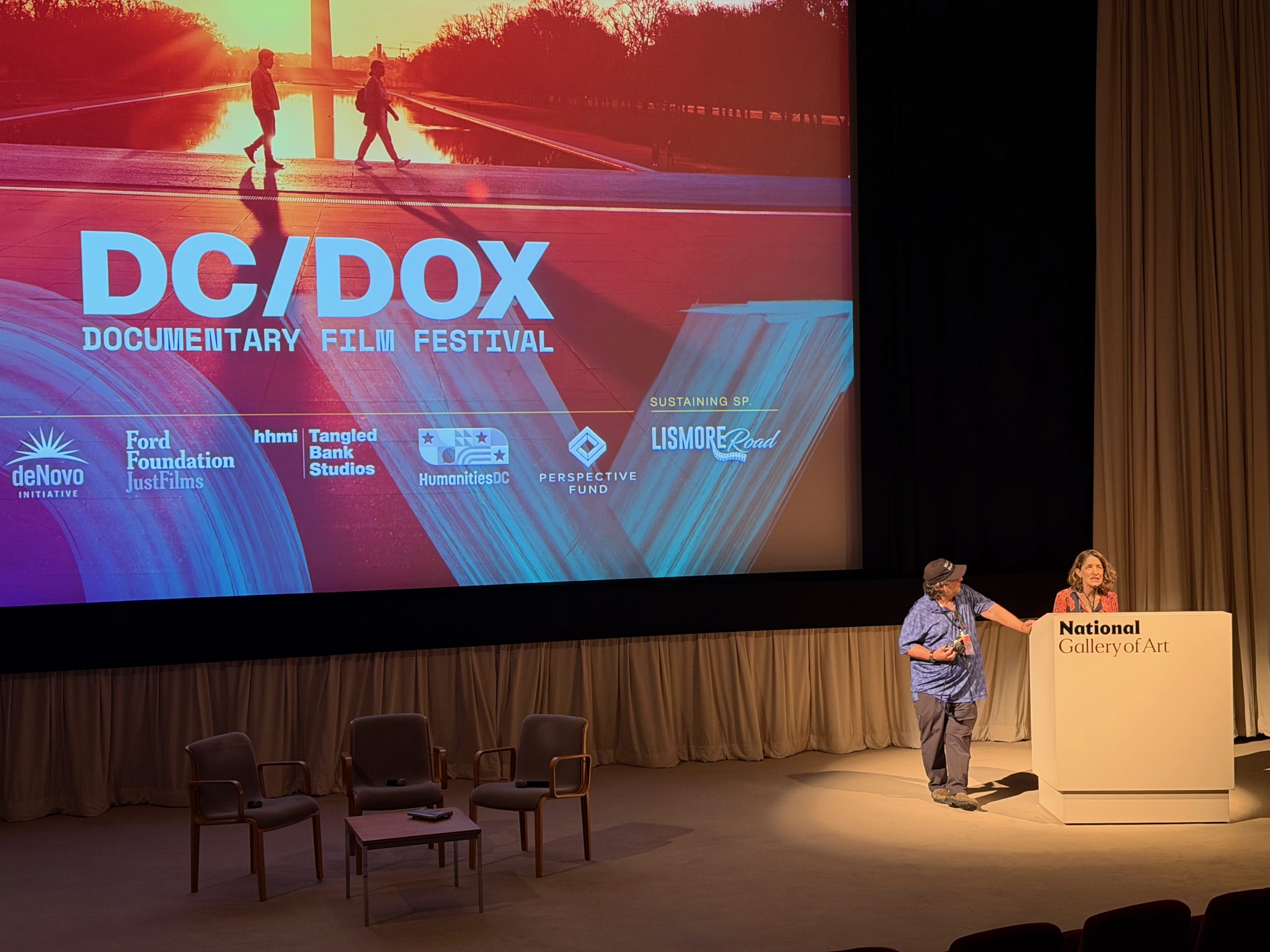
Every Contact Leaves a Trace plays for free in Washington on June 14th as a part of DC/DOX. This interview has been edited for length and clarity.

Alex Lei
Do people ever give you those electronic business cards now?

Lynne Sachs
Oh, yes. I was at the premiere of the film at the International Documentary Festival Amsterdam, and they had a fancy dinner for the filmmakers. I met a man who was a filmmaker there showing a feature film. I won’t say the person’s name, but I will say his film was nominated for an Academy Award; it didn’t win. We were talking about business cards and he took his phone and pointed it at mine, and it felt like a come-on or something. Like, “Oh, wow! That’s your body and this is my body.” It was not the same as a handshake. A handshake involves your body, all five of your fingers — it could have nuances. Having your phones meet like that…it seemed very sensual or something.

AL
I think it’s strange. It’s like a transmission.

LS
It’s a transmission, yes. All a sudden their identity is inside your identity. It becomes very suggestive.

AL
You could take that metaphor pretty far, I’m sure.

LS
You certainly could. The poster [for Every Contact Leaves a Trace] has these two hands with a card, they’re in silhouette. That has a kind of trajectory, but the telephones touching is another thing entirely. It feels altogether virtual, not somatic. But the thing is, our phones these days contain everything practically who we are, so it’s very comprehensive.

AL
Let’s talk about where the film starts, with this forensic investigation. Forensics is such a precise, exacting process. Your process feels much more intuitive.

LS
First of all, it wasn’t hard to get that interview with the forensic scientists, they were so intrigued by the fact that I was out of the business of policing and investigation. Both of those scientists were a bit amused that I wanted them to wax poetic about their field. I did have a goal to see if there were still fingerprints on the cards, but if we didn’t discover that together, then we would talk about the practice of celebrating the haptic and the tactical. But for me, it was also a license to also knock on the door of a laboratory at the State University of New York and sashay my way in. It was an opportunity to think more deeply with people who would spark my contemplations.

AL
Do you often use your filmmaking that way, as a sort of means to get in these doors?

LS
Following an investigation that is a discursive one, that’s the key. Even if it’s a bit anomalous to see me in that space, I’ve always been intrigued by these synaptic clashes. The idea of two different worlds that shouldn’t mix that do mix.

AL
How often are you in your life finding these points of friction to make films about?

LS
Some films I make that are very introspective, and take me into a very familiar zone. Like making a film with a daughter of mine or my father. Then other films encourage a journey. It may be a journey to a faraway place, but I’m also keen on the journey being super close. When I made my film Your Day Is My Night, it was a moment in time where I needed to reclaim what home is. That home is also an urban space, and that there are pockets that may be completely unfamiliar and you need to reacquaint yourself with communities. With that film it was because so many people who live in New York only go to Chinatown to eat meals. After I made that film, quite a few people said to me, “You made me look up at the windows.”

AL
Lawrence Brose says something to that effect in Every Contact Leaves a Trace, “We’re in the gutter but we’re looking up at the stars.”

LS
Thank you for mentioning Lawrence Brose. Bringing him into the film was really a profound gift. It was one of the hardest and most vulnerable parts of making the film. He was one of the most open people I’ve ever met, but also perhaps the artist I’ve known who’s been most punished by society. He died from cancer [in 2025]. But the condition he lived for the last decade came very much from attitudes and biases that are deep within our culture, so I think his identification with — that’s a quote from Oscar Wilde that you mentioned — his awareness of being in the gutter but looking up at the stars. That’s another reason to make films, is you have a chance to talk to people who allow you to grow in these ways you might not have.

AL
In a certain way, too, it lets you hold onto them. Same with the business cards, it’s another piece of ephemera from this person.

LS
I’ve shown the film in the United States twice in the U.S. and in both audiences, at Ann Arbor [Film Festival] and in Maryland [Film Festival] with you, someone knew Lawrence Brose. Therefore, we got to hear his name and we got to talk about him as an artist, and that’s the only ephemeral gift we can give back to his spirit, is to talk about him.

AL
Was it a challenge reaching back out? How hard was it to try to reconnect with these people?

LS
You know, once I said I’m not just a detective, but I’m half-detective, half-human being, then the obstacles to the traditional “I’m trying to find this person who could be lost” became a much more artistic investigation. So, for example, the Syrian woman who I had met on a film set, and in some ways to me she connected to a geopolitical crisis, and I thought, “Oh, we’ll be able to talk about that. That’ll bring that part of the world closer to me.” And the fact that she built up a wall and switched the documentary paradigm around; she took control as subject. And I thought that is probably what we do with most people who’ve passed through our lives, a doctor we’ve had or a childhood friend, they become the accumulated gestalt of our existence, but we don’t have trajectories or vectors that can take us back to that.

During the making of this film, I discovered for the first time really Deleuze and Guattari, a book they wrote called A Thousand Plateaus. It’s a very dense book, but their idea of a “body without organs,” their concept of that, was such a revelation to me. This idea that we become an accumulation of all these energies or affects from people and that enters our being. Again, I was saying that making a film is a reason to knock on the door, but it is also a reason to do research. I’ll recommend a book that you might’ve read already, but it’s really on the other side of the spectrum of research. Have you read Suite For Barbara Loden?

AL
No!

LS
Oh my god. It’s so good. And it’s all about the earnest impulse to understand another human being and the failure to do so. Nathalie Léger, she wrote it, and I think you would love it.

AL
Yeah, I mean, I love Wanda, I love Barbara Loden’s work. She’s such a fascinating figure in the world of independent film. Even the way that she almost doesn’t exist. I think a lot about how she was originally in Frank Perry’s The Swimmer, but her scene got reshot and she was totally recast out of the movie. But there’s some images with Burt Lancaster sitting by the pool, and it haunts me in a certain way.

LS
That conceit that you just described sort of permeates the whole book. And it’s a beautiful book. It’s about a little bigger than my hand. The only reason I came across it was because after Barbara Hammer died, her partner Florrie [Burke] contacted me and a few other people and said, “Come over, I have a few things for you.” For me, she actually had some rings, and she gave me Barbara Hammer’s leather jacket and her motorcycle jacket because we were about the same size. I wear them and I love them. But she also had some books we could look through. Every book that Barbara had, at least that I saw there, had a sticker inside, like an Ex Libris type of sticker, it just said “Hammer.” But it was sort of like “From the library of…” I don’t know if your parents ever gave you any stickers like that for your childhood. So that book came from Barbara posthumously. I actually recommended it to people who didn’t know who Barbara Loden was and definitely hadn’t seen Wanda, and it doesn’t matter because it’s really about a kind of transposing of relationships to those we don’t know and want to understand. It also made me look back at my film, Film About a Father Who, because that film had so much access, but also so much resistance.

AL
I did want to bring up, too, that at Maryland Film Festival, I thought it was a great happenstance that Brydie O’Connor’s doc about Barbara Hammer [Barbara Forever] was playing.

LS
We got to meet for the first time, she and I. We had corresponded for maybe eight years, but we had never met in person.

AL
Also this year at Maryland Film Festival, you showed your old Catonsville film, Investigation of a Flame. How was it revisiting that?

LS
I just felt lucky to be coming back to Baltimore with that movie. And also to revisit how profound it was to meet with all of those people during that period of my life, people who had taken such incredible risks. We talk about risks like jumping off a cliff or athletic risks, but these were other risks of the body, of stature, of freedom. But all of that, they did because of their belief system, and it was very meaningful to me. It was a funny coincidence that it showed at the same time as NASA has been reinvigorated — that was a theme of my film, that in the late 60s the U.S. government was, in my mind, trying to distract us from the deaths of the Vietnamese and American soldiers, because Americans tend to care more about a few people dying who are Americans than the thousands of people that are dying.

Whatever the death was, they wanted people to look at the stars. Like you mentioned, they wanted people to look up from the gutter and back to the stars. I think it’s interesting that that was reinvigorated at the same time that we’re bombing Iran, and how culture works to wrap itself around political ideology.

At the first screening [at MdFF 2026] two of the people from the Catonsville 9 support group came. They’re in their late 80s and they spoke about that time, and they talked about making homemade napalm with the Catonsville 9. And the most surprising thing was that people from Catonsville who I spoke to. They told me that Catonsville is actually kind of a more lefty town then back when I lived there. I wondered if they’re teaching the story about the Catonsville 9 at their local high school. They would not have been in 2001.

AL
Tell me about when you lived in Catonsville.

LS
I loved Baltimore. My husband taught at UMBC, I taught at the Maryland Institute College of Art. Oh, do you know what 14Karat Cabaret was? It was a fantastic, very alternative performance space called 14Karat Cabaret run by a woman named Laure Dragoul — she’s a performance artist and sculptor in Baltimore. I know that’s a distraction from our conversation, but I just wanted to Laure. She’s a very special person in Baltimore.

But also, I was meeting all of these people who were my parents’ age or older, and spending so much time with them and learning from them about what it is to engage with society in a way that’s so committed to change. For example, Philip Berrigan lived in a very alternative community on the grounds of a cemetery in Baltimore, in West Baltimore, I think near Mount Street. Then I’d spend a lot of time at Viva House, which is a Catholic worker soup kitchen in Baltimore. I had all these reasons to learn about what we now called mutual aid communities in your city.

AL
Yeah I think Baltimore is such a great place for that, and these strange, alternative spaces.Do you know Skizz Cyzyk?

LS
Oh, totally! Yes.

AL
He ran a space in the 90s called The Mansion Theater.

LS
When I lived in Baltimore, Skizz was kind of the leader of anything movie underground in town. He was it. And he was also involved in the film festival. I admire him a lot. He also does some work with Slamdance, so I’ve seen him in Park City.

AL
His old space was a funeral home that converted into a punk house that was screening movies at.

LS
I even showed work there, I believe, before we moved to Baltimore. His reputation preceded him.

AL
A lot of this film concerns the perception of memory versus the reality of something, and you’re trying to square these intangible things with each other.

LS
I’m still learning about the film. It really is about the way that memory serves us and fails us, and that’s been a conceit for filmmakers for a long time. I think in a very primal way because film can ostensibly replace memory, but we know it doesn’t. But the suggestion of the film is that it allows you to go back in time. But I like that that is erroneous in most ways, that it’s a subjective return, as memory is. It’s one person’s perception, film is in an epistemological way. So, the fact that I could physically, potentially return to a human being that would be 20 years older, as I was, or 30 years older, and that we could revisit, at least in conversation, a moment in which our lives intersected. That was a potential opportunity to understand how my life had worked. That sounds selfish, but it was an impulse. And then as I was making the film, I saw that any failure had a reason for being a failure.

As you grow older, you learn that your first impressions of a person are probably wrong, but you go through a certain time in your life when you think I’ve matured enough to understand another person rather quickly. And those kinds of shadings of relationships have to do with growing older. And so I was trying to pursue that.

There’s a part of the film where I reveal that I had thought the woman who cuts my hair was from one part of Europe but actually she was from quite another part. That is an embarrassing revelation. Not one of any great consequence, but I like those kinds of moments in life in which a small incident becomes a distillation for a larger misconception or a larger assessment of a zeitgeist, or a claim to understanding is actually proven wrong. While I was making the film, quite a few people said, “I wouldn’t put that in the film. You should be kind of embarrassed that your geography is so bad.” And then I said, “Yeah, a lot of people have a bad sense of geography.” It’s particularly American to be that way. We have a “we’re at the center of the world” attitude, and why not talk about that?

AL
In a way cinema can act as a political tool to trowel through, or even try to right the wrongs of people’s memories. There’s a part early on, when it’s almost like the film that you’re exploring falls apart and you start questioning yourself over and over and over again. Your voiceover starts speaking over itself. There’s one line that you say: “I don’t swallow, I gulp.” Which I thought is a very interesting example of your process.

LS
A swallow is very considered, and a gulp is kind of an accident. That’s how it is to exist in any period of history. And sometimes, I don’t gulp at all. Sometimes I just ignore. It depends on what you’re capable of doing. I’m very interested in those kinds of decisions that are kind of accidental. I wrote this book called Year By Year Poems. In that book I try to think about things that happen in our domestic universe — that would be swallow, mostly — and then things that go on outside that, the periphery of your home or your contained consciousness. You might go outside and you gulp. And you didn’t mean to, but you did. And then it’s in you. And it makes you choke.

AL
Throughout the film you use these vector drawings to trace your relationship to people. Towards the end, they become more and more garbled, or even more experimental and don’t follow strict lines. It seems to me like that’s sort of a visual embodiment of your process as well.

LS
I actually like to draw what you might call storyboards before I do it. Not so much around acting, but around space. So I was using that impulse to draw energies between two people, going back to that idea of the body without organs, and to think about how another person’s energy enters my awareness and vice versa. So I was doing all these drawings, thinking they were just helping me understand my process, and then I think, “Oh! Actually, this is a bit of visualization.” Something similar happened when I was making my film The House of Science: A Museum of False Facts. I could not find the structure of that film at all. I did not know how to shape all of the scenes that I loved. And then I thought, oh my goodness, I’ve been keeping a journal the whole time I’ve been making this film. Maybe that journal will help me piece it together. And then it basically did. So, in this case, what was happening in parallel — which were those drawings — became a little bit of a template for understanding how my relationships were working with each of those people. So then I was working with an animator — she really is just a great artist named Rachel Rosheger — she created that animation that happens with my niece and nephews towards the end. I’d never really used animation like that, but we had a good time.

AL
Did you always think that this would turn into a feature? Or how did you shape it?

LS
It could turn into a book. I would actually like to write a book in the next year or two. Because there are a lot of people who didn’t make it into the film — probably five or six — and I think it could be an interesting experience. I like making books. I have a book that just came out with Punctum Books, which is a press I like. Actually, I was just in Baltimore with my press. Do you know about AWP?

AL
Yeah. Oh yeah.

LS
I’ve recently been in Baltimore a lot. I was just there for the AWP conference with a new book that is very much a visual book with text. It’s called Hand Book [A Manual on Performance, Process, and the Labor of Laundry]. So I think I want to make a book that will be a continuation of Every Contact Leaves a Trace. Different title, I think

I have at least four scenes that could be short films…I wish we called them “films,” and that we called features “long films.” There are probably three short films that I could possibly make. But I’ve been so involved in getting this film out that I haven’t returned to those scenes, but they’re already constructed. When I made Film About a Father Who, my mode of working, of creating that film, when I was so lost in the editing — which I always am, and then I tried to find it — I made 12 short films. And then I spent about a year moving those films around so that the transition from one short film to another could be evocative, I thought. In a way, Every Contact Leaves a Trace is also kind of like seven short films, except then I cut within them so that they build.

AL
Towards the end, you’re talking about how you just want to be done with the whole thing. You’re trying to close the book on troweling through these business cards — do you ever feel done with it?

LS
People are giving me their cards more often now. They feel an urgency to put their card into this collection. I hope the film kind of grows. I won’t change it per se, but I hope it grows with the times. The section that you referred to around the Holocaust and Gaza, for example, is a kind of open indication of how my mind was working at the time. The more people told me not to put that in, the more I insisted that I had to put it in. It’s always interesting to see the points that are the most vulnerable. I’m wondering if I look at this film five years from now, what will have happened in that part of the world? May I pray and hope that things are better. I just don’t know, I can’t know.

AL
In Every Contact you’re trying to have hindsight about your life, but you can only do that through where you are right now and what you’re thinking about when you’re making the film.

LS
That’s kind of what I was trying to explore, my so-called positionality at this point in my life. And I always hope that an essay film like this leaves people with kind of a doorway to do the same thing for themselves.

Alex Lei

New Fest / Barbara Hammer Through the Eyes of Others Virtual Exclusive

https://newfest.org/events/barbarahammerthroughtheeyesofothers/?brid=YWdncwHooOLau6JSHMWOLOWNd_xR

May 28 ’26 – Jun 1 ’26 Virtual Exclusive

Curated and presented in partnership with MIX NYC, this Barbara Hammer-inspired shorts program spotlights work by filmmakers who were/are in conversation with Hammer—from engaging in her practices to making homages, writing letters, and (upon Hammer’s invitation) even using her footage.

Description

Virtual Exclusive
The pioneering lesbian experimental filmmaker Barbara Hammer produced more than 80 films between 1968 and 2019; this program showcases an array of works that explore her artistic output, her as a being, and the ripple effects both continue to have. The filmmaker began this process herself while she was alive—AUDIENCE offers a playful array of snippets from conversations about her work with attendees of numerous screenings. The program goes on to move through films by filmmakers who were/are in conversation with Hammer—from engaging in her practices to making homages, writing letters, and (upon Hammer’s invitation) even using her footage. Curated and presented in partnership with MIX NYC, this program also features a film by the 2025 recipient of Queer|Art’s Barbara Hammer Lesbian Experimental Filmmaking Grant, an initiative Barbara Hammer created to support early career artists and give back to her community.

AUDIENCE
Dir. Barbara Hammer, 32 min, USA
Barbara Hammer takes her camera out to film the audiences at screenings of her films – some women only, some mixed – at the London Film-makers’ Co-op; at the Roxie Theater, in San Francisco, during Gay Pride Week (where the audience includes fellow filmmakers Curt McDowell and Ulrike Ottinger); at The Funnel, in Toronto; and at McGill University, in Montreal.

LOVE, BARBARA
Dir. Brydie O’Connor, 15 min, USA
A short documentary on the iconic life, work, and legacy of pioneering lesbian experimental filmmaker, Barbara Hammer, through the lens & love of her partner of over 30 years.

UNTITLED (DYKETACTICS REVISITED)
Dir. Liz Rosenfeld, 7 min, USA
Dreamy landscapes androgynous figures, skin, and concrete, masquerade through a fantasia of fluid forms referencing history while looking into the future.

A VIDEO LETTER TO BARBARA HAMMER
Dir. Joey Carducci, 17 min, USA
A tender coming out note to Barbara Hammer from a transgender mentee that transforms Hammer’s leftover footage into an intimate conversation.

TIME OF CHANGE
Dir. Alexa Burrell, 5 min, USA
The spirit of Black Queer San Francisco revisits the historically Black Haight and Ashbury district

A MONTH OF SINGLE FRAMES
Dir. Lynne Sachs, 14 min, USA
In 1998, Barbara Hammer had a residency where she shot film and kept a journal. In 2018, Barbara began her own process of dying. She invited Lynne Sachs to make a film with the material. Lynne explores Barbara’s experience of solitude by bringing us all together in multiple spaces and times.

Lecture / St. Petersburg School of New Cinema

https://spb.newcinemaschool.com/ru/events/2026/0610-lynne-sachs

“Scenic Ruptures: Land, Space and Sky in Experimental Film”
A Virtual Lecture (on Zoom)
Experimental Film Laboratory at the Saint Petersburg School of New Cinema
Lynne Sachs
With Gevorg Galstian

June 10, 2026 – 11 am – 1 pm NYC / EST time

An open lecture by Lynne Sachs, poet and experimental filmmaker.

The online meeting will be held on the Zoom platform. Participation is free. Pre-registration is required. 

The lecture is timed to coincide with the recruitment of new experimental film lab students .

About the lecturer: 

Lynne Sachs is an American poet and experimental filmmaker. For the past four decades, she has been creating cinematic works that resist genre definitions: hybrid forms born from the intersection of various disciplines and incorporating elements of essay, documentary, performance, and collage. She draws on letters, archives, diaries, and music to guide the viewer along a critical journey through reality and memory, exploring the connections between the body, the camera, and the materiality of film itself.

Retrospectives of her work have been held at the Museum of the Moving Image, Sheffield Doc/Fest, Buenos Aires International Festival of Independent Cinema, Cork Film Festival, China Women’s Film Festival, Costa Rica International Film Festival, Oberhausen (Germany), and Ambulante Festival of Documentary Film (Mexico). She is a recipient of a Guggenheim Fellowship in the Arts.

Her books include Year by Year Poems (Tender Buttons Press) and Hand Book: A Manual on Performance, Process and the Labor of Laundry (punctum books).

Leading instructor at the Experimental Film Laboratory  of the St. Petersburg School of New Cinema

Interview with Lynn Sachs on the website  of the St. Petersburg International Experimental Film Festival 

18+

A link to the Zoom meeting will be sent to your email after registration.

Moviate Film Festival / Every Contact Leaves a Trace

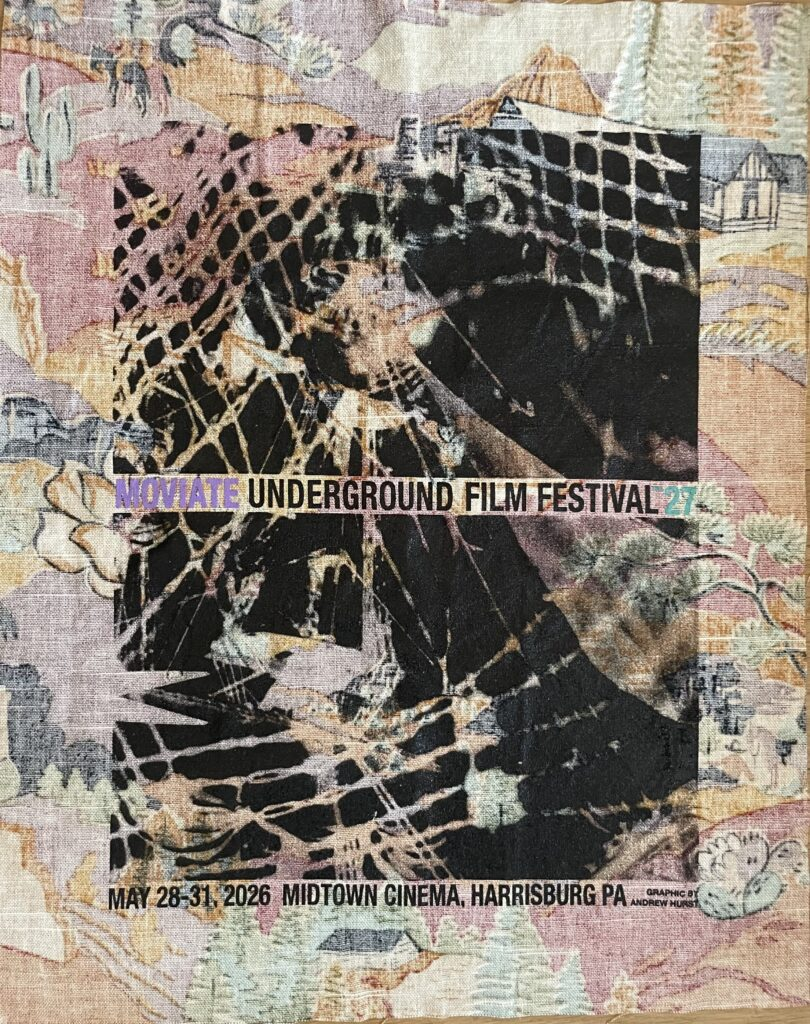
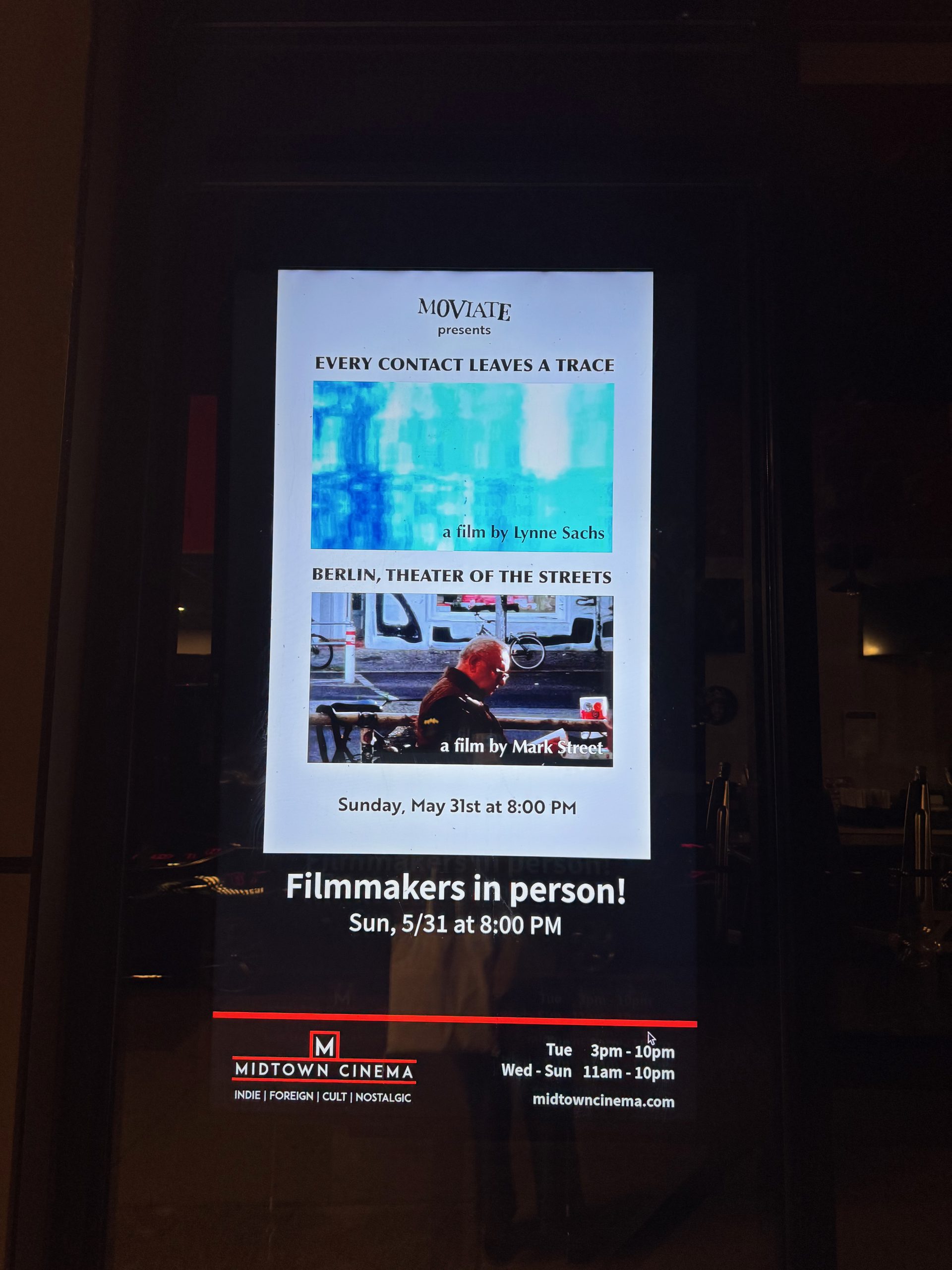
27th ANNUAL MOVIATE UNDERGROUND FILM FESTIVAL – Every Contact Leaves a Trace (2025) – 82 minutes Presented by filmmaker Lynne Sachs

Every Contact Leaves a Trace (2025) – 82 minutes
SUNDAY MAY 31st, 2026
Presented by filmmaker Lynne Sachs
$12 – 8PM at the Midtown Cinema, Harrisburg PA

Contact—so tactile, so evocative of the touch of one person on another, physically and emotionally. Trace—a way to get back to an earlier point and a reckoning with the remains of that initial encounter. Filmmaker Lynne Sachs has saved every business card anyone has ever given her. After 40 years of collecting, she recognizes their mnemonic powers. With 600 cards in her grasp, Sachs contemplates the impact of these haptic exchanges. In both real and imagined ways, her essay teases apart their vivid resonances, entwining personal memory with geopolitical history through visual abstraction, music, and a poet’s sense of introspection.

Showing with:
“Berlin Theater of the Streets” – A film by Mark Street – 10 minutes
Presented in person by filmmaker Mark Street
A walk through Berlin; eyes open, camera ready. Countless vignettes unfold around me, and I imagine storylines for each set piece.
Join us for a special Closing Night Program with both filmmakers in-person!
As part of the 27th Annual Moviate Underground Film Festival.

The Burg : Moviate Underground Film Festival to return to Harrisburg this weekend

https://theburgnews.com/news/moviate-underground-film-festival-to-return-to-harrisburg-this-weekend

Get your popcorn ready.

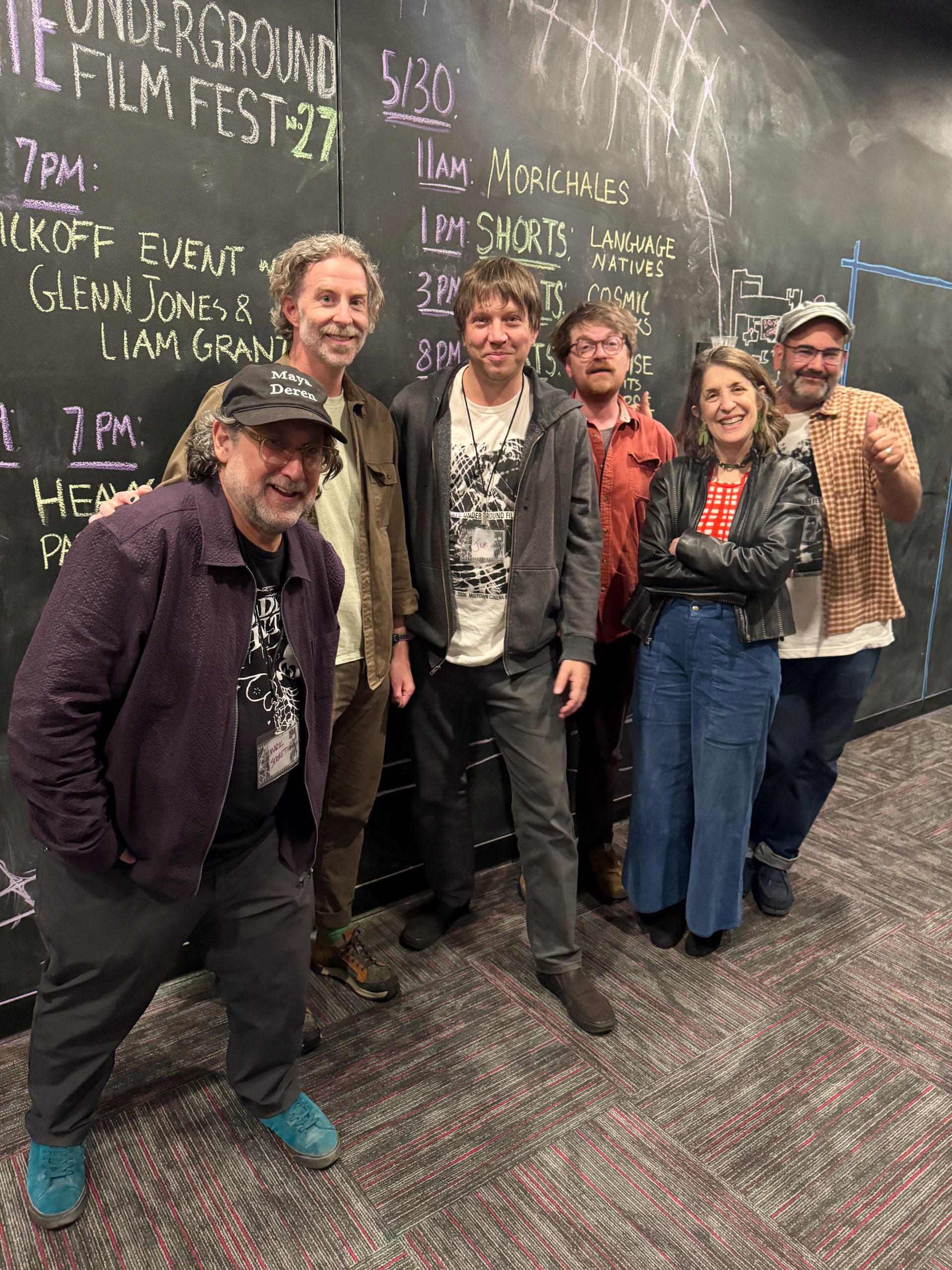
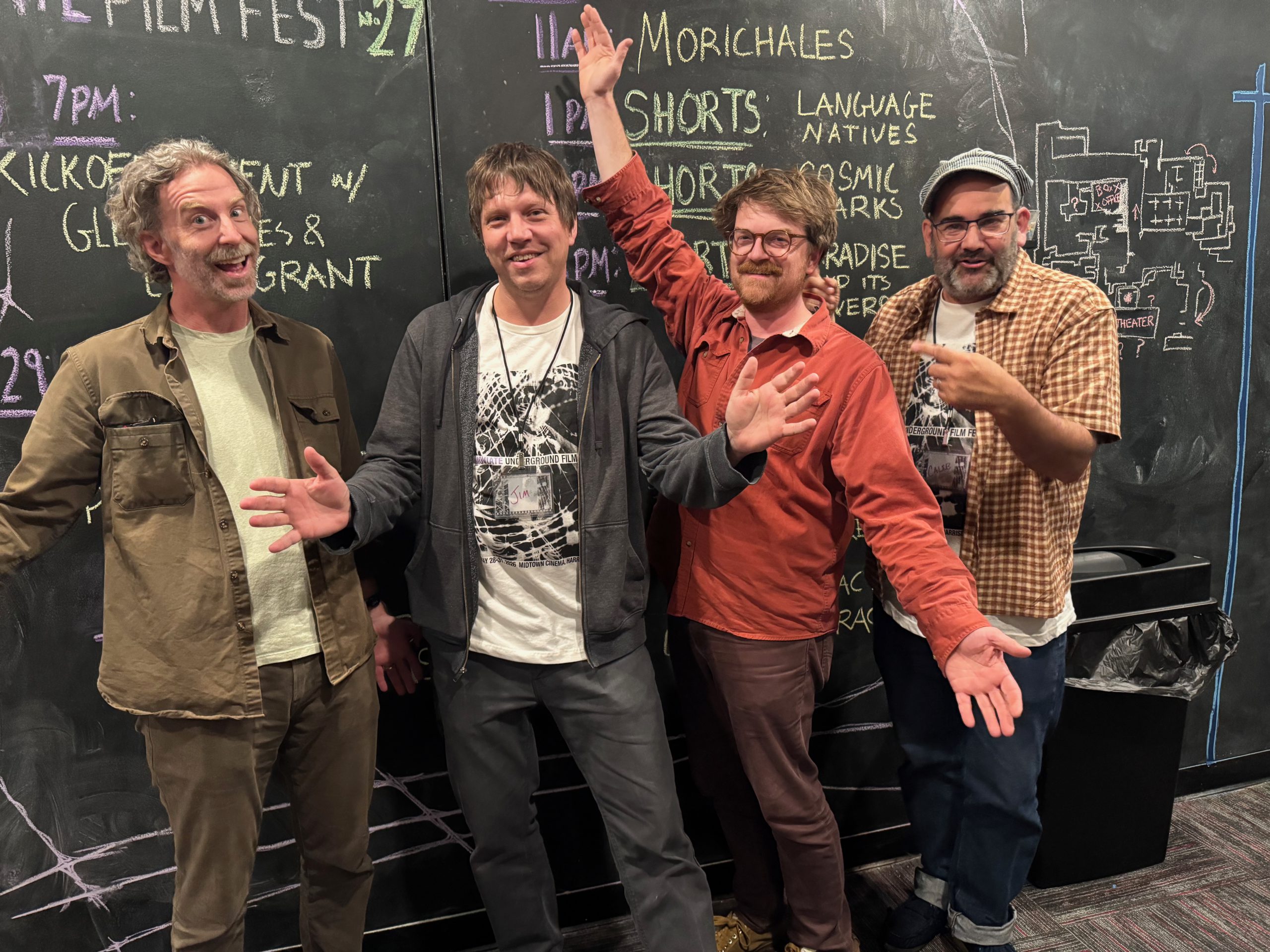
The 27th Annual Moviate Film Festival will take place on May 28 to 31 at Midtown Cinema and feature more than 60 films from 15 countries, with 13% of the movies being screened on real film.

Many of the selected films are new and classic documentaries. Caleb Smith, co-founder of Moviate highlighted several of the weekend’s showings as can’t miss events.

“You’re going to see someone’s personal creativity along with their vision, whether it’s a five-minute animation or a 90-minute documentary,” Smith said.

On Thursday, May 28, musicians Glenn Jones and Liam Grant will perform live original scores to two of their films, “The River” and “The Plow that Broke the Plains,” at 7 p.m. As they’ve been touring around the east coast, they will not be performing the original score to these films anywhere else but in here in Harrisburg, Smith noted.

 The weekend continues Friday, May 29 with a 40th anniversary screening of the 1986 documentary “Heavy Metal Parking Lot,” featuring director Jeff Krulik in attendance. The screening is co-presented by local business Tattoo Punks.

“Jeff will present previously unseen footage, including interviews with the band Judas Priest related to the film,” Smith said.

On Saturday, May 30, Colombian filmmaker Chris Gude’s “Morichales” will screen in partnership with Harrisburg-based Elementary Coffee Co., whose coffee is largely sourced from Colombia.

“The film is a stunning portrait of the workers in Venezuela who are trying to mine for gold. It’s a really beautiful film,” Smith said.

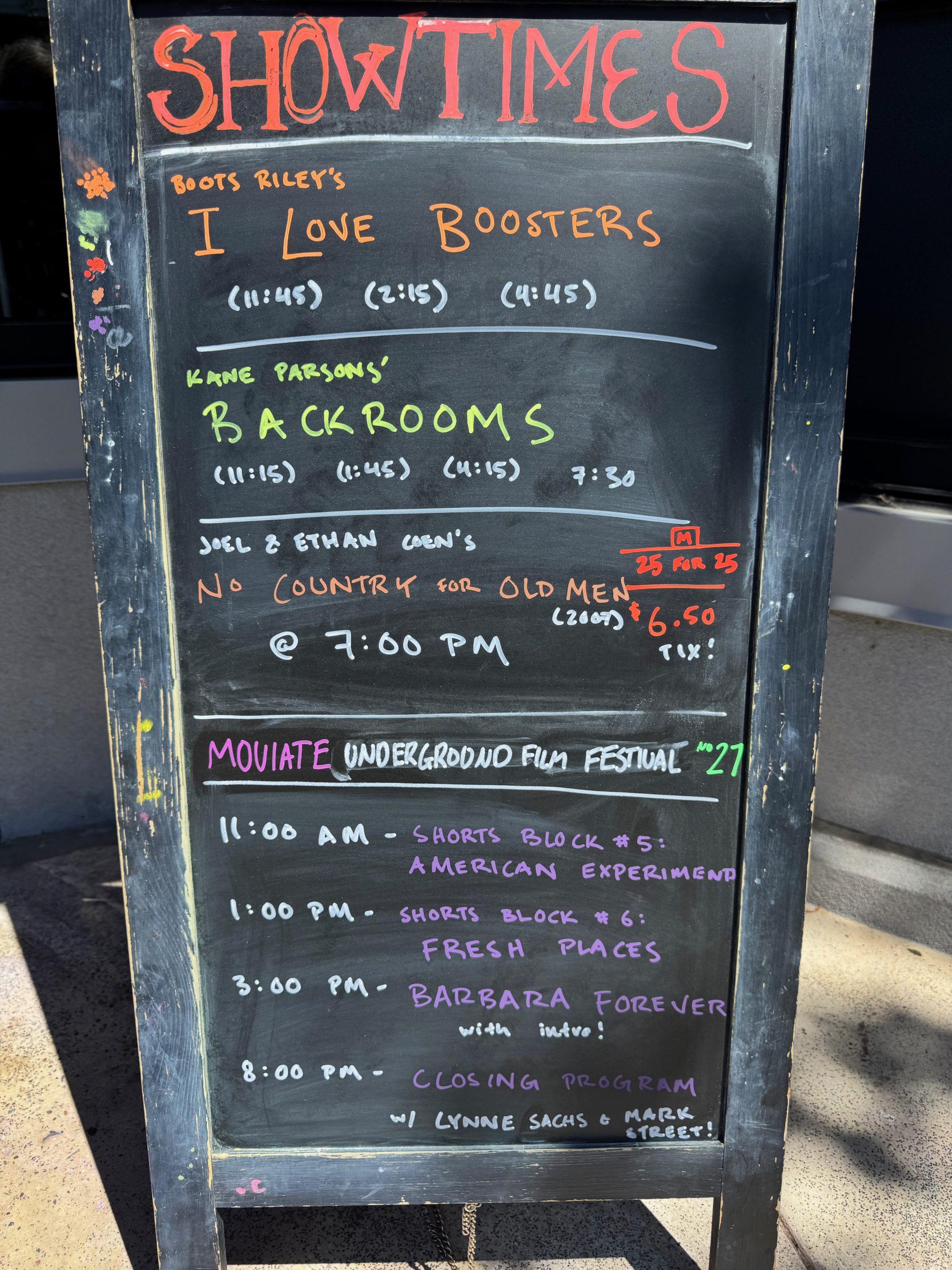
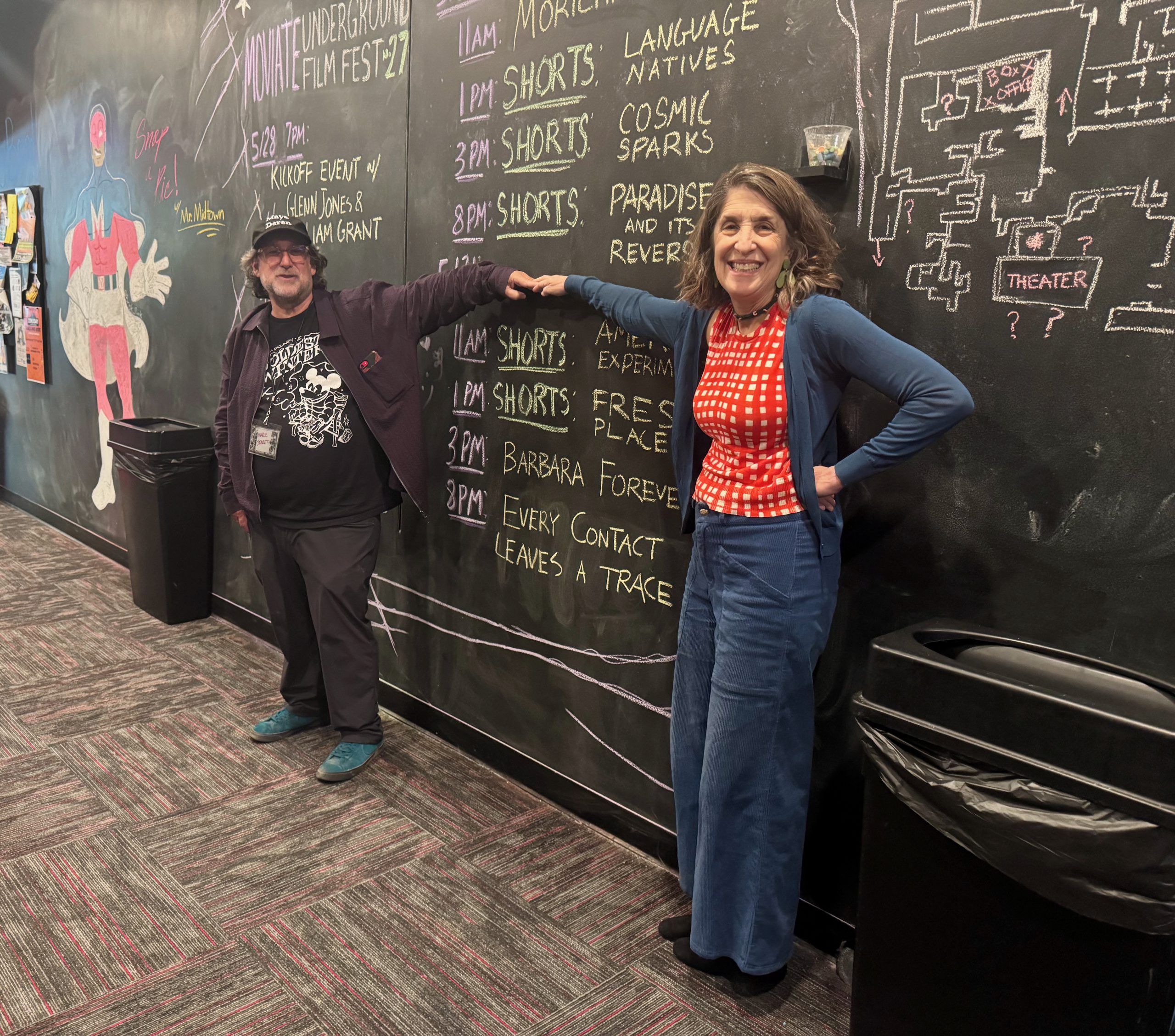
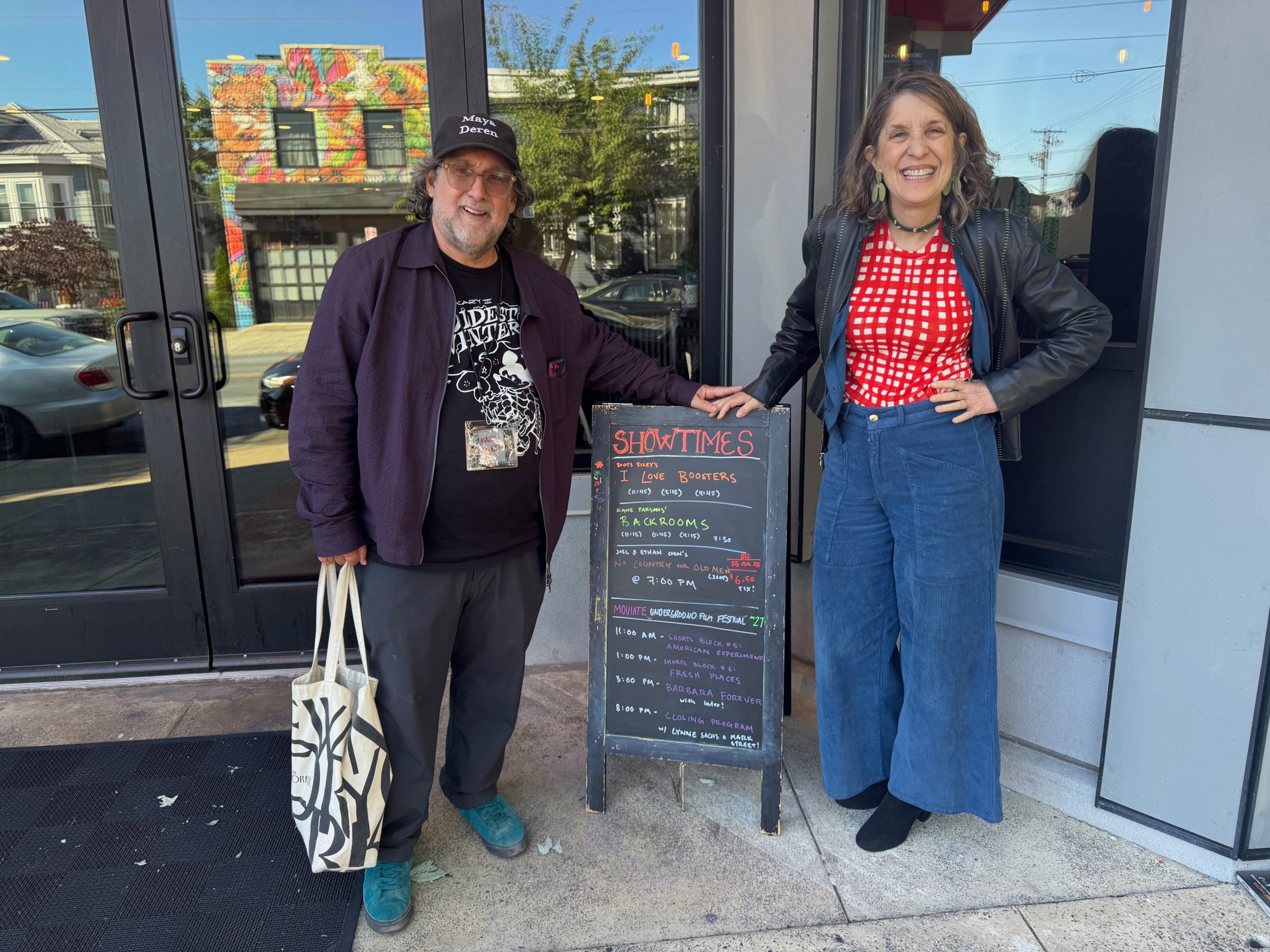
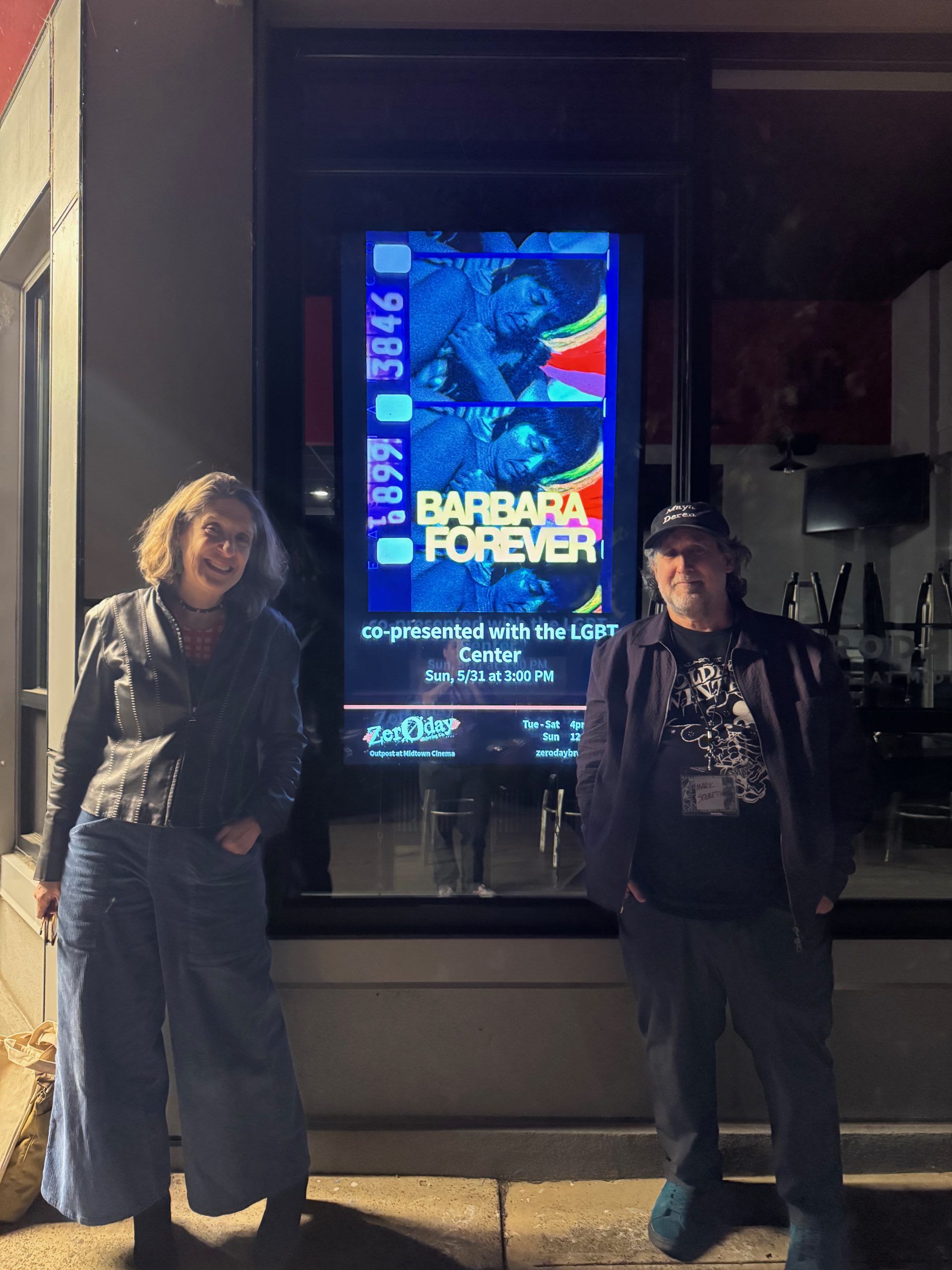
The festival concludes Sunday, May 31, with a screening of “Barbara Forever,” accompanied by New York City filmmakers Lynne Sachs and Mark Street in partnership with the LGBT Center of Central PA.

“Lynne and Mark worked with Barbara for many years and were close friends with her,” Smith said. “She was very enigmatic and creative and had documented a lot of her life as she was making films. This film just came out this year, so I’m excited that Lynne and Mark will introduce it.”

In addition to spotlighting unique indie films, Smith also sees the festival as an avenue for connection.

“With the emergence of artificial intelligence and the silo effect of people being on their phones, there’s a feeling of isolation. When you go to Midtown Cinema, you can meet other people, chat and experience the film together,” he said.

Deadline / Every Contact Leaves a Trace

DC/DOX To Host World Premieres Of Rory Kennedy’s Boeing Expose Follow Up, Marilyn Ness Documentary And More

https://deadline.com/2026/05/2026-dc-dox-lineup-1236882581/

Features

AANIKOOBIJIGAN [ANCESTOR/GREAT-GRANDPARENT/GREAT-GRANDCHILD]: DIRS Adam Khalil and Zack Khalil. PRODS Steve Holmgren, Adam Khalil, Zack Khalil, Grace Remington, and Jacque Clark. USA.

Trapped in museum archives, Ancestors bend time and space to find their way home. History, spirituality, and the law collide as tribal repatriation specialists fight to return and rebury Indigenous human remains, revealing the still-pervasive worldviews that justified their collection in the first place.

ADAM’S APPLE: DIR Amy Jenkins. PRODS Brit Fryer and Amy Jenkins. USA.

A transgender teen and his mother chronicle their lives, weaving an intimate portrait of a family in transition. Two decades of footage trace a boy’s path to manhood and his parents’ vulnerability as they reckon with change.

AI: PROBABLY NOTHING TO WORRY ABOUT: DIR Nick Holt. PRODS David Glover, Mark Raphael, David Dugan, and Zara Powell. United Kingdom.

ADVERTISEMENT

As artificial intelligence accelerates a new technological arms race, the scientist whose breakthrough made it possible begins to question what he has unleashed. AI: PROBABLY NOTHING TO WORRY ABOUT is a gripping look at the race to build thinking machines — and the growing fear that they may outpace us all.

AMAZING LIVE SEA MONKEYS: DIRS Mark Becker and Aaron Schock. PRODS Mark Becker and Aaron Schock. USA.

From her crumbling estate on the Potomac River, Yolanda Signorelli battles to wrest control of her late husband Harold’s iconic toy, AMAZING LIVE SEA-MONKEYS!, from the corporate men she insists stole it from her — and to rescue it from the stain of her husband’s dark legacy.

AMAZOMANIA: DIR Nathan Grossman. Sweden, Denmark, France.

When the footage from a celebrated 1996 first-contact expedition in the Amazon resurfaces decades later, a triumphant story of discovery unravels into a reckoning with colonialism, documentary ethics, and the lasting impact on the Korubo people.

North American Premiere.

AMERICAN DOCTOR: DIR Poh Si Teng. PRODS Poh Si Teng, Kirstine Barfod, and Reem Haddad. USA, Palestine State, Malaysia, Denmark, Qatar.

When three American doctors—Palestinian, Jewish, and Zoroastrian—enter Gaza to save lives, they find themselves caught between medicine and politics, risking everything to expose the truth.

AMERICAN PACHUCO: THE LEGEND OF LUIS VALDEZ: DIR David Alvarado. PRODS David Alvarado, Lauren DeFilippo, Everett Katigbak, and Amanda Pollak. USA.

Against political resistance and industry skepticism, Luis Valdez pushes Chicano storytelling from the fields to the film screen with Zoot Suit and La Bamba, crafting iconic works that challenge, celebrate, and expand America’s story.

BABY/GIRLS: DIRS Jackie Jesko and Alyse Walsh. PRODS Melissa Leardi, Alex Waterfield, and Kelly Rohrbach Walton. USA.

Set in post-Dobbs Arkansas, BABY/GIRLS follows three teens living in a Christian maternity home as they navigate pregnancy and early motherhood—an intimate, unfiltered look at girlhood and motherhood colliding in the American South.

BARBARA FOREVER: DIR Brydie O’Connor. PRODS Elijah Stevens, Brydie O’Connor, and Claire Edelman. USA.

A dreamlike portrait of the life, work, and legacy of a pioneering feminist experimental filmmaker whose work helped shape early lesbian cinema. Tracing her prolific canon alongside rarely seen documentation of her life and body, the film reveals her unconventional attempts to live on—most notably through the extensive archiving of her films.

THE BEND IN THE RIVER: DIR Robb Moss. PRODS Lisa Remington and Kristin Feeley. USA.

Following a group of friends for nearly fifty years, THE BEND IN THE RIVER explores the inexorable flow of aging and the unfinished project of living.

BIRDS OF WAR: DIRS Janay Boulos and Abd Alkader Habak. PROD Sonja Henrici. United Kingdom.

From besieged Aleppo to the confines of a London newsroom, Lebanese journalist Janay Boulos and Syrian activist/cameraman Abd Alkader Habak retrace their love story through a vast personal archive spanning 13 years of revolution, war, and exile. Can their love survive distance, danger, and difference?

BLACK ZOMBIE: DIR Maya Annik Bedward. PRODS Kate Fraser and Hannah Donegan. Canada.

From the flickering screens of Hollywood horror to the haunted cane fields of colonial Haiti, BLACK ZOMBIE unearths the buried origins of the zombie, reclaiming it as a symbol of survival and spiritual resistance.

BUCKS HARBOR: DIR Pete Muller. PRODS Nathan Golon, Noel Paul, and Pete Muller. USA.

In Downeast Maine, boys are shaped by brutal winters, the harvesting of the ocean’s bounty, and the rigid codes of their fathers. BUCKS HARBOR explores what it means to grow up in a community where a man’s worth is measured by the strength of his back.

A CHILD OF MY OWN: DIR Maite Alberdi. PRODS Sandra Godínez, Carla González Vargas, Maximiliano Sanguine. Mexico.

Alejandra’s profound desire to become a mother—and the heartbreak and pressure that engulf her after multiple miscarriages—drive her to fake a pregnancy, unleashing a media scandal and a moral reckoning.

Courtesy of Netflix.

CLOSURE: DIR Michaƚ Marczak. PRODS Monika Braid, Michał Marczak, Rémi Grellety, Katarzyna Szczerba, and Karolina Marczak. Poland, France.

After his teenage son goes missing, Daniel combs the depths of the Vistula River day and night, caught in a grueling, endless routine and torn between the dread of a fatal leap and the fragile hope that his son may still be alive.

COOKIE QUEENS: DIR Alysa Nahmias. PRODS Gregory Kershaw, Michael Dweck, Alysa Nahmias, and Jennifer Sims. USA.

It’s Girl Scout Cookie season, and four tenacious girls strive to become top-selling “Cookie Queens,” navigating an $800 million business where innocence and ambition collide.

THE CYCLE OF LOVE: DIR Orlando von Einsiedel. PRODS Harri Grace, Chloe Leland, Karl von Schedvin, and Emelie von Schedvin. United Kingdom, Sweden.

An epic true-life journey of self-discovery, tracing the romantic odyssey of PK Mahanandia, a Delhi street artist who bicycled 6,000 miles across continents in 1977 to reunite with the woman he loved—risking everything for belief, connection, and what the heart demands.

DAUGHTERS OF THE FOREST: DIR Otilia Portillo Padua. PRODS Paula Arroio, Elena Fortes, and Otilia Portillo Padua. Mexico.

Deep in Mexico’s forests, two Indigenous mycologists seek to reconcile the past and present while reimagining the future for themselves and a changing world.

DO YOU LOVE ME: DIR Lana Daher. PRODS Films de Force Majeure and My Little Films. Lebanon, France, Qatar, Germany.

An exhilarating journey through 70 years of images and sounds from Lebanon, exploring Beirut’s collective psyche—marked by beauty, trauma, joy, and forgetting.

EARTH TO MICHAEL: DIRS Nico López-Alegría and ZZ. PRODS ZZ, Steffie van Rhee, Dustin Nakao-Haider, and Nico López-Alegría. USA.

Before an astronaut leaves Earth to usher in a new era of spaceflight, his son asks him to confront the unresolved space between them—revisiting a past shaped by distance in the hope of a more connected future.

THE ENDLESS FRONTIER: DIR Marilyn Ness. PRODS Beth Westrate and Ted Richane. USA.

An urgent portrait of three scientists confronting some of the most pressing challenges of our time, revealing the growing threat to the American research ecosystem—and what is at stake if it begins to falter.

World Premiere.

EVERY CONTACT LEAVES A TRACE: DIR Lynne Sachs. USA.

In the digital era, when real-life connections are increasingly rare, even fleeting encounters can leave a lasting trace. Over a lifetime, filmmaker Lynne Sachs has collected business cards—mementos of brief exchanges with strangers—and selects seven to uncover why these moments have lingered so vividly in her memory.

FIRST THEY CAME FOR MY COLLEGE: DIR Patrick Bresnan. PRODS Holly Herrick, Harry W. Hanbury, Patrick X. Bresnan, and Zackary Drucker. USA.

When Florida Governor Ron DeSantis stages a coup at New College, students and professors confront a new reality: their campus becomes ground zero in an unprecedented nationwide assault on academic freedom and diversity.

FREEFALL: A RECKONING FOR BOEING: DIR Rory Kennedy. PRODS Rory Kennedy, Mark Bailey, Viva Van Loock, Sara Bernstein, Justin Wilkes, and Alexandra Korba. USA.

Following the highly publicized death of Boeing whistleblower John Barnett, Rory Kennedy’s FREEFALL: A RECKONING FOR BOEING continues the investigation into the once-iconic aviation giant, uncovering startling new revelations and insider accounts in the wake of a deepening corporate crisis.

World Premiere.

Courtesy of Netflix.

THE GREAT EXPERIMENT: DIRS Stephen Maing and Eric Daniel Metzgar. PRODS Stephen Maing, Eric Daniel Metzgar, and Farihah Zaman. USA.

An epic poem in documentary form—a mirror held to an American nation at war with itself, asking not who is right, but whether the experiment can survive.

HARVEST: DIRS Natalie Baszile and Hyacinth Parker. PROD Trevite Willis. USA.

The Nelson brothers are on a mission to become the largest farmers in the U.S., but after two years of poor harvests, a new season brings as much opportunity as uncertainty. Farming more land than ever before, the brothers must work together to navigate the mounting pressures of climate change, equipment failures, and family tensions.

HELL’S ARMY: DIR Richard Rowley. PRODS Richard Rowley, Richard Butler, Atanas Georgiev, and Caitlin McNally. Norway, United Kingdom, USA.

A dissident Russian journalist faces death threats and the murder of her colleagues as she races across the globe to unmask one of the world’s most feared mercenary armies.

US Premiere.

JARIPEO: DIRS Efraín Mojica and Rebecca Zweig. PROD Sarah Strunin. Mexico, USA, France.

In Michoacán’s hypermasculine rodeos, what begins as a celebration of tradition descends into a subconscious terrain of memory, queer desire, and longing—a reckoning with the wounds and beauty of a home left behind.

JOYBUBBLES: DIR Rachael J. Morrison. PRODS Sarah Winshall, Will Butler, and Annie Marr. USA.

A boy discovers he can control the global telephone system by whistling a magic tone. Born blind and yearning for connection, his obsession sparks a subculture that helps shape the future of hacking and technology.

KIDS LIKE ME: DIRS Cynthia Lowen and Jon Cohrs. PRODS Cynthia Lowen and Jon Cohrs. USA.

Meet Oliver, a 12-year-old murder-mystery buff with a boundless imagination who is growing up with a rare genetic condition. Together with his family, he helps reframe what it means to live with disability as they embark on an imaginative adventure to create a murder-mystery caper.

THE LAKE: DIR Abby Ellis. PROD Fletcher Keyes. USA.

An environmental nuclear bomb looms in Utah. Two intrepid scientists and a political insider race against the clock to save their home from unprecedented catastrophe.

LANDSCAPES OF MEMORY: DIR Leah Galant. PRODS Elijah Stevens and Leah Galant. USA.

As she journeys through Germany, Leah Galant confronts family trauma and the legacy of Holocaust memory, weaving together the lives of a survivor’s descendant, a Nazi-descendant historian, exiled Palestinian artists, and her father’s ALS to examine the uses and abuses of memory culture.

THE LAST CRITIC: DIR Matty Wishnow. PRODS Joe Levy, Paul Lovelace, and Ben Wu. USA.

Robert Christgau, the “Dean of American Rock Critics,” whose work has inspired and infuriated readers for sixty years, is still at it in his eighties—grading records, interrogating commas, and listening to nearly everything (except metal and prog).

THE LAST FIRST: WINTER K2: DIR Amir Bar-Lev. USA.

A complex, harrowing, and deeply moving portrait of the evolving world of extreme mountain climbing, following a 2021 expedition in which Icelandic mountaineer John Snorri Sigurjónsson and Pakistani father-son team Ali and Sajid Sadpara attempt the first winter summit of K2, when the mountain is at its most unforgiving.

Courtesy of Apple Original Films.

LOS LOBOS NATIVE SONS: DIRS Doug Blush and Piero F. Giunti. PRODS Rafael Agustín, Doug Blush, Robert Corsini, Piero F. Giunti, Patricia Harris DiLeva, and Flavio Morales. USA.

Drawing on rare archival material and intimate access, LOS LOBOS NATIVE SONS chronicles the extraordinary 50-year journey of Los Lobos, revealing the music, roots, and legacy of one of America’s most enduring bands.

LOVE APPTUALLY: DIR Shalini Kantayya. PROD Elizabeth Woodward. USA, Australia.

Following a French journalist’s journey from an early fascination with Tinder to an investigation of the deeper truths embedded in its algorithm, LOVE APPTUALLY explores how a multibillion-dollar tech industry is quietly reshaping desire, intimacy, and the most fundamental of human pursuits: love.

US Premiere.

MAKING THEIR POINTE: DIR Kamilah Thurmon. USA.

During segregation, African American ballet teachers in Washington, D.C. opened doors for children in underserved communities to enter and excel in the world of classical ballet, creating a legacy that continues across generations.

Screening as part of DC/FRAME.

MISS REPRESENTATION: RISE UP: DIR Jennifer Siebel Newsom. PRODS Camille Servan-Schreiber, Gretchen Miller, and Jennifer Siebel Newsom. USA.

In this timely follow-up to the lauded MISS REPRESENTATION, Jennifer Siebel Newsom’s RISE UP explores the ongoing cultural backlash against women’s mental health, agency, and political power, revealing how technology amplifies sexism and misogyny.

NEWPORT & THE GREAT FOLK DREAM: DIR Robert Gordon. PRODS Joe Lauro, Robert Gordon, and Laura Jean Hocking. USA.

Through performances at the Newport Folk Festival from 1963 to 1966, NEWPORT & THE GREAT FOLK DREAM captures a generation finding its voice through the revival of American folk traditions and protest song.

THE OLDEST PERSON IN THE WORLD: DIR Sam Green. PRODS Alison Byrne Fields and Josh Penn. USA.

A decade-long global odyssey chronicles the ever-shifting record holders of the title, evolving into a poignant meditation on time, chance, and the experience of being alive.

ONE IN A MILLION: DIRS Itab Azzam and Jack MacInnes. PRODS Itab Azzam, Jack MacInnes, Will Anderson, James Bluemel, Andrew Palmer, and Raney Aronson-Rath. USA, United Kingdom.

Filmed over ten years, one girl’s epic journey unfolds from Syria to Germany and back again as she navigates war, exile, and heartbreak, illuminating the complexities of the refugee experience.

Courtesy of PBS Distribution.

PHENOMENA: DIR Josef Gatti. PRODS Rob Innes, Jessica Harrop, Caitlin Mae Burke, Jad Abumrad, and Josef Gatti. Australia.

A psychedelic odyssey into the fabric of the universe, where immersive practical experiments yield striking, otherworldly imagery that unfolds into a hypnotic audiovisual experience of awe and human connection to the natural world.

THE SALISBURY POISONINGS: A SPY NEXT DOOR: DIR Dan Vernon. PROD Alex Brisland. United Kingdom, USA.

A botched assassination in a small English city contaminated by a chemical weapon unfolds into one of the most extraordinary true spy stories of the modern era—a portrait of loyalty and betrayal with urgent relevance today.

North American Premiere.

Courtesy of CNN Films.

THE SANDBOX: DIR Kenya-Jade Pinto. PROD Shasha Nakhai. Canada.

Through meditative, cinematic landscapes, THE SANDBOX explores global borders where surveillance and AI shape who lives and who dies. From the Arizona desert to the Mediterranean Sea, suffering is clinically managed while control is packaged as security. If there is no opting out, who is The Sandbox really protecting?

US Premiere.

SCHOOL FOR DEFECTORS: DIR Jeremy Workman. PROD Sona Jo. USA.

In an industrial area of Busan, South Korea, the tiny Jangdaehyun School serves just 20 students—all North Korean defectors—offering a joyful story of youth, inspiration, and our shared humanity.

SEIZED: DIR Sharon Liese. PRODS Sharon Liese, Sasha Alpert, and Paul Matyasovsky. USA.

When the small town of Marion, Kansas, is thrust into the international spotlight after a police raid on the Marion County Record and the death of its 98-year-old co-owner, a fierce debate ignites over abuse of power, journalistic ethics, the future of local journalism, and the United States Constitution.

THE SIEGE OF PARADISE: DIR Gar O’Rourke. Ireland, Switzerland.

Every summer, nearly four million tourists—TikTokers, Instagrammers, and selfie-seekers among them—descend on Cinque Terre and its 3,000 residents. THE SIEGE OF PARADISE follows one chaotic season in a sharply funny and surprisingly tender portrait of paradise under pressure.

SOUL PATROL: DIR J.M. Harper. PRODS Sam Bisbee, J.M. Harper, Danielle Massie, Nasir Jones, and Peter Bittenbender. USA.

From deep behind enemy lines, a hidden chapter of American military history emerges, prompting the question of whether reckoning with the past can bring peace to those who lived it. The Vietnam War’s first Black special operations team reunites to tell their story.

STEALING MAGIC: DIR Matthew Testa. PRODS Ethan Smith, Melanie Miller, Diane Becker, and Randy Pitchford. USA.

Magician Andi Gladwin becomes an unlikely citizen detective, joining a team of illusionists to track down internet pirates who steal their secrets and resell them online.

SUPER NATURE: DIR Ed Sayers. PRODS Rebecca Wolff, Ed Sayers, and Beth Allan. United Kingdom.

A global love letter to nature, filmed entirely on Super 8, invites us into a spellbinding journey of togetherness with our fellow dwellers on Earth—human and nonhuman—as people embrace beauty, abundance, and loss.

US Premiere.

THEYDREAM: DIR William D. Caballero. PRODS William D. Caballero, Brad Jones, Erin Ploss-Campoamor, and Elaine Del Valle. USA.

After 20 years of chronicling his Puerto Rican family, a director and his mother face devastating losses. Through tears and laughter, they craft animations that bring their loved ones back to life, discovering that every act of creation is also an act of letting go.

TIME AND WATER: DIR Sara Dosa. PRODS Shane Boris, Elijah Stevens, Jameka Autry, and Sara Dosa. USA, Iceland.

Facing the loss of his country’s glaciers and the impending death of his beloved grandparents, Icelandic writer Andri Snær Magnason turns his archives into a time capsule to hold what is slipping away—family, memory, time, and water.

Courtesy of National Geographic Documentary Films.

TIME WARP: DIR Allison Berg. USA.

Fifty years after THE ROCKY HORROR PICTURE SHOW electrified the world, a fearless dreamer sets out to bring its message of personal expression and sexual freedom to a small town in Wyoming.

TO HOLD A MOUNTAIN: DIRS Biljana Tutorov and Petar Glomazić. PRODS Biljana Tutorov, Petar Glomazić, Quentin Laurent, and Rok Biček. Serbia, France, Montenegro, Slovenia.

In the highlands of Montenegro, a shepherd mother and daughter defend their ancestral land from becoming a NATO military training ground, stirring memories of past violence.

TRUE NORTH: DIR Michèle Stephenson. PROD Leslie Norville. USA, Canada.

A riveting portrait of 1960s Montréal, where luminous archival footage and firsthand accounts bring a city in upheaval to life, revealing a defining moment in the global movement for Black liberation.

TWO MOUNTAINS WEIGHING DOWN MY CHEST: DIR Viv Li. PRODS Daniela Dietrich, Erik Winker, and Olivia Sophie van Leeuwen. Germany.

A Chinese misfit ricochets between Berlin’s alternative scene and Beijing’s family expectations, transforming cultural whiplash into an offbeat search for identity and belonging.

WHEN A WITNESS RECANTS: DIR Dawn Porter. PRODS Dawn Porter, Jennifer Oko, and Miriam Weintraub. USA.

In 1983, author Ta-Nehisi Coates recalls learning that a 14-year-old boy was murdered in the corridor of his Baltimore middle school. Revisiting the case as an adult, he uncovers the truth about three teenagers who were wrongfully convicted and sentenced to life. After 36 years in prison, false testimony is revealed to have led to their imprisonment. WHEN A WITNESS RECANTS explores the lasting impact of the case on the community, the wrongfully accused, and the young witnesses pressured to testify against them.

Courtesy of HBO Documentary Films.

WHO KILLED ALEX ODEH?: DIRS Jason Osder and William Lafi Youmans. PRODS Dawne Langford, Daniel J. Chalfen, Jason Osder, and William Lafi Youmans. USA.

In 1985, the assassination of Palestinian American leader Alex Odeh remains unsolved. Reopening the case as a gripping cold-case investigation, the film follows new leads as the search for accountability intensifies.

THE WHOLE WORLD IS A LIE: DIR Charlie Birns. PRODS Charlie Birns. USA.

A New York method acting class unravels when its students and teacher revolt against the filmmaker, forcing him into a reckoning with truth, trauma, and power in an age when reality itself feels like performance.

YO (LOVE IS A REBELLIOUS BIRD): DIRS Anna Fitch and Banker White. PRODS Anna Fitch, Banker White, Sara Dosa, and Hannah Roodman. USA.

After losing her friend Yo, Anna spends a decade obsessively building a detailed one-third-scale replica of her house — just large enough to crawl inside — where a puppet version of Yo still lives.

Shorts

9,192,631,770 HZ: DIR Todd Chandler. PRODS Heidi Fleisher, Mike Paterson, and Nora Wilkinson. USA.

In conversation with his young son, a filmmaker reflects on time — our attempts to control it, and the ways it shapes human experience.

AND AGAIN I DREAM: DIRS Catherine Gund and Mariah Norman. PROD Catherine Gund. USA.

As Ivy Young nears the end of her life, her lifelong friend Catherine and her young protégé Mariah come together to preserve the story of a beloved journalist and organizer whose legacy bridges queer generations through memory, activism, and love.

AT THE STAGE WHEN: DIR Hao Zhou. PRODS Tyler Hill and Hao Zhou. USA, China.

In a Chinese megacity, a young laborer navigates her marriage to a well-off man and finds herself bound to an unintended future.

THE BADDEST SPEECHWRITER OF ALL: DIRS Ben Proudfoot and Stephen Curry. PRODS Stephen Curry, Erick Peyton, and Ben Proudfoot. USA.

Now 95, Martin Luther King Jr.’s lawyer and speechwriter reflects on the personal cost and surprising truths of making history, offering an intimate insider’s view of the Civil Rights Movement.

Courtesy of Netflix.

BIG BASS: DIR Drew Dickler. PRODS Nikki F. Heyman, Jennie Kamin, and David Sherwin. USA.

Drew returns to 1997 to revisit a dreamlike second-grade memory shaped by her emerging queer identity, a legendary P.E. teacher, and a mysterious giant plastic fish.

THE BOYS AND THE BEES: DIR Arielle Knight. PROD Arielle Knight. USA.

On an idyllic farm in rural Georgia, young parents share their understanding of life, love, and nature with their sons, teaching them the art of beekeeping.

Courtesy of POV.

BUCKSKIN: DIR Mars Verrone. PROD Mars Verrone. USA.

An experimental portrait of the filmmaker’s grandfather: Carroll B. Williams Jr., a ground-breaking African-American forester, reflecting on his work and legacy in the twilight of his life.

CHILAPA GIRL: DIR Juana Lotero López. PRODS Daniel Sánchez and Juana Lotero López. Colombia.

Yulieth, on the cusp of adolescence, faces the difficulties of growing up in a wild territory where natural beauty coexists with the hostility of machismo. Her emerging identity is caught between the pull of her dreams and the realities of her world.

CHOCOLATE: A MOTION POETRY HOMAGE TO BLACK D.C.: DIR Eliamani Ismail. PROD Gyzelle Garcia. USA.

In the nation’s fastest-gentrifying city, Black DC refuses quiet erasure.

Screening as part of DC/FRAME.

THE CUSTODIAN: DIR  Khaula Malik. PRODS Amber Hsu, Colleen Thurston, and Khaula Malik. USA.

After more than five decades collecting rare and vintage memorabilia dating back to 1932, Samu Qureshi, a devoted Washington Commanders superfan, believes he is finally ready to part with his collection — hoping to sell it to team ownership and help establish a museum and hall of fame.

World Premiere.

THE DARK KNOT AT THE CENTER: DIR Inês Pedrosa e Melo. PRODS André Guiomar, Carlos Carneiro, and Luís Costa. Portugal, USA.

Women travel hundreds of miles for abortion care, recounting the barriers they face and the lasting toll of a system that forces them to the margins.

A DERAILMENT: DIR Nathan Truesdell. PRODS Kat Nguyen and Will Lennon. USA.

At 8:55 PM on February 3, 2023, a freight train carrying hazardous materials derailed in East Palestine, Ohio.

DIVISION: DIR James Paul Dallas. PRODS James Paul Dallas and Eryc Perez de Tagle. USA.

Spring, 2025. Brooklyn, New York. One chapter closes and another begins.

ENDLINGS: DIR María Luisa Santos. PROD Carlo Nasisse. USA, Costa Rica.

Amid the planet’s first human-driven mass extinction, a filmmaker moves through churches, ancient DNA labs, and spectral archives in search of what remains—and what can never be recovered.

FILME-COPACABANA: DIR Sofia Leão. PRODS Laura Neiva, Leonardo Martinelli, Rafael Lopes Cesar, and Sofia Leão. Brazil.

From a chair on a Rio sidewalk, a woman observes the passing choreography of Copacabana. Workers, tourists, dogs, and daily street life come together through playful montage to create a vibrant portrait of the neighborhood.

US Premiere.

FINAL PRESS: DIR John Haley. USA.

Workers at The Minnesota Star Tribune complete the last printing run at the newspaper’s Heritage Center, ending 150 years of printing the paper in Minnesota.

World Premiere.

FLETCHER STREET: DIR Jannat Gargi and David Darg. PROD Jannat Gargi. USA.

In North Philadelphia, the Fletcher Street Urban Riding Club offers a vital safe haven for at-risk youth. Their joy and sense of freedom as they ride horses majestically through the streets of their neighborhood is as affirming as the trust, discipline, and emotional resilience they build through their close bonds with the horses.

GATORVILLE: DIR Freddie Gluck. PRODS Chloe Campion, Freddie Gluck, and Matteo Moretti. USA.

In Colorado’s forgotten valley, two siblings face alligators and the ache of leaving youth behind.

GHOST LANDS: DIR Zachary Garmoe. USA.

Following the marshes and forests of the Delmarva Peninsula in the footsteps of Harriet Tubman, GHOST LANDS explores how the natural landscapes that shaped her life continue to hold the memory of freedom, resistance, and our shared past.

THE GRANDFATHER PUZZLE: DIR Ora DeKornfeld. PRODS Zsófia Paczolay, Máté Artur Vincze, and Noémi Veronika Szakonyi. USA.

When a puzzle-obsessed grandfather refuses to discuss his past, his granddaughter travels to photograph the Hungarian castle where he grew up and turn it into a puzzle. What begins as a simple mission becomes a darkly comic exploration of displacement, memory, and the meaning of home.

GRAZING ON IMAGES: DIR Mark Street. USA.

A diaristic journey shot on 35mm still film and Super 8 travels, tracing a life shaped by the rhapsodic beauty of everyday images.

World Premiere.

THE HOTLINE: DIRS Ricki Stern and Jesse Sweet. PROD Ricki Stern. USA.

A haunting, meditative portrait of opioid users connected through an anonymous phone line, THE HOTLINE reveals a fragile tether between life and death.

I WANTED TO HEAR YOUR VOICE: DIR James Pellerito. PROD David Barba. USA.

After eight years caring for his mother with severe dementia, a son navigates the challenges of their daily routine.

JACOB KAINEN: THE LAST EXPRESSION: DIR Mark Covino. PROD Jon Gann. USA.

From tenement kid to towering figure in Washington, DC’s art world, JACOB KAINEN: THE LAST EXPRESSION traces Jacob Kainen’s seven-decade journey through American art as a story of creative defiance.

Screening as part of DC/FRAME.

JOURNEY(S): ADDIS TO DC: DIR Saaret E. Yoseph. PROD Saaret E. Yoseph. USA, Ethiopia.

A narrative journey between two distant sister cities, JOURNEY(S): ADDIS TO DC traces the lives of Ethiopian women in America and Black women across the diaspora, weaving together memory, migration, and the search for home.

Screening as part of DC/FRAME.

KITE: DIR Thanos Psichogios. PROD Thanos Psichogios. Greece.

On Clean Monday, the first day of Lent in Greece, Panos, now grown, returns to a childhood ritual of flying a kite with his father. But memories are never simple.

KOKI, CIAO: DIR Quenton Miller. Netherlands.

The autobiography of Koki, the parrot of Marshal Tito, who led Yugoslavia for 35 years.

LA MAR: DIR Jean Chapiro. PROD Jean Chapiro. Mexico.

As the ocean swallows her fishing village on Mexico’s Gulf Coast, one woman leads the effort to relocate her community while struggling to let go of the sea that shaped her life.

LISTEN: DIR Taliesin Black-Brown. PRODS Taliesin Black-Brown, Sam Davis, and Greg Moga. USA.

As his mother slips away into dementia, an Alaskan sound recordist listens for what remains.

NOTES ON COURTWATCH: DIR Kate Levy. USA.

“Courtwatchers” attend immigration court to bear witness and support asylum seekers facing the risk of ICE detention at their hearings.

World Premiere.

OH WHALE: DIR Winslow Crane-Murdoch. PRODS Luke Terrell, Cecilia Brown, and Rachel Gardell. USA.

One man. One Whale. Twenty cases of dynamite.

PEDRO TOMÁS EXPLAINS THE WORLD: DIR Kornelijus Stučkus. PRODS Liliana Díaz Castillo, Marc Vila Bosch, and Paulina Martinez. Spain.

On the volcanic island of La Palma lives Pedro Tomás, a man who explores the world through his unique vision.

PLANT LIFE: DIRS Brett Marty and Joshua Izenberg. PRODS. USA.

At a pivotal moment in her life and career, Joanne Chory races to complete her most audacious experiment yet: re-engineering crops to draw down CO₂ at planetary scale. As her Parkinson’s advances and carbon levels surge, PLANT LIFE captures a scientific race against time that may determine both her legacy — and our collective future.

PLUMPED: DIRS Nora DeLigter and Faye Tsakas. PRODS. USA.

Inspired by GAP-TOOTHED WOMEN by Les Blank, women speak candidly about their experiences with lip filler, exploring beauty, identity, and the pressures of self-image.

World Premiere.

Courtesy of Rolling Stone.

A QUIET STORM: DIR Benjamin Nicolas. PROD Rumi Tominaga. Canada, Japan.

In suburban Tokyo, a fourteen-year-old krump prodigy channels his unspoken rage into dance while his single mother quietly raises him and his sister, who lives with a disability. In a culture that demands silence and conformity, her endurance becomes the loudest act of love, and his body becomes the only language left.

ROOM OF THE ABSOLUTE: DIRS Natalie Shirinian and Elizabeth Baudouin. PRODS Natalie Shirinian, Elizabeth Baudouin, and Alla Hurenko. USA.

Ukrainian painter Alla Hurenko (known as Pazza Pennello) captures an intimate, diaristic portrait of life under war through her iPhone, where art becomes a powerful act of resilience and self-preservation.

THE SECOND LIFE OF FREDDIE NOLE: DIR Dana Nachman. PRODS Chelsea Matter and Dana Nachman. USA.

When Freddie Nole drives to meet a man walking out of prison, he is not just offering a ride, but hope, dignity, and a path to lasting freedom. As this vérité road trip unfolds, the remarkable story behind Freddie’s mission comes into focus: a staggering mistake that cost him 50 years of freedom and ultimately brought him back to the prison gates.

SCENES FROM THE DIVIDE: DIR  Alison Klayman. PRODS Alison Klayman and Courtney Powell. USA.

Set against the contentious mayoral campaign of Zohran Mamdani, SCENES FROM THE DIVIDE follows one daughter and her parents, alongside other New Yorkers, as divisions over Palestine expose deeper fractures within Jewish communal life. Through intimate family and community conversations, the film reveals a struggle over identity, history, and belonging.

SEA SONG: DIR An-Phuong Ly. USA.

The last remaining South Vietnamese naval officers reunite one final time with the few people who understand the forces that have shaped their lives.

SHEESH, A TAYLOR LOVE STORY: DIR Ramona Diaz. PROD Diane Quon. USA.

In a country where drag is both art and survival, Taylor Sheesh transforms Taylor Swift fandom into a movement of joy, belonging, self-expression, and empowerment — revealing the power of queer performance to help people feel seen, beautiful, and free in a region still fighting for equality.

World Premiere.

STALIN BOYS: DIRS Ora DeKornfeld and Bianca Giaever. USA.

Four middle school boys in a Texas border town develop an unexpected obsession: Joseph Stalin.

STILL STANDING: DIR Victor Tadashi Suarez and Livia Albeck-Ripka. PRODS Livia Albeck-Ripka and Victor Tadashi Suarez. USA.

After the 2025 Los Angeles wildfires leave thousands of homes contaminated with toxic ash, residents face an impossible choice: protect their health or return home.

SUDAKAS: DIR Ricardo Betancourt. PRODS Lorraine Caffery. Venezuela.

A former Venezuelan diplomat now working as a housekeeper in the same city where she once served confronts the realities of immigration, labor, and reinvention.

TOSS A ROSE OVER: DIR Janelle VanderKelen. USA.

A travelogue from the vantage point of the plants of the Grand Canyon.

World Premiere.

THE TUNERS: DIR Pawel Piotr Chorzepa. Poland.

In the shadows of the world’s most prestigious piano competition, a group of expert tuners spend a month striving to achieve perfect pitch—hoping that the eventual champion will perform on their instrument.

North American Premiere.

WATER COOLER: DIR Emma V.F.. USA.

The Trump administration has transformed immigration courts into deportation traps. As ICE agents wait outside courtrooms to make arrests, their banal conversations stand in stark contrast to the gravity of their actions.

WEIRDO: DIR Amy Oden. PROD Amy Oden. USA.

In the summer before she starts high school, Bronwyn discusses what it’s like to feel weird in two very different towns.

WHEN THE REVOLUTION DOESN’T COME: DIR Aurora Brachman. PROD LaTajh Simmons-Weaver. USA, United Kingdom.

They are the children of the Black Panther Party — the self-styled Panther Cubs — born into a revolutionary movement for Black equality and self-determination, and now reckoning with the pride, loss, and unfinished promise of that legacy fifty years later.

Courtesy of The Guardian.

WOMEN LAUGHING: DIRS Kathleen Hughes and Liza Donnelly. PRODS Judith Mizrachy, Liza Donnelly, and Nathalie Seaver. USA.

New Yorker cartoonist Liza Donnelly talks, draws, and laughs with some of the most celebrated and groundbreaking cartoonists at the iconic magazine as they reflect on the essential work of women cartoonists today and over the last century.

Courtesy of Conde Nast / The New Yorker.

Frederick Wiseman Retrospective

HOSPITAL (1969): DIR Frederick Wiseman. USA.

Through the daily rhythms of an urban hospital’s emergency ward and clinics, HOSPITAL reveals the intricate systems, urgent decisions, and human encounters at the heart of modern medicine.

JUVENILE COURT (1973): DIR Frederick Wiseman. USA.

Set inside the Memphis juvenile justice system, JUVENILE COURT observes the difficult cases and impossible choices at the intersection of punishment, protection, and rehabilitation.

WELFARE (1975): DIR Frederick Wiseman. USA.

Inside a New York City welfare office, WELFARE reveals the human struggles, bureaucratic barriers, and impossible choices at the heart of the social safety net.

Every Contact Leaves a Trace with Grazing on Images / DC/DOX

Sunday, June 14, 2026 | 11:00 a.m. – 1:00 p.m.

https://dcdoxfest.com/films/every-contact-leaves-a-trace/

https://www.nga.gov/calendar/every-contact-leaves-trace-grazing-images

Join us for a post-screening discussion with filmmakers Lynne Sachs and Mark Street, in person. 

Contact—tactile, evocative of one person touching another, physically and emotionally. Trace—a reckoning with the residue of that initial encounter, filtered by time and the imperfection of memory. Filmmaker Lynne Sachs has lived most of her life before laptops reshaped how people connect, and she has saved every business card she has ever been given.

Each card is a portal to her past, a reminder of how someone she met in person shifted her consciousness and left a trace of their presence: a German woman grappling with her country’s history; a therapist who erased all records of her own life; an artist confronting government censorship. Sachs selects seven cards from hundreds and sets out to uncover how and why they have endured. When possible, she follows these traces, seeking out reunions.

Revisiting fleeting encounters in kitchens, parks, offices, and festivals, she carries her cards to a forensic scientist’s lab to examine their DNA traces. Blending the real and the imagined, her essay film teases apart nearly forgotten resonances, intertwining personal memory with broader geopolitical histories.

Preceded by the North American premiere of Grazing on Images. Filmed on 35mm analog still film and Super 8, Grazing on Images is a diaristic work that travels from Dublin to Los Angeles, Oklahoma City, and Beloit, Wisconsin, before returning to the filmmaker’s home base in Brooklyn to reflect on a life shaped by rhapsodic, everyday images. (Mark Street, 2025, DCP, 17 minutes)

This program is presented in partnership with the DC/DOX 2026 film festival.

STANDARD (NORMAL) DISTRIBUTION

As part of the event, we are screening three films from the respective collections in an effort to map the (recent) history of experimental film culture: Vidofreex’s “What’s That For?”; Jaime Davidovich’s “Adventures of the Avant-Garde”; and Lynne Sachs’s  “Swerve.”

Join us at Millennium Film Workshop on Friday, May 22, for Standard Normal Distribution, a panel discussion exploring the challenges of artists’ film and video distribution in 2026 and beyond. Organized in collaboration with the Millennium Film Journal, we are honored to welcome Rebecca Cleman of Electronic Arts Intermix (EAI, NYC), Matt McKinzie of The Film-makers’ Cooperative/New American Cinema Group (FMC, NYC), and Emily Martin of Video Data Bank (VDB, Chicago, IL), appearing in conversation with Joe Wakeman (MFW) and Nicholas Gamso (MFJ). 

Interest in experimental cinema has surged in recent years, with sold-out screenings, a bounty of new publications, platforms, and festivals, and artists of all backgrounds turning to film to reach broader audiences. At the same time, the field of artists’ film and video distribution has faced severe shocks, from funding cuts and rising costs to the pressures of digital piracy. The moment is right to strategize methods of supporting our community for years to come. We envision a rich discussion, not just about the current state of artist film distribution but its potential futures, asking questions such as: 

What would a more equitable and participatory kind of artist cinema look like?

How might we  expand on creative models, past and present, for programming, distributing, and screening artists’ films?

Can we secure fair remuneration for artists and cinema workers while rethinking—even dismantling—the structures of visibility, prestige, and (in)accessibility that still characterize our field?

The transcript from this live event will appear in part two of MFJ’s yearlong study of Circulation.   

We invite you to be a part of this important conversation, Friday, May 22, 7:30 PM at Millennium Film Workshop, 167 Wilson Ave, Brooklyn NY.

Mystery Catalog / Every Contact Leaves a Trace

https://mysterycatalog.com/2026/04/every-contact-leaves-a-trace-at-anthology-film-archives-may-3/
April 29, 2026
By Herbert Gambill

Brooklyn documentary filmmaker Lynne Sachs is the recipient of the POV Award at the San Francisco Film Festival on April 29. The festival will be screening her latest film, “Every Contact Leaves a Trace.” Go here for more information. On May 3 the film will also be shown at NYC’s Anthology Film Archives.

Sachs has a collection of 600 business cards and decides to choose seven of them and attempt to reconnect with the persons who gave them to her. (Her ramblings while searching for candidates–”Oh, she won’t talk to me!”–is one of the most amusing parts of the film.) She says the premise is a foundation of forensic science invented by Edmond Locard, a forensic pioneer: any trace can link a person to a place, another person or an object. She even has a scientist analyze the cards for fingerprints and DNA. (This doesn’t reveal much.)

In her director’s statement, Sachs reports that “Chance meetings become distinct and revealing punctums, each physical interaction an encounter that pricks.” Punctum was a concept Roland Barthes created for his 1980 book on photography “Camera Lucida.” He distinguished between the “studium” of a photo (the obvious symbolic content of the photo) and its “punctum” (something, perhaps incidental, that “pierces” the viewer in a person way). In her usual technique of hybrid filmmaking, she comes up with a different way to model her interactions with the seven contacts.

One of the most unsettling contacts for her is Lawrence Brose, an experimental film artist whose films explored his gay sexuality, especially his feature-length film “De Profundis,” a hand-etched film inspired by Oscar Wilde’s 1887 letter to his lover from prison. Brose reveals to Sachs that he was charged with having child pornography and she wonders if she should cut him from the film only to learn later that he was innocent: a member of his art collective had downloaded the material and yet he was charged and his lawyer advised him to take a plea deal rather than to go to court.

Sachs met two of the contacts via her presence at various international film festivals over the years. Angela Haardt is a German avant-garde film artist who was born in 1940 and recalls her memories of Nazi Germany, including the continued popularity of 19th century German poet Heinrich Heine, whose work was banned by the Nazis. This prompts Lynne, who is Jewish, to think about the genocide in Gaza.  Jiang Juan, a champion of films by women in China, lives with the director for awhile; Sachs uses striking split screen footage of her to illustrate her perception of her in the past and the present.

Betty Leacraft is a textile artist who lives in Philadelphia. She gently tutors the filmmaker in needlepoint, demonstrating her own method of tying off thread. Actress Rae C. Wright is employed to play a former therapist of Sachs whose advice surprised her. Lynne interviews her niece and nephew (children of her brother, filmmaker Ira Sachs) about her project. They offer her whimsical takes from a younger generation.

Sachs created a way to diagram her interaction with her contacts with white markings on a black background. (It looks a bit like football play diagrams.) One wonders how the film would differ had she chosen other business cards, which makes “Every Contact Leaves a Trace” what Barthes called a “writerly” text, one that forces the viewer to engage actively with the work. You may even want to go to your own collection of business cards and create your own series of experiments. Featuring a great soundtrack by Stephen Vitiello and lovely animation, Lynne Sachs’ latest film is another wonderful addition to her long body of perceptive, funny and warm feminist-informed explorations of creativity, memory, seriality and politics.

Go here to listen to Adam Schartoff’s interview with Sachs about this film.