Each Wednesday the Gallery shares a unique film on its website, free of charge, for one week. Join us for recent restorations, classic art cinema, exceptional documentaries, and a variety of films by artists.
In the Street and Figure and I
Photographer Helen Levitt’s iconic 1948 short film In the Street is coupled with artist Lynne Sachs’s Figure and I, a new work inspired by the exhibition The New Woman Behind the Camera.
Film will be available for online streaming starting November 3 through November 9
In the Street was originally a silent film, filmed and edited in Spanish Harlem (New York City) by well-known photographer Helen Levitt, with some footage by Janice Loeb and James Agee. A piano score by Arthur Kleiner was added in the 1950s and circulated with the film. More recently, silent-music composer and performer Ben Model was invited by the Metropolitan Museum of Art to create a new piano score for the film. Model says he tried to “find the human moment that was happening in the shots and brief sequences” and “aimed to create music for these moments that might help [the audience] connect with it, without reinterpreting it.” (Helen Levitt, 1948, 16 minutes)
“[Indie recording artist] Kristine Leschper wrote to me with a very intriguing proposition: create a short film in response to her song “Figure and I.” I knew that this deeply rhythmic two-minute song needed . . . somatic imagery. I needed to move with my body and my camera as I was shooting it. A few days later, I went to the New Woman Behind the Camera exhibition at the Metropolitan Museum of Art in New York City. I saw two photos by two women photographers from the 1920s whose work I had never seen before. These images guided me to a way of interpreting the physicality and the intimacy of Kristine’s song.”—Lynne Sachs (2021, 2.5 minutes)
About Film Programs
The National Gallery of Art’s film program provides many opportunities throughout the year to view classic and contemporary cinema from around the world in a traditional theatrical setting. Through screenings, scholarly notes, filmmaker discussions, and unique introductions by critics and academics, the program encourages viewers to learn more about the history of the cinema, its relationship to other art forms, and the role of media in society. Innovative retrospectives, restored works of historical value, silent films with live musical accompaniment, new documentaries, and experimental media by noted video artists are offered on weekends during the entire year. For information about past film programs, please visit the Film Programs Archive.
The Gallery’s film study collection includes hundreds of international documentaries related to the arts, such as Jean Dubuffet, Un Auto-Portrait; Joseph Cornell: Worlds in a Box; Beaubourg; David Hockney: The Colors of Music; Gertrude Stein: When This You See, Remember Me; Art City: Making It in Manhattan; The Camera Je; and various international television series on the arts. The National Gallery is an associate member of the International Federation of Film Archives (FIAF).
Thank you to our 2020/2021 Distinguished Jury: Tony Buba, Jan McMannis, Amber Bemak, Nadia Granados, Bill Brown, Sabine Gruffat
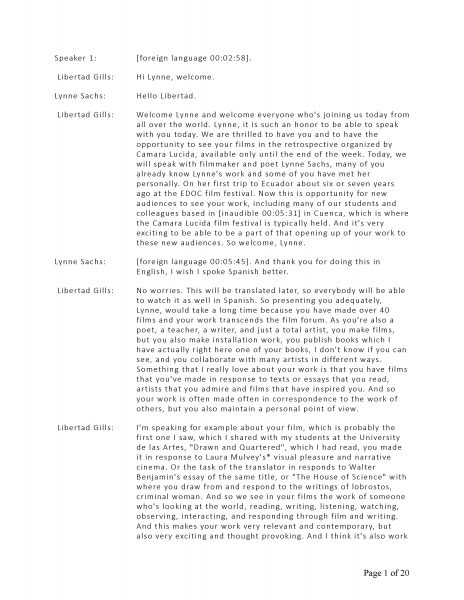
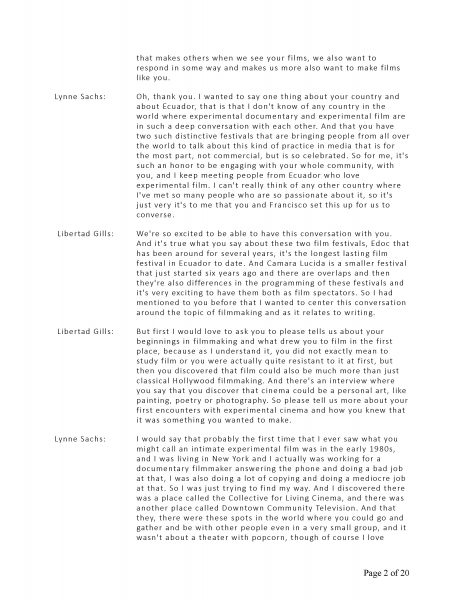
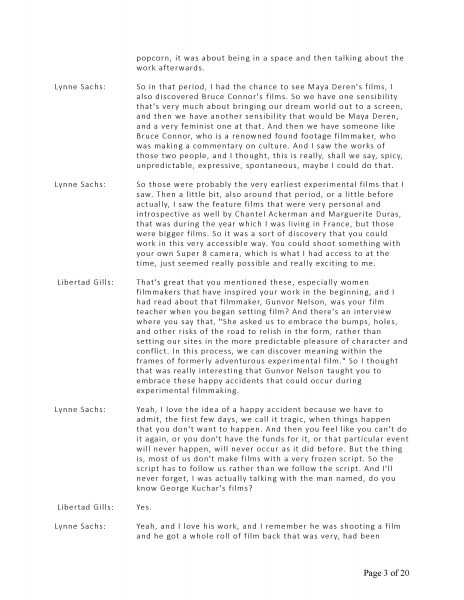
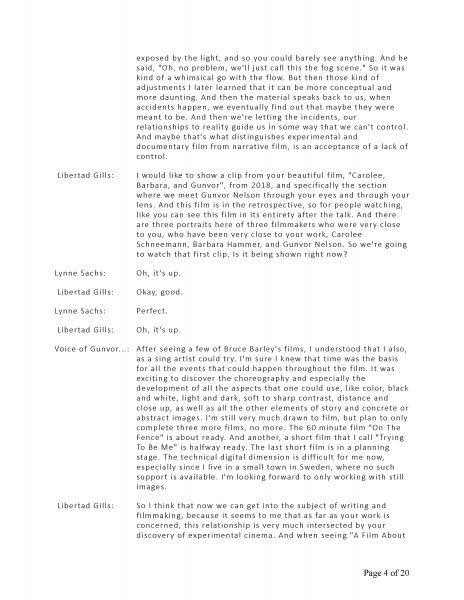
Sunday 10/24 3:30 PM 2020 Feature Documentary Award Film About a Father Who Lynne Sachs, Documentary, USA, 74 min.
Sunday 10/24 5:30 PM 2020 Feature Documentary Award Cinema Pameer Martin von Krogh, Documentary, Afghanistan, 80 min.
Sunday 10/24 5:30 PM 2020 Feature Narrative Award Holler Nicole Riegel, Narrative, USA, 87 min.
Sunday 10/24 5:30 PM 2020 Short Film Awards Animation Award: Hi,crows Zehong Zhu, Animation, UK, 4 min Narrative Award: Ship a Visual Poem Terrance Daye, Narrative, USA, 12 min Documentary Award: The Mortician of Manila Leah Borromeo, Documentary, Philippines, 25 min Experimental Award: We Were Hardly More Than Children Cecelia Condit, Experimental, USA, 9 min Music Video Award: Emotions in Metal Tommy Becker, Experimental, USA, 21 min Research Award: Amazonia Roger Beebe, Documentary, USA, 25 min Black Bear Award: Duet John Muse, Experimental, USA, 11 min Film House Award: Those That Tremble as if They Were Mad Salma Shamel, Experimental, Egypt, USA, 11 min
Sunday 10/24 7:30 PM 2021 Feature Narrative Award Toprak Sevgi Hirschhäuser, Narrative, Turkey, 105 min
Sunday 10/24 7:30 PM Programmers Prizes From the Booth Award: Eat the Rainbow Brian Benson, Narrative, USA, 20 min Programmers Prize: Execution Stavit Allweis, Experimental, USA, 48 min
Sunday 10/24 7:30 PM 2021 Short Film Awards Animation Award: Average Happiness Maja GEHRIG, Animation, Switzerand, 7 min Narrative Award: Drifting Hanxiong Bo, Narrative, China, Spain, 16 min Documentary Award: The Long Wait Shuang Li, Documentary, China, USA, 26 min Experimental Award: The Truth About Hastings, Dan S, Experimental, USA, 9 min Music Video Award: Pirate Bay Lisa Truttmann, Music Video, UK, 7 min Research Award: My Favorite Software is Being Here Alison Nguyen, Animation, USA, 20 min Film House Award: Drills Sarah Friedland, Experimental, USA, 17 min Black Bear Award: New Mexico Deathwish Diatribe Georg Koszulinski, Experimental, USA, 12 min
About
Founded in 1974, the AIFVF has been presenting the best in international film for 46 years. Known globally as a festival that supports cinema from underground and marginalized populations, the AIFVF represents the values that we share as a community. It is a champion of justice and provides a voice for underrepresented artists and viewpoints on a global level. For four decades, Athens International has embraced experimental, narrative, short-form, feature length, and documentary films from every corner of the globe, offering filmmakers a stellar platform for public exposure and an environment that values artistry above marquee names and industry relationships.
Each month, dozens of new films are added to the Criterion Channel. While the rich selection of feature-length classic and independent films obviously gets a lot of well-deserved attention, I wanted to shine a little light on some of the short films. I believe that shorts should get a lot more attention than they typically do—they are breeding grounds of experimentation and non-traditional storytelling, and often are important outlets for marginalized voices.
October’s lineup on Criterion Channel features just nine new short films under 40 minutes, five of which were experimental documentaries by director Lynne Sachs. Also added to the channel this month were narrative shorts by Mariana Saffon, Brandon Cronenberg, and Chloë Sevigny, as well as a documentary short by Arthur Dong. Since it was a lighter month, I’m only going to profile three films this time around.
While this article is exclusively focusing on short films that are on Criterion Channel, I’m also keeping track of all of the short films I watch in monthly Letterboxd lists, whether on Criterion Channel or elsewhere. I’ve listed the streaming service that I watched them on, with the films that I talk about in this article marked in the notes with two asterisks. Feel free to follow me and the lists on Letterboxd and feel free to reach out to me on Twitter if you want to discuss any of the short films. Without further ado, let’s get into the films!
Please Speak Continuously and Describe Your Experiences as They Come to You (2019, 10 minutes), dir. by Brandon Cronenberg
While it’s already the short film with the longest name of any I’ve covered in this column, it’s also one of the most unsettling. Directed by Brandon Cronenberg, son of body horror legend David Cronenberg and director of the 2020 feature film Possessor, the short portrays a woman describing the waking dreams she is experiencing as the result of a device that has been implanted into her brain. The device is typically covered by a wig because it otherwise grotesquely sticks out from the top of her head. As she describes the dreams, we see them with her through a bright, colorful filter that changes colors as different parts of her brain are stimulated.
The dreams are, of course, nightmarish and surreal. Much like a real dream, the dreams operate with a logic that is all their own. Sometimes the images and the words describing them don’t align. Non-sequiturs abound. Perhaps most importantly, there are also recurring elements, like the test subject repeatedly using the same phrases to describe what she is seeing—she says that each one is “a dream I used to have” and that “eventually I realize that I am in a kind of hell.” The recurring motifs mimic the recurring nature of the dreams (“a dream I used to have” implying, of course, that they are dreams that she has had on many occasions) and induce a similar dream-state disorientation in the viewer. The short also begins to blur “reality” with the dream state, as one of the dreams essentially describes the plot of the short.
One thing that I found surprising was some small moments of humor in the short. The moment that sticks out the most to me is in the third dream when the main character, Emily, imagines everyone having the device implanted into their brains under wigs and says that “Eventually I realize I’m in a kind of hell, because it seems impossible that the wig industry can manufacture enough units to cover everyone.” Another line that I found humorous (although I’m not positive that this one is intended to be), is when Emily describes a dream where she is “the best boxer in the world” in a world where boxing doesn’t exist. This moment is brief, however, and the scene immediately shifts to a more terrifyingly existential territory (“Eventually I realize I’m in a kind of hell, because my worth is based entirely on a nonsense idea”). The dark science fiction, surreal blurring of dream and reality, and stylized imagery made this short film my favorite of the month.
Sewing Woman (1982, 14 minutes), dir. by Arthur Dong
The last two films in the Criterion Channel column this month are documentaries that share similarly intimate and personal approaches to themes of immigration in the mid-20th century. The first is Sewing Woman, which tells the story of the filmmaker’s mother Zem Ping Dong. The understated nature of the short film is epitomized by the final line: “I’m just a sewing woman.”
Despite Dong’s protestations to not exaggerate her life, the documentary is a mini-epic. Dong’s life from child bride in an arranged marriage in rural China, giving birth while her husband was in America, to surviving the Second Sino-Japanese War, and disowning her son to emigrate to America. It is both an extraordinary story and one that is also incredibly common coming out of the strife of the mid-twentieth century.
The Last Happy Day (2009, 38 minutes), dir. by Lynne Sachs
The subject of The Last Happy Day, Sandor Lenard, is from the other side of the world from Sewing Woman. Distantly related to filmmaker Lynne Sachs, Lenard came to her attention after an uncle gave her and her brother a copy of A.A. Milne’s Winnie the Pooh that Lenard had translated into Latin.
The short intersperses readings of Sandor’s letters with interviews with his relatives, readings by Sachs’ children, and abstract images. Secretly Jewish during World War II, Lenard found work recovering bodies of Allied forces. He hid prisoners of war in his Rome apartment. He spoke over a dozen languages and spent time studying in the Vatican library. He lost a brother in the Holocaust, and never truly seemed to recover from all the horrors he experienced.
There are a few moments that stand out that point to why Sandor may have decided to translate Winnie the Pooh, the “Latin is not a dead language, believe me. If only for this moment. It is with Latin that I am best able to invent a way to speak of dread. The second moment comes from Sandor’s second wife, Andrietta. In her advanced age, Andrietta struggles to remember the order of events, and whether they even happened as she remembers them. “There are things so old that I am not sure of the truth. Sometimes, you don’t know anymore what’s real and what’s fantasy. Sandor never could forget.” The “fantasy” part of the quote is not exactly in the same context, but I couldn’t help but wonder if Sandor tried to find truth in the fantasy of Winnie the Pooh. He emigrated to Brazil to live somewhere “big and green and quiet and far away.” The refuges from reality that he found in Winnie the Pooh and Brazil seem to be what he chased the rest of his life, and what are presented so eloquently in this short film.
Closing
This is just a taste of the short films on Criterion Channel! What were some of your favorites? Was there a filmmaker whose filmography you’re excited to dive deeper into? Let me know in the comments what stuck out to you, or reach out to me on Twitter, and I’ll be back next month to look at some more Criterion Channel short films!
I will be heading to Cork International Film Festival in Ireland to present “Film About a Father Who” with 10 short films as part of their AEMI artist focus on my work. Honored to share four collaborative film poems: “Longings” made with filmmaker Moira Sweeney (who will be there with us!); “A Month of Single Frames” made with Barbara Hammer; “Girl is Presence” made with Anne Lesley Selcer; and, “Starfish Aorta Colossus” made with Paolo Javier.
Making work since the 1980s Lynne Sachs’ films have incorporated a cross-pollination of forms that extend to the essay film, documentary, collage, performance, and poetry. Deeply reflexive, Sachs’ films to date have outlined a rich interplay between the personal and the socio-political. aemi is delighted to present this overview of selected short works by Lynne Sachs at Cork International Film Festival, many of which are screening in Ireland for the first time.
In addition to this shorts programme Lynne will also be in attendance at the festival for the Irish premiere of her celebrated feature Film About a Father Who.
CAROLEE, BARBARA & GUNVOR Lynne Sachs From 2015 to 2017, Lynne visited with Carolee Schneemann, Barbara Hammer and Gunvor Nelson, three artists who embraced the moving image throughout their lives.
STILL LIFE WITH WOMEN AND FOUR OBJECTS Lynne Sachs A portrait that falls somewhere between a painting and a poem, a look at a woman’s daily routines and thoughts via an exploration of her as a ‘character’.
DRAWN AND QUARTERED Lynne Sachs Optically printed images of a man and a woman fragmented by a film frame that is divided into four distinct sections.
THE HOUSE OF SCIENCE: A MUSEUM OF FALSE FACTS Lynne Sachs A girl’s difficult coming-of-age rituals are recast into a potent web for affirmation and growth.
GIRL IS PRESENCE Lynne Sachs and Anne Lesley Selcer Against the uncertain and anxious pandemic atmosphere, inside domestic space, a ‘girl’ arranges and rearranges a collection of small and mysterious things.
LONGINGS Lynne Sachs and Moira Sweeney A collaboration exploring the resonances and ruptures between image and language.
DRIFT AND BOUGH Lynne Sachs Lynne Sachs spends a winter morning in Central Park shooting film in the snow. Holding her Super 8mm camera, she takes note of graphic explosions of dark and light and an occasional skyscraper.
STARFISH AORTA COLOSSUS Lynne Sachs Poetry watches film. Film reads poetry. Paolo Javier’s text is a catalyst for digital sculpting of an 8mm Kodachrome canvas.
MAYA AT 24 Lynne Sachs Lynne Sachs films her daughter Maya at 6, 16 and 24.
A MONTH OF SINGLE FRAMES Lynne Sachs with and for Barbara Hammer In 1998, filmmaker Barbara Hammer had an artist residency in a shack without running water or electricity. She shot film and kept a journal. In 2018 Hammer, facing her own imminent death, gave her material to Lynne and invited her to make a film.
The Irish premiere of Lynne Sachs’ celebrated feature Film About a Father Who screens here alongside the world premiere of Myrid Carten’s short film Sorrow had a baby. Both artists will be in attendance for a discussion of their work following the screening.
Both Film About a Father Who and Sorrow had a baby deal, in very different ways, with familial legacy incorporating personal archives and pushing against the traditional boundaries of documentary practice. Myrid Carten’s film Sorrow had a baby is also the first film produced through aemi’s annual film commissioning programme, supported by Arts Council of Ireland.
Myrid Carten, Sorrow had a baby,2021, Ireland, 16 minutesaemi Film Commission 2021
‘I absorbed the women in my life as I would chloroform on a cloth laid against my face.’ – Vivan Gornick
Sorrow had a baby explores the mother-daughter relationship through multiple lenses: memory, beauty, inheritance. Who writes the stories in a family? Who can change them?
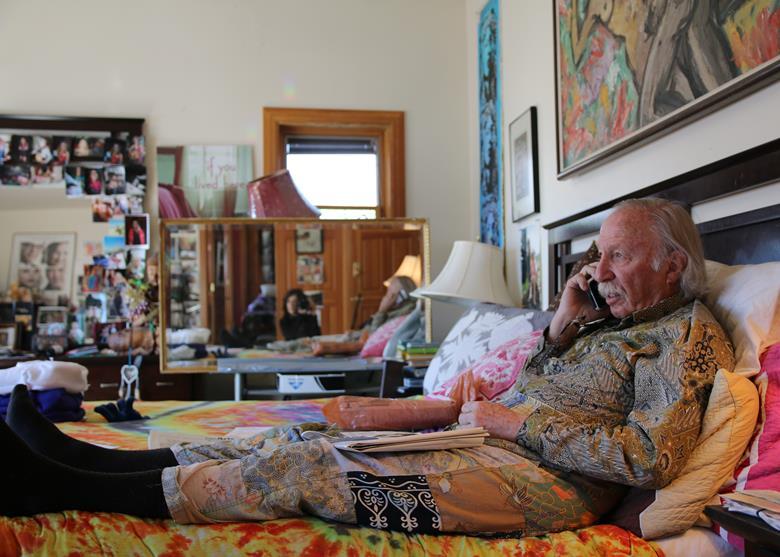
Lynne Sachs, Film About a Father Who, 2020, USA, 74 minutesOver a period of 35 years between 1984 and 2019, filmmaker Lynne Sachs shot 8 and 16mm film, videotape and digital images of her father, Ira Sachs Sr., a bon vivant and pioneering businessman from Park City, Utah. Film About a Father Who is her attempt to understand the web that connects a child to her parent and a sister to her siblings. With a nod to the Cubist renderings of a face, Sachs’ cinematic exploration of her father offers simultaneous, sometimes contradictory, views of one seemingly unknowable man who is publicly the uninhibited center of the frame yet privately ensconced in secrets. In the process, Sachs allows herself and her audience inside to see beyond the surface of the skin, the projected reality. As the startling facts mount, Sachs as a daughter discovers more about her father than she had ever hoped to reveal.
Featuring seven short films and a new introduction by the filmmaker
Over a period of thirty-five years between 1984 and 2019, filmmaker Lynne Sachs shot 8 and 16 mm film, videotape, and digital images of her father, Ira Sachs Sr., a bon vivant and pioneering businessman from Park City, Utah. Film About a Father Who is her attempt to understand the web that connects a child to her parent and a sister to her siblings. Like a cubist rendering of a face, Sachs’s cinematic exploration of her father offers multiple, sometimes contradictory, views of a seemingly unknowable man who is publicly the uninhibited center of the frame yet privately shrouded in mystery. With this meditation on fatherhood and masculinity, Sachs allows herself and her audience to see beneath the surface of the skin, beyond the projected reality. As the startling facts mount, she discovers more about her father than she had ever hoped to reveal.
This exclusive streaming premiere is accompanied by a selection of experimental short films by Sachs, many of which also reflect her probing exploration of family relationships
Which Way Is East, 1994
The Last Happy Day, 2009
Wind in Our Hair, 2010
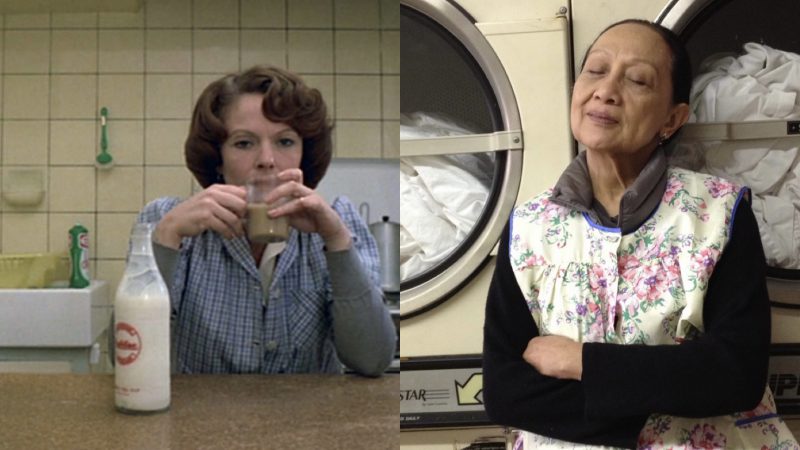
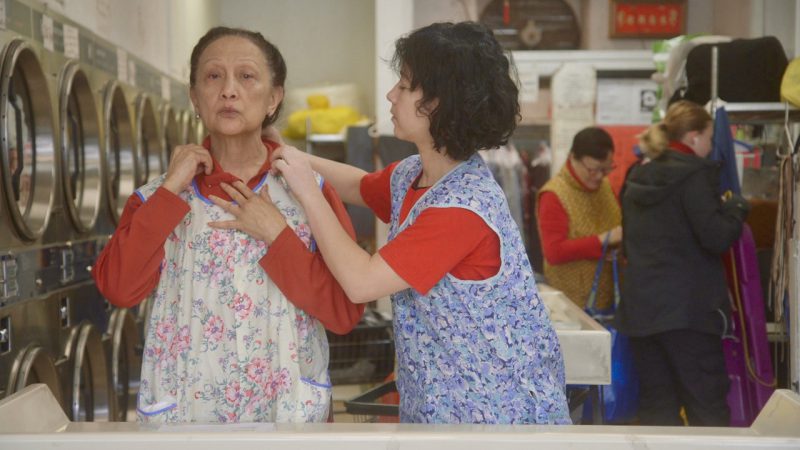
The Washing Society, 2018
Girl Is Presence, 2020
E•pis•to•lar•y: Letter to Jean Vigo, 2021
Maya at 24, 2021
Featured in the following collections: women directors, shorts collections, exclusive streaming
Selected clips from original Criterion Channel interview with Lynne Sachs by Tara Young:
Criterion Channel adds “Film About a Father Who” Director’s Commentary
Wednesday, Oct.20, 7:30PM- online Runtime: 55 mins
notes from the kingdom of the sick – Felicity Palma Self Portrait with Bag – Dianna Barrie Monsieur Jean-Claude – Guillaume Vallée Maya at 24 – Lynne Sachs Tri and Khanh – Daphne Xu 婦人 (Fujin) – Rachel Makana’aloha O Kauikeolani Nakawatase Two Sons and a River of Blood – Amber Bemak & Angelo Madsen Minax
Post-screening Q&A with Filmmakers & Sarah Bliss
Revolutions per Minute festival (RPM Fest) is dedicated to short-form poetic, personal, experimental film, video and audiovisual performance.
Since the 1980s, Lynne Sachs has created cinematic works that defy genre through the use of hybrid forms and collaboration, incorporating elements of the essay film, collage, performance, documentary and poetry. Her films explore the intricate relationship between personal observations and broader historical experiences. With each project, she investigates the implicit connection between the body, the camera, and the materiality of film itself.
After comprehensive career retrospectives at Sheffield Documentary festival in 2020 and the Museum of the Moving Image in New York this year, her latest feature ‘Film about a Father Who’ is being screened on the Criterion Channel along with seven other short films. Over a period of 35 years between 1984 and 2019, filmmaker Lynne Sachs shot 8 and 16mm film, videotape and digital images of her father, Ira Sachs Sr. a bon vivant and pioneering businessman from Park City, Utah. ‘Film About a Father Who’ is her attempt to understand the web that connects a child to her parent and a sister to her siblings.
We chat about ‘Film About a Father Who’, her approach to experimental documentary making and living and working in San Francisco in 80’s
You can stream 8 of Lynne’s films including FILM ABOUT A FATHER WHO on the Criterion Channel here.
“Everything that surrounds us becomes part of us, it seeps into us with every experience of the flesh and of life and, like the web of a great Spider, binds us subtly to what is near, ensnares us in a fragile cradle of slow death, where we lie rocking in the wind.”
People and places in San Francisco.
Lynne worked with the Vietnamese filmmaker, writer and composer Trinh T. Minh-ha
And remember that you can support Into the Mothlight on Patreon here.
About Into the Mothlight Podcast
Experimental film and installation artist Jason Moyes lives and works in rural Scotland and has been exploring the moving image since 2007. His work has been shown in the UK, North America, Europe and Asia. He is a founding member of the Moving Image Makers Collective.
From 1984 to 2019, Lynne Sachs shot 8mm, 16mm, video and digital footage of her father, a bon vivant businessman from Park City, Utah, in an effort to understand what binds a child to her father, and a sister to his siblings.
ABOUT THE PROGRAM
It’s become increasingly difficult to define “independent cinema” in the United States. With well over 1,000 films being made every year, and the continuing reduction of studio-based production, just about anyone can claim to be an “independent.” Yet with this explosion of quantity has come a loss of meaning for the term; when the concept of an “independent cinema” first began to emerge in the 1930s—applied to movements as varied as the Workers’ Film and Photo Leagues and early avant-garde cinema—it meant work that was essentially different from that being produced by the commercial cinema of Hollywood: different forms of production, different strategies of distribution and exhibition, but most importantly different aesthetic forms and politics. Little of what passes for U.S. independent cinema today looks like anything more that a lower budget version of what you can easily find on television or in the local multiplex.
Happily, the spirit of that original independent cinema does live on, most often in works that appear “under the radar” of the major media and festivals. It was to celebrate and promote this kind of work that American Fringe was created; we’re honored and delighted to have been invited back to the Cinémathèque to present a fourth edition.
The films on view represent a range of subjects and styles, but what unites all of them is their shared commitment to bringing to the screen deeply personal visions of America today.
–Richard Peña and Livia Bloom Ingram, co-curators, American Fringe
The Irish premiere of Lynne Sachs’ celebrated feature Film About a Father Who screens here alongside the world premiere of Myrid Carten’s short film Sorrow had a baby. Both artists will be in attendance for a discussion of their work following the screening.
Both Film About a Father Who and Sorrow had a baby deal, in very different ways, with familial legacy incorporating personal archives and pushing against the traditional boundaries of documentary practice. Myrid Carten’s film Sorrow had a baby is also the first film produced through aemi’s annual film commissioning programme, supported by Arts Council of Ireland.
PROGRAMME
Sorrow had a baby [WP] – Myrid Carten (aemi Film Commission 2021) Sorrow had a baby explores the mother-daughter relationship through multiple lenses: memory, beauty, inheritance. Who writes the stories in a family? Who can change them?
Film About a Father Who – Lynne Sachs Between 1984 and 2019, filmmaker Lynne Sachs shot film and video images of her father.
Authors who have made their way looking inward, achieving a work where the constant regression to aesthetic searches, thematic investigations and particular narratives, have a point at which the gaze gravitates, infects and expands.
In this edition, we are happy to share in Mirada Epicentro the work of Lynne Sachs, Bruno Varela and Ecuador de Territory, a program made up of the authors Alberto Muenala, Eriberto Gualinga and Sani Montahuano.
A Month of Single Frames 2020 – U.S.A – 14’ In 1998, filmmaker Barbara Hammer had a one-month artist residency in the C Scape Duneshack which is run by the Provincetown Community Compact in Cape Cod, Massachusetts. The shack had no running water or electricity. While there, she shot 16mm film with her Beaulieu camera, recorded sounds with her cassette recorder and kept a journal.
In 2018, Barbara began her own process of dying by revisiting her personal archive. She gave all of her Duneshack images, sounds and writing to filmmaker Lynne Sachs and invited her to make a film with the material.
Carolee, Barbara & Gunvor 2018 – U.S.A – 8’ From 2015 to 2017, Lynne visited with Carolee Schneemann, Barbara Hammer and Gunvor Nelson, three multi-faceted artists who have embraced the moving image throughout their lives. From Carolee’s 18th Century house in the woods of Upstate New York to Barbara’s West Village studio to Gunvor’s childhood village in Sweden, Lynne shoots film with each woman in the place where she finds grounding and spark.
E•pis•to•lar•y: letter to Jean Vigo 2021 – U.S.A / España – 5’ In a cinema letter to French director Jean Vigo, Lynne Sachs ponders the delicate resonances of his 1933 classic “Zero for Conduct” in which a group of school boys wages an anarchist rebellion against their authoritarian teachers. Thinking about the Jan. 6, 2021 assault on the United States Capitol by thousands of right-wing activists, Sachs wonders how innocent play or calculated protest can turn so quickly into chaos and violence.
Drawn and Quartered 1987 – U.S.A – 4’ Optically printed images of a man and a woman are fragmented by a film frame that is divided into four distinct sections. An experiment in form/content relationships that are peculiar to the medium, 1987
Film About a Father Who 2020 – U.S.A – 74’ Over a period of 35 years between 1984 and 2019, filmmaker Lynne Sachs shot 8 and 16mm film, videotape and digital images of her father, Ira Sachs Sr., a bon vivant and pioneering businessman from Park City, Utah. FILM ABOUT A FATHER WHO is her attempt to understand the web that connects a child to her parent and a sister to her siblings. With a nod to the Cubist renderings of a face, Sachs’ cinematic exploration of her father offers simultaneous, sometimes contradictory, views of one seemingly unknowable man who is publicly the uninhibited center of the frame yet privately ensconced in secrets. In the process, Sachs allows herself and her audience inside to see beyond the surface of the skin, the projected reality. As the startling facts mount, Sachs as a daughter discovers more about her father than she had ever hoped to reveal.
Following the Object to its Logical Beginning 1987 – U.S.A – 9’ Like an animal in one of Eadweard Muybridge’s scientific photo experiments, five undramatic moments in a man’s life are observed by a woman. A study in visual obsession and a twist on the notion of the “gaze”.
Maya at 24 2021 – U.S.A – 4’ Lynne Sachs films her daughter Maya in 16mm black and white film, at ages 6, 16 and 24. At each iteration, Maya runs around her mother, in a circle – clockwise – as if propelling herself in the same direction as time, forward. Conscious of the strange simultaneous temporal landscape that only film can convey, we watch Maya in motion at each distinct age.
Photograph on Wind 2001 – U.S.A – 4’ My daughter’s name is Maya. I’ve been told that the word maya means illusion in Hindu philosophy. As I watch her growing up, spinning like a top around me, I realize that her childhood is not something I can grasp but rather – like the wind – something I feel tenderly brushing across my cheek.
Same Stream Twice 2012 – U.S.A – 4’ In 2001, I photographed her at six years old, spinning like a top around me. Even then, I realized that her childhood was not something I could grasp but rather – like the wind – something I could feel tenderly brushing across my cheek.
Still Life with Woman and Four Objects 1986 – U.S.A – 4’ A film portrait that falls somewhere between a painting and a prose poem, a look at a woman’s daily routines and thoughts via an exploration of her as a “character”. By interweaving threads of history and fiction, the film is also a tribute to a real woman – Emma Goldman, 1986 .
The house of science: a museum of false facts 1991 – U.S.A – 30’ Offering a new feminized film form, this piece explores both art and science’s representation of women, combining home movies, personal remembrances, staged scenes and found footage into an intricate visual and aural college. A girl’s sometimes difficult coming of age rituals are recast into a potent web for affirmation and growth.
Viva and Felix Growing Up 2015 – U.S.A – 10’ Capturing fragments of the first three years of her twin niece’s and nephew’s lives with their two dads (her brother Ira Sachs and his husband Boris Torres) and their mom (Kirsten Johnson), Sachs affectionately surveys the construction of family.
Which way is east Lynne Sachs / Dana Sachs 1994 – U.S.A – 33’ When two American sisters travel north from Ho Chi Minh City to Hanoi, conversations with Vietnamese strangers and friends reveal to them the flip side of a shared history. Lynne and Dana Sachs’ travel diary of their trip to Vietnam is a collection of tourism, city life, culture clash, and historic inquiry that’s put together with the warmth of a quilt. “Which Way Is East” starts as a road trip and flowers into a political discourse. It combines Vietnamese parables, history and memories of the people the sisters met, as well as their own childhood memories of the war on TV. To Americans for whom “Vietnam” ended in 1975, “Which Way Is East” is a reminder that Vietnam is a country, not a war. The film has a combination of qualities: compassion, acute observational skills, an understanding of history’s scope, and a critical ability to discern what’s missing from the textbooks and TV news. (from The Independent Film and Video Monthly, Susan Gerhard)
Program in Spanish
Mirada Epicentro
Autoras y autores que han labrado su camino mirando hacia dentro, logrando una obra donde la regresión constante a búsquedas estéticas, investigaciones temáticas y narrativas particulares, disponen un punto en el cual la mirada gravita, se contagia y se expande.
En esta edición, nos alegramos compartir en Mirada Epicentro la obra de Lynne Sachs, Bruno Varela y Ecuador de territorio, un programa conformado por los autores Alberto Muenala, Eriberto Gualinga y Sani Montahuano.
A Month of Single Frames 2020 – U.S.A – 14’ En 1998, la cineasta Barbara Hammer tuvo una residencia artística de un mes en Cape Cod, Massachusetts. La choza no tenía agua corriente ni electricidad. Mientras estuvo allí, filmó una película de 16 mm, grabó sonidos y llevó un diario. En 2018, Barbara comenzó su propio proceso de muerte revisando su archivo personal. Ella le dio todas sus imágenes, sonidos y escritura de la residencia a la cineasta Lynne Sachs y la invitó a hacer una película.
Carolee, Barbara & Gunvor 2018 – U.S.A – 8’ De 2015 a 2017, Lynne visitó a Carolee Schneemann, Barbara Hammer y Gunvor Nelson, tres artistas multifacéticos que han abrazado la imagen en movimiento a lo largo de sus vidas. Desde la casa del siglo XVIII de Carolee en los bosques del norte del estado de Nueva York hasta el estudio de Barbara en West Village y el pueblo de la infancia de Gunvor en Suecia, Lynne graba una película con cada mujer en el lugar donde encuentra la base y la chispa.
E•pis•to•lar•y: letter to Jean Vigo 2021 – U.S.A / España – 5’ En una epistolar fílmica dirigida al director francés Jean Vigo, Lynne Sachs reflexiona sobre su clásico de 1933 “Zero for Conduct”, en el que los escolares libran una rebelión anarquista contra sus maestros autoritarios. Al pensar en el asalto del 6 de enero de 2021 al Capitolio de los EE. UU. Por parte de activistas de derecha, Sachs se pregunta cómo un juego inocente o una protesta calculada pueden convertirse tan rápidamente en caos y violencia.
Drawn and Quartered 1987 – U.S.A – 4’ Imágenes impresas ópticamente de un hombre y una mujer fragmentadas por un fotograma de película que se divide en cuatro secciones distintas. Un experimento en las relaciones forma / contenido que son peculiares del medio, 1987.
Film About a Father Who 2020 – U.S.A – 74’ Desde 1984 al 2019, Lynne Sachs filmó a su padre, un animado e innovador hombre de negocios. Este documental es el intento de la cineasta por entender las redes que conectan a una niña con su padre y a una mujer con sus hermanos. Con un guiño a las representaciones cubistas de un rostro, la exploración de Sachas ofrece visiones simultáneas y a veces contradictorias de un hombre aparentemente incognocible que públicamente se ubica de forma desinhibida en el centro del encueadre, pero en lo privado se refugia en secretos.
Following the Object to its Logical Beginning 1987 – U.S.A – 9’ Como un animal en uno de los experimentos fotográficos científicos de Eadweard Muybridge, una mujer observa cinco momentos poco dramáticos en la vida de un hombre. Un estudio sobre la obsesión visual y un giro en la noción de “mirada”.
Maya at 24 2021 – U.S.A – 4’ Conscientes del extraño paisaje temporal simultáneo que solo el cine puede transmitir, vemos a Maya en movimiento en cada época distinta.
Photograph on Wind 2001 – U.S.A – 4’ El nombre de mi hija es Maya. Me han dicho que la palabra maya significa ilusión en la filosofía hindú. Mientras la veo crecer, girando como una peonza a mi alrededor, me doy cuenta de que su infancia no es algo que pueda comprender, sino más bien, como el viento, algo que siento acariciar con ternura mi mejilla.
Same Stream Twice 2012 – U.S.A – 4’ En 2001, la fotografié a los seis años, girando como una peonza a mi alrededor. Incluso entonces, me di cuenta de que su infancia no era algo que pudiera comprender, sino más bien, como el viento, algo que podía sentir con ternura rozando mi mejilla.
Still Life with Woman and Four Objects 1986 – U.S.A – 4’ Un retrato cinematográfico que se sitúa entre una pintura y un poema en prosa, una mirada a las rutinas y pensamientos diarios de una mujer a través de una exploración de ella como un “personaje”. Al entrelazar hilos de historia y ficción, la película también es un homenaje a una mujer real: Emma Goldman, 1986.
The house of science: a museum of false facts 1991 – U.S.A – 30’ Ofreciendo una nueva forma de película feminizada, esta pieza explora la representación de las mujeres tanto en el arte como en la ciencia, combinando películas caseras, recuerdos personales, escenas escénicas y metraje encontrado en una intrincada universidad visual y auditiva. Los rituales de mayoría de edad a veces difíciles de una niña se reconvierten en una potente red de afirmación y crecimiento.
Viva and Felix Growing Up 2015 – U.S.A – 10’ Durante los primeros tres años de la vida de mi sobrino y mi sobrina gemela, usé mi cámara Bolex de 16 mm para filmarlos mientras crecían en la ciudad de Nueva York con sus dos papás (mi hermano Ira Sachs y su esposo Boris Torres) y su mamá (Kirsten Johnson). . La película termina con un abrazo por el Día del Orgullo Gay.
Which way is east Lynne Sachs / Dana Sachs 1994 – U.S.A – 33’ Cuando dos hermanas estadounidenses viajan al norte desde la ciudad de Ho Chi Minh a Hanoi, las conversaciones con desconocidos y amigos vietnamitas les revelan la otra cara de una historia compartida.