Category Archives: SECTIONS

Lynne Sachs Retrospective in San Francisco and Berkeley April 10-14, 2010

handcuffs

States of Belonging: A Lynne Sachs Retrospective

Working since the mid-1980s, variously on lyrical formal shorts and long form experimental documentary, Lynne Sachs’ body of film and video work has explored the relationships between individual memory and experience in the context of large historical forces. Foregrounding personal history and autobiography, Sachs exalts the intimate gesture as perhaps the most heroic of poetic and political acts. With a keen grasp on cultural theory and media history, Sachs’s films avoid academicism in their celebration of life and mindful political engagement, presenting complex pictures of the world with lyrical grace and even joy.

Lynne Sachs: States of Belonging is a four-part retrospective of the filmmaker’s work, presented as a collaboration between San Francisco Cinematheque, Pacific Film Archive, ATA’s Other Cinema and Oddball Film + Video. The series in accompanied by a limited-edition monograph—available at screenings—featuring original writings by Susan Gerhardt, Kathy Geritz, Lucas Hilderbrand and Bill Nichols.

States of Belonging, program one
Saturday, April 10 at 8:30 pm
Other Cinema at Artist Television Access
992 Valencia St., San Francisco

http://www.othercinema.com/calendar/index.html

“GIRL TALK”
Curated by Craig Baldwin

Inspired by the stories of Argentine writer Julio Cortazar, yet blended with the realities of contemporary Latin America, here’s the world debut of Wind in Our Hair, Lynne Sachs’ experimental narrative about four girls discovering themselves through a fascination with the trains that pass by their house. A story of early-teen anticipation and disappointment, the 42-min. lyric is circumscribed by a period of profound Argentine sociopolitical unrest. Shot with 16mm, Super 8mm, and Regular 8mm film and video, the rites of passage proceed from train tracks to sidewalks, into costume stores, kitchens, and into backyards in the heart of today’s Buenos Aires. PLUS: In her House of Science: a museum of false facts, Sachs suggests that the mind/body split so characteristic of Western thought is particularly troubling for women, who may feel themselves moving between the territories of the film’s title—private, public, and idealized space—without wholly inhabiting any of them. The film explores society’s conceptions of woman through home movies, personal reminiscences, staged scenes, found-footage and voice-over. ALSO Lynne’s Atalanta: 32 Years Later; Noa, Noa; and Photograph of Wind.
Wind in Our Hair (Con viento en el pelo) (2010); Atalanta: 32 Years Later (2006); Noa, Noa (2006, with Noa Street-Sachs); Photograph of Wind (2001); The House of Science: a museum of false facts (1991)

States of Belonging, program two
Sunday, April 11 at  8:00pm
Oddball Films
275 Capp St.  San Francisco

http://www.oddballfilm.com/

“10 Short Films by Lynne Sachs (1986 -2010)”
Curated by Stephen Parr

Lynne Sachs short works reverberate with the distilled quality of  poetic moments. From her early work in 16mm film in the 1980s through her later works utilizing the immediacy of videotape, the texture of 8mm film and expanded pallet of digital editing techniques, Sachs’ works celebrate the ordinary and the profound, mapping and defining unmined territories of the human psyche.  Elegantly fusing her varied influences of  literature, painting  and collage into a inviting yet deep and personal space these shorts bristle with the feeling of newly discovered modes of perception and expressions of movement in time. (Stephen Parr)

Still Life With Woman and Four Objects (1986); Drawn and Quartered (1986) Following the Object to Its Logical Beginning (1987); Window Work ( 2001); The Small Ones (. 2006); Atalanta (2006); Georgic for a Forgotten Planet (2008); Cuadro por Cuardo en Montevideo (with Mark Street, 2009); XY Chromosome Project (2006-2009); Task of the Translator (2010)

States of Belonging, program three
Tuesday, April 13 at 7:30 pm
Pacific Film Archive
2575 Bancroft Way
Between College and Telegraph, Berkeley

“Dotted Lines: Women Filmmakers Connect the Past and the Present”
Curated by Kathy Geritz

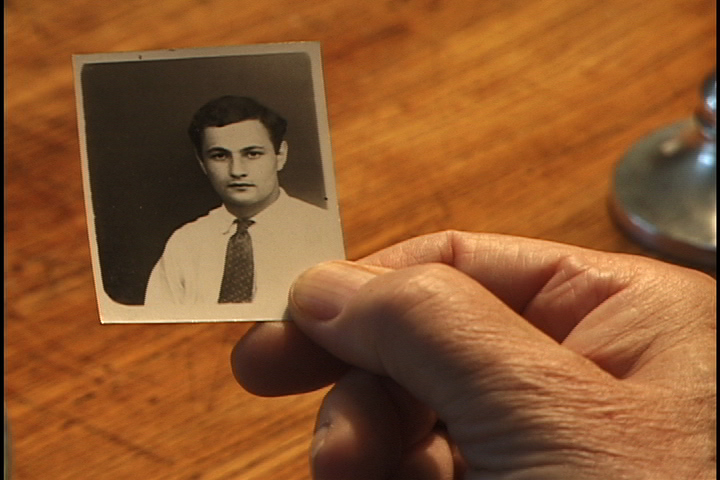
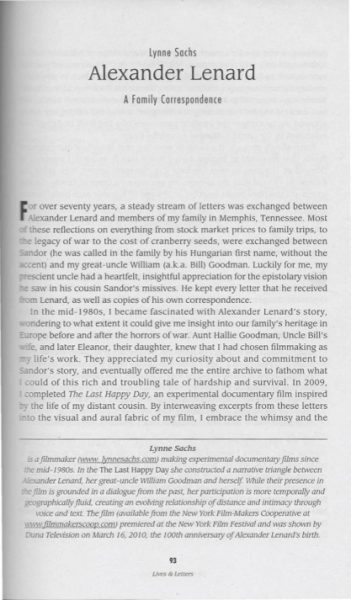
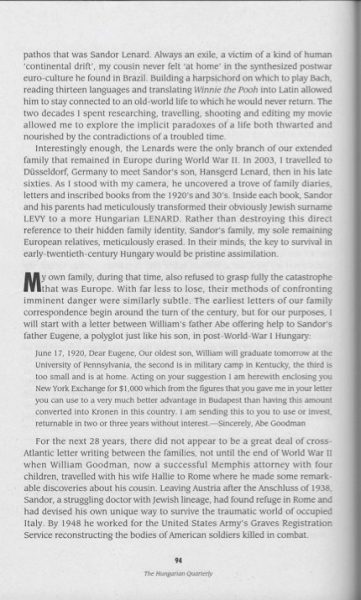
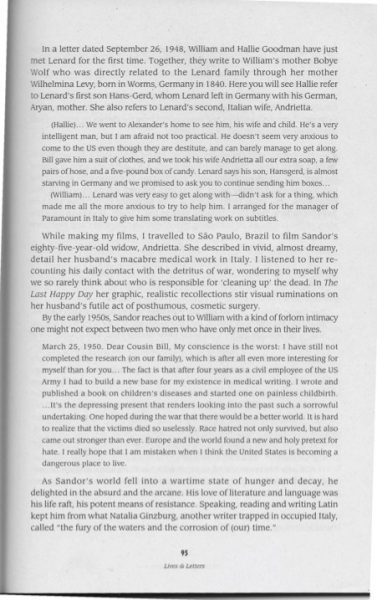
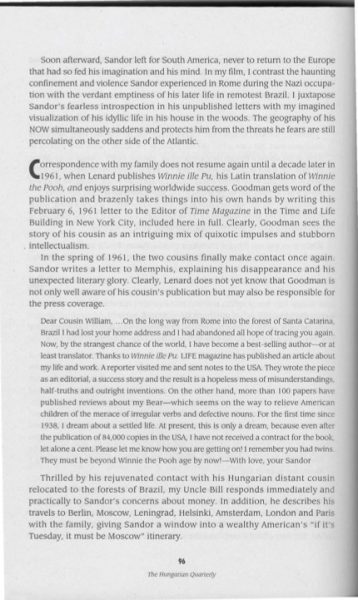
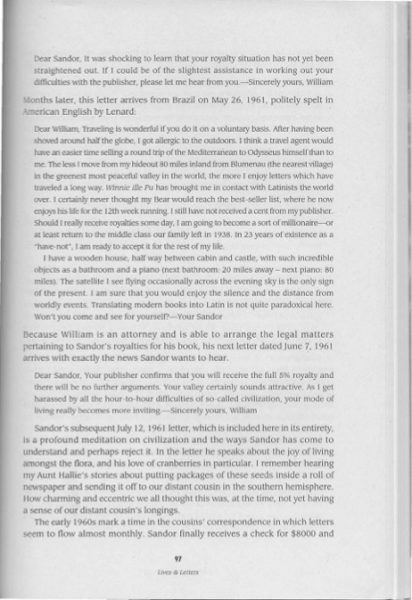
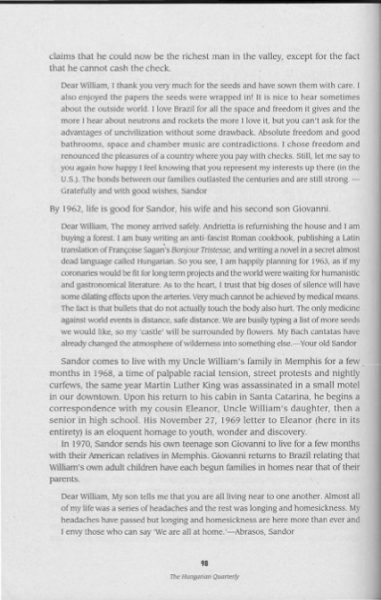
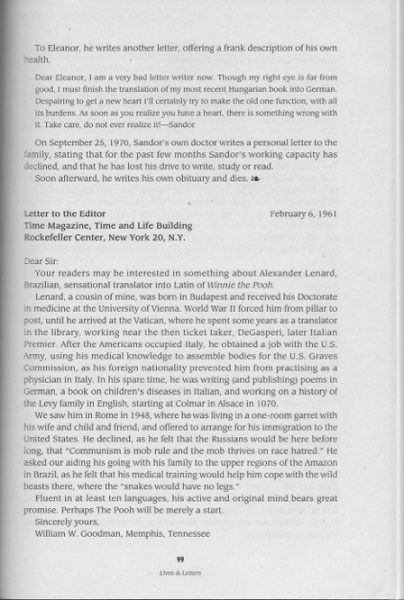
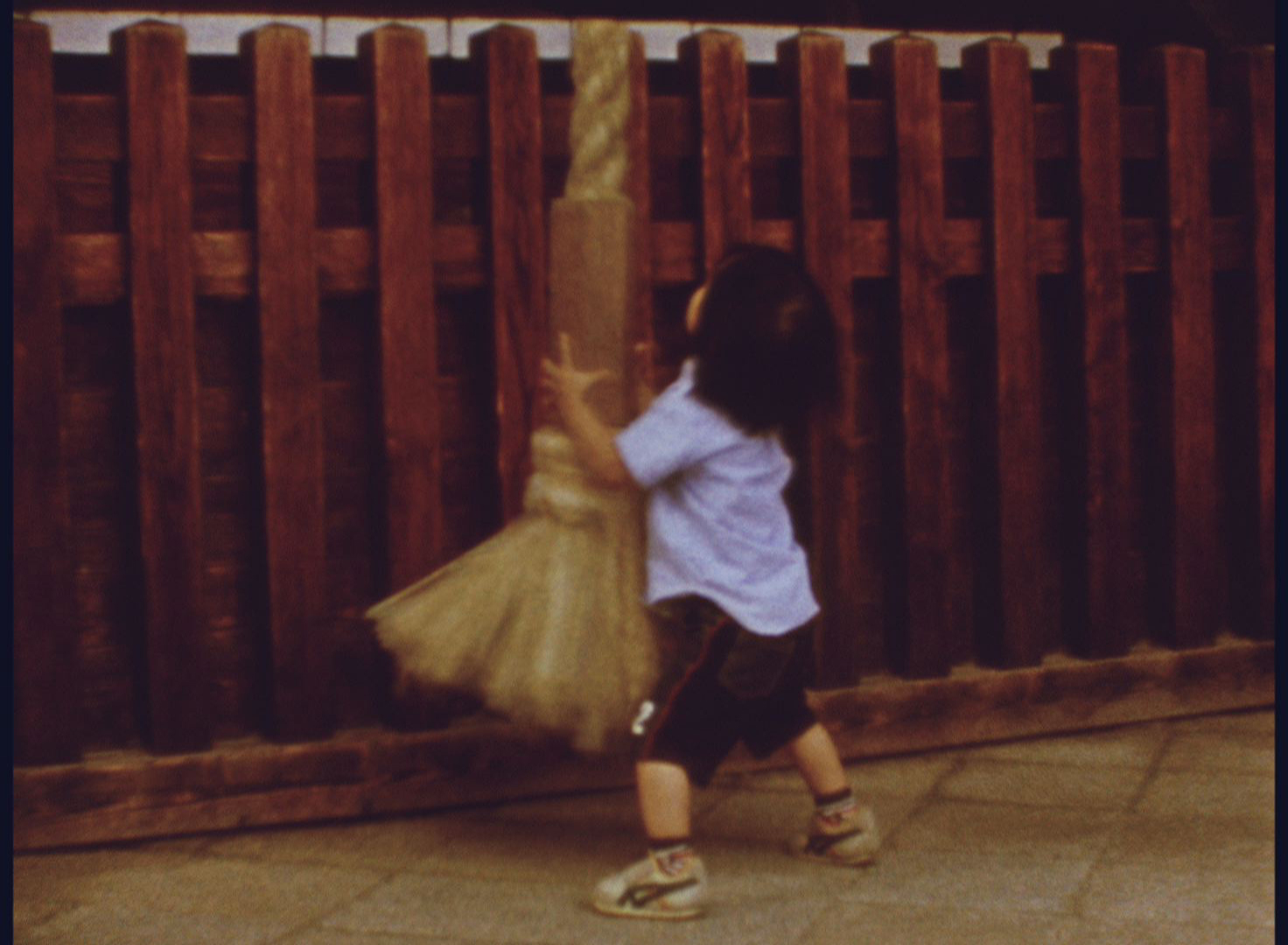
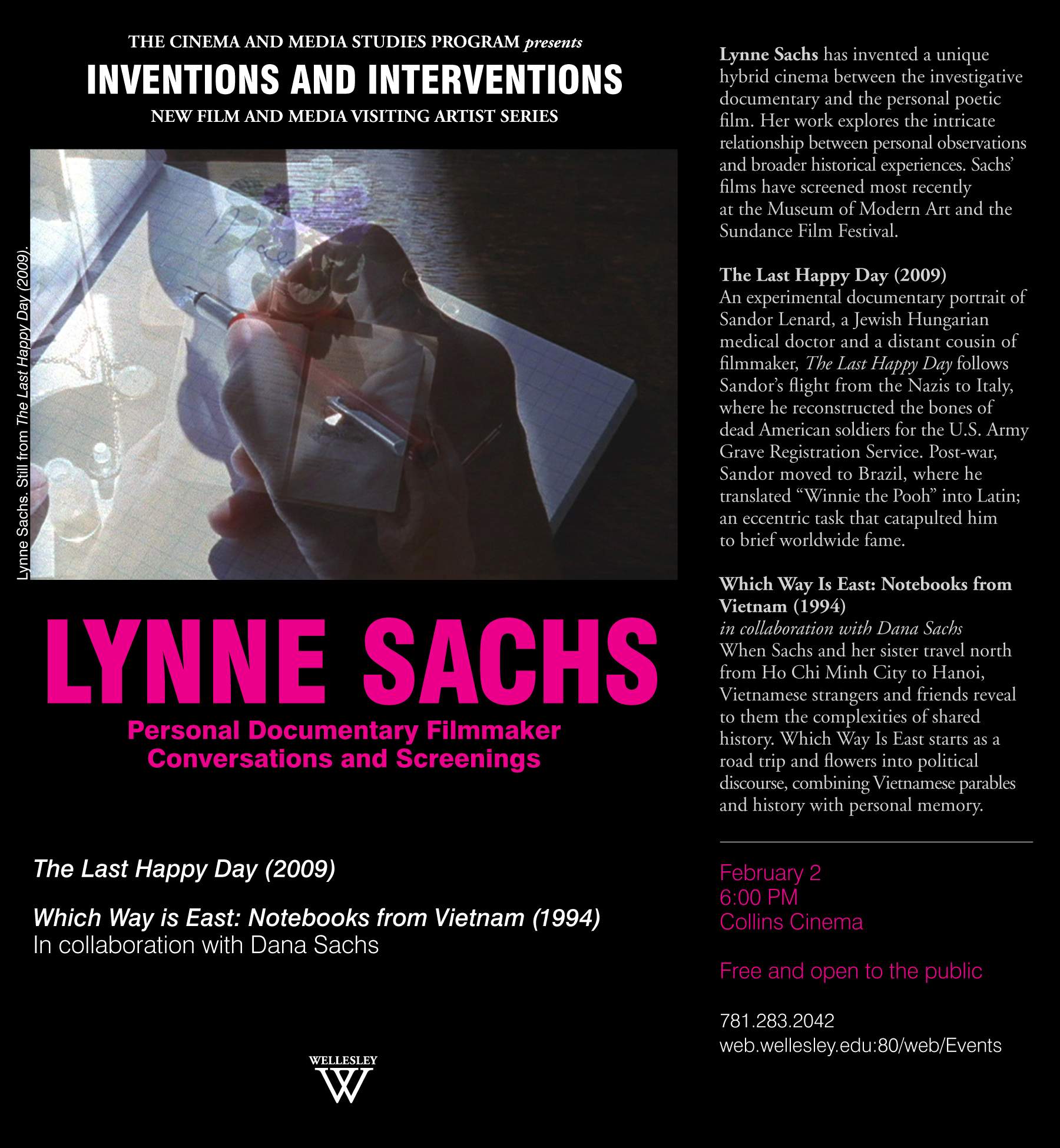
Lynne Sachs has been making films for twenty-five years, shifting between short, lyrical works and longer experimental documentaries, all distinguished by her beautiful camerawork and poetic associations. Her most recent film, The Last Happy Day, is a portrait of a distant cousin, Sandor Lenard, whose life was shaped by war and marked by his unusual pursuits. A Jewish doctor living in Hungary, he fled the Nazis in 1938, relocating to Italy. After he later moved to Brazil, he translated Winnie the Pooh into Latin. His story is revealed through letters and interviews, punctuated by scenes from Winnie the Pooh acted out by Sachs’s children and their friends. Which Way Is East, made fifteen years earlier, chronicles Sachs’s trip to Vietnam to visit her sister Dana; the pair traveled together from Ho Chi Minh City to Hanoi. Impressionistic yet keenly observed, the film reveals details of life during and after the Vietnam War, interspersed with Vietnamese proverbs and voice-over remarks by both Lynne and Dana as well as Vietnamese friends. Both films are part of a larger series, I Am Not a War Photographer, and along with the short cine-poem Tornado, they provide unique perspectives on the personal impact of war.(Kathy Gertiz)

Which Way is East (1994);  The Last Happy Day (2009);  Tornado (2001)

States of Belonging, program four
Wednesday, April 14 at 7:30 pm
SF Cinematheque at California College of the Arts
1111 Eighth Street (near 16th), San Francisco

The Last Happy Day  and Investigations of a Flame
Curated by Steve Polta

A frequent theme in Sachs’ work is the aftermath of war and its lingering effects on multi-generational families. Investigation of a Flame is a work of poetic investigative journalism which explores a 1968 Vietnam War protest in suburban Baltimore. Blending archival footage of the event, period reportage and contemporary interviews with participants Daniel and Philip Berrigan, the film examines the resonances of the act over the succeeding decades. A more personal work, 2009’s The Last Happy Day portrays a distant cousin of Sachs, Sandor Lenard. A Jewish writer and doctor, Lenard fled the Nazis and, post-war, worked with the US Army to identify human remains. Later, while living in self-imposed exile in the Brazilian jungle, Lenard achieved brief fame for translating Winnie the Pooh into Latin. Incorporating excerpts from Lenard’s later letters to his estranged family, and on-screen performances by her own children, the film stands as a moving tribute to quiet heroism. Also screening: Sachs’ 2007 “collaborative update” of Chris Marker’s 1972 short Three Cheers for the Whale. (Steve Polta)

The Last Happy Day (16mm  on video, 38 min. 2009); Investigation of a Flame (45 min. color and B&W, 2001); Three Cheers for the Whale
by Chris Mark in collaboration with Lynne Sachs (17 minutes / color, english version, 2007)

New Films by Lynne Sachs Reviewed in Chicago Reader

Chicago Reader
The Films of Lynne Sachs
Review by Andrea Gronvall
March 12, 2010
Family, history, and oblivion pervade these two short works. With the experimental documentary Last Happy Day (2009, 39 min.) Sachs reconstructs the life of a distant relative, Hungarian doctor Sandor Lenard, who escaped the Holocaust, settled in Brazil, and, among other things, translated Winnie the Pooh into Latin. Sachs’s daughters and their friends read from this text and and recite bits of Lenard’s biography, providing a piquant tonal contrast to the archival footage and the interviews with his son and his second wife. A visit to Buenos Aires and short stories by Julio Cortazar inspired the dreamy narrative Wind in Our Hair (2009, 42 min.), which deals with sisterhood, children’s games, passing trains, and brief encounters.

Otherzine Review of Experiments in Documentary Issue of Millennium Film Journal #51

othercinema logo

Looking Glass

by Gerry Fialka

19 Feb 2010

[Reviewed: ‘Millennium Film Journal’ #51]

How do you make art that is not art? Duchamp did it with readymade meta-cognitive creations. He helped spawn motionless dance, invisible art, silent music (John Cage’s 4’33”), the unreadable book (James Joyce’s Finnegans Wake) and George Manupelli’s unwatchable Film For Hooded Projector. And why make art that’s not art? That’s a good question. I wouldn’t want to ruin it with an answer. But learning how to cope with the hidden effects of what we invent may help. Duchamp sparked awareness of the sense-ratio-shift caused by inventions. He morphed the visual experience into the conceptual experience. Marshall McLuhan probed that “why” with his “media fast” proposition. It grew out of Ezra Pound’s “artists are the antennae of the race, broadcasting the hidden environments of inventions so we can cope with them.”

How do you make a doc that’s not a doc? How do you make an experimental film that is not one? How and why do moving image experimenters and documentarians combine their genres? Howard Guttenplan’s Millennium Film Journal (Spring/Summer 2009, #51) deeply penetrates these questions and creative cross-fertilizations. Guest editors, Lucas Hilderbrand and Lynne Sachs have gathered innovators to fill 100 pages of insights. Jill Godmilow’s advice to abandon “truth claims, intimacy and satisfying forms” recalls genre-bending pioneer Luis Bunuel’s “I have always been on the side of those who seek the truth, but I part ways with them when they think they have found it.” Reading MFJ raises new questions. Richard Fung queries, “What kind of truths can be communicated better in documentary than in fiction – and vice versa?” This echoes Faulkner’s “Sometimes the best fiction is more true than journalism.” The essays provoke us to examine the motives and consequences of these media practitioners.

Here are my favorites:

1) Ernie Larsen and Sherry Millner “unmask” the genre with essential observations on Bunuel’s Las Hurdes, which “will always stick in the craw of the powers that be.” How do you make an experimental doc that’s not an experimental doc? Luis did. His “thank God I’m an atheist” embraces contradiction. Larsen and Millner’s astute word choice “radical in-betweeness” mirrors McLuhan’s axiom “the gap is where the action is.”

2) Deborah Stratman astonishes with keen intelligence. She out-quotes me with Straub, Godard, Bunuel and Trinh Min-Ha. But it’s the Kafka axiom that ice-picks our foreheads with “what are we reading for?” She asks the reader to send her recommendations of new ways to see and think about the world. Stratman is not afraid to use all caps in a “LAWLESS PROPOSITION.”

3) Mark Street’s grassroots essay is a needed relief from the wild sea of polemic discourse. His simple story of a parents’ party for school kids communicates warmly the concerns of intention in the creative process. The Balinese have no word for art, they do everything as well as they can. Street lays it on the line with “it’s hard to communicate…I often find myself tongue-tied.” (Artists often aspire to make that which words can’t describe.) The honesty blossoms from unknowing into epiphany, much like Hilderbrand’s brilliant introduction entitled “Contradiction, Uncertainty, Change.” “The aesthetic of ambiguity” recharges Robert Dobbs’ “Ambiguity is a sign of human maturity.”

4) Hilderbrand and Sachs provide a chance to ponder the many connections between reality and experiments in documentaries. I recently interviewed Jay Rosenblatt, who said Chris Marker was an important influence because of “how he imagined Marker made Sans Soleil.” Rosenblatt could read and study all about Marker’s background, process and intentions till the cows come home. But in the long run, it’s how the perception resonates that’s vital.

What does it become when pressed to an extreme? That’s the fourth question of McLuhan’s Tetrad – the reversal. Kierkegaard wrote “Life can only be understood backwards, but we must live it forward,” which reverberates with Lynne Sachs’ remembrance “When I was six years old, I would lie on the living room couch, hang my head over the edge, let my hair swing against the floor and watch the evening news upside-down.”

5) Liza Johnson articulates the potential in her “small gesture of making the film (South of Ten)” with the statement “nothing is inevitable.” Johnson’s use of the word “inevitable” reminded me that MFJ’s inspired exploration of moving image art is, indeed, in the printed word medium, instead of being a film. This flips Hollis Frampton, who once said that one should lecture on film in the dark.

The word “inevitable” was also used by Marshall McLuhan, who probed form and content issues. He wrote “It’s inevitable that the world-pool of electronic information movement will toss us about like corks on a stormy sea, but if we keep our cool during the descent into the maelstrom, studying the process as it happens to us and what we can do about it, we can get through.” Millennium Film Journal #51 provides that inevitable looking glass.

What does the experimental documentary flip into when pushed to an extreme? How do we develop the skills to analyze this question? Can we master the ever-changing language of experimental documentaries so we can assimilate them into our total culture heritage? Since 1995, I have curated such films in my Documental series via Chris Marker’s words: “in the fashion of a musical composition, with recurrent themes, counterpoints, and mirrorlike fugues. Out of the these juxtaposed memories is born a fictional memory.” Or it’s like Guy Maddin says: “manufactured memory.” By hybridizing two genres, filmmakers have accumulated images that “can have conversation among themselves – or better yet, a musical conversation that sings to us about the differences between past and present, witness and participant.” – Jonathan Rosenbaum.

THE END

by Gerry Fialka

19 Feb 2010

[Reviewed: ‘Millennium Film Journal’ #51]

How do you make art that is not art? Duchamp did it with readymade meta-cognitive creations. He helped spawn motionless dance, invisible art, silent music (John Cage’s 4’33”), the unreadable book (James Joyce’s Finnegans Wake) and George Manupelli’s unwatchable Film For Hooded Projector. And why make art that’s not art? That’s a good question. I wouldn’t want to ruin it with an answer. But learning how to cope with the hidden effects of what we invent may help. Duchamp sparked awareness of the sense-ratio-shift caused by inventions. He morphed the visual experience into the conceptual experience. Marshall McLuhan probed that “why” with his “media fast” proposition. It grew out of Ezra Pound’s “artists are the antennae of the race, broadcasting the hidden environments of inventions so we can cope with them.”

How do you make a doc that’s not a doc? How do you make an experimental film that is not one? How and why do moving image experimenters and documentarians combine their genres? Howard Guttenplan’s Millennium Film Journal (Spring/Summer 2009, #51) deeply penetrates these questions and creative cross-fertilizations. Guest editors, Lucas Hilderbrand and Lynne Sachs have gathered innovators to fill 100 pages of insights. Jill Godmilow’s advice to abandon “truth claims, intimacy and satisfying forms” recalls genre-bending pioneer Luis Bunuel’s “I have always been on the side of those who seek the truth, but I part ways with them when they think they have found it.” Reading MFJ raises new questions. Richard Fung queries, “What kind of truths can be communicated better in documentary than in fiction – and vice versa?” This echoes Faulkner’s “Sometimes the best fiction is more true than journalism.” The essays provoke us to examine the motives and consequences of these media practitioners.

Here are my favorites:

1) Ernie Larsen and Sherry Millner “unmask” the genre with essential observations on Bunuel’s Las Hurdes, which “will always stick in the craw of the powers that be.” How do you make an experimental doc that’s not an experimental doc? Luis did. His “thank God I’m an atheist” embraces contradiction. Larsen and Millner’s astute word choice “radical in-betweeness” mirrors McLuhan’s axiom “the gap is where the action is.”

2) Deborah Stratman astonishes with keen intelligence. She out-quotes me with Straub, Godard, Bunuel and Trinh Min-Ha. But it’s the Kafka axiom that ice-picks our foreheads with “what are we reading for?” She asks the reader to send her recommendations of new ways to see and think about the world. Stratman is not afraid to use all caps in a “LAWLESS PROPOSITION.”

3) Mark Street’s grassroots essay is a needed relief from the wild sea of polemic discourse. His simple story of a parents’ party for school kids communicates warmly the concerns of intention in the creative process. The Balinese have no word for art, they do everything as well as they can. Street lays it on the line with “it’s hard to communicate…I often find myself tongue-tied.” (Artists often aspire to make that which words can’t describe.) The honesty blossoms from unknowing into epiphany, much like Hilderbrand’s brilliant introduction entitled “Contradiction, Uncertainty, Change.” “The aesthetic of ambiguity” recharges Robert Dobbs’ “Ambiguity is a sign of human maturity.”

4) Hilderbrand and Sachs provide a chance to ponder the many connections between reality and experiments in documentaries. I recently interviewed Jay Rosenblatt, who said Chris Marker was an important influence because of “how he imagined Marker made Sans Soleil.” Rosenblatt could read and study all about Marker’s background, process and intentions till the cows come home. But in the long run, it’s how the perception resonates that’s vital.

What does it become when pressed to an extreme? That’s the fourth question of McLuhan’s Tetrad – the reversal. Kierkegaard wrote “Life can only be understood backwards, but we must live it forward,” which reverberates with Lynne Sachs’ remembrance “When I was six years old, I would lie on the living room couch, hang my head over the edge, let my hair swing against the floor and watch the evening news upside-down.”

5) Liza Johnson articulates the potential in her “small gesture of making the film (South of Ten)” with the statement “nothing is inevitable.” Johnson’s use of the word “inevitable” reminded me that MFJ’s inspired exploration of moving image art is, indeed, in the printed word medium, instead of being a film. This flips Hollis Frampton, who once said that one should lecture on film in the dark.

The word “inevitable” was also used by Marshall McLuhan, who probed form and content issues. He wrote “It’s inevitable that the world-pool of electronic information movement will toss us about like corks on a stormy sea, but if we keep our cool during the descent into the maelstrom, studying the process as it happens to us and what we can do about it, we can get through.” Millennium Film Journal #51 provides that inevitable looking glass.

What does the experimental documentary flip into when pushed to an extreme? How do we develop the skills to analyze this question? Can we master the ever-changing language of experimental documentaries so we can assimilate them into our total culture heritage? Since 1995, I have curated such films in my Documental series via Chris Marker’s words: “in the fashion of a musical composition, with recurrent themes, counterpoints, and mirrorlike fugues. Out of the these juxtaposed memories is born a fictional memory.” Or it’s like Guy Maddin says: “manufactured memory.” By hybridizing two genres, filmmakers have accumulated images that “can have conversation among themselves – or better yet, a musical conversation that sings to us about the differences between past and present, witness and participant.” – Jonathan Rosenbaum.

THE END

http://www.othercinema.com/otherzine/?issueid=23&article_id=99

Lynne Sachs at Chicago Filmmakers

Chicago Filmmakers logo

http://www.chicagofilmmakers.org

Chicago Filmmakers
Friday, March 12th, 2010 – 8:00 PM
5243 N. Clark St., 2nd Floor

NEW FILMS BY LYNNE SACHS
TALES FROM SOUTH AMERICA

Filmmaker In Person! Jewish-Hungarian doctor Sandor Lenard fled Budapest shortly before World War II for the safe distance of Brazil. He abandoned his medical practice and took up translating “Winnie the Pooh” in Latin, which soon became an international bestseller. Filmmaker Lynne Sachs discovered him only recently through letters to an uncle, and pieced together a sense of his life and personality in the exquisite new film LAST HAPPY DAY (2009, 39 min.). Her daughters are enlisted to dramatize bits of his life, and Sachs sets out to reclaim a bit of his dignity and purpose using letters, newsreel footage, and recreations of Sandor’s environment as if to channel him back from the past.

Argentine author Julio Cortazar is the inspiration for WIND IN OUR HAIR (2009, 42 min.), which loosely interprets stories in the collection “Final de Juego” against the backdrop of social and political unrest in contemporary Argentina. In her first attempt at narrative filmmaking, Sachs still retains her associative, playful structure and documentary eye. Four young women, again played by Sach’s daughters and family friends, grow restless at home and begin to make their way through Buenos Aires in search of excitement and eventually to a fateful meeting at the train tracks near their home. The film moves from childhood’s earthbound, cloistered spaces and into the skittering beyond of adolescence, exploding with anticipation and possibility. Argentine musician Juana Molina lends her ethereal sound to compliment the wild mix of formats and styles.

The Task of the Translator

Latin student hand at window

The Task of the Translator (10 min., 2010)

Sachs pays homage to Walter Benjamin’s essay “The Task of the Translator” through three studies of the human body. First, she listens to the musings of a wartime doctor grappling with the task of  a kind-of cosmetic surgery for corpses.  Second, she witnesses  a group of Classics scholars confronted  with the  haunting yet whimsical task of translating a newspaper article on Iraqi burial rituals into Latin. And finally, she turns to a radio news report on human remains.

“In The Task of the Translator, Lynne Sachs turns her original, probing eye to the ways in which we struggle to put words to the horrifying realities of War.  In her subtle, trademark shifting between the intimate, personal space of a few individuals and the cavernous, echoing ambiguity of larger, moral questions, Sachs stakes out unsettling territory concerning what it means–what it feels like–to be made into unwitting voyeurs of Mankind’s most grotesque doings.   At the same time we find she is also talking, with startling deftness, about the way that all artists are, in the end, engaged in the task of the translator: stuck with the impossible task of rendering imponderables, unutterables, and unsayables, into neat representations to be consumed, digested, perhaps discarded.  We are not, however, left despairing; a pair of hands, caught again and again in the beautiful motion of gesticulation, is far from helpless or mute.  This image captures, rather, the supreme eloquence of the effort to translate, and the poignant hope represented by this pungent, memorable film itself.”      — Shira Nayman,   author of the novels The Listener and Awake in the Dark,

For inquiries about rentals or purchases please contact Canyon Cinema or the Film-makers’ Cooperative. And for international bookings, please contact Kino Rebelde

3RD ANNUAL EXPERIMENTAL LECTURE: Ken Jacobs “CUCARACHA CINEMA”

jacobs_2 poster

NYU Cinema Studies, NYU Moving Image Archiving and Preservation, and NYU Undergraduate Film and Television present
The 3rd Annual Experimental Lecture

Ken Jacobs ” CUCARACHA CINEMA”
Wednesday, Feb. 24, 2010
6:15 p.m.   FREE

Tisch School of the Arts, NYU
721 Broadway, 6th Fl.
Michelson Theater

“Most movies just make the time pass. Jacobs suspends time. He holds it up to the light so you can see it, letting it flicker for us a little longer. Finally, you see everything you have been missing.” (Manhola Dargis, New York Times)

“Ken Jacobs’ teaching was ecstatic. It was like a volcano.”
(J. Hoberman, former student and film critic for The Village Voice.)

Ken Jacobs has been making avant-garde film in New York City since the late 1950s. He is the director of “Tom, Tom, The Piper’s Son” (1969, USA),” Star Spangled to Death”(2004, USA), and numerous other cinematic visions on celluloid and tape. Jacobs, who taught for many years in SUNY Binghampton’s renowned program on avant-garde film, coined the term paracinema in the early 1970s, referring to cinema experiences provided by means outside of standard cinema technology.

“It’s not natural for anybody with a sex drive to be hopeless. In fact it’s a contradiction in terms, or something. However, we can’t consider Obama’s betrayal -protecting the Bush-Cheney secrets, expanding the war/s, fucking over the peons while rewarding Wall Street thugs, etc, etc- to be leading towards anything other than ka-boom!   Sexy Ken is not hopeless. Because my interest in cinema has much to do with 3D perception I need to learn more about cockroaches, the likely inheritors of the planet,. I’m tuning my art to accommodate cockroach concerns. You don’t catch me whining; I adapt, and Cucaracha Cinema is clearly the next big thing. We’ll intersperse short and long works during the talk and the audience should feel free to say or ask anything — but stick to art, to the discussion of its intrinsic dynamics and we’ll let the rest of the world go by. There will be new works that require “free-viewing” in 3D.” (Ken Jacobs)

Lynne Sachs presents three films in Pamplona, Spain

Last Happy Day still of childupsidedown copy

Still from “The Last Happy Day” by Lynne Sachs

A filmmaker who started work in the second half of the Eighties, Lynne Sachs effortlessly saunters between film, video, the internet and gallery installations. Principally concerned with the involvement of individuals in History, Lynne Sachs’ films often adopt the film essay form to explore the interrelationship between collective and subjective memory. Her films mix the most experimental and poetic of approaches with live recording, archive material and a range of narrative sources, all with the same air of ease.

To celebrate her participation on the Punto de Vista 2010 jury, we would like to make the most of the occasion to present two of her films: Investigation of a Flame and The Last Happy Days. Both films approach periods of war (Vietnam and the Second World War, respectively) to probe the responses of specific individuals in the face of such circumstances. Both leave the public wondering about their own ability to react in today’s no-less belligerent climate. And as the cherry on the sundae, the session is to be brought to a close with Three Cheers for the Whale, the English-language version of a 1972 Chris Marker film (Vive la baleine) which Lynne Sachs personally oversaw in 2007 and which has never been screened in Spain before. For Punto de Vista, the honour of presenting all these films for the first time in Spain is more than just a simple luxury.

Lynne in Punta de Vista

Blogs and Docs interview with Lynne Sachs (Spanish)

Blogs and Docs interview by Pablo Marin with Lynne Sachs: http://www.blogsandocs.com/?p=216 anan

Su estilo cinematográfico, siempre en movimiento, se ubica en la encrucijada del cine documental, experimental y de ensayo autobiográfico al mismo tiempo que transciende cualquiera de estas categorías preestablecidas. Territorio estético en constante tensión, difícil de explicar con palabras, su visión creativa se expande de fotograma a fotograma como esos organismos microscópicos capaces de multiplicar su tamaño y forma en cuestión de minutos. Siempre rigurosa… siempre aleatoria. Y renovadora, claro.

Trabajando con, contra y más allá de la realidad. Una entrevista con Lynne Sachs.

A mitad de camino entre la teoría y la práctica, la obra de la cineasta, profesora, comisaria y escritora norteamericana Lynne Sachs es prácticamente única. ¿Única? Sí. Su estilo cinematográfico, siempre en movimiento, se ubica en la encrucijada del cine documental, experimental y de ensayo autobiográfico al mismo tiempo que transciende cualquiera de estas categorías preestablecidas. Territorio estético en constante tensión, difícil de explicar con palabras, su visión creativa se expande de fotograma a fotograma como esos organismos microscópicos capaces de multiplicar su tamaño y forma en cuestión de minutos. Siempre rigurosa… siempre aleatoria. Y renovadora, claro.

Durante el pasado mes de abril, Lynne Sachs visitó Buenos Aires bajo el marco de la nueva edición del Festival Internacional de Cine Independiente (Bafici 2007) para presentar tres de sus películas: Which Way is East (1994), Investigation of a Flame (2001) y States of UnBelonging (2005). Además, ofreció como actividad paralela un workshop dedicado a su obra y a los caminos paralelos del documental.

En medio de la catarata de imágenes profundamente evocativas que caracterizan su cine (esto es, en completo estado de exaltación y trance), tuve la posibilidad de charlar, junto al programador del Bafici Leandro Listorti, con una de las documentalistas más encantadoramente atípicas de los Estados Unidos.(1)

Venís presentando este workshop a lo largo del mundo, ¿cómo surgió la idea?

Lo que me atrajo de la idea de preparar una suerte de clase única fue tratar de ver la realización de trabajos que respondan a la realidad en dos maneras diferentes. Cada vez que quieres interpretar algo que sucede alrededor tuyo, lo haces desde un lugar interior y de otro exterior. Y la parte interesante es donde esos dos lugares convergen. La primera parte es aquella en la que decidí mostrar pequeños trabajos que hice que pienso que son expresiones directas de algunas observaciones muy pequeñas dotadas de una carga visual electrizante que presencié a lo largo de mi vida. Y luego esa expresión inmediata o articulación volcada hacia el cine. La segunda parte trata sobre la continuación de este interior pero sumándole el exterior. De manera que son respuestas inmediatas al mundo visible. En conjunción con nuestra manera de darnos cuenta de la dialéctica, de esas tensiones que nos rodean para mí como la intersección entre un reconocimiento personal y una conciencia más pública.

¿Cómo llegaste a la definición de que “no soy una fotógrafa de guerra”?

Surgió al darme cuenta de que había hecho varias películas que trataban el tema de la guerra, no era que no lo notara, pero en un momento lo vi más claro, en cierta manera la idea apareció como lo hizo con mi definición de que no soy agnóstica. Dando una idea de lo que no soy, creo que le doy un giro a lo que soy. De hecho el 99.9% de la gente no es un/a fotógrafo/a de guerra. Diciendo eso, estoy diciendo que soy una persona común y corriente.

Todas tus películas, incluidas esas que mostraste en el workshop, tienen una estructura muy poco rígida, casi como improvisada, ¿piensas que es posible iniciar un proyecto sin tener una idea definida?

Pienso que la mayoría de las cosas devienen de la observación. Es interesante porque he trabajado de ambas maneras. En mi película The House of Science: a museum of false facts (1991), comencé con una idea sobre mi resistencia como mujer en la manera en que la ciencia determina cómo debe ser una mujer en el mundo, y esto históricamente estuvo ligado a una percepción masculina. De manera que realicé una película desde el amor a la ciencia pero en oposición al establishment científico. Esa fue mi idea. Pero lo curioso es que también terminó siendo una de mis películas más experimentales, realizada a partir de collages, found footage y extrañas performances. Pero sí, todo partió de la base de explorar mi relación con la ciencia, específicamente en relación a los cuerpos y resultó en un cruce entre la ciencia y el arte. Por otra parte muchas de mis películas siguen un criterio del “all yes” (todo vale): cualquier idea, cualquier pensamiento, cualquier cosa que me haya ocurrido, es introducido en la película. Eso ocurre en Which Way is East, la cual comenzó sin demasiadas ideas. A diferencia de la mayoría de los cineastas norteamericanos que filmaron en Vietnam, traté de ir con la mente en blanco. De modo que es una mezcla, que comienza de cualquier manera pero rara vez parte de un guión.

En tu última película States of UnBelonging eso se refleja muy bien. Es una película situada en el medio de las ideas y lo espontáneo: comienza con un suceso histórico (el asesinato de la cineasta israelí Revital Ohavon durante un ataque terrorista a un kibbutz) pero a medida que avanza vas incorporando el proceso creativo en tiempo presente, sin eliminar ciertas fallas o dudas.

Eso no fue algo que planeé. Las dudas también son muy importantes, la mayoría de las veces sirven para que la audiencia establezca una conexión con la película, para que se adapte. Ken Jacobs es un cineasta que siempre me inspiró con su teoría de que hacemos un cine “de errores”. Pero no es tanto como querer filmar con cierto nivel de exposición de luz y que no salga de esa manera: es pensar que si el sonido no salió significa que no quería salir de esa manera. Es algo más espiritual. Es tratar de tener una naturaleza menos controladora. En cierta forma es como decía Jonas Mekas, “hacemos films del color de la sangre”. Y no es que queramos hacer películas con sangre, sino tener una relación corpórea con el material.

Wind in Our Hair

TRAILER:

COMPLETE FILM:

Wind in Our Hair
40 min., 2010,  by Lynne Sachs

Inspired by the stories of Argentine writer Julio Cortázar, yet blended with the realities of contemporary Argentina, “Wind in Our Hair” is an experimental narrative directed by New York filmmaker Lynne Sachs about four girls discovering themselves through a fascination with the trains that pass by their house. A story of early-teen anticipation and disappointment, “Wind in Our Hair” is circumscribed by a period of profound Argentine political and social unrest. Shot with 16mm, Super 8mm, Regular 8mm film and video, the film follows the girls to the train tracks, into kitchens, on sidewalks, in costume stores, and into backyards in the heart of Buenos Aires as well as the outskirts of town. Sachs and her Argentine collaborators move about Buenos Aires  with their cameras, witnessing the four playful girls as they wander a city embroiled in a debate about the role of agribusiness, food resources and taxes. Using an intricately constructed Spanish-English “bilingual” soundtrack,  Sachs and her co-editor, Puerto Rican filmmaker Sofia Gallisa, articulate this atmosphere of urban turmoil spinning about the young girls’ lives.   “Wind in Our Hair” also includes the daring, ethereal music of Argentine singer Juana Molina.

________________________________________________________________

“Inspired by the short stories of Julio Cortázar, Lynne Sachs creates an experimental narrative about a group of girls on the verge of adolescence. While their lives are blissful and full of play, the political and social unrest of contemporary Argentina begins to invade their idyllic existence. Sachs’ brilliant mixture of film formats complements the shifts in mood from innocent amusement to protest. ”  Dean Otto, Film and Video Curator, Walker Art Center

“Inspired by the writings of Julio Cortázar, whose work not only influenced a generation of Latin American writers but film directors such as Antonioni and Godard, Lynne Sachs’ Wind in Our Hair/Con viento en el pelo is an experimental narrative that explores the interior and exterior worlds of four early-teens, and how through play they come to discover themselves and their world. “Freedom takes us by the hand–it seizes the whole of our bodies,” a young narrator describes as they head towards the tracks. This is their kingdom, a place where–dawning fanciful masks, feather boas, and colorful scarves — the girls pose as statues and perform for each other and for passengers speeding by. Collaborating with Argentine filmmakers Leandro Listorti, Pablo Marin and Tomas Dotta, Sachs offers us a series of magical realist vignettes (rock/piedra, paper/papel, scissors/tijera), their cameras constantly shifting over their often-frenzied bodies. A collage of small gage formats and video, the 42-min lyric is enhanced further by its sonic textures that foreground the whispers and joyful screams of the young girls with the rhythms of a city and a reoccurring chorus of farmers and student protesters. Filmed on location in Buenos Aries during a period of social turmoil and strikes, Sachs and co-editor Sofia Gallisá have constructed a bilingual work that places equal value on the intimacy of the girls’ lives and their growing awareness of those social forces encroaching on their kingdom. “       – Carolyn Tennant, Media Arts Director, Hallwalls Contemporary Arts Center, Buffalo, New York

“Argentine author Julio Cortazar is the inspiration for WIND IN OUR HAIR (2009, 42 min.), which loosely interprets stories in the collection “Final de Juego” against the backdrop of social and political unrest in contemporary Argentina. In her first attempt at narrative filmmaking, Sachs still retains her associative, playful structure and documentary eye. Four young women, again played by Sach’s daughters and family friends, grow restless at home and begin to make their way through Buenos Aires in search of excitement and eventually to a fateful meeting at the train tracks near their home. The film moves from childhood’s earthbound, cloistered spaces and into the skittering beyond of adolescence, exploding with anticipation and possibility. Argentine musician Juana Molina lends her ethereal sound to compliment the wild mix of formats and styles.”  – Todd Lillethun, Artistic Director, Chicago Filmmakers

“I completely felt Cortazar’s stories throughout. The fluidity in which a ludic and serious tone mix and the combined sense of lightness and deepness capture the author’s vision.” – Monika Wagenberg, Cinema Tropical

Selected Screenings:

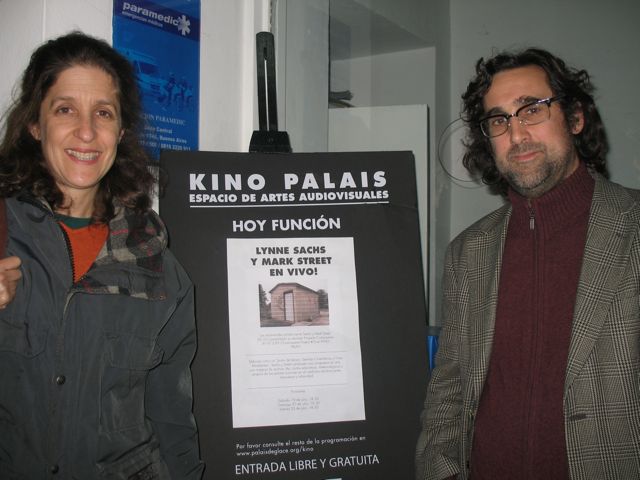
Palais de Glace, Buenos Aires
Walker Art Center, Minneapolis, MN
http://calendar.walkerart.org/event.wac?id=5786
La Habana Festival de Cinema Latinamericano, 2010

Anthology Film Archive, New York

See Spanish version here:   http://www.lynnesachs.com/2011/01/04/con-viento-en-el-pelo-de-lynne-sachs/

For inquiries about rentals or purchases please contact Canyon Cinema or the Film-makers’ Cooperative. And for international bookings, please contact Kino Rebelde