with: Lynne Sachs, Maya Gehrig, Ismaël Joffroy Chandoutis, Astrid Bussink, Sidsel Meineche Hansen and Therese Henningsen and Diane Obomsawin.
The popular saying, I see you, is used when an individual acknowledges or understands a different point of view highlighting its importance. The films selected focus on some of the core issues in today’s society bringing us closer to a better understanding of the challenges and prospects put forward by these seven filmmakers.
This program includes works that speak to the universal and touch on empathy, arousal, fear, confusion and satisfaction through the portraying of complex stories and falls under this year’s theme on emotions proposed by HeK and Kunsthaus Baselland for OSLO NIGHT.
A Month of Single Frames Lynne Sachs, USA, 2019, 14 min 12, English
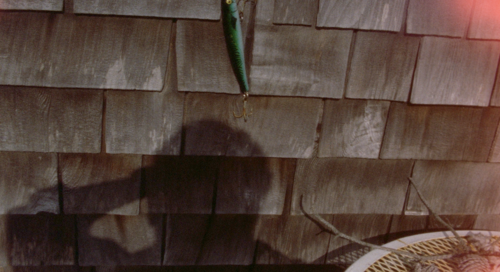
In 1998, filmmaker Barbara Hammer had an artist residency in a shack without running water or electricity. While there, she shot film, recorded sounds and kept a journal. In 2018, Barbara began her own process of dying by revisiting her personal archive. She gave all of her images, sounds and writing from the residency to filmmaker Lynne Sachs and invited her to make a film with the material. Through her own filmmaking, Lynne explores Barbara’s experience of solitude. She places text on the screen as a confrontation with a somatic cinema that brings us all together in multiple spaces and times.
Average Happiness Maya Gehrig, Switzerland, 2019, 7 min 15, no dialog
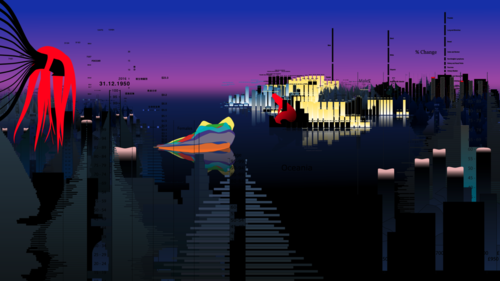
During a PowerPoint presentation, statistical diagrams are breaking free from the strait-jacket of their coordinates. A trip into the sensual world of statistics begins. Pie charts are melting, arrow diagrams twisting, scatter plots, bar graphs and stock market curves join in a collective climax.
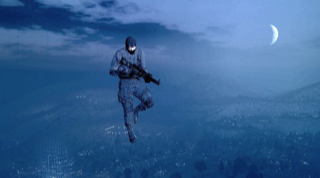
Swatted Ismaël Joffroy Chandoutis, France, 2018, 11 min, English
Online players describe their struggles with “swatting”, a life-threatening cyber-harassment phenomenon that looms over them whenever they play. The events take shape through youtube videos and wireframe images from a video game.
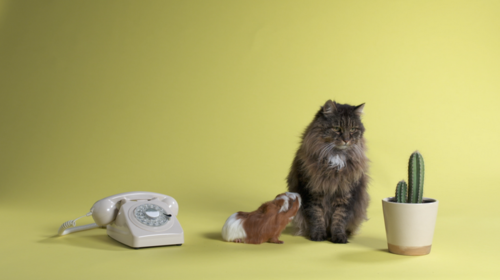
Listen Astrid Bussink, The Netherlands, 2017, 15 min, Dutch with English subs
Life can seem pretty overwhelming at times, particularly when you’re growing up. And it’s not always easy to talk to your parents or friends about your problems. Fortunately, the “Kindertelefoon” (Child Helpline) in the Netherlands provides a listening ear. LISTEN presents a cross-section of conversations between children and the Kindertelefoon.
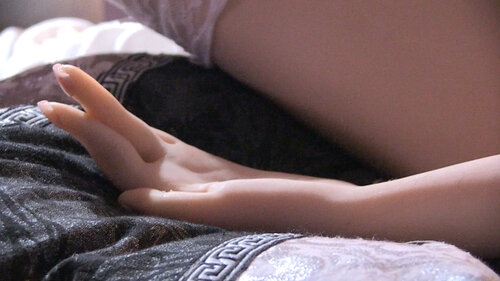
Maintenancer (doc.) Sidsel Meineche Hansen and Therese Henningsen, Germany, 2018, 13 min 5, German with English subs
The video work Maintenancer, which was produced as part of Meineche Hansen’s 2018 PRE-ORDER I-III exhibition series, focuses on the use and maintenance of sex dolls in the context of a German brothel. The work documents the transition into post-human prostitution – where sex work shifts from the physical body of the sex worker, onto the sex doll or robot.
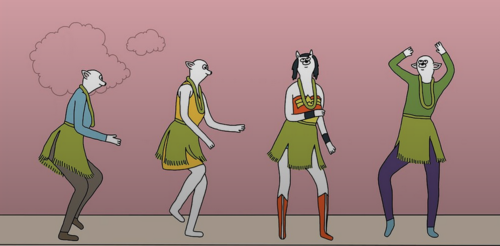
I Like Girls Diane Obomsawin, Canada, 2016, 8 min, English
In this animated short from Diane Obomsawin, four women reveal the nitty-gritty about their first loves, sharing funny and intimate tales of one-sided infatuation, mutual attraction, erotic moments, and fumbling attempts at sexual expression.
DOCS IN ORBIT – INTRO Welcome back to part two of our Master Edition Episode featuring the highly acclaimed feminist, experimental filmmaker and poet, Lynne Sachs.
In the first part of the episode, Lynne Sachs spoke about how feminist film theory has shaped her work and her approach to experimental filmmaking.
We also discussed her collaborative process in her past films including, TIP OF MY TOUNGE and her short documentary film A MONTH OF SINGLE FRAMES (for Barbara Hammer) which is currently available to screen at Sheffield Doc/Fest until the end of this August.
Today, we continue the conversation about her latest feature length documentary film, FILM ABOUT A FATHER WHO.
FILM ABOUT A FATHER WHO is perhaps one of Lynne’s most personal works and the longest of her collaborations. Filmed over a period of 35 years, Lynne Sachs collected interviews with her father, her siblings and other family members in an attempt to understand the web that connects a child to their parent and a sister to their siblings.
With a nod to the Cubist renderings of a face, Sachs’ cinematic exploration of her father offers simultaneous, sometimes contradictory, views of one seemingly unknowable man who is publicly the uninhibited center of the frame yet privately ensconced in secrets.
In the process, Sachs allows herself and her audience inside to see beyond the surface of the skin, the projected reality. As the startling facts mount, Sachs as a daughter discovers more about her father than she had ever hoped to reveal.
Film critics and programmers have described FILM ABOUT A FATHER WHO as “a divine masterwork of vulnerability that weaves past and present together with ease.”
I definitely consider this film essential viewing for filmmakers who lean towards the personal.
FILM ABOUT A FATHER WHO had its world premiere at Slamdance Film Festival in Park City, Utah. It then went on the screen at the Museum of Modern Art in New York City as part of Documentary Fortnight, and will be having it’s international premiere at Sheffield Doc/Fest in Autumn.
Lynne also briefly speaks about her writing process, and her book, Year by Year Poems.
Christina: I think we should go to Film About A Father Who (2020), which was shot over a period of 35 years, and it’s described as a portrait of your father, though actually I think in your film, you say it’s not a portrait of your father.
Lynne: The convention of a portrait is sort of one facade. And as I was making that film, I started to think about Cubist paintings, portraits, let’s say – Pablo Picasso made portraits of his daughter, Maya Picasso, or, you know, there, there’s a way that you see multiple facades at the same time, multiple sides of a person. And so I think we tried to, together myself and my siblings construct, an understanding of our father, which I think basically any child, whether that child knew their parents or not, you try to have a mental image of them in order to understand how you yourself can move forward.
So, in some ways it’s like a failed portrait because I certainly didn’t have access to all of the things that one might think that one should ask, but I actually was able to finish it when I realized that the pursuit of knowledge of my father, which might lead me to understand myself and my family better was what the film was. It was a pursuit. It’s driven the desire to paint a picture of a person, but it also has lots of holes because that’s kind of the way we can, we can know anybody else or not know.
Christina: And it’s also a very moving pursuit and I appreciate and am grateful for all your films and this one in particular. So 35 years though – so can you talk a little bit about what was the first kernel of the idea? So where did the film start in terms of process and what the motivation to begin filming your father?
Lynne: I’d probably say in a very typical way that perhaps as a going back years as a young woman, I was both enchanted by my father and deeply exasperated by him. And, I wanted him to be like everybody else’s dad, and yet he wasn’t.
There’s always this impulse by children to be both conventional and invisible and to be a little different. And so I was kind of in a quandary about that.
And, from an early age, I knew my father was not monogamous, even before I knew the definition, that word.
I saw him as letting down my mom, or I saw him as going from one girlfriend to the next or one wife to the next. And, and, and it seemed like he was always kind of indulging his own interests and I felt like resentful of that while I also was completely enamored with my dad and the sense that he was very loving to me, he respected my work as a student and as an artist and –
Practically every film I’ve ever made, my father was there for the premiere in that old fashioned way. Like, does your father come to the spelling bee? If you’re a good speller come to, you know, I never was a good speller, but he would come to things and clap, but it was all the other stuff that was sort of the in between things that he couldn’t necessarily be counted upon.
And, there was a point where I started making films, which was in the mid eighties. And then by 1991, I said, Oh, I’m like, I make experimental documentaries. And maybe I feel connected enough to my work as an artist then maybe it could be part of my own process of understanding who my dad is and who I am in relationship to it.
So in 91, I consciously thought I’m making a film with and about and around. And, and despite my dad, and he loved the idea and he was seemingly cooperative, in his own way. So he’d say things like we’re losing light then, or, you know, that’s a cut or all that kind of movie language.
It became truly like a running joke in my family. “Oh, Lynne’s making her dad film again.”
So I had high tapes and mini DV tapes and 16 millimeter that I just kept shooting for all those decades, And then I kept being really baffled. I had to make it, and I felt there were two reasons. I think why I finish it, initially.
And one was that it was hard, painful to make. And my other films gave me more joy at got point.
And then second of all, when I dare to look back at the material at shot on these cameras that now seem to obsolete video cameras or film cameras I’d look at the footage. I was very judgmental.
I thought it was horrible because I was trying to deal with my personal life. At the same time I was, I was making a movie and I felt aesthetically that it was very compromised.
And then about three years ago, I said, I have to finish the film because I needed to move on to the next phase of my life, whatever that may be.
I saw my dad get older, though keep in mind you grow older at the same rate that I grow older at the same rate that he does, we do it day by day. But he was having some problems with his speech so I didn’t think I’d get very much further with our conversations.
Christina: So 35 years of footage, so it’s um, I can’t imagine how much footage that you amassed over that period of time.
And, I was totally in this film from the very first shot where we see this shared moment between you and your father. And it’s a very recognizable moment. It’s very touching. It’s – you’re with him, you’re, you’re giving him a haircut which so many daughters do to their, to their fathers. And it immediately establishes a relation between two people between you and your father.
And for me, this relation is carried out through the film, and this closeness, but also the acceptance of the pain that comes with this closeness.
And you come back to this similar shot in the end where we see you both on the sofa, watching a film together. And by the time we get to both of you sitting together, there’s meaning in that image because we’ve kind of been on a journey of, of, uh, of your reckoning with him.
So I wanted to ask, I mean, I just think that these, the beginning finding that the beginning of the ending are just so powerful for me. I wanted to ask about how it was finding the opening and the closing of the film.
Lynne: Clearly you are asking this as a filmmaker, so I love it. Because when we’re editing work, especially work, that wasn’t shot with the, with the kind of structure in mind, we’re always looking for the shape of the work.
There are a few images that I knew would in a sense, like a balloon, would inflate with meaning for the audience. The audience would be able to create that fullness based on your immersion in these 74 minutes.
The image of the brushing of the hair on the cutting is kind of repeated, but the first time it’s like a gesture, like a woman, you don’t even know maybe this is the daughter, but I needed to land myself as filmmaker.
For example, when you’re making a movie, do you put a film by, or directed by at the beginning? I didn’t want to do that. So I had to leave my fingerprint pretty early. So the fingerprint was actually on the scissors in a way.
Like if you saw scissors in a film, it’s kind of like MAN WITH A MOVIE CAMERA and you see Dziga Vertov’s Elizaveta Svilova, I don’t know how to pronounce her name, but you see her with the scissors cutting that film, you know, that she edited that film.
So you see this person with scissors and there’s something that says this person might be involved on a deeper level.
So, by the time you get to the end and you see the two of us sitting on the couch, or you see my cutting of the hair again, you know, you know who I am.
And it’s tricky because do you give ideas for yourself? I didn’t, you know, like there’s a lot of like little details that you’re trying to work out.
But I really appreciate your thinking about the visuals in that way because I try to make films that aren’t so dependent on dialogue. And especially a movie like this, when you don’t have the chance to direct people and you can’t say, “can you do it that again?”
So you have to take those images that have resonance beyond the plot or beyond the conversations. And I tried not to have anything that I would call a B roll in any of my footage. So the B roll the convention of the B roll, which is just backdrop to voiceover, like, Oh, well, let’s go into that folder called B roll. And then it doesn’t have any resonance, it’s filler and no shots should be filler.
The B roll folder or envelope should be those images like that resonate beyond the story.
There’s one other shot in the film that I used that lasted about seven minutes, but I use it three times. And it’s the image of the children. Me and my siblings like out in the, in a little stream bed in the rocks, and you hear my father because he shot it. It was shot on VHS. It was kept in a garage for like 30 years. It’s very degraded.
But to me, that image is so important because it has this fatherly resonance, where a father is shooting a home movie and also being a little bossy and also getting irritated and also lovingly recording his own children with his camera.
And I think it’s shot exquisitely. Like, you know, when we talk about a classical image that takes on a triangle shape and everything kind of moves in towards the center of the, of the frame.
So I use that film three times and it’s not that the image was repeated. It’s continued. I don’t like to repeat the same shot, but as it continues, I hope it does what you suggested earlier that each time you engage with it in a deeper and deeper way.
Christina: So yeah, this takes me to ask about the editing – so how did the editing process work on this film?
Lynne: I’m really glad you asked that because I wanted to talk about one extremely important person, and that is Rebecca Shapass. So she is a young artist who was a student of mine when I was teaching at NYU.
And she, about three years ago became my studio assistant meaning she comes to my editing room, studio space a couple of times a week and we work all different kinds of things.
And I said, one of the things we’re going to do is go through all the tapes and transcribe them. And what was so liberating was as we were doing that, which we did for a year, she was never judgmental. She was never kind of, Oh my God.
You know, she would just listen and she would ask me questions – such good questions that, I said, Hmm, I think she understands this material in a way, with a level of detachment that I cannot get.
I cannot edit this form by myself. I can’t, because I’m always trying to contextualize, I’m always trying to apologize for situations.
Like, I think women do that a lot and sorry to make a generalization, but –
Christina: You are apologizing right now.
Lynne: Yeah. I just apologize. Right. But we take situations for which we have no control and we still apologize. So I think that I was going to do that throughout and even the film would have become a big apology problem.
So by working with Rebecca over the course of three years, and we worked on other things as well, uh, it became more fun and fun is key. It became more about making a film rather than just excavating material that I found very upsetting to look at.
And, she was sitting at the keyboard and I was next to her. So when we were transcribing, sometimes I would be typing and she would be moving through Premiere and vice versa.
And so, within a few months, I realized that nothing embarrassed me, and that was a breakthrough. She just was so open to work with. And supportive. And I think she learned a lot. I’m sure the most complicated film she ever edited. So it was a breakthrough for both of us. So that helped a lot.
Christina: That’s great, I was also going to ask about managing the vulnerability. And so, it sounds like she was integral in being able to distance you from the material and also having fun with it as well.
Lynne: (01:33:58) Yeah, and it’s not just Rebecca now because I’ve now shared it with a lot more people than Rebecca. And that was emotionally pretty hard, but also has led to so many interesting interactions with people that I still, I feel okay about it. So, um, but I wasn’t sure how I would feel because this, you know.
I made a film, for example, the House of Science, that’s super personal, but it’s also very generic. Like I’m talking about women’s experiences, even though I kept a diary, it could have been a diary button, woman. But this story is very much my story. And so it has layer of vulnerability that, um, you know, which is tricky.
Christina: Yeah. I think it’s brave. I think these types of films are really compelling because they’re so honest.
Christina: (01:39:06) There are a couple moments in this film that, um, that I wanted to kind of pull out and have you speak about, uh, I think because they’re, they’re reflexive, they’re, there’s this like self reflexive.
There’s this moment where it’s a young age, you you’re, you’re it’s you at it as a young filmmaker, seemingly talking to your father. I think your father might actually be filming you you’re outside on a patio and introducing the idea of like, why you’re going to be doing this project…
And the second, the second moment that I wanted to kind of pull out and have you talk about is I think it might’ve been your brother who said it, which is very self reflexive and it’s that “you and Dana liked to ask dad for things that he won’t give you.”
And after that, you talk about, um, the motivation for this and about understanding your father and about using the lens as a way to capture the reality in a sense. And it’s a moment in the film where it’s actually about the film. It’s like, you, we understand why you’re actually making this film so yeah, cause you’re talking about moments in the film.
Lynne: (01:40:03) I really appreciate your picking both of those moments. And I think that those are definitely examples of material that initially I might have thought would not be included in the film. And that’s one of the reasons I would share, like with any, um, young filmmaker to cut your home movie and then to go back and look at the sections that you dismissed because they weren’t, they weren’t useful enough or they were, they were hard to understand orally or they were, they were about the making an initial reason. Well, why would I include something about the making when I’m making it? And then you go back and they, you, that that’s kind of the glue that content sections together.
So, um, when my brother’s cutting, um, telling me that, that I do a certain thing at first, I’m going to feel like how dare you tell me, but then I realized that he is looking at the rhetoric of filmmaking.
Lynne: (01:41:16) So the part of the rhetoric of documentary filmmaker is to ask the questions that we think people won’t answer, but to ask them again and again and again, so he’s a fiction filmmaker and I’m a, my brother Ira is a fiction filmmaker. So he’s not, he’s not standing in front of those walls because he writes stories, but I’m a documentary filmmaker more so, so I’m constantly being put in front of situations that I’m trying to enter, but there are so many walls that come in front of come, come before me.
There’s also a process of therapy. You could say, which I’m not trying to say the film is therapy, but I think Ira recognized that part of the maturation process is to recognize things that you cannot control.
like to recognize where you, the point at which you cannot shape other people.
And I think that, um, my sister and I were always expecting our dad to come around and to be what we wanted him to be. And I think that’s, that’s part of like eventually becoming a mature human being is to recognize that people are who they are.
And so maybe my filmmaking was, it’s a series of chapters in which I’m constantly trying to figure out who he is, but also who I am in relationship to it. And so there’s that section, where we’re sitting on a patio and another one of the many visits where my father came to see me, which he’s always done. And I was living in San Francisco at the time.
And so he’d come and we’d do things like eat meals or go to Alcatraz. And I’d say, now I have to make my movie dad, I’m going to ask you the same old questions and we’d sit. And I was really a young filmmaker. So I sat on a patio.
And the sound was horrible. And I didn’t think I could even use that. I never even considered using it because it sounded so bad. And then I realized that it’s this opportunity to look at myself as a younger person and to see that, that I was trying to reveal to him what I was trying to do. You know, I’m making a film about you sort of, and other things at the same time. And I’m, I, I actually love in film and audio until I love when people can’t find the right word.
I’d rather I watch somebody in search of meaning and have them sit there for like, I think in a film when there’s a pause, then the audience has a place to enter in wonder there’s an anticipation. I think pauses are great, but there’s very few of them in documentary they’re always filled with music or this or that.
So like you brought up that point that I was searching for my words. And I think that now that I look back at it, even though it’s flawed, because I didn’t know what to say, it has this opportunity for the viewer to think about process.
Christina: (01:45:13) Yeah. I love that though. Yeah, it is about the acknowledgement of process in film, in your films. Um, and you do it in so many of them. I mean, it’s definitely a part of your style, a part of your language is to include in there the process a bit.
I want to get to your writing and your process of writing, because that’s also another element that is in your work. It’s constantly popping up. I mean, you’re, you’re a poet. The language is very beautiful in all of your films. Um, the way that you described situations and then also in your year by your poems book, that accompanies the film Tip of My Tongue. Um, so can you talk a little bit about your approach to writing?
Lynne: (01:48:25) Um, actually that could be another thread of like, I could explore through a lot of my work going back to, uh, the film house of science, which has a lot of writing, um, diary writing. And you hear, you actually hear the sound of my urinating at the same time that you see the, the, the words handwritten words on the screen. And what I tried to do all the way along in my work was to, to, to take writing as a, as a method of, of getting in touch with the internal voice.
So instead of saying writing is for writers, um, which so many people do. They’re like they say, you know, I make films and I’m not a writer, but, but in a sense, writing is about introspection. It’s just accessing that introspection. That’s kind of the, you know, you could say the calling card of the essay film or you, I know you’re interested in Chris Marker.
There’s a way that he would write, for example, in Sans Soliel, he would write as if he were writing from a woman’s voice or a woman reading a letter from a man. And there were all these kinds of iterations of the writing process. So I think that the writing is very active. It’s not just a kind of skill that you have, or you don’t have, but it’s an engagement with your present moment, as well as your past and how those, through writing, we can integrate the present and the past.
That is something that’s really hard to do with the image. We look at the image and we say, “Oh, that’s like an archival image. So it’s in the past.” Or we see some new images, so it’s present. But in writing we can have this fluidity through time.
And I’m also really interested in writing as a gesture.
So I mentioned the part about the writing in IN HOUSE OF SCIENCE, I have the sound of the pencil on the paper, or the sound – we write in our heads.
If you think of writing as just an access to what is on your mind, what is concerning you, especially during the pandemic, what is of utmost importance to you or how you respond to things, then it’s a bit like writing is a validation of your mind.
Christina: Right, and I think that’s what I appreciated in your, by your poems is the process is again, it’s the, you put the process in everything, whether you’re making a film or whether you’re writing a book or publishing a book of poems, you have the poem, but then you also have the scrap of paper that the poem was written on in its earlier form – and I go back and forth when you were kind of brainstorming what that poem be. Um, so it’s really, it’s really, uh, uh, nice to be able to see that.
Lynne: I really liked that you say you go back and forth, because usually a book like a film moves in a progression from page one to page 64 or from minute one to minute 74. And we as an audience or as a reader, we expect everything to move forward.
And I think one of the experimental aspects to that book is that your eyes can move in various ways. You can move from the top of the page to the bottom. You can move left to right. You can go backwards and forwards. And so there’s a kind of freedom that’s different. And I think that was exciting to me as a graphic. And also because it’s built on a chronology and we physically cannot go backwards in time, but through filmmaking and through writing and poetry, we can.
Christina: And, so, Year by Year Poems, your book of poetry, where can we find that?
Lynne: (02:22:09) Well, of course it’s on Amazon, but it’s also on small press distribution, which is a fantastic not for profit, but it’s on bookshop.com. Pretty much any place that you buy or order books, it’s available.
Christina And I highly recommended it as a birthday gift! Thank you so much!
DOCS IN ORBIT – OUTRO
Thanks for listening. And head over to our website, docsinorbit.com that include links to films and articles referenced in this episode.
This podcast was produced by Panda Ray Productions.
With music by Nayeem Mahbub in Stockholm. And Produced by Christina Zachariades in Brooklyn. Special thanks to Sylvia Savadjian. And for more goodies follow us on twitter, instagram and facebook for all the updates.
DOCS IN ORBIT – INTRO Welcome to another Masters Edition episode of Docs in Orbit, where we feature conversations with filmmakers who have made exceptional contributions to documentary film.
In this episode, we feature part one of a two part conversation with the remarkable and highly acclaimed feminist, experimental filmmaker and poet, Lynne Sachs.
Lynne Sachs is a Memphis-born, Brooklyn-based artist who has made over 35 films. Her work explores the intricate relationship between personal observations and broader historical experiences by weaving together text, collage, painting, politics and a layered sound design.
Strongly committed to a dialogue between cinematic theory and practice, she searches for a rigorous play between image and sound, pushing the visual and aural textures in her work with every new project.
Sachs’ films have been screened all over the world, including New York Film Festival, Sundance, Oberhausen, BAMCinemaFest, DocLisboa and many others.
Her work has also been exhibited at the Museum of Modern Art, the Whitney Museum of American Art, Walker Art Center, and other venues, including retrospectives in Argentina, Cuba, and China.
She’s also received a 2014 Guggenheim Fellowship in the Arts and in 2019, Tender Buttons Press published Lynne’s first collection of poetry, Year by Year Poems.
Lynne Sachs is currently one of the artists in focus at Sheffield Doc Fest where her most recent feature documentary film, FILM ABOUT A FATHER WHO is presented alongside a curated selection of five of her earlier films.
I caught up with Sachs recently to discuss the many aspects of her work, including feminist film theory, experimental filmmaking, and her collaborative approach. We also discuss her short film, A MONTH OF SINGLE FRAMES (FOR BARBRA HAMMER), which is currently available at Dokufest until August 25th.
Christina: I’m just so grateful to have you here today. I have to first say that I’m emerging from this journey of reviewing many of your films and your work over the past 30 years, as well as a video lecture, MY BODY YOUR BODY OUR BODIES: SOMATIC CINEMA AT HOME AND IN THE WORLD, which is a fascinating guide through your work and evolution as a filmmaker. And it’s also available online. I’ll include links to all of this on the website so that our listeners are able to easily find it.
You know, it’s kind of very difficult to figure out where to start after reviewing so much of your work, but I figured maybe it would be nice to just kind of start off with what has shaped you as a filmmaker?
Lynne: First of all, I wanted to say that it’s very interesting to talk to someone who has taken that journey through my work, because one of the things that I think is very much an aspect of my way of making films is that they are so interconnected with my own life.
So if you saw my film, THE HOUSE OF SCIENCE, you’d see that I write within it. I keep journals within it. And I talk a lot about the day that I left for college and I had this male gynecologist, I went to check in with him and get Portia birth control, but I wasn’t even sure where my cervix cervix was.
And then you all the way to my more recent films from 20 years ago, and they were a lot about having children. And then in between that there’s films that include a lot of travel and a kind of exploration as a young filmmaker.
And then, I have a whole group of films that I made usually in the town where I lived. So partially in Baltimore and a lot in New York. And that was maybe because I didn’t believe that documentary film had to come with a big, expensive airplane ticket. And also I had young children at a certain point.
So there’s a kind of way that each film, whether in subject or in execution, reflects what was going on in my life, in those decades.
Christina: There is this very personal aspect of your work as well. This link of what’s happening historically in the world around you, but then also through the lens of how it connects to something that you’re experiencing.
And I love that you mentioned this notion of going to your gynecologist, because there is also another element of your work that is very much exploring feminism. In a lot of your previous lectures of when you were talking about or writing about what has been influential, you mentioned feminist film theories in your work, and I would love to hear from you- I know it’s a big topic – but what feminist film and feminist filmmaking means to you and why it’ s still important today.
Lynne: I think that in the world of that it has built up around the film industry. There’s been an enormous emphasis on access to the means of production. Are women able to break into the hierarchy and even climb or be given the opportunity to access the top.
So there’s this idea that you become a director and therefore you have accomplished what any other woman would want to do.
But unfortunately that does not necessarily come with what maybe you or I would call a feminist sensibility. So there is this breaking of the glass ceiling on the level of job opportunities, but then once you’re there, you’re still replicating what the men have already done.
So important filmmakers and thinkers around film who’ve really shaken me up on the level of image making and encouraged or compelled me to, to bring a feminist commitment to my work would probably start with Maya Deren.
She’s probably the best known grandmother. And I say that in this very broad way. She was a grandmother to many men also. But this person who believed in the possibility for personal filmmaking to break through, to be accessible to many people and in the process to speak to her own experience, which was a woman’s experience.
And then thinking about theory, I would say, Laura Mulvey’s article on Visual Pleasure, because I think even putting those two things together, visual pleasure – and she was writing about narrative cinema. We look at art for pleasure. Yes, we eat food for pleasure, and we travel for pleasure, and we do many things, but art also offers that.
But if the visual pleasure is replicating the desires of a male cinematographer or director, then what she is asking us. And she did this in the early seventies. What she’s asking is, is that really progress?
So Maya Deren, Laura Mulvey, and then I think other people writing on film, who demanded that we not only talk about women’s experiences, but be very vulnerable in our openness to talking about the body, because that’s what distinguishes us from men.
I think a kind of hero in that respect would be Carolee Schneemann, who was a great performance artist, conceptual thinker and filmmaker.
Christina: Yeah, so it’s not just about being able to give a woman a camera and access to making a film, but it’s about actually putting on screen, the way that a woman sees the world, the way that a woman sees her body and it not being through the lens of this male perspective
Lynne: Yeah.. How the body is framed and how we articulate a point of view and being really thoughtful about that. And eventually, maybe there’s the, there will come a time where we don’t have to be as self-conscious, it will just happen. But I think right now we have to investigate that.
And I think particularly in the year, 2020, we also have to look at how the articulation or the expression is also open to a kind of freedom around race too. A freedom of expression that’s not tied down to stereotypes and tied down the burden of what, what cinema has done for so long in terms of how women and women of color have been represented.
Christina: Yeah, and I was going to ask about this because this feminist movement in cinema, as you had mentioned, has been around since the seventies. And you were exploring that when you were in college as well in the eighties, and reading about these theories and then taking your camera up to the roof and exploring the way bodies were represented in film. But how about today? What more can you say about how this is still important?
Lynne: I think one of the people who kind of broke through our, our way of thinking would be bell hooks. She writes a great deal about those forms of representation. I personally have been very influenced by Kara Walker’s work, and by the imagery that she boldly has presented to the world of art.
Then there’s a few filmmakers whose work has been very influential to me. These Black women filmmakers. Cauleen Smith is a super interesting filmmaker. Her work is very much about Afro surrealism.
I actually really liked the way Ja’Tovia Gary integrates these interview processes. She takes a kind of a convention of the reporter on the street, but she has this intimacy at the same time, which I find very empowering as a woman, you know, like let’s do it the old fashioned way with this phallic thing, the microphone, but let’s do it in this way that’s like female bonding. So I love, I really love her work.
Christina: Yeah, I do too. It was one of the delights to discover at Hot Docs this year. I think it’s been around for a while, that short film, but I had only come to see it when it was on display at Hot Docs.
So another thing that you’re known for … I’m trying to pull the threads of how to describe you as a filmmaker and the adjectives that are most commonly used and the word feminist always comes up, but then also experimental filmmaker.
For me, this is very visible in your work and how you play with textures in your films. I would describe your work as being very idea centric, not so much plot driven, but it’s very much that there’s a thought in the center that you’re exploring and you’re using film as a way to bring that to life.
So can you speak a little bit about this idea of experimental filmmaking and what that means for you?
Lynne: I really appreciate your saying that because I actually do think the kernel, the seed is a thought and there’s an expectation in documentary film that we start with a story. And that I feel a bit resentful of because story also applies to plot also applies to the whole condition or expectations of literature as in you have a protagonist or character, and everything is revolving around that character.
And I find that to be kind of derivative. So if you, with an idea, as you’ve suggested, then the aesthetics have to build up around that and they have to take on a more complex approach.
So, if I have an idea or a curiosity or something I want to investigate, then I have to think about how I will hold the camera? You were talking about texture, how will I hold the camera to make that evident?
Or sometimes it goes the other way. Does the fact that the camera shook give you the sense that we have doubt? So there’s a give and take between process instead of always judging what you did.
Like if you did something all by yourself, the production values are often let’s say disappointing on first view.
But if the idea rises to the top, the idea says to you, well those obstacles, those production value obstacles actually lead us to something more real. Revealed something about the situation, for example, that you were shooting in a place where you felt scared.
Those things can come through the texture, but the problem with, what I think a conventional approach to documentary is there’s always this expectation that you’re going for something that’s perfect that follows a template that is beautiful in the most obvious ways.
But sometimes beautiful is opaque and not so beautiful adds a transparency of process that actually can be very stimulating to the viewer.
I mean, I really believe we’re sick of looking at the perfect image.
And actually you were asking about theory, and I would say another big influence is the German theorist and filmmaker, Hito Steyerl. She definitely identifies as highly conceptual and highly committed to the documentary impulse.
She wrote this article about the perfect image versus the degraded image. She sort of thinks it’s really interesting to look at the degraded image, the one that you find on the internet and how it moves from hand to hand, and that we become aware of its demise and we see all like all its wrinkles. Instead of thinking it has to be like fresh out of the camera and an unaffected by its life journey.
Christina: Another aspect of your work that really drew me / collaboration is a really important element in your process. Somewhere I read that there’s a point in your career as a filmmaker where you note this shift in your approach, as you begin to consider your subject as a collaborator. Can you speak a little bit about this and how it shaped sort of where that insight kind of came from and how it shaped the work that you do now?
Lynne: I’ve had this notion that historically in filmmaking, that actors are, have been treated like props, especially women. So if you allow those participants to become creatively involved, I actually think they feel more, there’s more gratitude.
Maybe that’s part of a kind of feminist resistance to the power that comes with being a director that’s never about listening? Like in my film TIP OF MY TOUNGE, I wanted that film to be a lot about listening – my listening to the people in the film and they’re listening to each other and not just about my directing.
Christina: I think, for me, that’s very resonant in your work. So I want to talk a little bit about that film also, but within the context of collaboration, because I’m really intrigued by the nature of your collaborations, because there’s always a degree of it and it’s really interesting to look at, I’ll just pick three –
Tip of My Tongue, and then Film About a Father Who, and A Month of Single Frames. So I think these three films, maybe we can just talk about these three films and the collaborative nature of them?
LYNNE: I also thought about Which Way is East, which I made with my sister. Yeah, this could be interesting, like in a curatorial way, I hadn’t thought about it.
In TIP OF MY TONGUE, it’s a film that started off with a collection of poems that I wrote for every year of my life, between 1961 and 2011, 2011 was the year I turned 50, but it took me about five years to write all those poems.
And then I started to think about, well, why do I just want to know about my own experience, this sort of documentary maker in me reared its head and said, well, how would other people who lived in Iran or lived in Australia or lived in the Netherlands – how would they have seen those years from very distinct different points of view?
So I am the director of it, but a big part of it was bringing this group of people together. And I didnt say I was making a movie, I just said I’m looking for people to collaborate on a project and I’m looking for people who were born between 1958 and 64.
A couple of them were friends, but others had been recommended like, Oh, I know a woman from Iran and she lived those exact years. And, you know, so I figured, okay, when I was graduating from high school and worrying about whether I was going to go to the prom, she was dealing with a revolution.
And we spent three days basically living together and talking to each other and I filmed it. And then I tried to, in a sense, collaborate with the city of New York, which was the only thing all of us have in common. We all lived in New York at that point, and so New York also becomes a collaborator with us as a backdrop and also as unifying aspect of our lives.
And so, what I did was I got together with them and I did an audio interview and I asked them to pick five moments in their lives where a public event affected something very personal or transformed or allowed them to understand something very intimate in their own lives.
So that was the prompt. That became a way by which they could think about Richard Nixon, or they could think about the first moon landing or they could think about 9-11. Some of those are more obvious than others.
So we processed that and filtered those mate, those big events through our own lenses and experiences.
Once I had those interviews, then I started to see intersections between the stories. And then I came back to them and acted a little bit more like Director.
So I have all this openness, anything goes, and then when we actually shot everything was storyboarded.
I think there’s an interesting connection between something you brought up earlier, which is the idea. I think the link between the idea and the aesthetics has to do with finding formal strategies that resonate both conceptually and visually. That’s what I spend all my time thinking about it in the shower. Or dare I say it, driving my car on the subway. Or I’ll wake up in the middle of the night. I think I need a strategy that works on both of those levels. And I’m very rigorous about that. And if it doesn’t work on both of those levels, then I kind of reject it. And sometimes that takes them years to figure it out.
Christina: Right. And there’s different, I imagine, drafts of strategies that you’re trying and trying and trying until you finally find one that does work.
Lynne: Yeah, sure. So that’s the process for that film. So maybe I’ll go on to A Month of Single Frames?
Christina: Yes! Please!
Lynne: So A Month of Single Frames is a film I made with Barbara Hammer who was a renowned lesbian, experimental filmmaker. And she always said intersectional; lesbian, experimental, and filmmaker, all all once! Woman.
So, I have known her for about 30 years – she had been a mentor of mine back in San Francisco, which was very formulated for both of us and then we both came to New York.
Then, just about two years ago, when she knew that she was dying, she came to four different artists and asked, would we like to work with material that she had?
The material she gave me was uncut, 16 millimeter film that she shot in 1998 of an artist residency.
And I said to her immediately, Barbara, why didn’t you make this? You’ve been so prolific, why didn’t make it? She said, well, it was too much about me. Which is funny because she made a lot of films about herself. But my feeling was maybe she thought the material was too beautiful. It didn’t have an edge to it.
So I was faced with its absolute beauty. Cape Cod, and the dunes, and the sunset. The sound effects of the waves and the insects, and all that.
And so there, I was in a sense collaborating with her work just by editing it. And that didn’t seem like enough.
So I thought I needed to talk through the material to her and to audiences and even to a more epistemological engagement with cinema. Like, what is cinema? What is it in terms of the way it looks at time at place as it once was and now what has changed? And how does cinema allow two people to be in the same space and not in the same space?
And then I’m in the same space with Barbara, with you as viewer, with anyone who watches the film people. Total strangers. We’re all in the same space.
So that actually came to me and I just started writing, as you’ve seen, in a lot of my films writing can find its way as voiceover or on the screen.
So the collaboration in a sense for me didn’t really happen until I was able to create my own place in it. Otherwise it was, it was more like, hagiography, and I didn’t want it to just be a portrait of a woman who had recently died. I needed to engage deeper in the deeper way.
Christina: You said it’s about cinema. It’s also about the making of cinema too and on that level, it resonated with me. It’s very clear from the beginning, when we hear you setting up the interviews, there’s a very reflexive mode in there. “I’m setting out to collaborate with this filmmaker and make a new creation out of her work”.
I found it very moving, not just because the images were incredibly beautiful and the soundscape and the way that those worked so well together, but I found it really balanced in terms of the space you gave yourself in the film while you’re paying an homage to Barbara Hammer and her work during that residency.
Lynne: One of the things that comes about when you’re making a work that uses this word, “about”. Or we talk about the elevator pitch, like, how can you describe your film in the 20 seconds that you’re on an elevator with someone? And the word that always comes in is “about”.
That’s the preposition, right? If the object of the preposition is only the name of someone, then I think it’s very reductive.
But if you can say the about, can become more expanded and more reflective that about is also within, and it can be multiple prepositions, within or underneath or behind or with, like all of those things.
Then we start to think about our engagement as being more fluid, more unpredictable, and more about point of view.
So, if I had just said, this is a film about a woman who had cancer, or this is a film about a woman who was a lesbian experimental filmmaker, then you would enter those 14 minutes and you’d come out knowing more like in an educational experience.
Like I know more about Barbara Hammer. Or in, Film About A Father Who, I know more about this filmmaker’s father. But I didn’t want either of those films to function on that narrow a level. I wanted it to be about process and about failure.
That’s why with A Month of Single Frames, you hear us setting up and you actually hear a place where, Barbara and I are talking about looking through her journal and she kind of gets a little irritated with me cause I don’t find the right part that she should read.
Normally you would cut that out, because it sort of shows my failures or that I felt pressured, or I really didn’t know what I was doing.
But if you leave it in, it becomes more human.
That’s like the calling card of all essay films is those moments where the attempt to do one thing leads to something else and so you go one direction and then you find a kind of obstacle and you go another direction.
There’s another part of A Month of Single Frames that you might not have noticed, but I almost took it out and it also shows failure. Barbara wanted to animate these little toys and she wanted to film them, but she was there all by herself in this remote shack in Cape Cod.
So she’d wind up the toys and then she kind of like run back to her camera. But by the time she got your camera, these wind up toys didn’t move anymore. So you actually see her hand and so called “good animators” wouldn’t include the hand moving the toys. They would only include the success. But I actually thought what was more interesting was her attempt to do something which basically failed.
Christina: I do remember that. I do remember that bit, but I wasn’t, to me, it was just playful.
Just to see somebody that is so renowned that, you know, it’s it’s, but at the same time, so devoted to the work as well and seeing how playful she is with her environment, it was just very nice to see.
Lynne: Well, I think one of the things about that film that’s so extraordinary is that her situation while beautiful is also quite basic.
And there’s a way that the film validates movie production on a budget. It doesn’t elevate access to funds and to locations. It just sort of says what the barest of tools you can make a movie. And I think that also is super validating and important to remember in our high tech and quite money oriented – our industry is a lot about money.
So when you see someone who’s working in this very austere way, I think it’s quite (inaudible)
You asked earlier what makes for an experimental film. I think it’s the notion that work can be play and play can be work. That if you allow yourself to play for a while, rather than judging yourself immediately, which we all do, especially when we call it work, we call it work and we don’t think it’s good enough, then we pretty much stop. We censor ourselves and stop.
But if we move into a realm of play, then I think we often end up in a place of discovery.
And Barbara was always doing that. And so she was most definitely a kind of role model for me.
CHRISTINA: That was it like when you first received this set of archives and watching and hearing them for the first time?
Lynne: You know, I had a student about three years ago who asked me, why do I make movies? And I guess I kind of gave her an answer. And then I asked her because she was learning to make films. And she said to me, I think I make films because I want to give gifts.
And I really loved that. I really loved that you do it because you’re sharing something or that you do have an experience that you want someone else to be able to engage with. And might give them joy. Or might make them feel about the world in a deeper way.
So, when Barbara gave me this imagery that she had, and she is giving me the gift of witnessing her solitude. So I felt that I needed to enter that experience of solitude and that was a gift that was from her to me.
So I needed to find a way to give back to her and I knew that it would be posthumous. So I needed to give to her legacy, not just to her. There’s a real exchange between the two of us.
And it’s interesting to find that I’m referring to her so much now that she’s not with us. I have this very profound belief that when we lose someone, someone who dies, that as much as we don’t want to say their names because it reminds us of them, that each time we say their name, we get to be with them a bit longer.
I really love when I dream about someone who’s died. And so the film is a little bit like my dream of Barbara that I keep getting to have.
Because, as you know with anyone who has died in life, you dream a lot about them, and you’re chit chatting with them and having dinner with them and all of that. When they appear in your dream, you feel wistful. And so the film was a little bit like that.
Christina: That’s wonderful. It’s actually a really wonderful way to close on, on the film too.
DOCS IN ORBIT – OUTRO
Thanks for listening. And make sure to subscribe to the podcast so you don’t miss part two of the conversation where we discuss more of Lynne’s work, including her feature film, FILM ABOUT A FATHER WHO.
Also, head over to our website, www.docsinorbit.com, for our show notes that include links to films and articles referenced in this episode.
This podcast was produced by Panda Ray Productions.
With music by Nayeem Mahbub in Stockholm. And Produced by Christina Zachariades in Brooklyn. Special thanks to Sylvia Savadjian.
And for more goodies follow us on twitter, instagram and facebook for all the updates.
Dogmilk Films August 2020 – September 8, 2020 Eclectic Visions Watch Until September 8, 2020|read in English Bahasa Indonesian|vist the archive
Drawn and Quartered (1948) & Carolee, Barbara and Gunvor were available for streaming
Eclectic Visions presents a collection of experimental films created solely by female artists that span from across the globe. Each share vastly different approaches to their work; with concepts ranging from the elusiveness of dreams, to documenting the everyday, they all however equally present a unifying force that is the expansiveness of filmmaking. These women of multi-faceted practices, ages and backgrounds share a deep connection to the moving image, whether that image is captured through super 8, 16mm or digital.
In their own way filmmakers Audrey Lam, Lynne Sachs, Azucena Losana, Adelaide Norris, Barbara Meter and Eliza Roberts aspire to dismantle conventional forms of narrative by blending together techniques from both cinema and video art, and it is through their own explorations and experimentations that we become accustomed to the notion that the ways of seeing and viewing the filmic image can be reborn.
Selected by Veronica Charmont and Lola Hewison
Indonesian translation and subtitles by Afifah Tasya
A Pocketful Of Song Audrey Lam, 2018, 17 mins A bustling market street chimes with the gentle chaos of a lone, decades-old collectible coin and stamp shop in its midst. The elderly shop owner shares stories of the stamps and the world passing by.
Drawn and Quartered Lynne Sachs, 1987, 4 mins In 1984, Lynne’s Uncle gave her a Regular 8 Filmo Camera. He explained to her the intricacies of the camera, warning her not to forget to ‘flip the reel and camera and shoot the rest’, otherwise, he says, “it will appear topsy-turvy”. Three years later, Lynne picked up the camera, she was a student at the San Francisco Art Institute. So, she says, “On one of those rare, warm San Francisco afternoons I convinced my new boyfriend John to follow me to the roof of the Art Institute to make the first movie I would ever shoot in Regular 8mm”. “That must have been the year I first encountered Laura Mulvey’s theory of the ‘male gaze’, seen in Carolee Schneeman’s “Fuses”, pondered Yvonne Rainer’s “Lives of Performers”. Sachs explains that she took the roll to the lab, she begged them not to split the film as usual. As she describes, “within the parameters of the image gestalt, we are dancing together without ever touching. Our two bodies remain totally distinct and apart.”
Carolee, Barbara and Gunvor Lynne Sachs, 2018, 9 mins Lynne Sachs’ film Carolee, Barbara and Gunvor is an intimate and sincere composition of 3 artists; Carolee Schneeman, Barbara Hammer and Gunvor Nelson. Pioneers of the moving image in their respective art forms, Carolee, Barbara and Gunvor are given time and space to recount their artistic achievements, intentions and lives as female artists.
At Your Heels Azucena Losana, 2017, 2 mins At Your Heels refers to a recurring dream where I arrive in a foreign city and look for a person everywhere and just can’t find them, just the traces left behind. The film was made during a residency in Prague, I was learning to develop black and white film. It was my first time filming on 16mm and as well as in colour. My Czech friends lent me a Krasnogorsk camera and I used some expired film that an Argentinian friend gave me. I always wanted to film the modern patterns on the metro stations, they are from outer space! I edited on the camera, triggering with the shortest possible shot (probably 6 or 8 frames). This is part of a series of short films looking at cities.
Appointment Adelaide Norris, 2019, 12 mins Appointment went from being a reason to bring a bunch of girls/non binary people together and keeping them skating as an opportunity to give room to the minorities within the industry. We were so stoked meeting up n going to skateboarding video premiers that we decided we want do our own thing – it then went from our first video ABD to Appointment which started aiming more so at giving space for people that aren’t often given light in skateboarding, something for those types of people to see and be inspired to do themselves hopefully.
Headless Brim Eliza Roberts, 2019, 14mins Cinema has long been used as a tool to reflect and expand upon time: past, present and future. Headless Brim seeks to encompass these different states, blurring the lines between reality and fiction, and grappling with notions of memory. Headless Brimsits somewhere between meditation and narrative, where as viewers, we are pulled in and out of interior and exterior worlds.
A Touch Barbara Meter, 2008, 13 mins Wordless experimental collage of impressions and moods. Grainy fragments of landscapes, flakes whirl in the wind. Fog and mist, shadows of people in the city and by the water. Silhouettes that fade and turn into pure light and shadow until we discern the specks and scratches on the film strip itself. Sometimes, for a fraction of a second, a face, a person. A film as a memory that eludes us. Music by Alan Seip.
“States of UnBelonging” will be available from 3/9 at 12AM until 12/9 at 12AM Follow this link for tickets: https://docaviv.pres.global/order/69
LIVE Q&A SUNDAY 6/9/ 2020 at 19:00 Lynne Sachs, Filmmaker of States of Unbelonging and Film About a Father Who in conversation with Dr. Laliv Melamed and Nir Zats, co-writer if States of Unbelonging
UNITED STATES / ISRAEL 2005, 63 MIN, ENGLISH, HEBREW SUBTITLES Filmmaker Lynne Sachs never met Revital Ohayon, an Israeli filmmaker and mother killed near the West Bank. In 2002, she read a news article about the death of Ohayon and her two small children in their house in Kibbutz Metzer. She immediately started gathering information. Despite the distance, New York-based Sachs slowly gets to know more about the young Israeli filmmaker, who had so much in common with her but lived in a starkly different reality. She puts the pieces together through phone calls and correspondences with Nir Zats, an Israeli friend and former student of Sachs, who acts as her field agent. The puzzle takes her over two years to complete, and the picture that emerges is complex and multi-faceted. Although seemingly different, each person in it is trying to survive in a violent present, while carrying a violent past. Without taking sides or casting blame, the film becomes a cine-essay on fear and filmmaking, tragedy and transformation, violence and the land of Israel/Palestine.
The film is screened as part of a tribute to Lynne Sachs, alongside her new work Film About a Father Who…
Previous Festivals: BAFICI (Buenos Aires Intl Film Festival), Margaret Mead Film Festival New York
“Film About a Father Who” will be available from 3/9 at 12AM until 12/9 at 12AM Follow this link for tickets: https://docaviv.pres.global/order/71
LIVE Q&A SUNDAY 6/9/ 2020 at 19:00 Lynne Sachs, Filmmaker of States of Unbelonging and Film About a Father Who in conversation with Dr. Laliv Melamed and Nir Zats, co-writer if States of Unbelonging
UNITED STATES 2020, 74 MIN, ENGLISH, HEBREW SUBTITLES How does one paint the portrait of a father who may seem like a chatty, extraverted bon vivant, but keeps the really important parts of his life secret? Artist and filmmaker Lynne Sachs documented her father for 35 years, uncovering his vibrant, unusual, and disturbing persona with the dedication of an archaeologist. Her intimate film slowly unravels the tangled web her father wove: three women, nine children, numerous lovers, and a complicated relationship with his mother, the director’s grandmother. Years of obfuscations and vague responses from her father have driven the filmmaker to try other avenues of investigation. Determined to solve the mystery, she seeks out siblings and spouses, carefully sewing their insights together into a captivating quilt of sights, sounds, and stories.
The film is screened as part of a tribute to Lynne Sachs, alongside her 2005 work States of Unbelonging.
Previous Festivals: MoMA Doc Fortnight (NYC), Slamdance FF, Sheffield, Sarasota Film Festival, Gimli Film Festival
A Conversation with Lynne Sachs, director of Film About a Father Who… and States of Unbelonging, with co-author Nir Zats, moderated by Dr. Laliv Melamed
Lynne Sachs has been making films for over thirty years. Her work is investigative, lyrical, sensitive, and intimate, and her films raise questions about language, narrative techniques, and the cinematic practice itself. Sachs delegates the storytelling work to her subjects—from illegal workers to her own family—letting them negotiate with her camera. Two of her films are screened at this year’s Docaviv: Film about a Father Who and States of Unbelonging. Both film take the viewers on a journey of discovery, but the roads fork many times over and do not lead to definite answers. The discovery, if it exists at all, isn’t always a solution or a revelation, and the journey is internal and external at the same time.
Sachs’ most recent film, Film about a Father Who, is the culmination of thirty years of documentary work—a period as long as her entire professional career. The film’s focus is on her father, Ira Sachs. Sachs Senior is a colorful and licentious type, and his daughter takes his character apart and puts it back together again through the testimonies of his mother, his wives, and his many children, scattered across considerable distances. The film, much like its title, is an unfinished sentence. “This is not a portrait,” she tells us. It is a space she crafts meticulously and laboriously, unraveling and weaving threads with anger and forgiveness, affection and aversion for a father who (…).
In States of Unbelonging (2005), Sachs follows the trail of Revital Ohayon, a film teacher from Metzer, a Kibbutz near the West Bank, who was murdered by a terrorist along with her two children. Having learned about the incident from a newspaper article, Sachs becomes determined to understand this woman, who was as close to her as she was far away. She does this through letters and footage obtained by Nir Zats, an Israeli filmmaker and friend. Driven by an imagined affinity between her and Ohayon, Sachs tries to figure out her relationship with Israel, a torn, wounded nation. “As a documentary filmmaker, I am always reckoning with what it means to shoot from the outside in,” she says. The two films move simultaneously inward and outward, cutting through layers of language, meaning, and identity.
This year has not been a kind year for the film festival. Several major film festivals including Cannes and Telluride have been canceled as a result of the current coronavirus pandemic, and rightly so. We can probably all agree that the idea of thousands of people from across the globe gathering in one place, standing shoulder to shoulder, and sitting tightly packed inside a small dark room for long periods, is the perfect breeding ground for a virus as deadly as COVID-19.
Some film festivals still took place at the start of the year, most notably Sundance and Berlinale. However, a report from the Hollywood Reporter stated that this year’s Sundance Film Festival could have been the “first petri dish” for the spread of the virus with many attendees reporting coronavirus-like symptoms after attending the festival. However, it is worth mentioning that according to the festival organizers, they are “not aware of any confirmed festival-connected cases of Covid-19.”
The postponement of Cannes this year marks the first time since 1968 that the festival hasn’t taken place since the end of the Second World War. Coincidentally, the festival didn’t take place in ‘68 due to nationwide student protests. When asked about whether or not the festival could take place virtually, Festival director Thierry Frémaux stated that it “wouldn’t work”. However, festivals such as CPH:DOX did make the transition from physical to virtual, with festival organizer Tine Fischer stating, “If we had not gone online I’m not sure that we would have survived.”
And, while we have heard from the major film festival organizers, what about the film critics who have been affected by the coronavirus situation and how has it impacted their film festival experience? Well, I felt compelled to seek out people and ask them about their thoughts regarding the impact that coronavirus has had on the film festival circuit, as well as what the future has in store for the film festival experience. If film festivals were all to make the transition from the physical form to the vertical/digital form, would we not lose something truly unique? Attending film festivals is a major way to network with film industry individuals and allows filmmakers to exhibit their films in the hopes of being picked up for distribution. The right amount of festival buzz can make (or break) a film. Could this be achieved in a digital sense or would we miss out on that special act of social interaction?
Personally speaking, I believe the best outcome is for film festival organizers to host smaller scale festivals once restrictions ease. By controlling the number of attendees, festivals could enforce social distancing quite easily. However, the next question would be – who would be allowed to attend the festival if a limitation of attendees was enforced? Ask any aspiring critic about how strict the restrictions and regulations are for the press accreditation process and they will more than likely express their frustrations. Would film festivals become even more restrictive and selective in terms of what level of film critic and/or industry professional they allow to attend?
Since the pandemic, I have been able to cover Sheffield Documentary Film Festival (a festival I attended last year in person), Edinburgh Film Festival, review films for SXSW, and I hope to help in covering Fantasia Film Festival as well. Being able to access the films via the online Doc Player for the Sheffield Documentary Film Festival made things a lot easier. There were no anxieties about organizing travel and accommodation, no rushing around to make sure I got to the screenings on time. I could simply sit at home on my sofa all day and watch the films I wanted to see and not worry about having to pick and choose films. However, I missed the networking and social interaction aspect of attending a film festival.
Inspired by my own experiences of attending film festivals in the past, and thoughts about the future of film festivals, I decided to reach out to a few fellow film critics and also ask some filmmakers about their thoughts on the matter. Kathia Woods recently covered the AFI Documentary Film Festival which took place online. “It was kinda nice to see the films without standing in line,” she says. “I miss connecting with my fellow critics. A nice part of the festivals are the Q&A [sessions] afterward.”
Woods isn’t the only film critic to have attended a festival in the virtual sense; however, in the case of film critic Alex Billington, his experience wasn’t exactly a straightforward one. “So far the only film festival I’ve tried to cover online is the Annecy Film Festival (the top animation festival in France). It was a disaster,” he explains. “Online festivals are temporary solutions, but definitely do not compare in any way to actual festivals. They said all of their films would be available online. But after logging in I discovered only half were available, the rest were only 10-minute clips. Watching a few of them by myself, at my home, without anyone to talk to about them wasn’t very exciting. I know it’s the only way to run a festival during this pandemic, but it has been a very bad experience so far.”
While Billington had a bad experience with the Annecy Film Festival, critic Cameron Ward’s experience was far more enjoyable. “For Annecy Online, my experience was very positive,” he says. “I don’t have the finances to take a trip to France and the expenses that come with that, so being able to experience the world of animation from the comfort of my home with no real schedule to keep track of was refreshing. If I could afford to go to Annecy France to attend the physical festival, I would. But with everything going on, it wouldn’t have been possible anyway. Going online was a way for animation fans and critics alike to get a taste of seeing what the animation scene from around the world was working on.”
However, even Ward has to admit that “attending festivals in person is fun since you will get the chance to meet the directors, teams, and actors for the films in question, and see new films before anyone else for the most part.” He also explains the cons of physical festivals, but the pros always outweigh them. “[Festivals are] a lot to plan out with schedules to execute, making sure you get your questions answered, walking back and [forth] to different screenings, and sitting down for two or so hours. Like I said above, the pros of it all are being able to see new films, experience the audience reactions, getting to meet the directors in person, and being able to talk to them.”
Critic Max Borg – who I had the pleasure of meeting at this year’s Berlinale – spoke about the prospect of more festivals becoming digital. “Going digital – if we’re talking post-COVID times – should be something that enhances the existing festival experience, rather than replacing it,” he explains. “We’re already seeing that now with Venice electing to be 100% physical (presumably due to rights issues) and Toronto doing a hybrid edition where only some of the films will be available online. I don’t think the online version is much of an incentive to be honest because all of the ones I’ve covered had some kind of restriction, be it geoblocking or some films being unavailable (the latter happened with Annecy, where some of the feature films were not viewable in full unless you were a jury member). And everyone I’ve spoken to about this said the same thing: they miss getting to interact with a physical audience.”
Certainly, the idea of missing out on the human/social interaction side of film festivals seems to be a consensus that most critics I spoke to shared. Awards Watch founder and owner, Erik Anderson, explains that “removing the audience element of festivals and filmgoing misses out on certain key components about film itself.” He continues by saying, “I can watch a movie alone in my living room and laugh at funny parts or jump at scary parts, but more often than not those are less likely to happen or happen with less fervor as an individual. It’s great to gauge how funny a joke is by the audience response or hear someone crying when an earned tearful response happens.” However, Anderson made a very good point which I think we should all consider: “There is a great advantage to people with difficulties or disabilities that would be able to enjoy these films and that’s an undeniable plus.”
Critic Caitlin Kennedy spoke about the accessibility of film festivals, drawing my attention to the fact that not all critics are as privileged as those who work at a professional level. “Traveling to film festivals puts a great burden on time and finances and not all critics or fans have the resources to meet that burden,” she explains. “It’s nice to have the option to interact with film festivals that I previously had no relationship with because it has been made convenient to do so. Of course, with accessibility comes a lack of exclusivity. That “special” feeling of being in a small crowd, limited by time and space, to be the first to experience a film goes away, but we’re at a point where it’s more important than ever for those opportunities to be accessible. Film should not operate under the limitations of privilege. No art should, honestly.” Kennedy’s words certainly gave me food for thought and made me realize how privileged I have been this year to have been able to attend Berlinale.
We have heard that many major film releases such as “Black Widow” and “No Time to Die” have had their release dates pushed back, but what about the future of independent films especially those who were due to be screened at festivals such as SXSW and Telluride? What are their thoughts on the future of the film festival and do they have any concerns about festivals making the transition to the virtual world?
Danny Mendlow, the producer of the documentary, “Never Be Done: The Richard Glen Lett Story,” expressed his thoughts about digital vs. physical film festivals. “There’s no comparison in my mind. It’s like comparing watching a basketball game on your TV at home to sitting next to Spike Lee in the front row of Madison Square Garden. It’s that different,” he states. “You can watch the Super Bowl at home, sure, but how can you compare that to a tailgate party and seats at the 50-yard line? You can watch a hundred really well-produced documentaries of Woodstock, but if you weren’t there in person, you didn’t get to go hang out with Jimi Hendrix after he played ‘The Star-Spangled Banner’. So I’m not trashing digital/online film festivals, I think they have an important place in things, and obviously, we are all being catapulted into a more digital world, but there’s just no comparison to what a live, in-the-flesh film festival offers. I mean, I’ve been to rooftop Turkish Film Parties at TIFF or Louisiana Film Parties at Sundance and there’s no universe that skyping into either would’ve been comparable in any way.” Mendlow goes on to add that “attending as a filmmaker and film fan is fun and party hopping and networking, but there’s nothing like attending as a filmmaker or team with a good movie that people like screening at the fest.”
David Lawson, the producer of “She Dies Tomorrow,” also shared his thoughts. The film was scheduled to be screened at SXSW but the festival was sadly canceled. Luckily, Lawson and his team were “extremely fortunate to already have a sales/PR team around the film that had anticipated this as a possibility.” He continues by explaining that they “screened the film for a small group of distributors and press outlets in NY and LA and were extremely fortunate to come out of that situation with NEON picking up the film for distribution.”
Lawson makes a good point which I didn’t even consider: the issue of piracy. “The obvious and biggest disadvantage to me on online film festivals is the potential for piracy,” he says. “I think that should be every festival’s number one concern when opting for a digital version. I’m not sure that everyone is aware that most films at a festival haven’t been sold yet, and if a film ends up on a torrent platform it could destroy the ability for that film to recoup its money, and thus hurting a filmmaker/investor’s future potential in film.”
Gavin Booth, the director of “Last Call,” says that, as a filmmaker, he’s “losing the ability to meet other filmmakers, actors, and creative people.” He says that his favorite thing at any festival is meeting peers. “The energy and excitement of talking to creators fuels my own creativity and often you are meeting your fellow creators. There’s a sort of summer camp aspect to it where you find your circle of people at any given festival and share meals, laughs, screenings, and are able to support and promote one another’s festival events.” Booth also stressed the point of directors missing out on the audience’s reaction to their film. “It’s nice to see what works and doesn’t work with the film. When a film is at a festival, it’s finished, but hey, if you see a real sticking point that audiences don’t respond well to, there’s a hail mary chance to go in and adjust the film before you attempt to find distribution for it.”
In a similar fashion to film critics, Booth agrees that the experience of watching the film with a collective audience is something that would be greatly missed if more festivals took place in a digital sense. “Virtual screenings are no different to watching Netflix or renting a movie on iTunes,” he explains. “What we will lose in terms of a viewing experience at festivals is the community. A community of filmmakers supporting one another’s work as well as each festival’s loyal audience that enjoys taking in new independent cinema. It definitely is more accessible. This can be looked at either way. It’s a great benefit that more than a few hundred people at a time in a cinema can see these films premiere, but at the same time, it’s taking some of the mystique away from the buzz a film gets at a festival and then that buzz is used as a groundswell marketing campaign to help bring the film to the masses upon traditional release.”
Lynne Sachs – whose documentary feature “Film About A Father Who” screened digitally at Sheffield Doc/Fest and whose short “A Month of Single Frames” screened at Oberhausen, Dokufest in Kosovo, Sydney Underground Film Fest, and the Gimli Film Fest in Canada – says that going online may be a good thing. “For smaller festivals, I think there were some very gratifying and democratizing aspects to going online. I was on the jury at the Ann Arbor Film Festival in March this year. They quickly pivoted to an online experience and the results were truly breathtaking,” she says. “Basically, hundreds of filmmakers with work in the festival were able to watch the entire festival and participate in live Q and A’s from literally all over the world! My fellow judges and I spent an intense week on Zoom watching all of the films and discussing them. We felt extremely close after this, not only because we connected via our film viewing, but also because we were bonding during one of the most horrific shared times in world history.”
I also asked Lynne Sachs about her thoughts on the advantages and disadvantages of film festivals becoming more virtual, and whether or not that was the right direction to go. She believes that “a hybrid model is really the way to go.” “Our society has become far too dependent on air travel which is expensive, elitist, and terrible for the environment,” she continues. “Ever since I attended my first film festival in the late 1980s, I have loved my experiences participating in all aspects of this very special convergence of cinephiles. But, I also think that we must recognize that the cost of traveling with your film divides those filmmakers with additional financial means from those without. There are so many festivals that just don’t have the budget to pay for airfares, lodging, and food for their participating artists. So, the burden of participating face-to-face lands on the filmmaker who has already probably spent money for the festival submission fee. This is absolutely unfair. Adding a virtual component to a festival enlarges audience and artist participation.”
Communicating with my fellow film critics, and also corresponding with filmmakers, really helped me gain a greater insight into how the cancellation of film festivals due to the COVID-19 pandemic has impacted the film industry in a way that goes beyond the headlines. Hopefully, film festival organizers will take the opportunity to reach out to filmmakers and critics alike, as well as film festival attendees, to ask for their input, recommendations, and thoughts about the future of the film festival. One can only hope that we can all come together to support film festivals large and small, as well as indie filmmakers and film critics (at all levels) to maintain our love and appreciation for the film festival spirit. Personally speaking, I’m even beginning to miss the early morning queues at the London Film Festival which I used to moan about all the time. It’s funny how you miss the little things in life.
Editor’s note: The interviews included in this piece have been edited for clarity.
Welcome to another Masters Edition episode of Docs in Orbit, where we feature conversations with filmmakers who have made exceptional contributions to documentary film.
In this episode, we feature a two part conversation with the remarkable and highly acclaimed feminist, experimental filmmaker and poet Lynne Sachs.
In part one of the conversation, Lynne Sachs speaks about how feminist film theory has shaped her work and her approach to experimental filmmaking. We also discuss her collaborative process in her films including, her short documentary film A MONTH OF SINGLE FRAMES (for Barbara Hammer), which is currently available to screen at Sheffield Doc/Fest until August 31st.
In part two, we discuss her latest feature-length documentary film, FILM ABOUT A FATHER WHO, which will be having its international premiere at Sheffield Doc/Fest in Autumn.
Mulvey, Laura. (1975). Visual Pleasure and Narrative Cinema. Screen,16(3), 6-18, Link
Steyerl, Hito. (2009). In Defense of the Poor Image. e-flux, 10, Link
Lynne Sachs is a Memphis-born, Brooklyn-based artist who has made over 35 films. Her work explores the intricate relationship between personal observations and broader historical experiences by weaving together text, collage, painting, politics and layered sound design. Strongly committed to a dialogue between cinematic theory and practice, she searches for a rigorous play between image and sound, pushing the visual and aural textures in her work with every new project.
Sachs films have been screened all over the world, including New York Film Festival, Sundance, Oberhausen, Viennale, BAMCinemaFest, Vancouver Film Festival, DocLisboa and many others. Her work has also been exhibited at the Museum of Modern Art, the Whitney Museum of American Art, Walker Art Center, Wexner Center for the Arts and other venues, including retrospectives in Argentina, Cuba, and China.
She received a 2014 Guggenheim Fellowship in the Arts. In 2019, Tender Buttons Press published Lynne’s first collection of poetry Year by Year Poems.
Lynne Sachs is currently one of the artists in focus at Sheffield Doc Fest where her most recent feature documentary film, A FILM ABOUT A FATHER WHO is presented alongside a curated selection of five of her earlier films.
Rain Taxi Vol. 25 No. 2 – Summer 2020 Lynne Sachs – Year by Year Review By John Bradley
“Everything that surrounds us becomes part of us,” wrote Fernando Pessoa in his The Book of Disquiet. In the author’s afterword to this book of poetry, Lynne Sachs refers to Pessoa’s statement as “an eight word distillation of my endeavor.” On turning fifty, Sachs decided to compose a poem for each year of her life, and that’s what Year by Year provides: fifty poems, beginning in 1961 and ending in 2011. For many of these poems, the book offers an early handwritten draft, adding an extra layer of depth to this intriguing project. Sachs, a filmmaker as well as a poet, wisely avoids trying to encompass every event that transpired in a year; rather, she distills one key moment. Here’s “1969,” a poem that provides an eight-year-old’s view of an historic event that year, in its entirety:
Our telephone rings. Neil Armstrong on the line. He knows I stole the Earth’s only moon. “Give it back,” he says. I watch him step across the lunar landscape. I thought we could be friends. He turns to look at all of us (from the moon) I am the only one who sees his sadness.
The poem feels like a combination of a young writer’s diary, a scene from a short story, and a dream. The end-stopped lines convey the sense of a writer used to composing prose, and the last line of the poem surprises the reader with its unexpected perception.
The most intriguing poems are those juxtaposed with the handwritten early draft, as with “2002,” for example. In the top right corner, we see a list of notes for that year: “security/ Anthrax/ gloves/ Susan w wears/ gloves.” The opening lines of the poem quickly remind us of the national panic that year: “Welcome to the department of homeland insecurity./ I’m with my friend in her car, not far from the Pentagon.” This is the year white powder was found in various envelopes, creating widespread fear; wearing gloves (as indeed Susan does in the poem) was a way to protect oneself, or at leastto create the illusion of protection. The ‘heart of that fear is revealed in the second stanza:
Here you’ll find inscrutable dust, under your tongue, in your nails, your nose, even the folds of your labia. Dust that pushes past security bars and screen doors.
Her imagery brings to mind not only the white anthrax powder, but also the dust from the destruction of the two World Trade Center towers.
In the introduction to this book, poet Paolo Javier informs us that the poems of Year by Year led Sachs to create a “feature-length hybrid documentary” called Tip of My Tongue, an indication of how richly resonant these poems are, with their skillful intermingling of private and public.