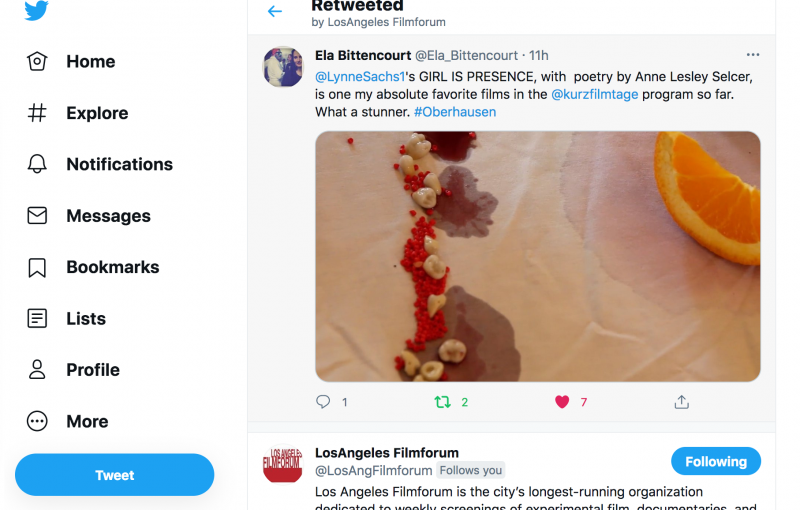
“Lynne Sachs’s GIRL IS PRESENCE, with poetry by Anne Lesley Selcer, is one my absolute favorite films in the @kurzfilmtage program so far. What a stunner. #Oberhausen”. Film critic and arts journalist Ela Bittencourt on Twitter
40 films from 30 countries have been selected for Oberhausen’s first International Online Competition, more than half of them made by women. The list includes numerous new discoveries, but also works by filmmakers Lynne Sachs, winner of the Grand Prize of the City of Oberhausen 2020 or Kristian Mercado, Grammy nominee for his music videos and SXSW jury prize winner, or artists such as Eszter Szabó or Sebastian Buerkner. One of the main underlying themes in the selection is the boundary between humans and machines. Avatars, robots, artificial intelligences are the focus of films like Sebastian Buerkner’s Surge (UK), my favorite software is being here by Alison Nguyen(USA) or Ieva by Vytautas Plukas and Domas Petronis (Lithuania), which explore the question of what actually makes us human at the intersections between digital and real, between the virtual world and reality.
The online selection committee: Hilke Doering (Kurzfilmtage), Christiane Büchner (filmmaker, Cologne), Greg de Cuir (curator, Belgrade), Javier Estrada (curator, Madrid).
International Online Competition
+x+=+, Niyaz Saghari, Iran 3xShapes of Home, Elisabeth Brun, Norway Un très long temps d’exposition (A very long exposure time), Chloé Galibert-Laîné, France Azkorri árnyéka alatt (Under the Shadow of Azkorri), Eszter Katalin, Spain Belos Carnavais (Beautiful Carnivals), Thiago B. Mendonça, Brazil Berlabuh (Anchoring), Haris Yuliyanto, Indonesia Birthday, Yuka Sato, Japan Cântec de leagăn (Cradle), Paul Mureșan, Romania copia de la copia (de la copia), Rafal Morusiewicz, Austria Dear Aki, Nina Kurtela, Croatia Dos hombres atentos (Two Watchful Men), Joserraúl Ortiz, USA Footnote to a Season, Julia Dogra-Brazell, France/UK Girl Is Presence, Lynne Sachs/Anne Lesley Selcer, USA Hemen. Gaur. Berriz (Here. Today. Again), Aitor Gametxo Zabala, Spain Ieva, Vytautas Plukas/Domas Petronis, Lithuania Kalsubai, Yudhajit Basu, India La Cumbre, Felipe Lopez Gomez, Colombia La Promenade sous les arbres (Walk Under the Trees), Nathan Clement, Switzerland Las Credenciales (The Credentials), Manuel Ferrari, Argentina Minnen (Memories), Kristin Johannessen, Sweden my favorite software is being here, Alison Nguyen, USA Nuevo Rico, Kristian Mercado, USA Oasielles, Nathalie Rossetti, Belgium Only Yesterday, Sione Monu, New Zealand Pole Žin (Fields of Žinas), Marie Lukáčová/Anna Remecova, Czech Republic Rumi X Phantasm, Khavn, Philippines SON CHANT, Vivian Ostrovsky, USA Suodji (Shelter), Marja Helander, Finland, Norway Surge, Sebastian Buerkner, UK Széphercegnő (Princess Beauty), Szabó Eszter, Hungary The Light of Day, Alex Eisenberg/Anne Bean, UK The Other Garden; Joel’s Garden, Go-Eun Im, Netherlands/South Korea The Shadows, Paulo Pécora, Argentina The___________World, Peixuan Ouyang, USA/China Tracing Utopia, Catarina de Sousa/Nick Tyson, Portugal/USA/Australia Trampa de luz (Light Trap), Pablo Marín, Argentina Μεσογειακό Τοπίο (Mediterranean Landscape), Christiana Ioannou, Cyprus Состязательная инфраструктура (Adversarial Infrastructure), Anna Engelhardt, Russia Wei Qiao (Dangerous Bridge), Aixing Wang, China 我伪装起来了,就在你面前 (Guising, In front for you), Zhu Changquan, China
Oberhausen, 12 February 2021
Press contact: Sabine Niewalda, T +49 (0)208 825-3073, niewalda(at)kurzfilmtage.de
Anne Lesley Selcerr & Lynne Sachs discuss “Girl is Presence” Collaboration
Stephen Vitiello, an excerpt from Bowed from “Film About a Father Who”Stephen Vitiello, an excerpt from Something Betweene from “Film About a Father Who”
Lynne Sachs first reached out to me in 2012, asking if I could recommend someone to work on the soundtrack for an upcoming film. I probably paused for a polite moment and then offered my own services. Since that time, I’ve created music for several projects by Lynne, including 4 feature-length films, a performance work (created in collaboration with playwright Lizzie Olesker) and a short film that uses a track I did with Molly Berg for a 12k CD. Over the years, I’ve amassed an archive of pieces made for these projects, some used in the films, some excerpted, some proposed. In some cases, Lynne would be looking for a 30-second clip for a transition and I’d use that as an excuse to record a 10-minute piece, figuring we’d find the 30-seconds somewhere in there.
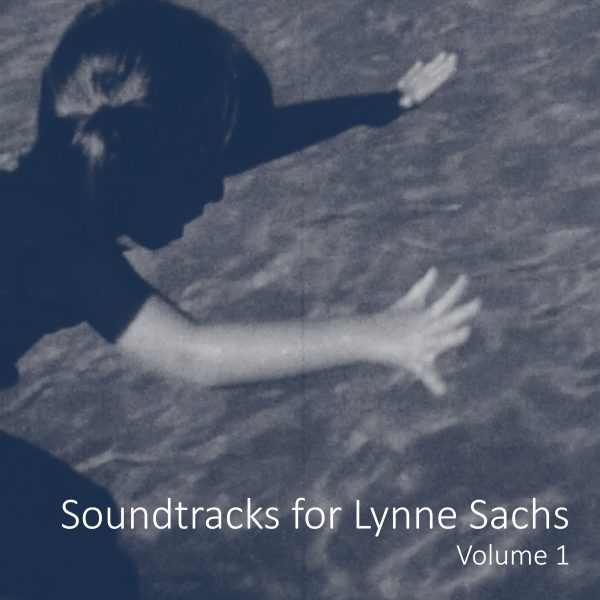
This first volume of soundtracks works are from two films – Film About A Father Who, a complex portrait of Lynne’s father and (many) siblings. And then, Tip Of My Tongue, a piece on events of the last 55 years as remembered by a collection of friends and colleagues. As much as these musical tracks were created for the films, I don’t believe one has to have seen the films to enjoy them. That said, running out, or jumping on your computer, to watch and listen to the films would be a very good thing to consider.
Film About A Father Who, directed by Lynne Sachs, 2020 Editor – Rebecca Shapass
Tip Of My Tongue, directed by Lynne Sachs, 2017 Editor – Amanda Katz
credits
released February 5, 2021
Stephen Vitiello – guitar, modular synthesizer, piano, Rhodes keyboard, field recordings Justin Alexander – percussion (FAFW) Sara Bouchard – piano (FAFW) Olivia LeClair – clarinet (TOMT) Andy McGraw – percussion (TOMT)
Cover art – Lynne Sachs Mastering – Lawrence English
“This is not a portrait,” states Lynne Sachs, near the end of Film About a Father Who, after the last in a string of revelations. “This is not a self-portrait. This is my reckoning with the conundrum of our asymmetry.” Shot on a procession of film and video formats from 1965 though 2019, Sachs’ fascinating new film isn’t therapy, either.
Sachs studied and made films in San Francisco from the mid-’80s through the mid-’90s, bridging the experimental film and documentary worlds. Several of her pioneering works from that period, including The House of Science: a museum of false facts (1991), are included in the Roxie’s accompanying shorts program “Inquiries Into Self and Others.” A second collection, “Profiles in Courage,” showcases Sachs’ recent work, including A Month of Single Frames (for Barbara Hammer).
Sachs’s films are, generally, intentionally unpolished, willfully undercutting the popular presumption that the job of documentaries is to provide answers. Film About a Father Who excavates her (now-elderly) dad’s messy, lifelong love life through a pastiche of loose ends, unanswered questions and unresolved emotions. The film imperceptibly gets deeper and darker as it goes, ultimately amassing the power of an indictment.
Svetlana Cvetko lives in L.A. and shoots all over the world, but her roots as a filmmaker are in the Bay Area. After gravitating to San Francisco from the former Yugoslavia several years ago, Cvetko took film classes and turned her eye from photography to cinematography. She was a quick study, making narrative shorts while shooting local docs like Charles Ferguson’s Oscar-winning Inside Job, Jacob Kornbluth’s Inequality for All and Jason Cohen’s Silicon Cowboys.
Cvetko’s wonderful and wise second feature as a director, Show Me What You Got, is infused with an L.A. vibe filtered through the French New Wave. Shot by Cvetko in joyous, handheld black-and-white, the movie depicts a ménage à trois between a barista-slash-artist (Cristina Rambaldi), the son of an Italian TV soaps star (Mattia Minasi) and a would-be actor (Neyssan Falahi) postponing his return to Tehran.
A seductive yet mature study of love, freedom and responsibility, Show Me What You Got returns for a virtual run after screening at the Mill Valley Film Festival in 2019. Play dates are limited, so hurry and schedule your play date (pun intended).
Film festivals continue to test and tweak virtual models, trying to conjure the group experience of live screenings and the connective threads of community. The first is a hard nut for anyone—even Sundance—to crack. This year’s SF Urban Film Fest, though, has mastered the second challenge, of bringing people together online to brainstorm on issues and seed solutions.
The theme of this year’s edition is “Wisdom Lives in Places,” which evokes the street-level experience and expertise on offer in the films as well as the accompanying panel discussions. The program “People-Led Solutions: Models of our Shared Future” centers on evictions and homelessness and features local filmmaker Irene Gustafson’s collaboration with the Tenderloin ensemble Skywatchers, reimagining the city, as our own. An inspiring group of activists and advocates convenes after the film program.
Who can resist an event called “Times Like These: An Inflection Point for Food & Our Cities”? The film component includes Aaron Lim, Anson Ho’s uplifting short doc about a young man doing his part and more to keep Chinatown restaurants going through the pandemic. The diverse group talking turkey following the films includes La Cocina Program Director Geetika Agrawal. Bring your wisdom; join the conversation.
A conversation and live Q&A about Lynne Sachs’s newest documentary, a personal look at memory, familial love, and the unknowability of parents to their children. Sachs will discuss the movie with art historian, critic and long-time friend to the filmmaker, Kathy O’Dell and Artistic Director, Christy LeMaster and then take questions form the audience.
Live Q&A with Lynne Sachs on Friday, February 19, 7:00 pm PST (10:00 pm EST) by Zoom
Conversation with Lynne Sachs and Stephen Vitiello moderated by musician and music critic Sasha Frere-Jones on Sunday February 21, 5:00 pm PST (8:00 pm EST) by Zoom
Online via Los Angeles Filmforum
Filmforum is delighted to kick off 2021 by welcoming back our friend Lynne Sachs with her new film and several past works, all of which include original music by sound artist Stephen Vitiello.
“In collaborating on the soundtracks for my films, Stephen Vitiello somehow recognizes the interior sounds of objects and releases them for us to hear. Together his music and his sound designs push audiences toward a new way of experiencing cinema.” – Lynne Sachs
In these two programs, Los Angeles Filmforum explores the seven-year collaborative relationship between filmmaker Lynne Sachs and sound artist Stephen Vitiello.
Admission will include receiving links to both Zoom conversations!
Four films are covered by this admission, which is on a sliding scale, and which takes you to a screening room set up by Canyon Cinema. You also get a free link to the live Q&A with Lynne on Friday February 19 and the tripartite conversation on Sunday Feb 21.!
Ticketing for Four Films: Sliding Scale, $0 for members, $5 for students, $8, $12, $20
Special Thanks to Brett Kashmere, Canyon Cinema, Tom Sveen, Cinema Guild.
Films by Lynne Sachs with music and sound design by Stephen Vitiello
2013 – 2020
Biographies:
Lynne Sachs is a filmmaker and a poet born in Memphis, Tennessee but living in Brooklyn, New York. Her work explores the intricate relationship between personal observations and broader historical experiences by weaving together text, collage, painting, politics and layered sound design. Strongly committed to a dialogue between cinematic theory and practice, she searches for a rigorous play between image and sound, pushing the visual and aural textures in her work with every new project. Her work ranges from the very personal, as in her early experiments that are reminiscent of Bruce Connor’s found footage films and Chris Marker’s essay films, to documentary, as in her film on the Catonsville Nine’s antiwar-activism in Investigation of a Flame. Lynne discovered her love of filmmaking while living in San Francisco where she worked closely with film artists Craig Baldwin, Bruce Conner, Barbara Hammer, George Kuchar, and Trinh T. Min-ha. Between 1994 and 2006, she produced five essay films that took her to Vietnam, Bosnia, Israel, Italy and Germany — sites affected by international war — where she looked at the space between a community’s collective memory and her own subjective perceptions.
Sachs has made 37 films, which have screened at the New York Film Festival, Sundance, Oberhausen, Viennale, BAMCinemaFest, Vancouver Film Festival, DocLisboa and many others nationally and internationally. They have also been exhibited at the Museum of Modern Art, the Whitney Museum of American Art, Walker Art Center, Wexner Center for the Arts and other venues. The Buenos Aires International Festival of Independent Cinema, Festival International Nuevo Cine in Havana, China Women’s Film Festival and Sheffield Documentary Festival have all presented retrospectives of Lynne’s films. She received a 2014 Guggenheim Fellowship in the Arts. In 2019, Tender Buttons Press published Lynne’s first collection of poetry, Year by Year Poems. Lynne lives in Brooklyn with filmmaker Mark Street. Together, they have two daughters, Maya and Noa Street-Sachs. www.lynnesachs.com
Stephen Vitiello is an electronic musician and sound artist who transforms incidental atmospheric noises into mesmerizing soundscapes that alter our perception of the surrounding environment. He has composed music for independent films, experimental video projects and art installations, collaborating with such artists as Nam June Paik, Tony Oursler and Dara Birnbaum. Solo and group exhibitions include MASS MoCA, The High Line, NYC, and the Museum of Modern Art. https://www.stephenvitiello.com/ Solo exhibitions include All Those Vanished Engines, MASS MoCA, North Adams, MA (2011-(ongoing)); A Bell For Every Minute, The High Line, NYC (2010-2011); More Songs About Buildings and Bells, Museum 52, New York (2011); and Stephen Vitiello, The Project, New York (2006). He has participated in such group exhibitions as Soundings: A Contemporary Score, Museum of Modern Art, NY (2013); Sound Objects: Leah Beeferman and Stephen Vitiello, Fridman Gallery, New York (2014); September 11, PS 1/MoMA, LIC, NY (2011-2012); the 15th Biennale of Sydney, Australia (2006); Yanomami: Spirit of the Forest at the Cartier Foundation, Paris; and the 2002 Biennial Exhibition, Whitney Museum of American Art, New York (2002). Vitiello has performed nationally and internationally, at locations such as the Tate Modern, London; the San Francisco Electronic Music Festival; The Kitchen, New York; and the Cartier Foundation, Paris. In 2011, ABC-TV, Australia produced the documentary Stephen Vitiello: Listening With Intent. Awards include Creative Capital (2006) and a Guggenheim Fellowship (2011-2012). Vitiello is a professor of Kinetic Imaging at Virginia Commonwealth University. He lives and works in Richmond, Virginia.
Sasha Frere-Jones is a writer and musician from New York.
Los Angeles Filmforum screenings are supported by the Los Angeles County Board of Supervisors through the Los Angeles County Department of Arts & Culture, the Department of Cultural Affairs, City of Los Angeles, the National Endowment for the Arts, the Mike Kelley Foundation for the Arts, the Wilhelm Family Foundation, and the Academy of Motion Picture Arts & Sciences. We also depend on our members, ticket buyers, and individual donors.
The Washing Society Directed by Lynne Sachs and Lizzie Olesker 2018, color, sound, 44 min. When you drop off a bag of dirty laundry, who’s doing the washing and folding? The Washing Society brings us into New York City laundromats and the experiences of the people who work there by observing these disappearing neighborhood spaces and the continual, intimate labor that happens there. The juxtaposition of narrative and documentary elements in THE WASHING SOCIETY creates a dream-like, yet hyper-real portrayal of a day in the life of a laundry worker, both past and present.
“The legacy of domestic work, the issues surrounding power, and the exchange of money for services are all potent themes which rise to the surface and bubble over in dramatic, thrilling escalations of the everyday.” – Brooklyn Rail
“Spotlights the often-invisible workers who fold the clothes, maintain the machines and know your secrets.” – In These Times
Featuring: Jasmine Holloway, Veraalba Santa, and Ching Valdes-Aran Cinematography: Sean Hanley, Editiing: Amanda Katz
“Drift and Bough” 2014, Super 8mm on Digital, B&W, sound, 6 min. Sachs spends a winter morning in Central Park shooting film in the snow. Holding her Super 8mm camera, she takes note of graphic explosions of dark and light and an occasional skyscraper. The stark black lines of the trees against the whiteness create the sensation of a painterʼs chiaroscuro. Woven into this cinematic landscape, we hear sound artist Stephen Vitielloʼs delicate yet soaring musical track which seems to wind its way across the frozen ground, up the tree trunks to the sky.
Tip of My Tongue 2017, color, sound, 80 min. “To mark her 50th birthday, filmmaker Lynne Sachs gathers a group of her contemporaries—all New Yorkers but originally hailing from all corners of the globe—for a weekend of recollection and reflection on the most life-altering personal, local, and international events of the past half-century, creating what Sachs calls ‘a collective distillation of our times.’ Interspersed with poetry and flashes of archival footage, this poignant reverie reveals how far beyond our control life is, and how far we can go despite this.” — Kathy Brew, Museum of Modern Art
“A mesmerizing ride through time, a dreamscape full of reflection, filled with inspired use of archival footage, poetry, beautiful cinematography and music. Raises the question of how deeply events affect us, while granting us enough room to crash into our own thoughts, or float on by, rejoicing in the company of our newfound friends.” — Screen Slate, Sonya Redi
“A beautiful, poetic collage of memory, history, poetry, and lived experience, in all its joys, sorrows, fears, hopes, triumphs, and tragedies … rendered in exquisite visual terms, creating an artful collective chronicle of history.” Christopher Bourne, Screen Anarchy
Featuring: Dominga Alvarado, Mark Cohen, Sholeh Dalai, Andrea Kannapell, Sarah Markgraf, Shira Nayman, George Sanchez, Adam Schartoff, Erik Schurink, Accra Shepp, Sue Simon, Jim Supanick
Cinematography: Sean Hanley
Editing: Amanda Katz
Your Day is My Night 2013, HD video and live performance, color, sound, 64 min. Immigrant residents of a “shift-bed” apartment in the heart of New York City’s Chinatown share their stories of personal and political upheaval. As the bed transforms into a stage, the film reveals the collective history of the Chinese in the United States through conversations, autobiographical monologues, and theatrical movement pieces. Shot in the kitchens, bedrooms, wedding halls, cafés, and mahjong parlors of Chinatown, this provocative hybrid documentary addresses issues of privacy, intimacy, and urban life.
“A strikingly handsome, meditative work: a mixture of reportage, dreams, memories and playacting, which immerses you in an entire world that you might unknowingly pass on the corner of Hester Street, unable to guess what’s behind the fifth-floor windows.” -The Nation
In Chinese, English & Spanish with English Subtitles.
Featuring: Yi Chun Cao, Linda Y.H. Chan, Chung Qing Che, Ellen Ho, Yun Xiu Huang, Sheut Hing Lee, Kam Yin Tsui, & Veraalba Santa.
Camera by Sean Hanley and Ethan Mass
Winner, Best Feature Documentary, San Diego Asian Film Festival, 2013 * Winner, Best Feature Film, Workers Unite! Film Festival, 2013 * Winner, Best Experimental Film, Traverse City Film Festival, 2013
Fresh from her early 2021 retrospective at New York City’s Museum of the Moving Image, filmmaker Lynne Sachs returns to San Francisco where she lived and went to school (SFSU & SFAI) between 1985 and ‘95. It was here that Lynne really immersed herself in our city’s experimental and documentary community, working closely with local artists Craig Baldwin, Bruce Conner, Barbara Hammer, Gunvor Nelson and Trinh T. Minh-ha and spending time at the Film Arts Foundation (RIP), Canyon Cinema, SF Cinematheque, and Other Cinema.
“For more than thirty years, artist Lynne Sachs has constructed short, bold mid-length, and feature films incorporating elements of the essay film, collage, performance, and observational documentary. Her highly self-reflexive films have variously explored the relations between the body, camera, and the materiality of film itself; histories of personal, social, and political conflict; marginalized communities and their labor; and her own family life, slipping seamlessly between modes, from documentary essays to diaristic shorts.” – Edo Choi, Assistant Curator of Film, Museum of the Moving Image.
Accompanying our Bay Area premiere of Sachs’s Film About a Father Who, the Roxie offers two accompanying shorts sidebars programmed by filmmaker and Other Cinema curator Craig Baldwin.
Over a period of 35 years between 1984 and 2019, filmmaker Lynne Sachs shot 8 and 16mm film, videotape and digital images of her father, Ira Sachs Sr., a bon vivant and pioneering businessman from Park City, Utah. Film About a Father Who is her attempt to understand the web that connects a child to her parent and a sister to her siblings. With a nod to the Cubist renderings of a face, Sachs’ cinematic exploration of her father offers simultaneous, sometimes contradictory, views of one seemingly unknowable man who is publicly the uninhibited center of the frame yet privately ensconced in secrets. In the process, Sachs allows herself and her audience inside to see beyond the surface of the skin, the projected reality. As the startling facts mount, Sachs as a daughter discovers more about her father than she had ever hoped to reveal. (74 min., 2020, A Cinema Guild Release)
Critic’s Pick! “[A] brisk, prismatic and richly psychodramatic family portrait.” – Ben Kenigsberg, The New York Times
“Sachs achieves a poetic resignation about unknowability inside families, and the hidden roots never explained from looking at a family tree.” – Robert Abele, Los Angeles Times
“Formidable in its candor and ambition.” – Jonathan Romney, Screen International
Tickets for FILM ABOUT A FATHER WHO will be available on February 12
SACHS SHORTS SIDEBARS
Sidebar 1: INQUIRIES INTO SELF AND OTHER
Still from “The House of Science: a museum of false facts”
Still Life with Woman and Four Objects (4 min., 1986) Sermons and Sacred Pictures (29 min., 1989) The House of Science: a museum of false facts (30 min., 1991) Which Way Is East: Notebooks from Vietnam (made with Dana Sachs) (33 min., 1994)
“As sidebar to her fresh Father feature, here is the first of two shorts programs, showcasing the astonishing cinematic artistry of Lynne Sachs…all made during her san fran years and recently digitally restored. Her ‘89 Sermons offers an early glimmer of her sensitivity to both marginalized communities and their archives, as she gracefully threads ultra-rare ‘30s & ’40s footage from Rev. LO Taylor into a tapestry of visibility and respect for Memphis’ Black community. Her facility for celluloid extrapolation is demonstrated in even more creative ways in House of Science, a personal essay on female identity, told through found footage, poetic text, and playful experimental technique. Which Way is East raises its eyes to engagements in international waters, and to insightful exchanges with her expat sister Dana, towards new understandings of and in the oh-so-historically charged Republic of Vietnam. Opening is Lynne’s first ever 16mm, Still Life.” – CB
TRT: 96 min.
Tickets for Sidebar 1: INQUIRIES INTO SELF AND OTHER will be available on February 12
—
Sidebar 2: PROFILES IN COURAGE
A Month of Single Frames (for Barbara Hammer) (14 min., 2019) Investigation of a Flame (45 min., 2001) And Then We Marched (4 min., 2017) The Washing Society (co-directed with Lizzie Olesker) (44 min., 2018)
“Characteristically, Sachs speaks in first person to cultural difference and dissent, here particularly valorizing acts of resistance and struggles for justice. Her collaboration with the recently deceased lesbian maker Barbara Hammer keynotes this ‘Solidarity’ set, with Lynne literally framing/finishing her mentor’s last project. Younger allies are also acknowledged in Sachs’ inspiring 2017 celebration of women’s political power on contested Washington, DC turf. The 2001 Investigation is a tribute to the courage and conscience of the epochal Berrigan-led burning of Baltimore draft records, made while Sachs was teaching in that town. And the local debut of The Washing Society, produced with playwright Lizzie Olesker, stakes their support of NYC’s low-paid laundry workers—mostly women of color—in even another radiant illumination of the little-seen truths of contemporary race/class inequity.” – CB
TRT: 107 min.
Tickets for Sidebar 2: PROFILES IN COURAGE will be available on February 12
BRIAN DARR (unranked) The Beast Must Die The Brilliant Biograph: Earliest Moving Images of Europe Days Film About a Father Who First Cow Fourteen The Giverny Document Nomadland Steven Arnold: Heavenly Bodies Undine
from Nelson Kim My 20 favorite new movies of 2020, in alphabetical order. (LOVERS ROCK and NEVER RARELY SOMETIMES ALWAYS were probably my favorite-favorites.)
ANOTHER ROUND (Thomas Vinterberg) THE ASSISTANT (Kitty Green) BAD EDUCATION (Cory Finley) BEANPOLE (Kantemir Balagov) THE CLOUD IN HER ROOM (Zheng Lu Xinyuan) COLLECTIVE (Alexander Nanau) DICK JOHNSON IS DEAD (Kirsten Johnson) EMMA (Autumn DeWilde) FILM ABOUT A FATHER WHO (Lynne Sachs) FIRST COW (Kelly Reichardt) THE GRAND BIZARRE (Jodie Mack) LOVERS ROCK (Steve McQueen) MINARI (Lee Isaac Chung) NEVER RARELY SOMETIMES ALWAYS (Eliza Hittman) NOMADLAND (Chloe Zhao) SHITHOUSE (Cooper Raiff) SWALLOW (Carlo Mirabella-Davis) TIME (Garrett Bradley) THE TROUBLE WITH BEING BORN (Sandra Wollner) THE VAST OF NIGHT (Andrew Patterson)
BFI: The best films of 2020 – all the votes
We asked 104 contributors – British and international – to pick the ten best new films they’d seen in 2020. Here you can browse all 353 films they nominated.
Lynne Sachs’s body of work first came to my attention via Sheffield Doc/Fest’s online focus and I am now completely immersed in her craft.
There are many more films that will seem like omissions and perhaps it is only that my eyes await them, as I was unable to see the usual level of films this year, though I have still witnessed great talent, art and beauty.
Cine-File Contributors’ Best of 2020 Lists
https://www.cinefile.info/blog/best-of-2020 Kathleen Sachs Favorite New(-ish) Releases I Saw for the First Time in 2020 1. CITY HALL (Frederick Wiseman) 2. DAYS (Tsai Ming-liang) 3. BEANPOLE (Kantemir Balagov) 4. THE WOMAN WHO RAN (Hong Sang-soo) 5. EMA (Pablo Larraín) 6. (Tie) MAAT MEANS LAND/SAN DIEGO (Fox Maxy) 7. JUANITA (Leticia Tonos Paniagua) 8. (Tie) FILM ABOUT A FATHER WHO (Lynne Sachs)/A HOUSE IS NOT A HOME: WRIGHT OR WRONG (Mehrnaz Saeed-Vafa) 9. ON A MAGICAL NIGHT (Christophe Honoré) 10. FIRST COW (Kelly Reichardt)
Pathological in a comparatively old-fashioned way is the man at the center of Lynne Sachs’ very-long-in-the-making personal documentary. (It deploys footage shot by herself, family members, and others between 1965-2019.) She is daughter to Ira Sachs, a hotelier and entrepreneur who worked as little as was needed to maintain his extravagant, globe-trotting, pleasure-seeking lifestyle. (Ira Sachs Jr. is Lynne’s full brother, as well as the slightly-better-known director of such excellent movies as Keep the Lights On and Little Men.) Some apparently called him “the Hugh Hefner of Park City.” I doubt he protested.
While he may be elderly and perhaps a bit senile now (or perhaps he’s just using “I don’t remember” as an excuse to dodge questions), few deny that he was charismatic, fun, generous, genuine in his love for people…even if his actions often caused them grief. What he wasn’t was “the stable parent” (that was Lynne and Ira Jr.’s mother), or anyone who could be counted on, least of all to be honest. “He doesn’t lie—he just doesn’t tell you what’s going on” one daughter says here. That fibbing by omission extended to his neglecting to inform his “legitimate” children of their “hidden siblings” scattered hither and yon, some left to grow up in abject poverty while he flew with the jet-set. Even the kids he was hiding such intel from were all too aware he was constantly stringing along not just wives and mistresses, but “subsidiary girlfriends,” short-term flings, much-younger pickups, et al. His bedroom should have had a revolving door.
Compromised largely of home movies covering decades, Film About a Father Who is a semi-experimental collage documentary that asks the question “How can you love people you don’t know?” The senior Sachs is lovable, by all reports, yet refuses to be truly “known,” perhaps even to himself—evasion seems utterly core to his being. His own wealthy, long-suffering mother (from whom he kept many of his children secret) calls him a kind of psychological “cripple,” his compulsive promiscuity a sickness. He’s not exactly an above-board embodiment of “free love”: He has been deliberately deceptive, misleading women and to varying degrees skipping out on the consequences they’ve then had to live with. His filmmaker daughter doesn’t see him as a simple cad. But as intriguing as this ambivalent portrait is, the viewer may well disagree. It becomes available as part of the Roxie Virtual Cinema programming on Fri/12.
A conversation with the US filmmaker Lynne Sachs about the importance of the autobiographical in her films
From the beginning of your career as an artist and filmmaker you were in one way or another present in your films: as a body, as a voice, or with certain‚ chapters’ of your own (family) history. Why was this personal or autobiographical approach important to you, why is it still relevant?
Presence in a film comes in a variety of forms. When I used to cut the actual film footage with a guillotine splicer, I felt that my finger prints on the celluloid were the beginning of my engagement with both the celluloid material and the moment that it signified through the images I had collected with my camera. Of course, that haptic connection has now disappeared with the intervention of the digital. Still, in our current time, every image or sound that you collect, be it your own or a found one, is a document of a thought. During the first decade of my filmmaking practice, almost every film I made included some image of my own body, sometimes clothed, sometimes not. It almost became a joke in my family. ”Oh, there she is again!” But, for me, this was a way to subvert the subject/object paradigm of the camera. I needed to flow back and forth, as if through the mechanism of the lens itself. The presence of my body paralleled the presence of my words, whether experienced aurally as voice-over or on the screen through my hand-written gesture. Today, we all recognize the inundation of media in our lives. With the sensation of feeling this material as either an assault or caress (depending on your mood as you scroll through your cell phone just before going to sleep at night), each of us must find a way to register awareness and critique.
Although you choose a personal approach, you represent yourself (and others) more in a fragmented way than as ‚authentic’ characters. What is the idea behind this?
Seeing my work through your eyes is a revelation, actually. I would not have articulated my approach this way, and yet I completely agree with your assessment. I have never identified with storytelling and, in turn, the effort to create a character. This homage to narrative tradition I find reductive and limiting, in the same way that I would find writing a conventional feature film script to be deeply restrictive. One of the words I despise most in today’s parlance is the word “template”. When I discovered that there are templates for writing feature film screenplays, I felt like weeping. When one uses the word “personal” to describe their work, I think they are claiming ownership for all aspects of the creative process, from the structure to the content. Yes, I do feel an affinity for a more fragmented depiction of another person because I want to make clear that my ability to understand is determined by my point of view. These fissures give someone watching the film the possibility of providing the glue, the connections, the linkages that always circle back to their own life experiences.
How do you deal with the double position of being the author and the figure of your films at the same time?
Sometimes I make films that are very clearly an outgrowth of my own identity as a white Jewish woman born in the United States in 1961. I can’t change any of that and I can’t simply hide one part and flaunt another. Other times, I make films that don’t make those ingredients so apparent, even though they are always there. Even when my voice, my writing or my body are not there, we all know that my position is influencing every decision I make, how person is framed, how a sound is heard, which music is included, which images are given the space to thrive and which are punished for their very existence.
When speaking about her autifictional novel The Cost of Living, the British writer Deborah Levy characterized her literary (female) subject as a person who is not herself, but who is ‚close’ to her. Who are you in your films?
Deborah Levy’s sense of her own presence in her work is very intriguing, even candid. This reminds of a cultural theory observation by filmmaker, poet and teacher Trinh T. Minh-ha in her essay “Speaking Nearby” (1992) which I quote here:
“There is not much, in the kind of education we receive here in the West, that emphasizes or even recognizes the importance of constantly having contact with what is actually within ourselves, or of understanding a structure from within ourselves. The tendency is always to relate to a situation or to an object as if it is only outside of oneself. Whereas elsewhere, in Vietnam, or in other Asian and African cultures for example, one often learns to “know the world inwardly,” so that the deeper we go into ourselves, the wider we go into society.”
Trinh was a professor of mine in graduate school. I am convinced that her practice of transposing her understanding of herself to her earnest, but always recognizably incomplete, effort to project on others had an enormous impact on my work.
In your films about family members like your father in Film About a Father Who (2020) or The Last Happy Day (2009), which tells of a distant cousin of yours, you sometimes seem to dissolve as the authorial voice, or to put it another way, you pass on your voice – for example to your siblings or children. Is this also a form of giving up some of the power that one has as a narrative authority?
Hmmmm. This makes me think very hard about my process. That’s what a good interview does. Thank you for giving me this chance to be introspective. On one level, I am very committed to a non-hierarchical way of working, one that does not privilege my perspective over another person’s. On another level, perhaps I am ashamed of expressing my thoughts or feelings in a singular voice so I depend on others to prop me up. Both of these films are part of a triptych of films, the third of which is States of UnBelonging (2005). The intention with this three-part endeavor was to grapple with the ways we can and cannot understand another human being. States of UnBelonging looks at a woman in Israel-Palestine who was total stranger to me. The Last Happy Day is a fragmented portrait of a distance relative, so one degree closer, in a way, to me. Film About a Father Who is, obviously, about my dad. That was supposed to be the easiest, and ultimately it was the most difficult. Closeness and intimacy somehow became an obstacle. I end up relying on others to give me clarity.
In A Month of Single Frames, your film with images, sounds and notes by the now deceased experimental filmmaker Barbara Hammer, I was very taken with your expanding the First Person Singular. What gave you the idea of this grammatical shift?
Oh, I am thrilled to be talking about voice, language and grammar all in one question. In A Month of Single Frames I decided that I would use the expanded Second Person that includes an ambiguous “you”. It could be the “you” that we usually find in a correspondence with another person. Or, it could be the “you” that embraces all of us in one sweeping address. When I write the word you, the viewer might think I am talking to Barbara Hammer, who is no longer alive but through cinema can be included in this dialogue. Or, the viewer may feel that I am addressing them. It’s kind of wonderfully unclear, which might be an accident or might be intentional. I will never tell.
This is how I see you. This is how you see yourself.
You are here. I am here with you.
This place is still this place. This place is no longer this place. It must be different.
You are alone. I am here with you in this film. There are others here with us. We are all together.
Time less yours mine
(On Screen text by Lynne Sachs from A Month of Single Frames)
For some time, personal or autobiographical narratives are strongly present in documentary filmmaking. How would you explain the strong interest in the personal in these times?
My interpretation of this current enthusiasm for the personal narrative has to do with our interest in knowing who is speaking to us. So much media in our lives is delivered to us without this clarity of positionality. We are forced to discern and to guess how who someone is affects what they are saying to us. Maybe it is refreshing to have this kind of transparency.
“Film About a Father Who” opens on Ira Sachs, the filmmaker’s father, flinching as a comb works through his long and wiry hair. In this frame, Ira is an unknown elderly man who looks tired, harmless and boring. As the documentary untangles the web of adventure, women and children that make up his life, he proves to be quite the opposite.
Filmed and directed by Lynne Sachs, “Film About a Father Who” is an examination of Ira’s role in the lives of those who are close to him. Ira is initially depicted as a gregarious and quirky businessman who takes his work calls while riding ski lifts. As the film progresses, his cavalier attitude toward life appears to put a heavy burden on his children, his mother and his romantic partners.
The caricature that Ira fulfills — an absent and negligent father — is a bit tired, but his story is nonetheless worthy of hearing, especially as Sachs’ approach to making this documentary creates a genuinely emotional audience experience.
Sachs meticulously pieces together moments of her father’s life and interviews with those who know him intimately to make up this documentary. The shots featured were taken over a 35-year period, which only makes it feel more organic.
“Film About a Father Who” is often dreamlike and nostalgic. Sachs is imaginative with her talking heads, scene transitions and introductions. Sometimes the timelines of events are unclear, but this haziness only emphasizes the overarching theme of general confusion about how she and her siblings should feel toward their father. He has nine children with multiple different women, and they each struggle to understand how to manage their relationship with him and each other.
The most intriguing aspect of this film is its level of candor and its genuine purpose. Sachs makes no futile attempts to give her viewer definitive answers. Like its title suggests, this documentary invites outsiders to consider who or what the father at the center of this film is. On the surface, he is an intriguing free spirit. As he complicates and impresses upon his children’s lives, he becomes toxic.
Sachs does not hold back on the negative portrayals of her father, and she makes no excuses for him. In a voiceover near the end of the film, Sachs says, “This is not a portrait. This is not a self-portrait. This is my reckoning with the conundrum of our asymmetry.” This film is not an invitation to view the spectacle that is Sachs’ eccentric father. It is instead a valiant attempt to come to terms with the chasm between them, even as they are inextricably linked.
“Film About a Father Who” can be watched online through various virtual cinemas.