Tag Archives: film about a father who

In Their Own League – Exclusive Interview with Filmmaker Lynne Sachs

Exclusive Interview with Filmmaker Lynne Sachs
In Their Own League 
By Bianca ‘Bee’ Garner 
July 17, 2020
https://intheirownleague.com/2020/07/17/exclusive-interview-with-filmmaker-lynne-sachs/

Lynne Sachs is an extraordinary filmmaker with a distinct and unique approach to documentary filmmaking. Each one of her films is an exploration into a secret hidden world as well as an experiment with the medium of visual storytelling. Currently, the Sheffield Documentary Film Festival is running a ‘Directors in Focus’ showcase of Sachs’ work where you can catch pieces like “Your Day is My Night”, “The Washing Society” and her latest film “Film About a Father Who”.

It’s been a real delight to explore Sachs’ work as part of the festival and when the opportunity arose to speak to Lynne personally, I jumped at the chance. Here’s our interview where we discuss how she approaches documentary filmmaking, her friendship with Barbara Hammer and the art of editing. 

Bianca: Hello Lynne, lovely to chat to talk. I just want to say how much I’ve enjoyed exploring your work as part of the Sheffield Doc Fest “Directors in Focus”, you have such an unique approach to filmmaking. I find it to be this unusual blend of traditional documentary style filmmaking meets the avant-garde artistic style of filmmaking of allowing imagery and sound to tell the stories. How did you develop this approach and style of filmmaking, and what was it about documentary filmmaking that appealed to you as a filmmaker?

Lynne: I’ll guess I’ll start by admitting that I don’t even know if I would be able to make a traditional documentary, that might be because of when I invest myself into an investigation or a story I take such a deep dive and I am always looking for a visual or an oral method by which I can comment on that particular theme in a way that hasn’t been done before. Sometimes it’s the topic that guides me. 

The more conventional approach would be to have a template or a formula or maybe even a time-limit like 58 minutes so you would have time for the commercial breaks, then you would take your subject and frame it by those expectations. However, that approach never really interested me and I wonder whether I have the skill or the commitment to do that style of filmmaking. 

My desire to work in the documentary realm came from a convergence of the love of art and the love of politics. My background was as an undergraduate in history, I never expected to be an academic historian but it feeds my way of thinking. I wanted my creative juices to fly but the limitations of being a historian weren’t appealing to me.
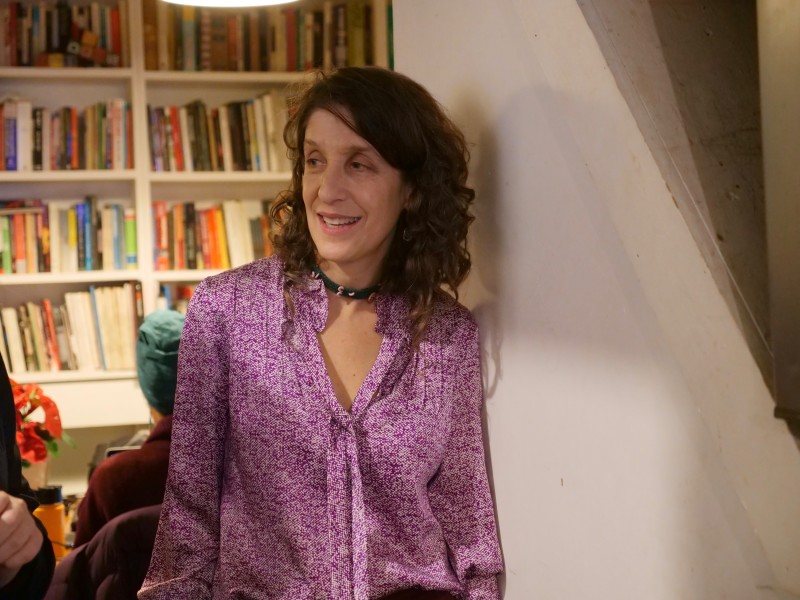
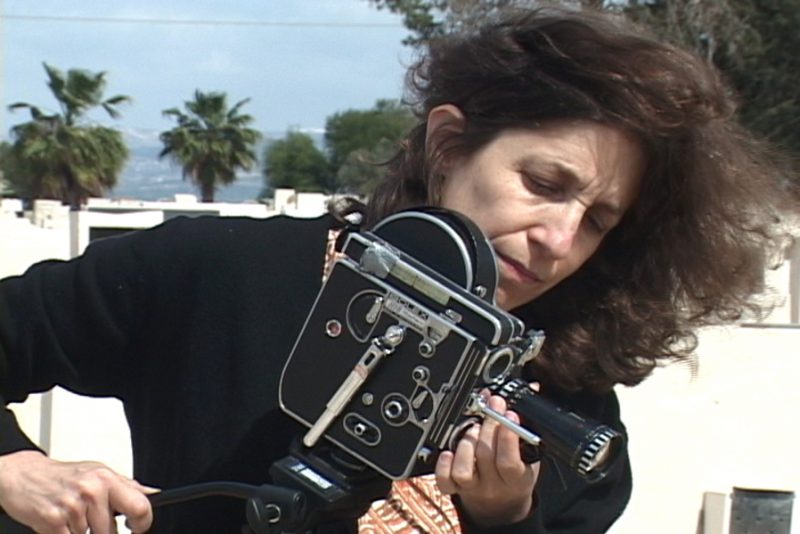
Lynne Sachs, dir. of Film About a Father Who

Bianca: Did you always strive to have a personal connection with the people and the subjects you film?

Lynne: It’s very important to me to have a complex relationship with the people in my film, just like the one I would have normally with a friend. It takes work, and often in the field of filmmaking there’s the sense of jumping in as quickly as possible then leaving. You actually leave with this gift: the interaction you had with the people you filmed. You then own that gift, but those people don’t have that anymore. I think the whole process has to take a whole circle where you work to find the right participants for your film, you work on that film and then you come back to them after completion and during distribution. 

With “Your Day is my Night” we worked on that film for a couple of years and it became a live performance and I was bringing the people from Chinatown, to places in New York City where they hadn’t been before. I was organising cars for them as they were older people and we couldn’t expect them to travel via Subway. I wanted them to experience that pleasure, and two years after we had finished shooting we took the film and the live performance to a public library in Chinatown where we had an afternoon matinee where all of their friends came.
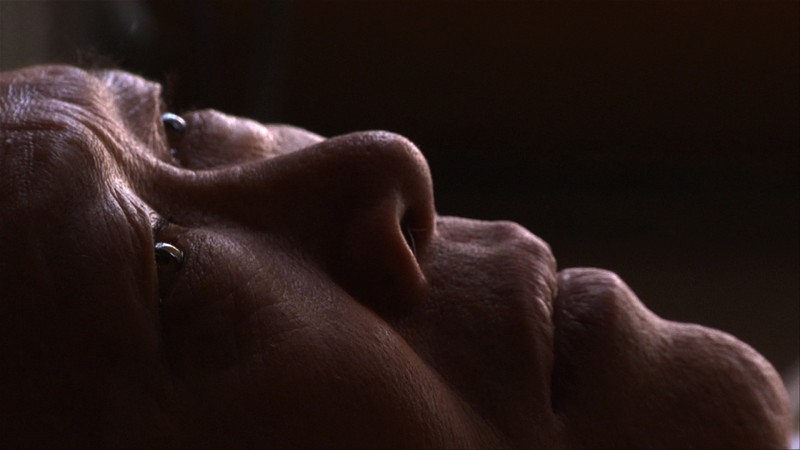
It was actually quite a sad moment because one of the participants in the film had died since we made the film, so when his face came up in the film everyone in the audience started crying. So, it was a memorial for him in a way. There are ways films can function outside the function of building your career or taking you to film festivals. I really feel committed about the idea of having movies been shown on all different kinds of screens.

Bianca: People often overlook the importance of sound and audio in filmmaking because film is a visual medium. What I find fascinating about your films is that often the audio doesn’t always match up to what’s being depicted on-screen. I think this is brilliantly showcased in your latest film “Film About a Father Who” where we see one version of your father being shown but the narration is discussing a different aspect of his character.

Lynne: I just want to touch on something I hadn’t thought about, the formal connection between the way you understand a human being and the way that film works, and how you process what you see and what you later discover. I think that’s very particular to this medium. We have this notion that the visual and the sound should be married but we all know that marriage is just an agreement that can fall apart. It’s through that use of ‘falling apart’ where we begin to see that what something appears like isn’t actually what it is in reality, and we build in doubt. 

I think doubt should be a part of any filmmaking experience, whether you’re talking about fiction or non-fiction, do we believe the ideology that is intact. If you’re a doubtful viewer in any way then you start to engage with it in a deeper way, you start to question everything and as a result you become more intellectually engaged. What I wanted to say about “Film About a Father Who” that there were times where maybe I was uncomfortable in a situation where I did have doubts, but I wanted to believe that things were more acceptable than they actually were and worked with how I thought a father should be. 

If you think about the foundations of who we think we are as children and the notions of how we fit into that micro community it’s usually pretty transparent. However, maybe that’s no longer the case today. I used to think my family was very atypical, but now that I’ve screened the film quite a lot of people have either come up to me or written to me to share their own experiences. I think our notions of family are now more evolved than how it was when I was a kid.
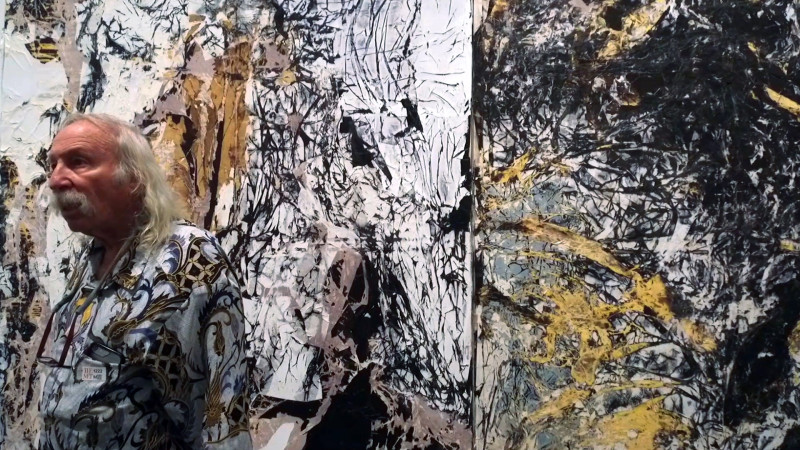
Ira Sachs Sr. w Painting in Film About a Father Who

Since making the film I’ve been able to have some really profound conversations with those who have watched it. Whether or not it’s your mother or father who have secrets it’s their way of protecting themselves, but it also leaves an imprint on us and we’re left with a sense of confusion about how we’re supposed to process this new information and emotions. 

Bianca: The impression I got from your film was that this was not only a self-discovery for you but also a self-discovery of who your father is. It was a self discovery of a family too.

Lynne: It took me a year of going through all the videos and super-8 films and I realise I had a lot of content about my father. The traditional approach to documentary filmmaking is that you take all the footage and make a character so people leave the movie thinking they really know that person. I thought about whether that was what I really wanted to do, as what I was really interested in was the interrelationships between people and the way we yearn for a part of our parents in ourselves and how we are always looking for stability. I know I have very distinct relationships with my parents and I value that in its own way. 

Bianca: What’s something you want the viewer to take away from “Film About a Father Who”?

Lynne: I’m very interested portraying the layers of expression especially in terms of being a woman, that include your anger and your rage as well as your ability to integrate forgiveness because I think it’s very hard to go on living your life if you hold onto the pain of your own rage. Forgiveness isn’t about saying that something didn’t happen, there are parts in my film where I realise that I’ve become very good at training myself to have forced amnesia. If you can find forgiveness and realize that the person who hurt you or made mistakes, made those mistakes because of the things they went through themselves that can help you move forward.
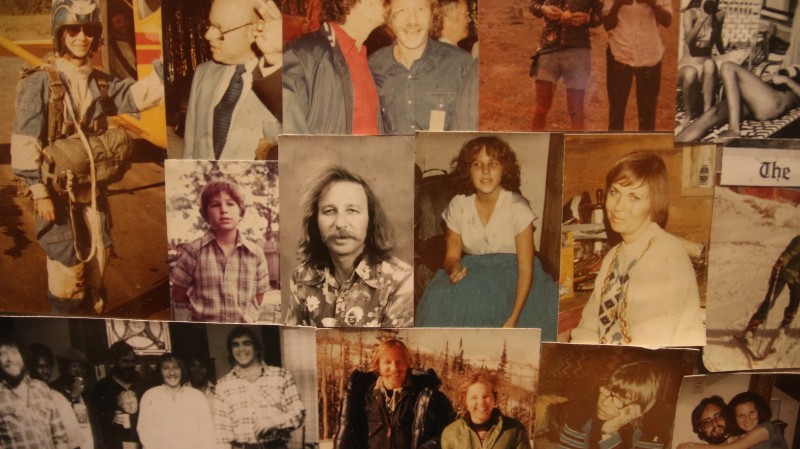
Photo collage from Film About A Father Who

I am also interested in showing my family’s story so others can investigate their own stories. I showed the film to a group of fifteen men in their 80s who were in a fraternity with my father and all idolised him. After the film, they said to me that they wished their daughters had made a film about them which surprised me. I think it was because the film elevated my dad to a full person and his entire life was told. He came to the premiere in New York and he was happy with the film. And he’s told me that he wants to do better in the future. 

Bianca: Another recent film of yours is “A Month of Single Frames”, a beautiful collaboration with the late filmmaker Barbara Hammer. How did that film come around?

Lynne: I met Barbara in the late ‘80s as we were both in San Francisco during that time. At that time and well into the 1990s, San Francisco was a mecca for experimental filmmakers. I think that’s the place where my style really evolved as it’s not a commercial film centre like New York or Los Angeles. There was a place called the Film Arts Foundation where you could go and learn different skills or edit your films on a 16mm flatbed and Barbara was there teaching a class. I took a weekend class with her and we hit it off! We became friends and both ended up moving to New York City. 
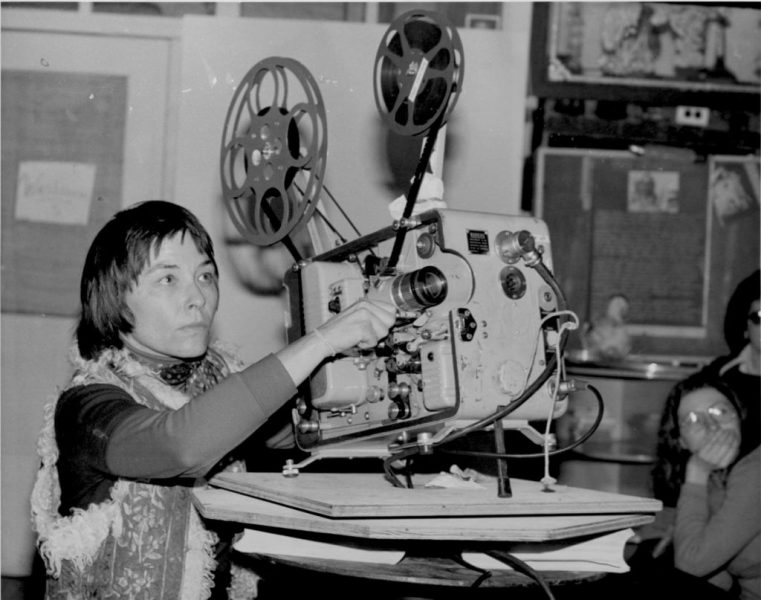
Twelve years ago, Barbara found out she had ovarian cancer. She was going through chemotherapy and we would take meals to her and talk to her. She actually lived a lot longer than she thought she would. During that time we became deep friends, and I think she appreciated that me and my husband (Mark Street) were not intimidated by the word ‘cancer’. She asked Mark and me to make a film with the material she gave us when she saw her life coming to an end. 

When she gave me the footage she hadn’t told me she’d also kept a journal. Her health was declining but she was quite active in terms of filmmaking in her last year, so I had to squeeze in my visits with her between chemotherapy and her trips to the Berlin Film Festival for a premiere of a film she made. And, when she went to Berlin in 2018 she lost one of her vocal chords so when we were recording her narration for the film we had to use an amplifier. What’s amazing about making a film is that it’s a sustained experience and a gift with that person you’re collaborating with. It was also a gift in the sense that we could share all that time together. 
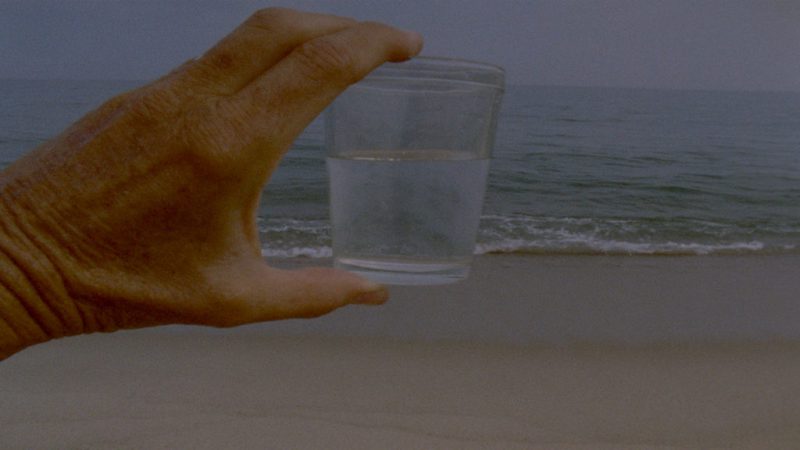
Barbara passed away in March 2019, and I’d hadn’t yet written the text you see in the film. I really wanted a way so you could dive into the film on a personal level, and on a level where I could be talking to her, the audience, the Earth, to the future and to anyone who could be watching the movie. What’s so specific about film, that it can transport you back in history but can also propel you forward in time too. I wanted there to be an active presence which is why I talk to the audience. 

Bianca: That’s what is so special about “A Month of Single Frames” is that feeling of conversation between you, the audience and Barbara. In the way it felt like therapy and a precious way of capturing someone’s memory.

Lynne: We think of film as a closed system where you enter it but you don’t affect it although it may affect you in a psychological way. I wanted that system to be more open, the screen is no longer a closed system. 

Bianca: Do you think we’ve lost something special about the art of shooting on film compared to how we now seem to shoot everything on digital, especially in terms of the craft of editing?

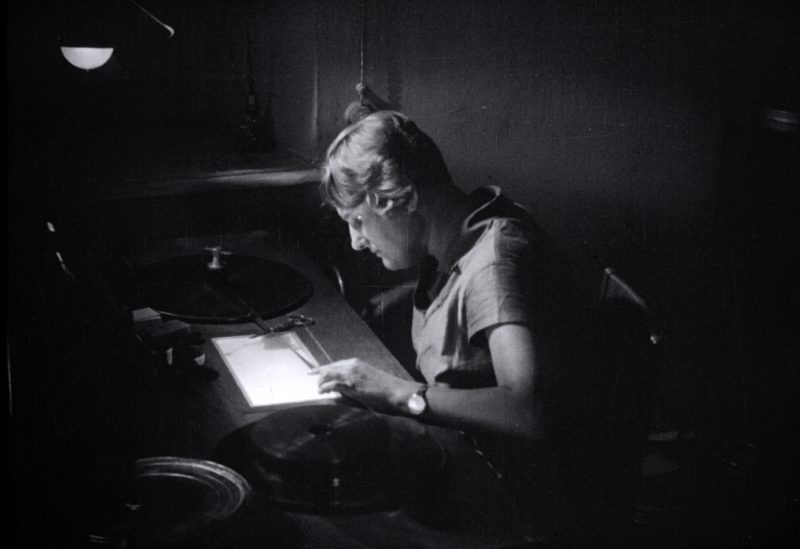
Lynne: It’s funny that you mention editing because it made me recall Dziga Vertov’s “The Man With a Movie Camera” because many people believe that the director’s wife (Yelizaveta Ignatevna Svilova) really made the film, I believe her work helped give the film it’s rhythm. There’s an image of her in the film where she’s sat at the editing table and she looks like she’s sewing. This image reminds us that analogue film was constructed in a method that was very identified with women. There has been a revived interest in the materialistic qualities of the medium and the fact you can go from something three-dimensional to something two-dimensional.
In terms of my own filmmaking, “Which Way is East” was shot all on film and so was “A Month of Single Frames” and “The Last Happy Day” was digital and film. It’s a real mix. In terms of the images I shoot on Super-8 and 16mm, well I just like them better. Digital can be so pristine. There’s a sense of physicality to analogue film. Sometimes you see a strand of hair or dust, and that’s part of the real world that we’ve left behind like a fossil. 

“Film About a Father Who” is to be screened in Sheffield in Autumn, and online on Sheffield Doc/Fest Selects in parallel. The Filmmaker Focus- retrospective films are streaming now in the UK and their accessibility has been extended through August 31st.

Please see: https://selects.sheffdocfest.com/bundle/lynne-sachs-focus/

Gimli Film Festival Reviews “Film About a Father Who”

Film About a Father Who – Review
Gimli Film Festival 
By Joshua Banman 
July 17, 2020 
https://gimlifilm.com/review-film-about-a-father-who/

Lynne Sachs gives a biography of her father, Ira, using footage she’s captured over the last 30 years in Film About a Father Who. It’s an investigative process as Sachs inspects, discovers, and unpacks what she knows and has learnt of her father, but it becomes something more than a biography as she discovers the many relationships her father has had and the siblings she has.

Film About a Father Who is aesthetically interesting. Sachs compiles footage she’s taken over the last 30 years to bring together moments that are rich and reveal more about what was going on at the time than maybe anyone knew. It’s really impressive what she’s compiled here. She layers that with interviews of Ira’s children, often against shots of conversation, creating something that feels like a memory and that we aren’t sure if we can trust.

The film is moment after moment of revelation and as we learn of Ira’s relationships and offspring. Ira’s children keep discovering each other right up until the end, and so it’s not until Film about a Father Who is over that we realize as much as this is a biography of Ira, it’s an exploration of family dynamics. What are the obligations of a sibling to another sibling when they only share one parent?

We hear how Sachs’ grandmother wouldn’t meet the children from Ira’s second marriage because she couldn’t handle forming the bonds for more and more people the way she thought she was supposed to, and that’s really Ira’s story. He’s constantly making new relationships, and he leaves his mother, children, and his partners having to discover for themselves what his new relationships mean for them.

That’s not to say that Ira is a villain by the end of the story. Sach’s lens and writing are compassionate while being honest, an impressive balance when she is so close to the story herself. Sach’s truth-seeking makes for a compelling experience and while we only feel like we’re beginning to open the book on who her father was by the end of the film, we get the sense that we have arrived at the same spot of Sachs and her siblings.

In Their Own League – Sheffield Doc/Fest Exclusive Review: ‘Film About a Father Who’

Sheffield Doc/Fest Exclusive Review: ‘Film About a Father Who’
In Their Own League
Review By Bianca Garner
July 12, 2020
https://intheirownleague.com/2020/07/12/sheffield-doc-fest-exclusive-review-film-about-a-father-who/

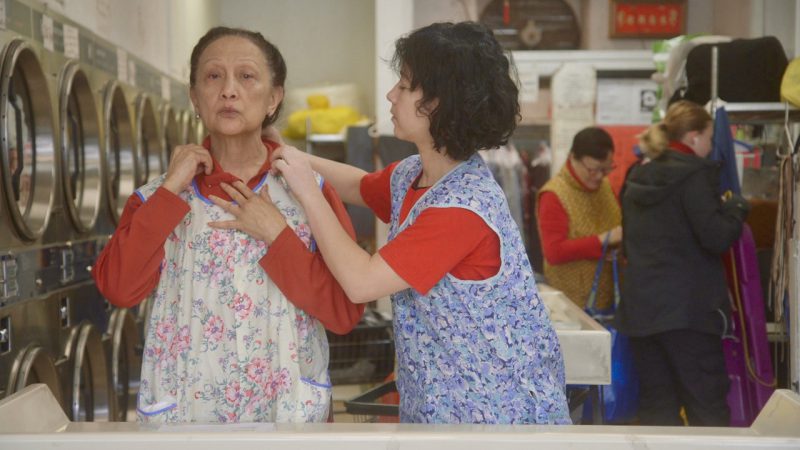
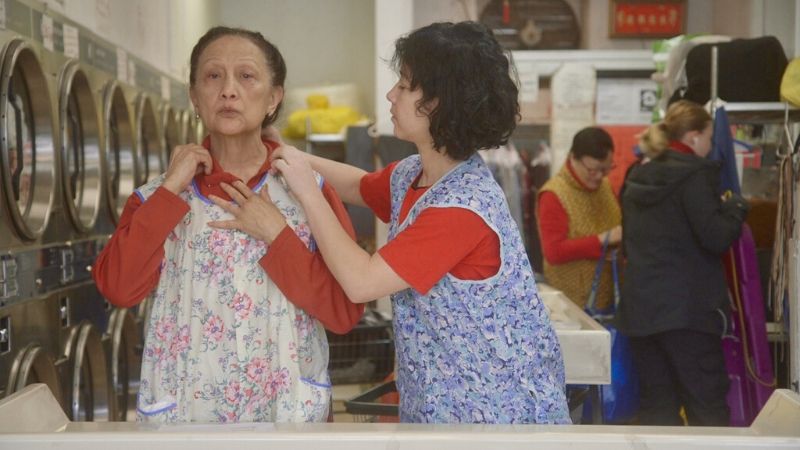
Lynne Sachs’ documentaries are quite unlike anything else you will ever see. Poetic, impactful and moving journeys into unique worlds which are rarely captured on-screen, whether it’s the hidden world of laundrettes in her film “The Washing Society” or the world of immigrants sharing a ‘shift-bed’ in “Your Day Is My Night”. Every film feels like it has a personal connection to Sachs, but it is perhaps her latest film, “Film About a Father Who” that is her most personal yet. 

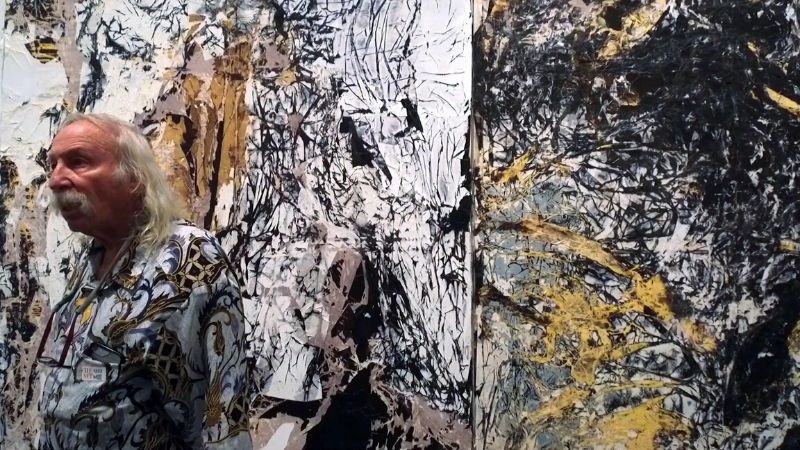
Over a period of 35 years between 1984 and 2019, Lynne shot 8 and 16mm film, videotape and digital images of her father, Ira Sachs Sr., an eccentric businessman from Park City, Utah. What the film ultimately becomes is a study, or rather, an investigation into this mysterious man that Lynne and her siblings (both known and unknown) call father. This is clearly an attempt to separate the man from the myth, but it becomes evidently clear that this is not an easy task to conduct. 

Film About a Father Who still

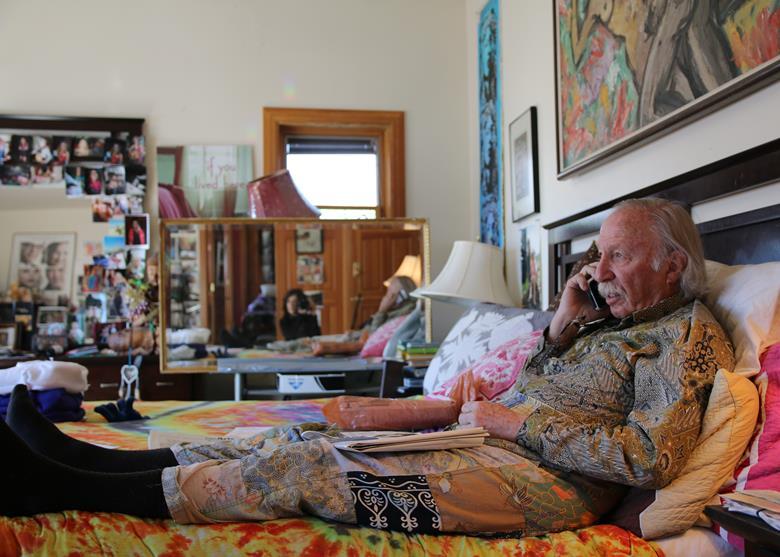
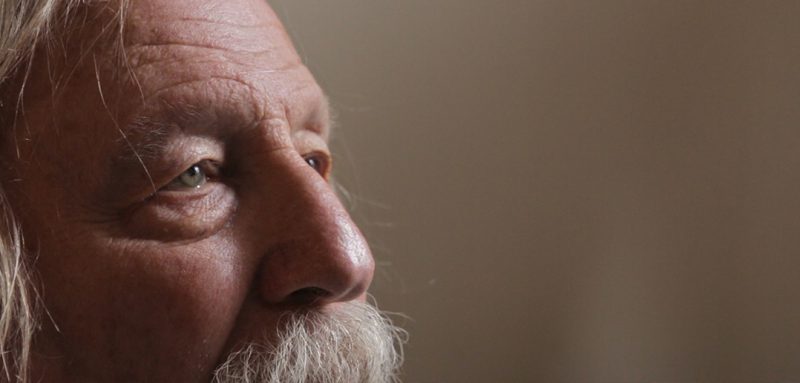
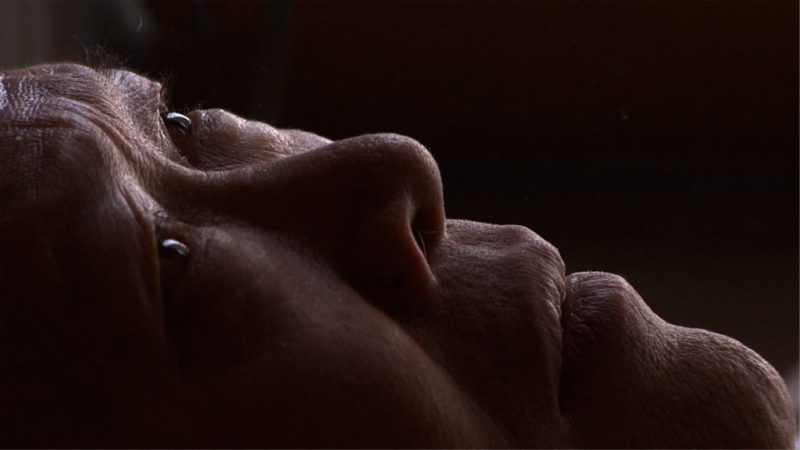
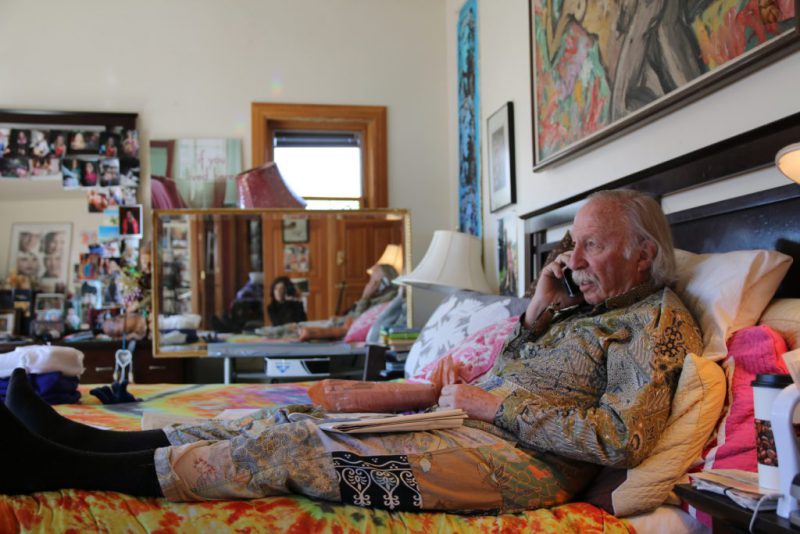
“Film About a Father Who” opens with the present day, we open with a close-up shot of an elderly man (Ira) having his hair combed. Compared to the different versions of Ira that we see throughout the film, this version seems almost a shadow of his former self, but he still holds onto his secrets, playing his cards close to his chest. Throughout the film we are introduced to the many faces and personas of Ira, but like Lynne and her siblings it’s hard trying to discover the real Ira. 

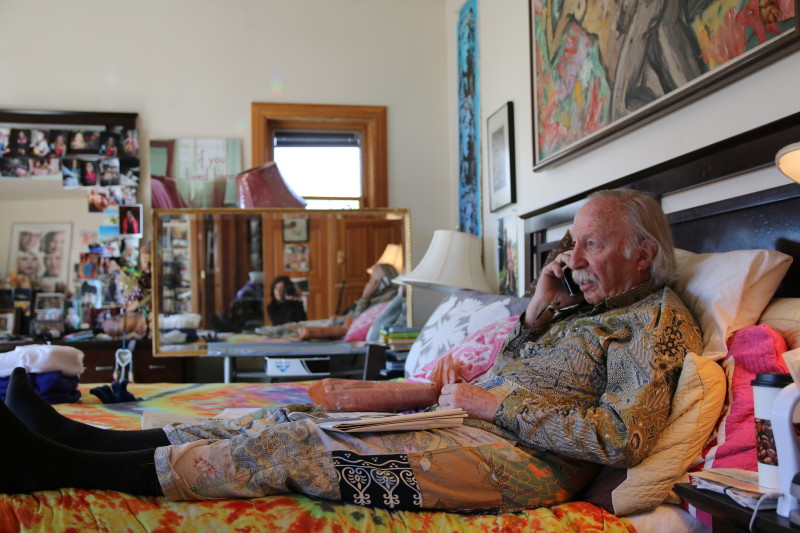
There’s the savvy businessman, the man we see skiing whilst talking on a cellphone. This version of Ira, we are told, worked from a shoebox and called himself a ‘hippy businessman’ who didn’t want to be defined by his work. It wasn’t really about his work, but the stuff that surrounded his work life.  There was the husband to Lynne’s mother, Dianne. In interviews we hear how she had her doubts about the wedding but loved him and overlooked those issues. “I tried to convince myself that this was what marriages were.” Ira isn’t a “swan” in his own words, he can’t settle down with one mate for life, “I wasn’t suitable for marriage, I didn’t want to burden your mother with that.”

Ira Sachs, Sr. in Park City Utah. From FILM ABOUT A FATHER WHO (2020) by Lynne Sachs.

There’s the ‘playboy’ version of Ira. The man who is dubbed the ‘Hugh Hefner of Park City’ and would throw lavish parties. The man with a revolving door of girlfriends and wives. During the documentary Lynne and her siblings comment on how difficult it was to recall all their names. Lynne also contains interviews with some of the prominent wives and girlfriends, such as Diana, his second wife from Bali. Her tale is a tragic one, she was in her own words “naive and so innocent” when she married him and came to the States. However, it isn’t hard to see why women are drawn to Ira, he has this magnetic charm and charismatic presence that Lynne brilliantly captures with her camera. 

Photo collage from Film About A Father Who


And, then there’s also the ‘son’. A son that didn’t want his mother to know that he owned two red Cadillacs and say that he was extragevant. The son who bickers with his eldery mother but also seems to dote on her too. The son who was separated from his mother at an early age only to be reunited years later. Without giving away too many details in this review, this glimpse into the early life of Ira and the trauma that he endured does allow us to gain some understanding into the mystery that is Ira Sachs Sr.

Watching the documentary you can understand Lynne and her siblings’ frustrations and maybe even resentment towards their father especially when it concerns certain details about half-siblings. With “Film About a Father Who” we are presented with the fundamental truth that people are complicated creatures who are sometimes impossible to understand fully. This may frustrate some viewers because we aren’t granted all the explanations and the details are confusing to follow at times, but real life is a tangled mess of names, dates and distant memories.

Ultimately, “Film About a Father Who” is a family home-video like nothing else you’ve ever seen before. This is an interesting film to experience, presented in Lynne Sachs’ beautifully abstract and artistic approach to filmmaking, which some viewers may find alienating but I encourage you to stick with it.  I must offer gratitude to the Sachs’ family for allowing us access into their world and to experience it with them even if it’s just for a short period of time. Raw, honest and eye-opening. “Film About a Father Who” is just like its subject matter, something quite extraordinary.

Please Note: “Film About a Father Who” is to be screened in Sheffield in Autumn, and online on Sheffield Doc/Fest Selects in parallel.

https://intheirownleague.com/2020/07/12/sheffield-doc-fest-exclusive-review-film-about-a-father-who/

Screen Queens: Sheff Doc/Fest 2020— The Lynne Sachs Focus

By Fatima Sheriff
July 11, 2020
Screen Queens
https://screen-queens.com/2020/07/11/sheff-doc-fest-2020-the-lynne-sachs-focus/

Premiering Lynne Sachs’ latest feature, A Film About A Father Who, Doc/Fest 2020 has taken the opportunity to curate a few of the director’s most intriguing films. Spanning over decades of empathetic, experimental filmmaking, Festival Director Cintia Gil mentions that the overarching theme of these works is “translation”. Sachs elaborates that while her films often feature other countries and languages, the experience isn’t meant to feel seamless, but instead explore the sense of dépaysement, of being out of your own comfort zone, and revelling in that unfamiliarity and curiosity. 

Which Way is East (1994)
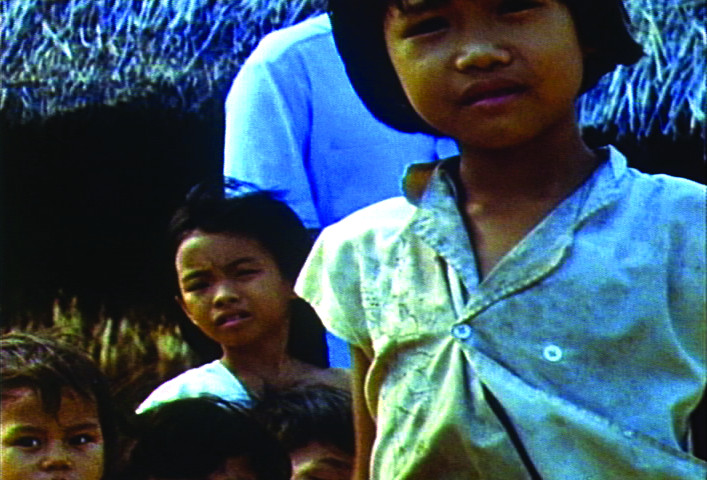
In which Lynne joins her sister Dana in Vietnam, and documents their travels north. Primarily she is connecting with the country: eating copious amounts of fruit, bonding with friends and strangers alike, examining the damage left behind from the war. There are layers beyond the direct translation of Vietnamese as peppered throughout are proverbs, which connect with the discussions and reveal how cultures perceive life differently. On another level she’s reconnecting and collaborating with a sister who she’s been separated from, and building a bridge between her own fictional, creative inclinations as a filmmaker and her sister’s political, non-fiction perceptions as a journalist. At 33 minutes, it feels like a whirlwind, footage zooming past on the roads, but one that really feels shared by all who feature in it. 

The Last Happy Day (2009)
This title is a quote from letters received by Sachs’ uncle referring to the day before the outbreak of WWI, marking a shattering of naïvité and the start of a century of disillusionment. In an incredibly liminal and fascinating piece of exploration, Sachs’ children tell the story of Sandor Lenard, a distant Hungarian cousin who fled a small town in Germany in 1938. 

Surrounded by death as he worked for the US to identify the broken bones of soldiers, his later project is intriguingly different: the translation of Winnie the Pooh into Latin. A so-called dead language, that he said best expressed dread, was applied to the philosophical exploits of children’s characters. Having watched many young men become soldiers, seeing Sachs’ kids interpret his letters and his translation brings out a deeper meaning within them. It’s a patchy portrait of a mysterious man that brings about a sense of existential crisis and a permanent exile from security. 

Your Day Is My Night (2013) 
My personal favourite, a window into the world of Chinese immigrants in New York City, who rent “shift-beds” in order to afford to live and work there. It’s a carefully orchestrated blend of performance art to highlight the nocturnal, upside-down lifestyle and monologues perfected to best tell the stories of each inhabitant. One stand out is Huang, a wedding singer who lives with his father, who shares his unique passions and fears. It is a tactile, emotional approach with many dimensions that helps the viewer begin to comprehend these experiences, and brings this hidden side of the city to light. 

The Washing Society (2018)
Co-directed with playwright Lizzie Olesker, this team effort is the culmination of a performance piece named ‘Every Fold Matters’, detailing and valuing the efforts of laundry workers. This film is named after the original Atlanta Washing Society of 1881, where thousands of African American laundresses unionised and demanded better pay and agency over clients. This revolutionary spirit is carried on, as the film juxtaposes three actresses with three workers, folding and carrying thousands of garments a day, unappreciated and undervalued. Through the combination of conversation and performances, the intimacy and volume of their work is brought to light. 

A Month In Single Frames (For Barbara Hammer) (2018) 
As filmmaker Barbara Hammer was undergoing chemotherapy, she gave certain filmmakers free reign with her unpublished work. In this case, Sachs plays with the footage taken on Hammer’s month long residency at Cape Cod. Particularly hypnotic are past Barbara’s meticulous and beautiful attempts to capture new colours in the sun, the sea and the sand, and the spontaneous originality with which she saw the same cabin and its surroundings. Here the translation is very much inter-generational, as Hammer reads from her journal at the time, and we overhear discussions between the two. Sachs revisits this time of creativity in an organic way and carefully scrapbooks it into a philosophical homage.

Note: this particular film makes a beautiful double bill with Lynne Ramsay’s Brigitte which will be out on Doc/Fest Selects in the autumn. She profiles a prolific portrait photographer, trying to see what Brigitte sees in her subjects, and turns that mirror towards her own life and approach to art.   

Full film available as part of Doc/Fest Selects here.

Throughout all these works, the partnership between Sachs and her subjects shines. Often she remains in contact with them, continuing to campaign alongside them. The collection boasts celebrating “translation as a political and poetic tool” and through this glimpse into her career, it is clear that the bridges she builds last. By the end of her films, it feels like both an honour and a necessity to inhabit these spaces and listen to these stories. 

“Serial Seduction: Film About a Father Who in Film Scratches”

Film Scratches is a blog by David Finkelstein focusing on the world of experimental and avant-garde film, especially as practiced by individual artists. It features a mixture of reviews, interviews, and essays.

July 5, 2020
Posted by Matthew Sorrento
Film International
http://filmint.nu/film-scratches-july-2020/

Serial Seduction: Film About a Father Who (2020)
by David Finkelstein

Film About a Father Who is Lynne Sachs’ absorbing feature length film about her unconventional father. She worked on the film for almost 30 years, shooting on a variety of analog and digital formats. The film begins with Lynne Sachs laboriously combing and disentangling her elderly father Ira’s long gray hair, an occasionally painful process, and the film is likewise an extensive process of trying to disentangle the many confused and hidden strands of her father’s complex relationships, hidden lives, and bewildering behavior. The examination is painful at times as well.

The film plays out as a detective story, as Lynne uncovers layer after layer of information about her father’s many contradictions and secrets. A free spirit and compulsive womanizer who spent most of his adult life picking up as many young women as he could, he pursued so many women at once that he had to keep elaborate lists and diagrams to keep track of them. Lynne admits that there are so many girls that she doesn’t even learn most of their names. Ira Sachs was adept at closing his eyes to the havoc he created in the lives of his various wives, girlfriends and children, and expert at keeping parts of his life hidden.

An extremely willful, volatile person, Ira acts on every passing desire and impulse he feels, heedless of the consequences. By contrast, Lynne’s mother and the other young women in his life seem so passive and fatalistic it is as if they don’t even know what it is like to identify one of their own needs or desires, let alone to act on it. Her mother says she didn’t make major decisions in her life, things “just happened.” She describes herself, in retrospect, as “purposefully blind” to Ira’s infidelities.

Ira’s instinct is to be courtly and attentive to all women: wives, girlfriends, daughters, his mother. They are each treated like queen for a day. Ira is seen dancing with his mother to Autumn Leaves, and her face lights up with a smile. (Perhaps this is why Lynne’s brother Ira Jr. comes across as having a more clear-eyed, less conflicted view of his dad: Ira Sr. doesn’t typically turn the charm on for men.)

A scene where Lynne discusses her parents with her brother and sister reveals that the three siblings act like close, trusting family allies. All three identify as artists: Ira Jr. is a filmmaker and Dana is a writer, and not only are they comfortable analyzing their family dynamics, they all relish it. Their father might refuse to see the uncomfortable truth of the people he has hurt, and their mother might close her eyes to her husbands philandering, but these three offspring do not believe in living an unexamined life. They have each made careers out of what amounts to a survival technique in the Sachs household: shining a light on the murky darkness.

Lynne Sachs builds her story with the consummate skill which viewers have come to expect from her films: seamlessly weaving together diverse fragments of sound and picture so that they tell a complicated and ambiguous story in a way that constantly draws you in. She circles around her elusive subject, viewing him from multiple angles, but always moving in towards the center of the story. The film’s nonlinear form, intercutting between time periods, pointedly calls attention to the disconnect between Ira’s perceptions and the real consequences of his choices.

The revelations pile up, and some of them are devastatingly ugly. Yet as Lynne brings the different branches of her family together for the film, it is clear that their frank discussions provide them with a powerful source of trust and healing. The film’s title, a reference to a Yvonne Rainer film, perfectly sums up a man so full of contradictions that he is impossible to sum up. The film wisely refrains from providing judgements or pat conclusions about Ira, and it ends with Lynne and her sister realizing that forgiveness is the only possible attitude to take towards this dynamic, creative father who offered inspiration and dismay in equal measure. When you dig deep enough into family histories, they can seem like an unending chain of cruelties suffered and inflicted in turn, but Lynne Sachs’ spirit of intelligent compassion lights up the film, giving voice to the anger and pain, but also providing the space and distance needed to recover from it. It’s a spectacular gift to the viewer, and one that will provide insight even to those with more conventional parents.

http://filmint.nu/film-scratches-july-2020/

Lynne Sachs Q&A at Sheffield Doc/Fest

July 2, 2020
Sheffield Doc/ Fest – Lynne Sachs – Live Q&A

Our Festival Director, Cíntia Gil is joined by our in-focus director, Lynne Sachs to discuss her films and to take questions from the audience for a live Q&A.  

DATE: Thursday, 2 July 
TIME: 7pm (BST)

The Q&A is free and open to all – please register through link below: 

Lynne Sachs Live Q&A registration

Filmmaker Lynne Sachs, in conversation with Festival Director Cíntia Gil, will discuss 5 films that form her Director’s Focus within the Ghosts & Apparitions strand and her upcoming international premiere of Film About A Father Who which screens as part of Doc/Fest in October. Lynne Sachs’ films explore the notion of translation as a poetic and political tool for widening the world. Together with the focus, Doc/Fest presents Sachs’ video lecture My Body, Your Body, Our Bodies: Somatic Cinema at Home and in the World, a fascinating journey through her themes and work. 

Her films are currently available to watch on Sheffield Doc/Fest Selects and Doc/Player:

The Last Happy Day, 2009, 37’
Which Way Is EastNotebooks from Vietnam in collaboration with Dana Sachs, 1994, 33’ 
Your Day Is My Night, 2013, 64’
The Washing Society, co-directed by Lizzie Olesker, 2018, 44’ 
A Month of Single Frames, made with and for Barbara Hammer, 2019, 14’ 

https://sheffdocfest.com/articles/867-lynne-sachs-live-q-a

Ubiquarian: The Process is the Practice

Ubiquarian 
The Process is the Practice
By Tara Judah
June 21, 2020
http://ubiquarian.net/2020/06/the-process-is-the-practice/

Prolific and poetic, experimental and documentary filmmaker, Lynne Sachs, lights up this year’s online edition of Sheffield Doc|Fest with a mini-retrospective, annotated lecture and her new feature, Film About a Father Who (2020).

Tara Judah

It happened less than ten years ago, when she was working on Your Day is My Night (2013): Lynne Sachs located the performance within her process and set out to challenge/change it. The idea was to gain participation, collaboration. Instead of turning a camera on her subjects – when they would perform instead of reveal – she decided to include them in the construction and craft of her filmmaking; when you point a camera at a subject, you can’t capture, you command. And power, though useful for its authoritative and therefore convincing tone, is also deeply problematic. In a way, what Sachs is doing is quietly radical. Not just because it is an attempt to remove the hierarchy inherent in documentary since Robert Flaherty started its discourse (Sachs is also a Flaherty Seminar alumnus) but, also, because it is an admission and undermining of her own intrinsic and pervasive authorial voice. It’s ambitious, but that’s also where a kind of freedom resides. The ambition is so substantial that it alone is enough; it doesn’t matter if she succeeds. In this way, Sachs’ later work, from Your Day is My Night onwards, is less about subjects and more about process.

Film still from “Your Day is My Night” (2013) by Lynne Sachs. Courtesy of Sheffield Doc|Fest

She’s been making films for more than thirty years, but the mini retrospective screening as part of this year’s online edition of Doc/Fest selects moments from the last decade to fit a through-line about Ghosts and Apparitions. I’m not interested in these, as they could be found almost anywhere, and in anyone’s work. In Sachs’ work all I find – and all I want to find – is respectful practice. There is more than just an artist at work, here, there is a generous exploration at play.

Before Sachs experienced her epiphany, she made Which Way is East? (1994), an arresting, painterly exploration of Vietnam. As one of the first American filmmakers granted permission to shoot in Vietnam, Sachs had the weight of responsibility and expectation on her shoulders. Despite this, the film has a sense of lightness and freedom, especially in its aesthetic and aural approach: it begins with a stilted photographic trajectory, literally rendering the moving image as a series of broad brush strokes, while the almost endlessness of the cicadas’ chirrup pitch moves the image along, though not necessarily forward. It is a sensory introduction, rather than a history lesson, and here Sachs’ work is at its most successful, inviting us, as viewers and listeners to be in this depiction of Vietnam, not to look at or hear a presentation of it. Eventually, Sachs and her camera will arrive somewhere static, she will then switch to a show and tell mode, which is informative but less awesome. She flits between the two with relative ease for the remainder of the film, letting her observations and those of her sister, Dana, interpolate the experience. It is as much about making her own memories as it is the chasing of those left behind by others. Her sister’s remarks are among the most revelatory, “I hate the camera,” she muses, “The world feels too wide for the lens and if I try to frame it, I only cut it up.” Holding a camera and being a filmmaker are not one and the same, “Lynne sees it through the eyes of its lens,” she continues, “It’s as if she understands Vietnam better when she looks at it through the lens of her camera.” For Sachs, the practice has always been the pursuit. She instinctively knew, even before it occurred to her laterally, to share the filmmaking in order to make it more accessible, more honest and more like the world it hopes to offer. It may have taken her another almost twenty years to fully understand and break with the idea of documentary as an act or approach, but there is a silver lining of melancholia inside Which Way is East? It makes me wonder if 1) she already knew and 2) if the practice, though expressive and creative as an outlet is also overwhelming, as there is some sadness here.

Film still from “Which Way is East?” (1994) by Lynne Sachs. Courtesy of Sheffield Doc|Fest

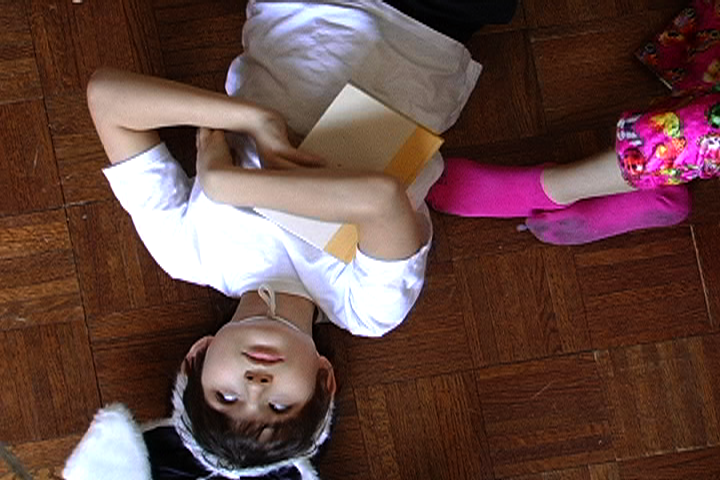
Looking at historical resonance while also pursuing the interplay between the personal and political, Sachs can’t help but put her heart into her films. The Last Happy Day (2009) stars her own children and uses family, performance, narration, interviews and archive to construct a story about stories. For some, it’s a story about Sachs’ relative, Sandor (Alexander) Lenard, a Hungarian Jew who fled to Rome and later Brazil, where he translated Winnie the Pooh into Latin. Lenard spoke thirteen different languages, and no one knew he was Jewish, so the film is also about what we do and do not know, and how we might go about trying to unpick the constructions and obstructions therein. To demonstrate the difficulty to (re)telling history, Sachs has whole through-lines about bones, with several stunning superimposed images that offer the fragments and the palimpsest at once. She even has one interviewee straight up tell us, “I don’t know anymore what’s real and what’s fantasy,” perhaps even a little too direct for a doc, but ironically true nonetheless, “I am not sure of the truth.”

Remembrance is also brought into question via the presence of doctored documents; literal erasure of a name lets us reflect on the ethics and truths that we can never know as so many were removed from our future before they could even make their mark. What struck me most, however, was the role of the central, yet arguably flippant, text. I wonder how the characters are in translation. Sachs’ band of performers – here, her children and their friends – act out scenes and discuss the meaning behind some of the plot points. Inevitably, they end up discussing the death drive when they get to talking about depression and Eeyore. I’ve always hated Winne the Pooh, because I thought he and many of his mates – Tigger, Rabbit, Owl and maybe even Piglet in his cowardice – were bullies, unkind to Eeyore, to whom my heart always went out. If I were Eeyore and had to live in their world, I might also desire death as an end to my depression. Even Christopher Robin didn’t seem to do anything to help, and he was a (white) human, surely the one with all the power. Could be that I remember it wrong, unsure what’s real and what’s fantasy, but in my remembrance, it is a horrible story filled with horrible characters. It’s lack of compassion makes me sad, still.

Film still from “The Last Happy Day” (2009) by Lynne Sachs. Courtesy of Sheffield Doc|Fest

But the film itself failed to move me. It was clever and fits a bunch of paradigms that I’d call smart documentary filmmaking. I even think it’s the most obvious fit for that Ghosts and Apparitions programme title. Perhaps that is why it didn’t move me at all. It’s all a bit too neat, well thought out. Nothing incidental or imperfect. No rough edges. But then I watched The Washing Society (2017, co-directed with Lizzie Olesker) and everything changed.

Thanks to Sachs’ newfound process of inclusive filmmaking, with her subjects, The Washing Society feels like a story from, not about New York City laundromats. Visiting over fifty laundries, Sachs tells us, “Sometimes they told us to stop, other times no one notices.” This is how her filmmaking has fundamentally changed: it’s not a process of requesting permission and setting up a tripod to stage an interview, it’s being in the space, with the people, and finding out what the story is as it unravels. Owing to this shift, the performative set pieces within the film – be it actors reading lines, narrated poetic interventions, or even Sachs’ fascination and lingering look at the way light dances around her subject(s) – are seamlessly integrated into an otherwise seemingly observatory mode. What I liked most was that it felt personal, private, public and political at once; the invisible labour of laundry workers is made visible, while the objects we wear to cover and conceal are laid bare, tossing and turning in machines after their toil, until they are, eventually, ready to perform their duty once more. Clothes are the ultimate in public and private markers; from the hours and loads of labour used to make, market and sell them before they even become hours and loads of labour to clean, fold and return to their often-oblivious wearers. I watched, at home, folding my own laundry, mostly that of my almost one-year-old son, painfully aware as I am that domestic labour (performed here whilst undertaking professional labour) is almost always unseen and almost never remunerated. I loved this film not because it struck a chord, but because it could; its poetry sparing and its humanity, honesty and openness laid out with generosity and as a gesture to the many faces that have served and are fast disappearing from NY’s many regenerated neighbourhoods as an app and its collection truck counterpart take over the (barely) visible nature of the business.

Film still from “The Washing Society” (2017) by Lynne Sachs and Lizzie Olesker. Courtesy of Sheffield Doc|Fest

It’s an important reminder, from Sachs, to think about what is not seen, whenever we reflect on what we have seen. Your Day is My Night (2013) is not just a film; it has had live stage performances and it is alive in the lives of those it features. Beds and stages and monologues and movement and projection are all elements of this docu-dramatic staged record of what it means to be more than how we are recognised. Spanning the deep economic issues of the US, and the failed reality of the outwardly boastful American Dream, all the way to micro-communities and what ‘home’ might ever mean, Your Day is My Night doesn’t show but does reveal the alienation inherent in both Chinese and American society. In making this film, and the live performances that span its production life, Sachs really got to know her collaborators – well, as well as she could with the bridge of a translator. Language can be a powerful separator, and Sachs hints at this in the film by bringing in an actress (Veraalba Santa, who also features in The Washing Society) to play the part of a Puerto Rican immigrant. It’s not Sachs, but her questioning and unease is represented in Santa’s performative role.

In her lecture, My Body, Your Body, Our Bodies: Somatic Cinema at Home and in the World, Sachs admits that she is still grappling with the extent to which she should express herself, and the subject. Her body may not be present in this film (it features heavily in many of her earlier, more experimental and material works), but exposing herself has served as a form of generosity, especially where she is asking an actress to expose themselves bare, as in The House of Science: A Museum of False Facts (1991).

Bodies exist but so do thoughts and feelings. And suicide is genuinely considered as an option when old age sets in for those who have no real ‘home’ to go to – neither a citizen of the US or China, there is a unique and pugilistic purgatory for some. Every round is a beating, but fight is what you came to do. I kept thinking of Charles Yu’s fantastic new book, Interior Chinatown (2020) as I watched it. Yu’s book is so many things – maybe everything – a documentary as a book, certainly. A uniquely crafted satire of Hollywood, racism in the United States, and the slippage between screenwriting and prose, Yu’s book looks at the stereotypes of ‘Generic Asian Man’, ‘Background Oriental Male’, ‘Kung Fu Guy’ and more. The people in Sachs’ film feel like characters, at times. Maybe because their lives, like the characters in Yu’s book, are enmeshed with the performance of their parameters – Chinatown in NYC, stuck in a stereotyped nightmare, “I was very aware of the narrow spectrum of representation of the denizens of New York City’s Chinatown,” Sachs tells Paolo Javier in an interview for BOMB Magazine, “Those kinds of Hollywood  images haunted me really. In fact, when I first chose the seven people who are featured in my film, I realized that most of them had already worked as extras for the movie industry at some point in their lives.” Fictions and realities reside, side by side, sometimes even in the same bed, sleeping in shifts.

Film still from Lynne Sachs’s “A Month of Single Frames” (2019) Courtesy of Sheffield Doc|fest

Sachs can’t, shouldn’t and thankfully doesn’t separate these two elements in her films. She works with them. And, now, in her more recent work, she allows the process to become the practice. In her most recent film screening in the programme focus at Doc|Fest, A Month of Single Frames(2019), a work pulling together various pieces of Barbara Hammer’s personal archive – 16mm film footage, journal entries and recorded stories – Sachs lets decisions leak into the final edit, allows us to understand how images move as time lapses. For Hammer as for Sachs as for an audience, frame rates and time passing is only relevant insofar as it is a part of the process that makes up such a thing as a filmmaking practice. It is not important when it occurs, only that it does. In that way, the film is not an archive or an object to be examined or understood. It is the act of holding those things, that person, their feelings, their being.

In this way, Film About a Father Who (2020) is her greatest achievement yet. Digging into far more than the family archive, Sachs takes footage and feelings that span her entire life to create a portrait, not of her father, but of “complicit ignorance” and how pervasive lies of omission might permeate both films and lives, through their intrinsic and insidious power dynamic. Her father is many things, among them a philanderer. Much was uncovered, but he withheld more. This is the role of structure and authority, the act of patriarchy and the act of whomsoever holds power. In this film, it is clear that her father is not the only one with power to play with – his mother, Maw-Maw, is just as commanding, especially as the puller of purse-strings, whose judgement has the ability to grant or take away knowledge, access, identity; family, truth and more. This is what Sachs has been working on all her life because it is the process of uncovering her power and confronting herself. Her aim to frame truth and authenticity will always be compromised by the reality of the moment that the camera is turned on, be it for family or strangers. In Film About a Father Who, Sachs admits that she is filming as a way of finding transparency. It is the ultimate in searching for cinematic veracity. She finds something beautiful and deeply moving, here. Speaking about the differences between her parents, she uses grammar as a metaphor. By extension, her own practice can be understood as a process of grammatic excellence; each thought, memory, scene, time and space given pause and punctuated by still more dancing light.

Film still from Lynne Sachs’s “Film About a Father Who” (2020) Courtesy of Sheffield Doc|fest

Reflecting on the impact of experimental filmmaker Stan Brakhage and his ground-breaking film Window Water Baby Moving (1959), Sachs understands her practice as the unification of art and life, “As a mom and an artist, I was extremely inspired by the way that he integrated his family into his daily practice as an artist. If you separate the two, both suffer.” On her own website, she further imagines “a list of possible lectures one might give in conjunction with the screening of this film [Window Water Baby Moving]. I offer them to you as a vehicle by which to ponder the last forty years of American cultural history.” There are twenty-three. I won’t list them, here. But they did get me thinking about possible lectures one might give in conjunction with the screenings of Sachs’ films. Here’s five of my suggestions.

Confronting Performativity
In Defense of Poetry
The Collaborative Moment
Towards an Understanding of Dancing Light
The Camera as Pencil; Drawing in the Margins

Backseat Mafia Reviews “Film About A Father Who”

SHEFFIELD DOC/FEST REVIEW: FILM ABOUT A FATHER WHO
By Rob Aldam 
Backseat Mafia 
June 17, 2020
https://www.backseatmafia.com/sheffield-doc-fest-review-film-about-a-father-who/

Whilst she might not be a household name to most, Lynne Sachs is well-known within the documentary community. The American experimental filmmaker has been working within the industry for the last thirty years, much of her work involves collaboration and a melding of different mediums. Sachs has been chosen to be subject of a retrospective at Sheffield Doc/Fest this year.  They’re also streaming her latest film, Film About A Father Who.

Lynne Sachs didn’t exactly have a conventional childhood or one that wasn’t without bumps, much of which could probably be attributed to her father. Over a period of thirty-five years, between 1984-2019, She filmed him and the people in his life. Ira Sachs was a hippie businessman from Park City who didn’t like to take things too seriously. Through this footage we’re shown a man of contradictions. One who means something different to each person he has a relationship with.

Film About A Father Who builds up a fragmented picture of a complex individual. As Sachs creates an intricate tapestry of her father through her lens, we’re introduced to a man of many contradictions. Memory and reality merge, affording the viewer an insight into her familial frameworks and growing up with a partly absent father. It’s a fascinating journey to experience someone else’s life from the viewpoint of those around them. Not that Ira Sachs is a man to give anything away lightly. 

Modern Times Review: «A new relationship to language and listening in cinema»: Lynne Sachs on her Sheffield Doc/Fest Retrospective

«A new relationship to language and listening in cinema»: Lynne Sachs on her Sheffield Doc/Fest Retrospective

INTERVIEW: Documentary filmmaker Lynne Sachs speaks on her career as part of Sheffield Doc/Fest’s «Ghosts & Apparitions» online focus.

By Lauren Wissot 
June 17, 2020
https://www.moderntimes.review/lynne-sachs-on-sheffield-doc-fest-retrospective/?fbclid=IwAR3OR4Y1Fo13SLsvoRJG39EE3EuFgl7jRmbHqRJW9K3Tpf5mV2z_UCVPsVY

For the past three decades, experimental doc-maker Lynne Sachs has been collaborating with those both behind, and in front of, her lens. Whether recording encounters on her way from Ho Chi Minh City to Hanoi with her co-director sister Dana (1994’s Which Way is East: Notebooks from Vietnam); or using (her own) children’s performance to mine the life of a distant relative, a Jewish doctor who went from fleeing the Nazis to translating Winnie the Pooh into Latin in Brazil (2009’s The Last Happy Day); or getting to know the undocumented workers sharing «shift beds» in NYC’s Chinatown (2013’s Your Day Is My Night) and the immigrants and people of color who wash and dry and fold throughout the metropolis (2018’s The Washing Society, co-directed with Lizzie Olesker); or simply revisiting a moment in time on Cape Cod «with and for» the late great Barbara Hammer, incorporating the feminist filmmaker’s personal archive into her process of dying (2019’s A Month of Single Frames).

And from June 10 – July 10 these five diverse works will be shared online in the «Ghosts & Apparitions» section of this year’s virtual Sheffield Doc/Fest. (Sachs’ video lecture My Body, Your Body, Our Bodies: Somatic Cinema at Home and in the World will also accompany the retrospective. While her 2020 feature Film About a Father Who – a sprawling, 35-year-spanning portrait of the hedonistic bon vivant icon of Park City that is her (and too many others’) dad, and which opened this year’s Slamdance Film Festival – will have its international premiere in Sheffield in October).

Film About a Father Who. a film by Lynne Sachs

So how did this retrospective come about? How did you and Sheffield Doc/Fest decide which films to screen?
During the early weeks of the pandemic, Sheffield Doc/Fest director Cíntia Gil and I were talking (through Zoom) about our shared fascination with cinema and translation. We are both intrigued by the passive approach to transforming one language into another that comes with the act of subtitling. Generally speaking, when audiences for foreign films from anywhere in the non-Anglo world start reading their English translations, they simply stop listening to the nuances of the original language.

From my 1994 essay film Which Way is East: Notebooks from Vietnam to my 2018 hybrid documentary The Washing Society, I have tried to challenge this seamless leap from an «other» language to the more dominant English by playing with text onscreen and leaving some sections untranslated. Ever since I read Walter Benjamin’s profoundly insightful essay The Task of the Translator, I’ve tried to activate the act of reading, with the hope of creating a new relationship to language and listening in cinema.

Film About A Father Who seems almost a culmination of your «filmmaking as family affair» approach to the work. How do you see it in relation to the many other films you’ve made throughout your career?
As a documentary filmmaker, I am always reckoning with what it means to shoot «from the outside in,» using my camera to peer into the lives of people from other places, cultures, or communities. Honestly, it’s the foundation of the documentary paradigm that most disturbs me.

With this in mind, I have also consistently turned my camera toward my own life. It’s an A/B/A/B kind of pattern. Looking out. Looking in. Between 1984 and 2019 I shot VHS tape, Super 8mm and 16mm film, mini DV, and digital video with my dad. It was a way to find meaning in the delights, the rage, and the forgiveness that were all so much a part of being his daughter. A few hours after Film About a Father Who premiered as the opening night movie at Slamdance 2020, I thought to myself, «Tomorrow will be the first day of the rest of my life.»

The Washing Society and Your Day Is My Night are incredibly timely considering the pandemic has finally exposed our hidden workforce – which has suddenly gone from society viewing these immigrants and people of color as expendable to «essential.» So have you thought about how the current collision of the coronavirus with racial inequity might best be documented to bring about lasting change?
Another convention of the documentary filmmaking practice is that you need to buy a plane ticket to make a movie, that your job is to make the exotic familiar. This conceit for working with reality conflicts with the notion that you can spend long, sustained periods of time with the people in your movies. They can move from being your subjects to being your collaborators if you are able to shoot your film in the place where you live.

As a documentary filmmaker, I am always reckoning with what it means to shoot from the outside in…

Lynne Sachs

With both The Washing Society (co-directed with playwright Lizzie Olesker) and Your Day Is My Night, I was determined to explore the nature of work and housing in the place where I live, New York City, over a long period of production. Both films investigate the experiences of immigrants, people in service jobs, people who are at the core of what makes a metropolis like this function and thrive. During the coronavirus pandemic and subsequent quarantine, white middle-class citizens were profoundly dependent on these service workers, predominantly people of color, who delivered food and cared for the sick. Maybe watching these films on shift-bed residents in Chinatown and laundry workers throughout the city will give viewers a chance to think about another layer of living in our daunting now.

You’ve tread similar doc territory as Julia Reichert who, along with her husband Steven Bognar, just won the Academy Award last year for American Factory. Do you think there’s an increased hunger from the general public lately for films exploring labor issues, the dignity of work?
Julia and Steve are great heroes of mine. Their commitment to depicting the lives of working people is part of a recent obsession in our culture for understanding the great divide between those who make, those who distribute, and those who receive. British filmmaker Ken Loach’s newest feature Sorry We Missed You gives us an equally profound window into the lives of the people who deliver packages.

Looking back a bit, I am indebted to Chinese filmmaker Jia Zhangke whose 2008 hybrid feature 24 City guided me toward seeing the factory as a context for organizing, performing, and exploring the collective work experience. While making The Washing Society I tried not to gasp in horror when I realized that the laundry workers I was filming were actually folding thousands of articles of clothing in one day. I want my viewers, who might indeed be their customers, to recognize the pain and struggle that a worker might feel.

I also make a point of collaborating with related worker-supported organizations like the Laundry Workers Center. I shoot video documentation of their protests or invite their organizers to my screenings so they can speak about their current activism.

The Washing Society, a film by Lynne Sachs & Lizzie Olesker

Your work is so reliant on close observation, on personal encounters with those in front of your lens. So what does filmmaking look like for you in a post-pandemic world?
You’re so right. I thrive on finding some kind of intimacy with my filmmaking process, either through the lens or through my sustained engagement with the people in my films. I think that the convention of relying on the face, on the ability of an actor to articulate an emotion, is so overrated. A deep connection with a film can be found via a barely registered voice, two hands breaking a bean at a kitchen table, a glimpse of skin under the shower. These quotidian moments offer a viewer an entry point, a place to feel a part of the complexity of the cinematic moment.

Stuck at home over the last three months like everyone else, I attempted to throw out things I no longer needed or wanted. I found a bag of black shark’s teeth given to me by an ex-boyfriend, some old red beads, and my collection of snow globes. My adult daughter Noa and I made a film together, which is now a fossil in a way, of our quarantine.

This week I left New York and drove to North Carolina. En route home, I visited Richmond, Virginia where I filmed the desecration of so many Confederate monuments. I am currently making an experimental documentary on Ida B. Wells, co-directed with historian Tera Hunter. No doubt the video I shot on the way home will find its way into this film. For me, life and filmmaking are very intertwined.

https://www.moderntimes.review/lynne-sachs-on-sheffield-doc-fest-retrospective/?fbclid=IwAR3OR4Y1Fo13SLsvoRJG39EE3EuFgl7jRmbHqRJW9K3Tpf5mV2z_UCVPsVY

‘Film About A Father Who’: Sheffield Doc/Fest Review

by Jonathan Romney
June 15, 2020
Review of “Film About a Father Who”

A chapter in a continuing stream of work by an experimental, highly personal film-maker

Dir. Lynne Sachs. US. 2020. 74 mins.

Lynne Sachs’s Film About a Father Who begins and ends with images of the director cutting her elderly father’s tangled hair. This inescapably suggests an attempt to get into the man’s head, but that is precisely what Sachs’s film does not do. Described by the film-maker towards the end as neither a portrait nor a self-portrait, this documentary essay explores the complexities of a disparate family and a nexus of problems revolving around a wayward, unconventional, elusive patriarch.

Through its depiction of Ira, the film indirectly sketches a picture of a generation of American males whose lives were changed by the radical ideals of the 60s but who remained no less patriarchal for all that

First screened at Slamdance, the film receives its international premiere at Sheffield Doc/Fest alongside a selection of shorts by Sachs, which should give context to a documentary that is formidable in its candour and ambition, but which many viewers may find frustratingly elusive in its eschewal of a more conventional expository style.

Named after Yvonne Rainer’s 1974 work Film About a Woman Who…, and inspired by the narrative approach of Heinrich Böll’s novel Group Portrait With A Lady, Sachs’s film gradually unpacks the mysteries of her large family, and the relationship between the nine children and their their father. Now in his 80s, and seen on film and video over several decades, Ira Sachs Sr. is a Park City businessman, sometime hotelier and hippie bon vivant, a lover of the great outdoors who has clearly led the freewheeling life he wanted, but at the expense of those around him. The film uses footage, both new and old, including material from home movies shot over decades in formats including 8mm, 16mm, VHS and digital – the bulk of the footage shot by Ira Sr, Lynne Sachs and her brother Ira Sachs Jr, the director whose own films include Little Men and Love Is Strange.

Early on, Lynne’s mother Diane talks about her marriage to and divorce from Ira, seen in early footage as a clean-cut middle-class suburbanite. The picture gets more dense as we learn more about Ira’s enthusiastic womanising and tendency to surround himself with much younger partners. A second wife, Diana, is seen in tears, uncertain as to how her marriage went wrong, while another girlfriend, Mallory Chaffin, offers her own frank testimony. A picture builds up of a sprawling extended family– with another sister, Beth Evans, turning up towards the end, having been the secret relative that, for 20 years, the ‘official’ Sachs siblings didn’t even know about.

One can’t help suspecting that at the root of the story – and perhaps of Ira Sr’s problematic personality and emotional opacity – is his mother Rose, a.k.a. ‘Maw-maw’, a formidable, forbidding woman who clearly loves her son, yet thoroughly disapproves of his lifestyle to the extent of regarding him as “a cripple… as if he was born an idiot.”

Through its depiction of Ira, the film indirectly sketches a picture of a generation of American males whose lives were changed by the radical ideals of the 60s but who remained no less patriarchal for all that – although the resounding conclusion here is that this oddly detached, possibly damaged man remains unknowable, inaccessible even to those closest to him. As Lynne Sachs herself says at the end, the film is neither a portrait nor a self-portrait, but “my reckoning with the conundrum of our asymmetry” as a family.

Fragmentary construction, and the refusal of a too clearly defined narrative framework – despite occasional voice-over by Sachs – can make the film feel somewhat self-enclosed. Viewers may well feel like outsiders at a family council, having to puzzle over connections for ourselves, despite captions identifying participants. Nevertheless, it is perhaps in the nature of such a ‘reckoning’ that it may make few concessions to the outside observer; and as the completion of what Sachs sees as a trilogy, following States of UnBelonging (2005) and The Last Happy Day (2009), the film might indeed be best understood as one chapter in a continuing stream of work by an experimental, highly personal film-maker.

https://www.screendaily.com/reviews/film-about-a-father-who-sheffield-doc/fest-review/5150622.article