Category Archives: SECTIONS

Your Day is My Night

Trailer for “Your Day is My Night” by Lynne Sachs

This film is currently only available with a password. Please write to info@lynnesachs.com to request access.


Dir. Lynne Sachs
64  min., HD, Color, Stereo & 5.1 Surround, 2013
Chinese, English & Spanish with English Subtitles

This complete film is currently only available with a password. Please write to info@lynnesachs.com to request access. Currently streaming on MUBI at: https://mubi.com/films/your-day-is-my-night

Go to Your Day is My Night website here

Purchase DVD for an institution here  Cinema Guild

While living in a “shift-bed” apartment in the heart of New York City’s Chinatown, a household of immigrants share their stories of personal and political upheaval.

Synopsis:

Since the early days of New York’s Lower East Side tenement houses, working class people have shared beds, making such spaces a fundamental part of immigrant life. Initially documented in Jacob Riis’ now controversial late 19th Century photography, a “shift-bed” is an actual bed that is shared by people who are neither in the same family nor in a relationship. Simply put, it’s an economic necessity brought on by the challenges of urban existence. Such a bed can become a remarkable catalyst for storytelling as absolute strangers become de facto confidants.

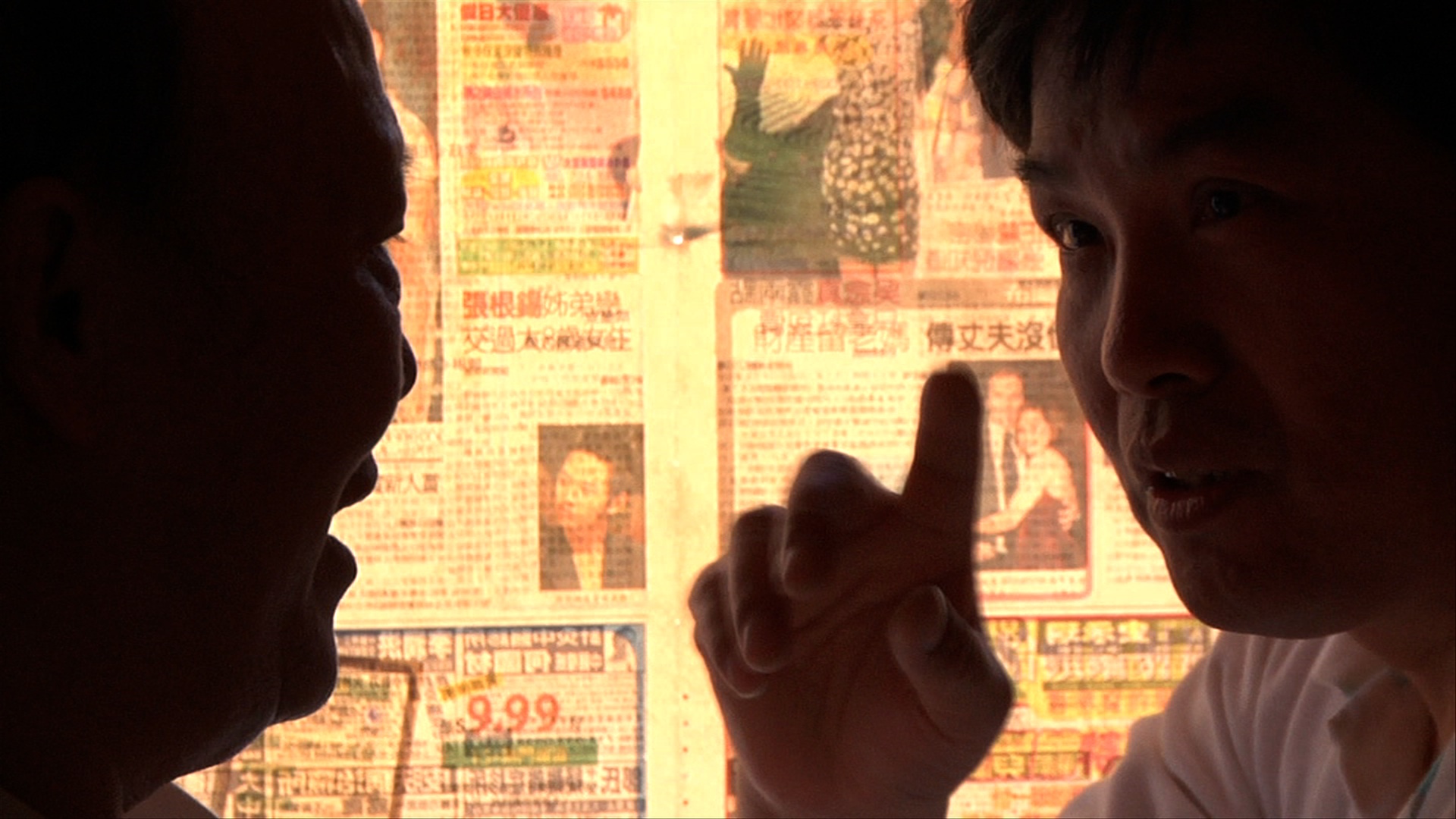
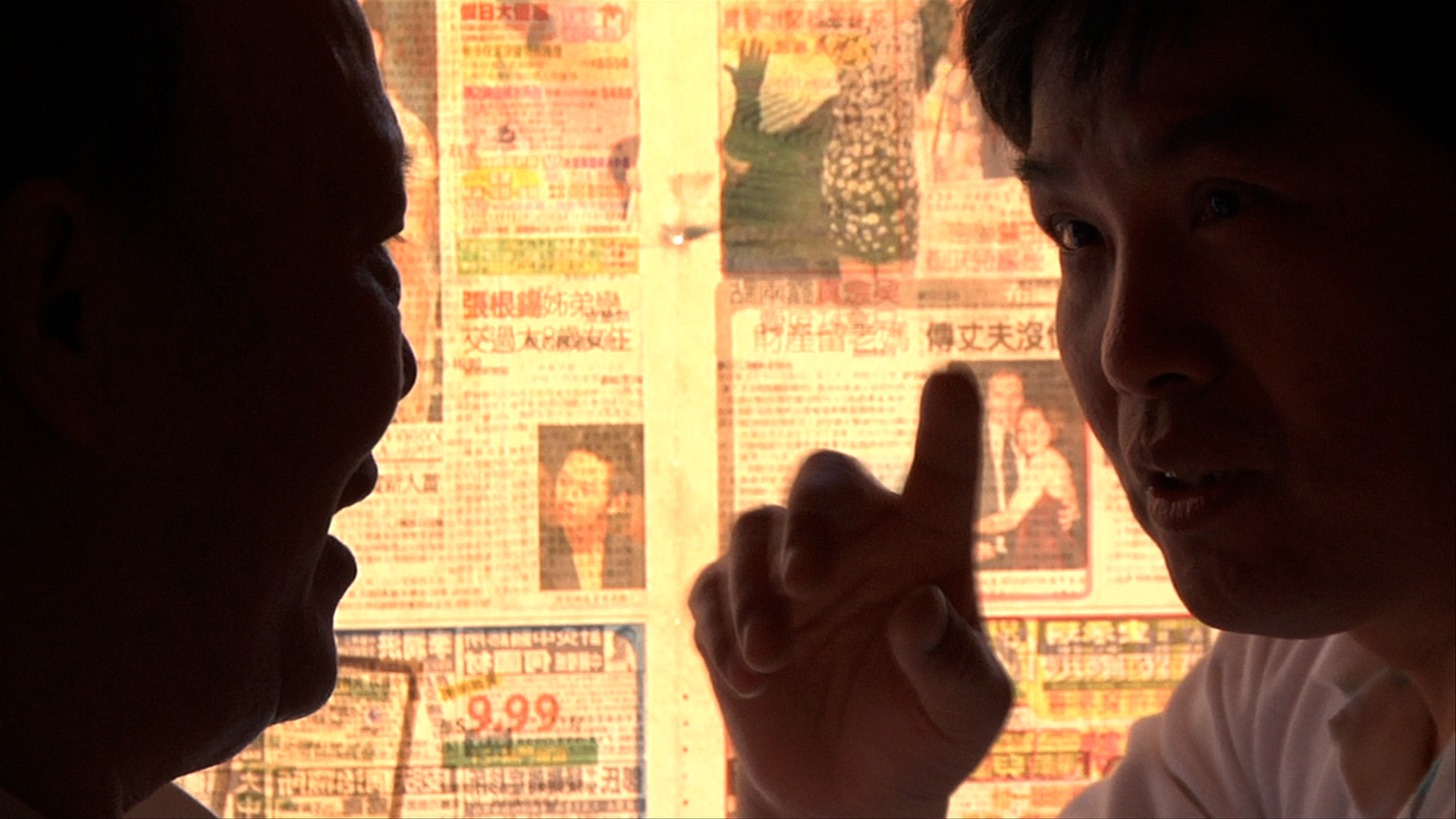
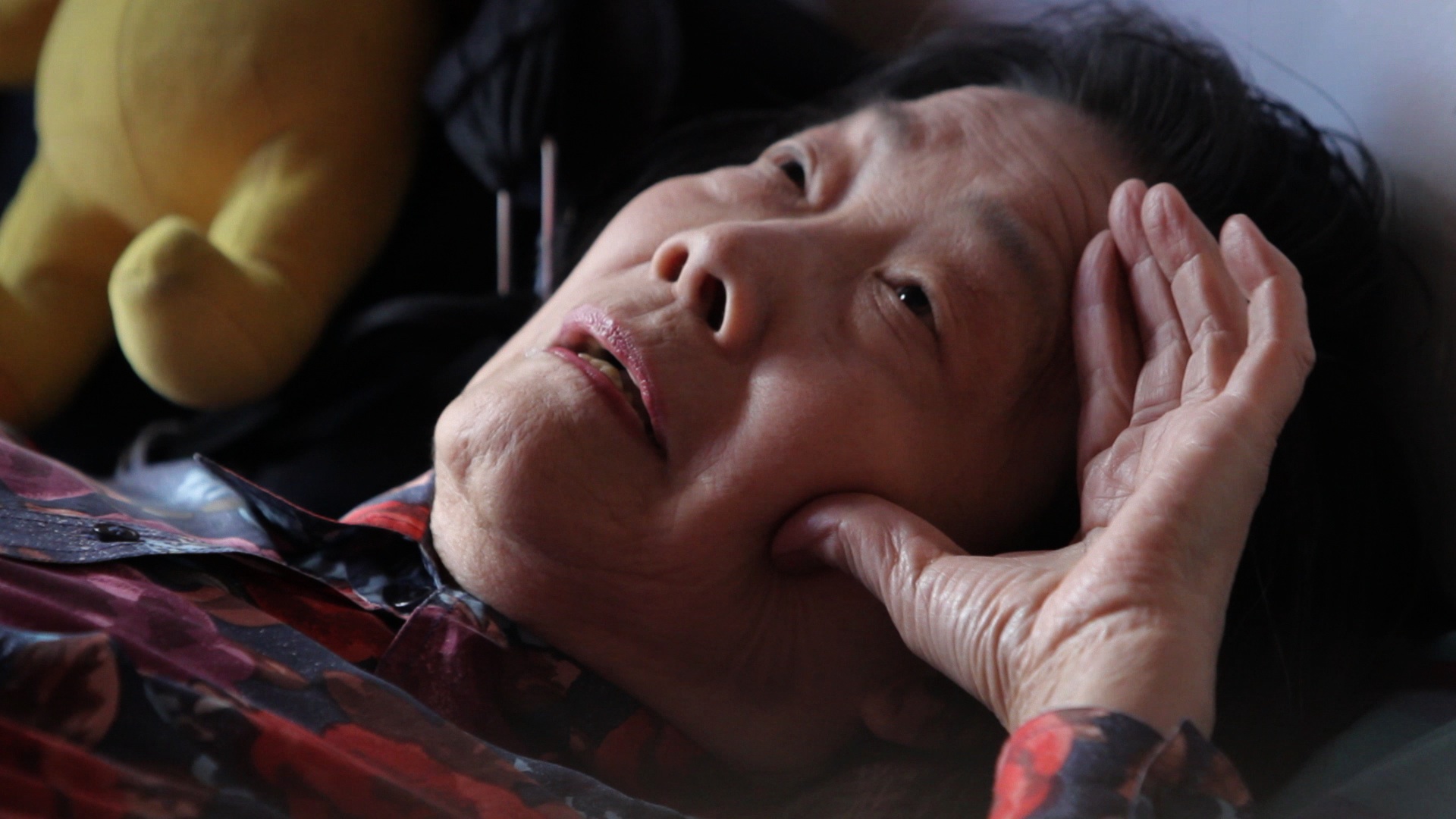
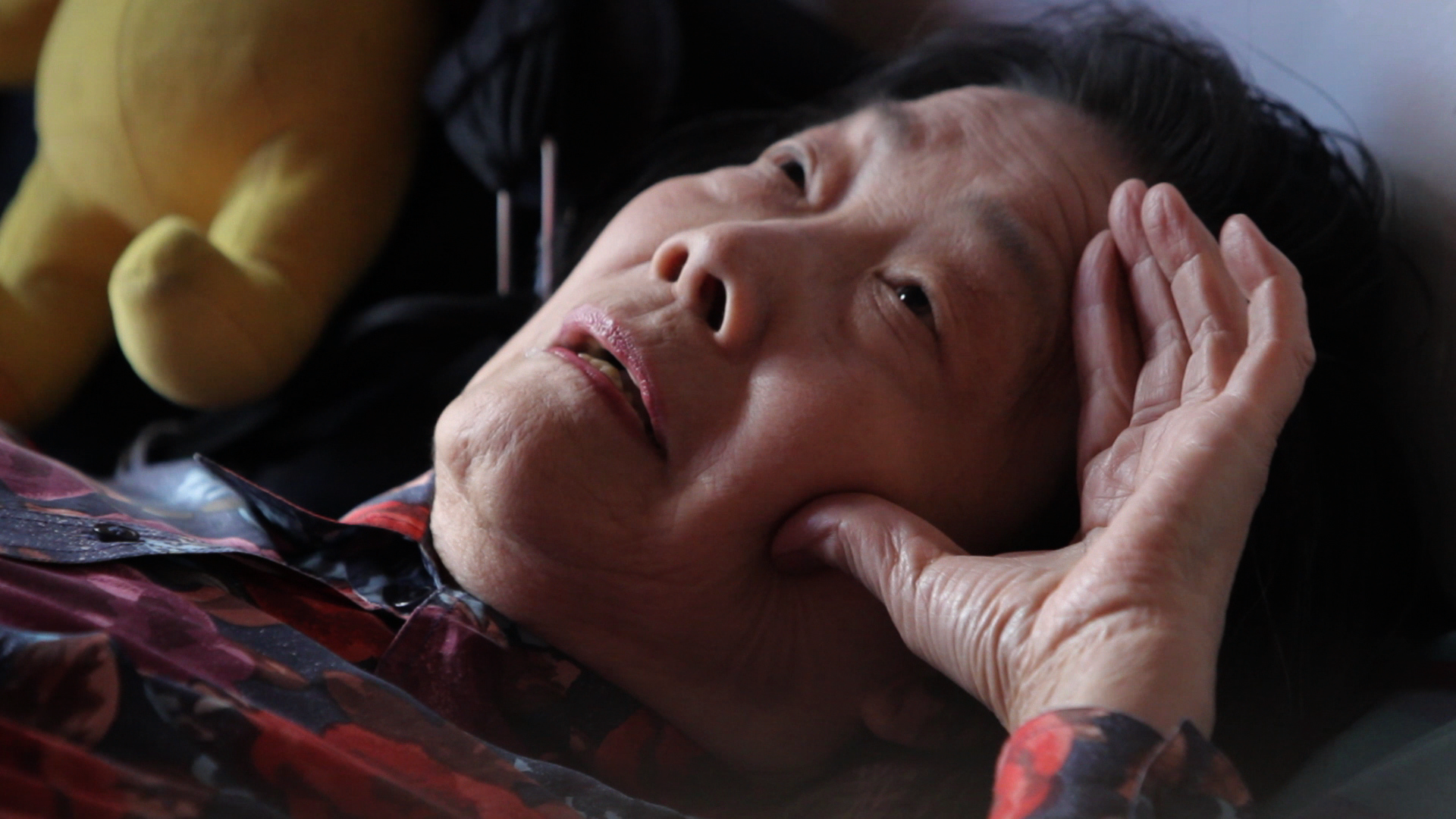
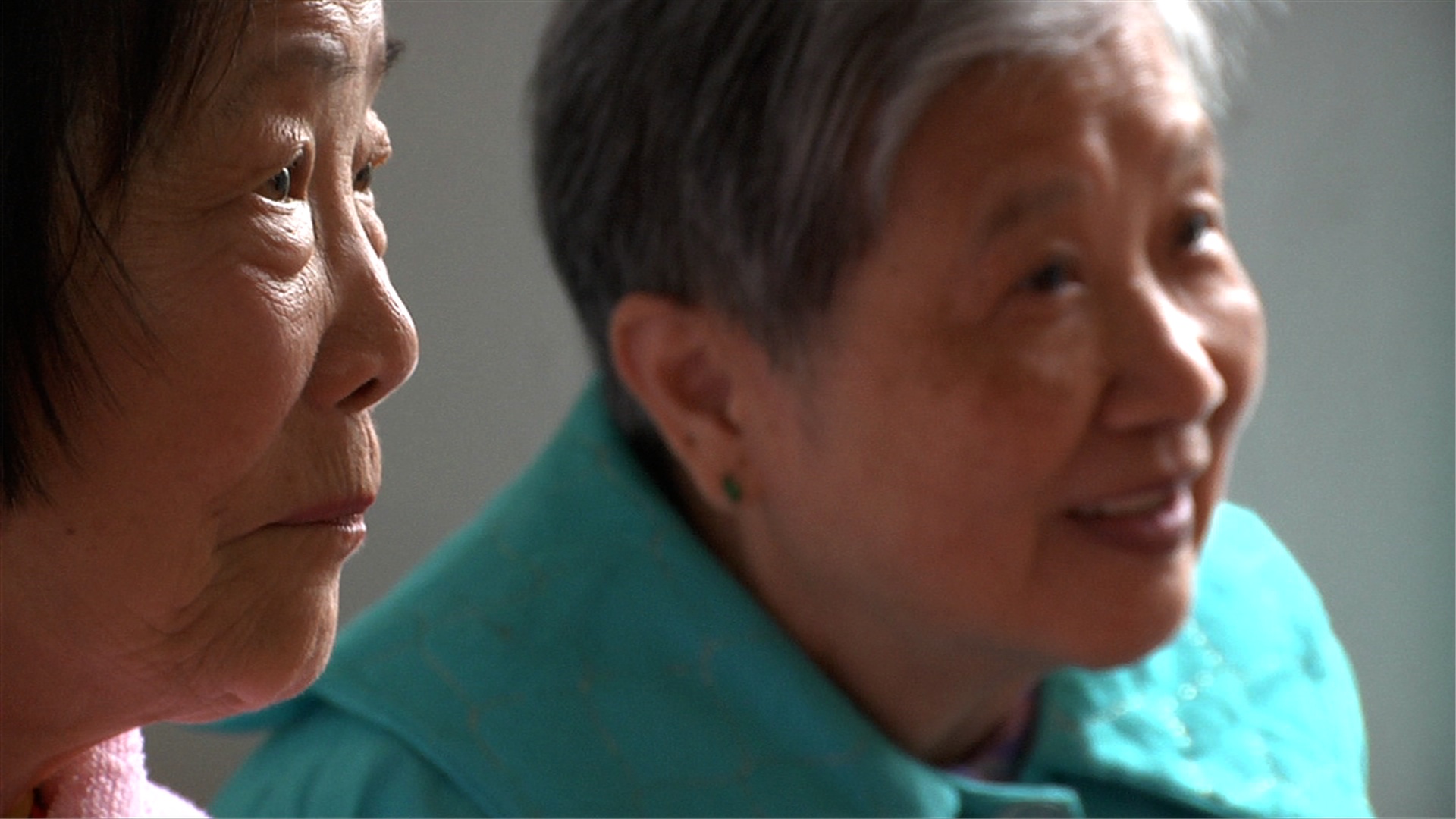
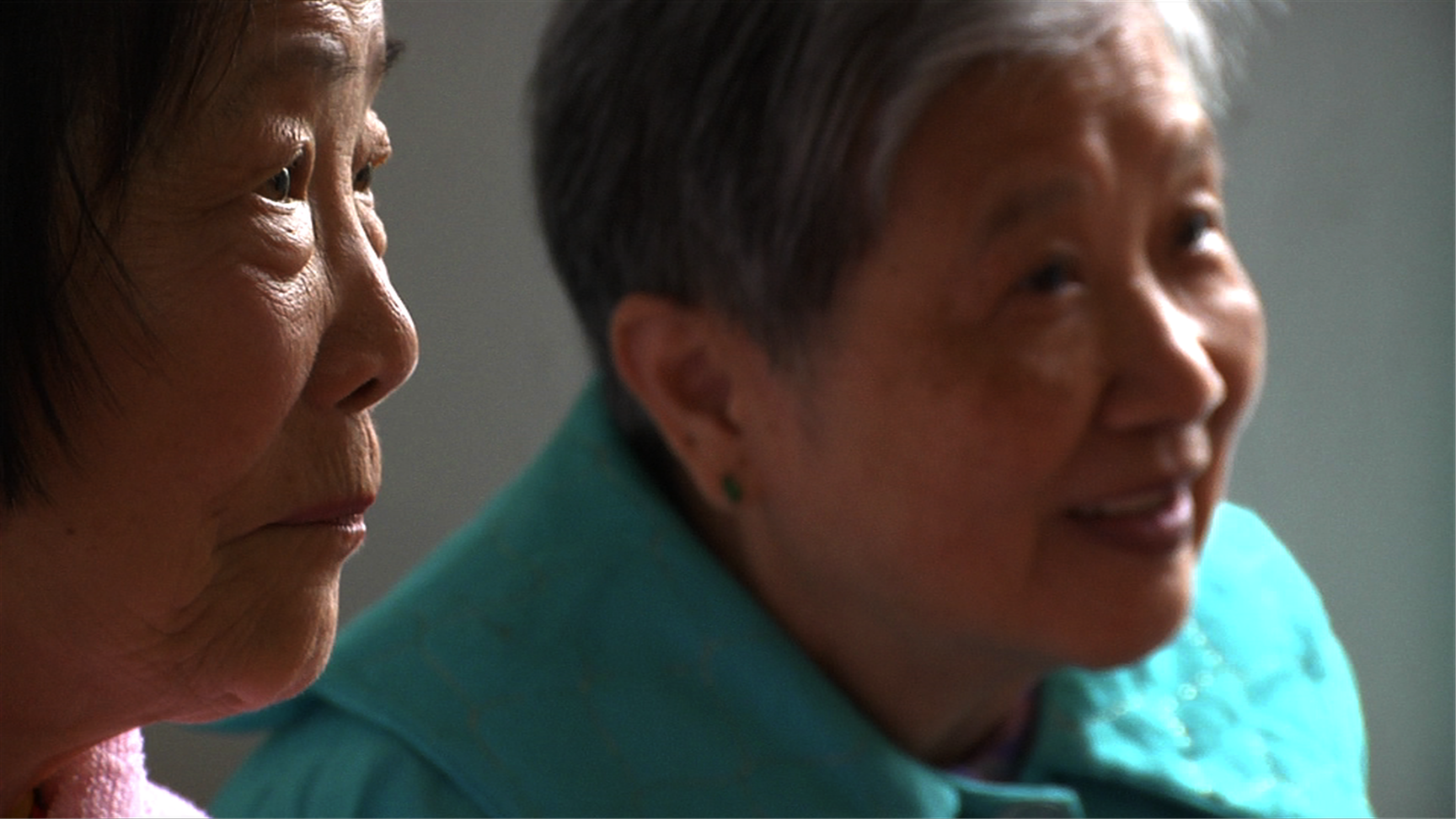
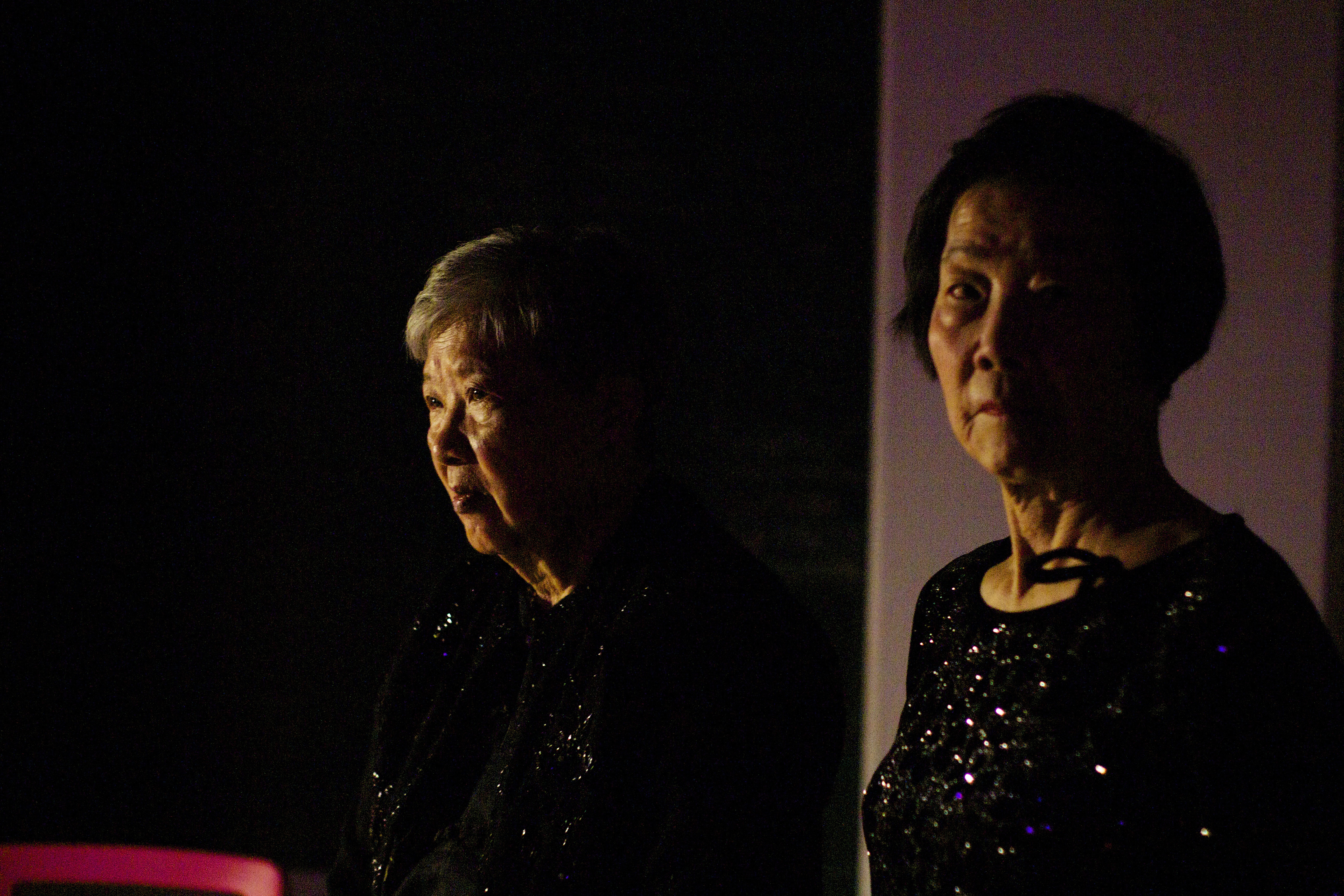
In this provocative, hybrid documentary, the audience joins a present-day household of immigrants living together in a shift-bed apartment in the heart of Chinatown. Seven characters (ages 58-78) play themselves through autobiographical monologues, verité conversations, and theatrical movement pieces. Retired seamstresses Ellen Ho and Sheut Hing Lee recount growing up in China during the turmoil of the 1950s when their families faced violence and separation under Chairman Mao’s revolutionary, yet authoritarian regime.  Yun Xiu Huang, a nightclub owner from Fujian Province, reveals his journey to the United States through the complicated economy of the “snakehead” system, facing an uphill battle as he starts over in a new city.

With each “performance” of their present, the characters illuminate both the joys and tragedies of their past.  As the bed transforms into a stage, the film reveals the collective history of Chinese immigrants in the United States, a story not often documented.  Further, the intimate cinematography and immersive sound design carry us into the dreams and memories of the performers, bringing the audience into a community often considered closed off to non-Chinese speakers.  Through it all, “Your Day is My Night” addresses issues of privacy, intimacy, and urban life in relationship to this familiar item of household furniture.


Press:

“Each person’s tale is brief but impactful, intercut with graceful set pieces and grainy footage that allows time to visualize, absorb and contemplate. Your Day is My Night is a cultural window with many dimensions, building empathy with viewers in this politically charged environment.” – Fatima Sheriff, One Room with a View

“A strikingly handsome, meditative work: a mixture of reportage, dreams, memories and playacting, which immerses you in an entire world that you might unknowingly pass on the corner of Hester Street, unable to guess what’s behind the fifth-floor windows.” –The Nation

“Beautifully blending anecdotes, evocative audio textures, and an ensemble of elderly immigrant performers/participants, Your Day is My Night is sumptuous and exploratory, bringing us a Chinatown we have never seen before in film.” – San Diego Asian Film Festival

“Using beds as a metaphor for privacy, intimacy and power, the film explores intercultural and trans-historical dialogue.” – The Washington Post

“Director Lynne Sachs’ Your Day is My Night shines a light on a little documented sub-culture in New York’s Chinatown, chronicling immigrants who live communally in buildings where there’s a shift-bed system. One person returns from a stint of overnight work to sleep in a bed just vacated by another person off to their day job. The form of this documentary is as compelling as its content. It is a beautiful collage of different media and music intricately edited together with the often emotional testimony of the immigrants.” – BBC

“New York’s Chinatown, a place as much spectral as real, flickers and flares into life in this singular hybrid of documentary, performance piece and cine-monologue. Seven working-class, immigrant residents of a shift-bed apartment play versions of themselves, recalling violent upheavals, long journeys and endless yearnings.” – Sight and Sound

“This is no ordinary documentary. This is film, a canvas, a moving poem. It never stands still. It moves and it moves us.” – Kennebec Journal/ Morning Star (centralmaine.com)

Director’s Statement:

“I’ve spent most of my life as an artist thinking about how to convey my observations of the world around me in the visual and aural language of film. I experiment with my perception of reality by embracing an associative, non-literal approach to images, and it is through this artistic exploration that I grapple with the natural, social, cultural and political phenomena that I witness through the lens of my camera. I began the Your Day is My Night project in late 2009 when I was talking with a relative on his 90th birthday.  A Brooklyn resident for his entire life, Uncle Bob has haunting memories of December 16, 1960 when a jet crashed near his Brooklyn home. Trying to imagine the devastation in this busy neighborhood, I asked him how many people on the ground had died.  ‘It was hard to know because there were so many hot bed houses in that area.  They all burned and no one knew precisely who lived there.’  What are hot bed houses? I asked him.  ‘Those are homes for poor people who work and can’t afford to rent their own apartments.  They share beds in shifts.’ I reconstructed the moment of the crash, creating a mental image of the inhabitants of these apartments as they tried to gather their few personal possessions and escape the fire. Which unlucky person would awake from a deep sleep after a long shift at the port to the sound of the crash and the heat of the fire?    After that conversation, I discovered that 19th Century photographer Jacob Riis documented numerous examples of these beds, and it is through his lens that I was able to begin my research.   In Riis’ How the Other Half Lives, he exposed to the rest of America the poor, immigrant experience he witnessed in downtown New York City.  I later read The Snakehead: An Epic Tale of the Chinatown Underworld and the American Dream by Patrick Radden Keefe to give me a more current sense of the situation in current day Chinatown.

I think of the bed as an extension of the earth.  For most of us, we sleep on the same mattress every night; our beds take on the shape of our bodies, like a fossil where we leave our mark for posterity. During the Revolutionary War, George Washington slept in many borrowed beds and now, hundreds of years later, his brief presence is celebrated from one New England town to the next: ‘George Washington Slept Here’ has a kind of strange signification and prestige. But for transients, people who use hotels, and the homeless a bed is no more than a borrowed place to sleep. An animal that borrows its home from another species is called an inquiline, and in Spanish inquilina is the word for a renter.  Conceptual artist and sculptor Félix González-Torres photographed a series of empty, unmade beds to commemorate the life and death of his partner, as if the very sheets that remained could remind him and us of the body and the man he had loved.

Since January of 2011, I have been writing, researching, and shooting material for my ‘bed project’ in the Chinatown neighborhood of New York City. I found a group of non-professional Chinese performer/participants (ages 58 – 78) and have worked almost weekly with them ever since. During our workshops, they each exchanged their own stories around domestic life, immigration and personal-political upheaval.  None of these people has ever worked in this cross-cultural way, so it is these taped process-oriented conversations that, in the final film, enhance our audience’s sense of the bed – experienced and imagined from profoundly different viewpoints. Next, a written script emerged from our months of shooting documentary images and interviews. Using the interactive model of Augusto Boal’s “Theatre of the Oppressed”, I guided my collective in a “simultaneous dramaturgy”. My performers, crew and, more recently, our live audience, explored the potential for transformation that can come from a dialogue around personal histories and the imagination.

The material I collected during these interviews is the basis for the monologues in Your Day is My Night. In production, I guided my performers through visual scenarios that reveal a bed as a stage on which people manifest who they are at home and who they are in the world. Our shooting took place in two different actual shift-bed apartments located in NYC’s Chinatown. The Chinese participants (several of whom currently live or have actually slept on shift-beds) spoke of family ruptures during the Chinese Cultural Revolution, a mattress excavated from a garbage heap, four men on one bed in Chinatown, amongst a long series of fascinating and haunting bed-related topics.

For inquiries about rentals or purchases please contact the Cinema Guild. For international bookings, please contact Kino Rebelde

“Your Day is My Night” has been exhibited as a live performance at St. Nicks Alliance in Greenpoint, Brooklyn, New York Public Library in Chinatown, Proteus Gowanus Interdisciplinary Arts Gallery in Brooklyn and University Settlement in Manhattan.” – LS

Cast: Che Chang-Qing, Yi Chun Cao, Yueh Hwa Chan  (Linda), Kam Yin Tsui, Yun Xiu Huang, Ellen Ho, Sheut Hing Lee, Veraalba Santa Torres,

Crew: Lynne Sachs (director); Sean Hanley (camera, co-produing and editing); Rojo Robles (co-writer); Catherine Ng and Jenifer Lee (translations); Ethan Mass (camera); Stephen Vitiello (music); Damian Volpe (sound mix) Amanda Katz and Jeff Sisson (sound); Bryan Chang (additional editing and translations); Madeline Youngberg (production assistance)
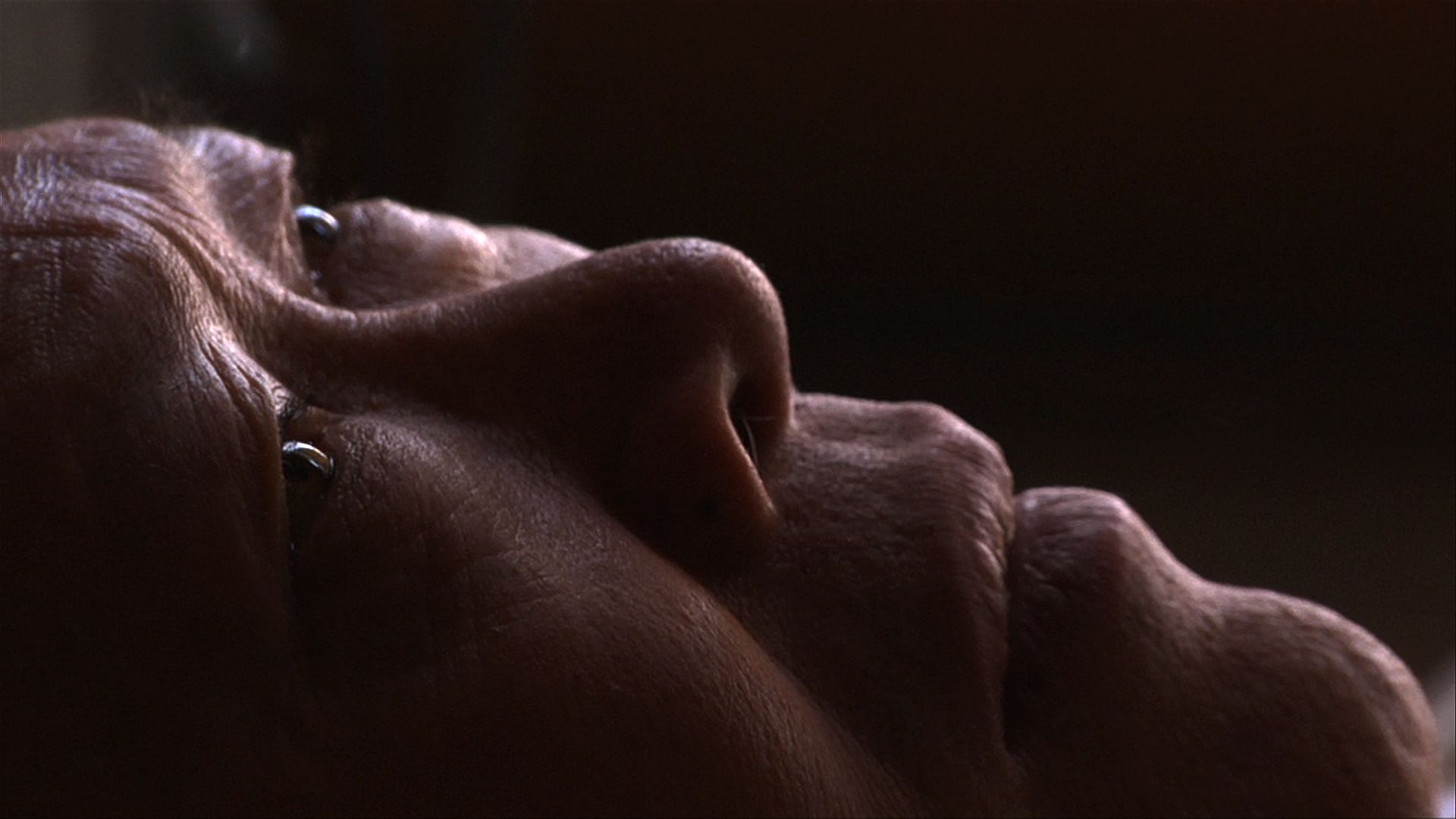
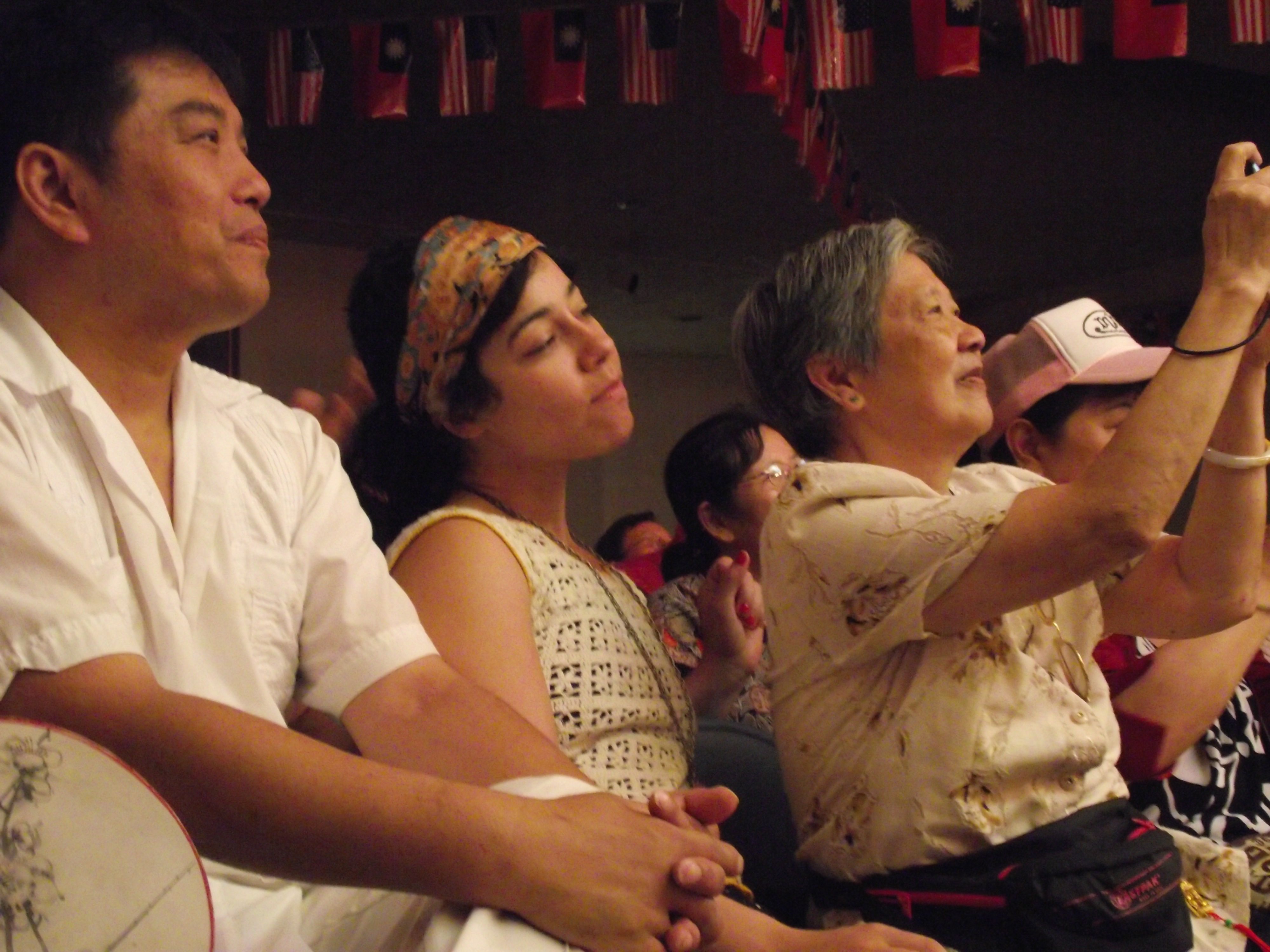
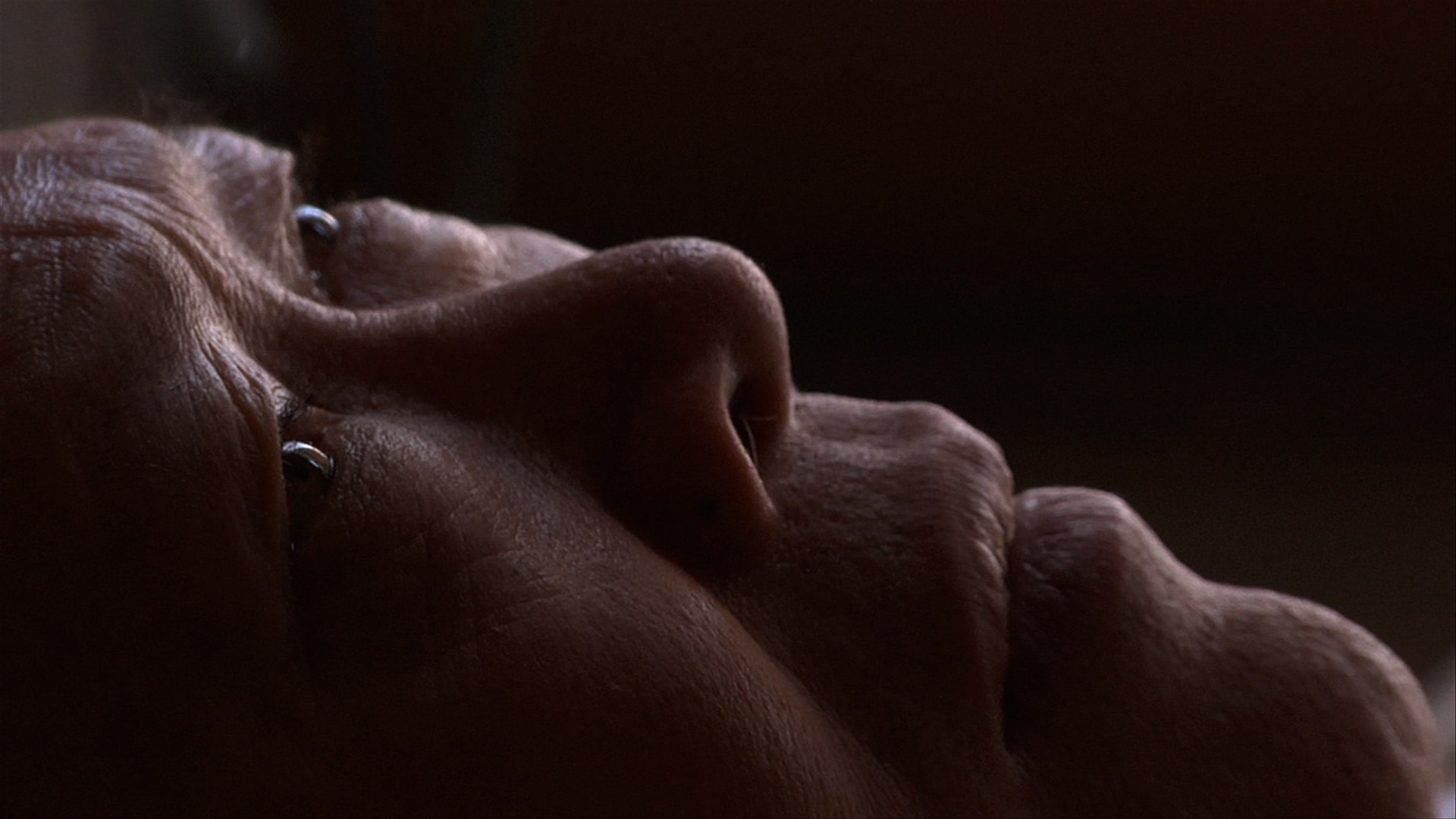
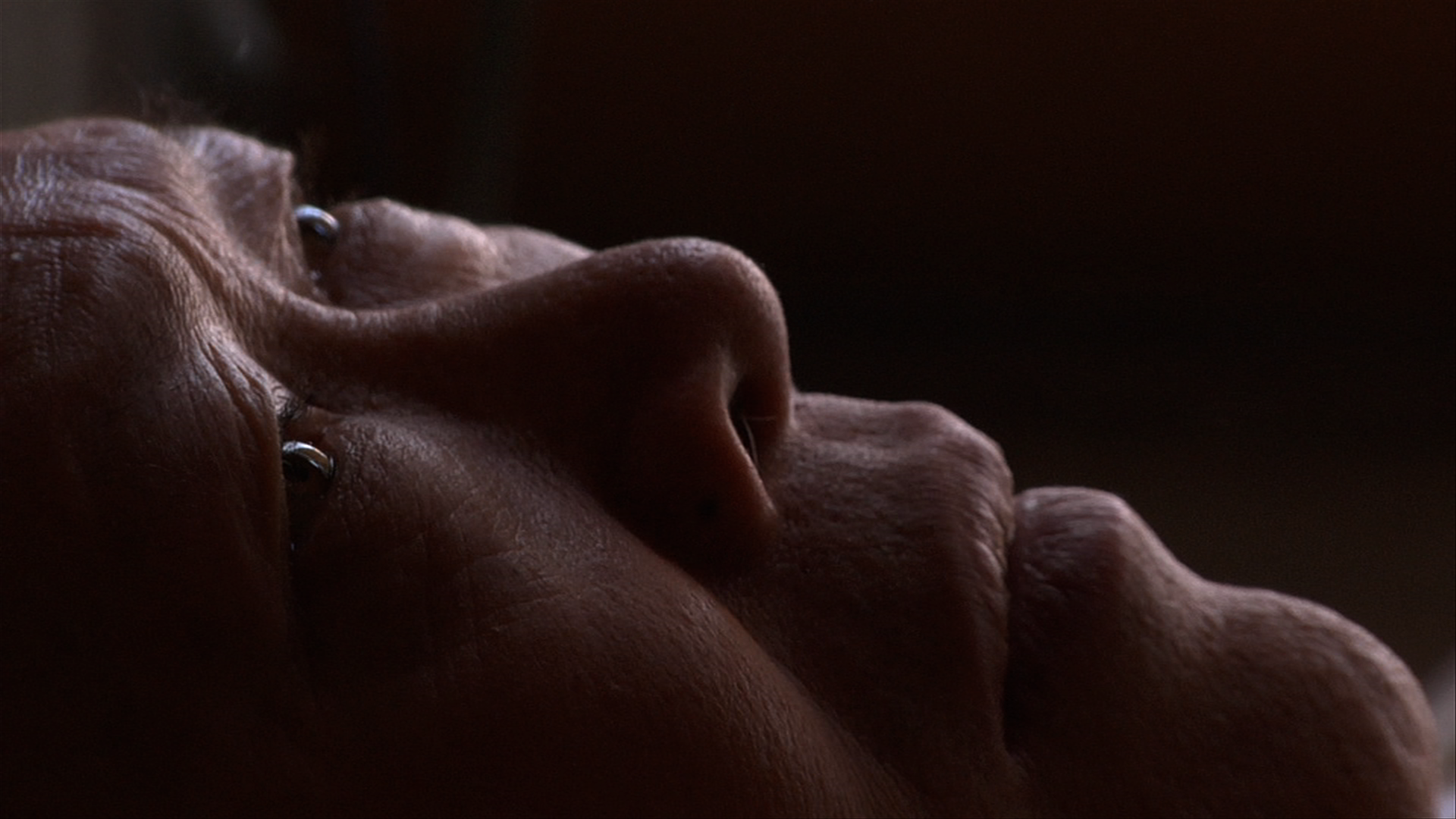
Kam Yin Tsui  in Your Day is My Night
Kam Yin Tsui in Your Day is My Night
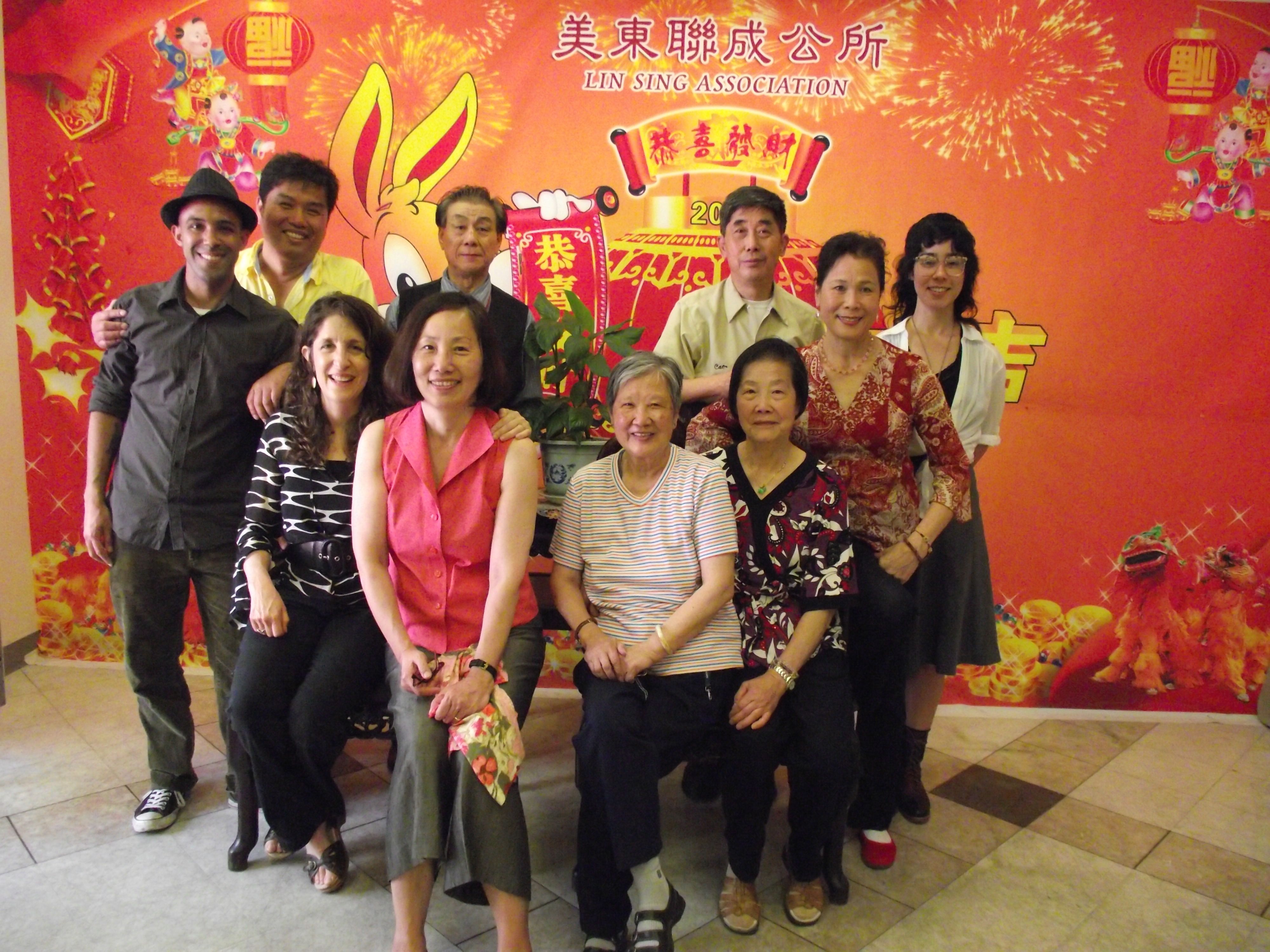
Your Day is My Night Cast and Crew
Yun Xiu Huang , Veraalba Santa and Sheut Hing Lee
Kam Yin Tsui and Yun Xiu Huang sing Happy Birthday

Link to Youtube video of cast Q & A Asian Pacific Institute at NYU:
https://www.youtube.com/watch?v=a-2Pgol6gck

“I think of the bed as an extension of the earth,” says experimental documentary filmmaker Lynne Sachs. In YOUR DAY IS MY NIGHT, a moving hybrid documentary/performance piece, the bed becomes stage as immigrant residents of a shift-bed apartment in the heart of Manhattan’s Chinatown are both performers and participants, storytellers and actors. Sharing their experiences as migrants and city dwellers, they reveal the intimacies and complexities of urban living. Filmmaker Lynne Sachs and performers Yi Chun Cao, Linda Y.H. Chan, Chung Qing Che, Ellen Ho, Yun Xiu Huang, and Sheut Hing Lee joined A/P/A Institute at NYU on Thursday, October 2, 2013 for a screening of the film and a conversation moderated by Karen Shimakawa (Chair of Performance Studies at NYU, Tisch School of the Arts). Lesley (Yiping) Qin served as translator.

Selected Screenings:

World Premiere:  Museum of Modern Art, Documentary Fortnight 2013 (Feb. 24 & 25, 2013)
Senior Planet Exploration Center New York City (April 12, 2013)
Ann Arbor Film Festival (March 23, 2013)
Athens Film Festival, Athens, Ohio Opening Night  April 18, 2013)
Workers Unite Film Festival, Cinema Village Theater, New York City (May 10, 2013)
Brecht Forum, New York City  (May 17, 2013)
Union Docs. Brooklyn, New York City (June 8, 2013)
Images Film and Video Festival, Toronto  (April 19, 2013)
Kingsborough College, Brooklyn, New York (May 6, 2013)
Maysles Cinema, Fiction-Non Series, NYC, (Sept. 25 & 26, 2013)
BorDocs Tijuana Forum Documental, Mexico, Sept., 2013
University of California, Santa Cruz, Nov. 18 and 19, 2013
Pacific Film Archive, Berkeley, California, Nov. 20, 2013.
Vancouver Film Festival, 2013
Micheal Moore’s Traverse City Film Festival, Michigan, Best Experimental Film, 2013
New Orleans Film Festival, 2013
San Diego Asian American Film Festival,  Best Feature Documentary2013.
Center for History, Media & Culture/ Asian Studies, New York University, 2013
Roy & Edna Disney/ CalArtst Theatre (REDCAT), Los Angeles, 2014.
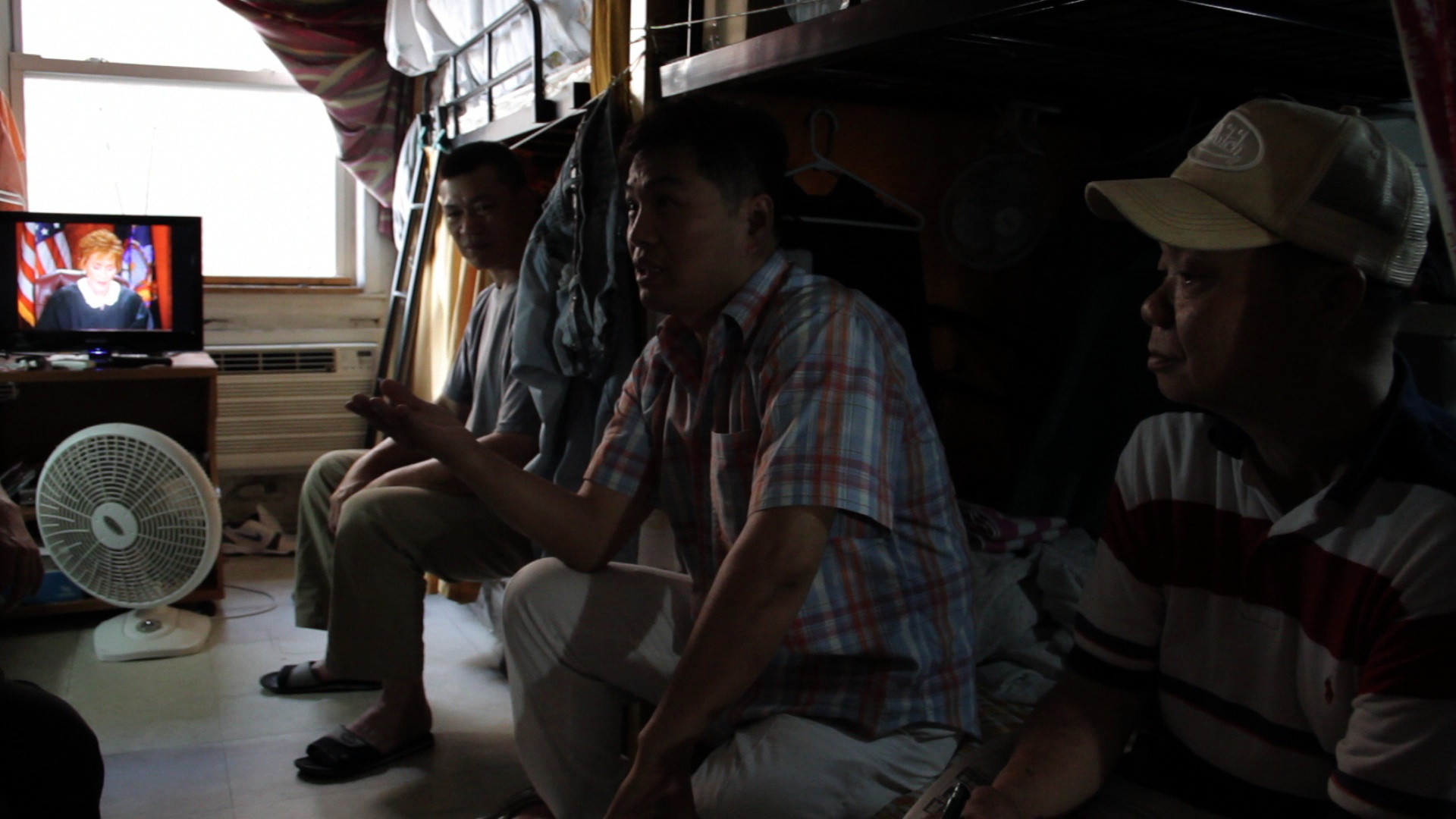
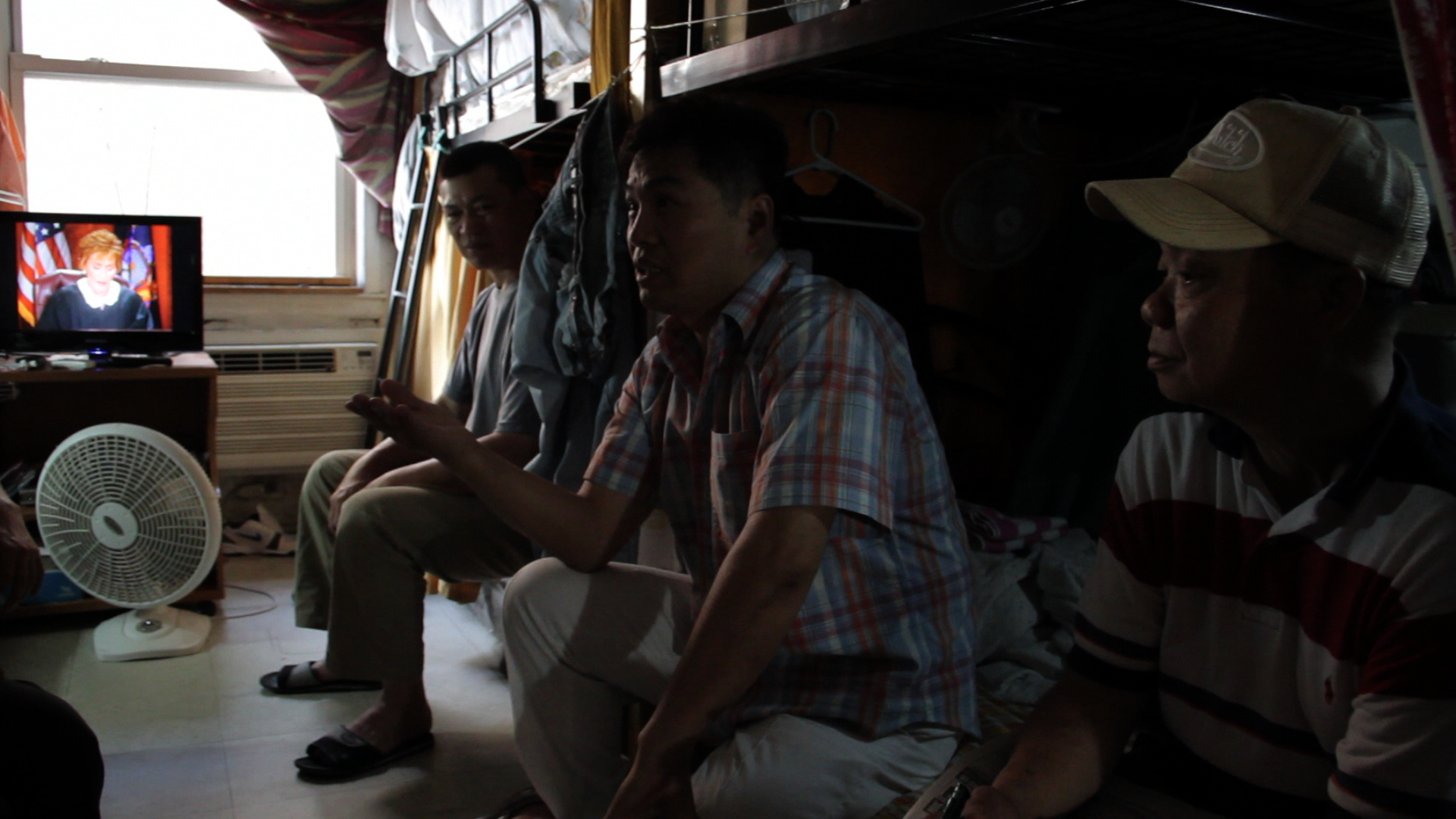
Your Day is My Night: Live Film Performance

“Your Day is My Night:  Live Film Performance”
dir. Lynne Sachs

SEE TRAILER FOR OUR LIVE PERFORMANCE HERE:

FULL LIVE PERFORMANCE HERE:

Presented as a Live Performance in 2012 at these venues throughout New York City:

Art@Reinassance at St. Nick’s Alliance, Greenpoint Brooklyn
http://roundrobinbrooklyn.blogspot.com/p/hospitality.html
Chatham Square Branch of the New York Public Library, Chinatown
Proteus Gowanus Interdisciplinary Gallery, Brooklyn
http://proteusgowanus.org/2012/04/your-day-is-my-night-an-interactive-film-performance/
The Performance Project at University Settlement, Lower East Side
http://www.universitysettlement.org/us/news/PerformanceProject/2012-2013_performance_calendar/

Produced by Lynne Sachs and Sean Hanley

Partially funded by the New York State Council for the Arts and the Tisch School of the Arts, New York University.  Presented in collaboration with the Tenement Museum and the Museum of the Chinese in America.

In “Your Day is My Night” a group of Chinese performers creates a dynamic live film performance that tells the collective story of Chinese immigration to New York City from the viewpoint of an older generation.  On both stage and screen, the seven performers play themselves, all living together in a shift-bed apartment in the heart of Chinatown. Since the early days of New York’s tenement houses, shift workers have had to share beds, making such spaces a fundamental part of immigrant life.  In this production, the concept of the shift-bed allows the audience to see the private become public. The bed transforms into a stage when the performers exchange stories around domestic life, immigration and personal-political upheaval.  They speak of family ruptures during the Chinese Cultural Revolution, a mattress found on the street, four men on one bed in Chinatown.  “Your Day is My Night” is a provocative work of experimental theater and cinema that reflects deeply on this familiar item of household furniture.

A bilingual performance in Chinese and English.

Featuring: Yi Chun Cao, Linda Y.H. Chan, Chung Qing Che, Ellen Ho, Yun Xiu Huang, Sheut Hing Lee, Kam Yin Tsui

“Your Day is My Night” directed by Lynne Sachs;   cinematography and editing by Sean Hanley and Ethan Mass; music by Stephen Vitiello;  Monologue writing support by Rojo Robles. Translations by Catherine Ng, Jenifer Lee and Bryan Chang.

Each evening includes an engaging talk-back with the performers, moderated by representatives from University Settlement’s Project Home, the Tenement Museum, and photographer Alan Chin.


For more info visit University Settlement


Additional Related “Tenement Talk” Program on October 23 presented at the Tenement Museum on Tuesday, October 23.
Please go to Your Day My Night Tenement Talk for more information.

Your Day is My Night Seut Lee Ellen Ho


Your_Day_Is_My_Night_Tsui_profile

DNAinfo NYC “New Performance Focuses on Shift Beds”

DNAinfo

http://www.dnainfo.com/new-york/20121213/chinatown/chinatown-rotating-shift-bed-residents-at-center-of-new-performance

CHINATOWN — A multimedia performance is seeking to shine a light on the phenomenon of “shift beds,” in which struggling immigrants rent places to sleep in 12-hour installments.

The performance, “Your Day is My Night,” will show at University Settlement on Eldridge Street this Thursday and Friday night, as a prelude to a documentary of the same name that will premiere in February.

The show intersperses excerpts from the upcoming film with live performances from predominantly Chinese Americans, detailing the often private life of workers who share beds to survive, but who also gain a sense of community as they carve out life in America.

“What you will see is a place where adults interact and talk and have this really homely life,” said filmmaker Lynne Sachs, 51, who has so far spent two years working on the documentary and accompanying performance, along with cinematographer Sean Hanley. “There is a lot conversation and exchange of live experience.”

As New Yorkers complain about living in what they consider tiny apartments, “shift beds” have been commonplace in immigrant communities, as well as in China, for years.

Jacob Riis photographed the lifestyle at the turn of the last century, capturing the beds where one person sleeps during the day and someone else moves in at night.

“Often, if you see a very small building with a large pile of trash out the front, chances are lots of people live there,” said Sachs.

Shift-bed apartments currently exist in areas like the corner of East Broadway and Allen Street, Sachs explained, providing accommodation to renters willing to vacate for half of the day for about $150 a month.

Many of the performers taking the stage for the show are between 50 and 70 years old and have themselves spent time in a shift bed.

“I gave them a change — to be performers and tell their own life story,” Sachs said.

Those performing on stage create the narrative using tai chi, dance, song and acting, with any Chinese translated via subtitles.

Sachs, a Carroll Gardens resident, was first inspired to research New York’s shift-bed lifestyle when an elderly uncle recalled its prevalence in the 1980s.

“I began to research and found out it was still happening today,” she said.

Even though eight people occupying an 800-square-foot apartment may seem to offer a poor quality of life, Sachs pointed to the community the shift-bed system creates for workers whose families often stayed in China while money was sent home, or until a life could be set up in America.

“We are trying to show that shift beds aren’t the struggle they seem to be,” she said.

MOTHER WORKS @ Microscope Gallery (including Same Stream Twice by L. Sachs)

Microscope_Gallery_logo

This Sunday night I will show Same Stream Twice a new short film I made in collaboration with my daughter Maya Street-Sachs in this program at Microscope Gallery in Bushwick, Brooklyn.   As some of you know, I was very inspired by conceptual artist Mary Kelly’s Post Partum Document in the early 90’s so I am excited to see the interview with her that is part of this program. I am also curious to see the piece by Linda Montano and her daughter. Linda is the performance artist who wore and lived in monochromatic colors for seven years in the 1970s.
Maya and I will both be at Microscope. I hope you can join us.
Lynne

Sunday November 11, 7pm
MOTHER WORKS
Videos by Catherine Elwes, Marni Kotak, Linda Mary Montano, and Lynne Sachs
plus a rare interview with Mary Kelly
Admission $6

Microscope Gallery
4 Charles Place
Bushwick, Brooklyn

With women issues at the forefront of recent political and social discourse, we present an evening of videos by working women artists including Catherine Elwes, Marni Kotak, Linda Mary Montano and Lynne Sachs concerning motherhood. The program features original video works and a rare interview with artist Mary Kelly, covering four decades from the setting of 70s feminism, where motherhood was often marginalized, to today’s over-the-top celebration of mommy culture.

The common element in these very different  approaches to the experience of motherhood and the mother/child relationship is the elevation of the personal daily experience. Each of the works – even when unstated – is also a collaboration with the artist’s son or daughter, or in the case of one, with her own mother.

MICROSCOPE GALLERY
presents film, video, sound, performance, new media and other time-based artists through exhibitions, screenings
and other events.

http://www.microscopegallery.com/

PROGRAM includes:

“There is a Myth”, Catherine Elwes, video, color, sound, 19 minutes, 1984
A single breast fills the screen and is repeatedly pummelled by the infants hand. These brutal caresses soon produce the desired effect and milk oozes from the swollen nipple. The viewer, deprived of any conventionally sexual reading, is left to confront or repress pre-lingual memories of the physical and psychological pleasures of lactation.  — C E

“Little Brother”, Marni Kotak w/ Ajax Kotak Bell, HD video, color, sound, 12 minutes, 2012
The latest in series of collaborative video works in which the artist equips her young child with a video to record his daily activities and the world he encounters. The featured segments were recorded during the past month.

“The Birth of Baby X”, Marni Kotak, video, color, sound, 4:30 minutes, 2012
Documentation from the live birth performance “The Birth of Baby X” in which the artist gave birth to her son as a work of art.

“Mom Art”, Linda Mary Montano, color, sound, 23 minutes, 2012
An interview between Mildred Montano and Linda Mary Montano (1970′s) featuring Mildred Montano’s paintings.

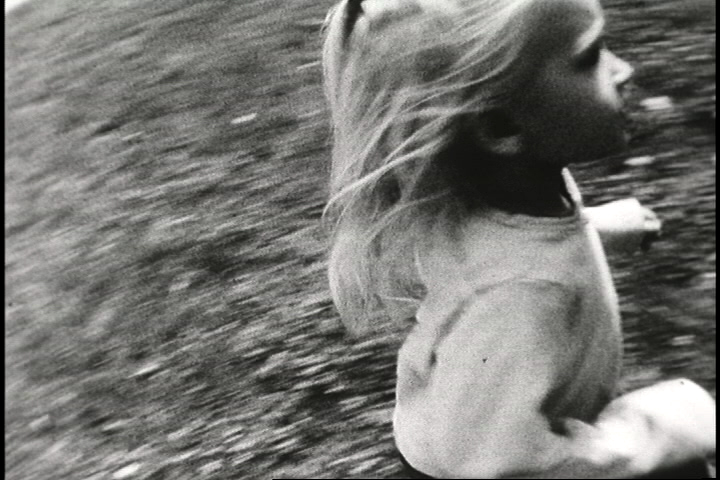
“Same Stream Twice”, Lynne Sachs with Maya Street-Sachs, 16mm b&w to DVD, 4 minutes, 2001-2012
My daughter’s name is Maya. I’ve been told that the word maya means illusion in Hindu philosophy. In 2001, I photographed her at six years old, spinning like a top around me. Even then, I realized that her childhood was not something I could grasp but rather – like the wind – something I could feel tenderly brushing across my cheek. Eleven years later, I pull out my Bolex camera  once again and she allows me to film her – different but somehow the same. — L S

In addition, a 17 minute segment from a rare interview with artist Mary Kelly discussing her works including her influential work “Post Partum Document”.

PoW.Maya.3

Voices of New York on Your Day is My Night

Voices of NY

http://voicesofny.org/2012/10/film-looks-at-new-yorkers-who-take-turns-sharing-a-bed/

October 24, 2012

Film Looks at New Yorkers Who Take Turns Sharing a Bed

By Ai Shen Wong and Yee Shin Du |
Translated by Connie Yik Kong

The Word Journal and the The Lo-Down wrote about the upcoming combination documentary/live performance “Your Day is My Night,” a look at New York’s “shift-bed” residents, mostly Chinese immigrants who take turns sharing the same bed. The Lo-Down piece in English can be read here and the World Journal one, translated from Chinese and edited, is below.

Directed by Lynne Sachs, the film “Your Day is My Night,” presents the harsh lives of Chinese immigrants who had to take turns sharing beds just to sleep. It will be shown, accompanied by a live performance, at University Settlement in the Lower East Side on Nov. 1-3.

Alison Fleminger, who organizes special events for University Settlement, said the film reflects the living conditions of immigrant communities in the Lower East Side and their diverse cultures. The performance artists share similar backgrounds with the subjects of the film or are of Chinese descent.

Director Sachs’ inspiration came from listening to stories from her relatives about the difficult lives of immigrants in the 1960s, where in one house, many people shared the same bed to cope with their limited income. Even many years later, she discovered that this kind of situation still happens to many immigrants, especially among new arrivals in Chinatown. Many people not only squeeze themselves into a small living space, they live a poor life, renting a bed with other people  to take turns to sleep.

The film features seven Chinese actors, who are all regular people playing themselves. They were discovered by Sachs through the Lin Sing Association, based in Chinatown. She interviewed them in person and merged each of their stories into the movie.  The seven are: Yi Chun Cao, Linda Y.H. Chan, Chung Qing Che, Ellen Ho, Yun Xiu Huang, Sheut Hing Lee, and Kam Yin Tsui.

Each has a distinct immigrant experience. Under the guidance of the director, their stories are presented through the sharing of the same bed. The bed documents each of their lives, carries their unique identities and speaks of each of their long histories. When they take turns to rest on this bed, their lives are intertwined.

A still from “Your Day is My Night.” (Photo courtesy of Lynne Sachs via The Lo-Down).

Yi Chun Cao: One Bed Shared by Three People

Yi Chun Cao moved to the U.S. 23 years ago and worked in a restaurant.  To save money, his family of three rented a small room. The whole family slept on one bed. Cao later worked as a custodian at Confucius Plaza.

In the movie, Cao recalled his experience of coming to the U.S. from China. In 1949, when the Guomintang Party was exiled to Taiwan, his parents and siblings all went there. He stayed on his own in Nanjing, China. When his older brother came to the U.S., Cao finally located him after writing to an uncle. According to Cao, the movie reminds him of his life, of being separated from his family since he was little, and being unable to see his parents again before they passed away.

Linda Y.H. Chan: The Floor is my Bed

Linda Y.H. Chan, 78, spoke of her difficult journey moving from China to the U.S. when she was a teenager.  According to Chan, because her grandfather had returned to China after being overseas, after 1949, her family was repeatedly denounced by the Chinese government. Their home was ransacked and all their valuables were taken away.  The government alleged they had more valuables hidden. Since they did not have any more to give to the government, the officers punched and kicked Chan who was just a teenager. Finally in 1958, to secure their safety and survival, her mother took her and her little brother and escaped to Hong Kong. Her father was already there.

Chan recalled that in 1962, her family came to New York from Hong Kong as refugees.  At that time, she only had $5 in her pocket. Life in the U.S. was very difficult.  Her parents worked in a garment factory in Chinatown. As a teenager, she started washing people’s clothes in Chinatown. Her family of four lived in one room. She and her little brother often slept on the floor or on the sofa.

Kam Yin Tsui:  Picked up a Bed to Bring Home

Kam Yin Tsui worked as a dishwasher at a restaurant. Having no money to buy furniture for his empty apartment, he had to pick up a bed that other people had thrown out in the street. After working for more than 10 years, Tsui, who is retired, indicated that the details of his struggles during those early years are still fresh in his mind when he recalls them even now.

According to Tsui, he was smuggled into the United States in 1972. When he was young, he had to work the fields in rural villages of mainland China and later begged on the streets of Guangzhou, China.  The travails he faced when he first came to the United States remind him of the miserable living conditions he endured during his childhood.

The movie and the live performance will be presented at University Settlement, 184 Eldridge St., on November 1-3 at 7:30 p.m. Ticket are $15; $10 for students and seniors.

Your Day is My Night in the Low Down

The Low Down

Your Day is My Night: An Inside Look at New York’s “Shift-Bed” Residents
By

http://www.thelodownny.com/leslog/tag/lynne-sachs

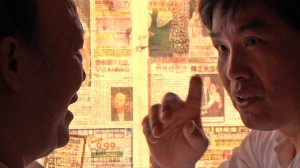
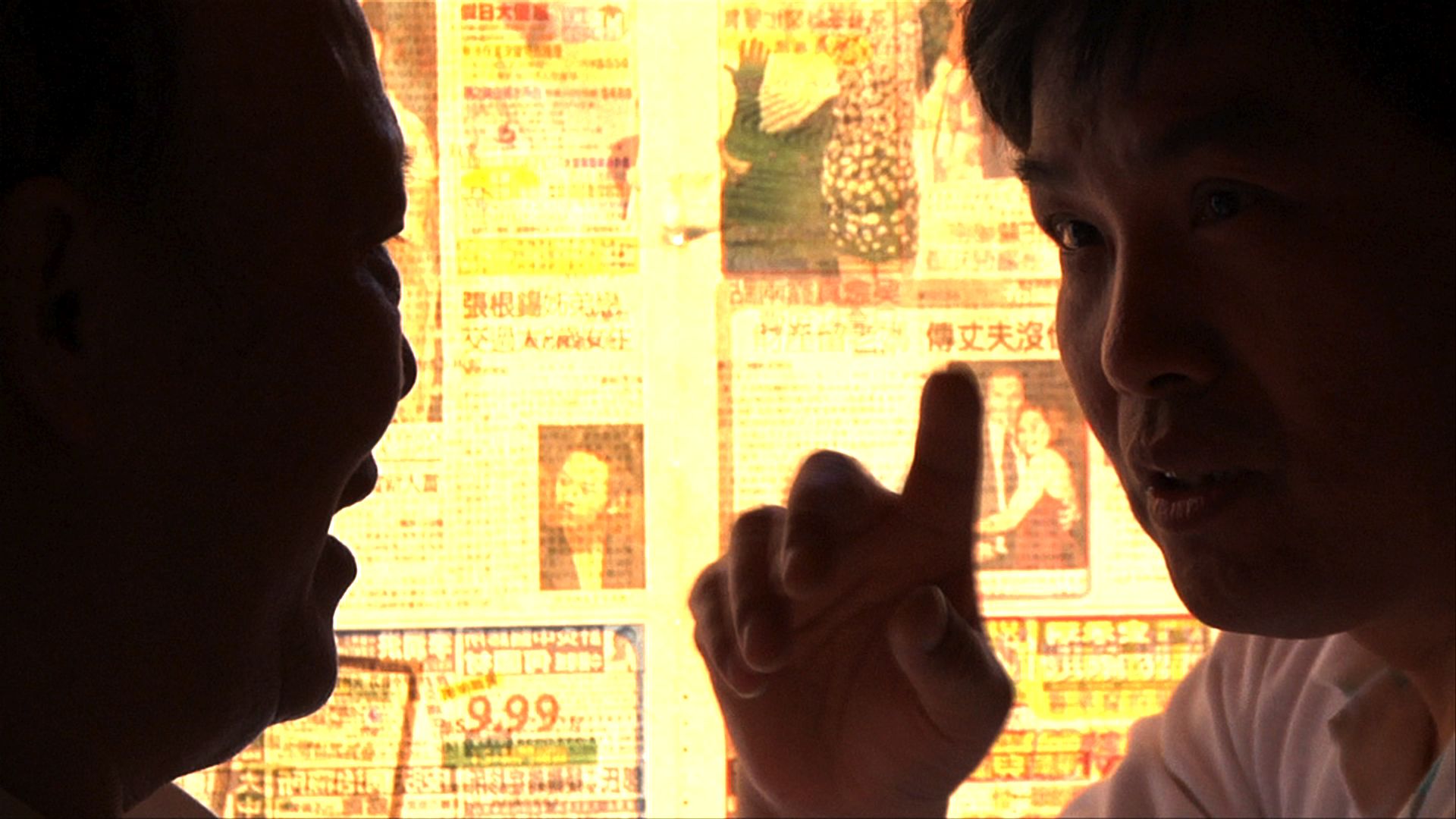
Your_Day_Is_My_Night_Two_Men_talk2

They are living right here on the Lower East Side but most of us are oblivious to the existence, let alone the daily travails, of New York’s “shift-bed” residents.  A hybrid documentary/live performance, “Your Day is My Night,” coming to University Settlement next month offers a rare glimpse into their hidden world.

Of the innovative production based on the lives of Chinese immigrants compelled to rent beds in 12-hour increments, Director Lynn Sachs says: “This shared domestic space becomes a… canvas on which lives are recounted and revealed.” Referring to her “new friends,” she explains, “We are making something together that we believe in, that expresses something about living in New York that perhaps has not been revealed before.”

Alison Fleminger, curator of University Settlement’s Performance Project was immediately drawn to the production. “Our aim is to encourage greater participation in the live arts and to help cultivate diverse creative communities on the Lower East Side.” All of the performers are artists who have some kind of background in dance or tai chi or qigong. They are, she notes, “artists who are conscious of the multi-layered communities that co-exist in New York City.”

A still from “Your Day is My Night.” Photo courtesy of Lynne Sachs.

One of the most compelling characters is a man named Yun Xiu Huang. He is a popular Fujianese wedding singer, “with a powerhouse operatic voice” says Sachs. He arrived in New York around 1990 to fulfill the American Dream, or at least leave behind the difficulties in his homeland. He has grown children in China who he hasn’t seen in years and who he may not see for many more. When asked if he’d try to bring his family to the U.S., he answered, “look at us. We’re adults living in shift beds. Our children wouldn’t want to come here.”

Sean Hanley, cinematographer and editor, observes, “the pain they experienced in China and the difficulty they’ve had living in the U.S., is something they never have a chance to talk about because everyone they know has been through it.”   The project artfully weaves a visual and oral history of lives you never knew existed.  And now it’s opening up new possibilities for creative expression.  In conjunction with the production, The Tenement Museum is working on a Chinese immigration exhibition and the Museum of Chinese in America is planning to present a special focus on Yun Xiu Huang.

Performances run Thursday, Nov. 1st through Saturday, Nov. 3rd at 7:30 p.m. at University Settlement. Go here for tickets.

Rabbis of the Round Table

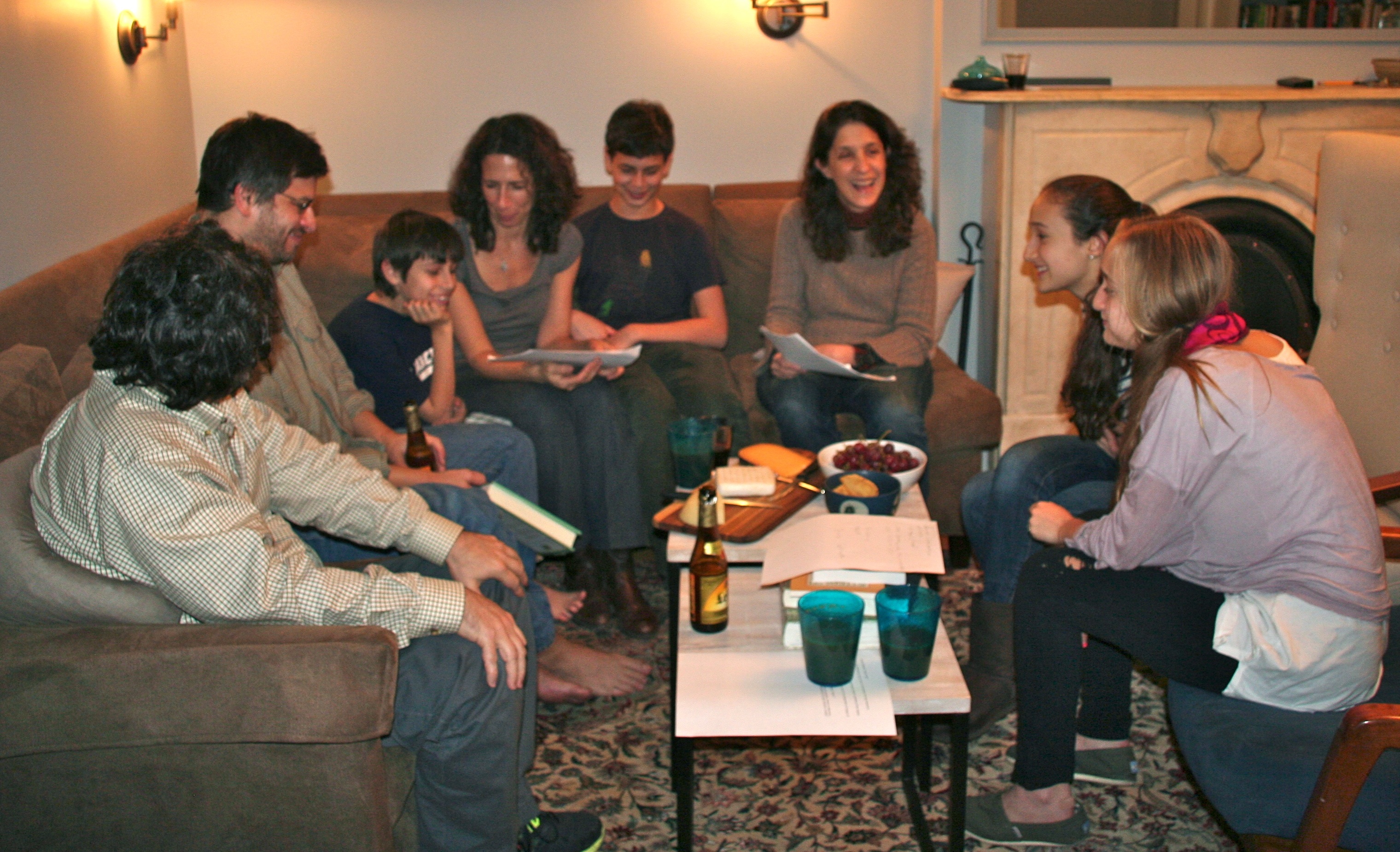
Rabbis of the Round Table Lynne Sachs2

Mark Street, Jason Dubow, Karen Cuchel, Lynne Sachs, Ari Dubow, Isaac Dubow, Maya Street-Sachs, Noa Street-Sachs

Rabbis of the Round Table
a monthly Adult and Child Jewish Study Group
by Lynne Sachs

Posted on Kolot Chayeinu: a Progressive Jewish Community website:  http://www.kolotchayeinu.org/home_practices#home

Back in 2004, I proposed to my husband Mark Street that I start a Torah study group for our half-Jewish-half-secular-humanist (the only unofficial faith or –ism he would embrace) 9 and 7 year-old daughters Maya and Noa Street-Sachs. He agreed reluctantly and skeptically, convinced that this passing fancy of mine for constructing a homemade form of religious learning would certainly go the way of Pilates or learning to cook.  Having grown up as a Reform Jewish teenager in Memphis, Tennessee in the 1970s, I’d been introduced to the tenets of my family’s religion through a long, dreary series of Sunday school classes that successfully squashed any latent curiosity I might have had about our faith.  It wasn’t until I passed the embarrassingly easy requirements for Confirmation at age 16 that I was given the choice to abandon my own spiritual edification or to continue in the lone, post-confirmation class for teens taught by a famously erudite local lawyer who conducted his class like a college literature seminar with a tinge of politics, European history and philosophy thrown in for good measure.  Confident that this would be my absolute last chance to find even a thread of appreciation for Judaism, I signed up for Leo Bearman’s course and groggily drove my way to our synagogue every Sunday morning throughout my senior year of high school.   To my surprise, the class was everything a learning experience could be – provocative, passionate, and rigorous.

And so with this profound moment in my young life still somehow resonating in my memory, I decided it would be possible to create a monthly study group for my own children here in Brooklyn in conjunction with our visits to Kolot Chayeinu for holidays, children’s events and the occasional Saturday service.

For the first few years of our de facto Havurah, we joined forces with another family with an eleven-year-old daughter.  At each meeting, we would tackle a particularly dramatic and no-doubt famous story from the Torah.  Quaint as it might sound, we called the group Bible Study and frankly that was what it was. Despite our unanimous opposition to the Old Testament as a significant doctrine of faith, we each believed that it was an intriguing, influential tome that would help our daughters better appreciate everything from the Sistine Chapel, to Creationism to 20th Century poetry. The Bible’s presence in our culture is pervasive and we wanted our children to understand its power, influence and resonance.  Using The Children’s Illustrated Bible, we moved our way from the Garden of Eden, to Sarah’s pregnancy, to Joseph’s Coat, to Jacob’s dream, until after two years we completed the Old Testament chapters of the book.  Because none of the children felt pressured to learn anything from one month to the next, they relished the humor and the drama in the stories, engaging in deep cross-generational discussions around such things as ethics, betrayal, commitment and sacrifice. Of course every one-hour Bible Study meeting finished off with a good meal, so the sensorial rewards were always within grasp.

Eventually our first collaborative family decided to move on, and so I was faced with the challenge of finding another family who was willing to commit one day a month to our old-fashioned endeavor.  The second family who joined forces with us had an 11-year-old boy.  Of course our children’s preteen enthusiasms waxed and waned but nevertheless we followed another two-year journey, this time referring to our monthly gathering in a more specifically Jewish way, Torah Study.  Now with a more mature group of three students to teach, I met with Rabbi Lippmann for some guidance before embarking on Phase II. She suggested we acknowledge the sophistication of our own children by using W. G. Plaut’s renowned The Torah: A Modern Commentary as our primary text.  Clearly the children were now ready to take the helm as teachers and Biblical provocateurs. As Jews do every fall, we started all over again with Genesis in September of 2008 with monthly readings and analyses of such stories as: Cain and Abel, The Flood, Babel, and Sodom and Gomorah. In our second year, we even began delving into Exodus.  By this time, however, our children were no longer satisfied by a purest engagement with the literature.   They demanded intense discussions around the meaning and existence of God, poignant debates about Palestinians and Jews in the Middle East and frank reflections on the role of women as depicted in this hallowed text.

In 2010, we embarked on Phase III of our study.  It was a unanimous decision to put the bible to the side for a while and to engage with Judaism in a more creative and personal way.  Together with our daughters (now 13 and 15) and a family with two boys ages 9 and 12, we created Rabbis of the Roundtable (named for the shape of our dining room tables).  Each month we engage with some sort of reading that sparks a conversation. Our list of texts has included: “A Yom Kippor Scandel” by Sholem Aleeichem, “The Jewbird” Bernard Malamud; Maus by Art Speigelman, “The Boy in the Bubble” song by Paul Simon, “Conversion of the Jews” by Phllip Roth, “New York Filmmaker” by Ken Jacobs, “Address Unkown” by Katherine Kressman Taylor, “ Long to See My Mother in the Doorway” by Grace Paley, “The Plagues” by Moacyr Scliear, “King of the Jews” a film by Jay Rosenblatt, “World of our Fathers” by Irving Howe, The Boy in the Striped Pajamas by John Boyne, “Bontsha the Silent” by I.L. Peretz.  Last month my daughter Maya was Rabbi so she decided that she wanted to take us out of the house to visit the permanent collection of Judaica at the Jewish Museum.  Honestly, she had never even seen this collection before, so she researched some of the themes (both theoretical and religious) that had inspired the curators in order to lead us through the exhibit with issues to contemplate.  As we gazed at the vitrines full of mazuzahs and menorahs as well as the more contemporary canvases on the walls, she asked us to ponder the artists’ intentions and the relationship of the objects to our sense of the visual in Jewish culture. Surrounded by these art works and artifacts, four adults and three children stood listening to Maya explore her own relationship to Judaism.  I thought about the years we have spent in conversation about our shared culture and faith.  It is not the answers we have found together that are so important but rather the questions we continue to confront.

Lynne Sachs
2012

Lynne Sachs interviews 3 New Day filmmakers from the Midwest

New Day Logo

Interviews with New Day filmmakers based in the Midwest
by Lynne Sachs

http://www.newday.com/blog/2012/interviews-with-new-day-filmmakers-based-in-the-midwest/

New Day filmmakers live all over the United States, although many are concentrated on the East and West Coasts. In the following interviews, New Day filmmakers from the Midwest reveal how living there has impacted their personal – and filmmaking – choices.

KANSAS VS. DARWIN, THE EVOLUTION OF A DOCUMENTARY
Interview with Jeff Tamblyn

By Lynne Sachs, New Day Member

Jeff Tamblyn interviews John Calvert

Why did you make Kansas vs. Darwin at the time and place you did?

As I watched the school board hearings in Topeka taking shape in May, 2005, I knew it was going to be a documentary, with a cast of characters and a story arc.

Is this just a Kansas issue?

This was part of the debate for which Kansas was already synonymous. I was under the impression that this controversy mainly took place in rural states like mine, but I learned that it happens to a large extent in all 50 states.

Where did the idea for the film come from?

I got the idea for the film the day before my father died. I was reading a newspaper article that talked about the hearings to test the validity of evolution, and it was almost like a hand was on my shoulder and someone or something was whispering in my ear: “This is the film you should make” so later on when people asked me, “What are you doing?” I responded “We are on a mission from God!” It was kind of like the Blues Brothers, if you know what I mean (laughs).

What kinds of challenges pushed the film in directions that you might not have expected?

There were many challenges every step of the way. People on both sides refused to talk to me. I told the crew that we would never tell people what we believed, and so I had resistance on both sides of the issue.

Were you considered a threat?

One school board member made me drive seven hours just to convince her I would not be a threat to her. One of the principle figures on the pro-evolution side would not talk to me either because he thought I was against evolution since I would never directly claim my own position.

Then what kind of “voice” do you express in your marketing for the film?

My film is about provoking the audience and encouraging discussion. When the audience walks away, they are often upset, they want to talk and talk and talk. Whoever you are and whatever you think, this film is going to bring you face to face with people who think just the opposite.

Will teaching evolution end as an issue?

When I market the film, I try to remind people that this controversy over teaching evolution isn’t going away anytime soon. I want to connect with people who are struggling to teach evolution or to understand the political situation around the topic.

What are the challenges to being a filmmaker in Kansas?

There is less infrastructure here in terms of funding and fewer local networking opportunities, though we do have a large production community of technicians, bigger than you would think in a metro area of 2 million.

How do you actually make your life as a filmmaker?

For money, I make corporate films. On a personal level, the people I find community with here are not always filmmakers but writers, actors, musicians, arts administrators.

Has New Day (ND) changed your life?

It has totally transformed my life as a filmmaker. There is a huge community aspect to ND that is easily accessible through media and I see ND people when I travel to festivals and conferences. I also represented ND on a panel called “Film Distribution from A to Z with a Capital E for Education.”

Have you found kindred spirits in ND or films that share issues with your movie?

Yes, Greta Schiller, (dir. No Dinosaurs in Heaven) and I have spoken frequently about our shared topic and audience, which has led to our collaboration on a rather large science-education initiative involving a distinguished group of academics.

What impact has New Day had on your distribution?

Developing outreach partners who have a vested interest in a topic – such as science teacher organizations. Together, we develop programs using the film at state and local conferences. This is a very smart type of partnership that’s indispensable in today’s marketplace.

What have you brought from Kansas to New Day?

Common sense (laughs). I deal every day with a lot of different kinds of people, maybe it’s easier for me to have empathy with some of our viewers.


WRIT WRITER: A HISTORY OF THE PRISONERS’ RIGHTS MOVEMENT
Interview with Susanne Mason

By Lynne Sachs, New Day Member

Director Susanne Mason works with Editor Karen Skloss to select images for “Writ Writer.”

Did Austin Texas spark your work as a filmmaker?

In The University of Texas’s graduate school I made a film about women convicted of murdering their alleged abusers.

Was that easy to do?

I had a hard time getting permission from the prison system to interview the incarcerated women that I wanted to include in the film. In the process of jumping hoops and seeking permission, I was inadvertently introduced to the Texas prison system’s history and became fascinated by it.

Did that change your film plans?

In the end I obtained permission to interview five women, but the real fruit of that graduate thesis film was that it inspired me to study the Texas prison system’s transformation as a result of the Civil Rights Movement.

How did Writ Writer happen?

When I learned about the story of Fred Arispe Cruz, I thought it could be a remarkable biographical and historical documentary about a prisoner and a southern state prison system.

Do prisoners have rights?

Fred Cruz, who came into the system in the early 1960s and began studying law in order to fight his own conviction, eventually focused his legal attention on unconstitutional conditions of confinement. Writ Writer tells his story within the story of the emerging prisoners’ rights movement of the 1960s and 70s.

Could you have made your film anywhere?

Had I not lived in Texas I don’t think I ever would have told that story. It was my ability to hop in my car and drive to little towns all over Texas to interview former prison officials and prisoners that allowed me to piece together the history in a cinematic way.

How has Austin served you?

When I committed to making Writ Writer, I was lucky that one of Austin’s most famous filmmakers, Richard Linklater (dir. Slacker), had created the non- profit Austin Film Society. AFS became the fiscal sponsor for Writ Writer, and I received my first grant from the Texas Filmmakers Production Fund, a thrilling confirmation of what for me was an incredibly ambitious project.

Was Writ Writer your first feature documentary film experience?

I had been an Associate Producer of three hour-long documentaries for PBS, but I had never single-handedly produced a feature documentary. Writ Writer was a long shot, because it relates an obscure history about people who weren’t famous and hadn’t been filmed much. It was difficult to pitch. But AFS believed in me and the story.

Did you ever want to give up on your film?

I sought funding from the traditional sources, including the Independent Television Service. I was rejected by ITVS eight times before I was finally awarded finishing funds. I don’t like thinking about those years. I had invested so much sweat and tears, and had no idea if I’d ever be able to finish it. My confidence was shot. Having a community of film friends in Austin was absolutely crucial. People close to me saw the progress we were making and that encouraged me.

How has New Day helped you?

New Day Films is a community of filmmakers, many of whom have had similar experiences making films that would otherwise never be produced or released were it not for an independent spirit. Having new friends and colleagues who are willing to go out on a limb for a story that can shed light on a difficult history or social circumstance gives me hope.

Has New Day helped your distribution plans?

Being part of a distribution company with a national reputation for releasing high quality educational films has helped me to get Writ Writer into librarians’ and professors’ hands much more easily than if I had done it by myself in Texas.

Are other New Day filmmakers dealing with prison and criminal justice issues?

Yes. Goro Toshima (dir. A Hard Straight), Tony Heriza and Cindy Burstein (dirs. Concrete, Steel & Paint), Kelly Anderson and Tami Gold (dir. Every Mother’s Son), Lexi Leban and Lidia Szajko (dirs. Girl Trouble), among many others. It’s a terrifically inspiring group of dedicated documentary filmmakers.

Has New Day led you to new filmmaking plans?

New Day has made it possible to meet veteran filmmakers from all over the country whom I never would have had the opportunity to meet otherwise. I have the camaraderie of a league of excellent filmmakers. This is very empowering, and has encouraged me to embark on a new film about prisoner re-entry and reintegration into society, an issue that became a concern of mine while producing Writ Writer.


IMMIGRANT NATION! FIGHTING FOR IMMIGRANTS’ RIGHTS
Interview with Esau Melendez

By Lynne Sachs, New Day Member

Esau Melendez filming

Was living in Chicago significant when you made Immigrant Nation! The Battle for the Dream

There was a national law called HR4437 that criminalized everyone who was undocumented. On March 19, 2006, half a million people came out to march against the bill here in Chicago. That day, I saw that the mainstream media was mostly covering the anti-immigration group.

Did that motivate you?

I wanted to reveal how large the immigrant movement actually was, to show that this march was a lot bigger than what people were seeing on television. You see, this is currently the biggest civil rights movement in the US, but the media will never recognize that.

Was there something or someone who started you on the film?

I decided to follow my main character, Elvira Arellano, in order to show her as a symbol of the undocumented. She had been fighting her own deportation for a long time here in Chicago, and so she had a history of activism. When she received a deportation order, she refused and sought sanctuary in a church. This was just the right moment for me to begin following her journey.

What has happened to the cause your film champions?

If a community unites, there is no one that can stop them. Justice will be served. And as we can see today, the federal government is finally challenging those state laws.

What makes your film timely today?

When the Arizona anti-immigrant law came out, my film, Immigrant Nation received much more attention. I discovered a new momentum for the film’s distribution. It became a clear media response to similar anti-immigrant bills across the country.

How do you make ends meet as a filmmaker?

I work in a local PBS station here in Chicago. I edit, shoot and sometimes produce, which helps me develop skills for my own productions. I wish I could just do my own work but here in Chicago it is very difficult to get enough work to make a living in media.

What about funding your film?

I applied for an Independent Television Service grant and wrote on my application that I worked for a local station. This disqualified me immediately! Everyone knows it is so hard to make a living as a filmmaker without a regular job. So I made an argument in my own defense and ITVS finally changed their rules based on my complaints. I still did not get the funding, but that is another story.

Has New Day helped you distribute your movie?

My best decision was getting into New Day. The sales from my distribution are helping me to pay the debt for the film. It is now being used as an educational tool for one of the biggest movements in American history.

How do artists deal with the ups and downs of making films outside the mainstream?

Let me tell you a happy series of events: The Sundance Film Festival had just rejected my film but then right after that Latino public broadcasting offered funding. I told my pregnant wife “Let’s go celebrate!” and she responded, “I don’t think so, I am having contractions.” Such unforgettable moments are what make this journey so worthwhile.

Some Thoughts on my Friend Chris Marker

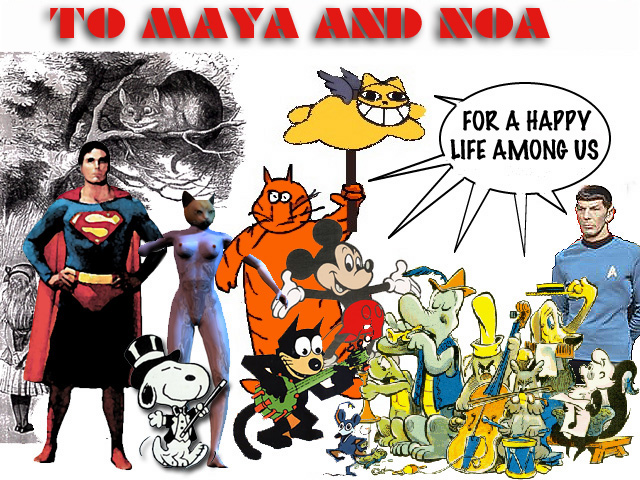
Chris Marker Makes a Special Guillaume cat cartoon for Maya & Noa Street-Sachs

Chris Marker Makes a Special Guillaume cat cartoon for Maya & Noa Street-Sachs

Some Thoughts on my friend Chris Marker

In San Francisco in  the mid-1980s, I saw Chris Marker’s “Sans Soleil”.  I witnessed his mode of daring, wandering filmmaking with a camera.  Alone, he traveled to Japan, Sweden and West Africa where he pondered revolution, shopping, family, and the gaze in a sweeping but intimate film essay that shook the thinking of more filmmakers than any film I know. Marker’s essay film blended an intense empathy with a global picaresque.  Simultaneously playful and engaged, the film presented me with the possibility of merging my interests in cultural theory, politics, history and poetry  — all aspects of my life I did not yet know how to bring together – into one artistic expression.  In graduate school at that time, I wrote an analysis of the film and then boldly, perhaps naively, sent it to Marker.  In a last minute note, I also asked him if he would like an assistant in his editing studio.

Several months later, his letter from Paris arrived with a slew of cat drawings along the margins.  In response to my request for a job, Marker cleverly explained that, unlike in the United States, French filmmakers could not afford assistants.  And, in response to my semiotic interpretation of his movie, he explained that his friend (and my hero) Roland Barthes would not have interpreted his film the way that I had.  Marker suggested that we continue this conversation in person, in San Francisco.  Not long afterward, I found myself driving Chris from his hotel in Berkeley, California to Cafe Trieste, one of the most famous cafes in North Beach.  There we slowly sipped our coffees in the last relic of 1960s hippy culture, talking about his films, his travels, and  my dream to be filmmaker.  As the afternoon came to a close, I politely pulled out my camera and asked him if I could take his picture.  “No, no, I never allow that.”  And then he turned and walked away, leaving me glum, embarrassed and convinced that my new friendship with Marker was now over.

Over the next two decades, Chris and I spoke on the phone periodically and I attended several of his rare public presentations. In 2007, Jon Miller, president of our mutual distributor Icarus Films, contacted me to see if I would be willing to assist Chris in the making of a new English version of his 1972 film “Viva la Baleine”, a passionate, collage-based essay film on the plight of the whales.  Of course, I was honored and immediately said yes.  For one whole year, Chris and I corresponded weekly as we re-wrote and updated the narration and I searched for a male and a female voice-over actor to read the two parts.  He renamed the new 2007 version of his film “Three Cheers for the Whale”. It is distributed  with other “bestiary” films he has made including “The Case of the Grinning Cat”.

After we had completed the film, I traveled to Paris with my daughters to talk with Chris about a wide range of things —  our collaboration, Stokely Carmichael (a Black activist in the American civil rights movement), Russian documentary, cats and tea.  Just before we left his home, he showed  me a scrapbook he’d been collecting for several years.  Chris had accumulated hundreds of pictures and articles on a young African-American politician who had just embarked on a campaign to become the next president of the United States.  Chris was convinced that this virtually unknown candidate could stand up to a historically racist United States of America and win.  I was doubtful.”  (Lynne Sachs)

More recently, he sent me this letter which I feel I can now share:

Chris_Marker_Guilliume_Arles

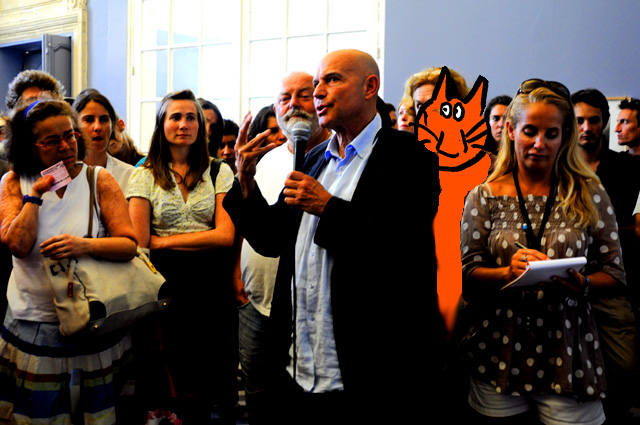
Chris Marker's Guillaume in Arles

Hi Lynne. Please don’t mention dates, it’s so depressing… Let’s say we met -some time ago. And a little earlier I had lunch with Robert Flaherty in Germany. Such are the dots along the strange line they call a life. A life that becomes more and more filled with daily tasks as time goes, which explains why I can’t consider any participation to any project, mines being already enough to keep me breathless. Tell that to your friend, with my warmest wishes.

I had recently a large exhibition in Arles, where Peter Blum, my New York galerist, acted as emcee. And guess who was there.. Show it to the girls, whom Guillaume and me fondly salute.
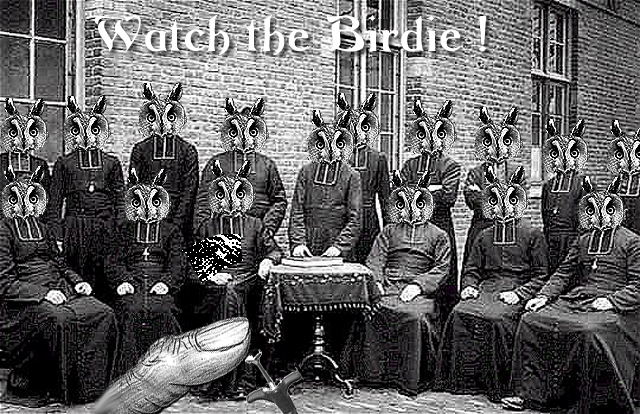
And here is another owl images he sent me recently.
CHRIS MARKER_Watch BIRDIE copie